Categoría: Blog

  • Chronicle #2: Celebrating Natura 2000 day. Removing capeweed plants from Helgueras (Noja)

    Chronicle #2: Celebrating Natura 2000 day. Removing capeweed plants from Helgueras (Noja)

    The companies AMICA, AMPROS and SERCA received training and volunteered for the LIFE ARCOS project

    We celebrated European Natura 2000 Network day on 18 May 2018 with a new volunteer and training event on invasive flora with the LIFE ARCOS Project from the Directorate-General of Natural Environment of the Regional Ministry of Rural Affairs, Fisheries and Food of the Government of Cantabria.

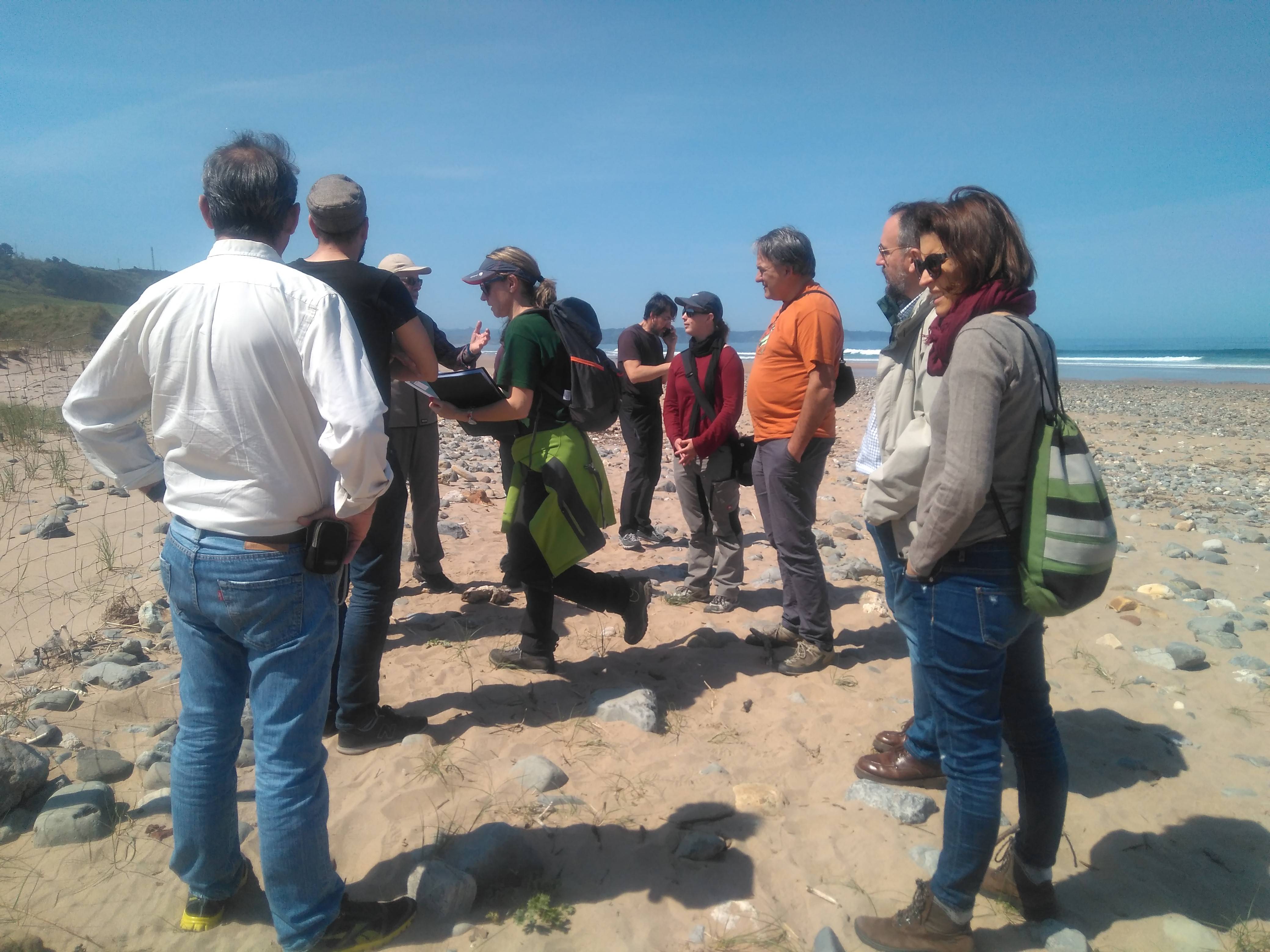
    On this occasion, the Cantabrian companies AMICA, AMPROS and SERCA worked to control the cape weeds that was starting to bloom in the tertiary dunes of the Helgueras beach dune system in Noja (within the Santoña, Victoria and Joyel Marshes Natural Park).  After listening to a brief speech from the natural park director, Lourdes González, the three teams from AMICA, AMPROS and SERCA got to work.  30 people worked within plots marked with temporary plastic tape. They collected approximately 300 kg of cape weeds (Arctotheca calendula), and 10 kg of ice plant (Carpobrotus edulis) was also found.  The participants learned to distinguish the characteristics of the cape weeds among other well-preserved and blooming dune plant species such as the sea potato, sea beet, Virginia stock, shore bindweed, European searocket, petty spurge, etc.

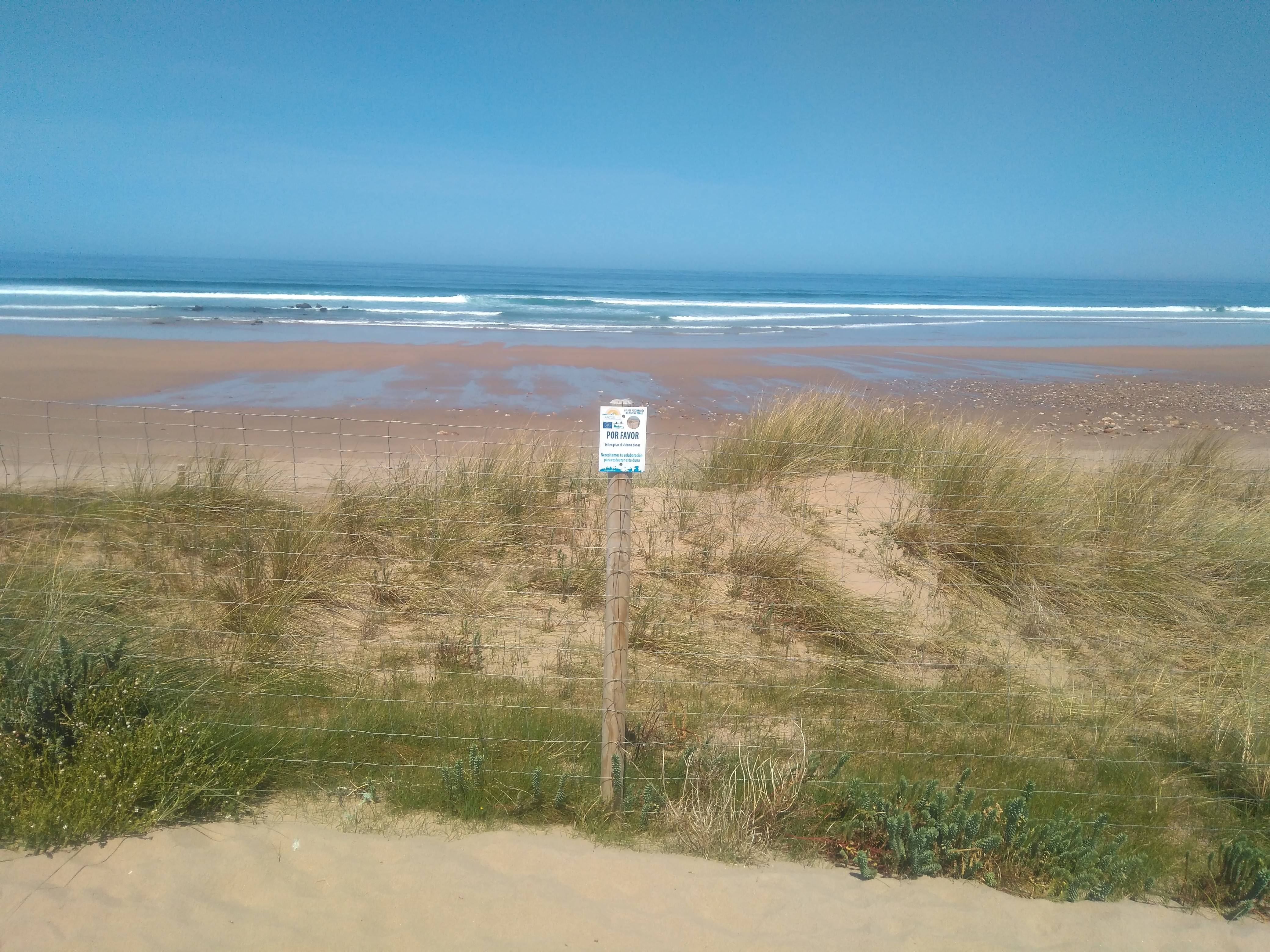
    The work area included dunes closed years ago to regenerate dune vegetation at Helgueras beach.
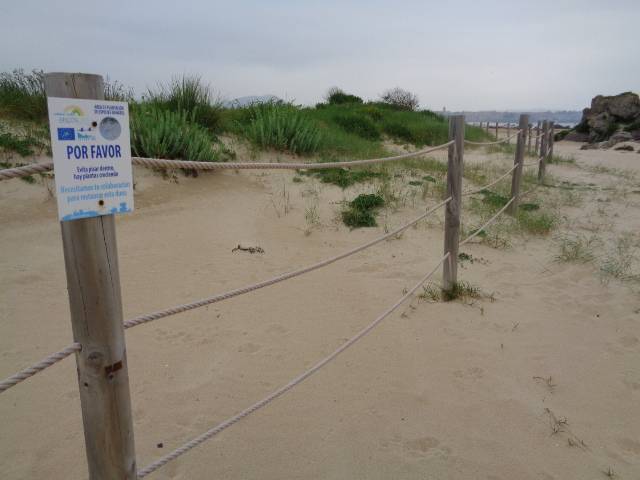
     

    Closed dunes of the LIFE ARCOS project

    Although the area was quite clean, volunteers also collected 2 kg of non-biodegradable bags. 

    The day concluded with a visit from the Mayor of Noja, Miguel Ángel Ruiz, the city councillor of the environment, Javier Martín, and two environmental technicians from the City Hall of Noja, Silvia Ochoa y Ludovico de Vega, who visited the volunteer area.

    Finally, the Cantabrian Network for Rural Development collected all the plants and garbage.

    Participants received a commemorative LIFE ARCOS ceramic glass made in a Ceramics Workshop at the El Dueso Penitentiary in its NACAR program (Nature and Prison).

    The Directorate-General of Natural Environment would like to thank volunteers for their participation. Everyone learned something new about the environment and played their part in restoring vulnerable ecosystems: the dune systems of Cantabria.
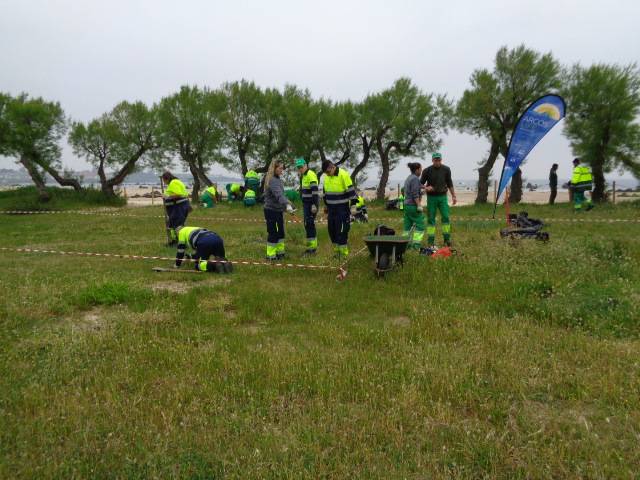
     

    Teams from AMICA, AMPROS and SERCA working at Helgueras beach (Noja)
  • Chronicle #1: Celebrating Natura 2000 day. Removing capeweed plants from Berria (Santoña)

    Chronicle #1: Celebrating Natura 2000 day. Removing capeweed plants from Berria (Santoña)

    Volunteering for the NACAR (Nature and Prison) program in the LIFE ARCOS project

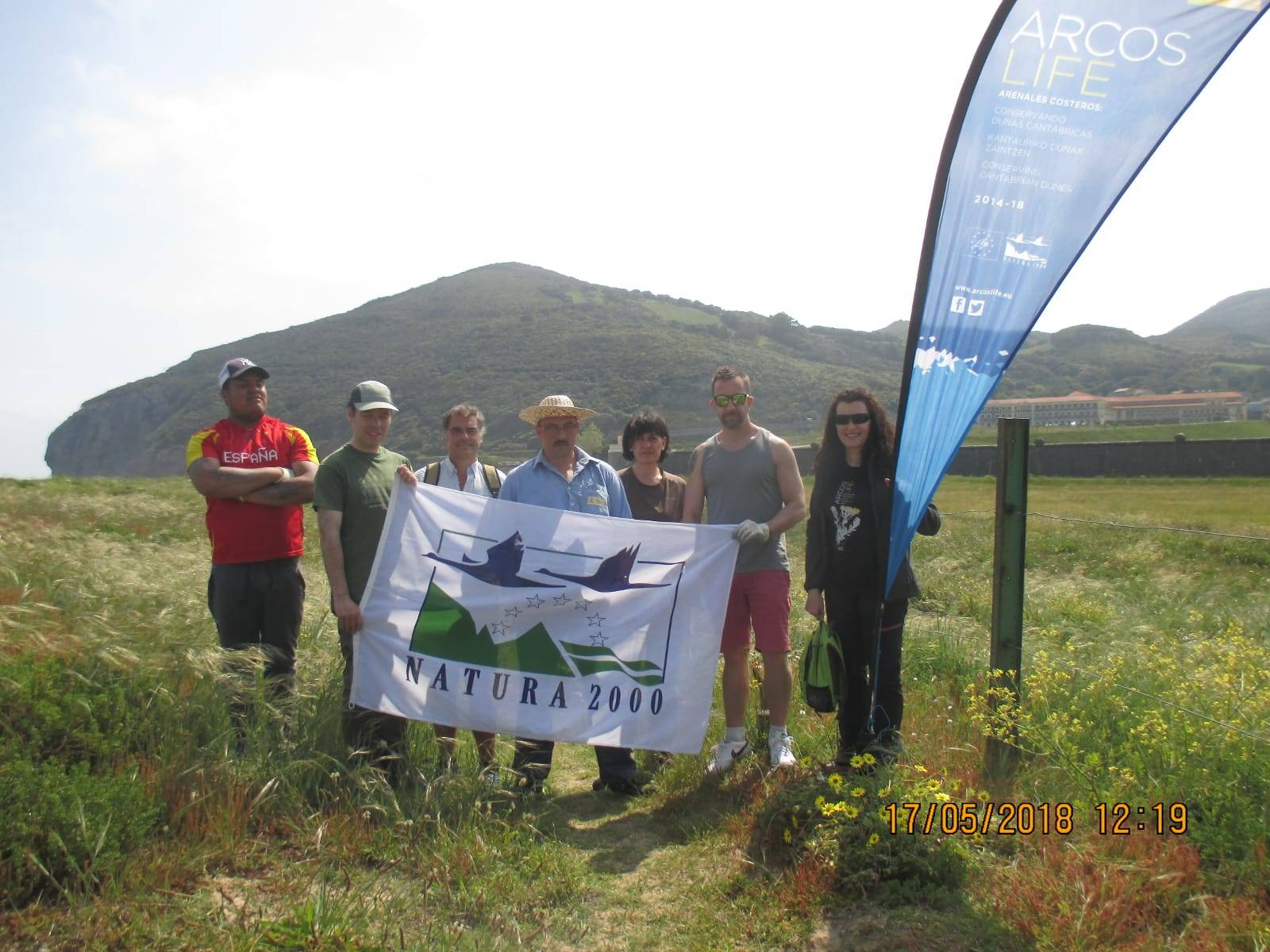
    We celebrated European Natura 2000 Network day on 17 May 2018, with a new volunteer event with the Nature and Prison program (NACAR) in coordination with the LIFE ARCOS Project from the Directorate-General of Natural Environment of the Regional Ministry of Rural Affairs, Fisheries and Food of the Government of Cantabria.

    The activity started at the tertiary dune of Berria beach’s dune system.

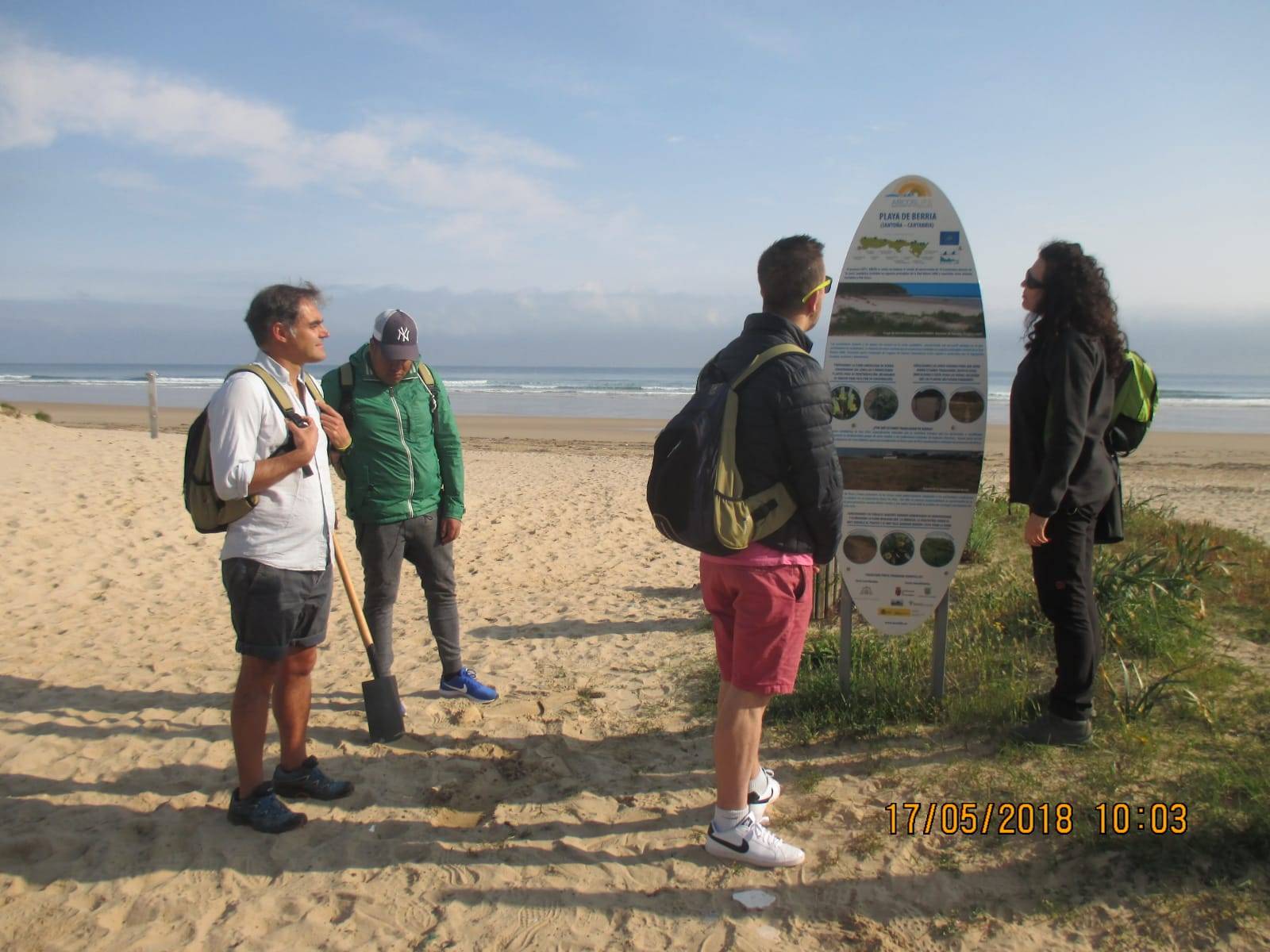
    Natural park director, Lourdes González, briefly introduced the LIFE ARCOS project, the NATURA 2000 NETWORK, the importance of dune ecosystems and how they protect themselves from winter storms, the distribution of dune species in areas and how they are affected by invasive exotic species.  The LIFE ARCOS sign at Berria beached was used to answer attendees’ questions.

    Beginning of the NACAR volunteer activity at Berria beach

    The team got to work after listening to an explanation on how to recognize the cape weeds and how to extract it.  The invasive exotic species was everywhere around the boardwalk parallel to the beach. Volunteers focused on this area.

    They collected around 130 kg of cape weeds (Arctotheca calendula) and 1 kg of non-biodegradable garbage.  The participants learned to distinguish the characteristics of the cape weeds among other well-preserved and blooming dune plant species such as the sea potato, sea beet, Virginia stock, sea daffodil, bindweed, houseleeks, petty spurge, etc.

    During break and in the work area, we explained why the dunes were closed by the LIFE ARCOS project. José Luís Tejerina from Demarcation of Coasts in Cantabria visited the site and assessed the work being done.

    Extraction of cape weeds from the Berria dunes

    Finally, the Cantabrian Network for Rural Development collected all the plants and garbage.

    The participants received a commemorative LIFE ARCOS t-shirt.

    The Directorate-General of Natural Environment thanked NACAR for participating to conserve and restore the dunes of Cantabria’s beaches.

    NACAR team on Berria beach (Santoña)
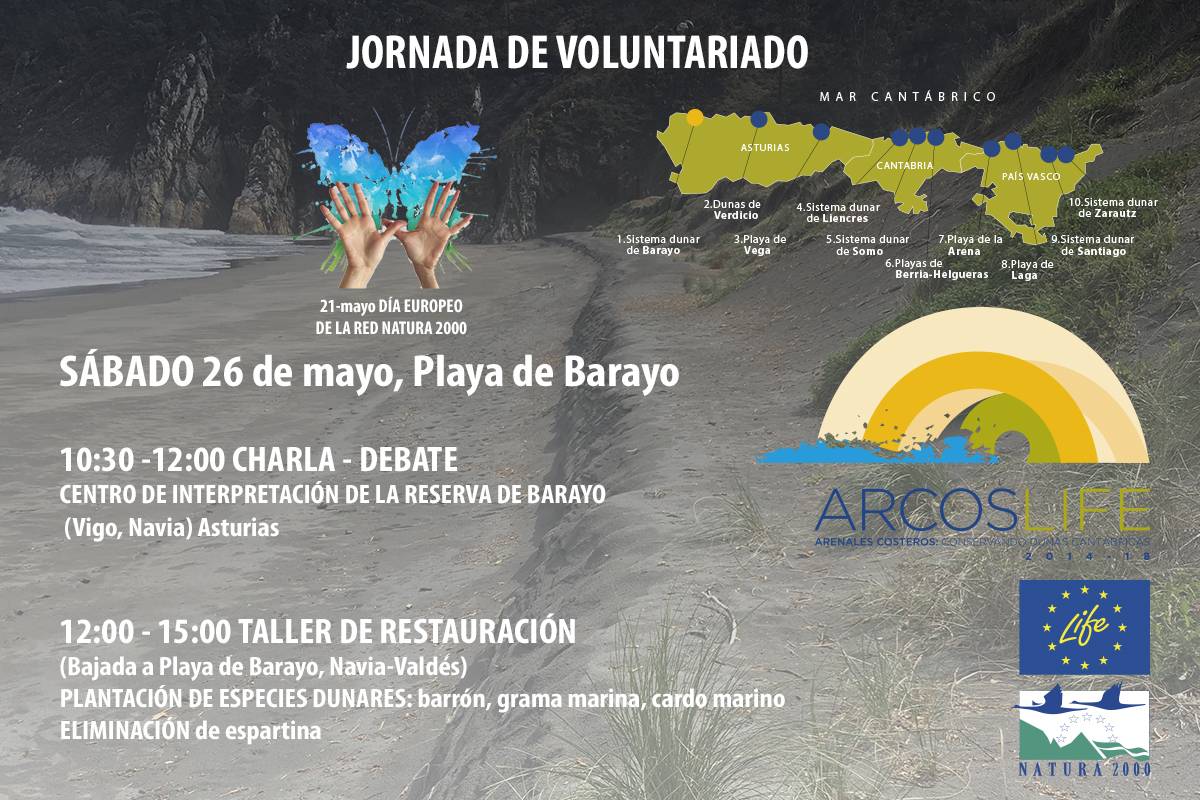
  • Join us to celebrate the Natura 2000 day in Barayo (Asturias) on 26th of May

    Join us to celebrate the Natura 2000 day in Barayo (Asturias) on 26th of May

    Saturday, 26 May is almost here! We can’t wait to see you at the Barayo Natural Reserve (Navia, Valdés, in western Asturias) to learn about the dune that Life+ARCOS is working to restore and about the restoration techniques we use in these types of habitats.

    If you haven’t registered yet, click here. Registration is open until tomorrow, 24 May.

    Our presentation about the Barayo Reserve Interpretation Centre’s work is open to the public. We’ll talk a bit about the importance of the Natura 2000 Network, the conservation goals that inspired us to work in Barayo and items of public concern. We’ll also set aside some time to talk with those in attendance and to take family photos to commemorate our common goal of improving the natural conditions of this protected area.

    The timetable is as follows:

    Chat and debate (10:30 AM -12:00 PM)

    • Location: Barayo Reserve Interpretation Centre (Centro de Interpretación de la Reserva de Barayo) in Vigo (Navia).
    • Objective:ARCOS+Life team members from the University of Oviedo (INDUROT) and from the company Ecología Litoral S.L. will explain how we’ll be celebrating European Natura 2000 Network Day. They will also talk about Life+ARCOS projects, the history of Barayo in photos, and the main restoration tools we use.
    • Debate / chat: We’re interested in hearing what people think about this protected area, so please use this time to share your thoughts with us.

    Restoration and eradication of invasive species workshop (12:00 PM – 3:00 PM)

    • Location: Western side of Barayo beach.
    • Objective:The company that manages the dune plant nursery centre of the Directorate General for the Sustainability of the Coast and the Sea in Cantabria will explain the most common techniques used to restore dunes. Then, we’ll plant dune species and work to eradicate an exotic species that is invading part of the Barayo dunes. Don’t worry, we’ll teach you how to identify the invasive ones.
    • Group lunch: If the weather holds out (fingers crossed for no rain!), we’ll have lunch on the beach so we can get to know each other better. 

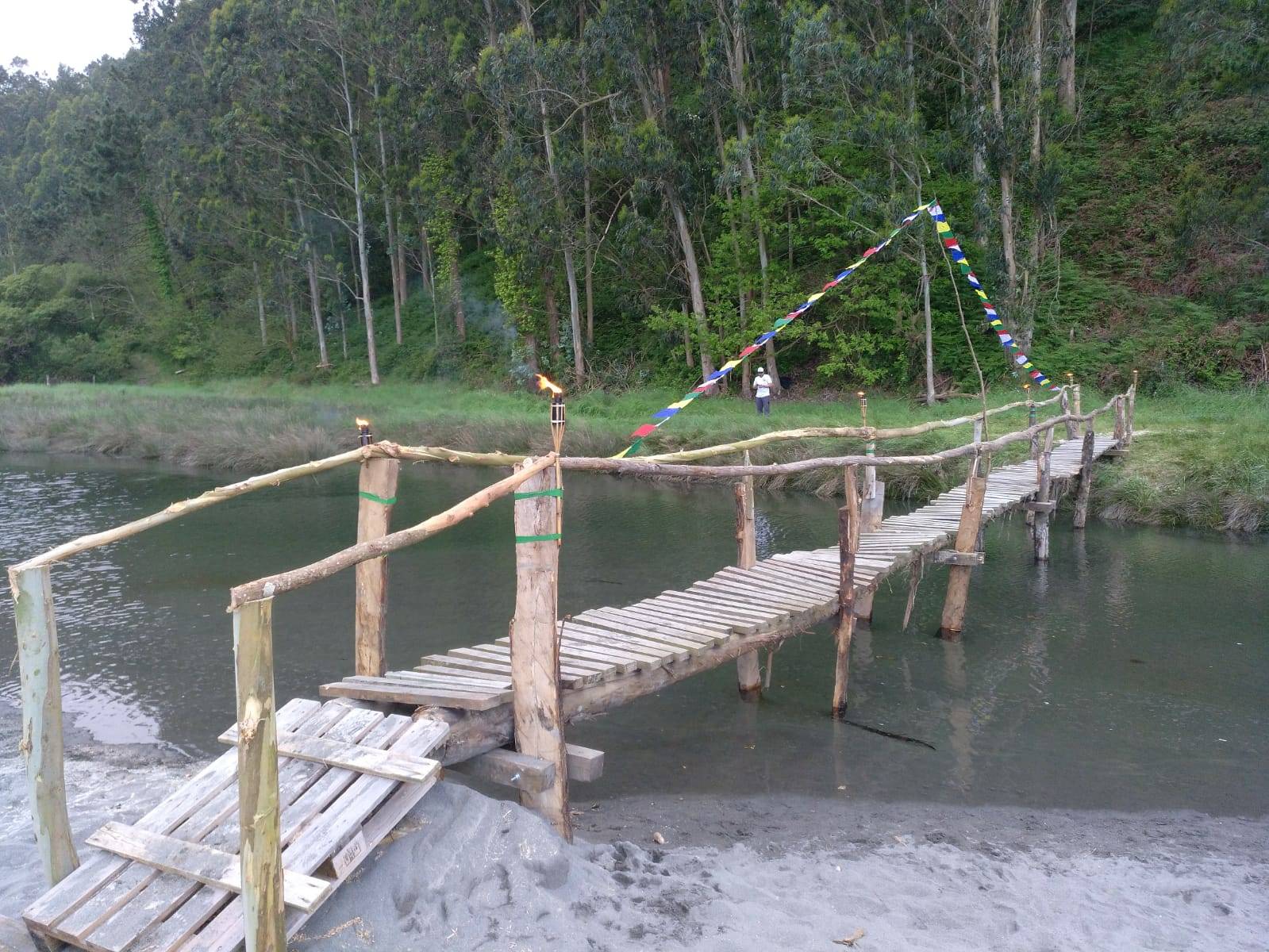
    To access the beach, the Friends of Barayo Association set up a bridge to the work area on the left side of the river. Thank you so much!

    The most important part: You can still register today and tomorrow by clicking here


  • You can register now to attend our activities in Barayo (Navia-Valdés, Asturias) on 26/05/2018 to celebrate the European Natura 2000 day

    You can register now to attend our activities in Barayo (Navia-Valdés, Asturias) on 26/05/2018 to celebrate the European Natura 2000 day

    Participate in our celebration of European Natura 2000 Network Day, the largest network of protected areas in the world.

    Register to volunteer on 26 May 2018. Together, we’ll learn about the Cantabrian dune system restoration work carried out by the Life+ARCOS project.

    Within the protected area of the Barayo Partial Nature Reserve (Navia and Valdés, Asturias), we’ll talk and learn about dune restoration work.

    Friends of Barayo Association

    We are very happy that members of the Friends of Barayo Association are going to participate in this activity. They have many members and are very familiar with this area. If you are a member of the group, please tell us on the form below.

    To participate in this day and stay informed about the timetable, fill out this registration form.

    Register now! (limited space available)

    Contact: arcoslife@uniovi.es

  • Removing ice plant, an invasive species, from Playa de Helgueras (Noja, Cantabria)

    Removing ice plant, an invasive species, from Playa de Helgueras (Noja, Cantabria)

    Volunteering for the NACAR (Nature and Prison) programme in the LIFE ARCOS project

    A new NACAR (Nature and Prison) programme volunteer event took place on 19 April 2018, in coordination with the LIFE ARCOS project from the Directorate-General of Natural Environment of the Regional Ministry of the Rural Affairs, Fisheries and Food of the Government of Cantabria. The goal of the event was to remove invasive flora.

    Collaboration between the NACAR programme and the European LIFE ARCOS programme has brought about various activities, mainly in the dune systems of the Natural Park Marshes of Santoña, Victoria and Joyel (which are also protected as a Special Area of Conservation), SAC Santoña, Victoria and Joyel Marshes (Special Protection Area for Birds), SPAB Santoña, Victoria and Joyel Marshes, Ajo Estuary, and Marshes of Santoña (Wetlands of International Importance).

    This time, we worked on the Helgueras beach (Noja) dunes with the participation of inmates and civil servants from the El Dueso Penitentiary. We also had the support of the Cantabrian Network for Rural Development team (and two foreign students interns) and technical personnel of the Directorate-General of Natural Environment of the Government of Cantabria. The Council of Noja provided logistical support.

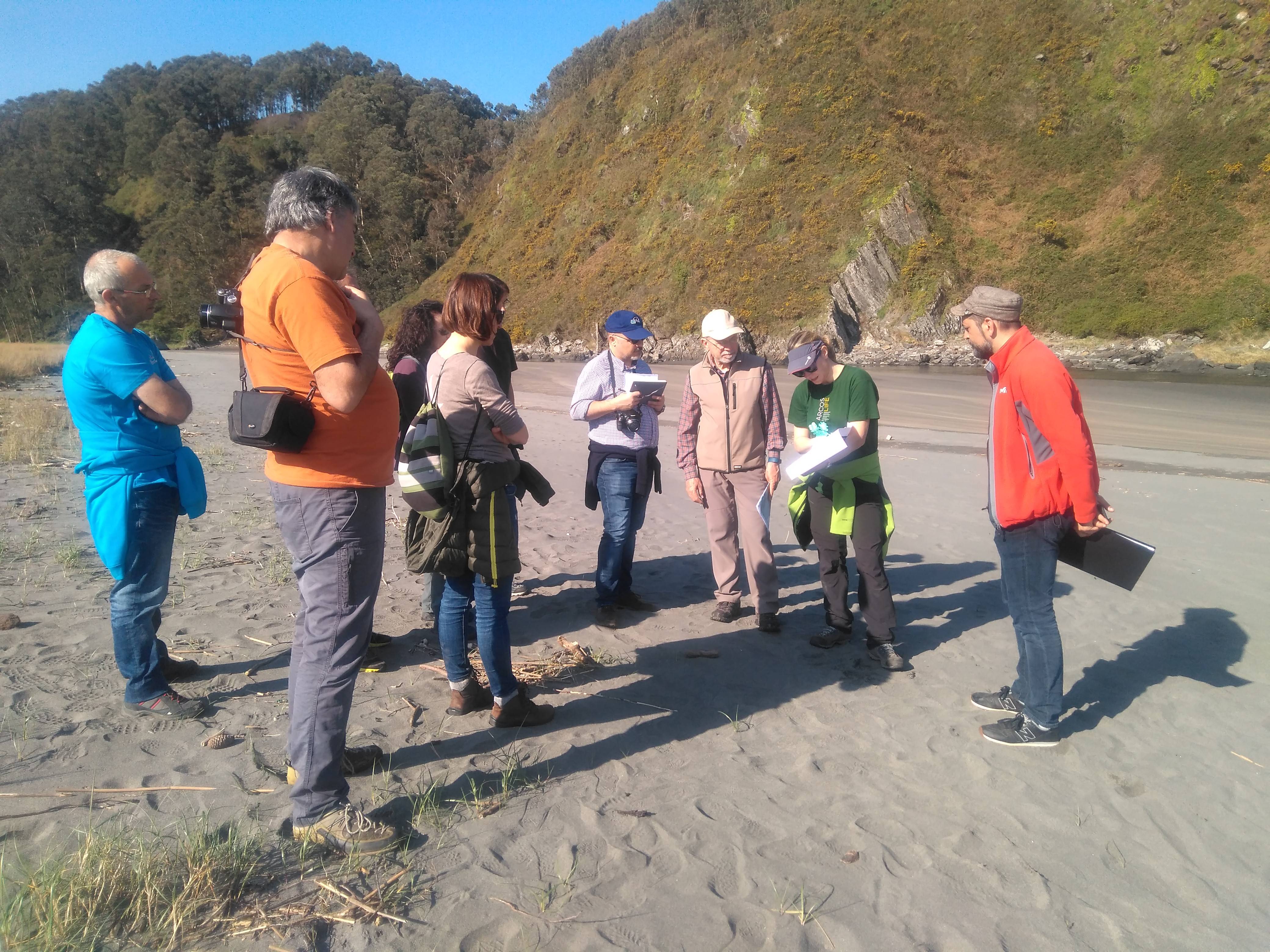
    The day started with a brief introduction at Berria beach (Santoña), where we explained the importance of dune systems. From there, we made our way towards Noja. On the way, we walked through the El Brusco hill. From different viewpoints, we explained the positive impact the LIFE ARCOS dune restoration project has had on Berria beach over the last few years (some of which was with the NACAR project). Likewise, when passing through the Cantabrian oak-tree forest, we talked about some of its characteristics and referenced the positive effect El Dueso Penitentiary inmates’ work has had there.

    Walk from Berria beach to El Brusco (Santoña)

    Once we passed El Brusco and reached Helgueras (Noja) beach, we started the main activity of the day: extracting ice plant (Carpobrotus edulis). After a few hours of meticulous work—keeping in mind the importance of extracting every single remain of the extracted plants to prevent their return—we eradicated approximately 1,100 kg of ice plant. The Council of Noja team helped us load and dispose of the ice plant at the Cantabrian Network for Rural Development collection point.

    The team extracting ice plant at Helgueras beach (Noja)

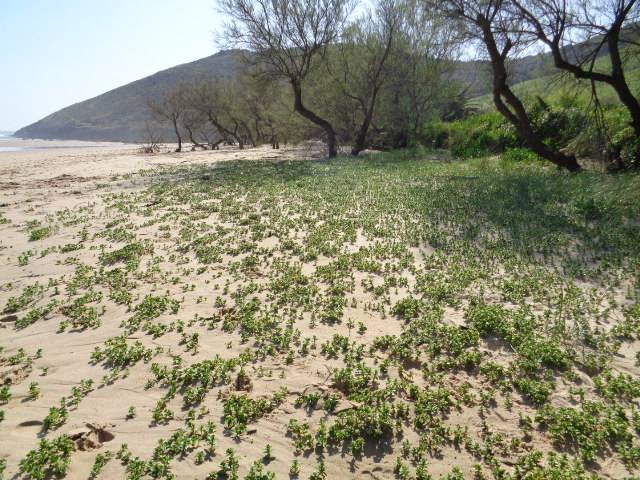
    We also collected various bags full of non-biodegradable garbage and planted sea daffodil (Pancratium maritimum) seeds to control the resurgence of ice plant collected.  We expect this effort to reinforce the natural colonization of dune species in the area, which should be rich in Honckenya peploides community species, but is increasingly scarce on the Cantabrian coast.

    Honckenya peploides community on Helgueras beach (Noja)

    We hope that this programme continues to grow and move forward. We would like to thank the Directorate-General of Natural Environment and everyone who worked on this opportunity to continue working and learning together.

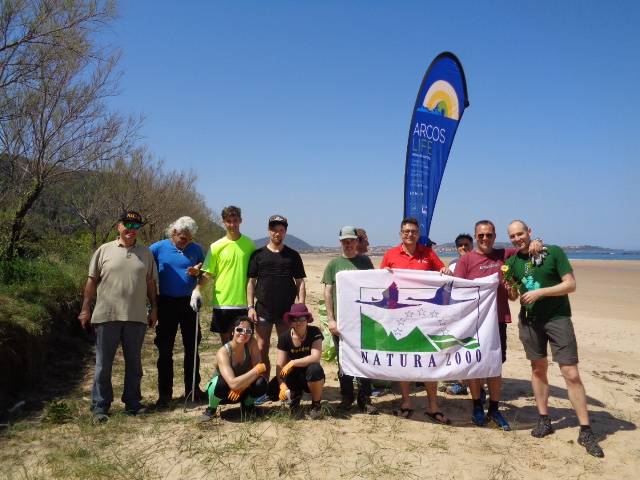
    Work team at Helgueras beach (Noja)
  • Monitoring team visit LIFE+ARCOS actions in Asturias. 16-17 April, 2018

    Monitoring team visit LIFE+ARCOS actions in Asturias. 16-17 April, 2018

    Last week, a representative from the NEEMO team (which monitors LIFE projects) visited the Life+ARCOS project to observe its current state first hand.
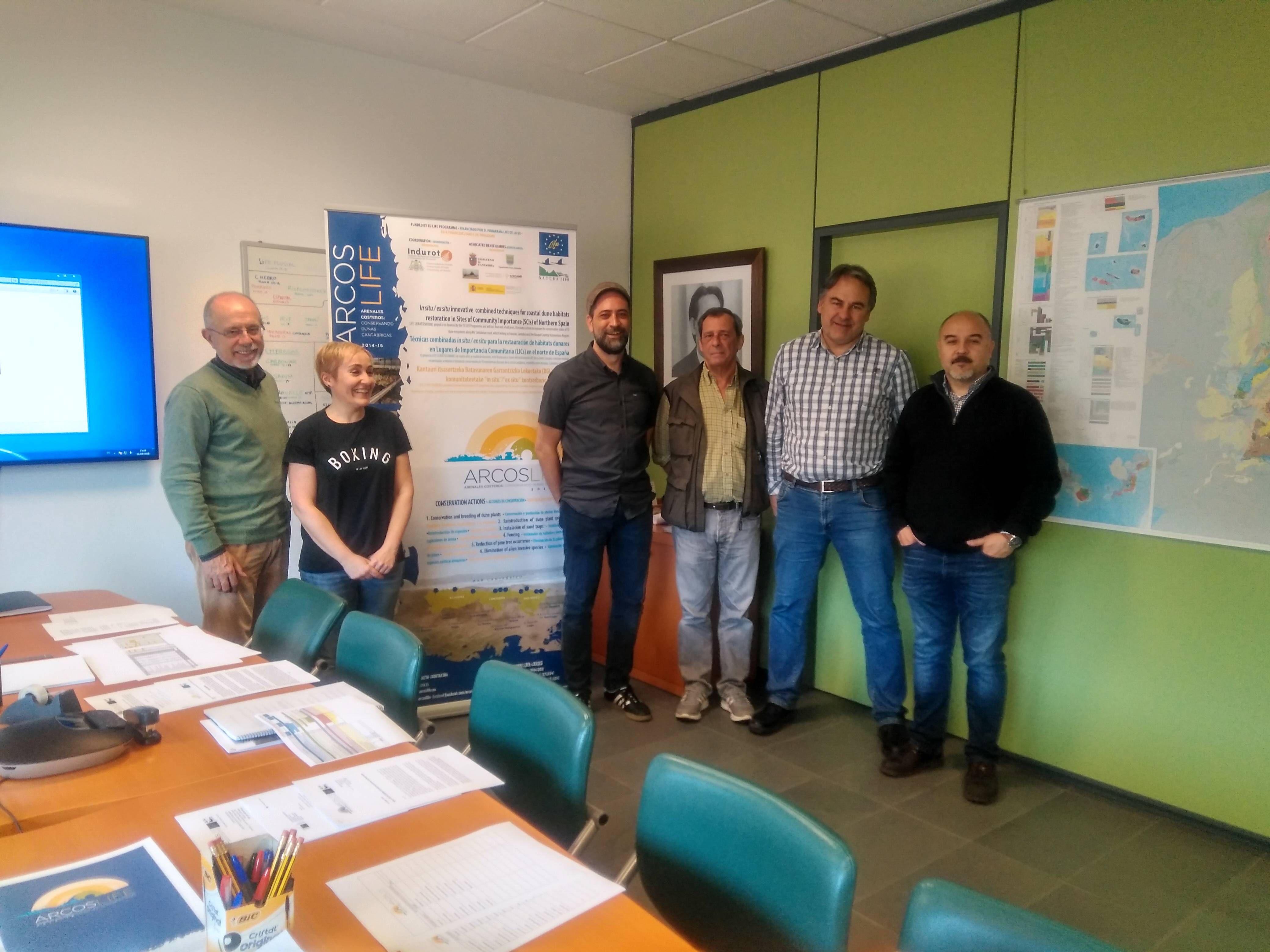
    During the representative’s two-day visit, they reviewed the project’s financial and technical parts. The first meeting took place on 16 April at the Institute of Natural Resources and Land Planning headquarters (INDUROT-University of Oviedo), located at the Mieres Campus.

    Primera jornada, evaluación de la situación económica del proyecto.
    Day one: Evaluation of the project’s financial status

    On 17 April, the representative observed the work being carried out within the Barayo protected area (Navia and Valdés) and at Vega beach (Ribadesella), where dune system restoration work recently began.

    Other project members were also invited to the Barayo Partial Natural Reserve (SAC ES0000317 Penarronda-Barayo): Ecología Litoral, Provincial Council of Gipuzkoa, Aranzadi Science Society and Directorate-General of Environment of the Government of Cantabria.

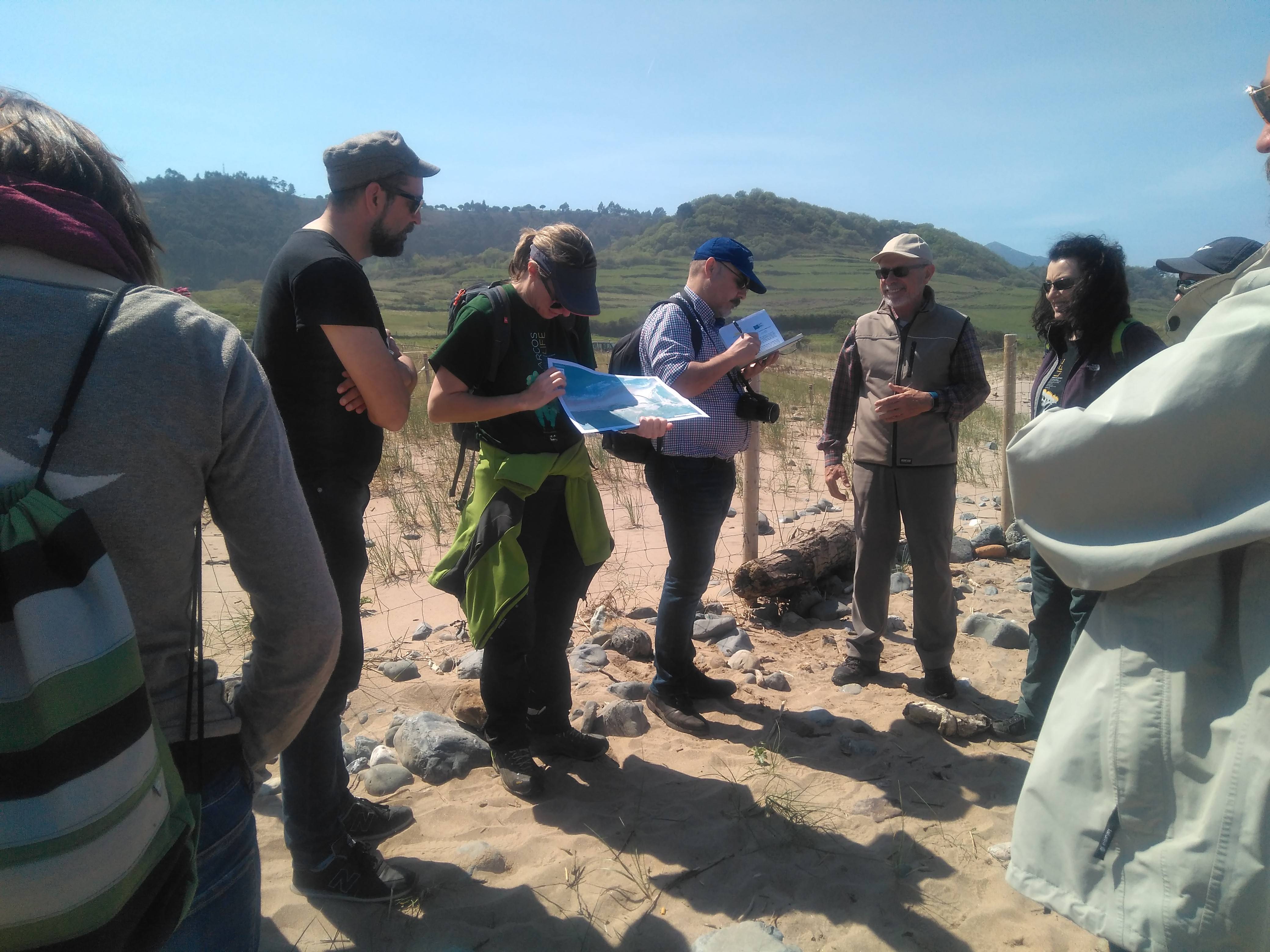
    Elena Fernández explains erosion trends in the Barayo dune system.

    At Barayo, we talked about the conservation problems this area faces and the steps we must take in order to begin restoring the dune ecosystem’s natural vegetation cover.

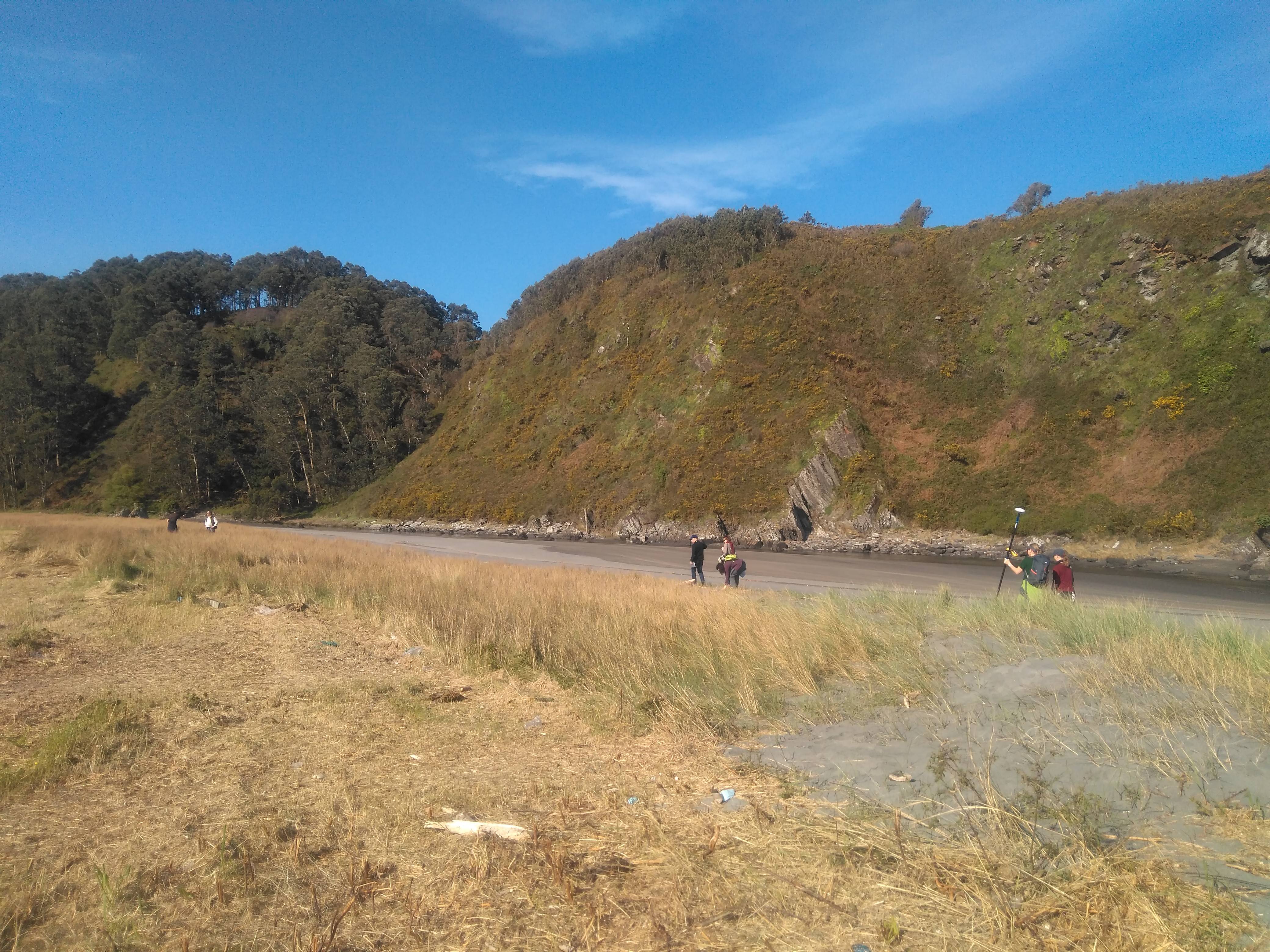
    That day, we also took new positioning measurements of the frontal dune with a sub-meter accuracy GPS receptor.

    Collecting frontal dune data via GPS

    After visiting Barayo, the team went to Vega beach in Ribadesella to see the results of the work done there. In this area, the closures and decrease in foot traffic inside the dune system has allowed vegetation to recover. In the area you could also see the effect storms had on some of the work carried out. Significant damage was done to the sand collectors and to some of the frontal closures.

    Presentation on Vega beach erosion trends, given by Elena Fernández (INDUROT)
    Dune vegetation recovery on Vega beach after closing transversal access points to the beach
    Evaluation of damage on Vega beach

    After visiting Vega beach, the team went to Ribadesella to have lunch at the «Tito Bustillo» Cave Interpretation Centre. Afterwards, we reviewed the work carried out by other teams at different work sites. The meeting was held at facilities generously provided by the Council of Ribadesella.

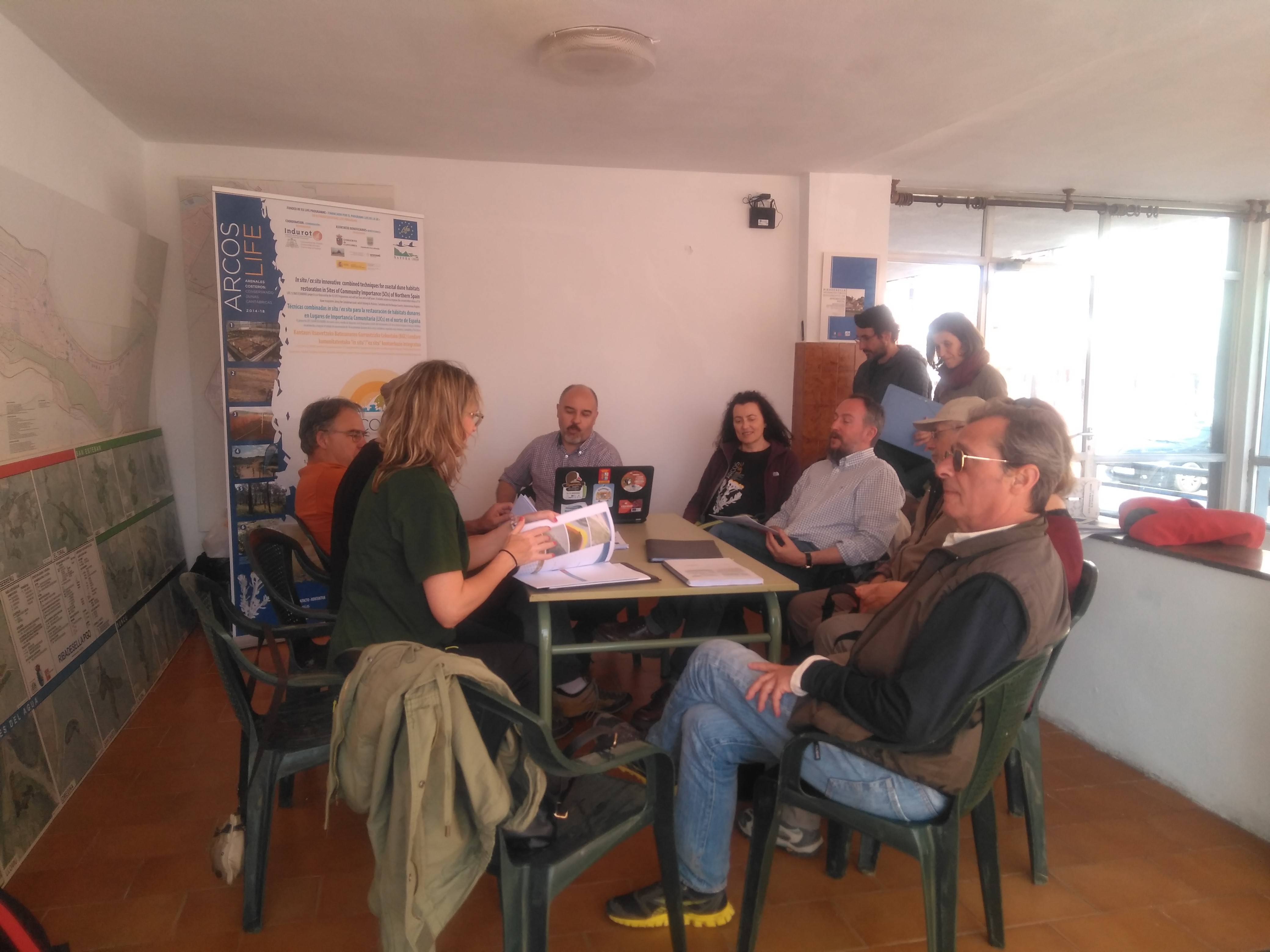
    Technical meeting at the offices of the Council of Ribadesella.
  • We keep on working in Barayo site (Asturias) by preparing the ground for plantations

    We keep on working in Barayo site (Asturias) by preparing the ground for plantations

    Work team at Helgueras beach (Noja)

    Our work to weed the Barayo dune system brush is coming to an end. After chopping down all the non-native trees to restore the area’s conditions, reconditioning work was needed in order to plant species native to the dunes.

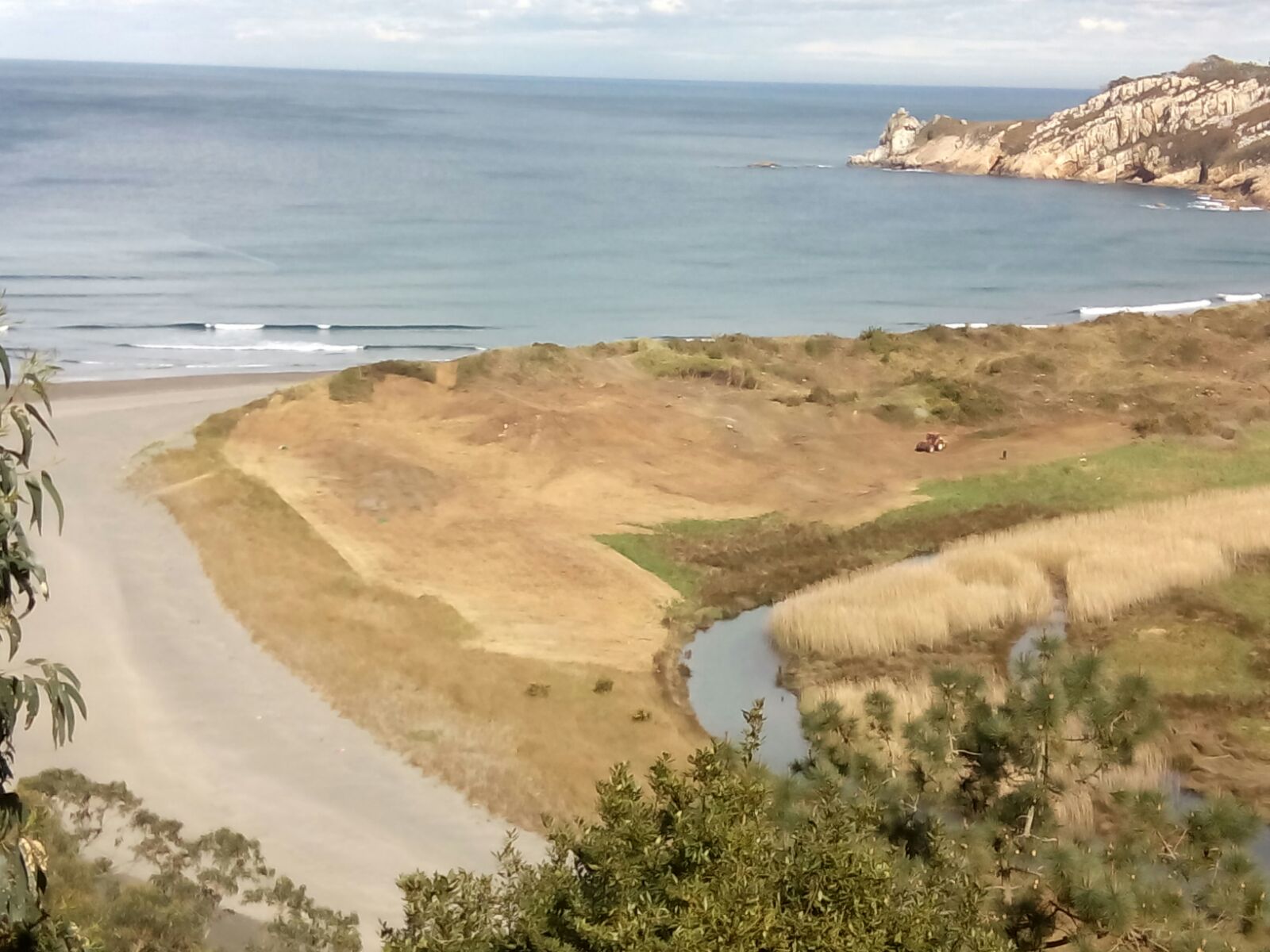
    View of the Barayo dune system during weeding work
  • Excited to celebrate Natura 2000 day in May 2018

    Excited to celebrate Natura 2000 day in May 2018

    We couldn’t wait any longer to tell you about European Natura 2000 Network Day! We could not wait any longer to tell you about this day, because are preparing something really interesting to share with you all.

    On 21 May, Europe celebrates the creation of Natura 2000 Network (the largest network of protected areas in the world) Day and the Habitats Directive publication, which legally protects species and habitats in this network.

    Like every year, the LIFE+ARCOS project will form part of the activities that celebrate this special nature conservation day.

    On 19 and 20 May, we’re hosting various communication sessions and volunteer activities within different Asturian (Barayo beach, between Navia and Valdés), Cantabrian and Basque dune systems.

    Please keep an eye on our website and social media profiles: we’ll post more information about how you can join our efforts at various points on the Cantabrian coast.

  • LIFE+ARCOS meets the General Directorate for Biodiversitiy, in Oviedo, to evaluate the extent of the actions foreseen in the Barayo site (Navia-Valdés, Asturias)

    LIFE+ARCOS meets the General Directorate for Biodiversitiy, in Oviedo, to evaluate the extent of the actions foreseen in the Barayo site (Navia-Valdés, Asturias)

    On 14 February, LIFE+ARCOS met in the Multi-Service Building of the Principality of Asturias with heads of the Protected Area and Nature Conservation Service, of the Directorate-General for Biodiversity. They talked about the next steps for the Barayo Partial Natural Reserve, including the SAC Peñarronda-Barayo, once the non-native forest cutting has concluded in the area.

    Ms Teresa Sánchez Corominas, head of this service, attended the meeting. Items were brought up that will have to be included in the LIFE project’s plan of action for this area, relating to the definitive treatment of leftover plant material from the cutting of pine trees, the salinization of the dune system to eradicate adventitious species before planting activities and the plan to eliminate the invasive plant Spartina patens in the protected space, among other items.

    The Multi-Service Building of the Principality of Asturias, in Oviedo,  where the meeting with the heads of the Protected Area and Nature Conservation Service took place

    The following people attended the meeting:

    From LIFE+ARCOS: T. E. Díaz, main project lead; Ignacio Felpete, conservation activity technician in Asturias; Carlos Ley, manager of the company Ecología Litoral S.L. and Fernando de la Torre, from Coast Demarcation of Asturias.

    From the Principality: Teresa Sánchez, head of the Protected Area and Nature Conservation Service; Víctor Vazquez, head of the Biodiversity Analysis and Conservation Section of said Service and Susana García, biologist of the section.

  • NGO ARANZADI (associated beneficiary) is funded by the Fundación Biodiversidad to contribute the dissemination of Life+ARCOS activities and expertise

    NGO ARANZADI (associated beneficiary) is funded by the Fundación Biodiversidad to contribute the dissemination of Life+ARCOS activities and expertise

    The ARANZADI Society of Sciences (ARANZADI Zientzia Elkartea), as a LIFE+ARCOS project partner and as the only non-profit making Organisation involved, has received financial aid from the Fundación Biodiversidad Foundation, funding allocated fundamentally to the dissemination of LIFE projects within the Call for granting aid from the Fundación Biodiversidad, in the non-competitive tendering, to co-fund projects backed by the LIFE programme within the sphere of biodiversity 2017