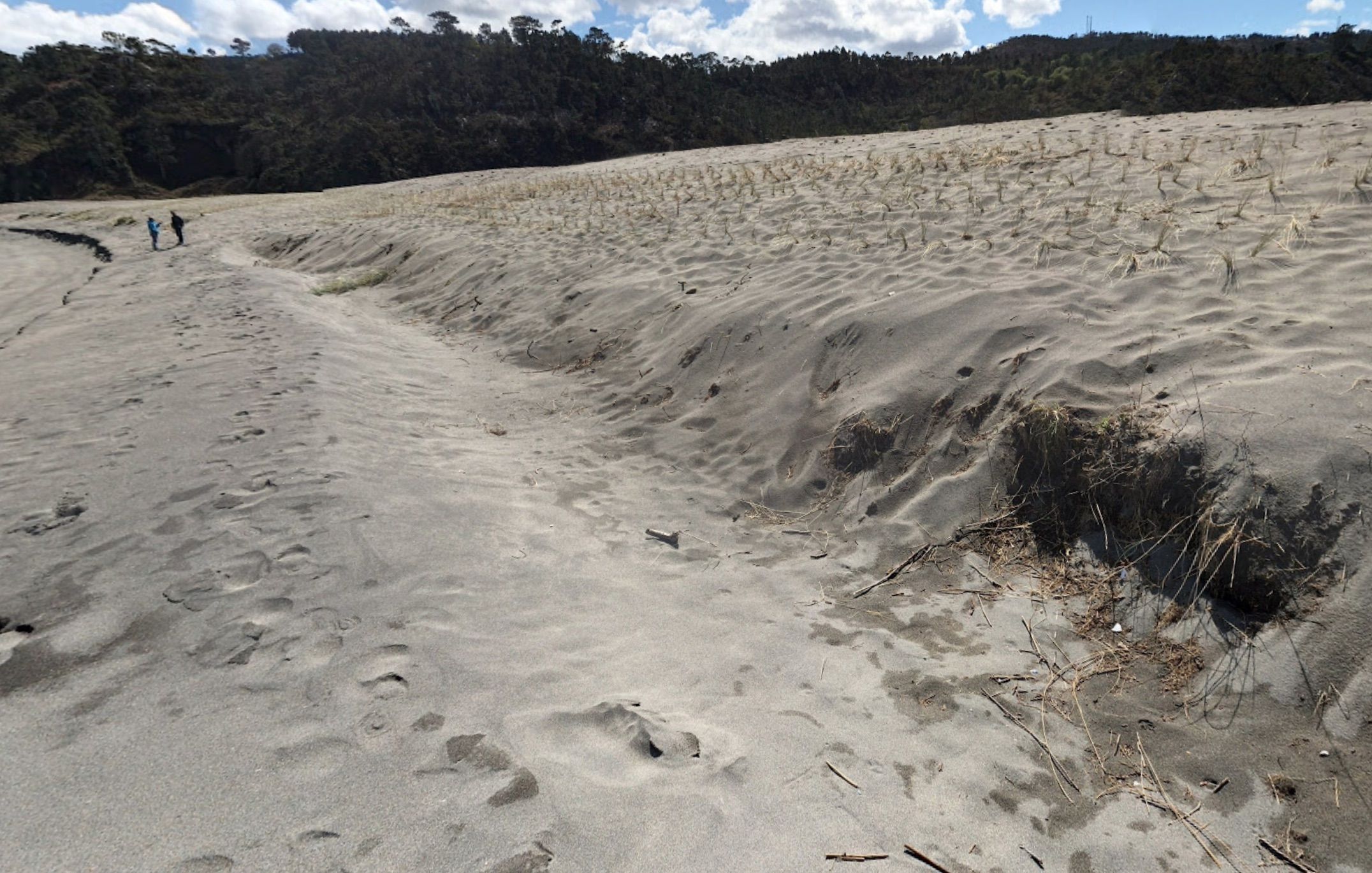
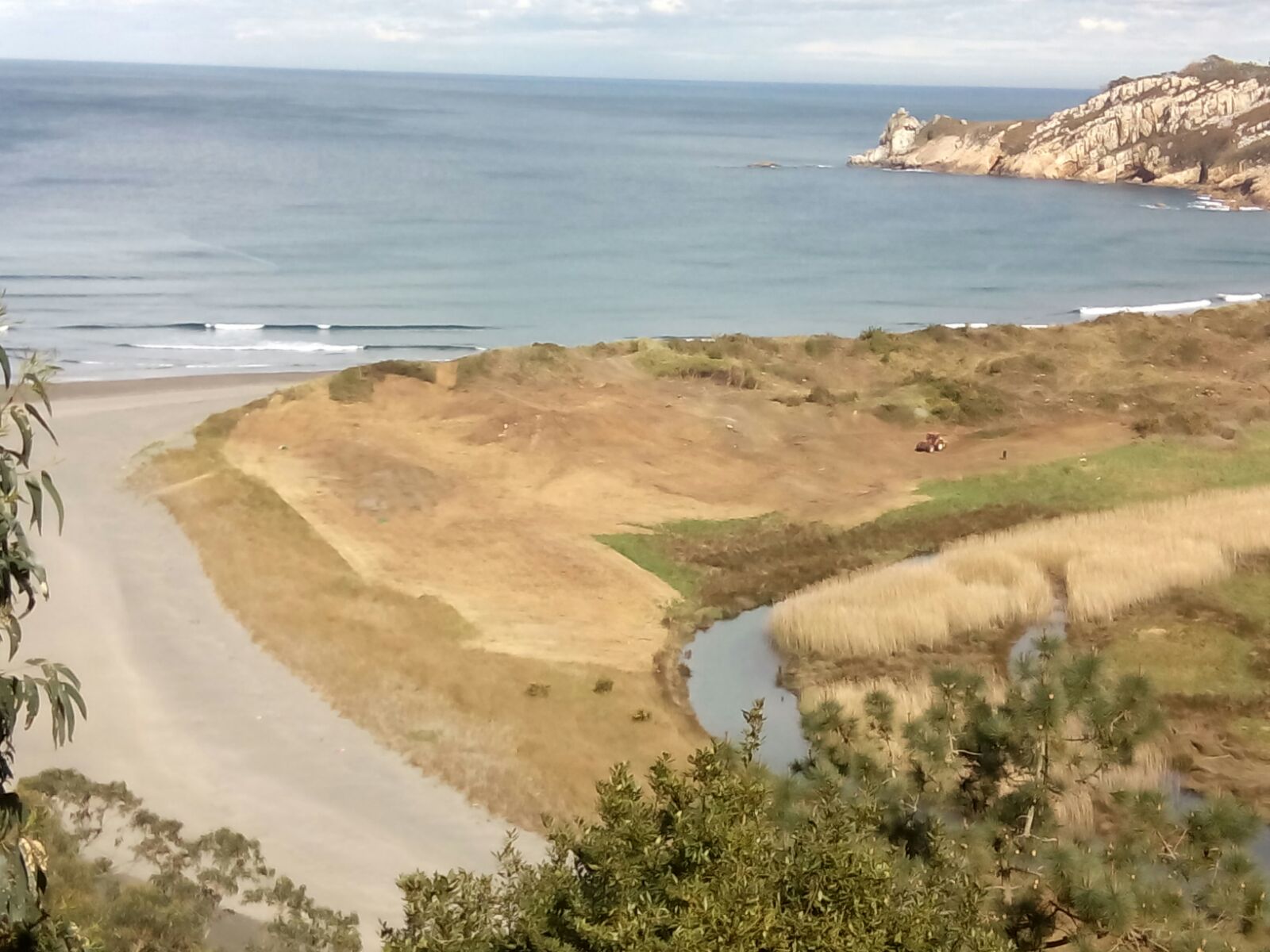
We could wait no longer to show you the first results that the smoothing of the front embankment has had on the dune system. By improving the conditions of the front, sand from the beach can once again reach the upper part of Barayo.
The good health of the primary and secondary dune vegetation depends on a sandy substrate, aided by the wind and the salty air. With the help of the wind over the past few weeks, we have managed to transform dune setting enough so as to put us in good stead to successfully face the next planting phase.
The first plantations that you can see in 360º image were carried out using European beach grass (Ammophila arenaria), which had detached from the top part of the dune and which was developing at the base of the front embankment. At LIFE+ARCOS we have taken the utmost care to ensure that these species – natural to white dunes – have not been affected by the conditioning works on the dune front.
We hope to shortly embark upon the bulk of planting with plants from the nursery that the Directorate General of Sustainability of the Coast and the Sea has in the Cantabrian town of Loredo, for the production of dune species. In the meantime, we will leave you with this image to give you an idea of how our efforts to recover these types of habitat – disappearing in the Partial Nature Reserve of Barayo over recent years – are advancing.
On 26 May, Life+ARCOS celebrated European Natura 2000 Network day alongside 34 people at the Penarronda-Barayo Special Area of Conservation (ES0000317). Here is a video summary of the day.
At the Barayo Partial Nature Reserve interpretation centre, located in the village of Vigo (Navia), we invited Life+ARCOS members to participate in a chat with members of the Friends of Barayo Association and other associations. The goal of the chat was to inform the neighboring areas of the protected site about the project and what we aim to recover.
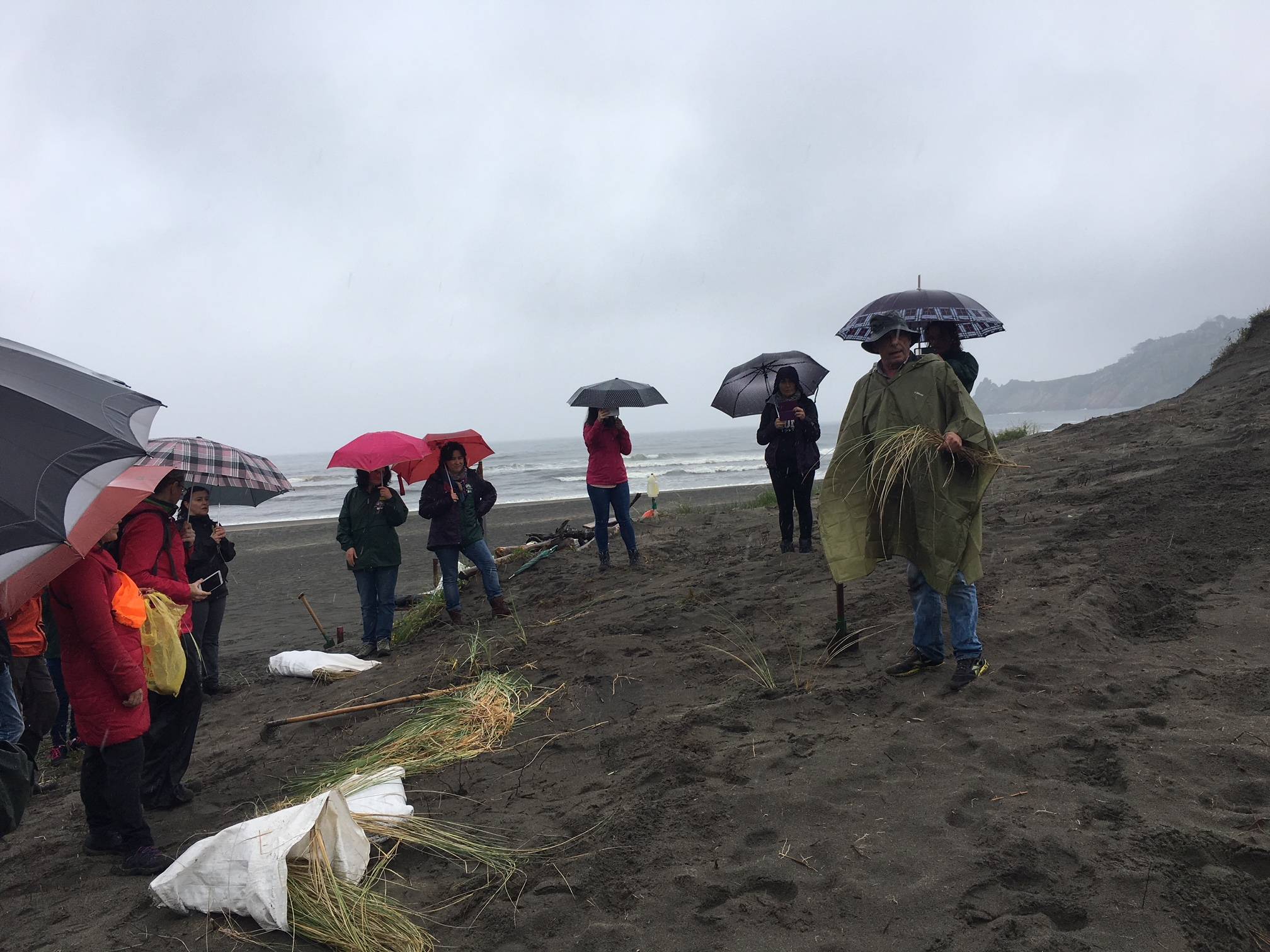
After the chat (which turned into a Q&A session with the Life+ARCOS team) we went to the Barayo dune system to hear explanations about dune system vegetation and to observe plants that are native to these areas.
Carlos Ley, from the company Ecología Litoral, demonstrated planting techniques for two structural species that will be introduced into the area: European beachgrass and sand couch-grass.
Unfortunately, the bad weather prevented us from cleaning parts of the dunes that are invaded by Espartina patens.
The day concluded with lunch at the interpretation centre.
Life+ARCOS would like to thank all attendees for participating.
Participate in our celebration of European Natura 2000 Network Day, the largest network of protected areas in the world.
Register to volunteer on 26 May 2018. Together, we’ll learn about the Cantabrian dune system restoration work carried out by the Life+ARCOS project.
Within the protected area of the Barayo Partial Nature Reserve (Navia and Valdés, Asturias), we’ll talk and learn about dune restoration work.
Friends of Barayo Association
We are very happy that members of the Friends of Barayo Associationare going to participate in this activity. They have many members and are very familiar with this area. If you are a member of the group, please tell us on the form below.
To participate in this day and stay informed about the timetable, fill out this registration form.
Our work to weed the Barayo dune system brush is coming to an end. After chopping down all the non-native trees to restore the area’s conditions, reconditioning work was needed in order to plant species native to the dunes.
View of the Barayo dune system during weeding work
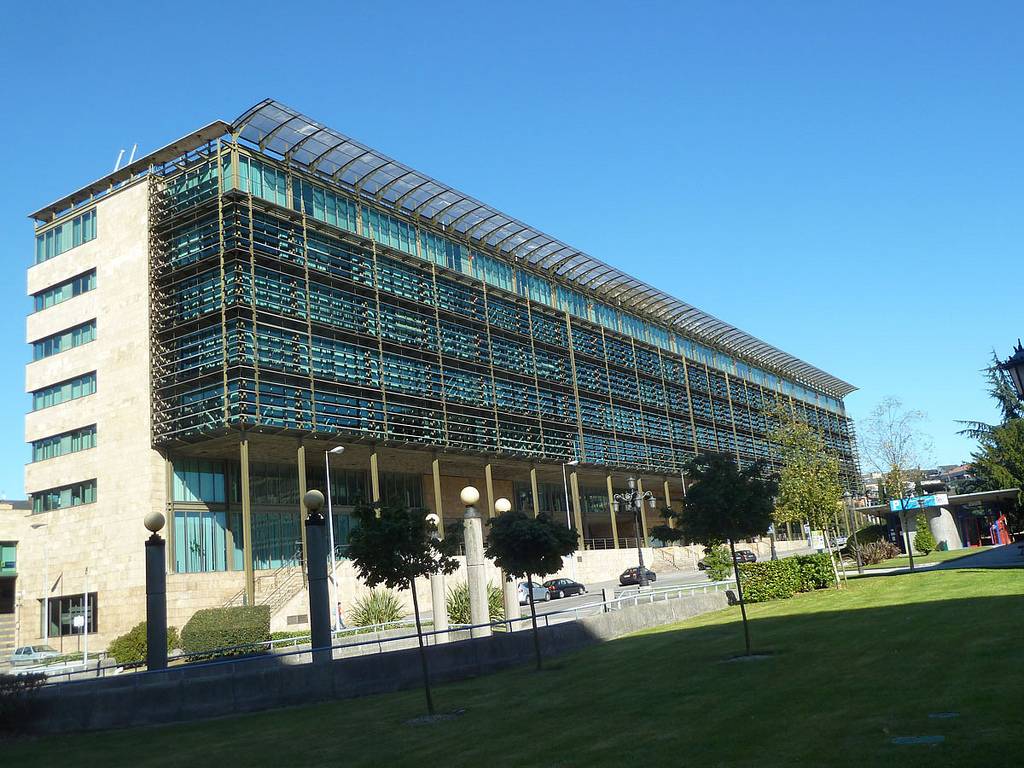
On 14 February, LIFE+ARCOS met in the Multi-Service Building of the Principality of Asturias with heads of the Protected Area and Nature Conservation Service, of the Directorate-General for Biodiversity. They talked about the next steps for the Barayo Partial Natural Reserve, including the SAC Peñarronda-Barayo, once the non-native forest cutting has concluded in the area.
Ms Teresa Sánchez Corominas, head of this service, attended the meeting. Items were brought up that will have to be included in the LIFE project’s plan of action for this area, relating to the definitive treatment of leftover plant material from the cutting of pine trees, the salinization of the dune system to eradicate adventitious species before planting activities and the plan to eliminate the invasive plant Spartina patens in the protected space, among other items.
The Multi-Service Building of the Principality of Asturias, in Oviedo, where the meeting with the heads of the Protected Area and Nature Conservation Service took place
The following people attended the meeting:
From LIFE+ARCOS: T. E. Díaz, main project lead; Ignacio Felpete, conservation activity technician in Asturias; Carlos Ley, manager of the company Ecología Litoral S.L. and Fernando de la Torre, from Coast Demarcation of Asturias.
From the Principality: Teresa Sánchez, head of the Protected Area and Nature Conservation Service; Víctor Vazquez, head of the Biodiversity Analysis and Conservation Section of said Service and Susana García, biologist of the section.
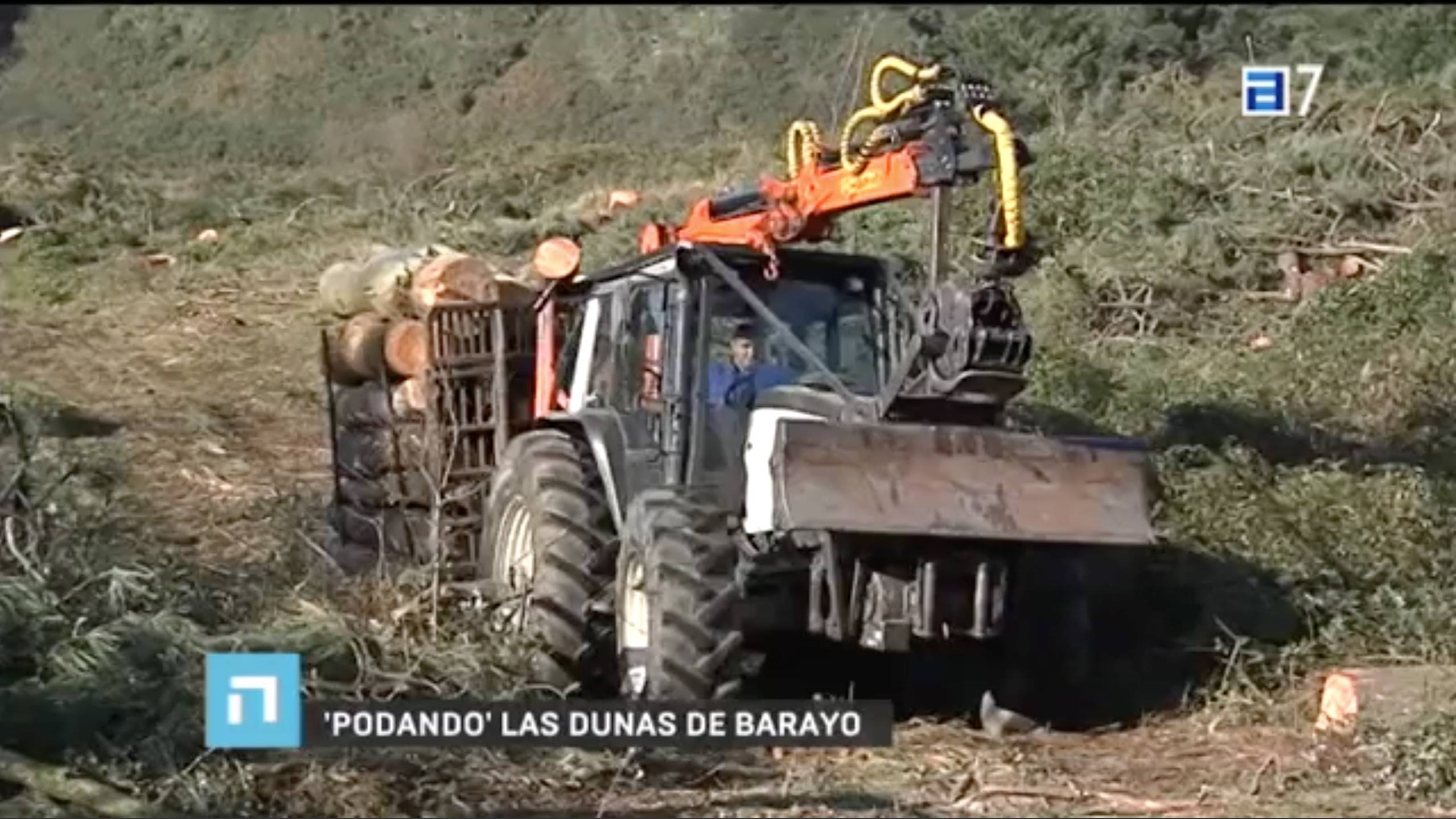
Here is the video of the news item, which was used on the opening of the local Asturian TPA News (evening edition) about the activities carried out in Barayo, which commence the dune system recovery actions on this protected space.
In the interview, the project director Mr Tomás E. Díaz comments on the role that the pine trees used to have in structuring and setting the dune system. When removing the pine tree covering, before the other actions – including the conditioning of the substrate so as to plant dune species such as the European beach grass (Ammophila arenaria)- the stump extraction of the planted pines was not carried out so as to limit the amount of sediment moved.
Another major issue arising from the recovery of this space is linked directly to the modification of the sediment input needed to keep the dune active. Within the LIFE+Arcos project, the INDUROT team (University of Oviedo) analysed the evolution of these inputs over the past 50 years.
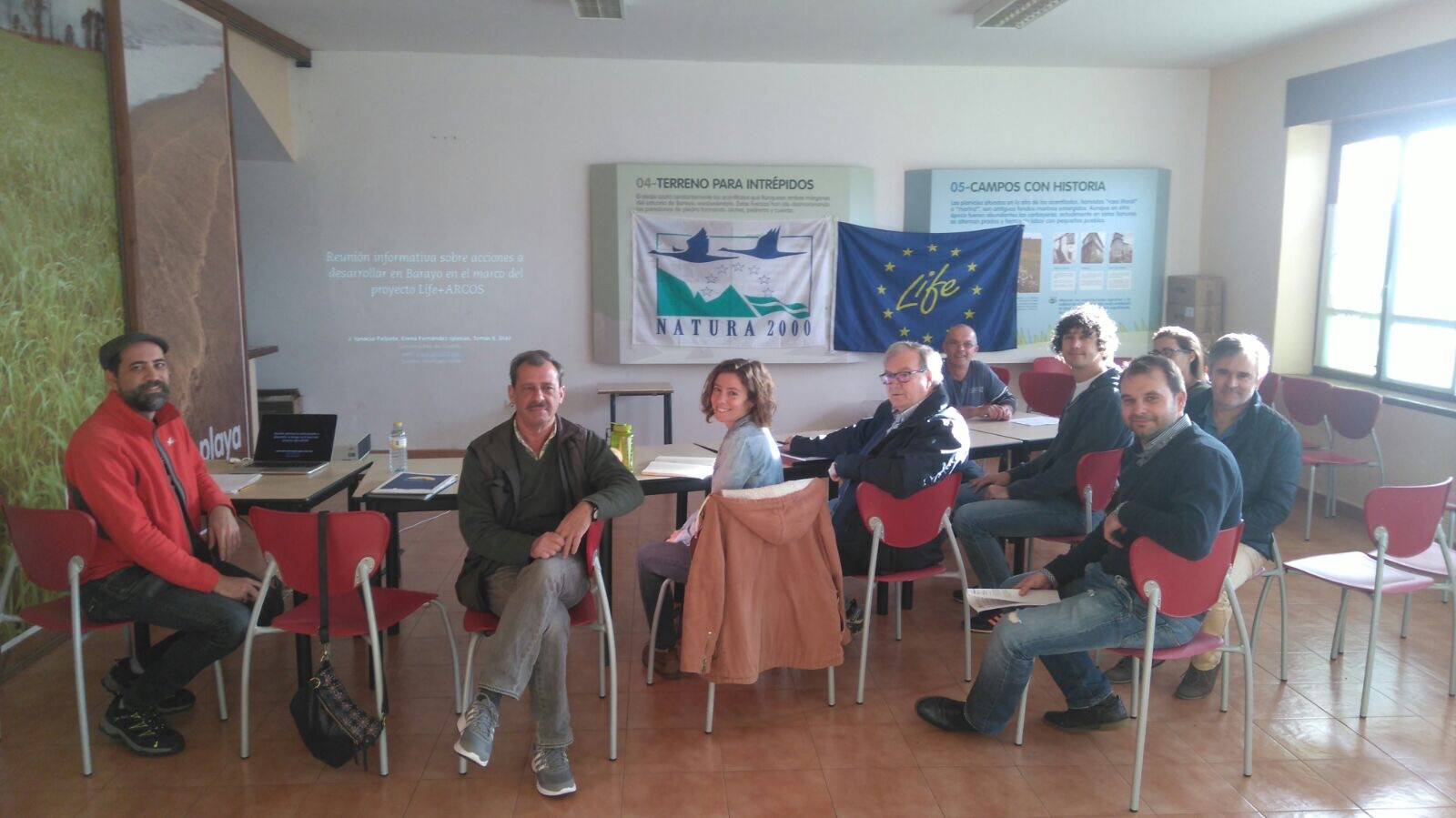
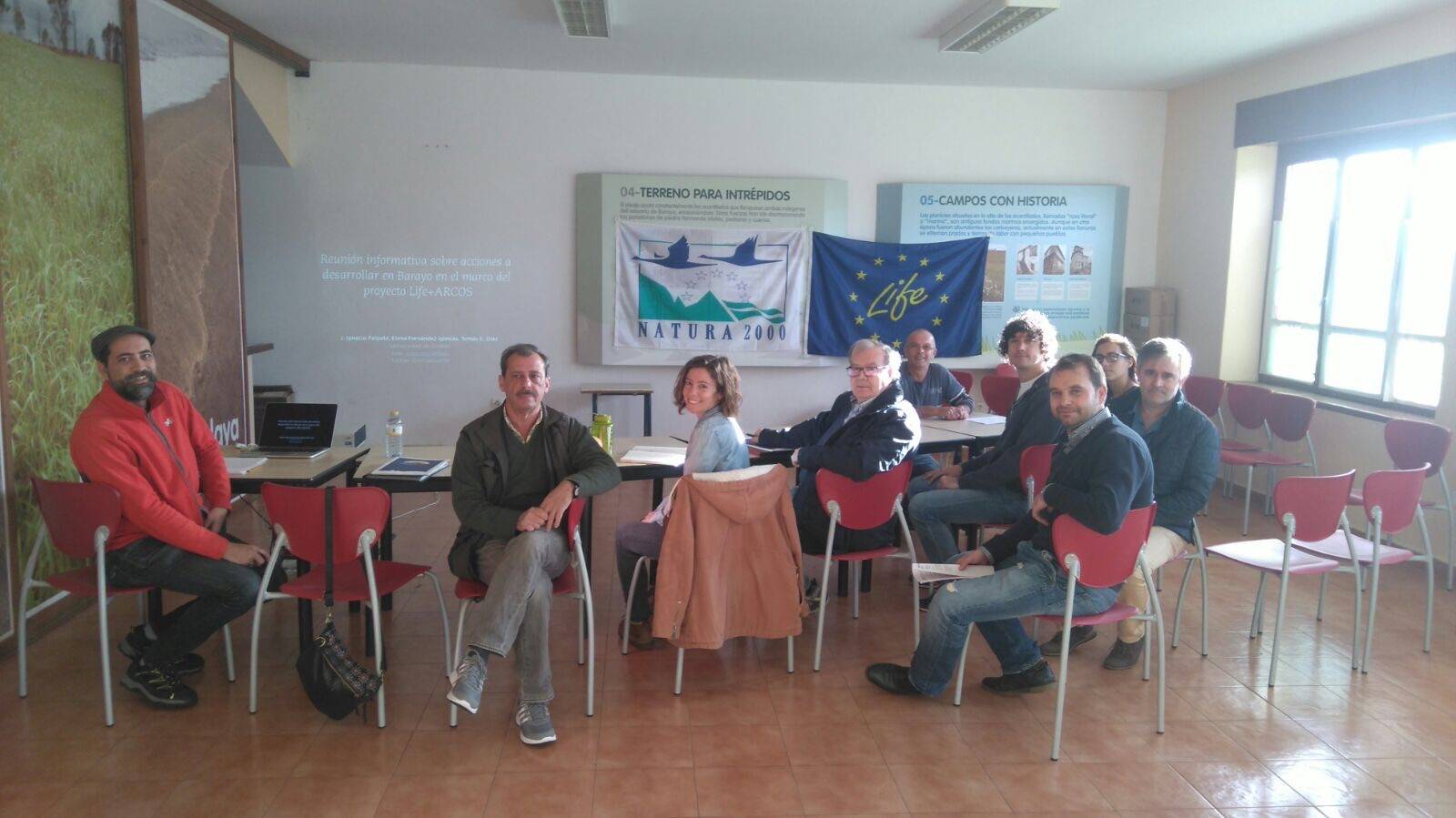
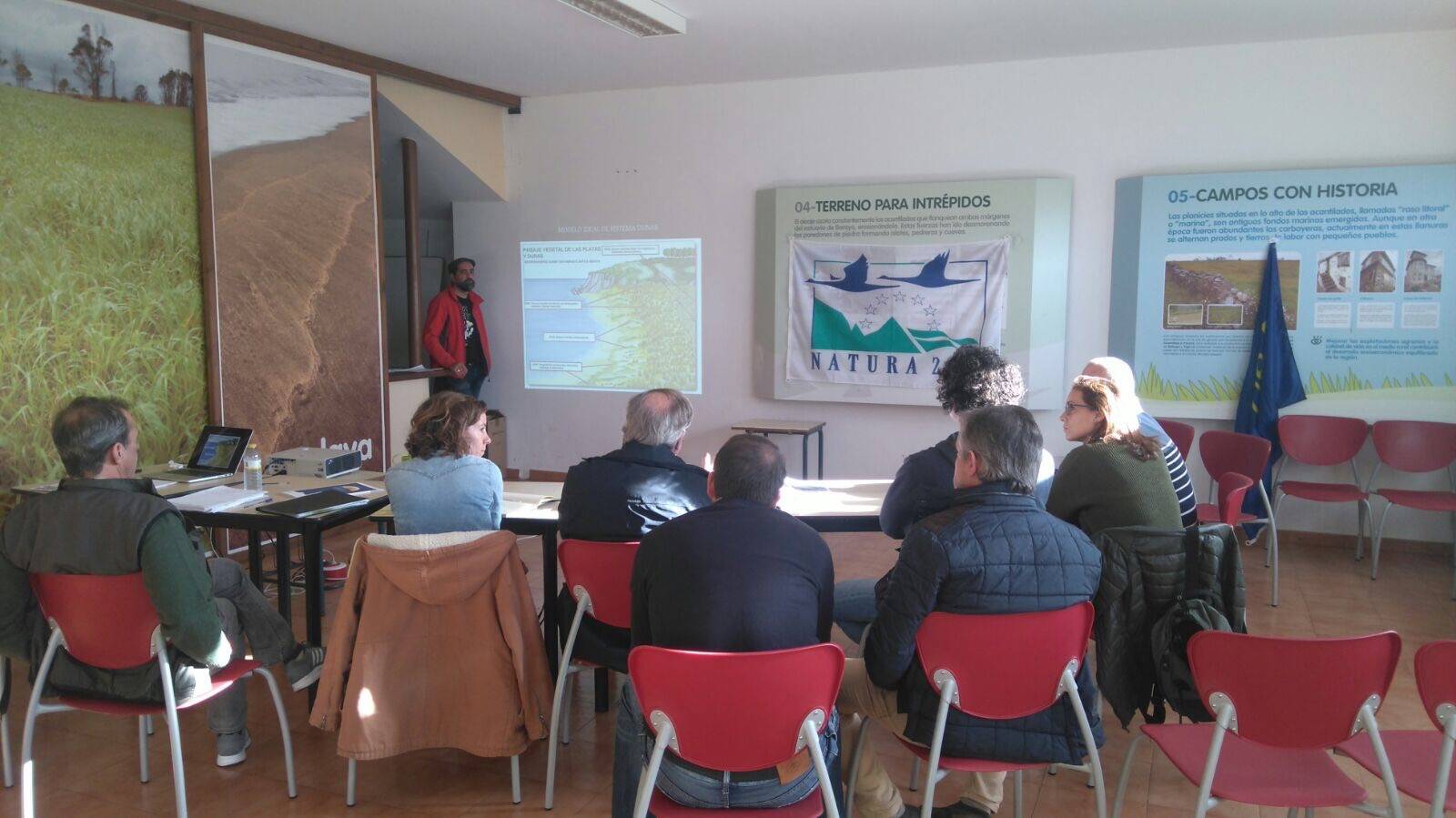
On 23rd November 2017, the Life+ARCOS team travelled to the town of Vigo in Navia, home to the Partial Natural Reserve of Barayo Interpretation Centre, to take part in an information session including the participation of various members of the Life+ARCOS project coordinating team belonging to the University of Oviedo, along with ECOLOGÍA Litoral, also a project partner, with the manager Carlos Ley Vega de Seoane.
Representatives from the two councils that share the space occupied by the Partial Natural Reserve of Barayo, Valdés and Navia attended the meeting. Representing the Navia Council was Marino Fernández, and on behalf of the Valdés Council were Ricardo García and Marcos Fernández. The Principality of Asturias was also present at the meeting, represented by Susana García Díaz, a biologist from the Service of Protected Spaces and Nature Conservation from the Directorate-General of Biodiversity.
Tomás E. Díaz, the principal researcher, and Elena Fernández Iglesias along with J.Ignacio Felpete, technicians from the project linked to the INDUROT (Institute of Natural Resources and Territorial Planning), were in charge of breaking down the actions proposed in the Action Plan for Barayo. This Action Plan constitutes an internal document to manage the actions that have been agreed to by the players involved in managing the protected space
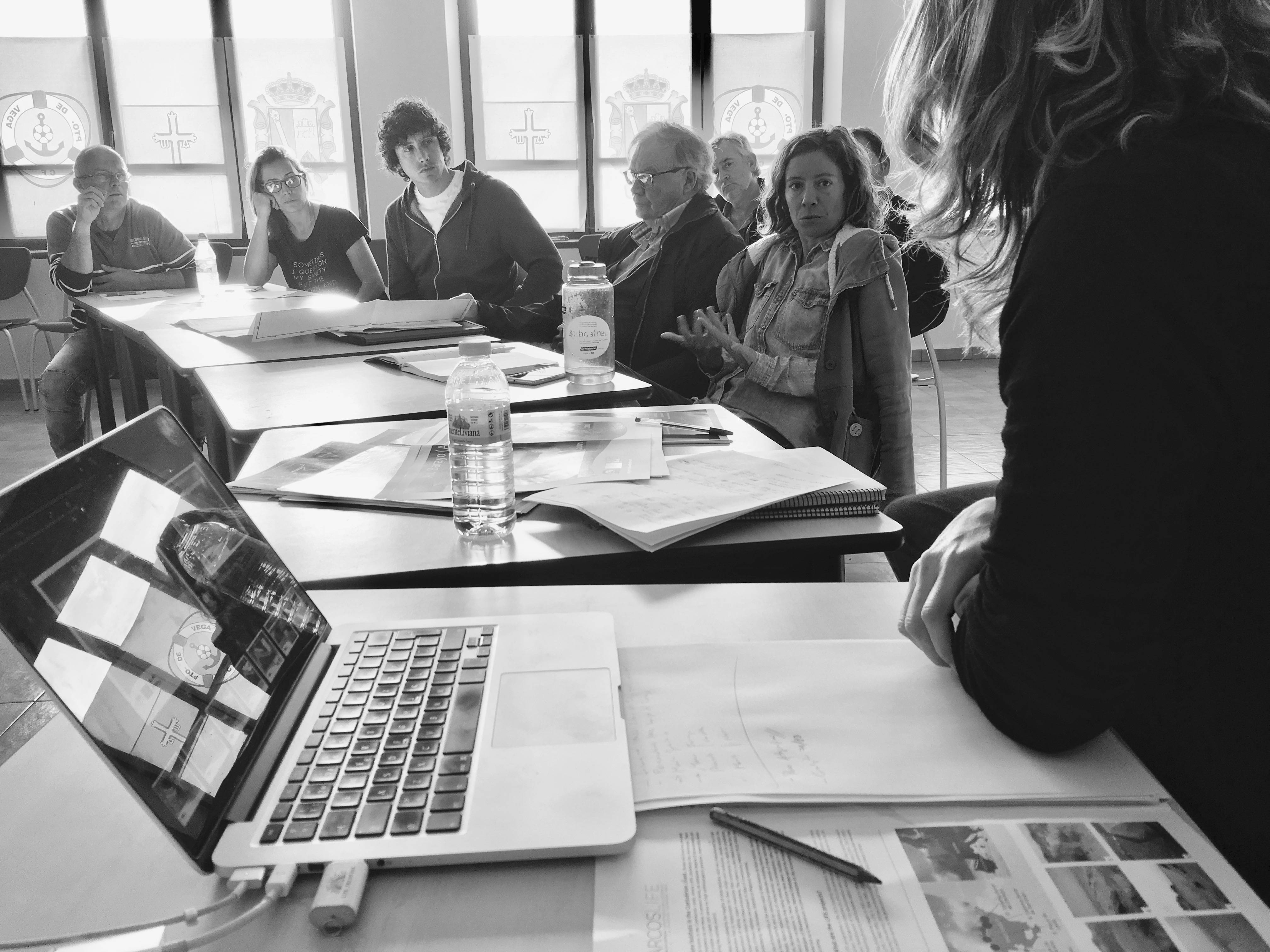
Some of the attendees at the information meeting held at the Partial Natural Reserve of Barayo Interpretation Centre
The meeting format meant that questions or debates about the scope of the actions could be proposed whilst they were being presented. The contributions of the attendees, in particular those from local people from the area of action, were extremely interesting. Particularly significant, in terms of the action to eliminate the pine covering currently present on the dune space, was the historical review using aerial photos from 1956 to the modern day, to confirm that the first Pinus pinaster plantations must have occurred at the end of the 1950s. Some unsuccessful management actions performed on the space were also reviewed, in comparison with those proposed today, and some of the reasons behind the failure of these actions were analysed.
Part of the presentation was also dedicated to understanding the extent of the problem of invasive exotic species within the protected space, very insignificant in terms of diversity (around 5 species), yet extremely important in terms of the space occupied by the most worrying of them all: Spartina patens. Information was given about the results obtained from the partial trials performed in situ, and discussions were held about the possibility of applying the same technique used in the trials across the entire occupied area.
The presentation
The meeting was an opportunity to reveal the actions that are going to be carried out in the space, and to reinforce or set up communication channels between neighbouring groups and associations such as the Asociación de Amigos de Barayo (with which a joint day of volunteering was already planned). In short, the aim was to link together the actions of this project funded by the European LIFE programme, with the reality of the inhabitants of the spaces targeted for recovery, so as to involve them in the decision-making process. The pleasant atmosphere enjoyed throughout the day leads us to think that the environmental improvement targets for the protected space are shared by all participants, and also helped us close this year with a common wish for actions to be implemented as best as possible, without forgetting the need for these actions to continue over time to ensure both mid and long-term success.
On 23rd November, the LIFE+ARCOS team is meeting up with the authorities responsible for managing the “Natural Reserve of Barayo” protected space to inform them about the actions envisaged to be implemented in this space before the end of 2017.
Authorities from the Principality of Asturias, the Navia and Valdés Councils, the Ecología Litora company (partner of the Life+ARCOS project) and the Asturias Coast Demarcation, are set to meet in the Natural Reserve of Barayo Interpretation Centre.
The aim of this meeting is to inform the competent authorities about the dimension of the actions that will take place, and in particular the felling of the pine trees that currently occupy the entire space. In the past this space was occupied by grey dunes, a priority habitat for conservation, according to that stipulated in the Directive 92/43/EEC from the Council, 21st May 1992, governing the conservation of natural habitats and wild flora and fauna, better known as the “Habitat Directive”.
To help us all remember what this protected space used to be like, we will leave you with an image that shows us how much dune area has been lost over the past 50 years, not just as a result of changes in the use of the space, but also as a consequence of the sediment input problems faced by this unique place.
Place the cursor on the central bar that separates both images and slide it from left to right to see before and after.
The Barayo dune system (Navia and Valdés) in the 1950s and today
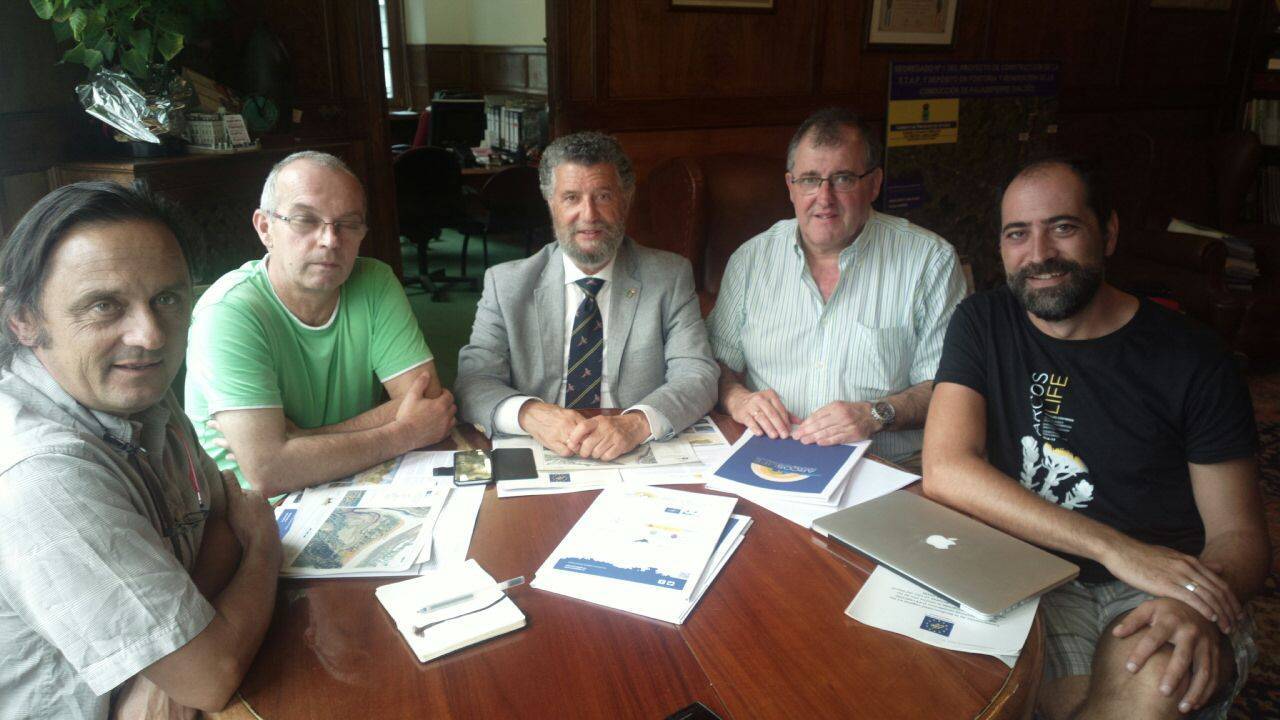
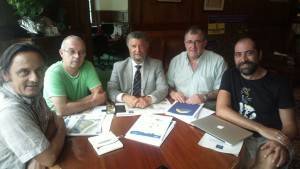
From left to right. Álvaro Bueno, Mariano Fernández, Ignacio García Palacios, Simón Guardado Pérez and Ignacio Alonso, attendees at the meeting.
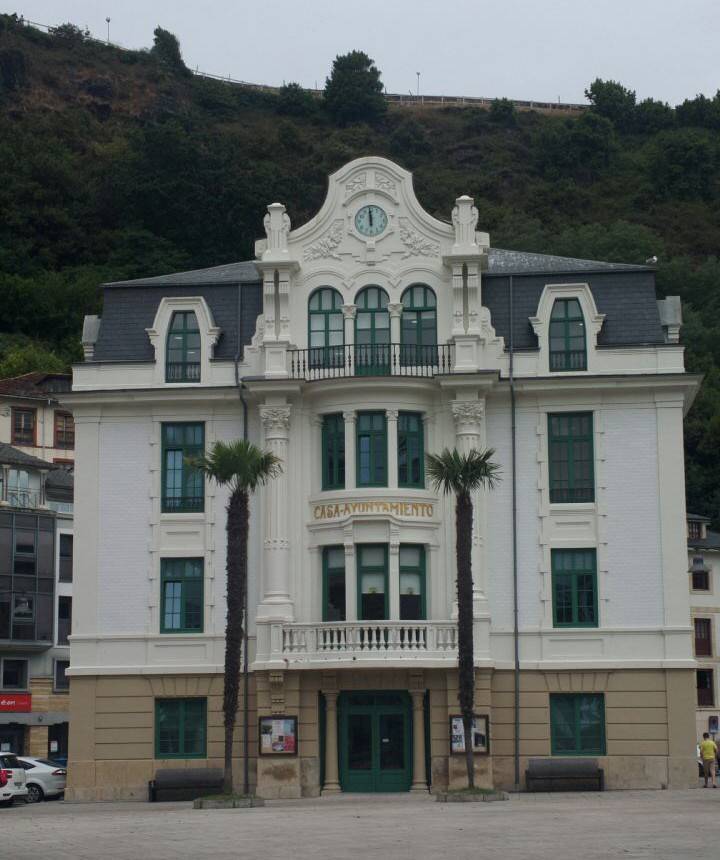
Today, members of the University of Oviedo, the coordinating partner of the Life+ARCOS project, held a meeting at the Luarca Council with the local mayor, Mr Simón Guardado Pérez, the Councillor of Navia, Mr Ignacio García Palacios, and a member of the Navia Council Environmental Department, Mr Mariano Fernández, to give information about the development of the conservation actions included within the project for the Barayo Beach protected space.
During the meeting, Mr Alvaro Bueno Sánchez and D. J. Alonso Felpete explained to representatives from both Councils the actions envisaged for the Partial Natural Reserve of Barayo, a protected space that encompasses terrain belonging to both Navia and Valdés. They were given an informative dossier with the list of foreseen actions in the other enclaves where this project is being developed.
Luarca Council, which hosted the meeting between representatives of the Life+ARCOS project and representatives of the Navia and Valdés Councils
The Councillors and members of the Council shared the interest and concern expressed by Life+ARCOS to recover the state of conservation of the dune system, which is currently far from optimal. Removing invasive species from the setting, specifically the actions on the invasive grass Spartina patens, were a central part of the meeting. The proposal to remove the non-native trees currently covering the space on the Barayo grey dune was met with great interest by all parties, who discussed the possibility that the dune ecosystem restoration actions may receive financial support from other institutions, which until now had not been part of the project development.
The meeting ended with the intention of all parties to hold an information session about all the actions envisaged for the Barayo space, with citizen participation and open to specific groups that may be interested in participating in the volunteering programme, which have been planned for this space within the Life+ARCOS project.
Este sitio web utiliza cookies para que usted tenga la mejor experiencia de usuario. Si continúa navegando está dando su consentimiento para la aceptación de las mencionadas cookies y de nuestra política de cookies. Pinche el enlace para mayor información.