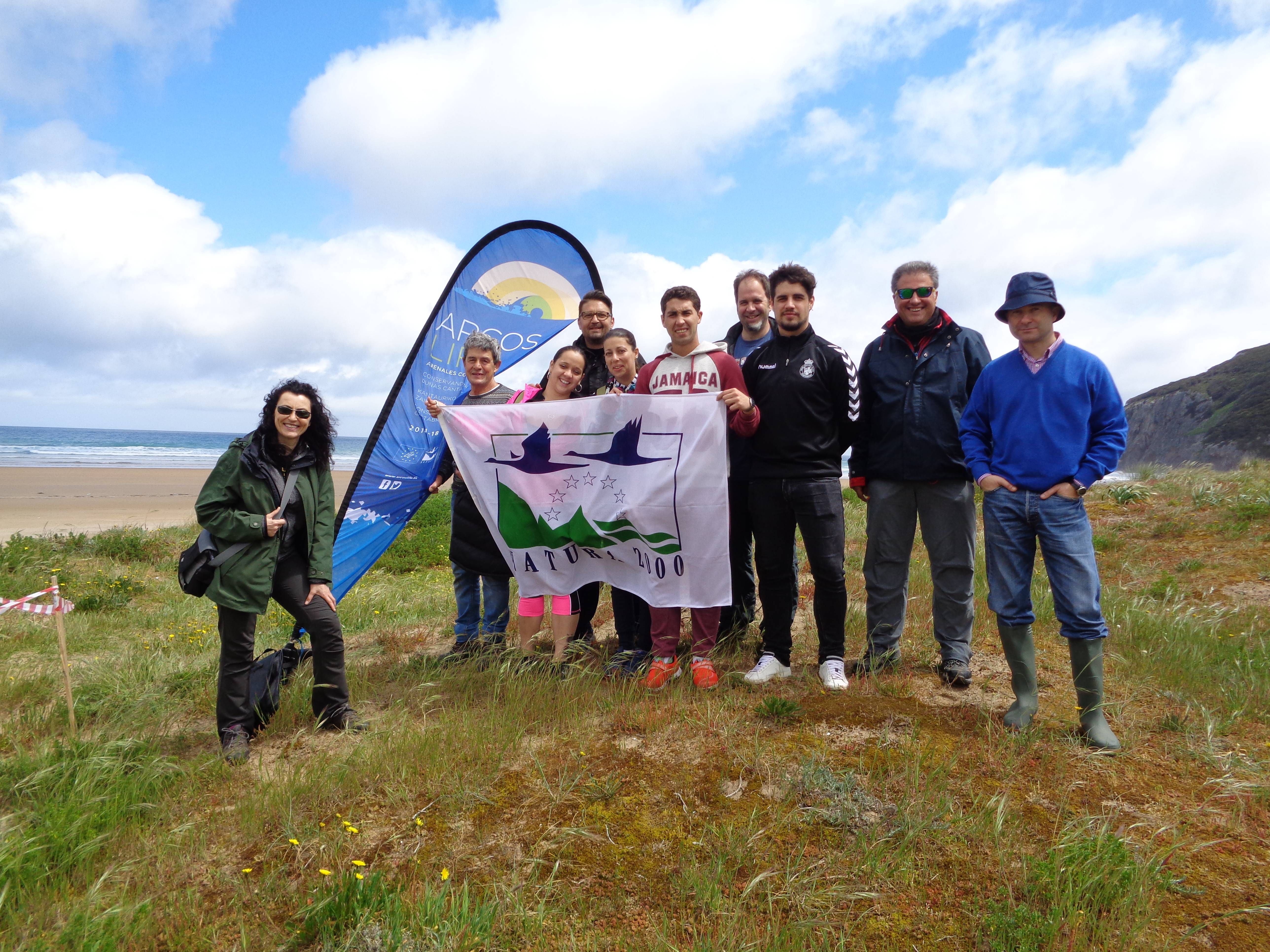
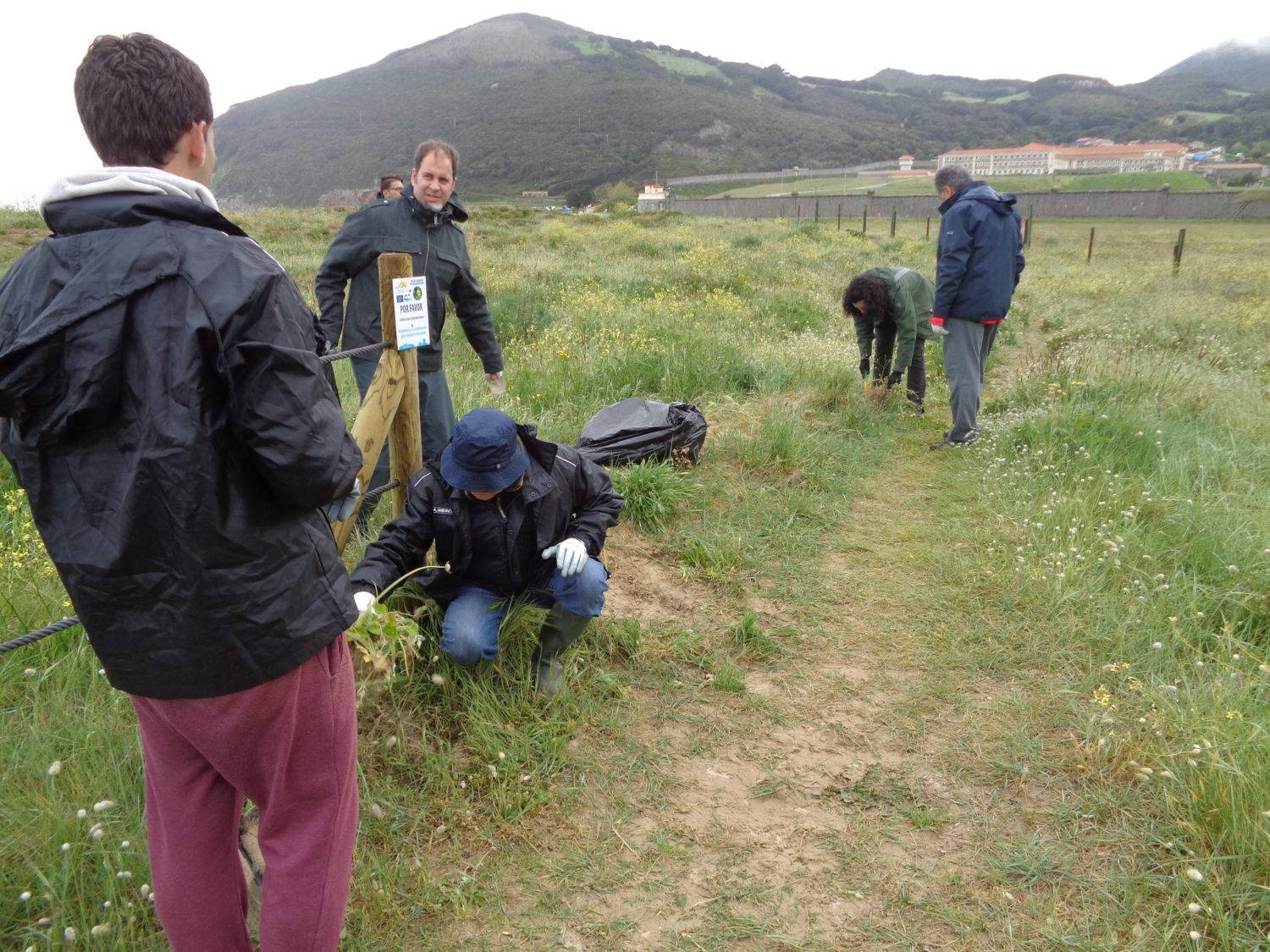
El pasado sábado 26 de mayo, Life+ARCOS celebró en compañía de 34 personas, el día Europeo de la Red Natura 2000 en la Zona Especial de Conservación Penarronda-Barayo (ES0000317). Este video resume la jornada.
Como estaba previsto, en el Centro de interpretación de la Reserva Natural Parcial de Barayo, ubicado en la localidad naviega de Vigo, nos dimos cita miembros de Life+ARCOS para participar en una charla-debate a la que asistieron varios socios de la Asociación de Amigos de Barayo y otras asociaciones, con el objeto de acercar las acciones del proyecto al entorno vecinal más próximo de este espacio protegido que se pretende recuperar.
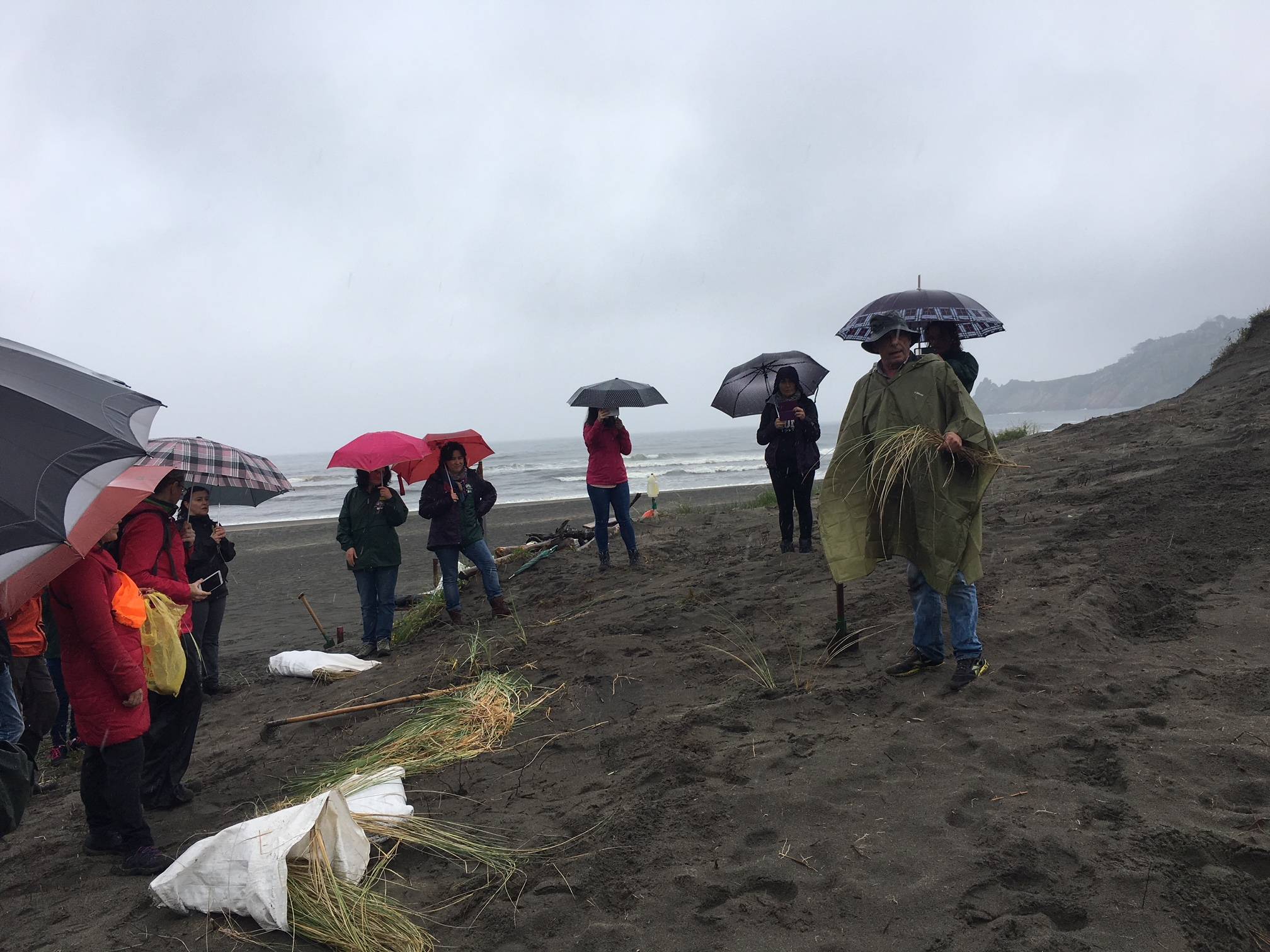
Tras la charla y el debate (transformado en preguntas al equipo Life+ARCOS) se descendió hasta el sistema dunar de Barayo para proseguir con unas explicaciones sobre la vegetación de los sistemas dunares, donde se pudieron ver algunas de las plantas típicas de estos medios.
Carlos Ley, de la empresa Ecología Litoral mostró a los asistentes, bajo la lluvia, cuales son las técnicas de plantación utilizadas para dos especies estructurales que se van a introducir en el espacio: el barrón de playa y la grama marina.
Por desgracia, las malas condiciones meteorológicas no permitieron que se pudiera abordar ningún intento de limpiar manualmente algún punto de la duna invadido de Espartina patens.
La jornada se cerró con una comida conjunta en el centro de interpretación.
Desde Life+ARCOS sólo nos queda agradecer a todos los asistentes su ilusionante participación en esta actividad.
On 26 May, Life+ARCOS celebrated European Natura 2000 Network day alongside 34 people at the Penarronda-Barayo Special Area of Conservation (ES0000317). Here is a video summary of the day.
At the Barayo Partial Nature Reserve interpretation centre, located in the village of Vigo (Navia), we invited Life+ARCOS members to participate in a chat with members of the Friends of Barayo Association and other associations. The goal of the chat was to inform the neighboring areas of the protected site about the project and what we aim to recover.
After the chat (which turned into a Q&A session with the Life+ARCOS team) we went to the Barayo dune system to hear explanations about dune system vegetation and to observe plants that are native to these areas.
Carlos Ley, from the company Ecología Litoral, demonstrated planting techniques for two structural species that will be introduced into the area: European beachgrass and sand couch-grass.
Unfortunately, the bad weather prevented us from cleaning parts of the dunes that are invaded by Espartina patens.
The day concluded with lunch at the interpretation centre.
Life+ARCOS would like to thank all attendees for participating.
Today, 17th May, the INDUROT (Institute of Natural Resources and Territorial Planning, Research Building, Mieres University Campus) is celebrating the 25th anniversary of the LIFE Programme. The event will cover the importance of this programme and diverse projects that have been developed from the University of Oviedo within this European funding framework.
In 2017, the LIFE Programme and the Habitats Directive are celebrating their 25th anniversary, both passed on 21st May 1992. To acknowledge the important role of this programme in conserving European natural heritage, the European Commission and the European Parliament, the Council and the Committee of the Regions, will officially declare the 21st May as the “European Natura 2000 Day”. INDUROT wants to mark this anniversary by implementing this information day on 17th May, which will address the way that this financial instrument has acted to co-fund environmental conservation actions, to study ways of mitigating climate change, and to propose new solutions to treating contaminated ground. The day will have a particular focus on analysing advances made by the LIFE+ARCOS project, and on highlighting the importance of conservation works on coastal dune systems, the target of this project’s action along the entire Cantabrian coastline. It will also summarise the objectives and results of the 2011 LIFE+IDARTS and TREMEDAL projects.
The programmecan be downloaded here , summarised below:
CELEBRATORY DAY TO MARK THE 25TH ANNIVERSARY OF THE LIFE PROGRAMME
12:00 Presentation by leaders of the regional administration and from the INDUROT (Institute of Natural Resources and Territorial Planning) from the European funding programme LIFE. Manuel Calvo, General Director for Natural Resources from the Principality of Asturias, and Jorge Marquínez, Director of the INDUROT.
12:30 Communication about the LIFE ARCOS Project currently in process by Tomás E. Díaz González (leading project researcher and Botany Lecturer at the University of Oviedo), Nacho Alonso Felpete and Elena Fernández Iglesias (project experts, botany and geomorphology specialists).
13:00 Communication about the LIFE IDARTS project by José Luis Rodríguez Gallego, leading project researcher and Tenured Professor of Prospecting and Mining Research.
13:15 Communication about the LIFE Tremedal project by Jesús Valderrábano Luque, project expert and botany specialist.
Cerca ya de la celebración anual del Día Europeo de la Red Natura 2000, incluimos esta noticia sobre las jornadas de voluntariado que se llevó a cabo en Cantabria, dentro del marco del proyecto LIFE+ARCOS, el pasado año 2016.
Hoy no es un día cualquiera, celebramos el Día Europeo de la Red Natura 2000 y lo hacemos con algunas actividades de sensibilización ambiental y trabajos de control de especies exóticas invasoras en las dunas de la playa de Berria (Santoña). Una de las playas incluida en el proyecto europeo de conservación y restauración dunar LIFEARCOS.
En esta ocasión, los escolares de Argoños (C.P. Pedro Santiuste) y de Santoña C.P. Macías Picavea), los días 10 y 12 de mayo de 2016 han realizado visitas al sistema dunar de la playa de Berria en Santoña recorriéndola para conocer las dunas, su flora y fauna con los monitores de la Red Cántabra de Desarrollo Rural (RCDR) que trabajan en el Centro de Interpretación del Parque Natural de las Marismas de Santoña, Victoria y Joyel. Los escolares estaban interesados y sus constantes preguntas han servido a los monitores de la Red Cántabra de Desarrollo Rural de Cantabria (programa NATUREA) para explicarles todas las curiosidades sobre las singulares especies de flora y fauna que habitan las dunas.
Escolares C.P. Pedro Santiuste de Argoños, que participaron en la jornadaEscolares del C.P. Macías Picavea de Santoña, que participaron en la jornada
Las actividades han finalizado con una pequeña plantación de una gramínea de las dunas terciarias la Festuca vasconcensis que ha sido la práctica que esperaban ansiosos realizar.
No se han terminado aquí las actuaciones de voluntariado en las dunas de Berria y se han realizado algunas de control de plantas invasoras con el programa NACAR (Naturaleza y Cárcel) y las agrupaciones de AMICA, SERCA y AMPROS de Cantabria.
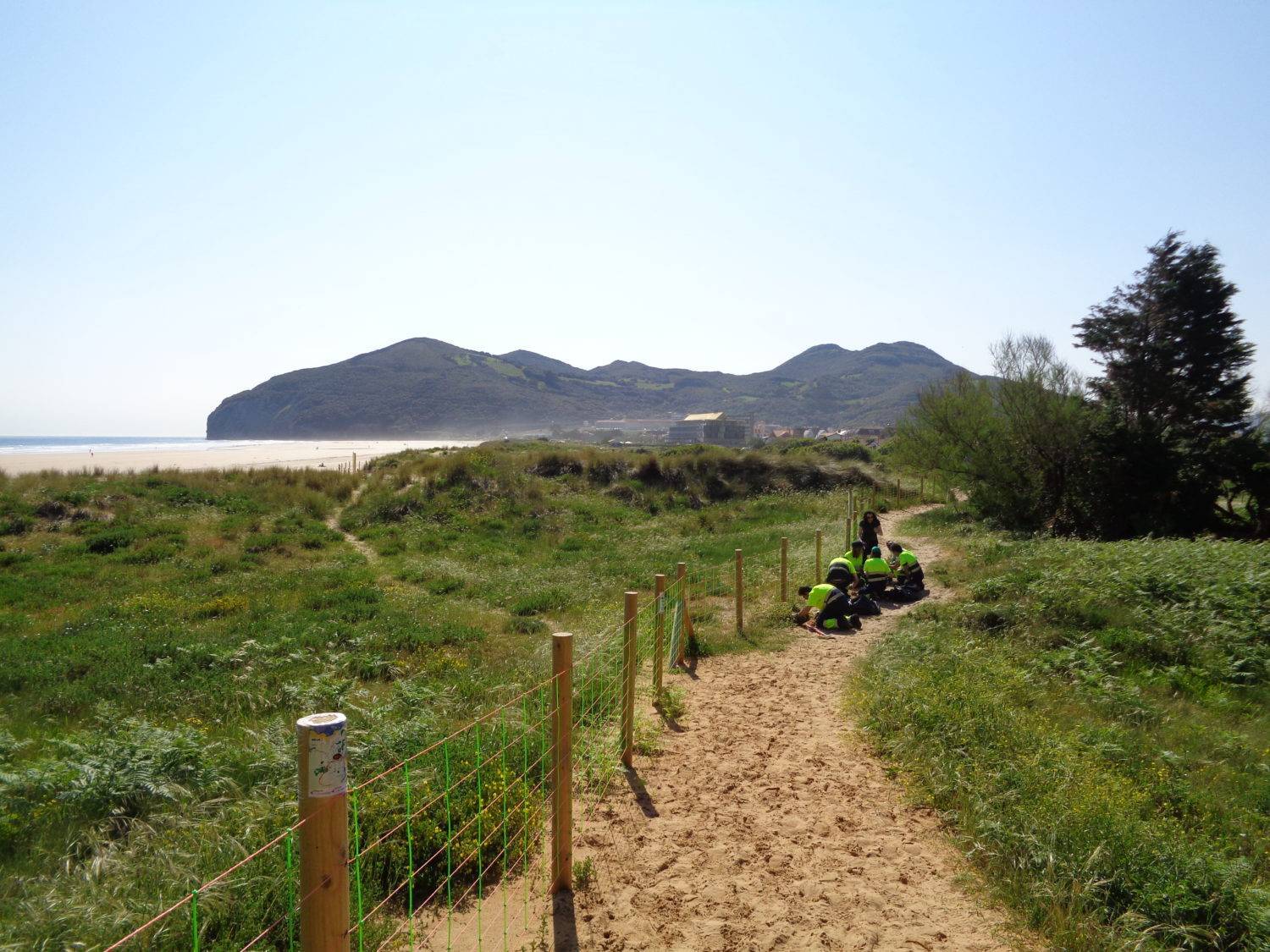
El día 19 de mayo de 2016 fue un día prácticamente nublado y con algo de lluvia pero se inició la retirada de especies invasoras en la duna terciaria de la playa de Berria con un grupo con un grupo de 6 internos del Centro Penitenciario de El Dueso. El entorno de trabajo es espectacular, la playa de Berria entre dos macizos calizos (El Brusco al oeste y monte Buciero al este) y ambientalmente su flora y fauna es rica en especies singulares de los sistemas dunares como la Linaria supina subsp. maritima.
Equipo del programa NACAR trabajando en la eliminación de la EEI «Margarita africana»
En esta época se ha detectado una floración de la especie invasora alóctona margarita africana (Artotheca calendula) en los caminos de tránsito paralelos a la playa de Berria y en la entrada principal a las dunas junto a los apartamentos y para evitar estos focos de la especie invasora se recogieron 13 bolsas de 120 L, lo que permitió dejar la zona limpia de la invasora.
Fotografía de grupo con el Equipo del programa NACAR
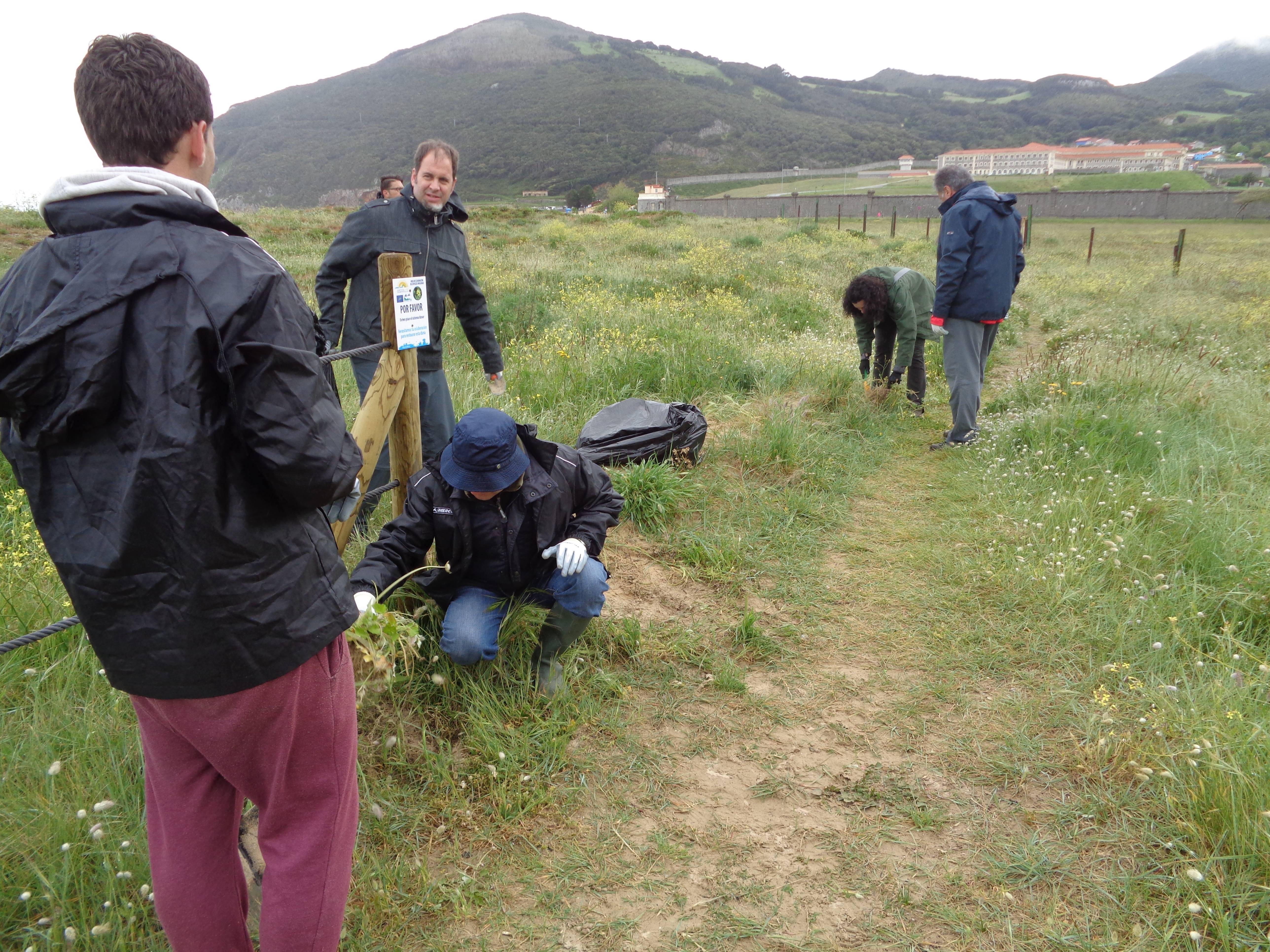
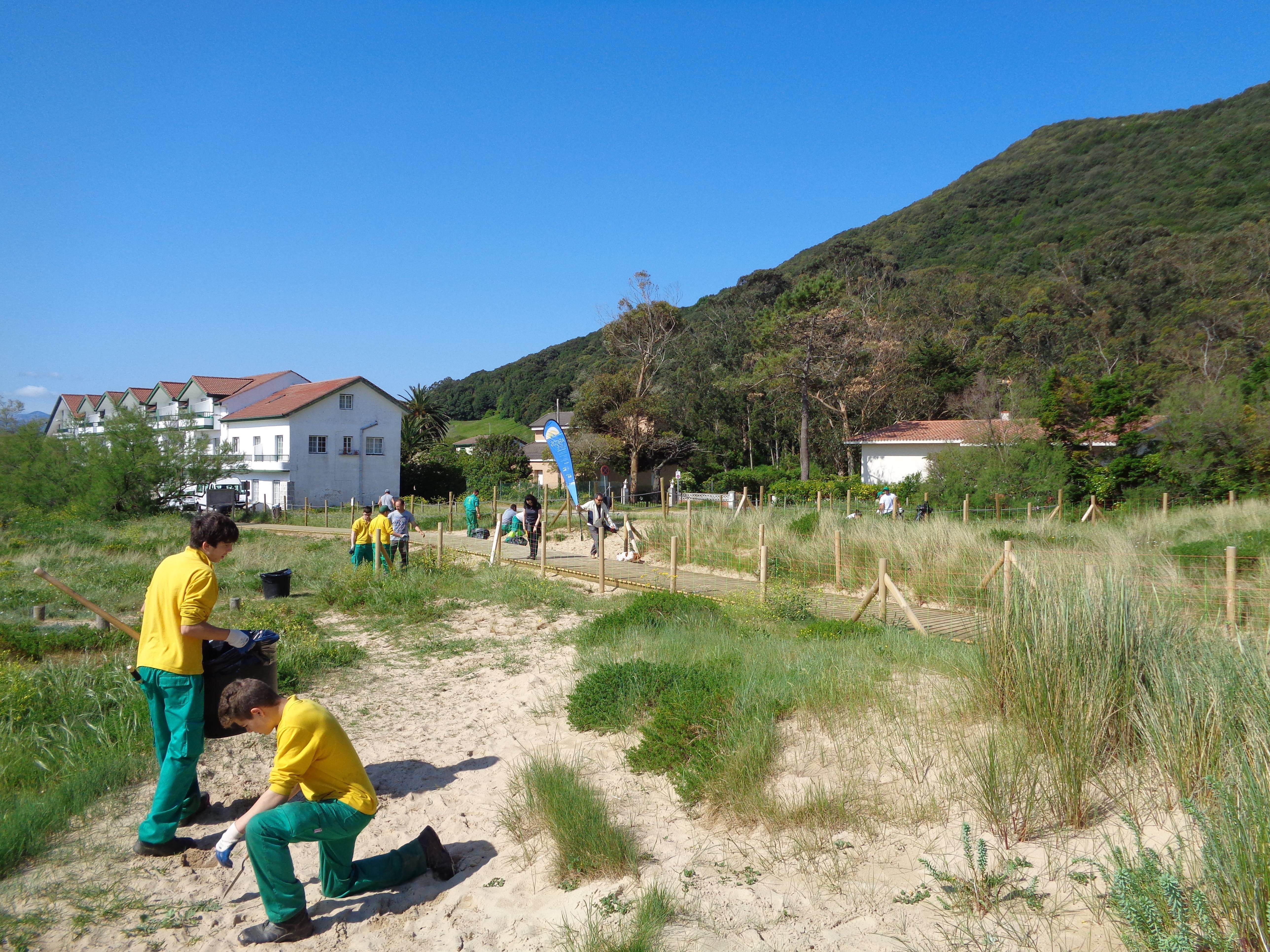
El día 20 de mayo de 2016 se trabajó junto a El Brusco en la playa de Berria. Se juntaron en el equipo de trabajo personal de AMICA, SERCA y AMPROS que quisieron actuar contra las especies invasoras y conmemorar el Día Europeo de la Red Natura 2000.
Contro de «Margarita africana» por integrantes de AMICA, AMPROS y SERCA
El trabajo fue laborioso y los equipos se repartieron el trabajo recogiendo y limpiando también basuras y la margarita africana que estaba en plena floración. Algunos como los trabajadores de AMICA y AMPROS aportaron su gran experiencia en este tipo de control manual de especies invasoras y el equipo de SERCA, en formación en labores de jardinería, disfrutó y aprendió mucho de la experiencia.
Otro momento de los trabajos de control de la «Margarita africana»
Se recogieron un total de 75 Kg de residuos de los que 58 Kg eran residuos orgánicos y 17Kg, residuos reciclables y 103 Kg de margarita africana.
Entre todos se hizo un buen trabajo, de hecho se controló durante 2016 la explosión de margarita africana en el sistema dunar de la playa de Berria (Santoña). Ahora cabe continuar en los siguientes años para mantener controlado el reservorio de semillas de esta especie.
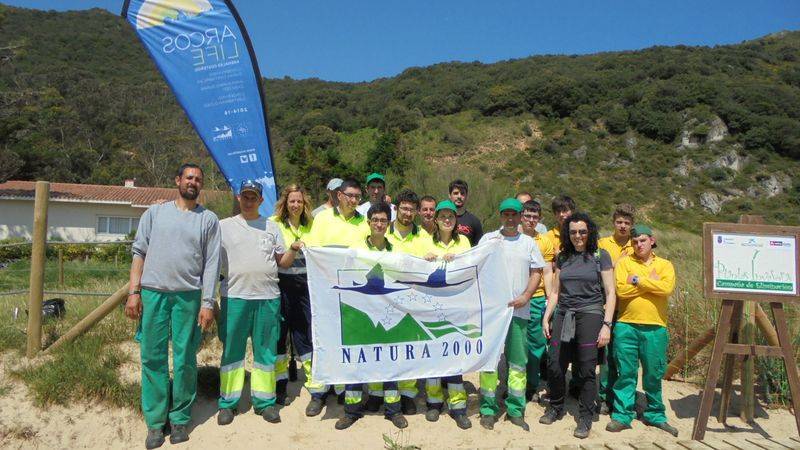
Foto grupal con los miembros de AMICA, AMPROS y SERCA que participaron en la jornada.
With the European Natura 2000 Day now approaching, we have included this news about the volunteering days undertaken in Cantabria in 2016, within the framework of the Life+ARCOS project.
Today is not just any ordinary day; we are celebrating the European Natura 2000 Day, and to do this we are holding some environmental awareness activities and carrying out work to control invasive exotic species on the Berria beach dunes (Santoña). One of the beaches included in the European dune conservation and restoration project Life+ARCOS.
On this occasion, pupils from Argoños (Pedro Santiuste Primary School) and Santoña (Macías Picavea Primary School), visited the Berria beach dune system in Santoña on 10th and 12th May 2016, walking along the stretch to discover the dune and its flora and fauna, led by instructors from the Cantabrian Rural Development Network (RCDR in Spanish) who work at the Santoña, Victoria and Joyel Marshes Natural Park Interpretation Centre. The pupils were fascinated and their constant questions helped the Cantabrian Rural Development Network instructors from Cantabria (NATUREA programme) to explain all the ins and outs of the unique flora and fauna species that inhabit the dunes.
Pupils from the Pedro Santiuste Primary School in Argoños, who participated in the activity day
The activities ended with the mini planting of grasses from the tertiary dunes Festuca vasconcensis – which was the activity that all the pupils had been excitedly waiting for.
The volunteering activities have not yet finished on the Berria dunes, and some other control activities of invasive species have been carried out with the NACAR Programme (Nature and Prison) and by the Cantabrian AMICA, SERCA and AMPROS groups.
19th May 2016 was a mostly cloudy day with the odd spot of rain, but even so activities commenced to remove invasive species from the tertiary dune on Berria beach, with a group of 6 inmates from the El Dueso Penitentiary Centre. The work setting – Berria beach nestled between two limestone massifs (El Brusco to the west and Mount Buciero to the east) – was spectacular. The dune systems here are rich in unique species of flora and fauna such as the Linaria supina subspecies. maritima.
Team from the NACAR Programme working to eliminate the IES “Capeweed”
This season an invasive exotic species – Capeweed (Artotheca calendula) – has been spotted flowering on the pathways that run alongside the Berria beach and at the main entrance to the dunes next to the apartment buildings. To avoid this concentration of invasive species, thirteen 120L-bags were filled, leaving the area free from the invasive plant.
Group photo with the team from the NACAR Programme
On 20th May 2016 work was carried out next to the El Brusco hill on the Berria beach. Staff from AMICA, SERCA and AMPROS joined forces to take action against the invasive species and to commemorate the European Natura 2000 Day.
AMICA, AMPROS and SERCA staff working to control “Capeweed”
The work was arduous, and the teams split the work into collecting and cleaning both rubbish and the capeweed, which was in full bloom. Some workers, such as those from AMICA and AMPROS, contributed their far-reaching experience in this kind of manual control of invasive species, whilst the SERCA team, in training for gardening tasks, thoroughly enjoyed the hugely constructive learning experience.
Another snapshot of the work to control “Capeweed”
A total of 75 kg of waste were collected, of which 58 kg comprised organic waste, 17 kg recyclable waste, and 103 kg capeweed.
Everyone worked extremely hard, managing to control the growth of capeweed throughout 2016 in the Berria beach dune system (Santoña). Over the coming years, maintenance work must be carried out to keep the reservoir of the seeds of this species under check.
Group photo with the members of AMICA, AMPROS and SERCA who participated in the activity day.
Take a photo of a plant on any of the dunes in the Autonomous Communities where work is being carried out within the Life+ARCOS project (Asturias, Cantabria or the Basque Country)
Upload your dune plant photos using the #natura2000day hashtag
We will only enter your photos into the competition if they include our twitter account @infoarcolife
PRIZES
The best photos will be awarded with the following books:
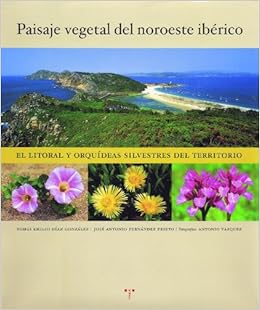
Paisaje Vegetal del noroeste ibérico. El litoral y orquídeas silvestres del territorio (Plant life in North-West Spain. The Coast and Wild Orchids from the Region): book by the co-authors Tomás E. Díaz and J.A. Fernández Prieto and the magnificent photographic illustration by Antonio Vazquez.
Manual de restauración de dunas costeras (Coastal Dune Restoration Manual): by co-author Carlos Ley, from the Ecología Litoral company, beneficiary partner of the Life+ ARCOS Project
El paisaje vegetal de noroeste Ibérico: el litoral y orquídeas silvestres del territorio
Manual de restauración de dunas costeras
Este sitio web utiliza cookies para que usted tenga la mejor experiencia de usuario. Si continúa navegando está dando su consentimiento para la aceptación de las mencionadas cookies y de nuestra política de cookies. Pinche el enlace para mayor información.