The ARANZADI Society of Sciences (ARANZADI Zientzia Elkartea), as a LIFE+ARCOS project partner and as the only non-profit making Organisation involved, has received financial aid from the Fundación Biodiversidad Foundation, funding allocated fundamentally to the dissemination of LIFE projects within the Call for granting aid from the Fundación Biodiversidad, in the non-competitive tendering, to co-fund projects backed by the LIFE programme within the sphere of biodiversity 2017
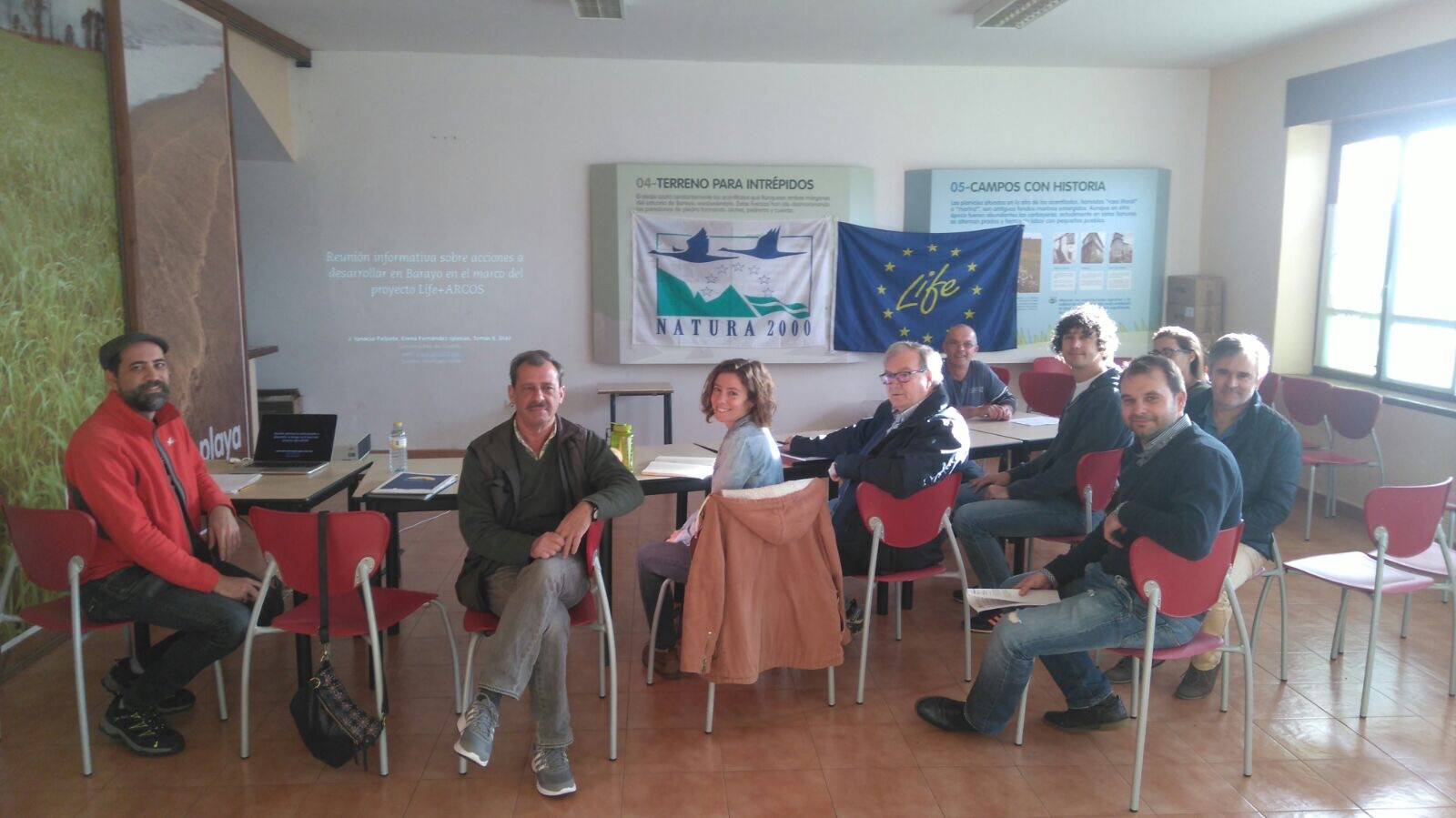
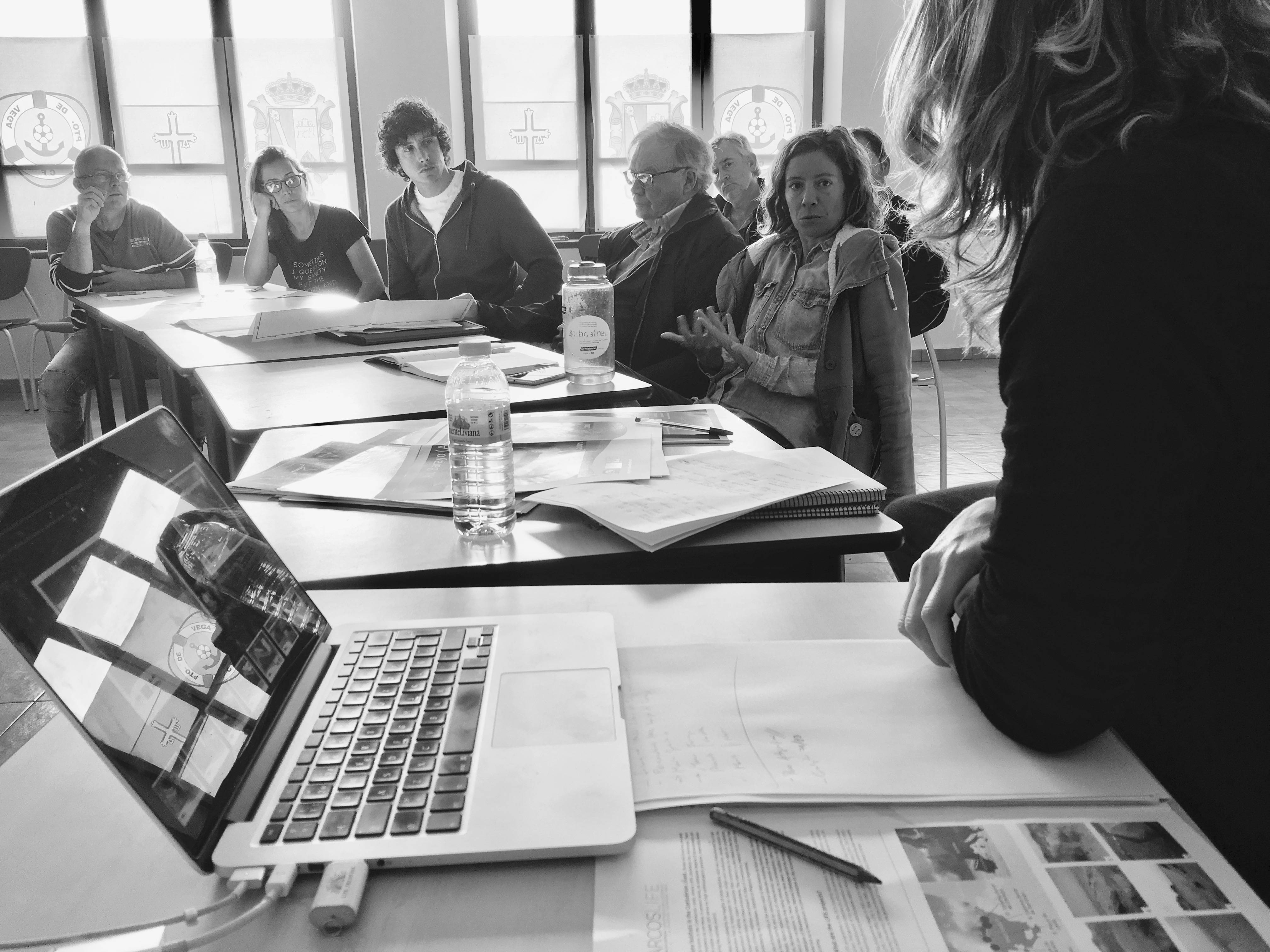
On 23rd November 2017, the Life+ARCOS team travelled to the town of Vigo in Navia, home to the Partial Natural Reserve of Barayo Interpretation Centre, to take part in an information session including the participation of various members of the Life+ARCOS project coordinating team belonging to the University of Oviedo, along with ECOLOGÍA Litoral, also a project partner, with the manager Carlos Ley Vega de Seoane.
Representatives from the two councils that share the space occupied by the Partial Natural Reserve of Barayo, Valdés and Navia attended the meeting. Representing the Navia Council was Marino Fernández, and on behalf of the Valdés Council were Ricardo García and Marcos Fernández. The Principality of Asturias was also present at the meeting, represented by Susana García Díaz, a biologist from the Service of Protected Spaces and Nature Conservation from the Directorate-General of Biodiversity.
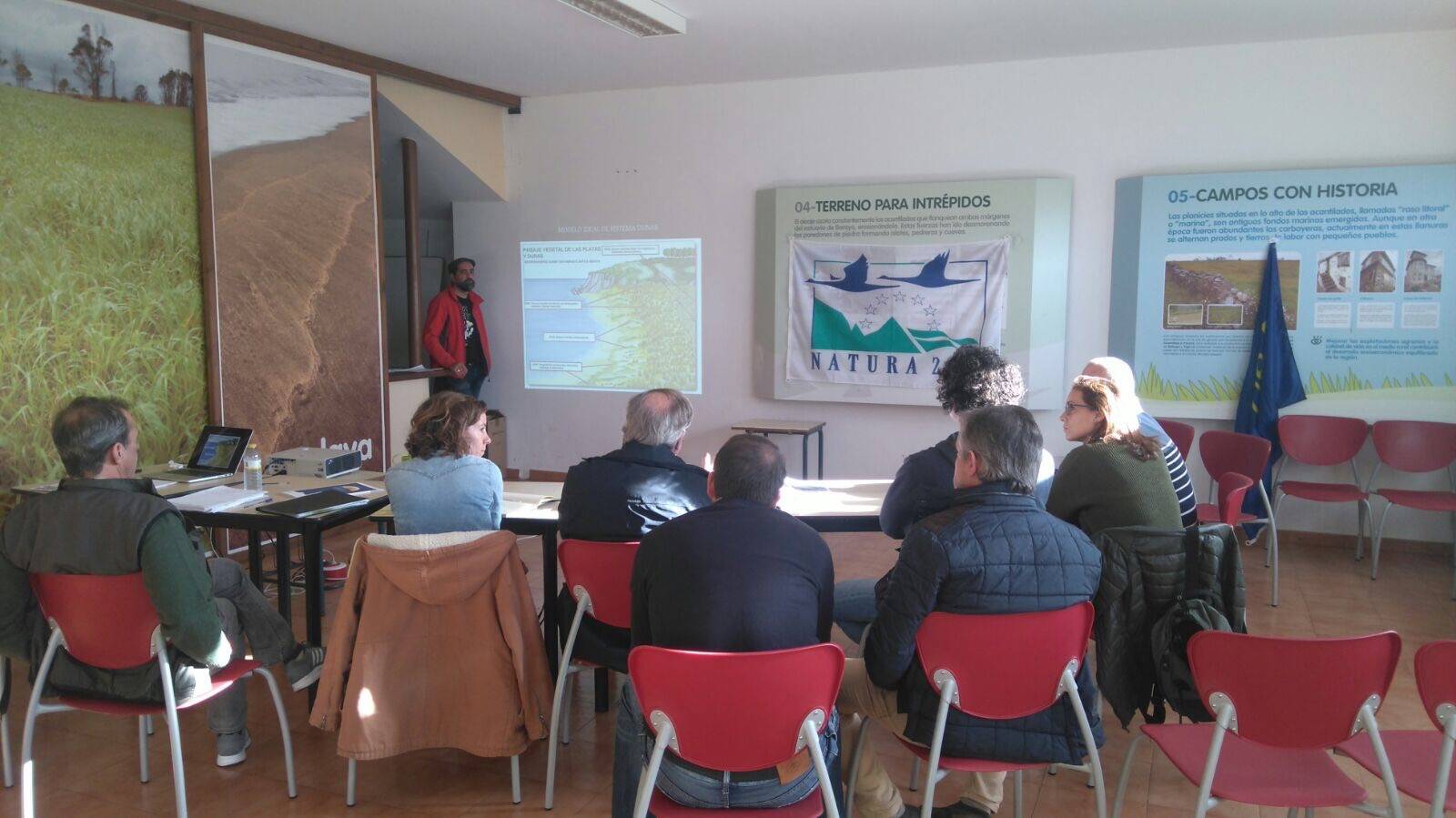
Tomás E. Díaz, the principal researcher, and Elena Fernández Iglesias along with J.Ignacio Felpete, technicians from the project linked to the INDUROT (Institute of Natural Resources and Territorial Planning), were in charge of breaking down the actions proposed in the Action Plan for Barayo. This Action Plan constitutes an internal document to manage the actions that have been agreed to by the players involved in managing the protected space
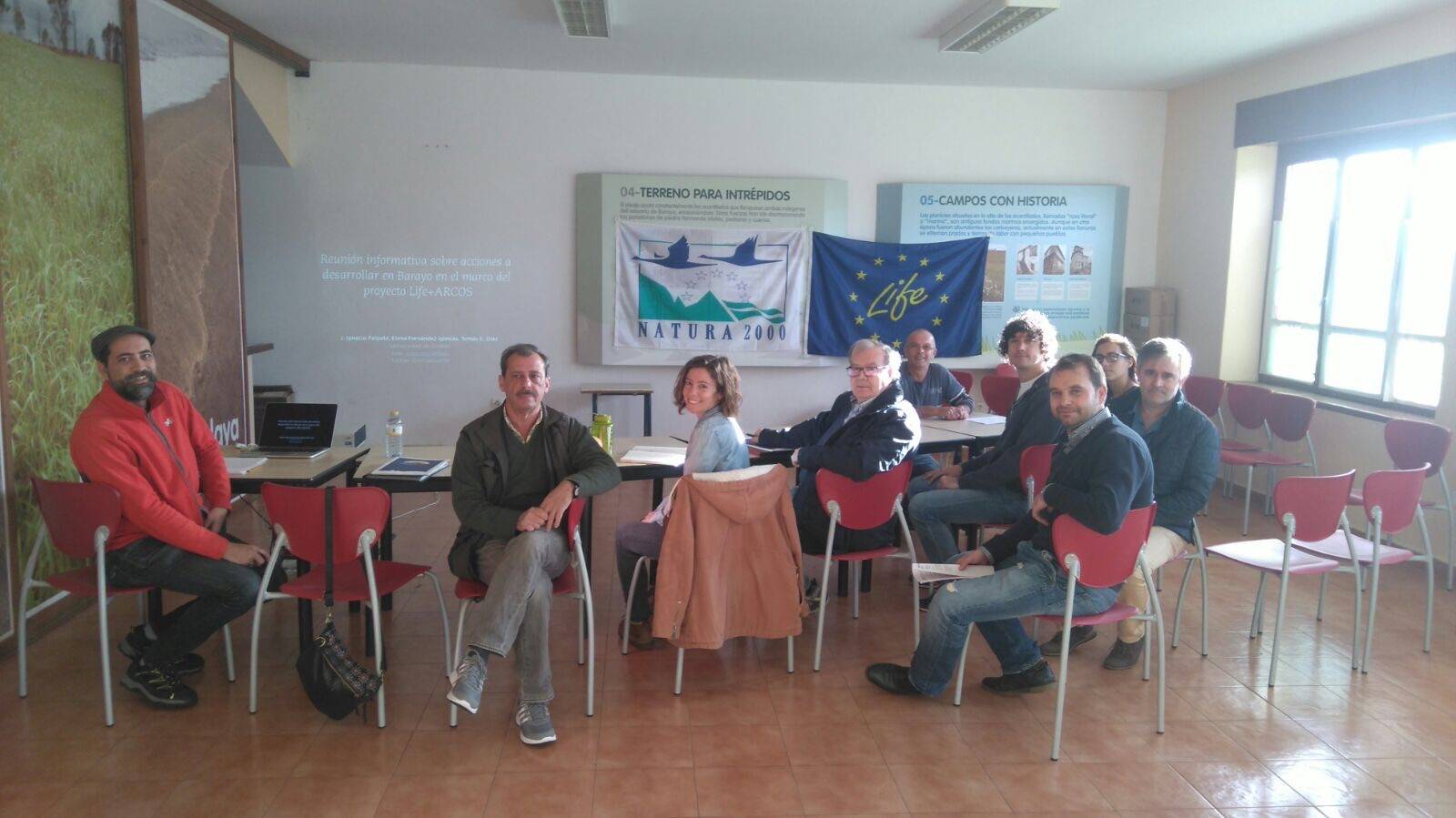
Some of the attendees at the information meeting held at the Partial Natural Reserve of Barayo Interpretation Centre
The meeting format meant that questions or debates about the scope of the actions could be proposed whilst they were being presented. The contributions of the attendees, in particular those from local people from the area of action, were extremely interesting. Particularly significant, in terms of the action to eliminate the pine covering currently present on the dune space, was the historical review using aerial photos from 1956 to the modern day, to confirm that the first Pinus pinaster plantations must have occurred at the end of the 1950s. Some unsuccessful management actions performed on the space were also reviewed, in comparison with those proposed today, and some of the reasons behind the failure of these actions were analysed.
Part of the presentation was also dedicated to understanding the extent of the problem of invasive exotic species within the protected space, very insignificant in terms of diversity (around 5 species), yet extremely important in terms of the space occupied by the most worrying of them all: Spartina patens. Information was given about the results obtained from the partial trials performed in situ, and discussions were held about the possibility of applying the same technique used in the trials across the entire occupied area.
The presentation
The meeting was an opportunity to reveal the actions that are going to be carried out in the space, and to reinforce or set up communication channels between neighbouring groups and associations such as the Asociación de Amigos de Barayo (with which a joint day of volunteering was already planned). In short, the aim was to link together the actions of this project funded by the European LIFE programme, with the reality of the inhabitants of the spaces targeted for recovery, so as to involve them in the decision-making process. The pleasant atmosphere enjoyed throughout the day leads us to think that the environmental improvement targets for the protected space are shared by all participants, and also helped us close this year with a common wish for actions to be implemented as best as possible, without forgetting the need for these actions to continue over time to ensure both mid and long-term success.
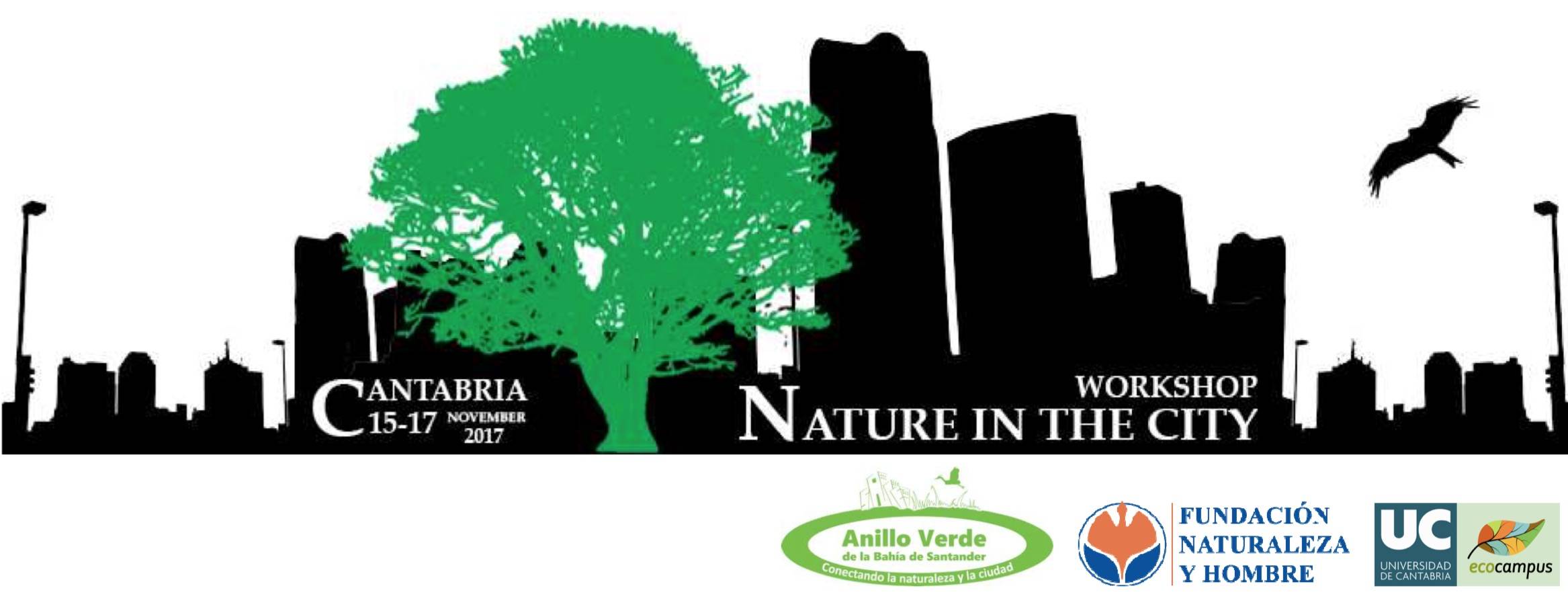
The LIFE+ARCOS project will attend the workshop under the motto of “Nature in the City”, and will present various initiatives about managing and restoring the environment. The event will be held in the University of Cantabria Assembly Hall in Santander from 15th to 17th November.
The director of the Liencres dune Park, Jesús Varas (Directorate General of the Environment, Cantabria) is set to participate in this workshop, organised by the “Green Belt Bay of Santander” project, presenting the LIFE Arcos Project (Coastal sandbanks: conserving Cantabrian dunes) on Thursday 16th November in the University of Cantabria Assembly Hall.
The conference is framed within block IV: Conserving Natural Heritage. Along with this, the workshop programme also includes a block dedicated to Green Infrastructures, another covering Environmental Education and Public Use and another about Ecosystem Services (see attached programme).
The congress, organised by the Fundación Naturaleza y Hombre and the University of Cantabria Ecocampus Department, is framed within the LIFE Project “Green Belt Bay of Santander”, which aims to create a network of natural spaces in the bay area.
USEFUL INFORMATION:
FREE ENTRY, PRIOR SUBSCRIPTION.
Aimed at both specialists and the general public.
Acknowledged with 0.5 ECTS credits from the University of Cantabria.
Every Friday in July, the Zarautz Council organises guided tours of the Inurritza Special Area of Conservation, where the Life+ARCOS project is undertaking different conservation actions on the dune system.
Members of the Aranzadi Science Society will be in charge of guiding these trips, which will be offered in various different languages so as to reach a larger audience, following this envisaged schedule:
Friday 7th July, 16:30-18:00 Basque – Spanish
Friday 14th July, 18:00-19:30 Basque – French
Friday 21st July, 16:30-18:00 Basque – English
July 28th July, 18:00-19:30 Basque- Spanish
In order to participate in this activity you must register on the Pier (tourist information point).
Activity free of charge.
Note: adverse weather conditions will not postpone the activity. Please wear suitable clothing.
Este sitio web utiliza cookies para que usted tenga la mejor experiencia de usuario. Si continúa navegando está dando su consentimiento para la aceptación de las mencionadas cookies y de nuestra política de cookies. Pinche el enlace para mayor información.