Etiqueta: meetings

  • This is how the Final Life+ARCOS Seminar went, held in Donostia (1/2)

    This is how the Final Life+ARCOS Seminar went, held in Donostia (1/2)

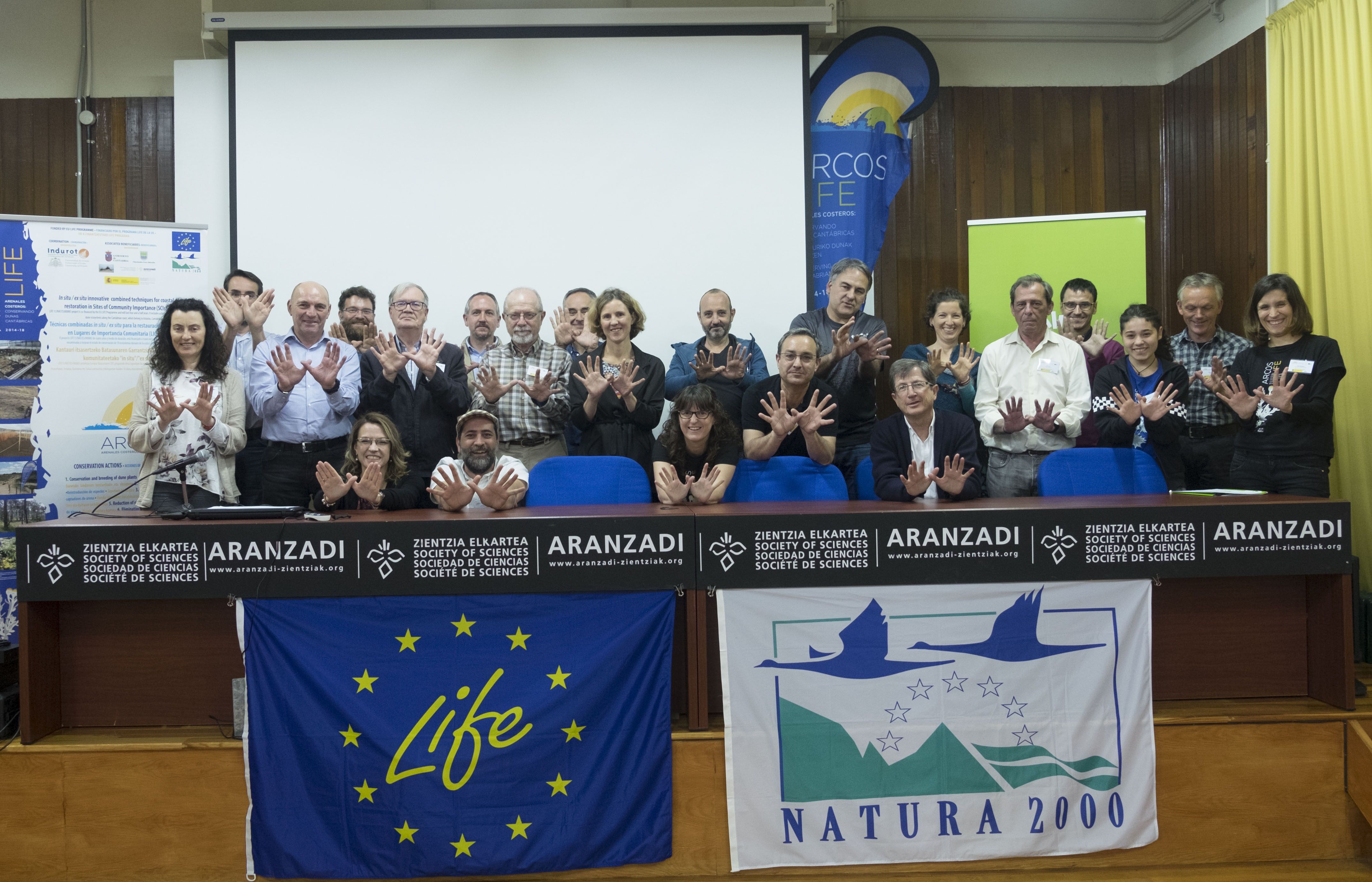
    On Tuesday 28th May, a week after the date set by the European Union to mark the European Natura 2000 Day, the Life+ARCOS team met up in the Society of Sciences Aranzadi headquarters in San Sebastian to hold the final project meeting and to discover the main results achieved, just a month before its formal completion.

    Along with all the partners involved in the project, the meeting also included contributions from various experts specialising in dune ecosystem management, whom, from various different fields and locations, were able to participate in the workshop, revealing the outcomes of the experiences and projects on which they had worked.

    Their contributions will be discussed in another blog entry.

    Opening

    The seminar was opened by Mr Tomás E. Diaz (Main project researcher from the Life+ARCOS project), José Ramón Martínez Cordero (Director of the Maritime-Terrestrial Public Domain Department in the Ministry for Ecological Transition (MITECO)), Íñigo Mendiola (Gipuzkoa Council) and Juan Arizaga (Society of Sciences Aranzadi).


    Opening table

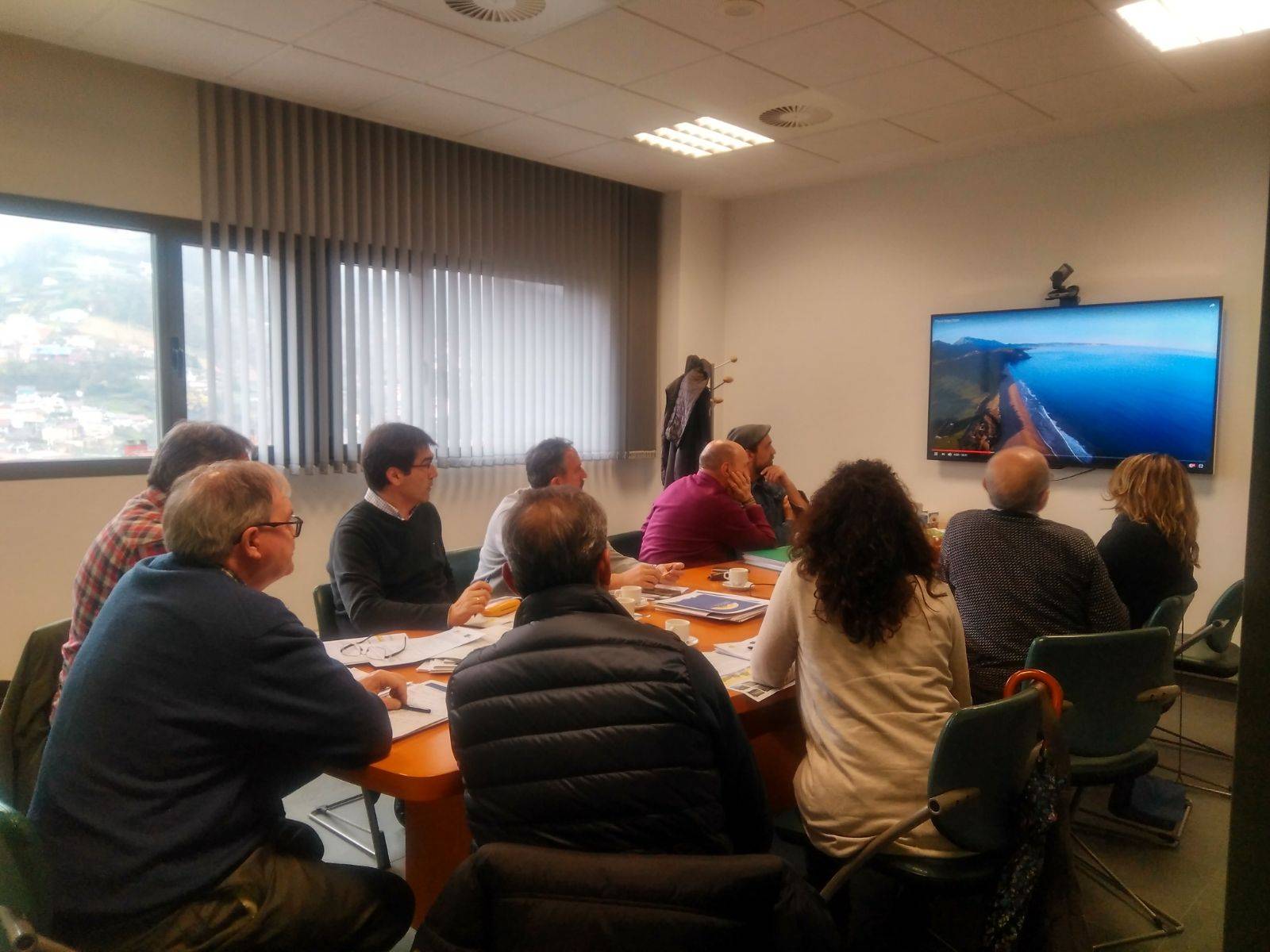
    This presentation was followed by a screening of a video about the restoration carried out by Life+ARCOS on the Somo dune system in Cantabria, and an introduction to the conference given by J. Ignacio Alonso Felpete (Ecología Litoral) to highlight the celebration of the European Natura 2000 Day and to outline the Spanish contribution to this Network of protected spaces.

    Ignacio Felpete (Ecología Litoral) during his presentation speech about the European Natura 2000 Day

    The first part of the conference was led by partners participating in the Life+ARCOS project, who assessed the actions carried out in each of the targeted spaces.

    Revealing problems and actions in the enclaves

    The first of the interventions was given by Jorge Marquínez, who outlined the main signs of change detected in the ten dune systems that had been worked on within the ARCOS project.

    The historical photo analysis and LIDAR data allowed for an assessment of the advances and setbacks suffered by the coastline over the past 70 years, as well as the volume of sediment estimated to have moved over these years. Some results were also shown of the chemical analyses performed on the different beaches-dunes, and the sea flooding and storm phenomena that have occurred, as well as estimated recurrence periods.


    Jorge Marquínez, director of the Institute of Natural Resources and Territorial Planning (INDUROT) – University of Oviedo

    The Main project Researcher, Tomás E. Díaz, from the Department of Biology of Organisms and Systems from the University of Oviedo was in charge of sharing the actions undertaken on the three dune systems in the Principality of Asturias where actions have been performed: the Partial Natural Reserve of Barayo, included in the SAC Penarronda-Barayo; the Verdicio beach, included in the SAC Cabo Busto-Luanco, and the Vega Beach, belonging to the SAC Vega Beach.

    The actions carried out in Barayo constituted the main focus of the intervention. The social interest raised with the felling of the non-native trees has been high, as expected. Importance was also given to the planting of native dune system species in the three enclaves, which should encourage self-restoration processes. In spaces such as Verdicio and Vega, the treatment of invasive species has been crucial to improving the state of conservation of the present dune habitats. The aim of the protection system using enclosures is to prevent the negative effects of excess pressure due to visitors walking over these spaces, particularly intense in these two areas.


    Tomás E. Díaz, director del proyecto Life+ARCOS

    The actions carried out in Cantabria, specifically on the Liencres  dune system (SAC Liencres dune system and Pas Estuary) and on the Berria and Helgueras beaches (SAC Santoña, Victoria and Joyel Marshes) were presented by Jesús Varas, director of the Liencres protected space. Lourdes González, director of the latter SAC, also concluded the presentations, in which emphasis was placed on the on-going treatment to remove invasive exotic species, which has had outstanding results, in particular on the Santoña and Noja beaches. The role of certain social agents and associations of groups with difficulties has been an essential part of developing this action. Among many others is the particularly noteworthy NACAR Programme (Nature and Prison), which enabled inmates and staff members from the El Dueso Penitentiary Centre to participate in some of these actions.

    The management and regulation of access to these spaces has been singled out as a key to achieving excellent results in the recovery of dune plant life. Accompanying all of these actions has been the planting of species that have speeded up the initial growth of biodiversity.


    Jesús Varas, director of the SAC Liencres Dunes and Pas Estuary

    From the Cantabrian Coastal Demarcation, José Luis Tejerina Hernando spoke on behalf of the Directorate General of Sustainability of the Coast and the Sea (Ministry for Ecological Transition), a beneficiary partner of the Life+ARCOS project.  This demarcation is responsible for assigning the majority of the structural dune species that have been used in all the spaces, as is responsible for managing the Ministry’s dune plant nursery located in the Cantabrian town of Somo.

    Tejerina assessed the plant that has been used in each of the SAC spaces where work has been performed.


    Jose Luis Tejerina, Head of the Construction and Coastal Demarcation Projects Department in Cantabria

    The summary of  the actions carried out on the dune systems of Santiago, in Zumaia (SAC Urolako Itsasadarra / Urola Estuary) and in Zarautz (SAC Iñurritza) was given by Jon Zulaika Isasti, from the Protection of Wild Flora and Fauna Department of the Gipuzkoa Council, a project partner.

    Zulaika focused a large part of the presentation on the handling of part of the non-native trees that were removed from Santiago, the handling of the invasive species in this space, and the problems caused by the strong tides on the extensive dune system in Zarautz. Managing threatened flora in this space has also been a priority line of action, as various protected species have been recorded here.

    The difference in the sediment balance between the first and second spaces, has been heavily conditioned by the set of actions. Sand collection in Zarautz: a priority line of action to create the conditions needed to ensure a future for the plantations carried out there. Various sand collecting systems have been implemented with varying results.


    Jon Zulaika Isasti, from the Gipuzkoa Council Protection of Wild Flora and Fauna Department

    The actions carried out on the Somo beach in Cantabria (SAC Puntal Dunes and Miera Estuary) and in the Biscay enclaves of La Arena, Zierbena (SAC Barbadungo itsasadarra/Barbadun Estuary) and Laga, Ibarrangelu (SAC Urdaibaiko Itsasertzak eta Padurak – Coastal and Marshland Zones of Urdaibai) were covered by Carlos Ley Vega de Seoane, director of the Ecología Litoral company, an project partner. This company was responsible for the development of the actions in the cited spaces and in all the Asturian spaces.

    The Somo dune system has been a success story for the functional and ecological recovery of a dune ridge, which had been literally destroyed after the 2014 storms. Along with the physical actions of incorporating sand and removing invasive exotic species, intense recovery work has also been carried out on the plant cover, which will enable the bank of seeds in the space to recover quickly. Fitting enclosures to control access and to avoid the negative effects of visitors treading on the plants as far as possible, have also been qualified as effective measures in achieving the desired results.

    Equally successful are the actions carried out in La Arena, where particularly intensive work was performed to remove invasive species, due to their high concentration at the start of the actions. The final aspect of the recovered dune system presents a marked dune morphology, thanks to the sand collectors fitted along specific points, and to sediment inputs, which have been exceptionally good over recent years. Reorganising accesses has also been highlighted as a key measure in encouraging the recovery of the entire system.

    The Laga dune system is currently the focus of the latest actions, which have centred on removing invasive exotic species and some non-native tree species, as well as on strengthening the numbers of dune species on the most damaged points. Strengthening the peripheral enclosures will also be a key step in organising access and to give greater continuity to the dune ridges, especially along the most easterly end.

    After the speech by Carlos Ley there was a break, followed by interventions from experts invited by Life+ARCOS, who spoke about the projects they are working on.

    We will explain it all in the next blog entry.
  • Life+ARCOS General meeting prior to the Mid-term report submit, hosted in the INDUROT headquarters in Mieres, Aturias.

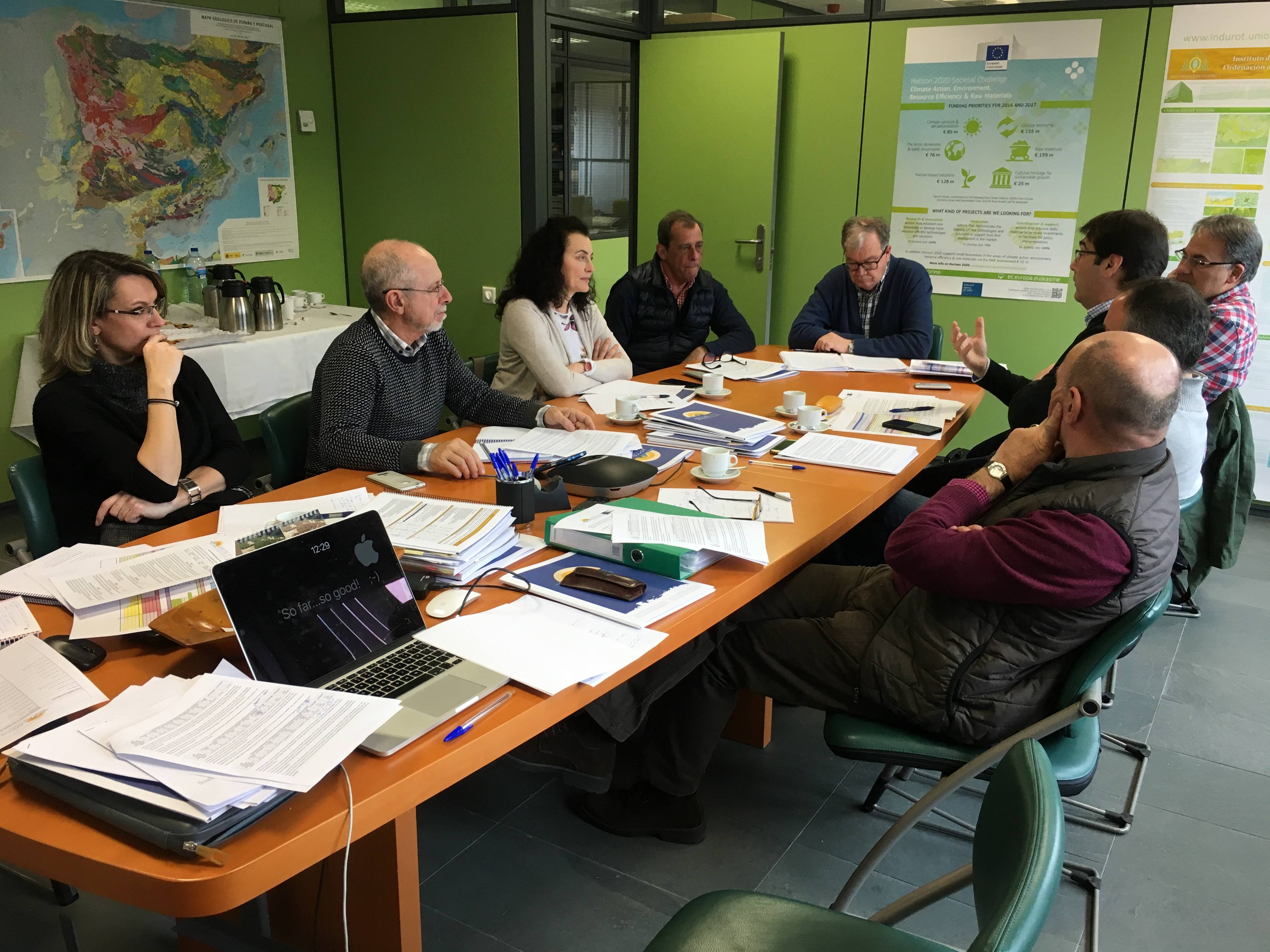
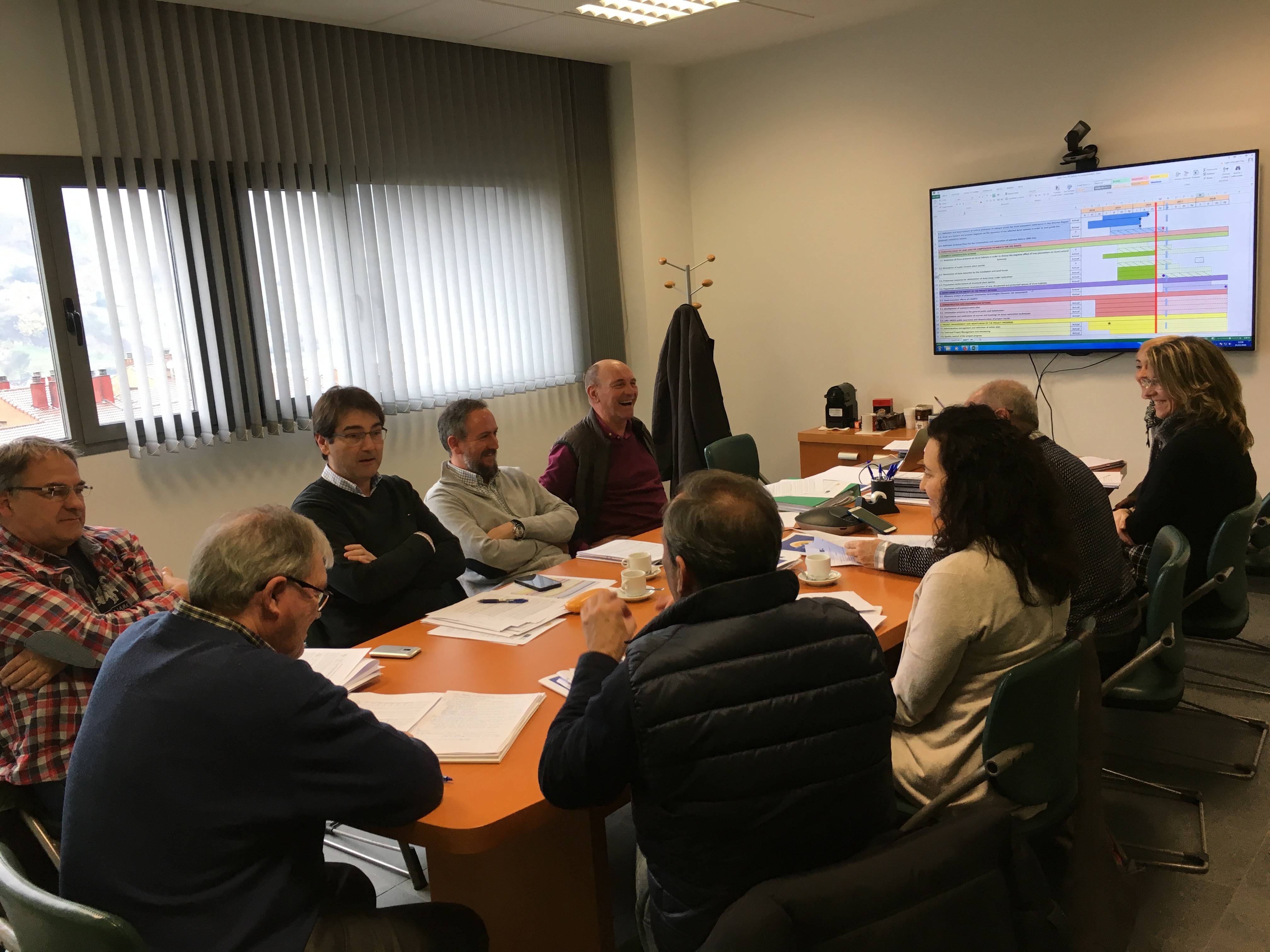
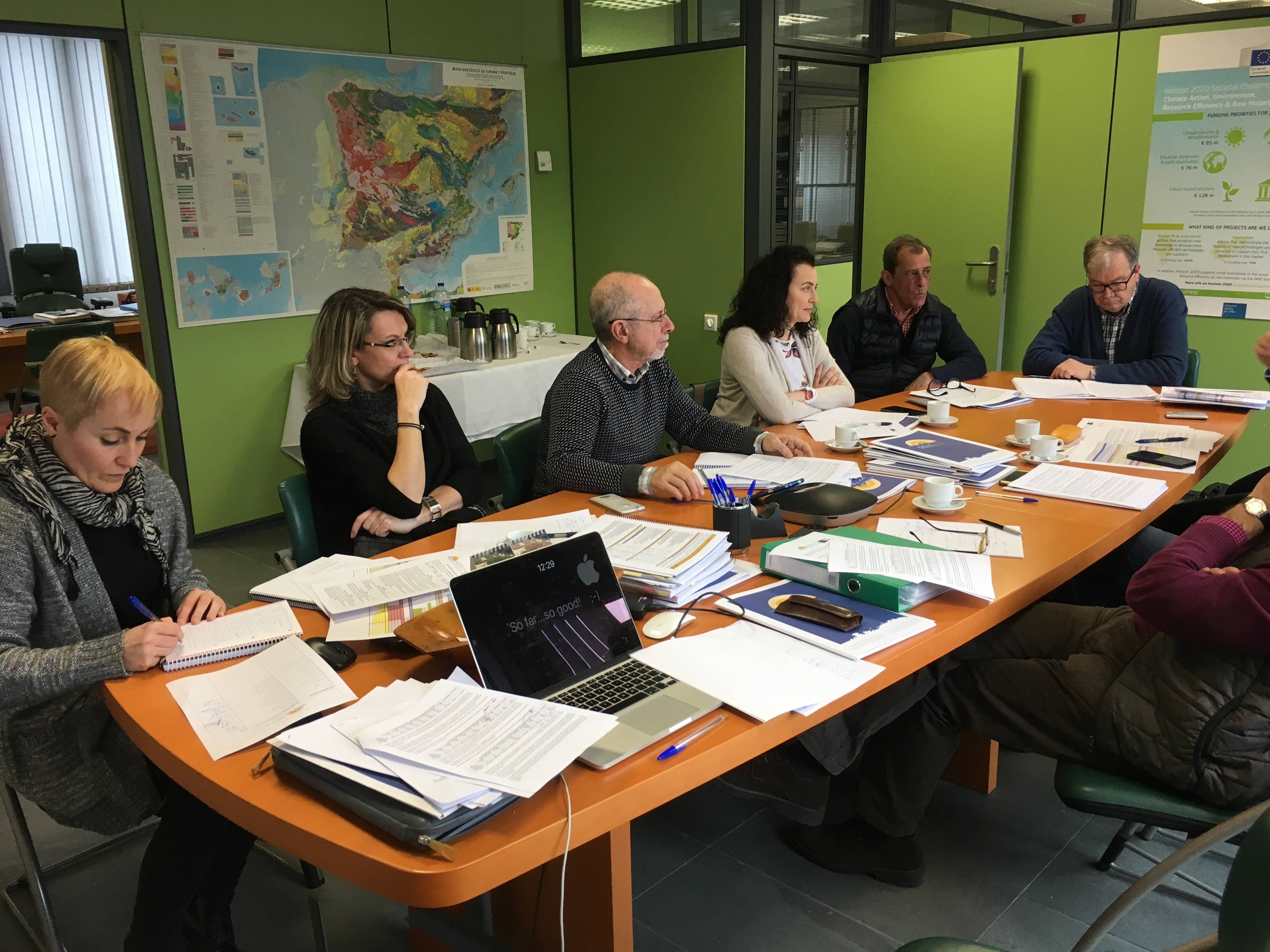
    Life+ARCOS General meeting prior to the Mid-term report submit, hosted in the INDUROT headquarters in Mieres, Aturias.

    The morning and afternoon sessions just ended. Members from the General Assembly of the Life+ARCOS @Lifeprogramme project were in attendance, alongside all beneficiary members of the project: Directorate-General for the Sustainability of the Coast and the Sea (via its areas in Asturias, Cantabria and Bizkaia); the Government of Cantabria (via the Directorate-General of Natural Environment), the Provincial Council of Gipuzkoa and the company Ecología Litoral; as well as its coordinating partner, the University of Oviedo.

    The meeting was held at the Institute of Natural Resources and Land Planning (INDUROT)-University of Oviedo, located on the Mieres Campus (Asturias).

    At the meeting, the head of each of the work areas reviewed the current state of Life project conservation activities. The progress obtained up until now and proposed a closure calendar for each of the 10 enclaves where the activities are taking place was also evaluated. With help from members, the timetable for project closure was adjusted and adapted to current needs. 

    At the meeting, the project’s interim report was reviewed, which will be sent to European authorities for evaluation. This also marks the beginning of the second and last stage of project closure, which will require an injection of new capital to carry out unfinished activities.

    The European Commission’s visit to activity areas in April of this year formed part of the work session.

    Project dissemination activities were reviewed and the consortium’s participation in international conferences during the following months of 2018 was decided.

    Also, within the scope of communicating and diffusing the project, 18 and 19 May were chosen to celebrate, with all project members, European Natura 2000 Network Day activities which, in the case of the Principality of Asturias, are focused on the Barayo Partial Natural Reserve.


    The capacity of the administrations working to manage the protected areas was brought to the table in order to talk about how to continue with the activities Life+ARCOS carries out in the three autonomous communities.

    It was informed that the Aranzadi Science Society recently obtained a subsidy to carry out informational activities. The Society was not present at the end of the meeting.

    The structural species and non-structural species planting calendar was also reviewed. The real capacity of the ARCOS+Life project was adjusted from its initial commitments.

    Finally, coordination between members regarding project closure was encouraged to make the process as successful as possible. In conclusion, everyone said their goodbyes as the next meeting won’t be held until April 2018.

  • LIFE ARCOS project in the LIFE platform meeting on restoration of sand dune habitats, Holland, 15-17 June 2016

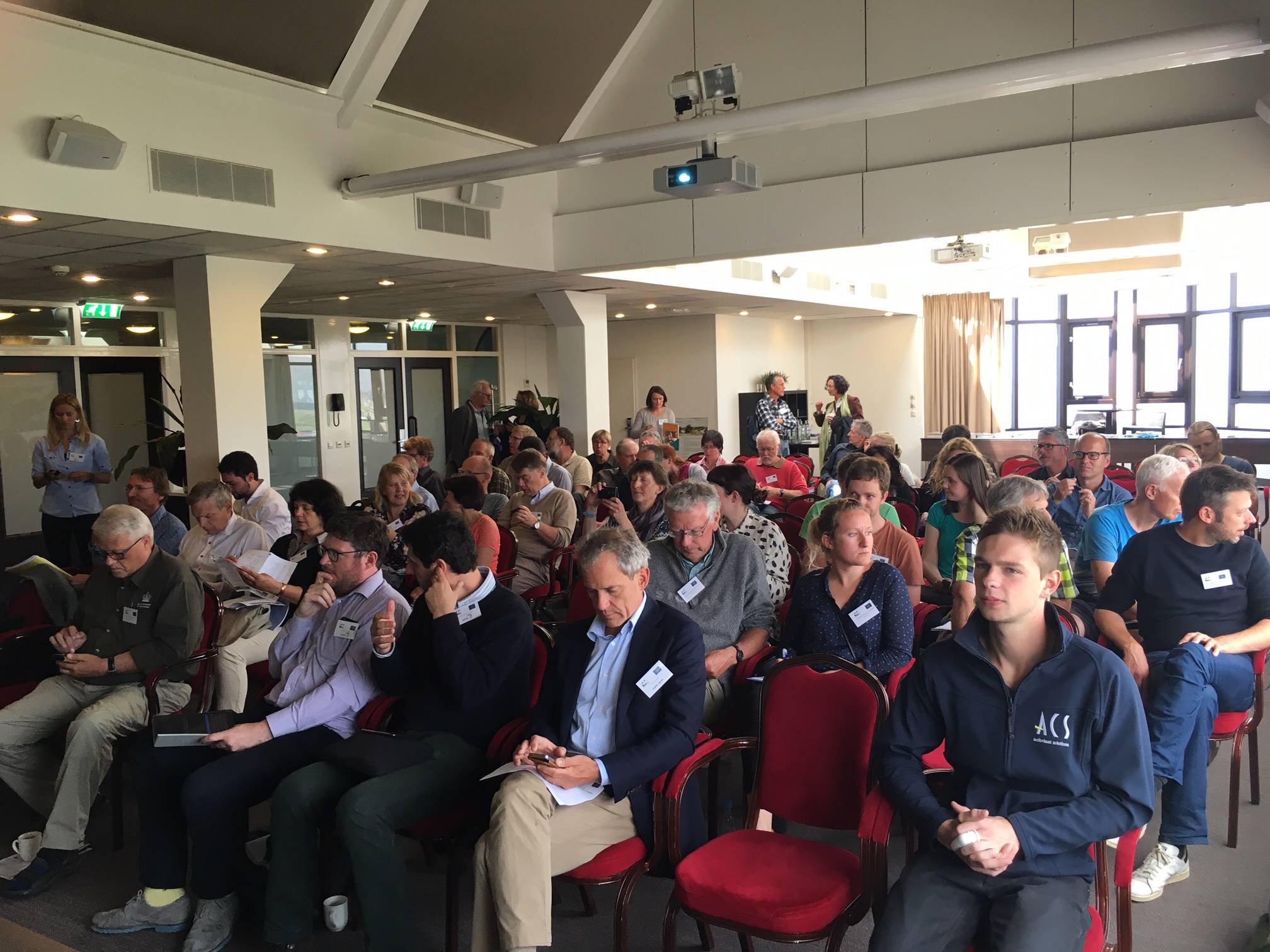
    LIFE ARCOS project in the LIFE platform meeting on restoration of sand dune habitats, Holland, 15-17 June 2016

    1st_Session_Life_Platform_Meeting

    From 15–17 June the Life+ARCOS team is going to Holland to participate in a meeting promoted by NEEMO, the organisation that supervises the development of LIFE projects, along with ECNC.

    At the meeting, we gave a presentation on some aspects of conservation efforts ex situ-in situ that the project has been developing, especially focusing on the importance of restoring dune biodiversity using dune species seeds we have conserved in the project’s seed banks.


    patrocinadores

    Here is the schedule of the meeting in which various dune restoration projects appear, which are financed by the European LIFE program.


    LIFE platform meeting on restoration of sand dune habitats
    NH Hotel, Zandvoort, the Netherlands, 15-17 June 2016


    Wednesday 15th June

    Registration desk open from 13.00 – Hotel Foyer

    All Plenary Sessions to be held in Zeester Meeting Room – access by lift from foyer

    Session 1: The Natura 2000 Biogeographical Process

    14.30 Welcome by chair Sjakel van Wesemael, Nature and Recreation Manager, PWN

    14.40 – 15.00 The Natura 2000 Biogeographical Process explained
    EC Representative TBC

    15.00 – 15.15 The LIFE programme 2014-2020 and expected LIFE project outputs in terms of dissemination, replicability and transferability
    Angelo Salsi, Head of Unit B3 -LIFE and CIP Eco-Innovation, European Commission, Executive Agency for Small and Medium-sized Enterprises (EASME)

    15.15 – 15.30 The LIFE programme and dune habitats
    João Pedro Silva, LIFE Communication Team, NEEMO-AEIDL

    15.30 – 16.00 Refreshment break

    Session 2: Lessons from the projects

    16.00 – 16.15 REDCOHA-LIFE Restoration of Danish coastal habitats: focus on removal of invasive alien species
    Uffe Strandby, Danish Nature Agency

    16.15 – 16.30 Restoration of inland dunes and dry grasslands in military areas – LIFE+ Military Habitats project in Southern Poland
    Wojtek Mróz, IOP, District Infrastructure Administration in Krakow

    16.30 – 16.45 The SandLIFE project: coastal and inland dune restoration in Sweden
    Magnus Jönsson, Land Manager, County Administrative Board, Skåne

    16.45 – 17.00 Conservation and restoration of inland dunes and dune heaths in Flanders: LIFE projects Most-Keiheuvel and LIFE-Together
    Lennert Damen and Bart Tessens, Agency of Nature and Forests of the Flemish Government

    17.00 – 17.15 Light and Fire –LIFE: Dune management in the Boreal Zone
    Päivi Virnes, Conservation Biologist, Metsähallitus Parks & Wildlife, Finland

    17.15 – 17.30 LIFE+ARCOS: coastal dune habitat restoration in northern Spain
    Ignacio Alonso Felpete, University of Oviedo

    17.30 Introduction to rest of programme and field trips

    18.30 Buffet dinner

    20.00 – 22.00 The Knowledge Market:
    -Knowledge exchange and networking

    Thursday 16th June

    Registration Desk 8.30-9.00 outside Meeting Room

    Session 3 Practical experiences and lessons: Where are we now and what needs to be done?

    9.00 Welcome from chair Angelo Salsi, Head of Unit B3, EASME, European Commission

    9.05 – 9.25 The Nitrogen problem
    Annemieke Kooijman, University of Amsterdam

    9.25 – 9.45 Invasive Alien Species in coastal dunes
    Maike Isermann, University of Bremen

    Project presentations
    09.45 – 10.00 LIFE HELVEX: From pine plantations to dunes: a practical overview of the integral restoration of inland dunes in the cross border park Kalmthoutse heide-De Zoom
    Frederik Naedts, Natuurpunt

    10.00 – 10.15 Dutch Dune Revival: Revitalising dunes in Kennemerland: beach-dune sand transport and habitat restoration
    Marieke Kuipers, PWN

    10.15-10.30 Amsterdam Dunes- Source for nature, dune habitat restoration project
    Luc Geelen, Waternet

    10.30 – 11.00 coffee break in workshop rooms and workshops to 12.30

    Session 4: Workshops

    Workshop 1: Challenges with rejuvenation and dynamics in inland and coastal dunes
    Leader: Evert Jan Lammerts, Staatsbosbeheer
    Presenter: Eva Remke, Bargerveen Foundation

    Workshop 2: Challenges and experiences with grassland habitats in inland and coastal dunes
    Leader: Luc Geelen, Waternet
    Presenter: Marijn Nijssen, Bargerveen Foundation

    Workshop 3: Drawing up a roadmap for the Atlantic Biogeographical Process
    Leader: Albert Salman, Coast and Marine Union-EUCC
    Presenter: Jean-Louis Herrier, Agency for Nature and Forests, Flemish Government

    13.00 Collect sandwich lunch

    Field visits

    13.15 – 17.30 Field visits by bicycle.

    1. During the excursion to the Amsterdam Dunes Project led by Mark van Til and Martijn van Schaik of Waternet we will show you:

    • Mosaic management grey dunes
    • Large scale removal of Prunus serotina shrubs
    • Removal of pine forest
    • Small scale blow-outs
    • Large scale restoration: Van Limburg Stirum project
    • Dune slack restoration and new ponds

    2. Dutch Dune Revival: During the excursion to the Noordwest Natuurkern in National Park Zuid-Kennemerland led by Coen van Oosterom (PWN) and Ruud Luntz (Natuurmonumenten) we will show you:

    • Old and new Dutch coastal management
    • Large scale interventions in frontal dunes
    • Successful connection beach-dunes
    • Large scale reactivation of parabolic dunes
    • Need for aftercare management
    • Integration of recreation and bunkers in this nature project
    • Profit and loss of the Dutch ‘Poldermodel’

    18.30—21.30 Social Dinner at Club Nautique Zandvoort www.clubnautique.nl

    Friday 17th June

    Registration Desk 8.30 – 9.00 outside Meeting Room

    Session 5: Ways to proceed, including feedback from workshops

    9.00 Welcome by chair Ed Cousin, Head of Nature Management, Waternet

    Project presentations
    9.10 – 9.25 LIFE FLANDRE: cross –border cooperation
    Jean-Louis Herrier, Agency Nature and Forests, Flemish Ministry of the Environment

    9.25 – 9.40 National Conservation and Management Programme for Natura 2000 Sites in Latvia – example of coastal dunes
    Juris Jatnieks, Nature Conservation Agency, Latvia

    9.55 – 10.10 Developing a UK dune restoration programme
    Sue Rees, Natural England

    10.10 – 10.30 Wuthering Heaths-Restoration on inland dunes and sandy heathland in the North-western Veluwe
    Peter Dam, Natuurmonumenten

    10.30 – 11.00 Coffee Break

    Session 6: Plenary discussion and input to dune roadmap

    11.00 – 11.30 Feedback and discussion from working groups

    11.30 – 11.45 Developing a ‘dune roadmap’ for 2016-2020 to take the views of the meeting forward to the Atlantic biogeographic seminar in Ireland in October 2016.
    Neil McIntosh (ECNC) and John Houston (NEEMO)

    11.45-12.15 Discussion and conclusions

    12.30 Sandwich lunch

    13.15 – 16.00 Excursion by bicycle to the Wisent Project Kraansvlak (European bison project) http://www.wisenten.nl/en/project