Etiqueta: Natura 2000 Network Day

  • This is how the Final Life+ARCOS Seminar went, held in Donostia (1/2)

    This is how the Final Life+ARCOS Seminar went, held in Donostia (1/2)

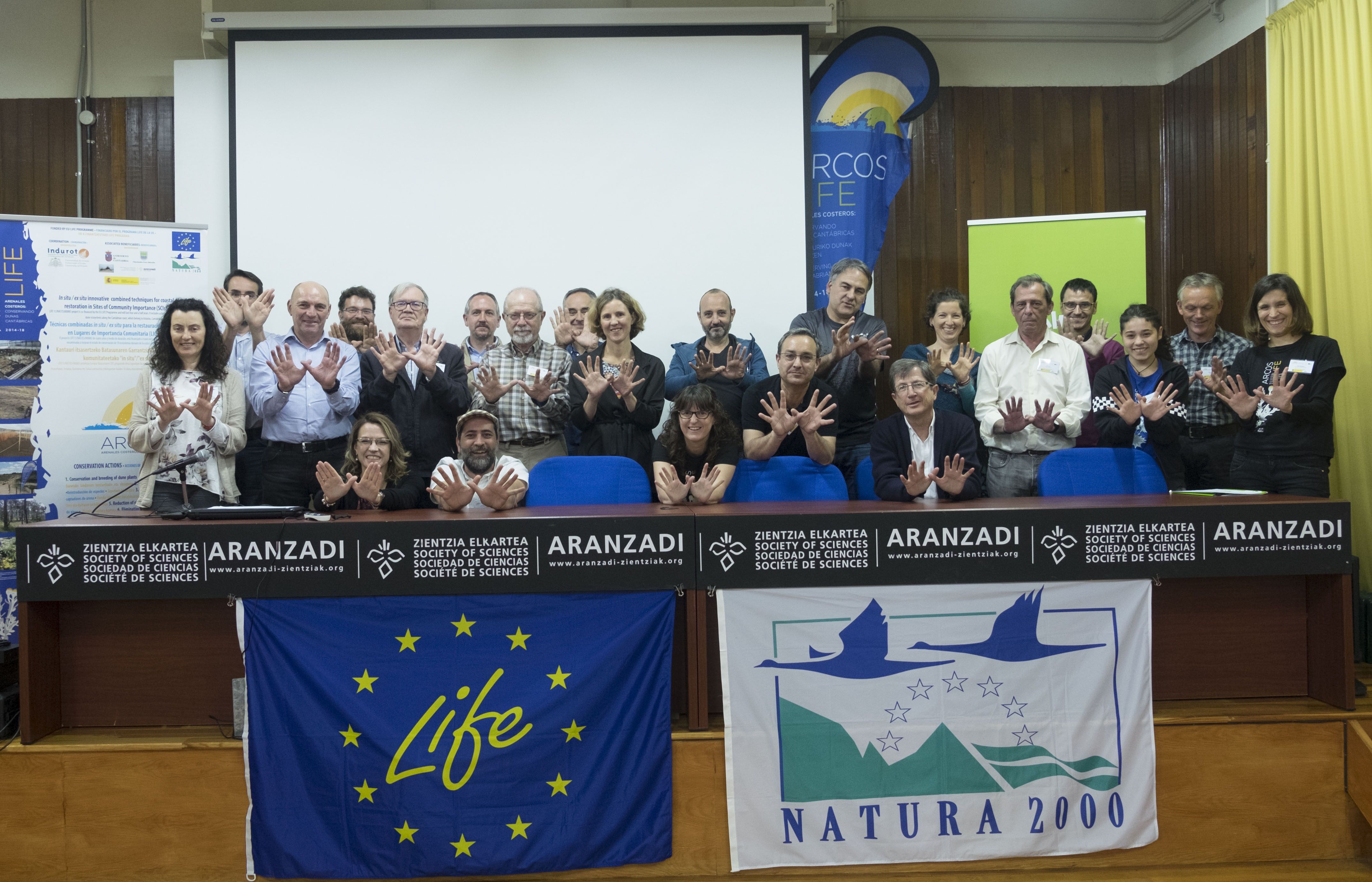
    On Tuesday 28th May, a week after the date set by the European Union to mark the European Natura 2000 Day, the Life+ARCOS team met up in the Society of Sciences Aranzadi headquarters in San Sebastian to hold the final project meeting and to discover the main results achieved, just a month before its formal completion.

    Along with all the partners involved in the project, the meeting also included contributions from various experts specialising in dune ecosystem management, whom, from various different fields and locations, were able to participate in the workshop, revealing the outcomes of the experiences and projects on which they had worked.

    Their contributions will be discussed in another blog entry.

    Opening

    The seminar was opened by Mr Tomás E. Diaz (Main project researcher from the Life+ARCOS project), José Ramón Martínez Cordero (Director of the Maritime-Terrestrial Public Domain Department in the Ministry for Ecological Transition (MITECO)), Íñigo Mendiola (Gipuzkoa Council) and Juan Arizaga (Society of Sciences Aranzadi).


    Opening table

    This presentation was followed by a screening of a video about the restoration carried out by Life+ARCOS on the Somo dune system in Cantabria, and an introduction to the conference given by J. Ignacio Alonso Felpete (Ecología Litoral) to highlight the celebration of the European Natura 2000 Day and to outline the Spanish contribution to this Network of protected spaces.

    Ignacio Felpete (Ecología Litoral) during his presentation speech about the European Natura 2000 Day

    The first part of the conference was led by partners participating in the Life+ARCOS project, who assessed the actions carried out in each of the targeted spaces.

    Revealing problems and actions in the enclaves

    The first of the interventions was given by Jorge Marquínez, who outlined the main signs of change detected in the ten dune systems that had been worked on within the ARCOS project.

    The historical photo analysis and LIDAR data allowed for an assessment of the advances and setbacks suffered by the coastline over the past 70 years, as well as the volume of sediment estimated to have moved over these years. Some results were also shown of the chemical analyses performed on the different beaches-dunes, and the sea flooding and storm phenomena that have occurred, as well as estimated recurrence periods.


    Jorge Marquínez, director of the Institute of Natural Resources and Territorial Planning (INDUROT) – University of Oviedo

    The Main project Researcher, Tomás E. Díaz, from the Department of Biology of Organisms and Systems from the University of Oviedo was in charge of sharing the actions undertaken on the three dune systems in the Principality of Asturias where actions have been performed: the Partial Natural Reserve of Barayo, included in the SAC Penarronda-Barayo; the Verdicio beach, included in the SAC Cabo Busto-Luanco, and the Vega Beach, belonging to the SAC Vega Beach.

    The actions carried out in Barayo constituted the main focus of the intervention. The social interest raised with the felling of the non-native trees has been high, as expected. Importance was also given to the planting of native dune system species in the three enclaves, which should encourage self-restoration processes. In spaces such as Verdicio and Vega, the treatment of invasive species has been crucial to improving the state of conservation of the present dune habitats. The aim of the protection system using enclosures is to prevent the negative effects of excess pressure due to visitors walking over these spaces, particularly intense in these two areas.


    Tomás E. Díaz, director del proyecto Life+ARCOS

    The actions carried out in Cantabria, specifically on the Liencres  dune system (SAC Liencres dune system and Pas Estuary) and on the Berria and Helgueras beaches (SAC Santoña, Victoria and Joyel Marshes) were presented by Jesús Varas, director of the Liencres protected space. Lourdes González, director of the latter SAC, also concluded the presentations, in which emphasis was placed on the on-going treatment to remove invasive exotic species, which has had outstanding results, in particular on the Santoña and Noja beaches. The role of certain social agents and associations of groups with difficulties has been an essential part of developing this action. Among many others is the particularly noteworthy NACAR Programme (Nature and Prison), which enabled inmates and staff members from the El Dueso Penitentiary Centre to participate in some of these actions.

    The management and regulation of access to these spaces has been singled out as a key to achieving excellent results in the recovery of dune plant life. Accompanying all of these actions has been the planting of species that have speeded up the initial growth of biodiversity.


    Jesús Varas, director of the SAC Liencres Dunes and Pas Estuary

    From the Cantabrian Coastal Demarcation, José Luis Tejerina Hernando spoke on behalf of the Directorate General of Sustainability of the Coast and the Sea (Ministry for Ecological Transition), a beneficiary partner of the Life+ARCOS project.  This demarcation is responsible for assigning the majority of the structural dune species that have been used in all the spaces, as is responsible for managing the Ministry’s dune plant nursery located in the Cantabrian town of Somo.

    Tejerina assessed the plant that has been used in each of the SAC spaces where work has been performed.


    Jose Luis Tejerina, Head of the Construction and Coastal Demarcation Projects Department in Cantabria

    The summary of  the actions carried out on the dune systems of Santiago, in Zumaia (SAC Urolako Itsasadarra / Urola Estuary) and in Zarautz (SAC Iñurritza) was given by Jon Zulaika Isasti, from the Protection of Wild Flora and Fauna Department of the Gipuzkoa Council, a project partner.

    Zulaika focused a large part of the presentation on the handling of part of the non-native trees that were removed from Santiago, the handling of the invasive species in this space, and the problems caused by the strong tides on the extensive dune system in Zarautz. Managing threatened flora in this space has also been a priority line of action, as various protected species have been recorded here.

    The difference in the sediment balance between the first and second spaces, has been heavily conditioned by the set of actions. Sand collection in Zarautz: a priority line of action to create the conditions needed to ensure a future for the plantations carried out there. Various sand collecting systems have been implemented with varying results.


    Jon Zulaika Isasti, from the Gipuzkoa Council Protection of Wild Flora and Fauna Department

    The actions carried out on the Somo beach in Cantabria (SAC Puntal Dunes and Miera Estuary) and in the Biscay enclaves of La Arena, Zierbena (SAC Barbadungo itsasadarra/Barbadun Estuary) and Laga, Ibarrangelu (SAC Urdaibaiko Itsasertzak eta Padurak – Coastal and Marshland Zones of Urdaibai) were covered by Carlos Ley Vega de Seoane, director of the Ecología Litoral company, an project partner. This company was responsible for the development of the actions in the cited spaces and in all the Asturian spaces.

    The Somo dune system has been a success story for the functional and ecological recovery of a dune ridge, which had been literally destroyed after the 2014 storms. Along with the physical actions of incorporating sand and removing invasive exotic species, intense recovery work has also been carried out on the plant cover, which will enable the bank of seeds in the space to recover quickly. Fitting enclosures to control access and to avoid the negative effects of visitors treading on the plants as far as possible, have also been qualified as effective measures in achieving the desired results.

    Equally successful are the actions carried out in La Arena, where particularly intensive work was performed to remove invasive species, due to their high concentration at the start of the actions. The final aspect of the recovered dune system presents a marked dune morphology, thanks to the sand collectors fitted along specific points, and to sediment inputs, which have been exceptionally good over recent years. Reorganising accesses has also been highlighted as a key measure in encouraging the recovery of the entire system.

    The Laga dune system is currently the focus of the latest actions, which have centred on removing invasive exotic species and some non-native tree species, as well as on strengthening the numbers of dune species on the most damaged points. Strengthening the peripheral enclosures will also be a key step in organising access and to give greater continuity to the dune ridges, especially along the most easterly end.

    After the speech by Carlos Ley there was a break, followed by interventions from experts invited by Life+ARCOS, who spoke about the projects they are working on.

    We will explain it all in the next blog entry.
  • Controlling invasive species in Liencres Natural Park (Piélagos) to celebrate Natura 2000 day

    Controlling invasive species in Liencres Natural Park (Piélagos) to celebrate Natura 2000 day

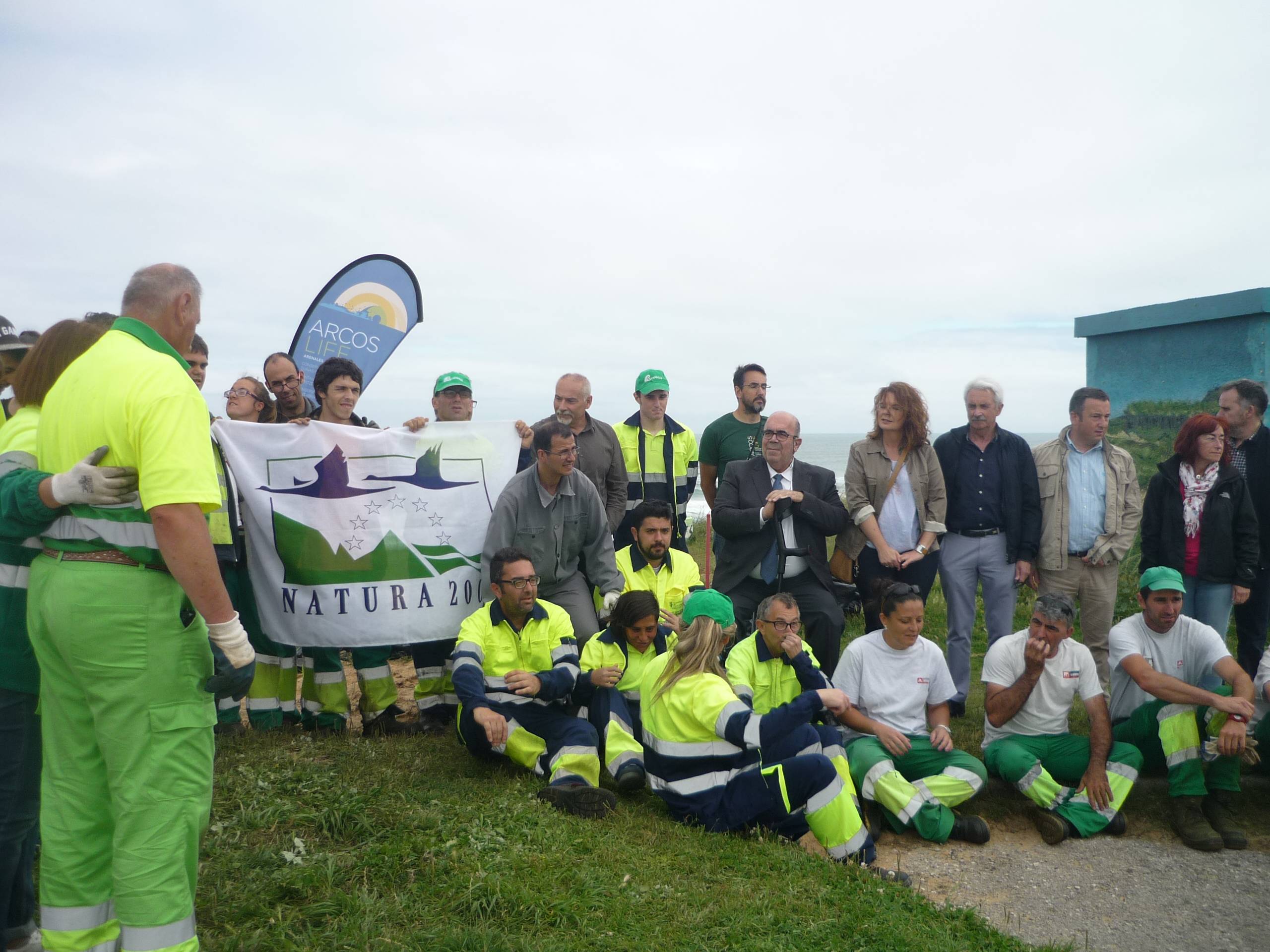
    The companies AMICA, AMPROS and SERCA received training and volunteered for the LIFE ARCOS project.

    We celebrated World Environment Day on 18 June 2018 with a volunteer and training event on invasive flora with the LIFE ARCOS Project from the Directorate-General of Natural Environment of the Regional Ministry of Rural Affairs, Fisheries and Food of the Government of Cantabria.

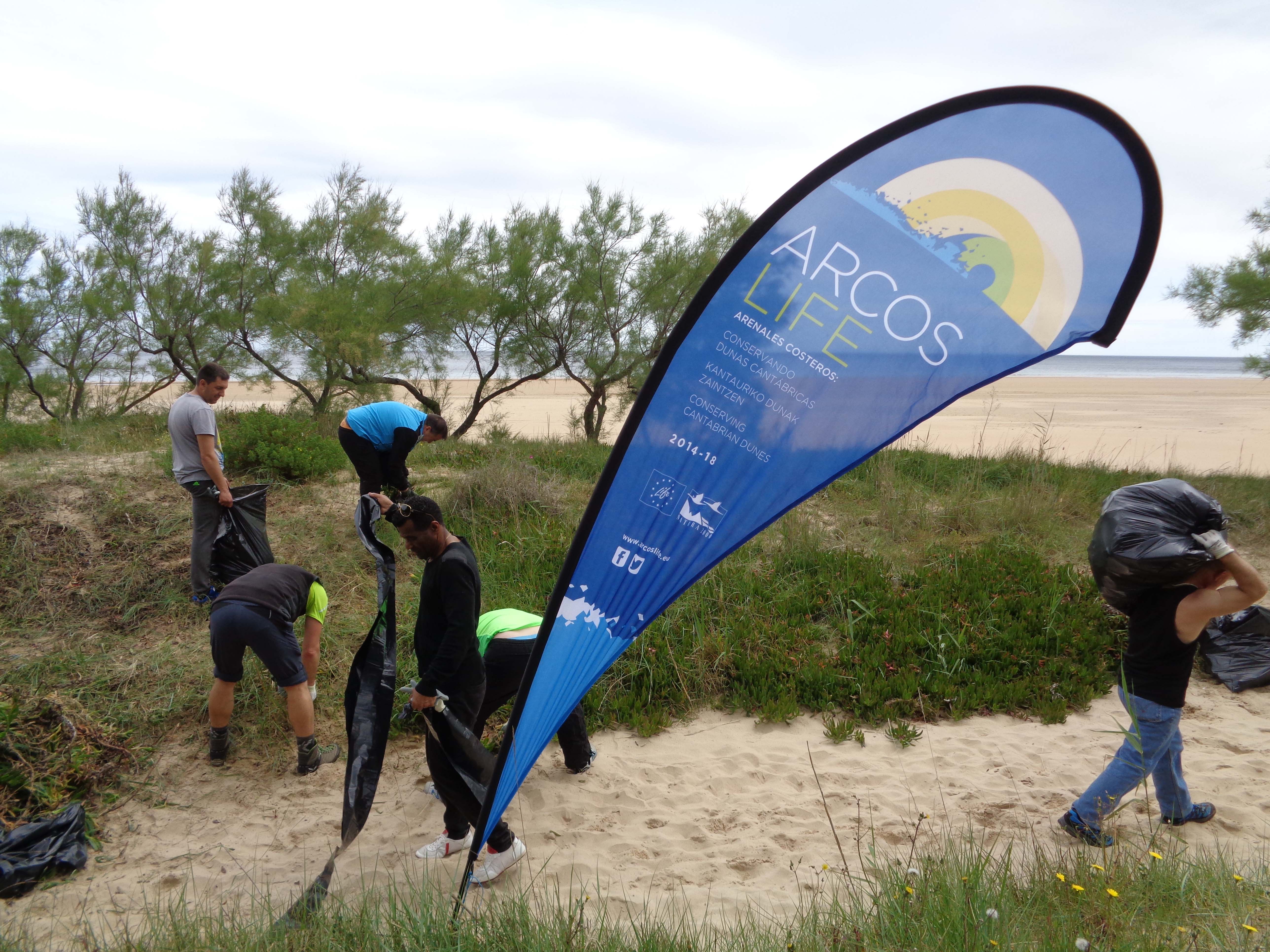
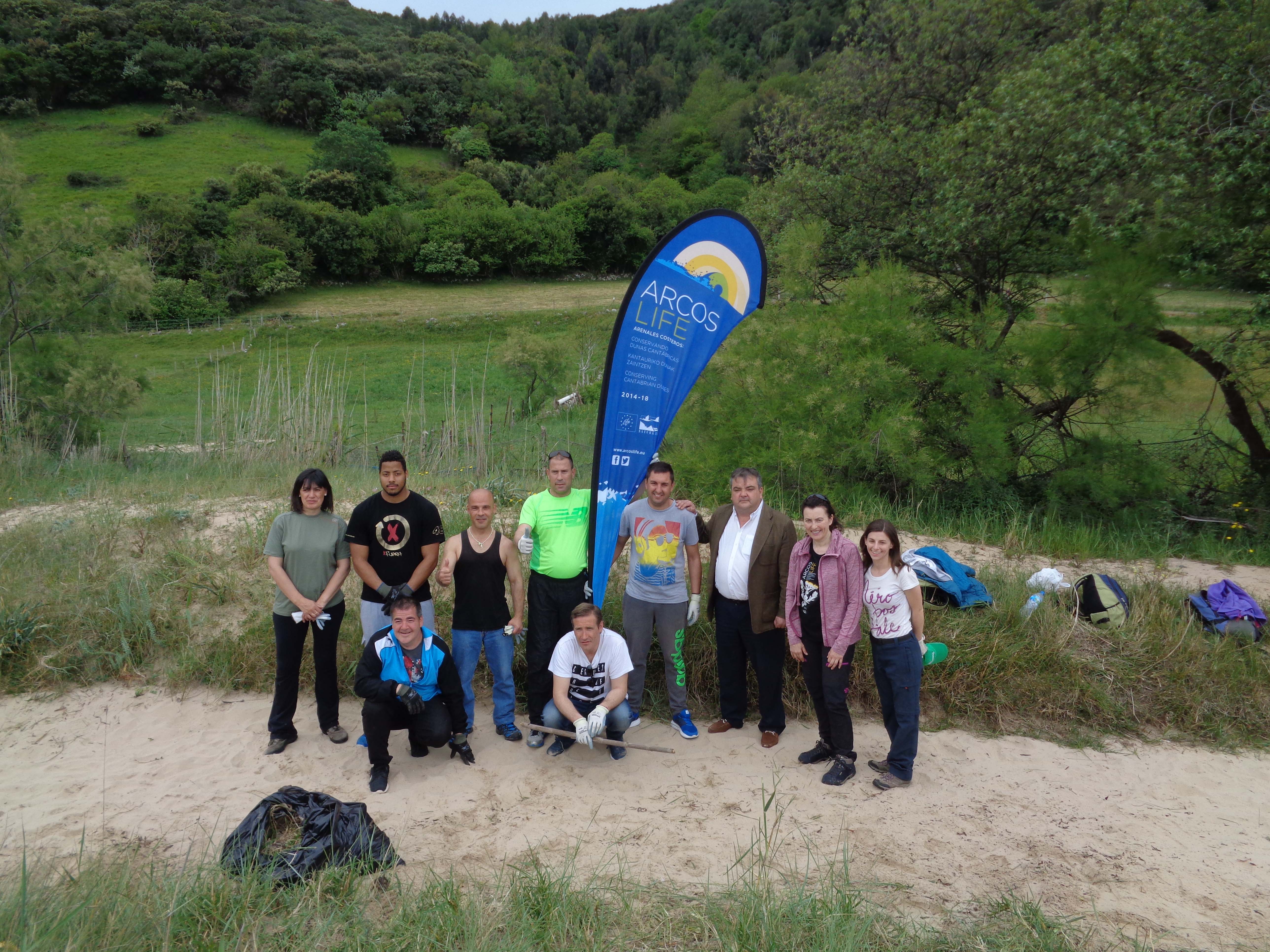
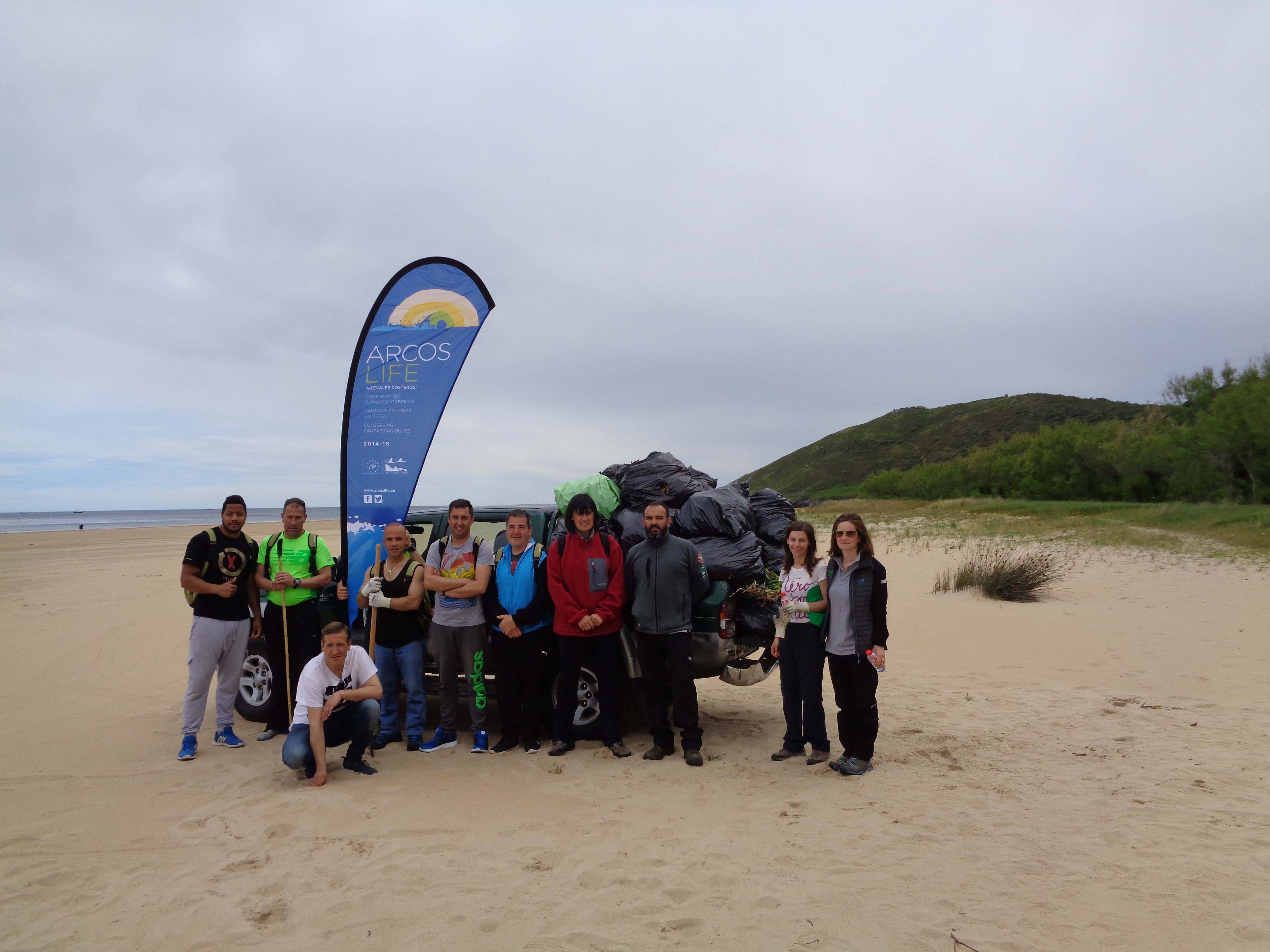
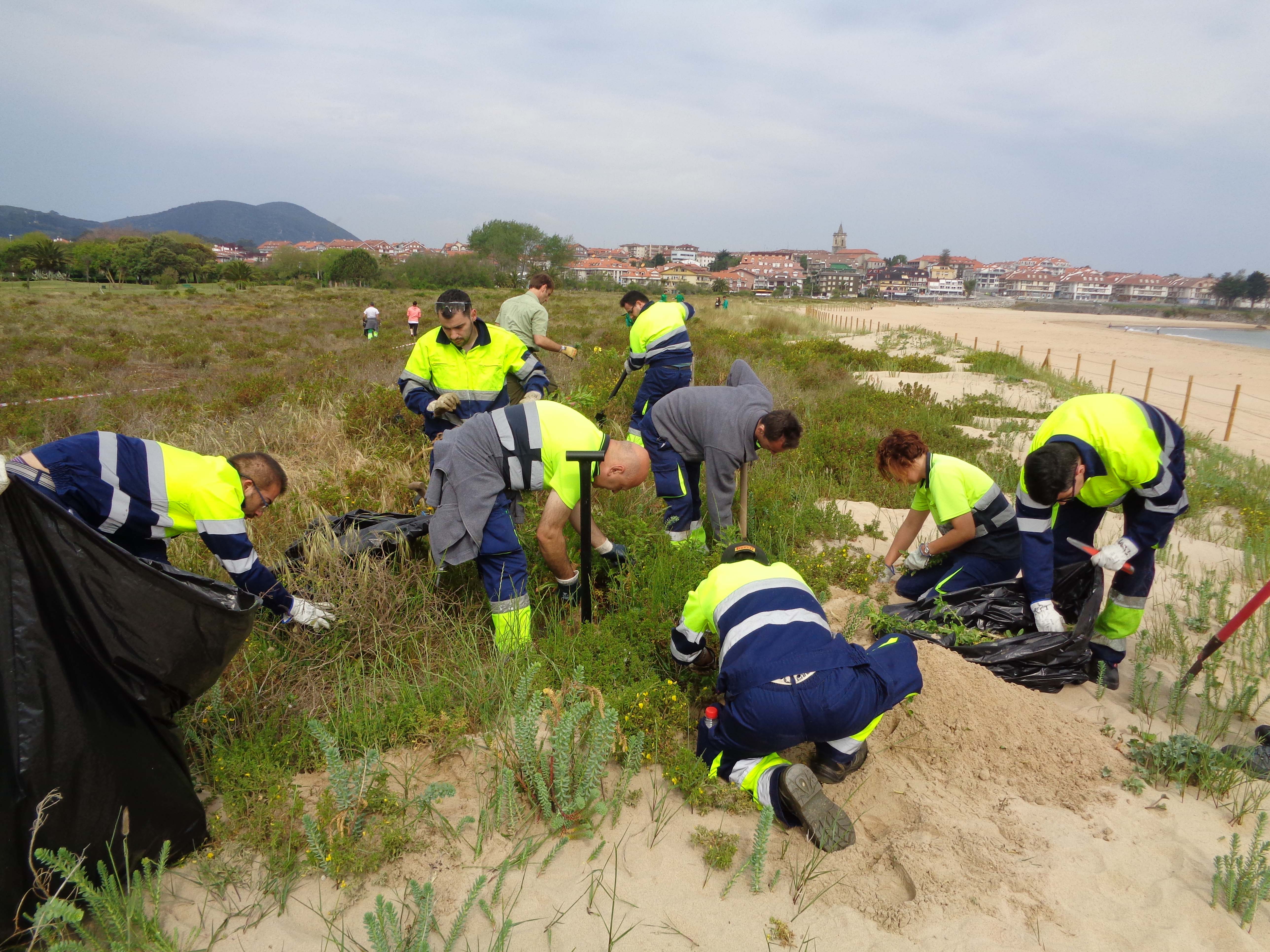
    On this day, the Cantabrian companies AMICAAMPROS and SERCA got to work to control the cape weeds and horseweed on Canllave Beach (Natural Park of Liencres).  After listening to a brief speech from the natural park director, Jesús Varas, the three teams from AMICA, AMPROS and SERCA got to work.  27 people worked within plots marked with temporary plastic tape. They collected approximately 390 kg of cape weeds (Arctotheca calendula) and 25 kg of horseweed (Conyza candensis).  The participants learned to distinguish the characteristics of the cape weeds among other well-preserved and blooming dune plant species such as the sea potato, sea beet, Virginia stock, shore bindweed, European searocket, petty spurge, etc.


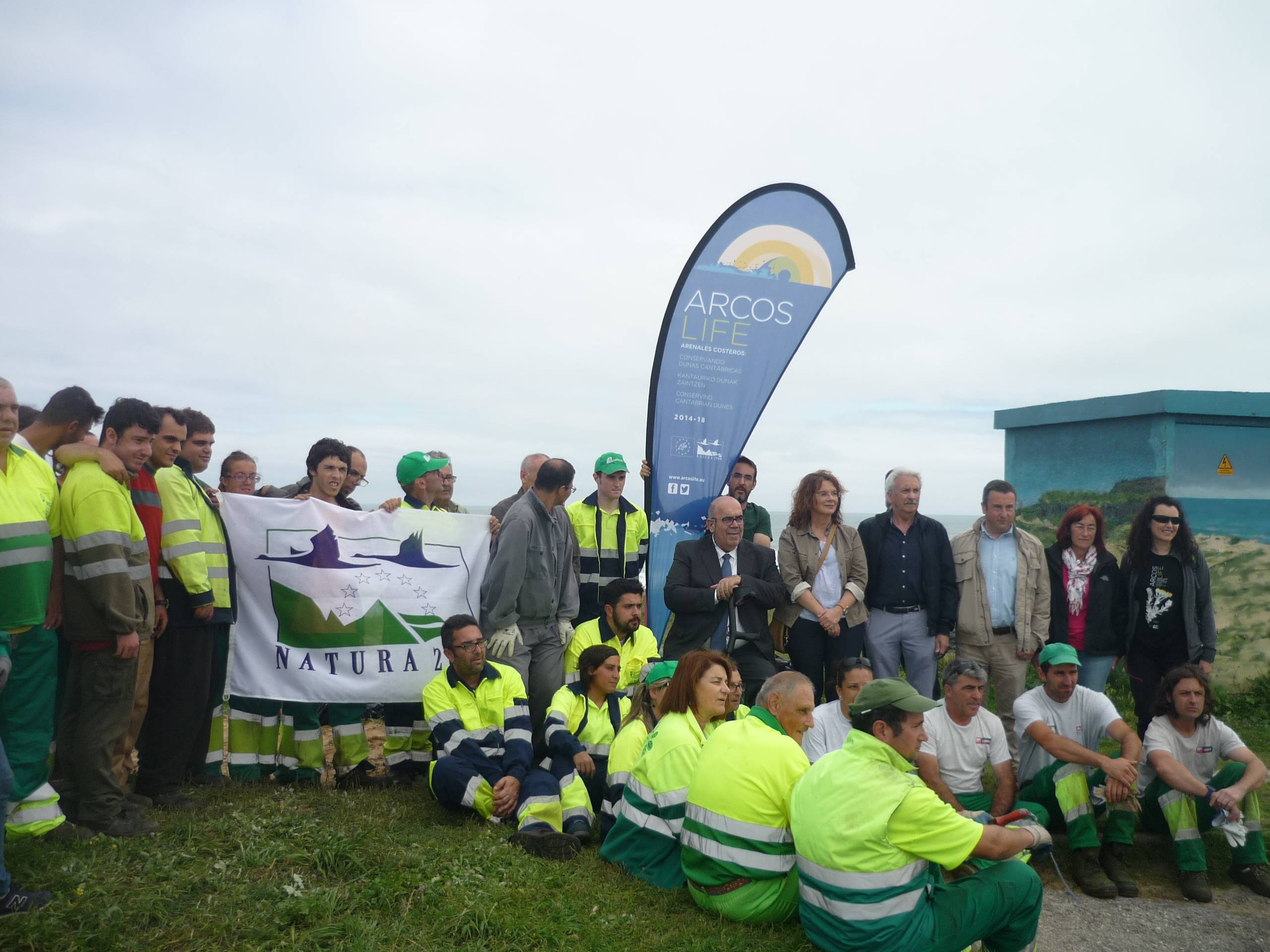
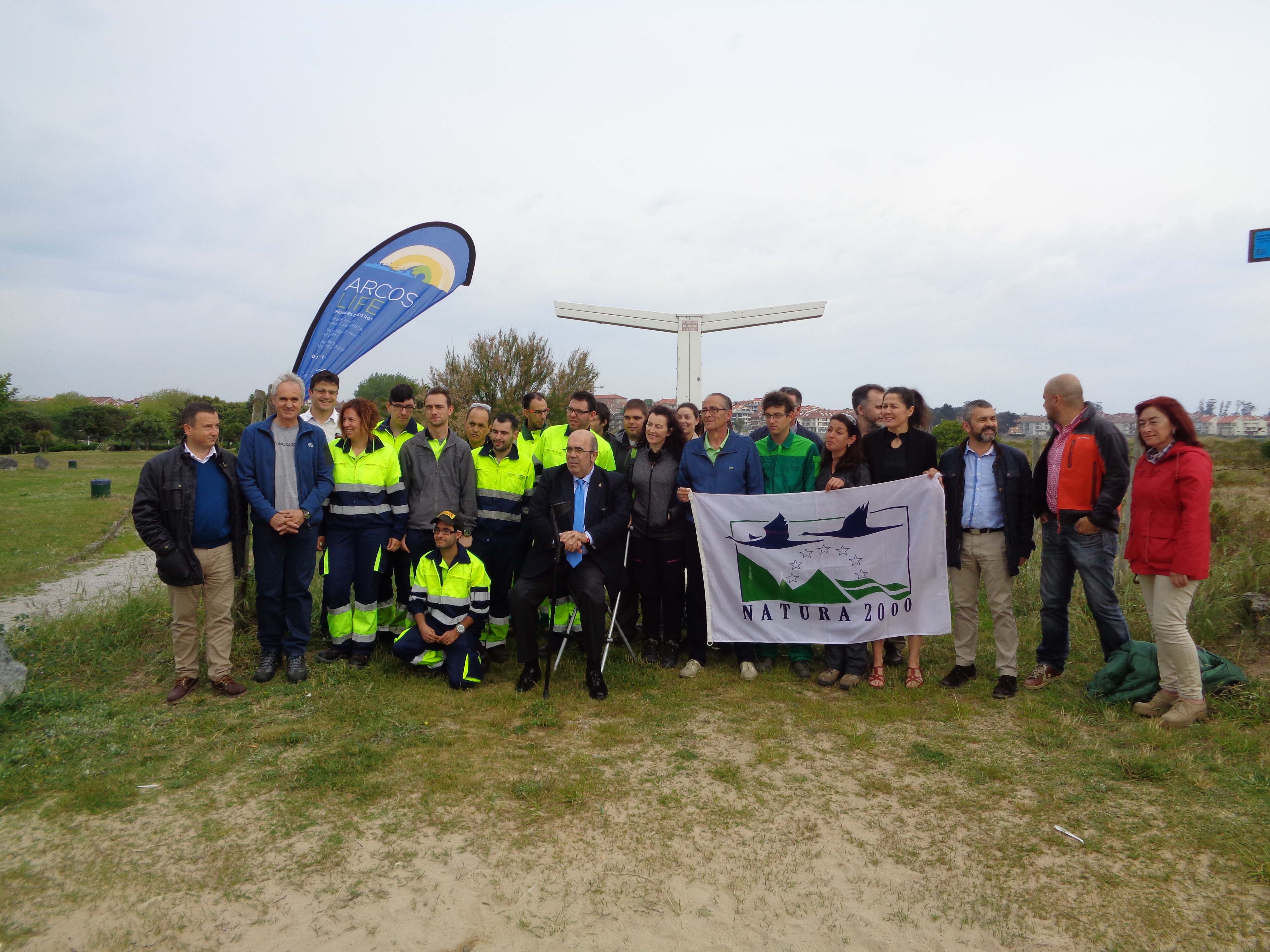
    Teams from AMICA, AMPROS and SERCA working in Canallave. Group photo with the Regional Minister for Rural Affairs, Fisheries and Food.

    The work area included dunes where restricted access favored their recovery and the regeneration of dune vegetation.

    Although the area was quite clean, volunteers also collected some non-biodegradable bags.

    Finally, the Cantabrian Network for Rural Development collected all the plants and garbage.

    Participants received commemorative informational t-shirts from LIFE ARCOS.

    The Directorate-General of Natural Environment would like to thank volunteers for their participation. Everyone learned something new about the environment and played their part in restoring vulnerable ecosystems: the dune systems of Cantabria.

    Download the activity announcement here

  • Chronicle #1: Celebrating Natura 2000 day. Removing capeweed plants from Berria (Santoña)

    Chronicle #1: Celebrating Natura 2000 day. Removing capeweed plants from Berria (Santoña)

    Volunteering for the NACAR (Nature and Prison) program in the LIFE ARCOS project

    We celebrated European Natura 2000 Network day on 17 May 2018, with a new volunteer event with the Nature and Prison program (NACAR) in coordination with the LIFE ARCOS Project from the Directorate-General of Natural Environment of the Regional Ministry of Rural Affairs, Fisheries and Food of the Government of Cantabria.

    The activity started at the tertiary dune of Berria beach’s dune system.

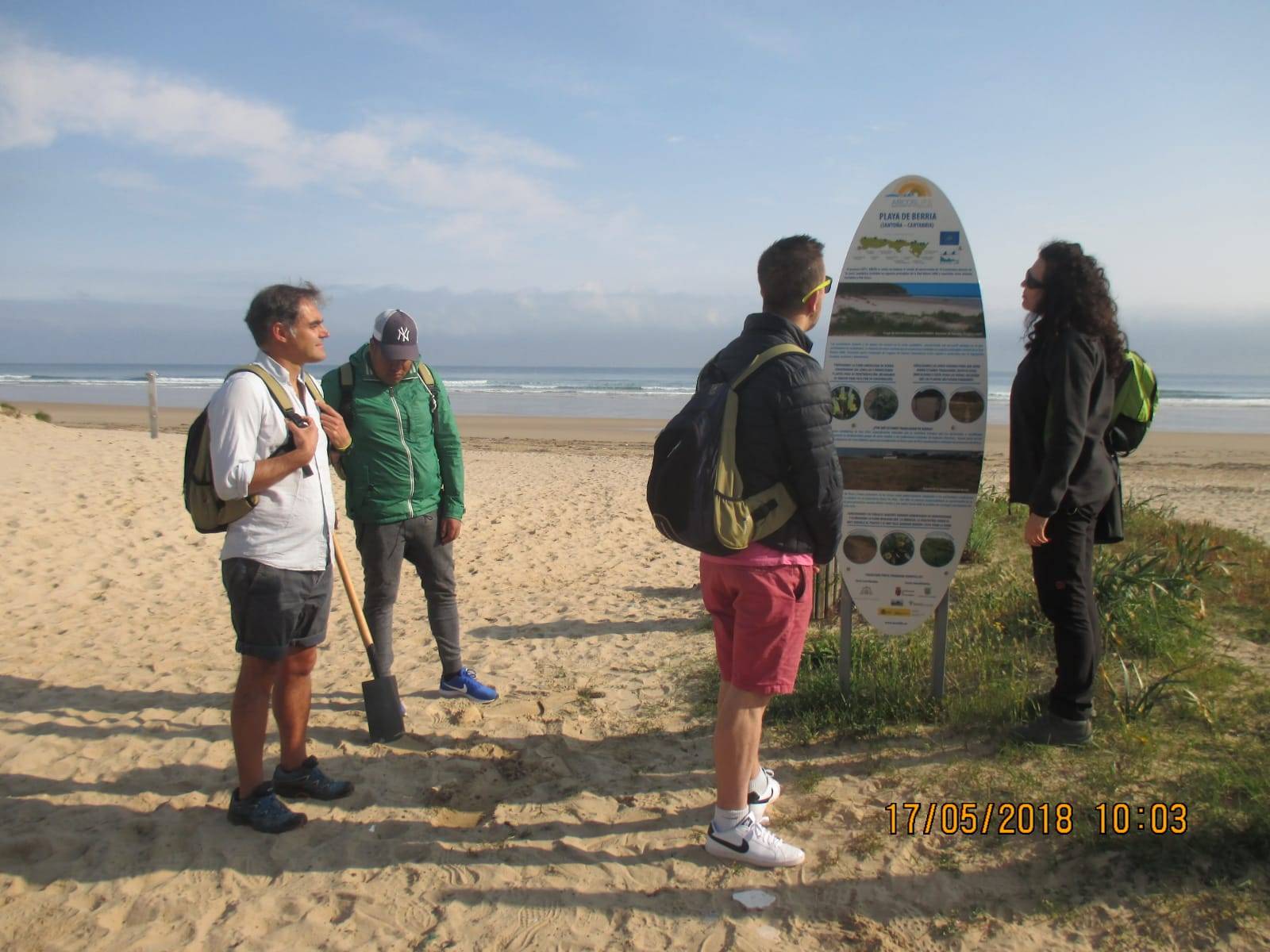
    Natural park director, Lourdes González, briefly introduced the LIFE ARCOS project, the NATURA 2000 NETWORK, the importance of dune ecosystems and how they protect themselves from winter storms, the distribution of dune species in areas and how they are affected by invasive exotic species.  The LIFE ARCOS sign at Berria beached was used to answer attendees’ questions.

    Beginning of the NACAR volunteer activity at Berria beach

    The team got to work after listening to an explanation on how to recognize the cape weeds and how to extract it.  The invasive exotic species was everywhere around the boardwalk parallel to the beach. Volunteers focused on this area.

    They collected around 130 kg of cape weeds (Arctotheca calendula) and 1 kg of non-biodegradable garbage.  The participants learned to distinguish the characteristics of the cape weeds among other well-preserved and blooming dune plant species such as the sea potato, sea beet, Virginia stock, sea daffodil, bindweed, houseleeks, petty spurge, etc.

    During break and in the work area, we explained why the dunes were closed by the LIFE ARCOS project. José Luís Tejerina from Demarcation of Coasts in Cantabria visited the site and assessed the work being done.

    Extraction of cape weeds from the Berria dunes

    Finally, the Cantabrian Network for Rural Development collected all the plants and garbage.

    The participants received a commemorative LIFE ARCOS t-shirt.

    The Directorate-General of Natural Environment thanked NACAR for participating to conserve and restore the dunes of Cantabria’s beaches.

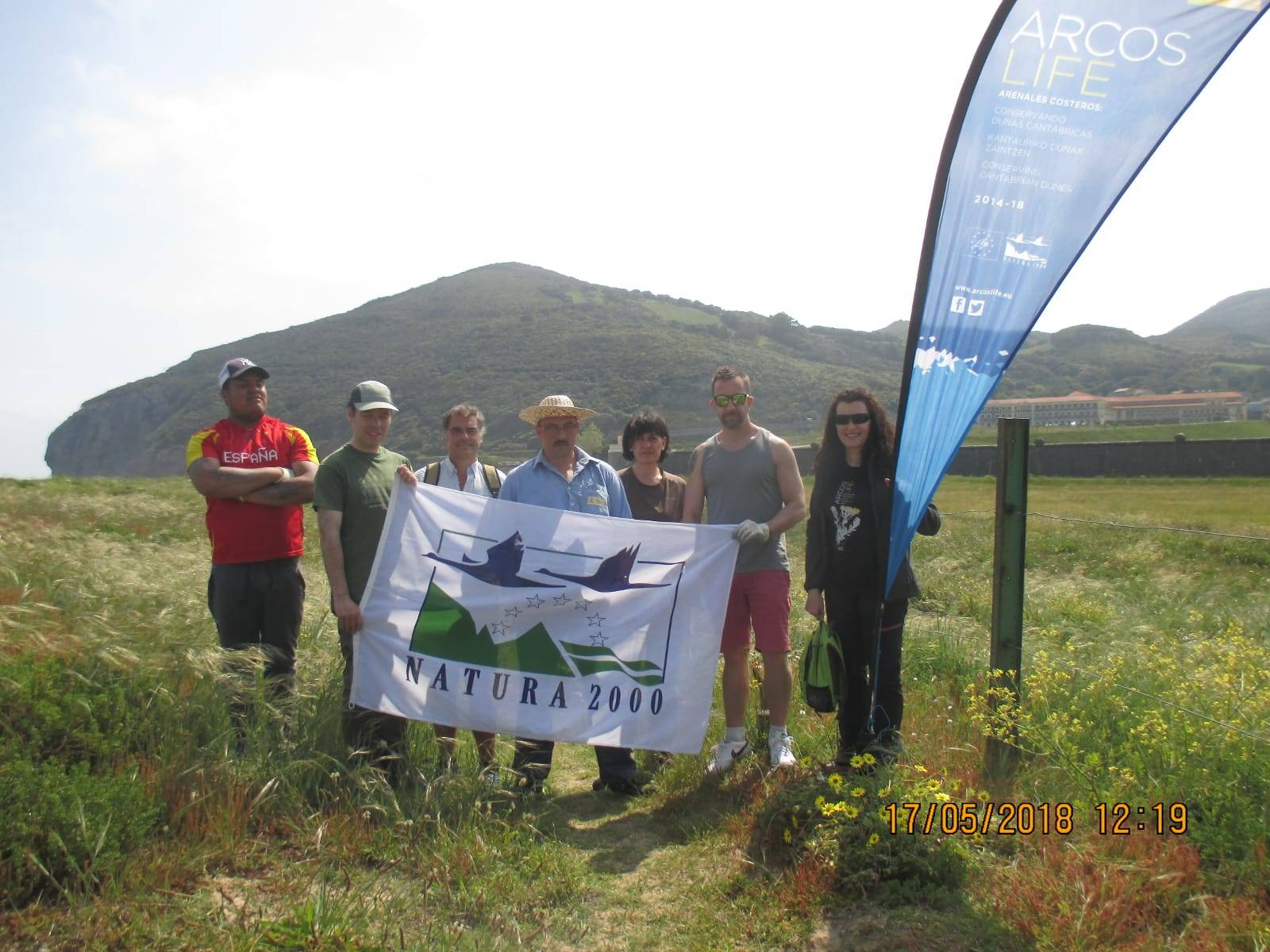
    NACAR team on Berria beach (Santoña)
  • Join us to celebrate the Natura 2000 day in Barayo (Asturias) on 26th of May

    Join us to celebrate the Natura 2000 day in Barayo (Asturias) on 26th of May

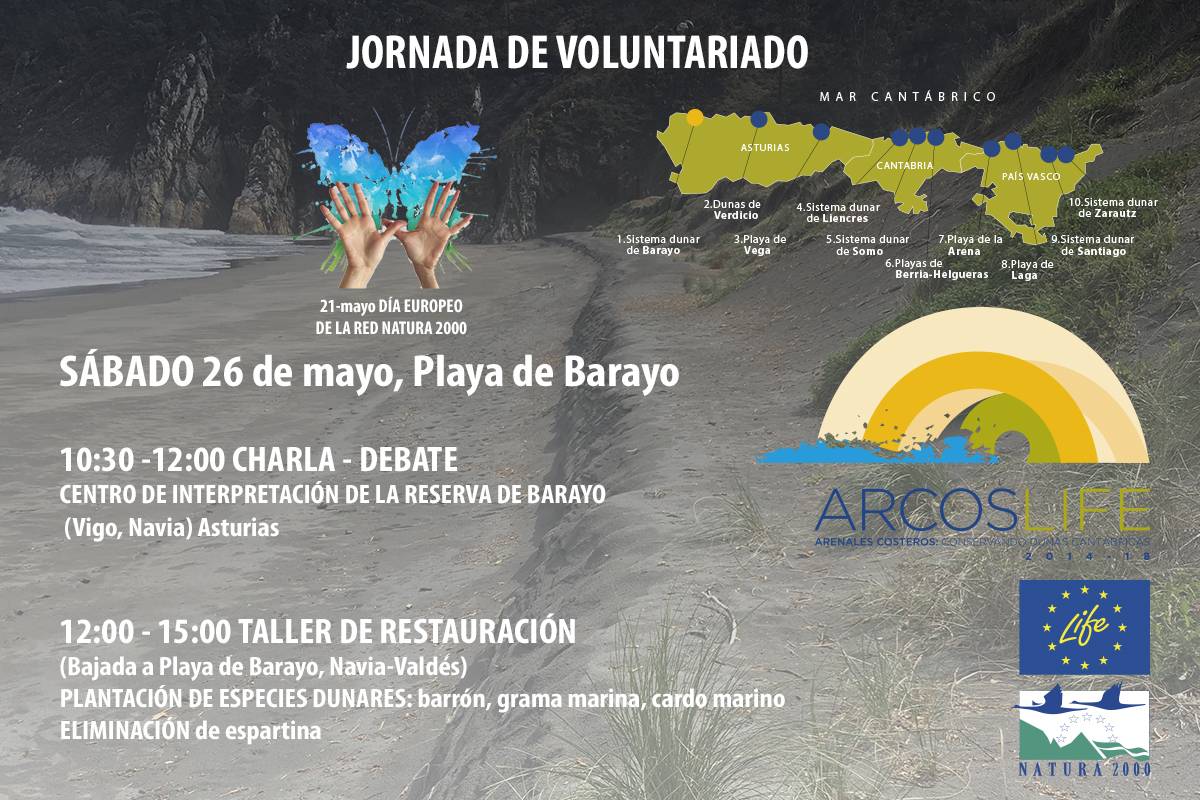
    Saturday, 26 May is almost here! We can’t wait to see you at the Barayo Natural Reserve (Navia, Valdés, in western Asturias) to learn about the dune that Life+ARCOS is working to restore and about the restoration techniques we use in these types of habitats.

    If you haven’t registered yet, click here. Registration is open until tomorrow, 24 May.

    Our presentation about the Barayo Reserve Interpretation Centre’s work is open to the public. We’ll talk a bit about the importance of the Natura 2000 Network, the conservation goals that inspired us to work in Barayo and items of public concern. We’ll also set aside some time to talk with those in attendance and to take family photos to commemorate our common goal of improving the natural conditions of this protected area.

    The timetable is as follows:

    Chat and debate (10:30 AM -12:00 PM)

    • Location: Barayo Reserve Interpretation Centre (Centro de Interpretación de la Reserva de Barayo) in Vigo (Navia).
    • Objective:ARCOS+Life team members from the University of Oviedo (INDUROT) and from the company Ecología Litoral S.L. will explain how we’ll be celebrating European Natura 2000 Network Day. They will also talk about Life+ARCOS projects, the history of Barayo in photos, and the main restoration tools we use.
    • Debate / chat: We’re interested in hearing what people think about this protected area, so please use this time to share your thoughts with us.

    Restoration and eradication of invasive species workshop (12:00 PM – 3:00 PM)

    • Location: Western side of Barayo beach.
    • Objective:The company that manages the dune plant nursery centre of the Directorate General for the Sustainability of the Coast and the Sea in Cantabria will explain the most common techniques used to restore dunes. Then, we’ll plant dune species and work to eradicate an exotic species that is invading part of the Barayo dunes. Don’t worry, we’ll teach you how to identify the invasive ones.
    • Group lunch: If the weather holds out (fingers crossed for no rain!), we’ll have lunch on the beach so we can get to know each other better. 

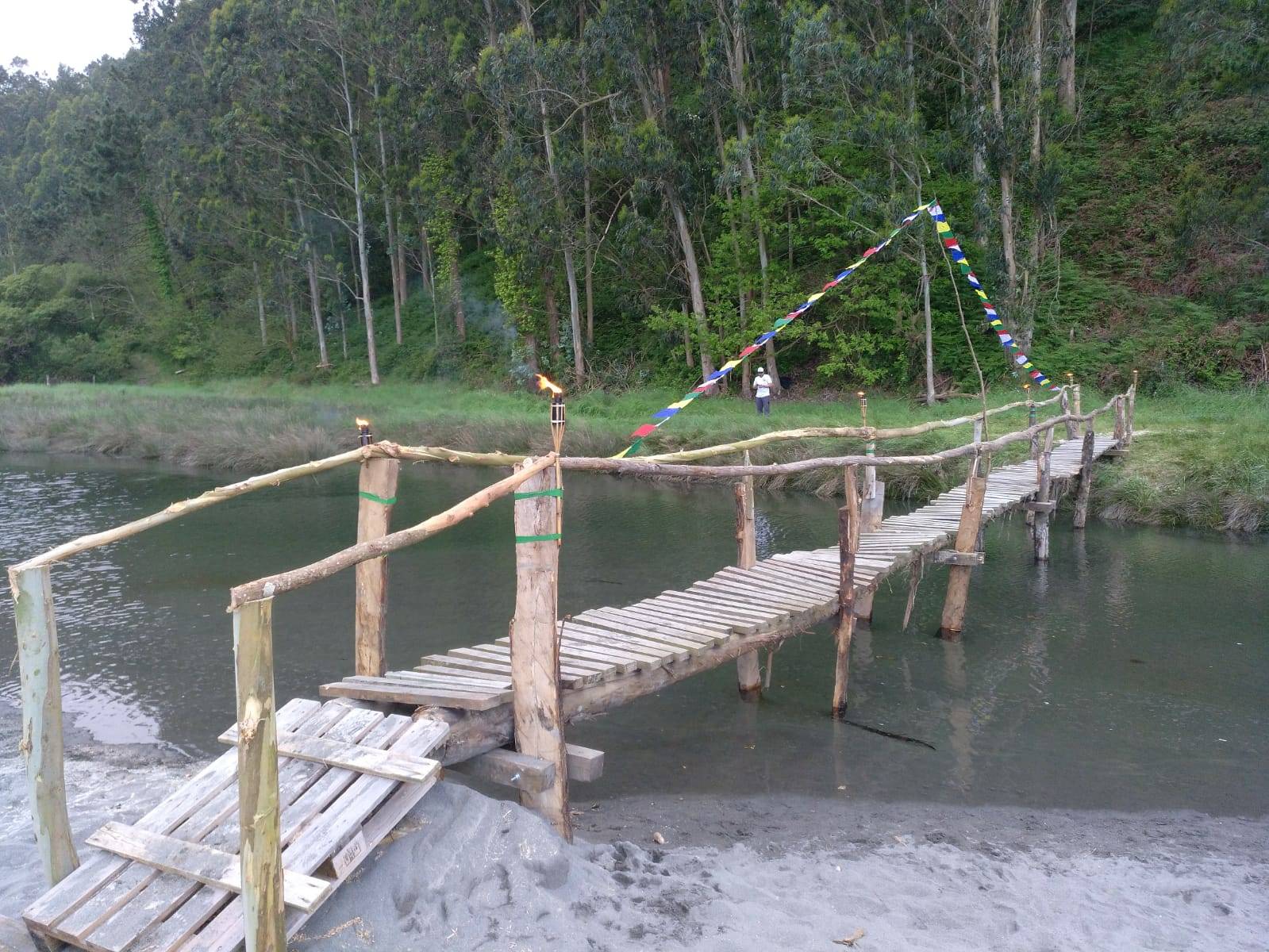
    To access the beach, the Friends of Barayo Association set up a bridge to the work area on the left side of the river. Thank you so much!

    The most important part: You can still register today and tomorrow by clicking here


  • Life+ARCOS celebrates the Natura 2000 day. Join us!

    Life+ARCOS celebrates the Natura 2000 day. Join us!

    The entities that work with the European LIFE + ARCOS project to restore dune systems have organized a series of activities to celebrate European Natura 2000 Network Day on 21 May.

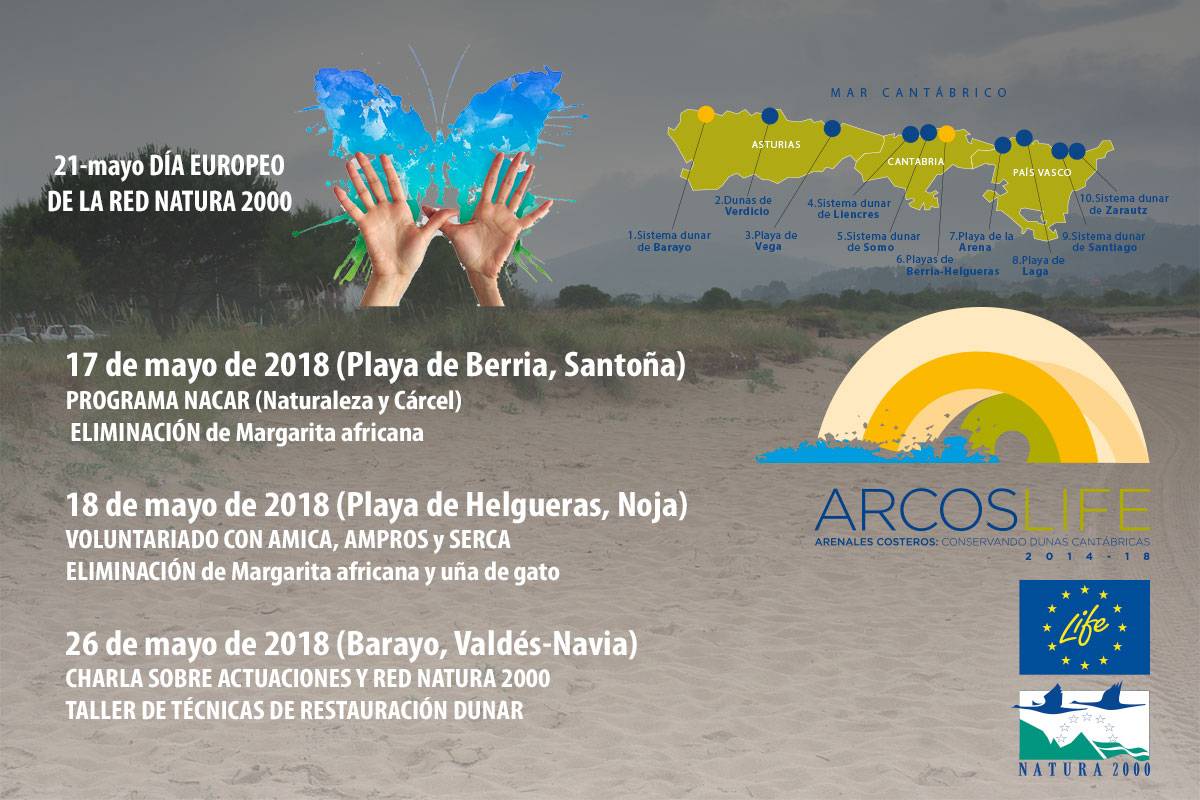
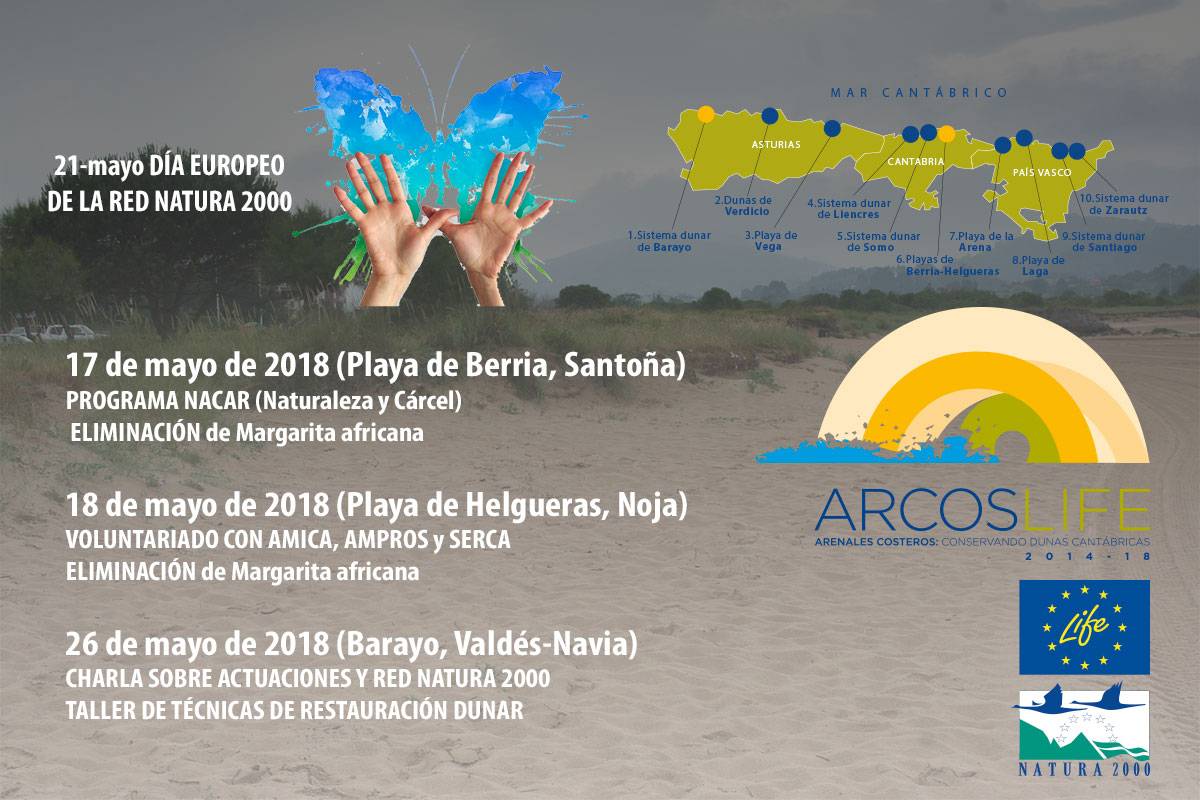
    The -Directorate-General of Natural Environment of the Government of Cantabria has organized two activities to commemorate European Natura 2000 Network Day: on 17 May—in collaboration with the NACAR (Nature and Prison) Programme—project personnel, inmates and civil servants from the El Dueso Penitentiary will participate in an invasive species activity on the Cape weed at Berria beach (Santoña). And, on 18 May, disadvantaged and disabled groups will also work to extract Cape weeds and ice plant at Helgueras beach (Noja).

    The University of Oviedo—with collaboration from the company Ecología Litoral, S.L. and the Friends of Barayo Association—has organized a volunteer day on 26 May on Barayo beach (city councils of Navia and Valdés), completed with a workshop on extracting the invasive plant and planting dune species. At 10:30 AM they will talk about the project objectives at the Barayo Partial Nature Reserve Interpretation Centre (village of Vigo, Navia). The workshop starts at 12:00 PM on the beach.  Registration is still open on the project’s website www.arcoslife.eu.

    The LIFE+ ARCOS project has been active for four and a half years (2014–2018) and is financed by the LIFE financial instrument of the European Union for a total of €945,428. Its work includes improving the conservation status of 10 dune ecosystems on the Cantabrian coast throughout the regions of Asturias, Cantabria and the Basque Country (Barayo, Verdicio, Vega, Liencres, Somo, Berria-Helgueras, La Arena, Laga, Santiago and Zarautz). The entities participating in this development project are: The University of Oviedo (beneficiary coordinator), Aranzadi Science Society, Government of Cantabria (Directorate-General of Natural Environment), Provincial Council of Gipuzkoa, Ecología Litoral S.L. and the Directorate-General for the Sustainability of the Coast and the Sea (Spanish Ministry of the Environment, Agriculture, Fisheries and Food); this directorate provides plants—free of charge—for restoration efforts via the dune garden centre of  Loredo (Cantabria) while the Provincial Council of Gipuzkoa provides plants for this area via the nursery centre of Arizmendi.

    https://www.arcoslife.eu/

    https://www.facebook.com/ARCOSLIFE/

    https://twitter.com/infoarcoslife

  • You can register now to attend our activities in Barayo (Navia-Valdés, Asturias) on 26/05/2018 to celebrate the European Natura 2000 day

    You can register now to attend our activities in Barayo (Navia-Valdés, Asturias) on 26/05/2018 to celebrate the European Natura 2000 day

    Participate in our celebration of European Natura 2000 Network Day, the largest network of protected areas in the world.

    Register to volunteer on 26 May 2018. Together, we’ll learn about the Cantabrian dune system restoration work carried out by the Life+ARCOS project.

    Within the protected area of the Barayo Partial Nature Reserve (Navia and Valdés, Asturias), we’ll talk and learn about dune restoration work.

    Friends of Barayo Association

    We are very happy that members of the Friends of Barayo Association are going to participate in this activity. They have many members and are very familiar with this area. If you are a member of the group, please tell us on the form below.

    To participate in this day and stay informed about the timetable, fill out this registration form.

    Register now! (limited space available)

    Contact: arcoslife@uniovi.es

  • Excited to celebrate Natura 2000 day in May 2018

    Excited to celebrate Natura 2000 day in May 2018

    We couldn’t wait any longer to tell you about European Natura 2000 Network Day! We could not wait any longer to tell you about this day, because are preparing something really interesting to share with you all.

    On 21 May, Europe celebrates the creation of Natura 2000 Network (the largest network of protected areas in the world) Day and the Habitats Directive publication, which legally protects species and habitats in this network.

    Like every year, the LIFE+ARCOS project will form part of the activities that celebrate this special nature conservation day.

    On 19 and 20 May, we’re hosting various communication sessions and volunteer activities within different Asturian (Barayo beach, between Navia and Valdés), Cantabrian and Basque dune systems.

    Please keep an eye on our website and social media profiles: we’ll post more information about how you can join our efforts at various points on the Cantabrian coast.

  • LIFE ARCOS project commemorates the European Day of the Natura 2000 Network with volunteer activities in Cantabria

    LIFE ARCOS project commemorates the European Day of the Natura 2000 Network with volunteer activities in Cantabria

    Activity within the LIFE Arcos (2014-18) project is continuing in Cantabria, with volunteering work in collaboration with different entities from the Autonomous Community.

    The Helgueras and Trengandín dune systems have been the focus of the activity over the past two days of work, which have contributed towards recovering the natural dynamic of these systems by mechanically eliminating different species of invasive exotic flora.

    The first of these days took place on 12th May, with the collaboration of a group of inmates from the El Dueso Penitentiary Centre. Within the NACAR (Nature and Prison) Programme, this group has undertaken outstanding work in restoring the dune by eliminating invasive species, reproducing and planting local species, removing waste, etc.

    On this occasion the tasks focused on eliminating ice plant (Carpobrotus edulis) from the dunes on the Helgueras beach. Prior to the work, as on previous occasions, the Director of the Santoña, Victoria and Joyel Marshes Natural Park gave a quick explanation to the participants about the dune dynamic and the problems that invasive species cause on these ecosystems. After this brief introduction and a practical demonstration of how to correctly treat and eliminate the species in question to ensure that the work is effective, the work began, resulting in the removal of some 1,600 kg  of ice plant from a surface area of around 120 m2. The group performed a 3 km hike from the Berria beach in the town of Santoña to reach the work zone, located on the Helgueras beach in Noja.


    Volunteering Group from the NACAR Programme

    The action was supported by the Noja Council, firstly represented by the Mayor and the Environmental Technician who made a follow-up visit, alongside civil servants from El Dueso Penitentiary Centre, followed by workers from the Council, who helped transport the plant waste extracted during the morning on the most inaccessible part of Helgueras beach.

    NACAR Programme group and the ice plant removal activity

    Members of the work team that had already participated in the NACAR Programme on previous occasions were given LIFE ARCOS t-shirts, which were enthusiastically received.

    NACAR Programme group and the ice plant removal activity

    The second work day took place on 17th May, coinciding to commemorate the European Natura 2000 Day. The activity was carried out with the collaboration of the AMICA and AMPROS associations, and the SERCA Special Employment Centre, which as on previous occasions, collaborated actively with the LIFE Arcos project, splitting into three action groups. 

    AMICA volunteering team

    The location chosen for these tasks was the Trengandín beach dune system, which despite being a clear example of the consolidation of the ecosystems of this nature, also presents a significant amount of invasive exotic species.

    At the start of the day, various regional and town authorities attended to greet participants in person. The Councillor from the Natural Environment, Fisheries and Food Department , the Directorate General of the Environment, the Head of the Government of Cantabria Conservation Service and the Noja Council Mayor, with environmental experts and council members.

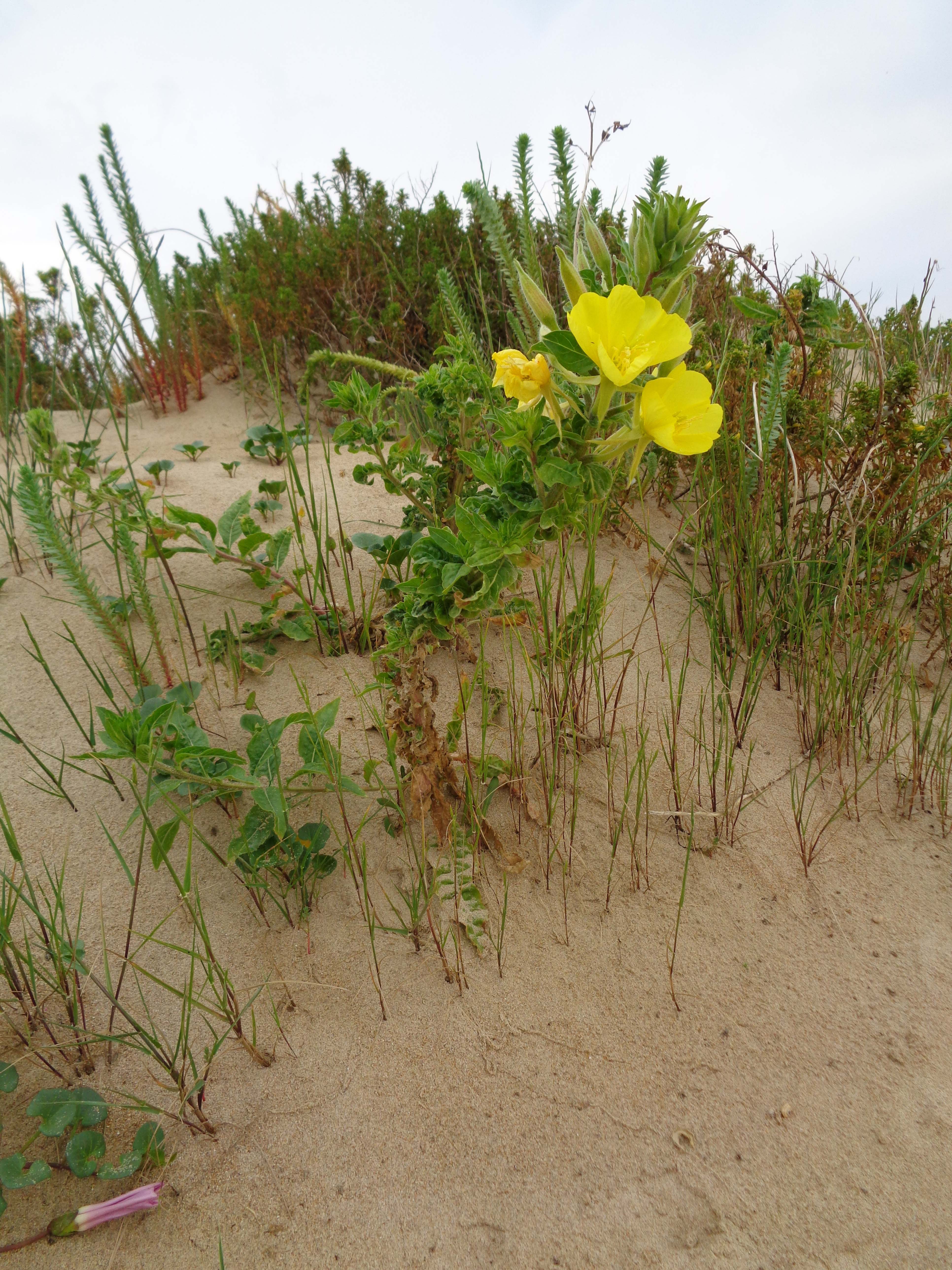
    After the formal greeting, participants were given an introductory explanation about how the dune systems work, the invasive plants and how to eliminate them, and the targets of the LIFE ARCOS Project, in this case focusing specifically on the invasive exotic species, evening primrose (Oenothera glazioviana).

    Volunteering group with the Councillor from the Natural Environment, Fisheries and Food Department
    Evening primrose present in the dune system (Oenothera glazioviana).

    Once the guidelines and aim of the activity were established, the work areas were marked out and the task began, which continued until the rain brought the activity to a close. By this point the group had already removed the evening primrose from a considerable stretch of dune (200 kg and 2 kg of waste) over an area covering around 10,000m2. To end the activity, participants from AMICA, SERCA and AMPROS were all given a LIFE ARCOS logo pendant, which is one of the ceramic pieces that has been made in their Workshops at the El Dueso Penitentiary Centre, as well as pen holders and flower pots. 

    LIFE ARCOS ceramic works produced in the El Dueso Penitentiary Centre Workshop

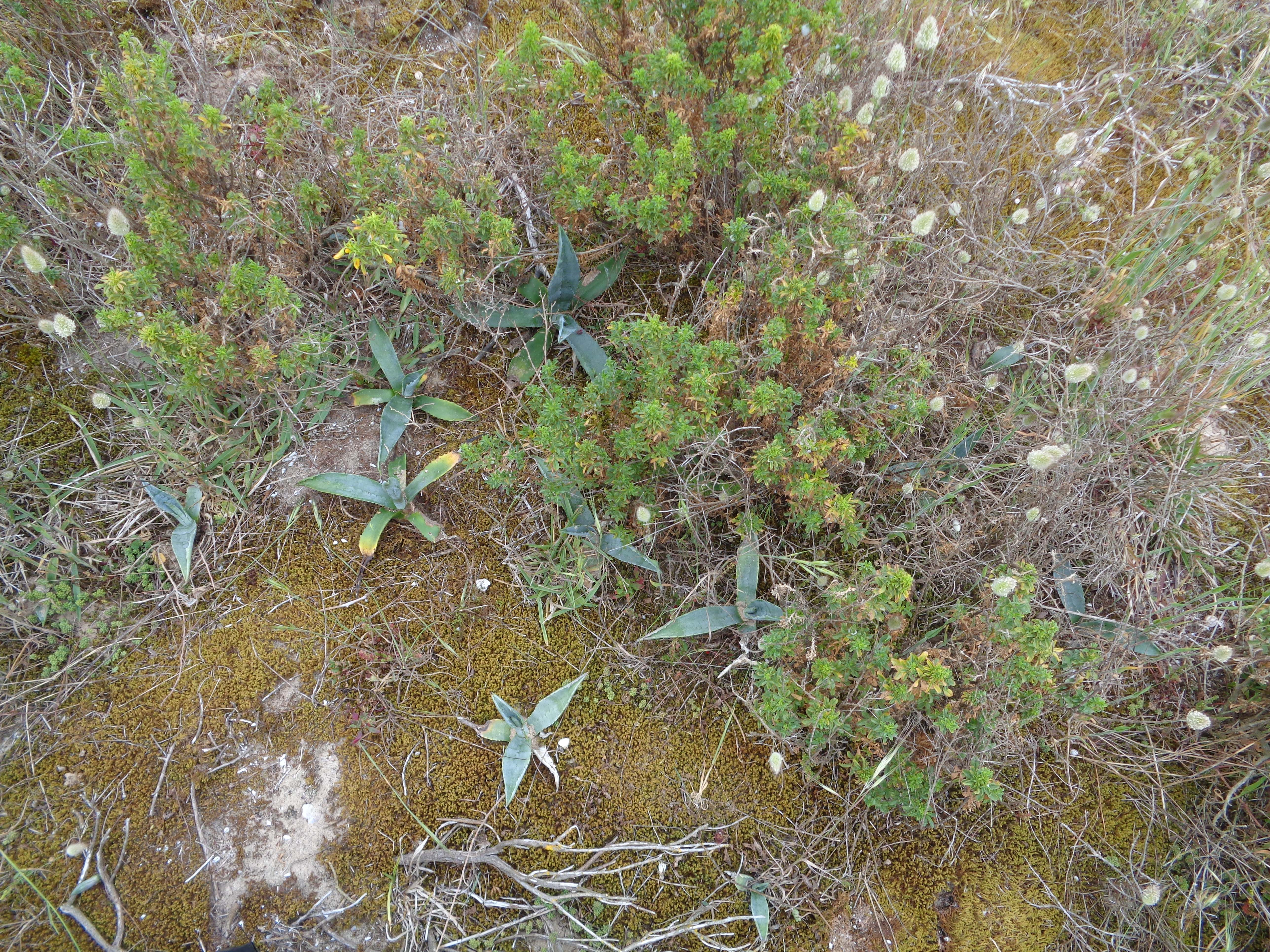
    During the task of removing the evening primrose, another exotic plant was detected and also removed: Agave americana. It had numerous shoots growing next to the dune vegetation, which would potentially have grown very large.

    Removed specimen of invasive species, Agave Americana


    The work performed on both days was supported by staff from the  Cantabrian Rural Development Network team, whose collaboration in removing and managing the plant waste obtained was paramount.

    These kinds of actions represent a major advance in terms of controlling invasive species, and show that adding up small actions can create a big result, which is why it falls to the Government of Cantabria Directorate General of the Environment to thank the collaborating entities for their involvement, without which these tasks would have been impossible.