Etiqueta: Noja

  • Controlling ice plant on the Helgueras beach (Noja, Cantabria) within the NACAR programme and volunteering

    Controlling ice plant on the Helgueras beach (Noja, Cantabria) within the NACAR programme and volunteering

    Controlling ice plant on the Helgueras beach (Noja)

    NACAR Programme (Nature and Prison) and volunteering within the LIFE ARCOS Project

    On 21st November, a new volunteering day was held in association with the NACAR Programme (Nature and Prison) to eliminate invasive flora within the activities of the LIFE ARCOS Project, coordinated in Cantabria by the Directorate General of the Environment of the Government of Cantabria Natural Environmental, Fisheries and Food Department.

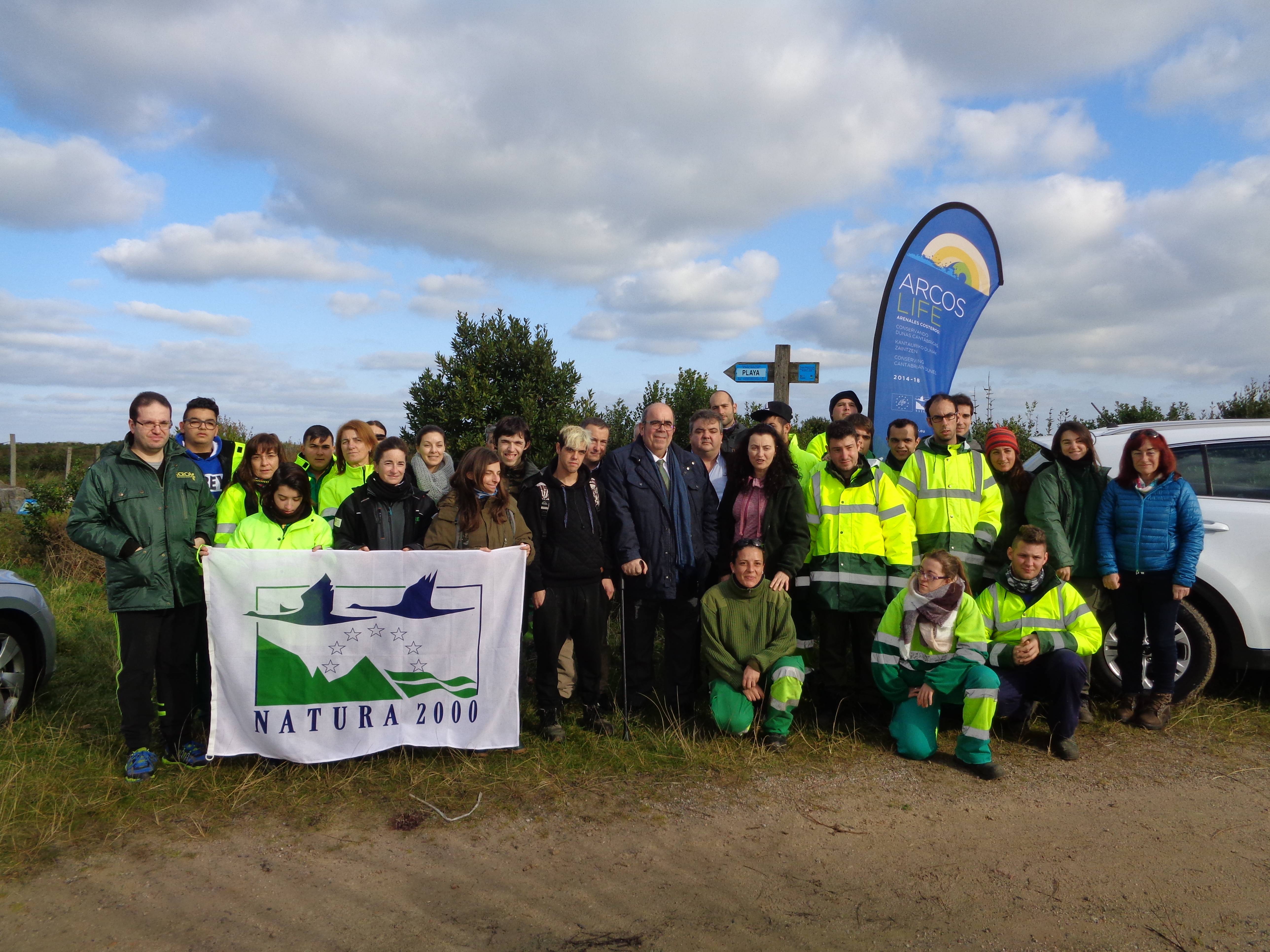
    Work was carried out on the Helgueras beach dunes (Noja) with the participation of inmates and workers from the El Dueso Penitentiary Centre, support from the Cantabrian Rural Development Network team, technical staff from the Government of Cantabria Directorate General of the Environment, and logistical support from the Noja Council.

    Before starting, participants took a short walk from the Berria beach (Santoña), across the El Brusco mountain towards the Helgueras beach. This route was the ideal introduction to the day, revealing how dune systems work and how important they are, giving participants a first-hand insight into the dune restoration actions carried out on the Berria and Helgueras beaches within the LIFE ARCOS Project, some performed in collaboration with the NACAR programme.


    Introduction to the day on the Berria beach

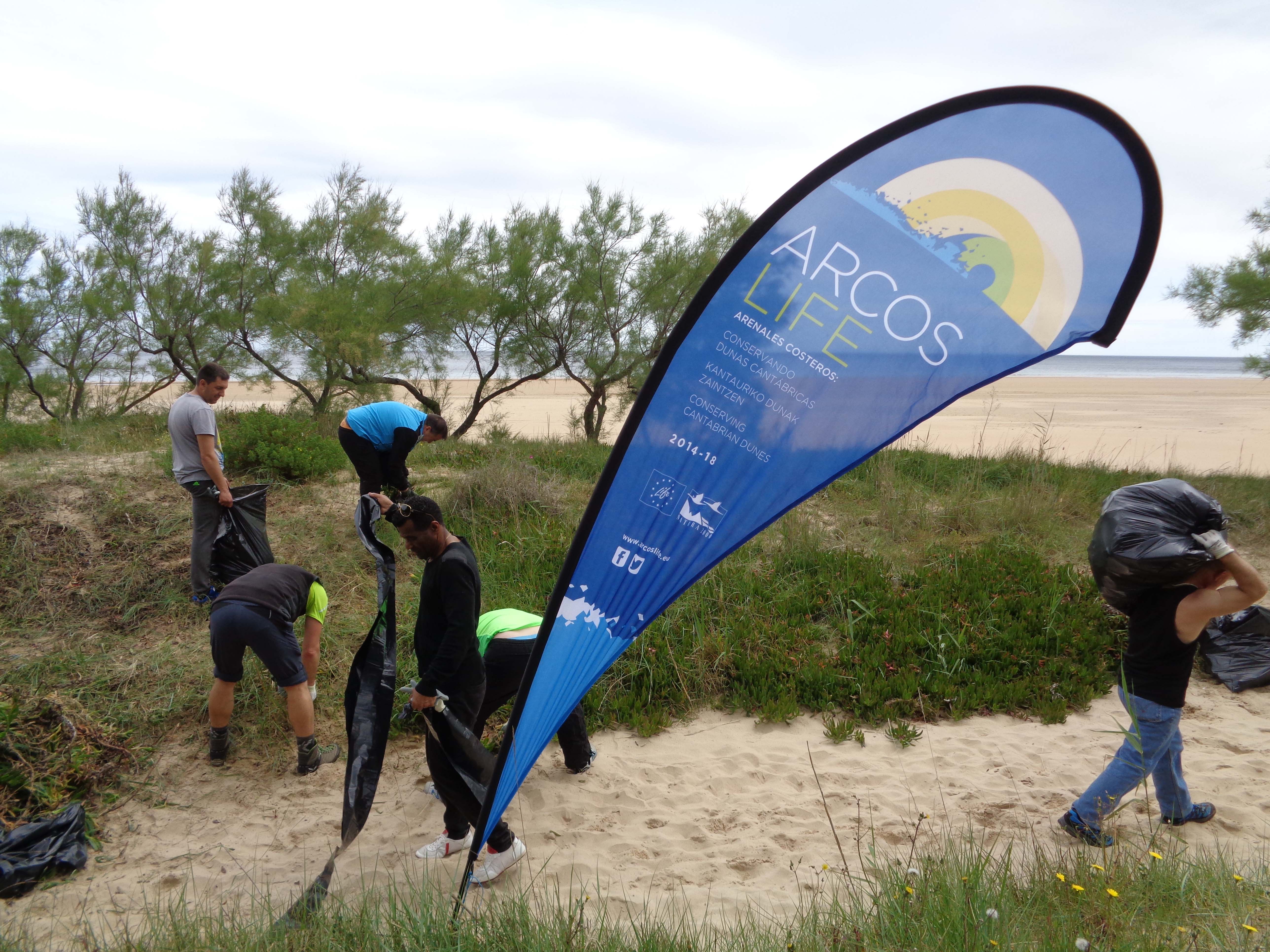
    The main part of the activity consisted in eliminating various patches of ice plant (Carpobrotus edulis) found on the Helgueras dune system, a demanding job given that it is a particularly complex species to remove. In just a few hours of work, around 1500 kg of ice plant were removed, taken off the beach by teams from the Noja Council to be managed by the Cantabrian Rural Development Network.

    The team removing ice plant from the Helgueras beach (Noja)

    Despite their work mainly focusing on the ice plant, both during the route between the beaches and throughout their activities, participants also collected a large amount of non-biodegradable waste, mainly plastics.

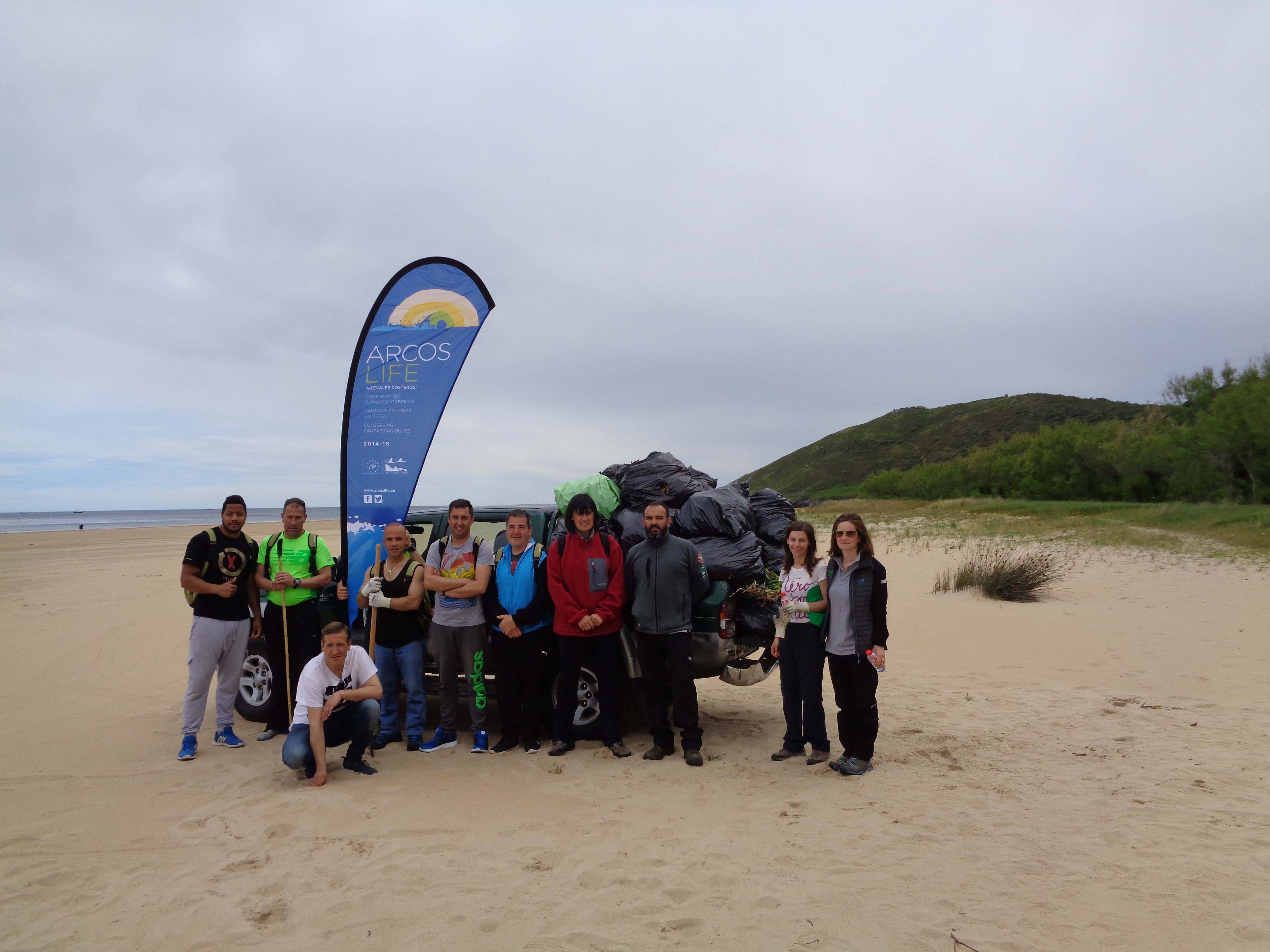
    Work group with some of the bags of extracted ice plant

    Once again, we greatly appreciate the collaboration of all those involved in the NACAR programme for their work within the LIFE ARCOS European Project, which has already been the architect of numerous activities to support the conservation of Protected Natural Spaces. We should keep in mind that these activities are undertaken on the Santoña, Victoria and Joyel Marshes Natural Park dune systems, also protected as Special Conservation Areas; SCA Santoña, Victoria and Joyel Marshes; Special Protection Areas for Birds; SPAB Santoña, Victoria and Joyel Marshes; and Ajo Estuary and the Santoña Marshes Wetlands of International Importance.

    During the activity, participants were visited by representatives from the Noja Council environment department, who via the Councillor for the Environment, Health and Spatial Planning, and the Environmental Officer, wished to thank participants for the work undertaken in the pursuit of conserving the dune system.

    Finally, and with the hope that this programme may continue, the Directorate General of the Environment thanked the people and bodies that participated in the activity for their collaboration and the chance to keep working and learning together.
  • Chronicle #2: Celebrating Natura 2000 day. Removing capeweed plants from Helgueras (Noja)

    Chronicle #2: Celebrating Natura 2000 day. Removing capeweed plants from Helgueras (Noja)

    The companies AMICA, AMPROS and SERCA received training and volunteered for the LIFE ARCOS project

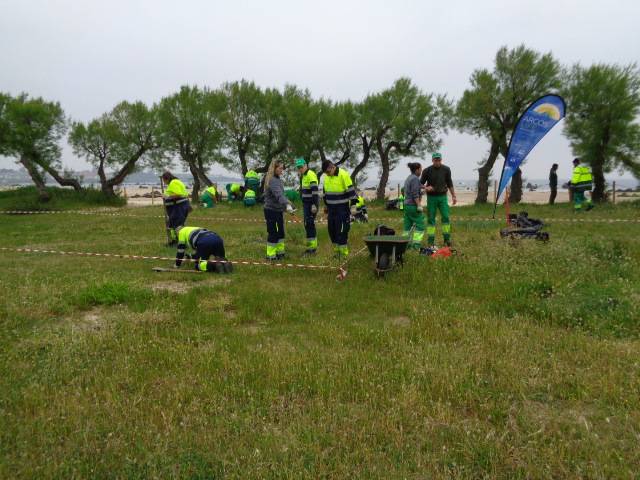
    We celebrated European Natura 2000 Network day on 18 May 2018 with a new volunteer and training event on invasive flora with the LIFE ARCOS Project from the Directorate-General of Natural Environment of the Regional Ministry of Rural Affairs, Fisheries and Food of the Government of Cantabria.

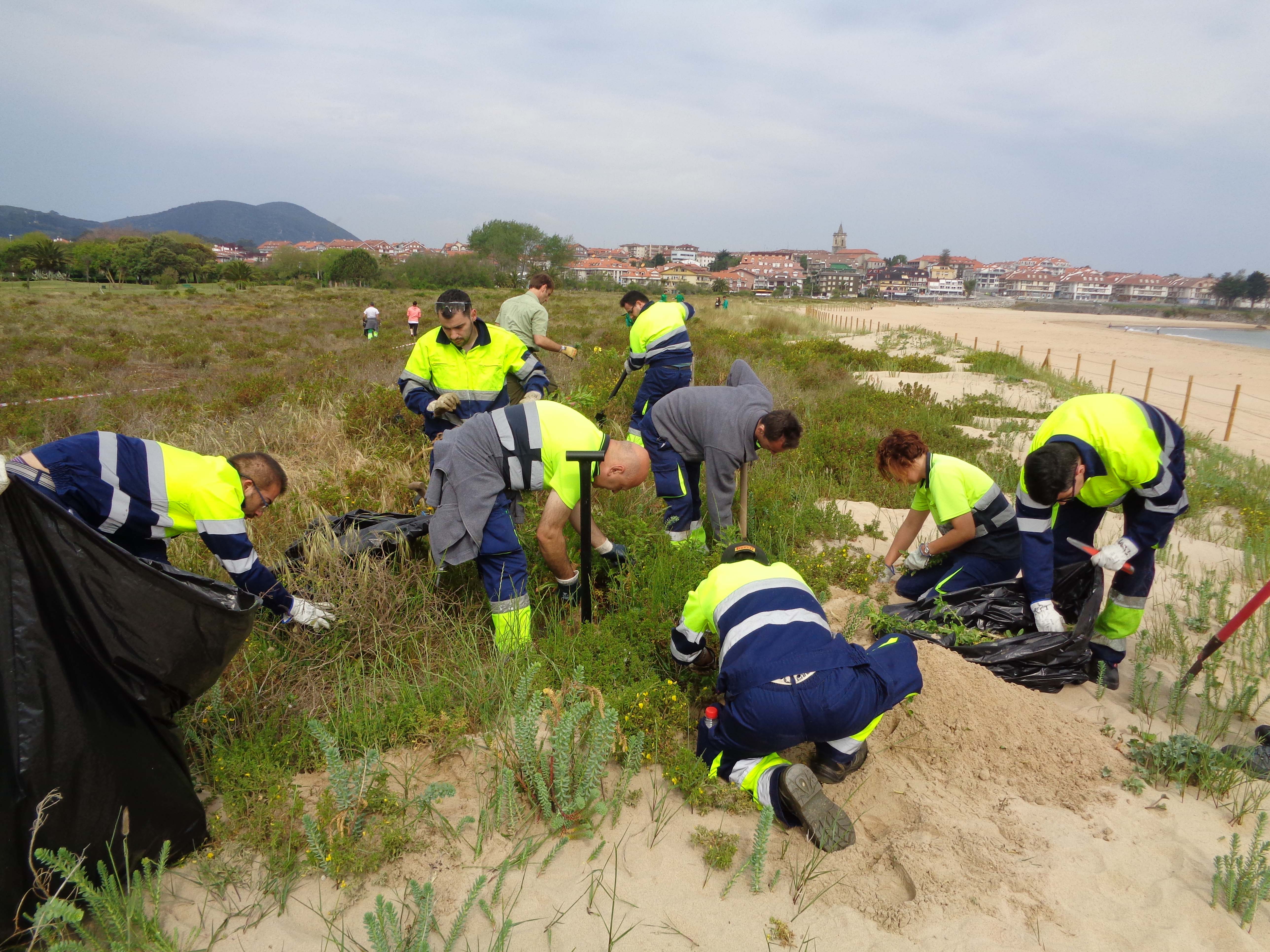
    On this occasion, the Cantabrian companies AMICA, AMPROS and SERCA worked to control the cape weeds that was starting to bloom in the tertiary dunes of the Helgueras beach dune system in Noja (within the Santoña, Victoria and Joyel Marshes Natural Park).  After listening to a brief speech from the natural park director, Lourdes González, the three teams from AMICA, AMPROS and SERCA got to work.  30 people worked within plots marked with temporary plastic tape. They collected approximately 300 kg of cape weeds (Arctotheca calendula), and 10 kg of ice plant (Carpobrotus edulis) was also found.  The participants learned to distinguish the characteristics of the cape weeds among other well-preserved and blooming dune plant species such as the sea potato, sea beet, Virginia stock, shore bindweed, European searocket, petty spurge, etc.

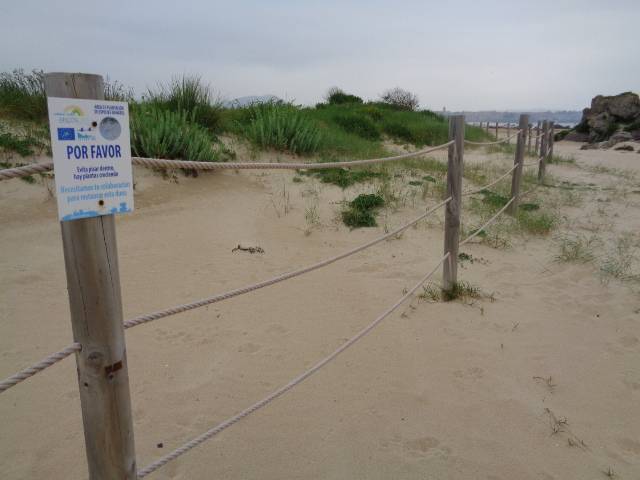
    The work area included dunes closed years ago to regenerate dune vegetation at Helgueras beach.


    Closed dunes of the LIFE ARCOS project

    Although the area was quite clean, volunteers also collected 2 kg of non-biodegradable bags. 

    The day concluded with a visit from the Mayor of Noja, Miguel Ángel Ruiz, the city councillor of the environment, Javier Martín, and two environmental technicians from the City Hall of Noja, Silvia Ochoa y Ludovico de Vega, who visited the volunteer area.

    Finally, the Cantabrian Network for Rural Development collected all the plants and garbage.

    Participants received a commemorative LIFE ARCOS ceramic glass made in a Ceramics Workshop at the El Dueso Penitentiary in its NACAR program (Nature and Prison).

    The Directorate-General of Natural Environment would like to thank volunteers for their participation. Everyone learned something new about the environment and played their part in restoring vulnerable ecosystems: the dune systems of Cantabria.


    Teams from AMICA, AMPROS and SERCA working at Helgueras beach (Noja)
  • Removing ice plant, an invasive species, from Playa de Helgueras (Noja, Cantabria)

    Removing ice plant, an invasive species, from Playa de Helgueras (Noja, Cantabria)

    Volunteering for the NACAR (Nature and Prison) programme in the LIFE ARCOS project

    A new NACAR (Nature and Prison) programme volunteer event took place on 19 April 2018, in coordination with the LIFE ARCOS project from the Directorate-General of Natural Environment of the Regional Ministry of the Rural Affairs, Fisheries and Food of the Government of Cantabria. The goal of the event was to remove invasive flora.

    Collaboration between the NACAR programme and the European LIFE ARCOS programme has brought about various activities, mainly in the dune systems of the Natural Park Marshes of Santoña, Victoria and Joyel (which are also protected as a Special Area of Conservation), SAC Santoña, Victoria and Joyel Marshes (Special Protection Area for Birds), SPAB Santoña, Victoria and Joyel Marshes, Ajo Estuary, and Marshes of Santoña (Wetlands of International Importance).

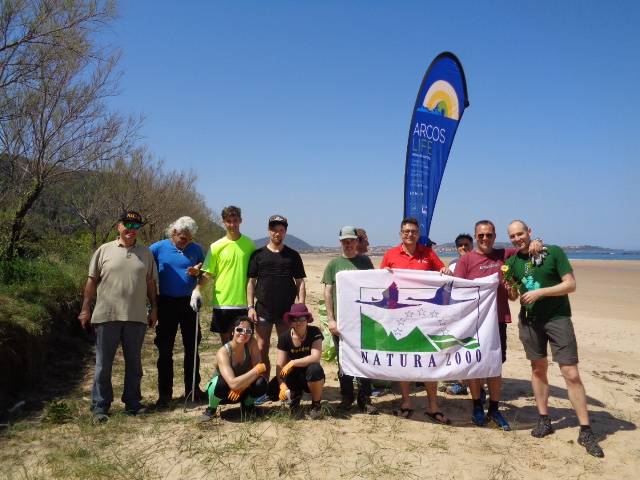
    This time, we worked on the Helgueras beach (Noja) dunes with the participation of inmates and civil servants from the El Dueso Penitentiary. We also had the support of the Cantabrian Network for Rural Development team (and two foreign students interns) and technical personnel of the Directorate-General of Natural Environment of the Government of Cantabria. The Council of Noja provided logistical support.

    The day started with a brief introduction at Berria beach (Santoña), where we explained the importance of dune systems. From there, we made our way towards Noja. On the way, we walked through the El Brusco hill. From different viewpoints, we explained the positive impact the LIFE ARCOS dune restoration project has had on Berria beach over the last few years (some of which was with the NACAR project). Likewise, when passing through the Cantabrian oak-tree forest, we talked about some of its characteristics and referenced the positive effect El Dueso Penitentiary inmates’ work has had there.

    Walk from Berria beach to El Brusco (Santoña)

    Once we passed El Brusco and reached Helgueras (Noja) beach, we started the main activity of the day: extracting ice plant (Carpobrotus edulis). After a few hours of meticulous work—keeping in mind the importance of extracting every single remain of the extracted plants to prevent their return—we eradicated approximately 1,100 kg of ice plant. The Council of Noja team helped us load and dispose of the ice plant at the Cantabrian Network for Rural Development collection point.

    The team extracting ice plant at Helgueras beach (Noja)

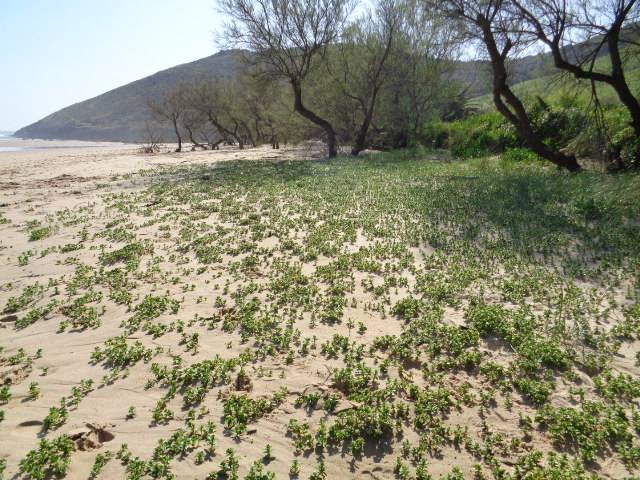
    We also collected various bags full of non-biodegradable garbage and planted sea daffodil (Pancratium maritimum) seeds to control the resurgence of ice plant collected.  We expect this effort to reinforce the natural colonization of dune species in the area, which should be rich in Honckenya peploides community species, but is increasingly scarce on the Cantabrian coast.

    Honckenya peploides community on Helgueras beach (Noja)

    We hope that this programme continues to grow and move forward. We would like to thank the Directorate-General of Natural Environment and everyone who worked on this opportunity to continue working and learning together.
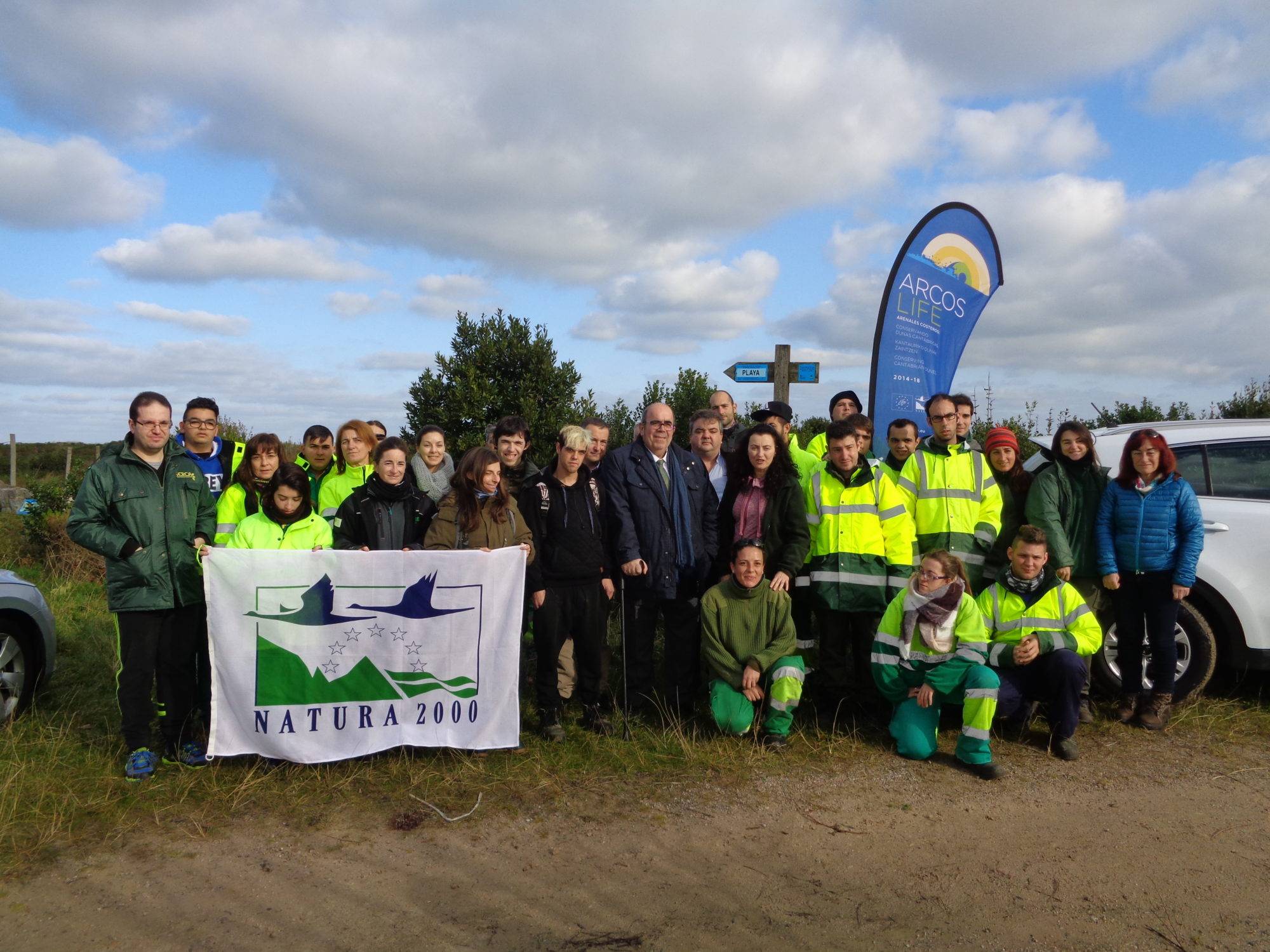
    Work team at Helgueras beach (Noja)
  • Life+ARCOS closes 2017 with a new volunteers action in Cantabria conducted by AMICA-SAEMA, AMPROS and SERCA

    Life+ARCOS closes 2017 with a new volunteers action in Cantabria conducted by AMICA-SAEMA, AMPROS and SERCA

    On 20th December 2017 a new volunteering day was held, with participants from the AMICA-SAEMA, AMPROS and SERCA groups, closing the annual LIFE Arcos project activity in Cantabria.  

    The activity took place on the Helgueras-Trengandín beach dune system in Noja.  The area chosen for the activity had undergone work on previous occasions, and the effectiveness of the actions carried out over the past years to control invasive species within the LIFE Arcos project were evident. 

    Before starting, the Director of the Santoña, Victoria and Joyel Marshes Natural Park gave the groups a brief introduction about the invasive exotic flora and the importance of eliminating them so as to ensure the conservation of the natural habitats of the Cantabrian dune systems.  Particular emphasis was given during this introduction on identifying the plants to be worked on and how best to control them.  The teams performed an “in situ” recognition and training activity of the invasive exotic species, with the added difficulty of the lack of flowers (given the time of year), which would have made them easier to find.

    The good atmosphere and the energy shown in the tasks carried out made for a productive day, meaning that during the morning the teams managed to remove 1 kg of Crocosmia sp., 2 kg of Agave americana, 6 kg of Sedum praealtum, 10 kg of sweet alyssum (Alyssum maritimum), 18 kg of horseweed (Erigeron canadensis), and 18 kg of evening primrose (Oenothera sp.), totalling 55 kg of invasive plants in an area of approximately 4,000 m2, as well as 3 kg of rubbish.

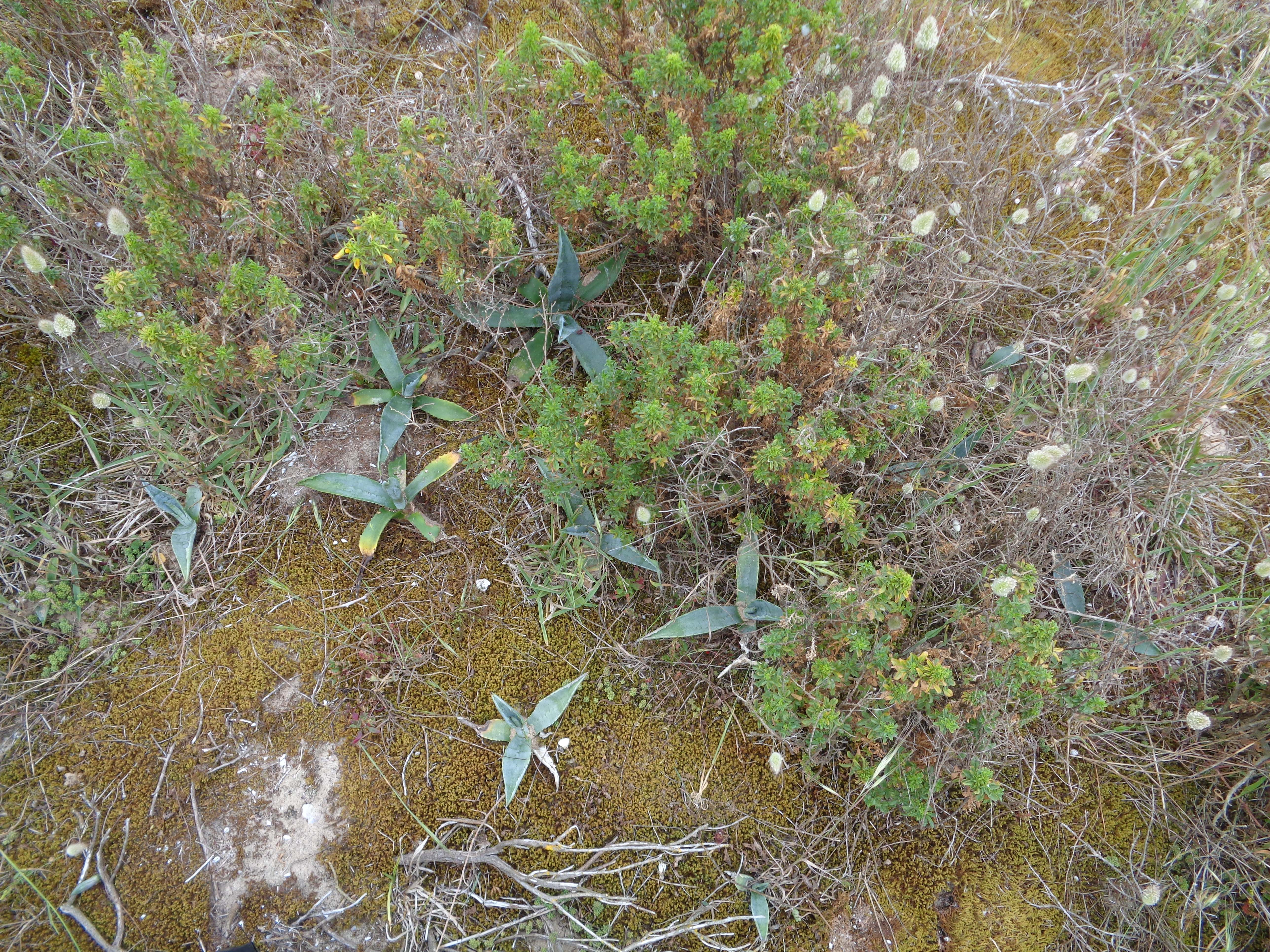
    Agave Americana specimen (invasive species) before being removed by the participants in this volunteering action.

    The day was also supported at all times by the Technician Assistant of the Environment of the area belonging to the nursery, as well as staff from the Cantabrian Rural Development Network and two trainee technicians from the Government of Cantabria Directorate General of the Environment

    At the end of the morning, and to close the activity, participants were greeted by various regional and municipal authorities, with the Councillor for the Environment, Fisheries and Food, the Mayor, and the technical manager of the Noja Council Environmental Department, all visiting the work area in person.  They all concurred that perseverance in

    these tasks was of the utmost importance, and were able to thank the participants for their involvement first hand.

    This way, and with the aim of continuing with collaborations between bodies to implement these tasks to control invasive exotic species, the 2017 LIFE Arcos activities in Cantabria were brought to a close.   It only remains to reiterate the thanks from the Directorate General of the Environment of the Government of Cantabria to all the people and organisations taking part for their interest and good work.

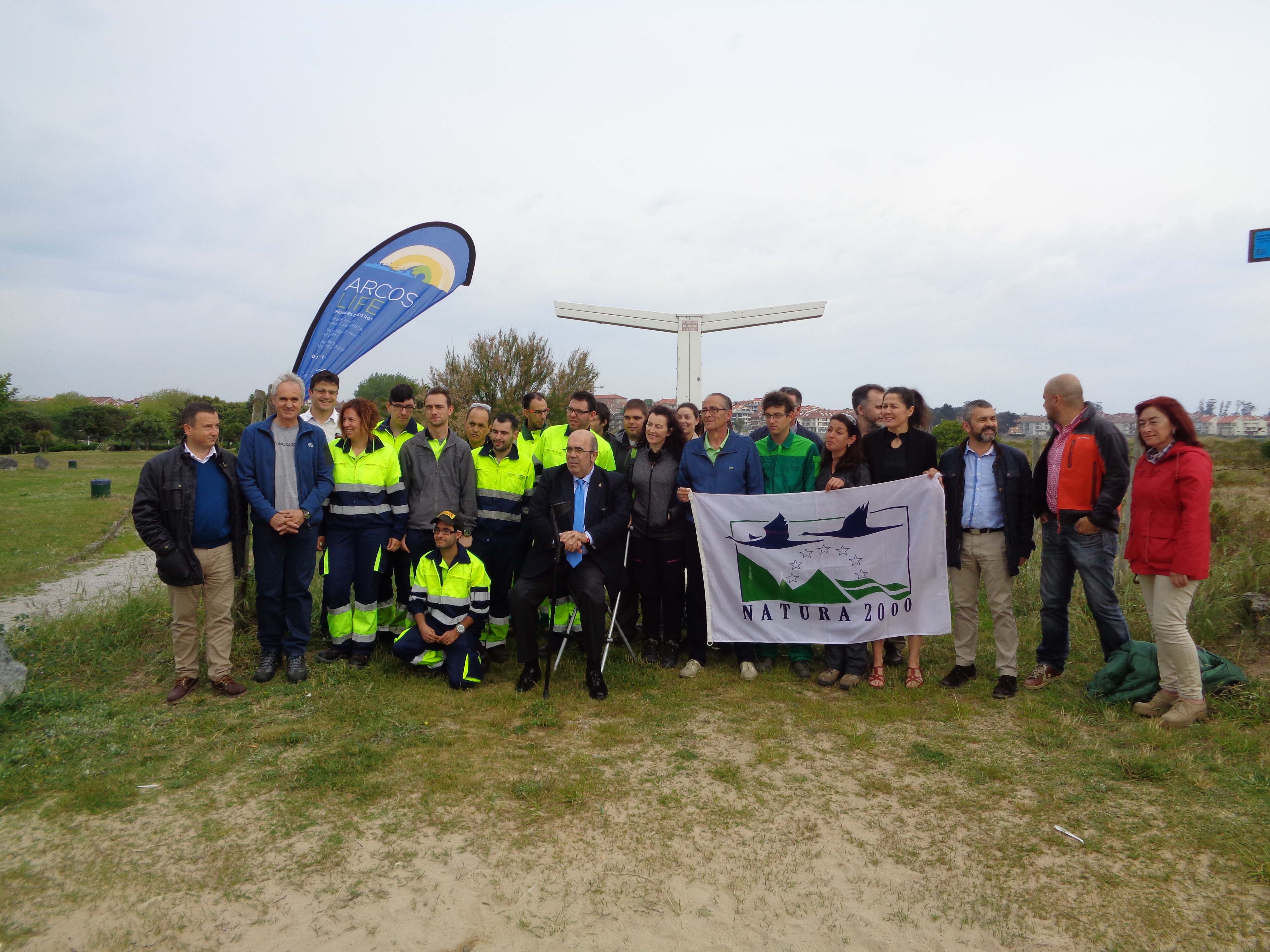
    The participating work team is greeted by the Councillor for the Environment, Fisheries and Food, the Mayor and the technical manager from the Noja Council Environmental Department, among others.
  • LIFE ARCOS project commemorates the European Day of the Natura 2000 Network with volunteer activities in Cantabria

    LIFE ARCOS project commemorates the European Day of the Natura 2000 Network with volunteer activities in Cantabria

    Activity within the LIFE Arcos (2014-18) project is continuing in Cantabria, with volunteering work in collaboration with different entities from the Autonomous Community.

    The Helgueras and Trengandín dune systems have been the focus of the activity over the past two days of work, which have contributed towards recovering the natural dynamic of these systems by mechanically eliminating different species of invasive exotic flora.

    The first of these days took place on 12th May, with the collaboration of a group of inmates from the El Dueso Penitentiary Centre. Within the NACAR (Nature and Prison) Programme, this group has undertaken outstanding work in restoring the dune by eliminating invasive species, reproducing and planting local species, removing waste, etc.

    On this occasion the tasks focused on eliminating ice plant (Carpobrotus edulis) from the dunes on the Helgueras beach. Prior to the work, as on previous occasions, the Director of the Santoña, Victoria and Joyel Marshes Natural Park gave a quick explanation to the participants about the dune dynamic and the problems that invasive species cause on these ecosystems. After this brief introduction and a practical demonstration of how to correctly treat and eliminate the species in question to ensure that the work is effective, the work began, resulting in the removal of some 1,600 kg  of ice plant from a surface area of around 120 m2. The group performed a 3 km hike from the Berria beach in the town of Santoña to reach the work zone, located on the Helgueras beach in Noja.


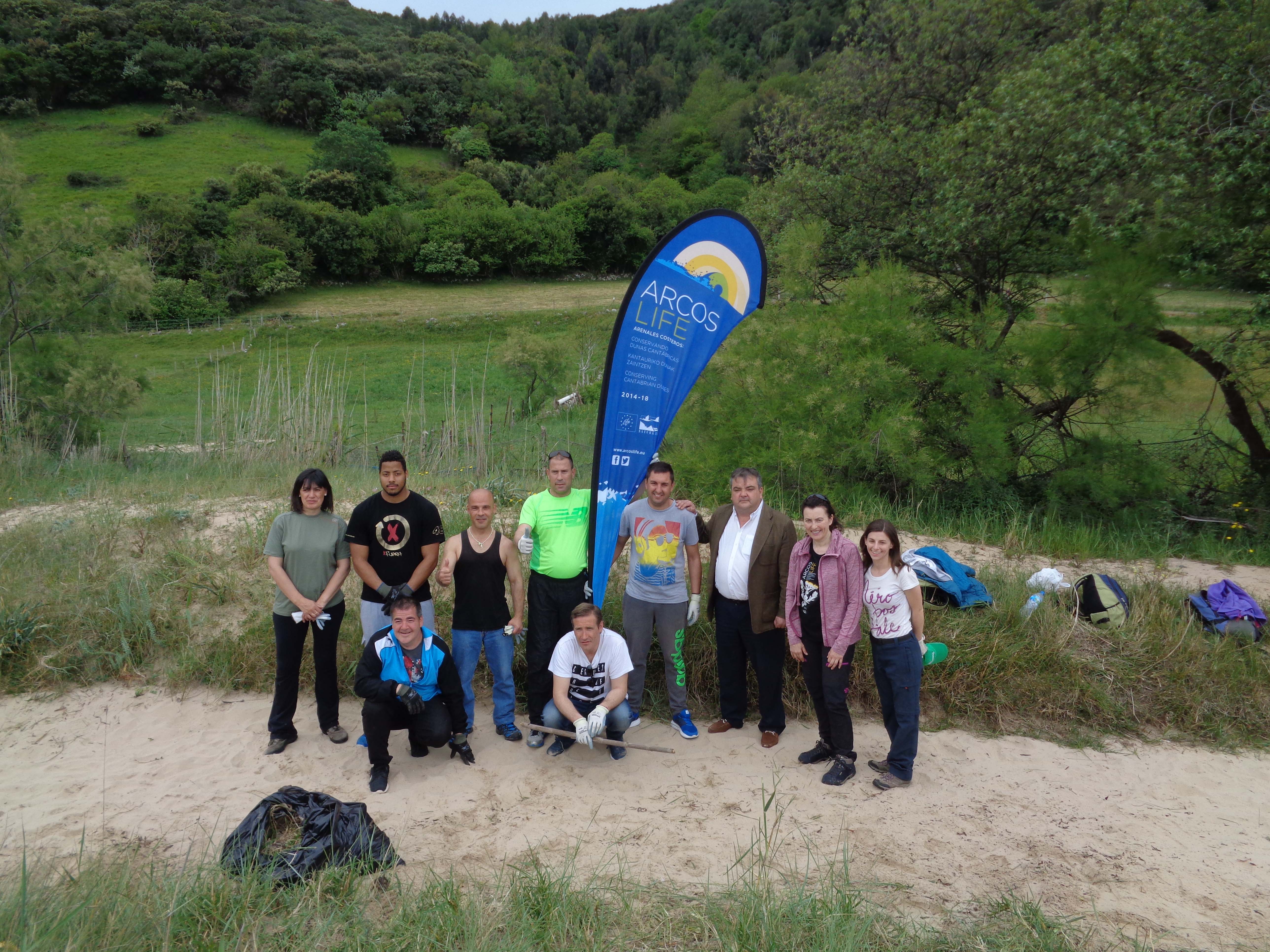
    Volunteering Group from the NACAR Programme

    The action was supported by the Noja Council, firstly represented by the Mayor and the Environmental Technician who made a follow-up visit, alongside civil servants from El Dueso Penitentiary Centre, followed by workers from the Council, who helped transport the plant waste extracted during the morning on the most inaccessible part of Helgueras beach.

    NACAR Programme group and the ice plant removal activity

    Members of the work team that had already participated in the NACAR Programme on previous occasions were given LIFE ARCOS t-shirts, which were enthusiastically received.

    NACAR Programme group and the ice plant removal activity

    The second work day took place on 17th May, coinciding to commemorate the European Natura 2000 Day. The activity was carried out with the collaboration of the AMICA and AMPROS associations, and the SERCA Special Employment Centre, which as on previous occasions, collaborated actively with the LIFE Arcos project, splitting into three action groups. 

    AMICA volunteering team

    The location chosen for these tasks was the Trengandín beach dune system, which despite being a clear example of the consolidation of the ecosystems of this nature, also presents a significant amount of invasive exotic species.

    At the start of the day, various regional and town authorities attended to greet participants in person. The Councillor from the Natural Environment, Fisheries and Food Department , the Directorate General of the Environment, the Head of the Government of Cantabria Conservation Service and the Noja Council Mayor, with environmental experts and council members.

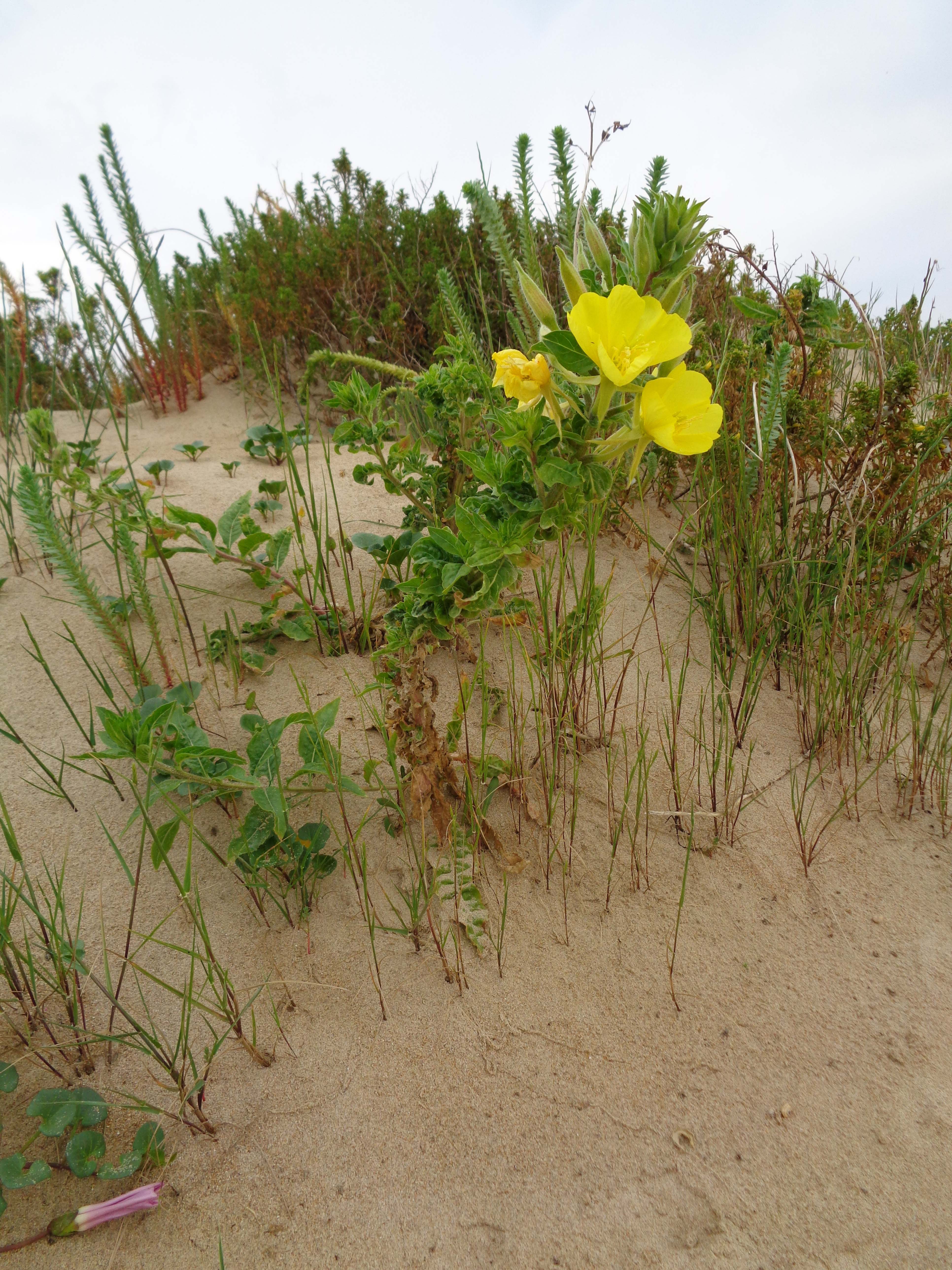
    After the formal greeting, participants were given an introductory explanation about how the dune systems work, the invasive plants and how to eliminate them, and the targets of the LIFE ARCOS Project, in this case focusing specifically on the invasive exotic species, evening primrose (Oenothera glazioviana).

    Volunteering group with the Councillor from the Natural Environment, Fisheries and Food Department
    Evening primrose present in the dune system (Oenothera glazioviana).

    Once the guidelines and aim of the activity were established, the work areas were marked out and the task began, which continued until the rain brought the activity to a close. By this point the group had already removed the evening primrose from a considerable stretch of dune (200 kg and 2 kg of waste) over an area covering around 10,000m2. To end the activity, participants from AMICA, SERCA and AMPROS were all given a LIFE ARCOS logo pendant, which is one of the ceramic pieces that has been made in their Workshops at the El Dueso Penitentiary Centre, as well as pen holders and flower pots. 

    LIFE ARCOS ceramic works produced in the El Dueso Penitentiary Centre Workshop

    During the task of removing the evening primrose, another exotic plant was detected and also removed: Agave americana. It had numerous shoots growing next to the dune vegetation, which would potentially have grown very large.

    Removed specimen of invasive species, Agave Americana


    The work performed on both days was supported by staff from the  Cantabrian Rural Development Network team, whose collaboration in removing and managing the plant waste obtained was paramount.

    These kinds of actions represent a major advance in terms of controlling invasive species, and show that adding up small actions can create a big result, which is why it falls to the Government of Cantabria Directorate General of the Environment to thank the collaborating entities for their involvement, without which these tasks would have been impossible.

  • Life+ARCOS team meets the major of the Noja Council and city councillorscity councillors

    Life+ARCOS team meets the major of the Noja Council and city councillorscity councillors

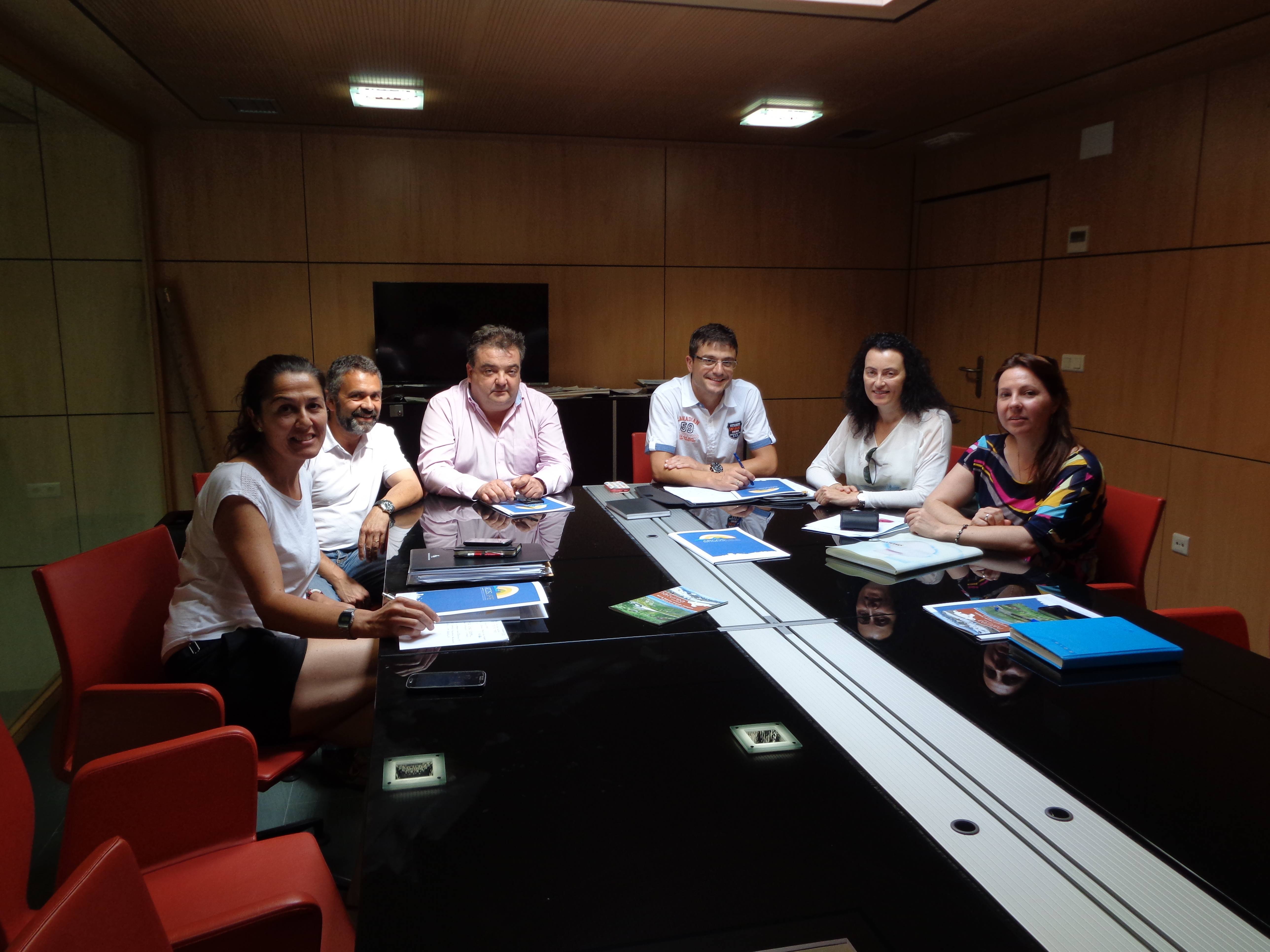
    Meeting at the Council of Villa de Noja, (from left to right) Ms Mónica Cagigas Ocerin (councillor of Procurement, Personnel, Heritage and Treasury), Mr Francisco Javier Martín Vázquez (councillor of the Environment), Mr Miguel Ángel Ruiz Lavín (mayor of Noja), Mr Álvaro Torre Torralbo (councillor of Sports), Ms Lourdes González Azpiri (director of the Santoña, Victoria and Joyel Marshes Natural Park), and Ms Rocío Gándara Revuelta (councillor of Education, Social Services and Healthcare).

    The LIFE+ARCOS project on Helgueras beach (Noja) will continue to do dune system conservation work from the Directorate-General of Forestry and Nature Conservation (currently the Directorate-General of Natural Environment) of the Regional Ministry of Rural Affairs, Fisheries and Food of the Government of Cantabria, which was already being carried out within the Santoña, Victoria and Joyel Marshes Natural Park.

    As stated by the new Noja mayor, Miguel Ángel Ruíz Lavín , and his councillors, the director of the Santoña, Victoria and Joyel Marshes Natural Park of the Directorate-General of Natural Environment of the Regional Ministry of Rural Affairs, Fisheries and Food of the Government of Cantabria (collaborating member of LIFE+ARCOS), Ms Lourdes González Azpiri at the meeting held on 6 August at the Council of Noja.

    Attendees received a thematic portfolio on the LIFE+ARCOS subject “Conserving Cantabrian Dunes” and learned about the scope of action and activities to be carried out on Helgueras Beach through 2018.

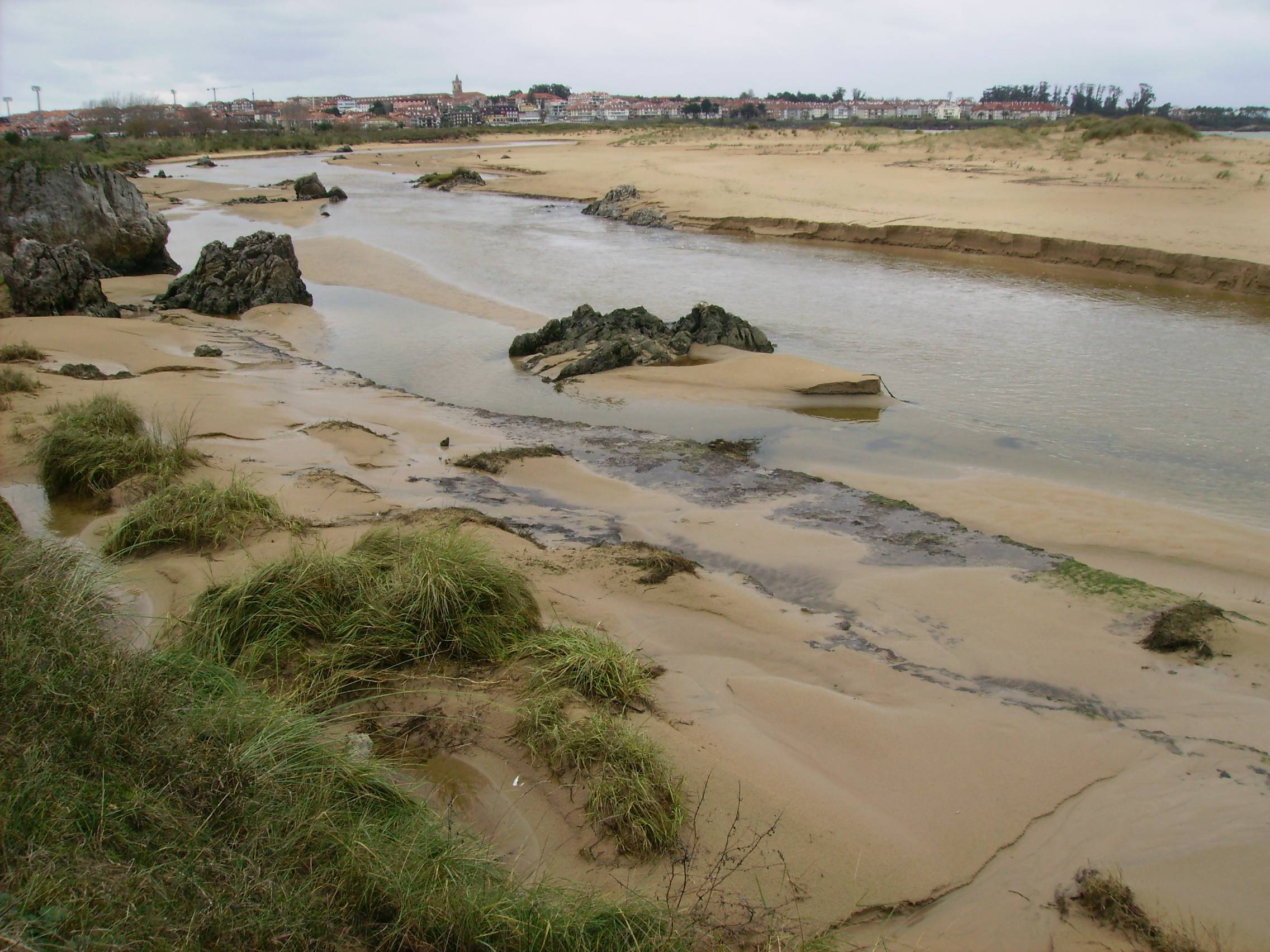
    Estuary of Victoria lagoon and, in the back, the settlement of Noja.

    The activities planned within the project (closing the dunes with wood posts and marine rope, eradicating invasive species and planting dune vegetation as main activities) are relevant to maintain the structure and dynamic of the dune system of Helgueras beach. During the presentation, the mayor expressed his interest in reading detailed information about the beach.

    During the meeting, we talked about the car park problem on Noja’s beaches. We talked about carrying out an activity to mark off an area visitors currently use to park and talked about possible solutions for the municipality during the summer. These potential activities need to be evaluated and studied.

    We also talked about the importance of ensuring dune structure maintenance in an area of the Helgueras dunes that shows signs of erosion. We focused on the importance of mechanical cleaning with a tractor (responsibility of the Council of Noja) on Helgueras and Ris beaches with enough distance from the front of the dune systems to ensure their conservation.

    Mayor Miguel Ángel Ruiz set up a new meeting to talk about different aspects of this Natural Protected Area after summer.