Volunteering for the NACAR (Nature and Prison) program in the LIFE ARCOS project
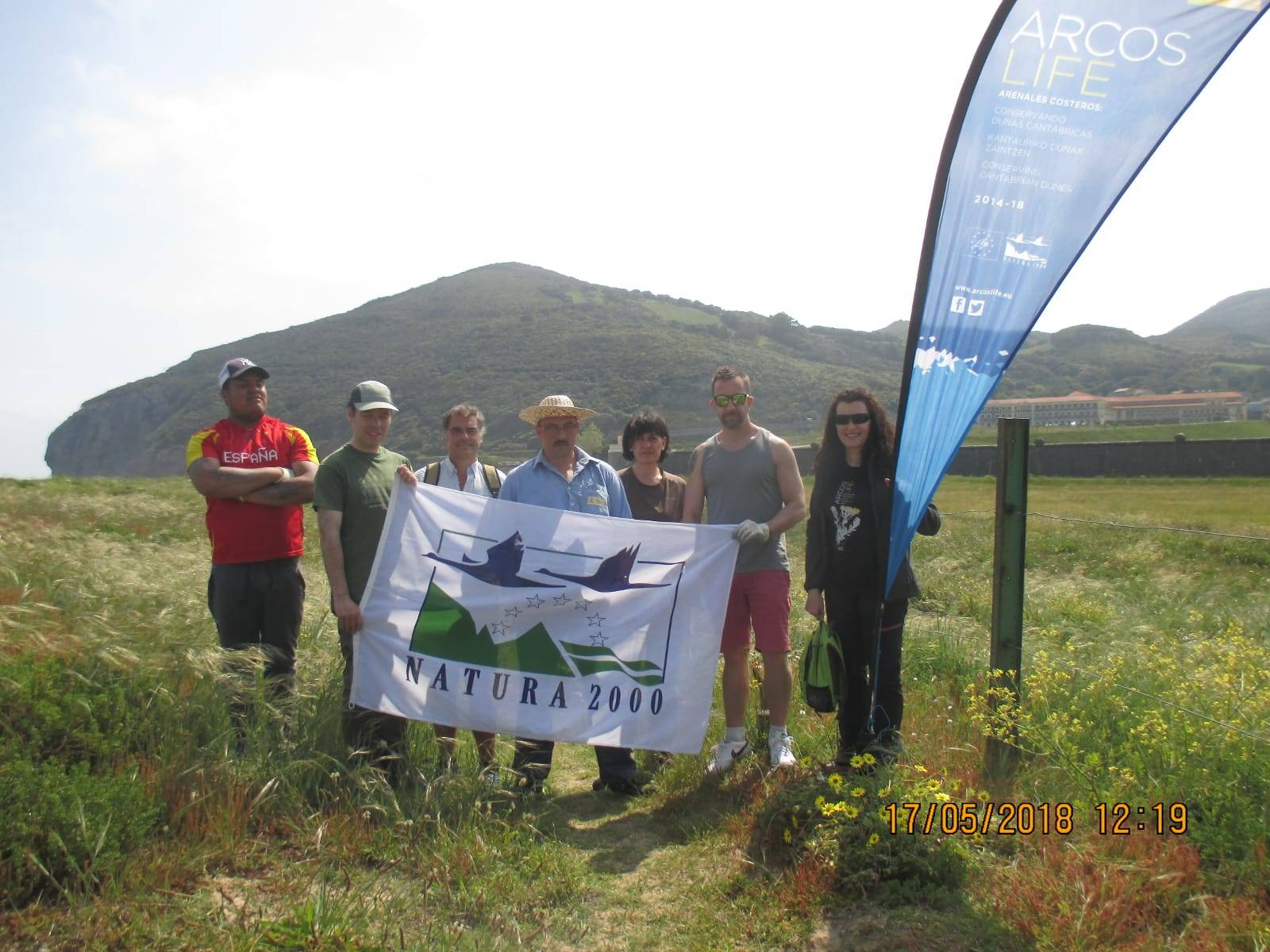
We celebrated European Natura 2000 Network day on 17 May 2018, with a new volunteer event with the Nature and Prison program (NACAR) in coordination with the LIFE ARCOS Project from the Directorate-General of Natural Environment of the Regional Ministry of Rural Affairs, Fisheries and Food of the Government of Cantabria.
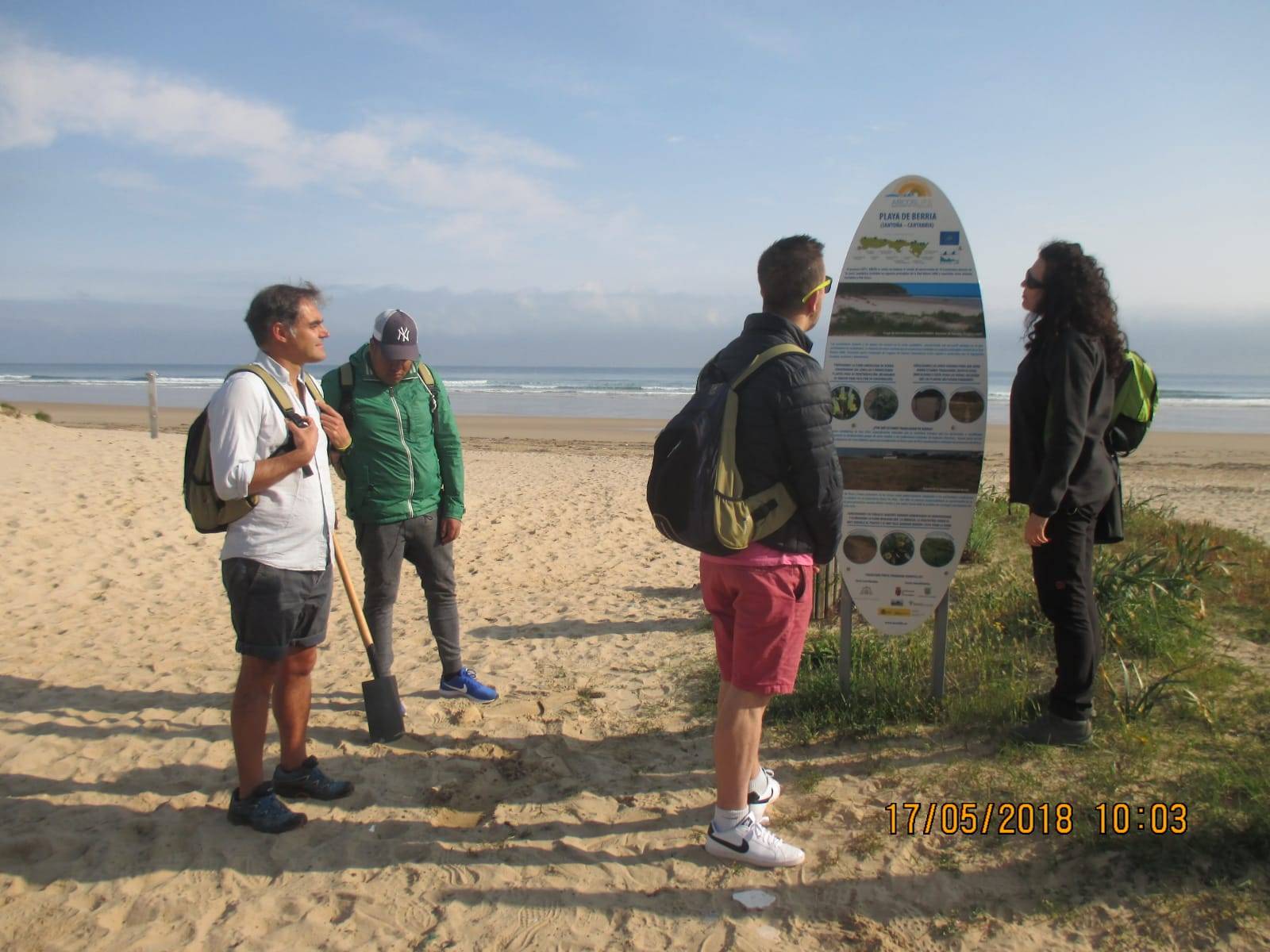
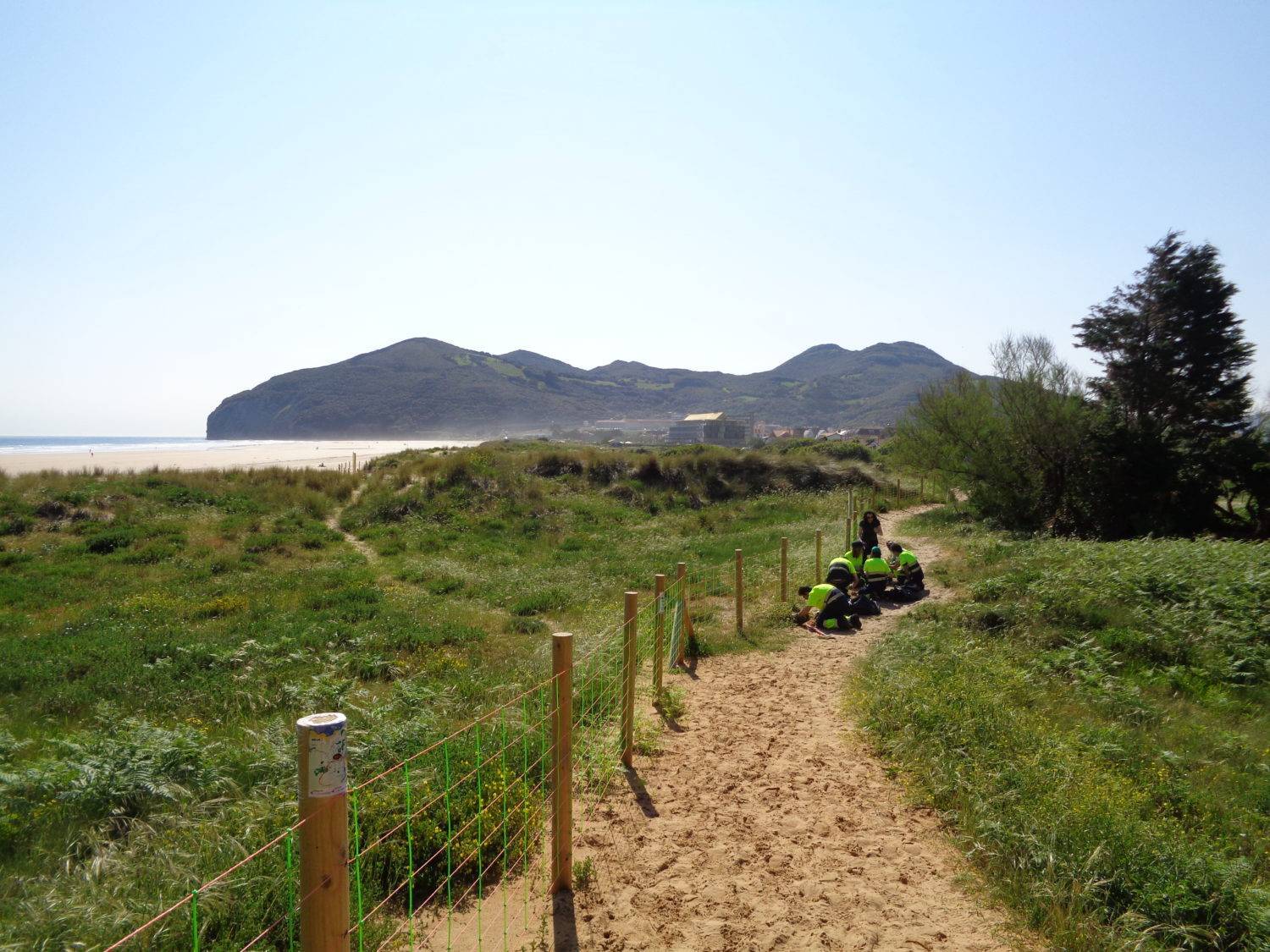
The activity started at the tertiary dune of Berria beach’s dune system.
Natural park director, Lourdes González, briefly introduced the LIFE ARCOS project, the NATURA 2000 NETWORK, the importance of dune ecosystems and how they protect themselves from winter storms, the distribution of dune species in areas and how they are affected by invasive exotic species. The LIFE ARCOS sign at Berria beached was used to answer attendees’ questions.
Beginning of the NACAR volunteer activity at Berria beach
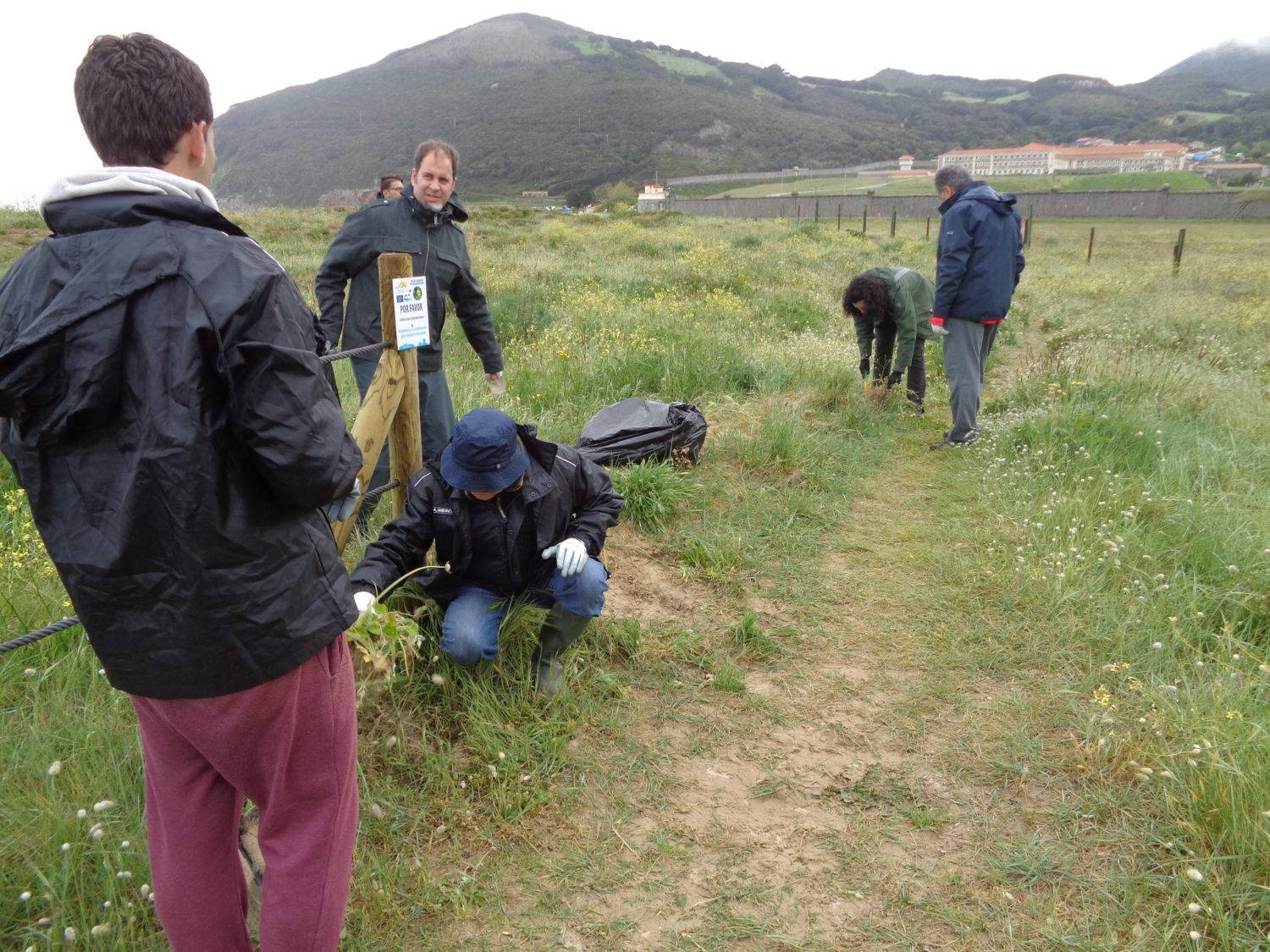
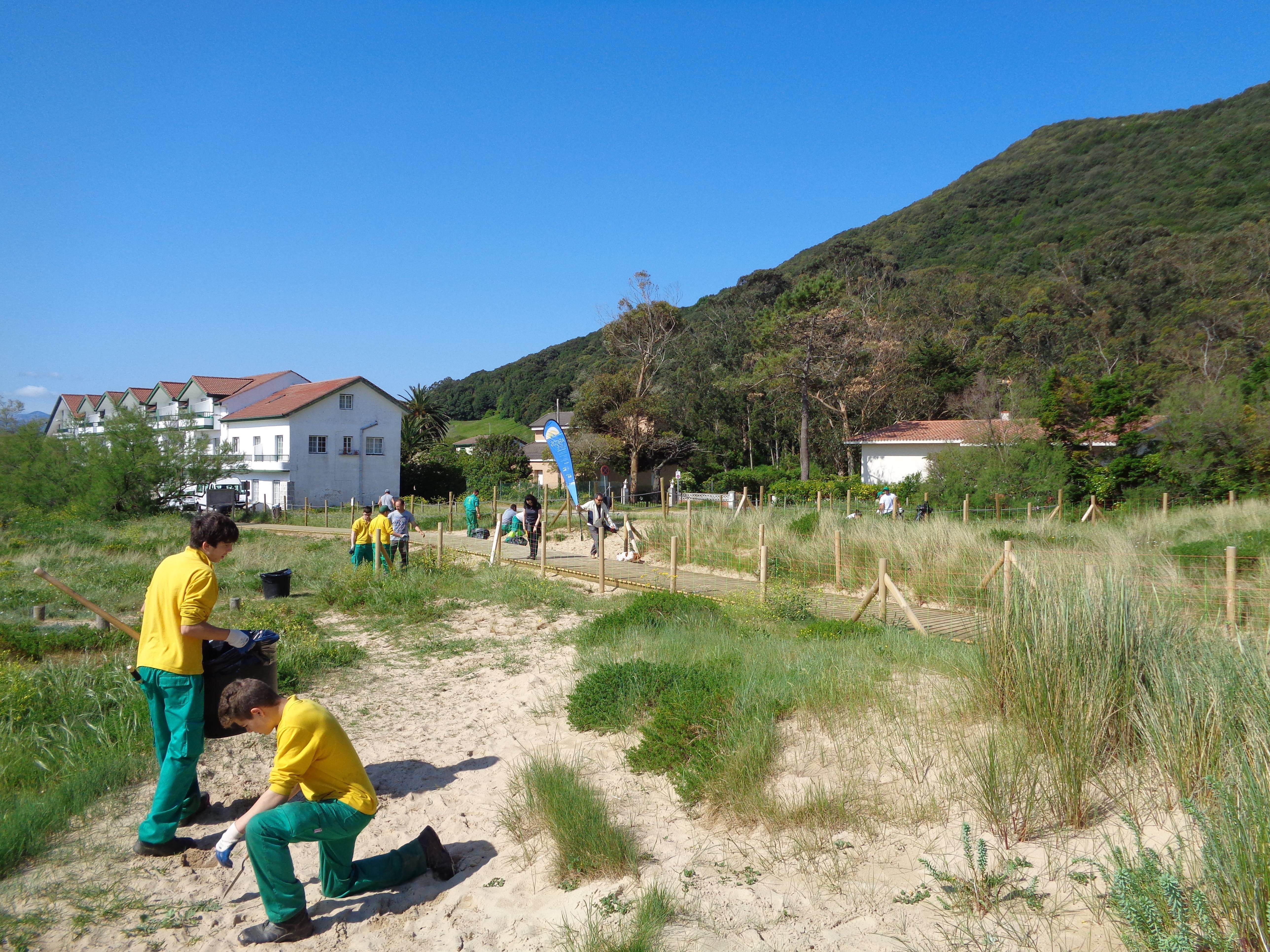
The team got to work after listening to an explanation on how to recognize the cape weeds and how to extract it. The invasive exotic species was everywhere around the boardwalk parallel to the beach. Volunteers focused on this area.
They collected around 130 kg of cape weeds (Arctotheca calendula) and 1 kg of non-biodegradable garbage. The participants learned to distinguish the characteristics of the cape weeds among other well-preserved and blooming dune plant species such as the sea potato, sea beet, Virginia stock, sea daffodil, bindweed, houseleeks, petty spurge, etc.
During break and in the work area, we explained why the dunes were closed by the LIFE ARCOS project. José Luís Tejerina from Demarcation of Coasts in Cantabria visited the site and assessed the work being done.
Extraction of cape weeds from the Berria dunes
Finally, the Cantabrian Network for Rural Development collected all the plants and garbage.
The participants received a commemorative LIFE ARCOS t-shirt.
The Directorate-General of Natural Environment thanked NACAR for participating to conserve and restore the dunes of Cantabria’s beaches.
With the European Natura 2000 Day now approaching, we have included this news about the volunteering days undertaken in Cantabria in 2016, within the framework of the Life+ARCOS project.
Today is not just any ordinary day; we are celebrating the European Natura 2000 Day, and to do this we are holding some environmental awareness activities and carrying out work to control invasive exotic species on the Berria beach dunes (Santoña). One of the beaches included in the European dune conservation and restoration project Life+ARCOS.
On this occasion, pupils from Argoños (Pedro Santiuste Primary School) and Santoña (Macías Picavea Primary School), visited the Berria beach dune system in Santoña on 10th and 12th May 2016, walking along the stretch to discover the dune and its flora and fauna, led by instructors from the Cantabrian Rural Development Network (RCDR in Spanish) who work at the Santoña, Victoria and Joyel Marshes Natural Park Interpretation Centre. The pupils were fascinated and their constant questions helped the Cantabrian Rural Development Network instructors from Cantabria (NATUREA programme) to explain all the ins and outs of the unique flora and fauna species that inhabit the dunes.
Pupils from the Pedro Santiuste Primary School in Argoños, who participated in the activity day
The activities ended with the mini planting of grasses from the tertiary dunes Festuca vasconcensis – which was the activity that all the pupils had been excitedly waiting for.
The volunteering activities have not yet finished on the Berria dunes, and some other control activities of invasive species have been carried out with the NACAR Programme (Nature and Prison) and by the Cantabrian AMICA, SERCA and AMPROS groups.
19th May 2016 was a mostly cloudy day with the odd spot of rain, but even so activities commenced to remove invasive species from the tertiary dune on Berria beach, with a group of 6 inmates from the El Dueso Penitentiary Centre. The work setting – Berria beach nestled between two limestone massifs (El Brusco to the west and Mount Buciero to the east) – was spectacular. The dune systems here are rich in unique species of flora and fauna such as the Linaria supina subspecies. maritima.
Team from the NACAR Programme working to eliminate the IES “Capeweed”
This season an invasive exotic species – Capeweed (Artotheca calendula) – has been spotted flowering on the pathways that run alongside the Berria beach and at the main entrance to the dunes next to the apartment buildings. To avoid this concentration of invasive species, thirteen 120L-bags were filled, leaving the area free from the invasive plant.
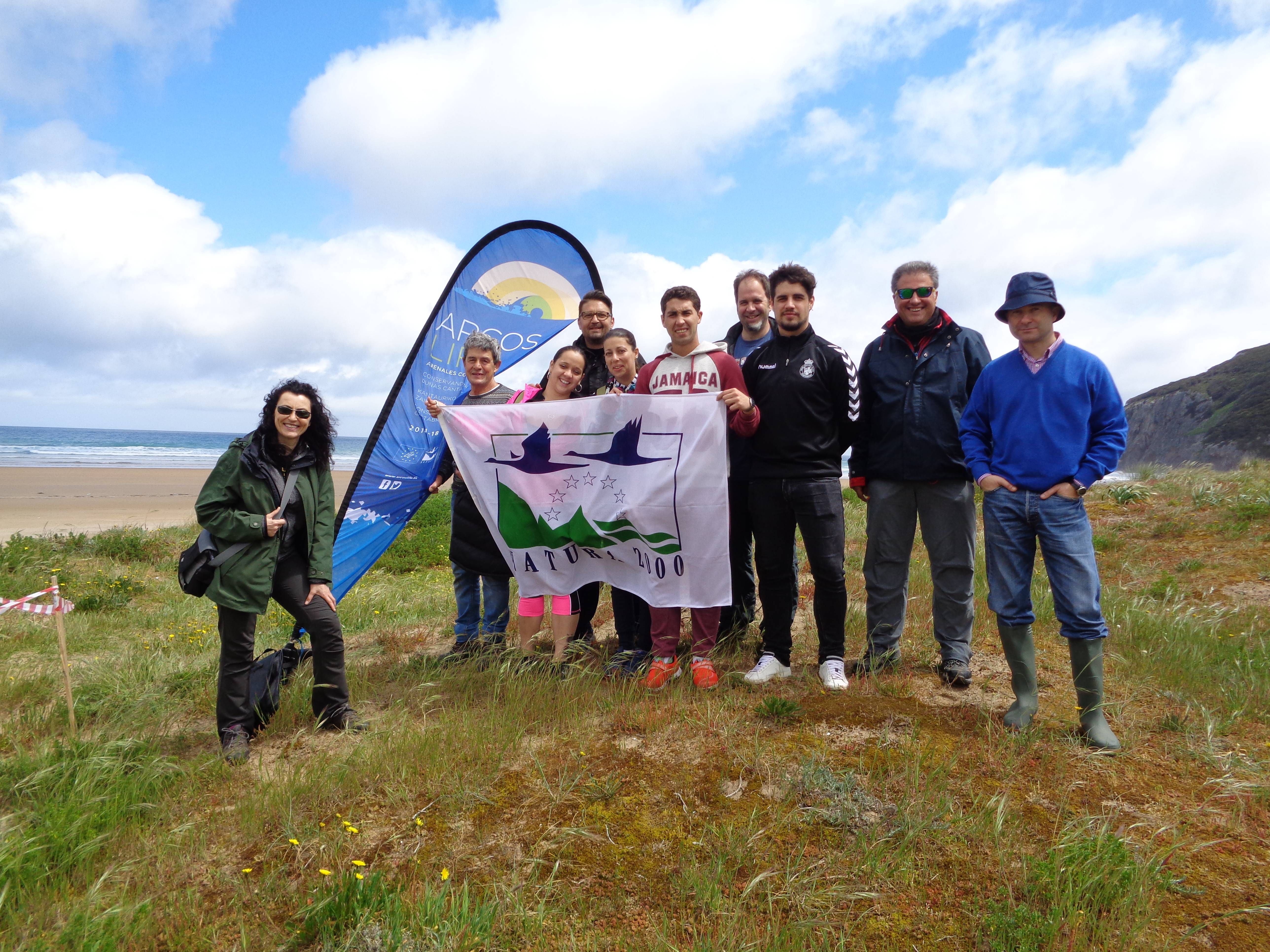
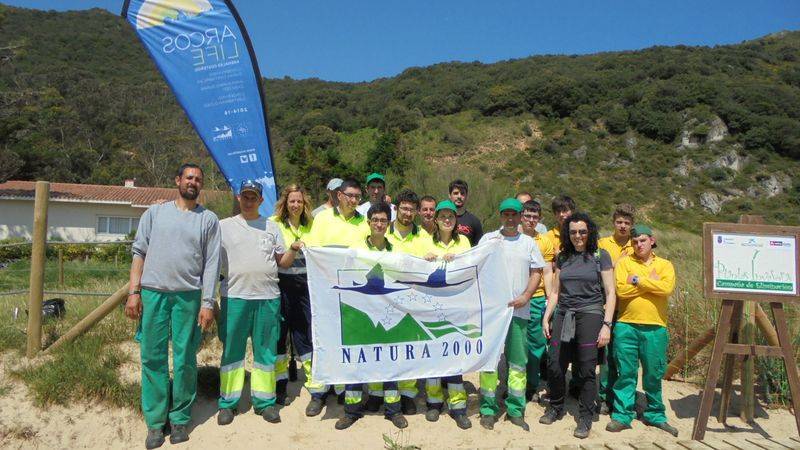
Group photo with the team from the NACAR Programme
On 20th May 2016 work was carried out next to the El Brusco hill on the Berria beach. Staff from AMICA, SERCA and AMPROS joined forces to take action against the invasive species and to commemorate the European Natura 2000 Day.
AMICA, AMPROS and SERCA staff working to control “Capeweed”
The work was arduous, and the teams split the work into collecting and cleaning both rubbish and the capeweed, which was in full bloom. Some workers, such as those from AMICA and AMPROS, contributed their far-reaching experience in this kind of manual control of invasive species, whilst the SERCA team, in training for gardening tasks, thoroughly enjoyed the hugely constructive learning experience.
Another snapshot of the work to control “Capeweed”
A total of 75 kg of waste were collected, of which 58 kg comprised organic waste, 17 kg recyclable waste, and 103 kg capeweed.
Everyone worked extremely hard, managing to control the growth of capeweed throughout 2016 in the Berria beach dune system (Santoña). Over the coming years, maintenance work must be carried out to keep the reservoir of the seeds of this species under check.
Group photo with the members of AMICA, AMPROS and SERCA who participated in the activity day.
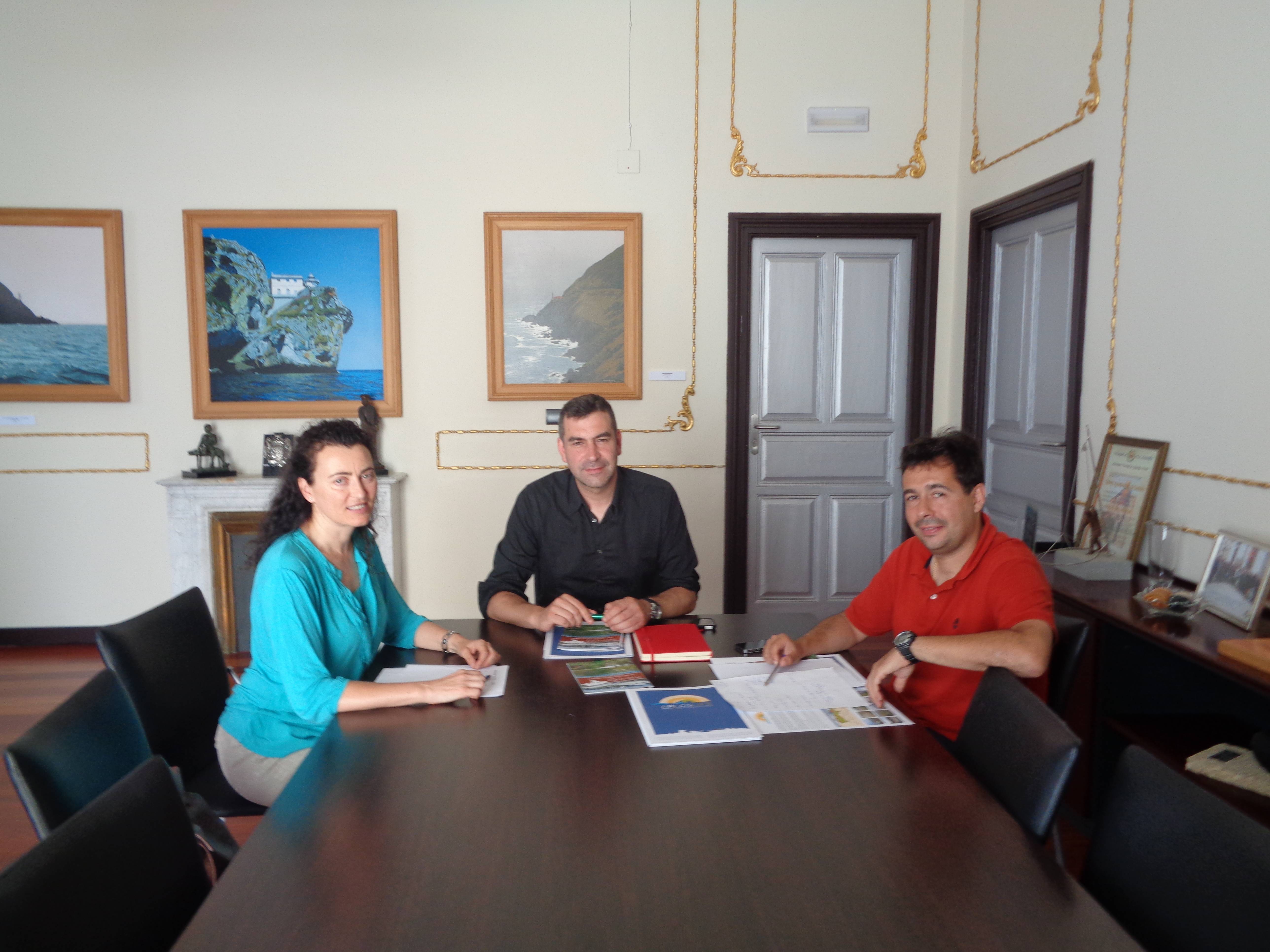
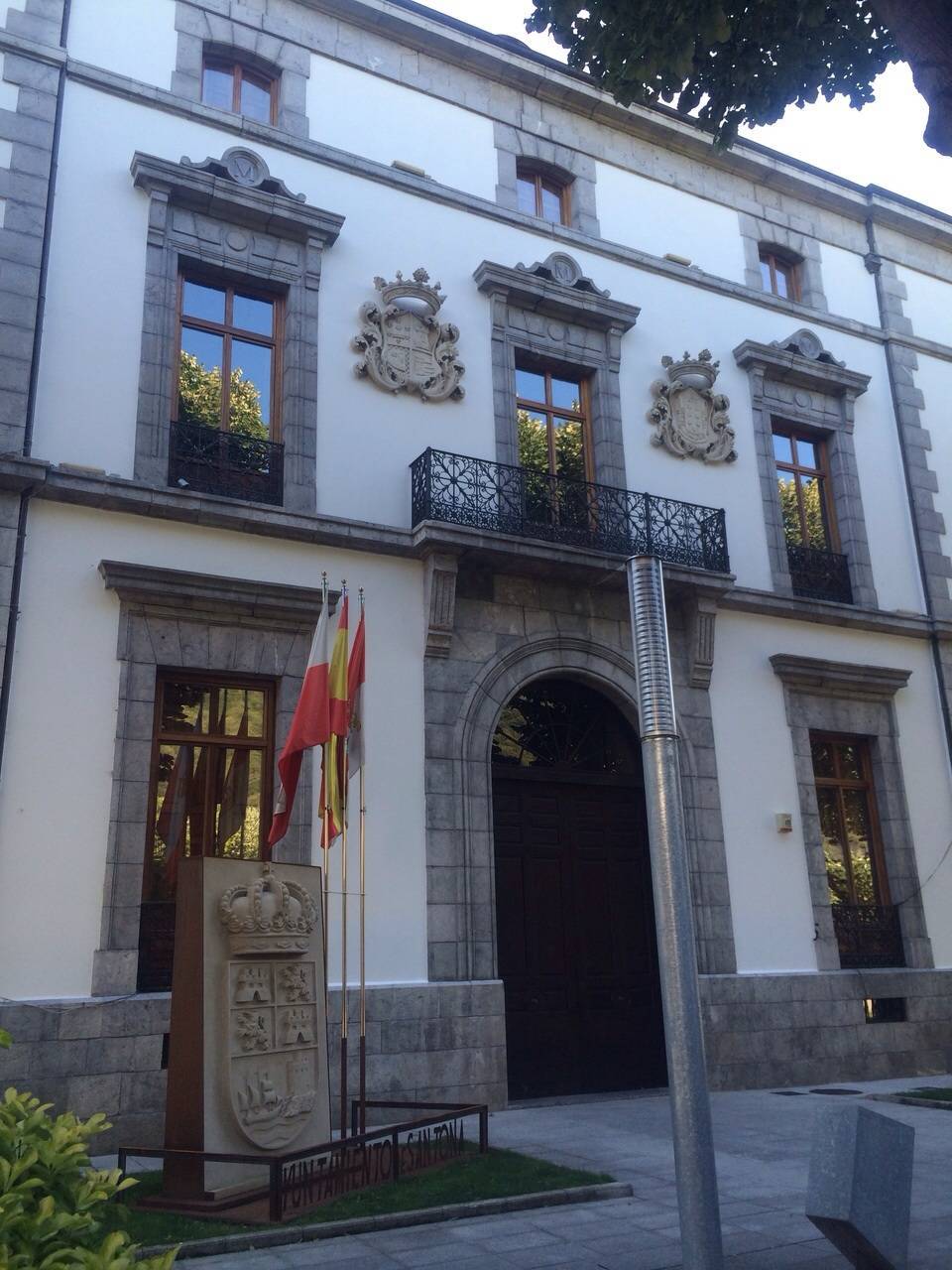
Council of Santoña, Manzanedo Palace, where the meeting between the Life+ARCOS project representative and representatives from the Council of Santoña was held
On 23 July, the director of the Santoña, Victoria and Joyel Marshes Natural Park of the Directorate-General of Forestry and Nature Conservation of the Regional Ministry of Rural Affairs, Fisheries and Food of the Government of Cantabria (collaborating member of the LIFE+ARCOS project), Ms Lourdes González Azpiri, met with the Mayor of Santoña, Mr Sergio Abascal Azofra, and the Councillor of the Environment, Mr Fernando Palacio Ansola. They talked about items of interest within the Natural Protected Area and about the LIFE+ARCOS dune restoration project for Berria Beach (Santoña).
Attendees received a thematic portfolio on the LIFE+ARCOS subject “Conserving Cantabrian Dunes” and learned about the scope of action and activities to be carried out on Berria Beach through 2018. They were informed about the importance of the activities planned within the project (closing the dunes, installing sand collectors, eradicating invasive species and planting dune vegetation as main activities) to maintain the structure and dynamic of the dune system. We also insisted on the need for mechanical cleaning of the front side of the beach (responsibility of the Council of Santoña) that is far enough away from the dune to conserve its habitats. In reference to the volunteer activities, we explained the relationship the NACAR (Nature and Prison) environmental volunteer programme (since 2004) with the LIFE+ARCOS project with the activities scheduled for next autumn.
Ms Lourdes González, the mayor of Santoña, Mr Sergio Abascal and the Councillor of Environment, Mr Fernando Palacio during the meeting.
The Mayor and Councillor of Environment were interested in knowing more about the project’s activities and suggested carrying out a technical visit to Berria beach on 3 August to interact with the current state of Berria beach’s dune system and to evaluate existing public use infrastructure.
Este sitio web utiliza cookies para que usted tenga la mejor experiencia de usuario. Si continúa navegando está dando su consentimiento para la aceptación de las mencionadas cookies y de nuestra política de cookies. Pinche el enlace para mayor información.