Autor: me

  • Hoy celebramos el 25 aniversario del programa LIFE (INDUROT, Edificio de Investigación, Campus de Mieres)

    Hoy celebramos el 25 aniversario del programa LIFE (INDUROT, Edificio de Investigación, Campus de Mieres)

    Hoy miércoles 17 de mayo el INDUROT (INDUROT, Edificio de Investigación, Campus de Mieres) acoge una jornada para celebrar del 25 aniversario del Programa LIFE. En este acto  se hará un repaso a la importancia de este programa y a diversos proyectos que, dentro de este marco de financiación europeo, se han desarrollado desde la Universidad de Oviedo.

    En el año 2017 se celebra el 25 aniversario del programa LIFE y de la Directiva Hábitats, ambos aprobados el 21 de mayo de 1992. Para reconocer el importante papel de este programa en la conservación del patrimonio natural europeo, la Comisión Europea, junto con el Parlamento Europeo, el Consejo y el Comité de las Regiones, proclamará oficialmente el día 21 de mayo como el “Día de la Red Natura 2000”. INDUROT quiere celebrar este aniversario poniendo en marcha el día 17 de mayo ésta jornada informativa en la que se hablará sobre cómo este instrumento financiero ha servido para cofinanciar acciones de conservación del medio natural, estudiar medidas de mitigación del cambio climático o proponer nuevas soluciones para el tratamiento de suelos contaminados. La jornada se centrará, sobre todo, en analizar los avances del proyecto LIFE+ARCOS y en evidenciar la importancia de los trabajos de conservación sobre los sistemas dunares costeros, objeto de actuación de este proyecto en todo el litoral cantábrico. Se resumirán también los objetivos y resultados de los proyectos de 2011 LIFE+IDARTS y TREMEDAL.

    Podéis descargar aquí el programaque os resumimos a continuación:


    JORNADA DE CELEBRACIÓN DEL 25 ANIVERSARIO DEL PROGRAMA LIFE

    17/05/2017 Hora de inicio: 12.00 h.
    Lugar: Aula Emilio Murcia, 7a planta, INDUROT, Edificio de Investigación, Campus de Mieres

    PROGRAMA

    12.00 h. Presentación por parte de responsables de la administración regional y del INDUROT del Programa de financiación europeo LIFE. Manuel Calvo, Director General de Recursos Naturales del Principado de Asturias, y Jorge Marquínez, Director del INDUROT.

    12.30 h. Comunicación sobre el proyecto actualmente en desarrollo LIFE ARCOS por parte de Tomás E. Díaz González (investigador principal del proyecto y Catedrático de Botánica de la Universidad de Oviedo), Nacho Alonso Felpete y Elena Fernández Iglesias (técnicos del proyecto, especialistas en botánica y geomorfología).

    13.00 h. Comunicación sobre el proyecto LIFE IDARTS por parte de José Luis Rodríguez Gallego, investigador principal del proyecto y Profesor Titular de Prospección e Investigación Minera.

    13.15 h. Comunicación sobre el proyecto LIFE Tremedal por parte de Jesús Valderrábano Luque, técnico del proyecto y especialista en botánica.

    13.30 h. Cierre de la jornada.
     

  • 25 anniversary of EU LIFE Programme. Location: INDUROT, Investigation Building, Mieres Universitary Campus.

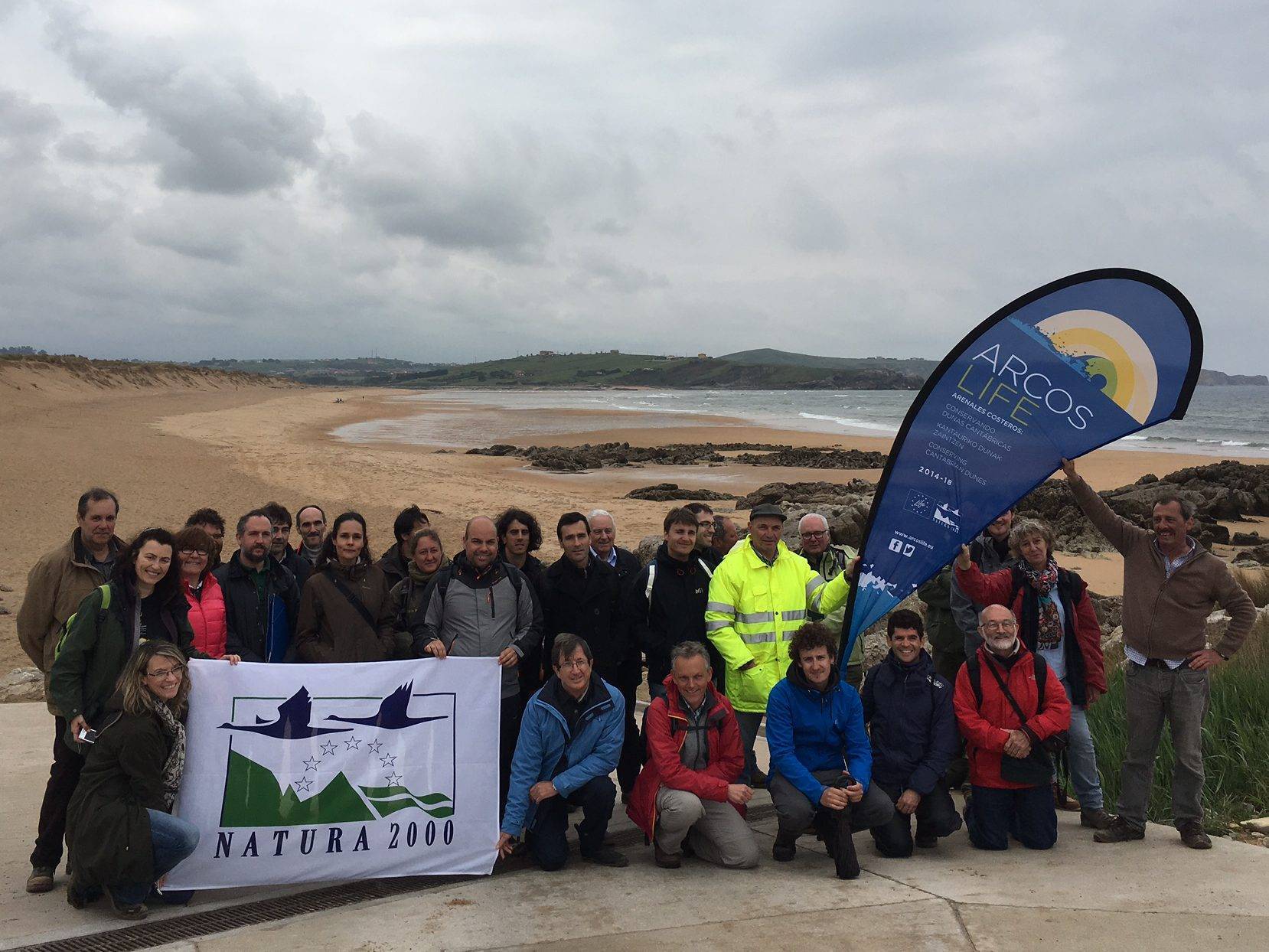
    25 anniversary of EU LIFE Programme. Location: INDUROT, Investigation Building, Mieres Universitary Campus.

    Today, 17th May, the INDUROT (Institute of Natural Resources and Territorial Planning, Research Building, Mieres University Campus) is celebrating the 25th anniversary of the LIFE Programme. The event will cover the importance of this programme and diverse projects that have been developed from the University of Oviedo within this European funding framework.

    In 2017, the LIFE Programme and the Habitats Directive are celebrating their 25th anniversary, both passed on 21st May 1992.  To acknowledge the important role of this programme in conserving European natural heritage, the European Commission and the European Parliament, the Council and the Committee of the Regions, will officially declare the 21st May as the “European Natura 2000 Day”.  INDUROT wants to mark this anniversary by implementing this information day on 17th May, which will address the way that this financial instrument has acted to co-fund environmental conservation actions, to study ways of mitigating climate change, and to propose new solutions to treating contaminated ground. The day will have a particular focus on analysing advances made by the LIFE+ARCOS project, and on highlighting the importance of conservation works on coastal dune systems, the target of this project’s action along the entire Cantabrian coastline. It will also summarise the objectives and results of the 2011 LIFE+IDARTS and TREMEDAL projects.

    The programme can be downloaded here , summarised below:

    CELEBRATORY DAY TO MARK THE 25TH ANNIVERSARY OF THE LIFE PROGRAMME

    17/05/2017 Start time: 12:00.
    Location: Aula Emilio Murcia, 7a planta, INDUROT, Research Building, Mieres Campus

    PROGRAMME

    12:00 Presentation by leaders of the regional administration and from the INDUROT (Institute of Natural Resources and Territorial Planning) from the European funding programme LIFE. Manuel Calvo, General Director for Natural Resources from the Principality of Asturias, and Jorge Marquínez, Director of the INDUROT.

    12:30 Communication about the LIFE ARCOS Project currently in process by Tomás E. Díaz González (leading project researcher and Botany Lecturer at the University of Oviedo), Nacho Alonso Felpete and Elena Fernández Iglesias (project experts, botany and geomorphology specialists).

    13:00 Communication about the LIFE IDARTS project by José Luis Rodríguez Gallego, leading project researcher and Tenured Professor of Prospecting and Mining Research.

    13:15 Communication about the LIFE Tremedal project by Jesús Valderrábano Luque, project expert and botany specialist.

    13:30 End of the day.


  • Taller EUCC / Life+ARCOS Resumen del día 25 de abril

    Taller EUCC / Life+ARCOS Resumen del día 25 de abril

    El taller que organiza EUCC-Atlantique, en colaboración con el proyecto Life+ARCOS ha elegido los sistemas dunares de Cantabria y las acciones de conservación que en las Dunas de Liencres y en lasDunas del Puntal y Estuario del Miera (recientemente declaradas Zonas de Especial Conservación,  Decreto 18/2017 de 30 de marzo, BOC 70) se están llevando a cabo en el seno de este proyecto, para reunir a un nutrido grupo de expertos en la gestión y conservación de este tipo de hábitats, durante los días 25 y 26 de mayo.

    Resumen de la jornada del día 25 de abril

    Visita al Sistema dunar de Liencres (mañana)

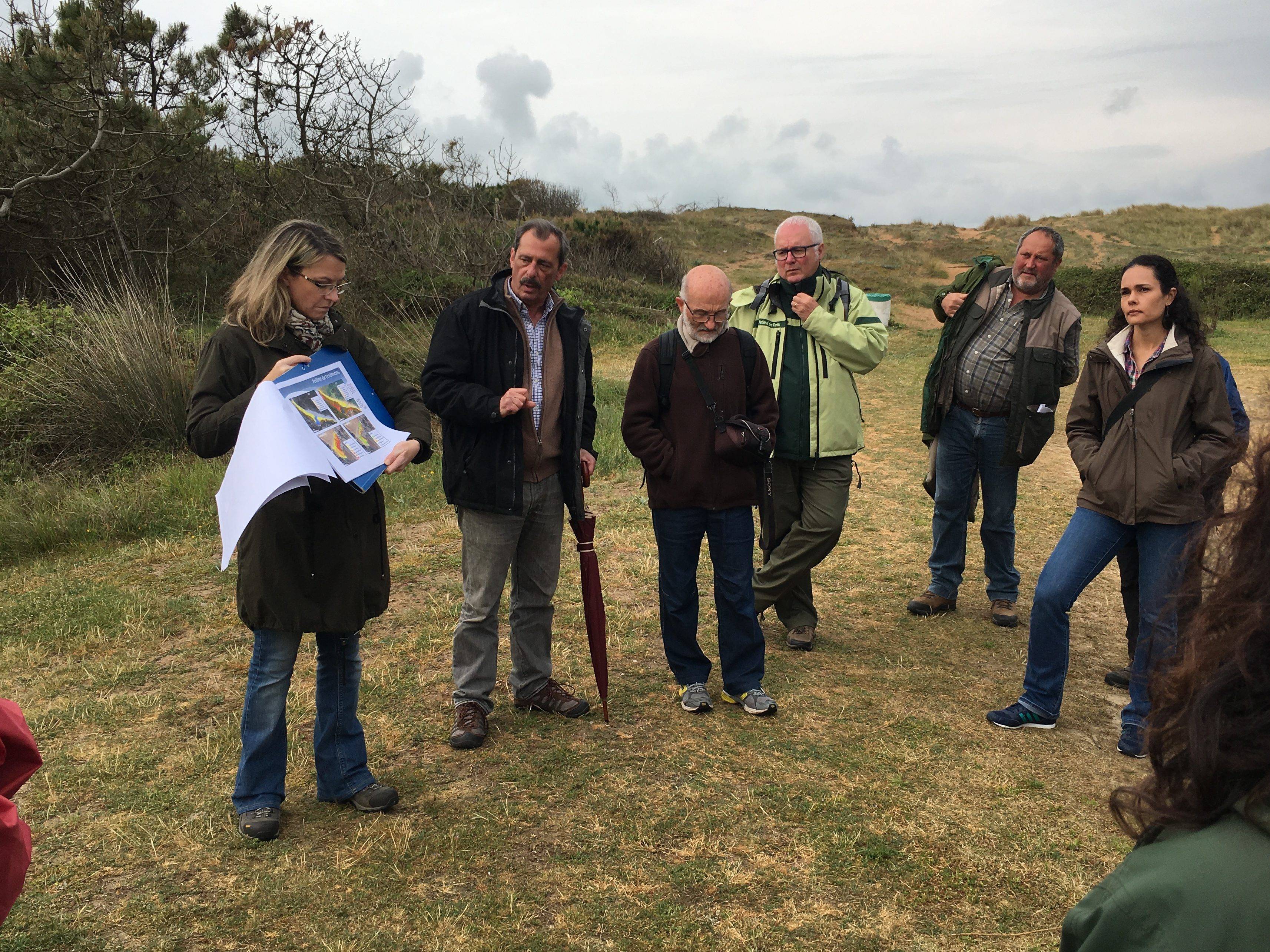
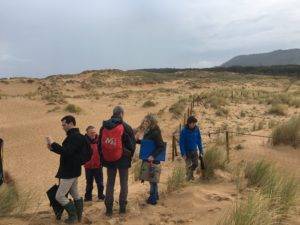
    La jornada comenzó con la presentación de todos los asistentes por parte de Christine Clus-Auby (EUCC) y Carlos Ley (Ecología Litoral – Life+ARCOS). Después de la presentaciones, según el programa establecido, el grupo visitó el Sistema dunar de Liencres. En la visita a pie por el espacio protegido se fueron sucediendo diferentes intervenciones. La visita fue guiada por el Director del espacio protegido Jesus Varas y contó con la colaboración de Carlos Ley y Jean Favenecc (EUCC) que también llevaron a cabo labores de traducción. Jesús Varas se encargó de explicar las diferentes actuaciones que en materia de conservación de hábitats dunares y gestión del espacio dunar  se están llevando a cabo, tanto en el contexto del proyecto Life+ARCOS como en otros dependientes de la Dirección de Conservación de la Naturaleza de Cantabria.

    Foto de grupo con los algunos de los asistentes a la jornada del día 25 de abril

    La introducción a la realidad geomorfológica del espacio y al análisis de su dinámica sedimentaria fue realizada por Elena Fernández Iglesias (Indurot- Uniovi – Arcos+Life). Elena analizó la evolución histórica del sistema dunar (años 50 hasta la actualidad)  realizada mediante fotointerpretación de fotografías aéreas históricas y análisis de datos LIDAR. La variación de los aportes sedimentarios del río Pas y los fenómenos erosivos producidos en los últimos años, están entre los principales responsables del actual balance sedimentario.

    Elena Fernández Iglesias durante su explicación


    La mañana trascurrió con las explicaciones de D. Jesús Varas y las intervenciones de varios de los asistentes que discutieron el conjunto de las actuaciones practicadas en el espacio protegido.

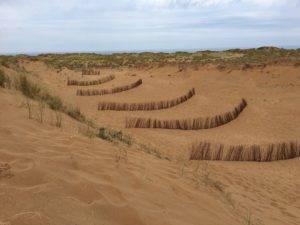
    La eliminación selectiva de pinos, la instalación de cierres con fines de ordenación del tránsito, captadores de arena, la gestión de arribazones marinos como elemento captador de arena o la eliminación de especies invasoras, fueron algunos de los temas tratados y discutidos activamente «in situ».

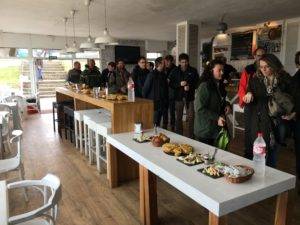
    La jornada de mañana terminó con la comida en un local cercano al sistema dunar.

    Algunas fotografías de la visita pueden verse a continuación.


    Presentaciones y debate (tarde)

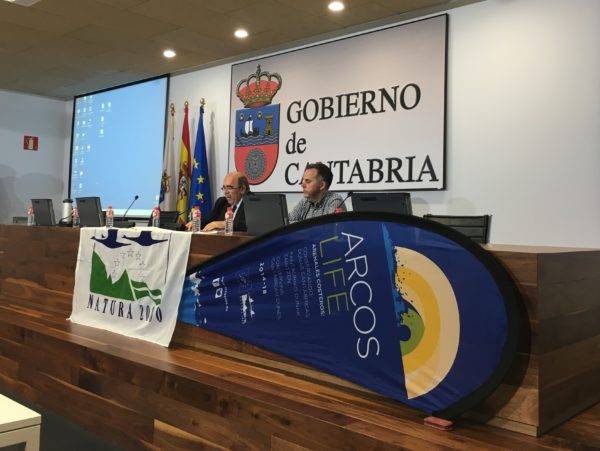
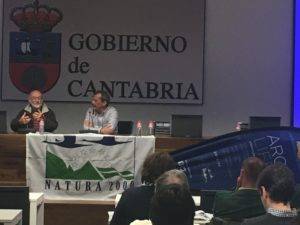
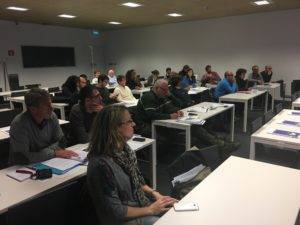
    El salón de actos de la Dirección General de Conservación de Conservación de la Naturaleza del Gobierno de Cantabria acogió la sesión de tarde, repleta de comunicaciones y debate posterior.

    La Sesión fue inaugurada por el Consejero de Medio Rural, Pesca y Alimentación, D. Jesús Oria, quien comentó el interés de su consejería por estos hábitats costeros, muestra de lo cual es su participación como socio beneficiario dentro del proyecto Life+ARCOS.

    Inaguración de las jornadas a cargo consejero de Medio Rural, Pesca y Alimentación, D. Jesús Oria

    Tras la presentación inaugural del Consejero, se sucedieron las diferentes intervenciones, en el siguiente orden:

    Luis Martín Rebollo, Catedrático de Derecho Administrativo, Universidad de Cantabria: Contexto legislativo et organización territorial en Cantabria: las claves para comprender la gestión de las dunas

    Ignacio Alonso, de la Universidad de Oviedo: Los objetivos y desafíos del proyecto ARCOSLIFE

    Loïc Gouguet, Responsable técnico nacional del litoral de la “Office National des Forêts (ONF)”: la gestión de las dunas atlánticas francesas, de la playa a la duna forestada

    Maria Recio, Instituto Hidráulico de Cantabria: Análisis de los efectos del tránsito pedestre sobre la vegetación dunar

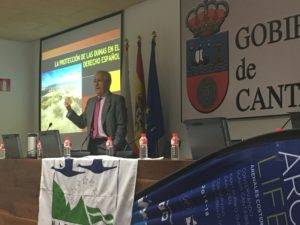
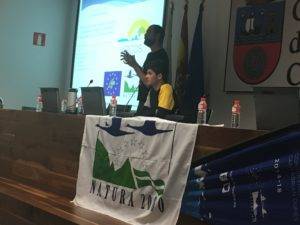
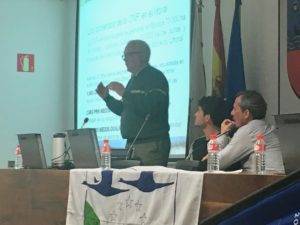
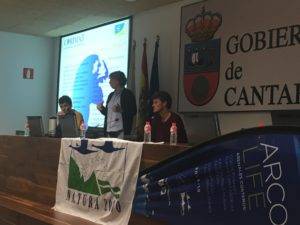
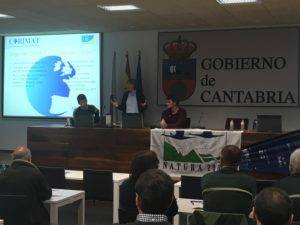
    Fotografías de los ponentes por orden de intervención (de arriba abajo y de izquierda a derecha).

    El debate posterior a las intervenciones fue moderado por Jean Favenecc (EUCC) y Carlos Ley (Ecología Litoral) y tras su finalización fue presentado de manera oficial el portal ANCORIM /CORIMAT, que se ha creado con el fin de reactivar la red de actores para la gestión de riesgos costeros en el espacio atlántico europeo. La presentación del portal la realizó Pedro Fernández (EUCC-Atlantique)  y Christine Clus-Auby (EUCC-Atlantique).


    Al finalizar el debate y la presentación del portal CORIMAT, el autobús de la organización devolvió a los participantes a la ciudad de Santander.

    CORIMAT website: https://corimat.net/

    Fotos en Twitter con el hasthag: #EUCCworkshop2017 

  • Workshop on dune systems, summary 25th April , 2017. Organised by EUCC-Atlantique and LIFE ARCOS project

    Workshop on dune systems, summary 25th April , 2017. Organised by EUCC-Atlantique and LIFE ARCOS project

    The workshop organised by EUCC-Atlantique, in collaboration with the Life+ARCOS project, has chosen the dune systems in Cantabria and conservation actions, which are being carried out within the framework of this project on the Liencres Dunes and the Puntal Dunes and Miera Estuary (recently declared Special Area of Conservation,  Decree 18/2017, 30th March, Official Cantabria Gazette 70), to bring together an experienced group of experts in managing and conserving this kind of habitat, on 25th and 26th May.

    Summary of the activity held on 25th April

    Visit to the Liencres dune system (tomorrow)

    The day started with a presentation given to all attendees by Christine Clus-Auby (EUCC) and Carlos Ley (Ecología Litoral – Life+ARCOS). After the presentation, following the programme, the group visited the Liencres dune system. Different interventions were given during the walk to the protected area. The visit was guided by the Director of the protected area, Jesús Varas, and was supported by the collaboration of Carlos Ley and Jean Favenecc (EUCC), who also assisted in translating. Jesús Varas was in charge of explaining the different actions that are being carried out in terms of preserving dune habitats and managing the dune space, both in the context of the Life+ARCOS project and in other frameworks dependent on the Cantabrian Directorate for Nature Conservation.


    Group photo with some of the attendees of the activity held on 25th April

    The introduction to the geomorphological situation of the space and the analysis of its sedimentary dynamic was given by Elena Fernández Iglesias (Indurot- Uniovi – Arcos+Life). Elena gave an analysis of the dune system history (1950s to present day), by interpreting historical aerial photos and by analysing LIDAR data. The variation of the sedimentary inputs of the river Pas and the erosive phenomena occurring over recent years, are among the leading causes of the current sediment balance.

    Elena Fernández Iglesias giving the explanation

    The morning included explanations from Mr Jesús Varas and interventions from various attendees, who discussed the set of actions being carried out within the protected space.

    The selective elimination of pine trees, constructing enclosures to organise pedestrian transit, sand collectors, managing seaweed banks as a sand collector element, and eliminating invasive species, were some of the issues addressed and actively discussed “in situ”.

    The morning session ended with a meal at a restaurant near the dune system.

    Some photos of the visit can be seen below.


    Presentations and discussion (afternoon)

    The Assembly Hall at the Government of Cantabria Directorate General of Nature Conservation, hosted the lively afternoon session, filled with communications and discussion.

    The Session was opened by the Councillor for Rural Affairs, Fisheries and Food, Mr Jesús Oria, who commented on the interest of his department regarding these coastal habitats, reinforced by its participation as beneficiary partner within the Life+ARCOS project.

    Opening of the activity days by the Councillor for Rural Affairs, Fisheries and Food, Mr Jesús Oria

    After the introductory presentation by the Councillor, the different interventions were given in the following order:

    Luis Martín Rebollo, Administrative Law Professor at the University of Cantabria: Legislative context and territorial organisation in Cantabria: the keys to understanding dune management

    Ignacio Alonso, from the University of Oviedo: The objectives and challenges of the ARCOSLIFE project

    Loïc Gouguet, Leading National Coastal Expert from the “National Forestry Department (Office National des Forêts, ONF)”: Managing the French Atlantic dunes, from beaches to forested dunes

    Maria Recio, Hydraulic Institute of Cantabria: Analysis of the effects of pedestrian transit over the dune vegetation

    Photos of the speakers in order of intervention (from top to bottom, left to right).

    The debate following the interventions was chaired by Jean Favenecc (EUCC) and Carlos Ley (Ecología Litoral), and after it finished the ANCORIM /CORIMAT portal was officially introduced, created with the aim of reactivating the network of players to manage coastline risks in the European Atlantic area. The presentation of the portal was given by Pedro Fernández (EUCC-Atlantique) and Christine Clus-Auby (EUCC-Atlantique).


    After the debate and the presentation of the CORIMAT portal, the organisation’s bus returned participants to the city of Santander.

    CORIMAT website: https://corimat.net/

    Photos in Twitter with the hasthag: #EUCCworkshop2017 

  • Celebramos el Día Europeo de la Red Natura 2000 con actividades de voluntariado en el proyecto LIFE+ARCOS (2016)

    Celebramos el Día Europeo de la Red Natura 2000 con actividades de voluntariado en el proyecto LIFE+ARCOS (2016)

    Cerca ya de la celebración anual del Día Europeo de la Red Natura 2000, incluimos esta noticia sobre las jornadas de voluntariado que se llevó a cabo en Cantabria, dentro del marco del proyecto LIFE+ARCOS, el pasado año 2016.

    Hoy no es un día cualquiera, celebramos el Día Europeo de la Red Natura 2000 y lo hacemos con algunas actividades de sensibilización ambiental y trabajos de control de especies exóticas invasoras en las dunas de la playa de Berria (Santoña). Una de las playas incluida en el proyecto europeo de conservación y restauración dunar LIFEARCOS.

    En esta ocasión, los escolares de Argoños (C.P. Pedro Santiuste) y de Santoña C.P. Macías Picavea), los días 10 y 12 de mayo de 2016 han realizado visitas al sistema dunar de la playa de Berria en Santoña recorriéndola para conocer las dunas, su flora y fauna con los monitores de la Red Cántabra de Desarrollo Rural (RCDR) que trabajan en el Centro de Interpretación del Parque Natural de las Marismas de Santoña, Victoria y Joyel. Los escolares estaban interesados y sus constantes preguntas han servido a los monitores de la Red Cántabra de Desarrollo Rural de Cantabria (programa NATUREA) para explicarles todas las curiosidades sobre las singulares especies de flora y fauna que habitan las dunas.

    Escolares C.P. Pedro Santiuste de Argoños, que participaron en la jornada
    Escolares del C.P. Macías Picavea de Santoña, que participaron en la jornada

    Las actividades han finalizado con una pequeña plantación de una gramínea de las dunas terciarias la Festuca vasconcensis que ha sido la práctica que esperaban ansiosos realizar.

    No se han terminado aquí las actuaciones de voluntariado en las dunas de Berria y se han realizado algunas de control de plantas invasoras con el programa NACAR (Naturaleza y Cárcel) y las agrupaciones de AMICA, SERCA y AMPROS de Cantabria.

    El día 19 de mayo de 2016 fue un día prácticamente nublado y con algo de lluvia pero se inició la retirada de especies invasoras en la duna terciaria de la playa de Berria con un grupo con un grupo de 6 internos del Centro Penitenciario de El Dueso. El entorno de trabajo es espectacular, la playa de Berria entre dos macizos calizos (El Brusco al oeste y monte Buciero al este) y ambientalmente su flora y fauna es rica en especies singulares de los sistemas dunares como la Linaria supina subsp. maritima.

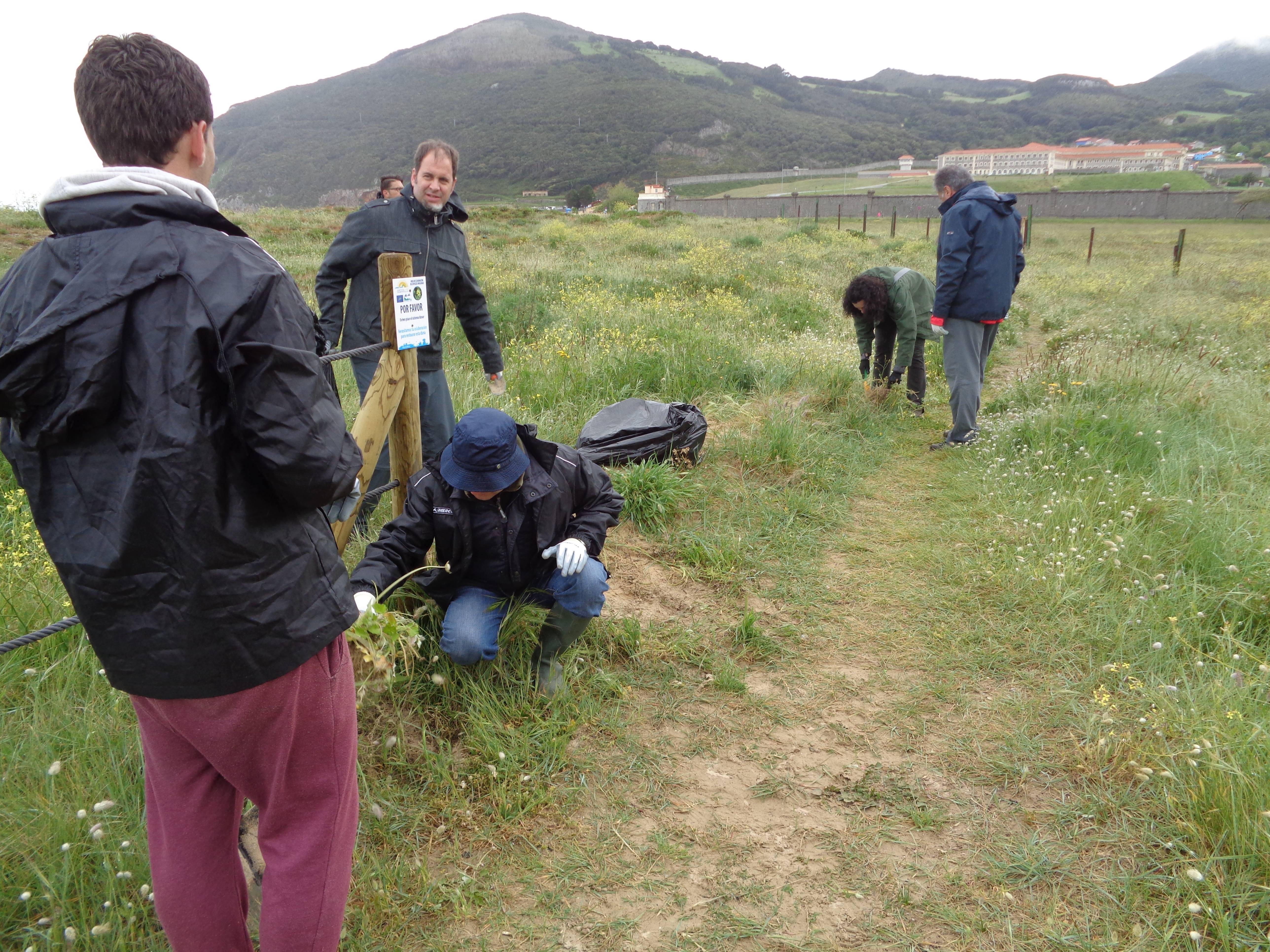
    Equipo del programa NACAR trabajando en la eliminación de la EEI «Margarita africana»

    En esta época se ha detectado una floración de la especie invasora alóctona margarita africana (Artotheca calendula) en los caminos de tránsito paralelos a la playa de Berria y en la entrada principal a las dunas junto a los apartamentos y para evitar estos focos de la especie invasora se recogieron 13 bolsas de 120 L, lo que permitió dejar la zona limpia de la invasora.

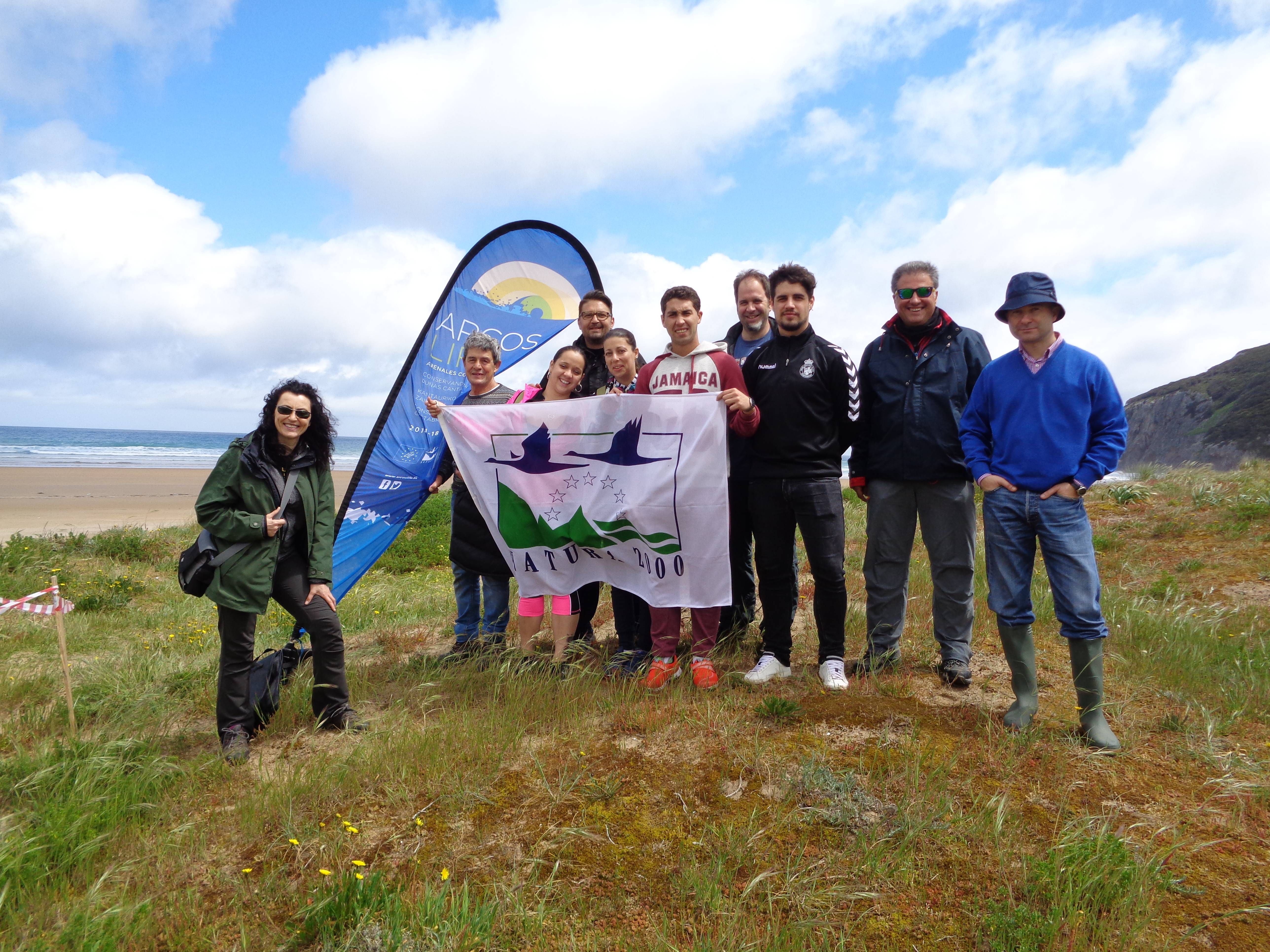
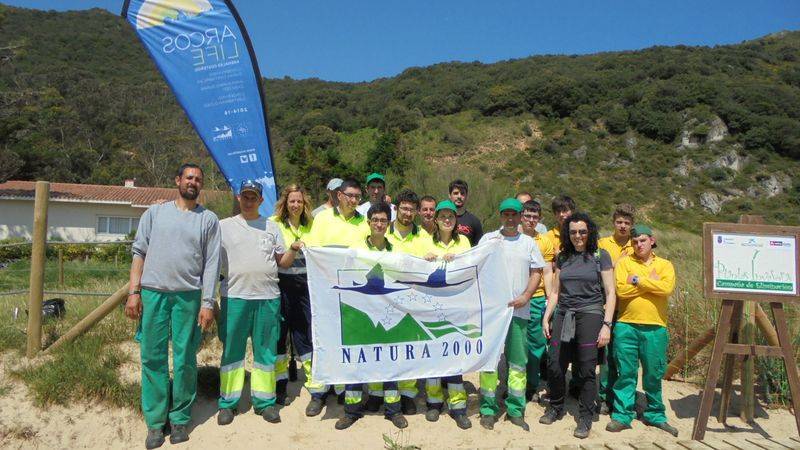
    Fotografía de grupo con el Equipo del programa NACAR

    El día 20 de mayo de 2016 se trabajó junto a El Brusco en la playa de Berria. Se juntaron en el equipo de trabajo personal de AMICA, SERCA y AMPROS que quisieron actuar contra las especies invasoras y conmemorar el Día Europeo de la Red Natura 2000.

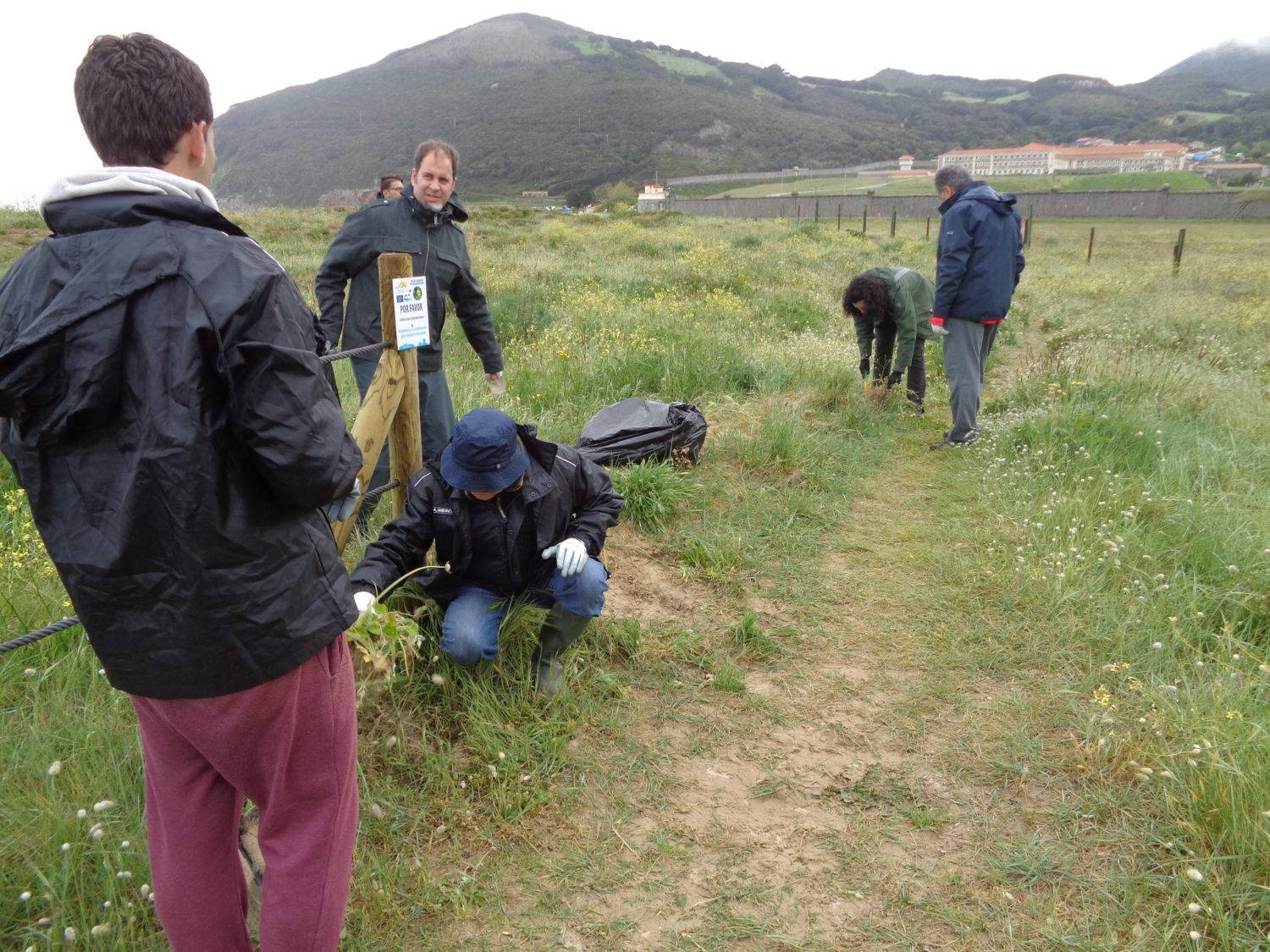
    Contro de «Margarita africana» por integrantes de AMICA, AMPROS y SERCA

    El trabajo fue laborioso y los equipos se repartieron el trabajo recogiendo y limpiando también basuras y la margarita africana que estaba en plena floración. Algunos como los trabajadores de AMICA y AMPROS aportaron su gran experiencia en este tipo de control manual de especies invasoras y el equipo de SERCA, en formación en labores de jardinería, disfrutó y aprendió mucho de la experiencia.

    Otro momento de los trabajos de control de la «Margarita africana»

    Se recogieron un total de 75 Kg de residuos de los que 58 Kg eran residuos orgánicos y 17Kg, residuos reciclables y 103 Kg de margarita africana.

    Entre todos se hizo un buen trabajo, de hecho se controló durante 2016 la explosión de margarita africana en el sistema dunar de la playa de Berria (Santoña). Ahora cabe continuar en los siguientes años para mantener controlado el reservorio de semillas de esta especie.

    Foto grupal con los miembros de AMICA, AMPROS y SERCA que participaron en la jornada.
  • LIFE ARCOS project celebrates the European Natura 2000 Day with volunteering activities (2016)

    LIFE ARCOS project celebrates the European Natura 2000 Day with volunteering activities (2016)

    With the European Natura 2000 Day now approaching, we have included this news about the volunteering days undertaken in Cantabria in 2016, within the framework of the Life+ARCOS project.

    Today is not just any ordinary day; we are celebrating the European Natura 2000 Day, and to do this we are holding some environmental awareness activities and carrying out work to control invasive exotic species on the Berria beach dunes (Santoña). One of the beaches included in the European dune conservation and restoration project Life+ARCOS.

    On this occasion, pupils from Argoños (Pedro Santiuste Primary School) and Santoña (Macías Picavea Primary School), visited the Berria beach dune system in Santoña on 10th and 12th May 2016, walking along the stretch to discover the dune and its flora and fauna, led by instructors from the Cantabrian Rural Development Network (RCDR in Spanish) who work at the Santoña, Victoria and Joyel Marshes Natural Park Interpretation Centre. The pupils were fascinated and their constant questions helped the Cantabrian Rural Development Network instructors from Cantabria (NATUREA programme) to explain all the ins and outs of the unique flora and fauna species that inhabit the dunes.


    Pupils from the Pedro Santiuste Primary School in Argoños, who participated in the activity day

    The activities ended with the mini planting of grasses from the tertiary dunes Festuca vasconcensis – which was the activity that all the pupils had been excitedly waiting for.

    The volunteering activities have not yet finished on the Berria dunes, and some other control activities of invasive species have been carried out with the NACAR Programme (Nature and Prison) and by the Cantabrian AMICA, SERCA and AMPROS groups.

    19th May 2016 was a mostly cloudy day with the odd spot of rain, but even so activities commenced to remove invasive species from the tertiary dune on Berria beach, with a group of 6 inmates from the El Dueso Penitentiary Centre. The work setting – Berria beach nestled between two limestone massifs (El Brusco to the west and Mount Buciero to the east) – was spectacular. The dune systems here are rich in unique species of flora and fauna such as the Linaria supina subspecies. maritima.


    Team from the NACAR Programme working to eliminate the IES “Capeweed”

    This season an invasive exotic species – Capeweed (Artotheca calendula) – has been spotted flowering on the pathways that run alongside the Berria beach and at the main entrance to the dunes next to the apartment buildings. To avoid this concentration of invasive species, thirteen 120L-bags were filled, leaving the area free from the invasive plant.

    Group photo with the team from the NACAR Programme

    On 20th May 2016 work was carried out next to the El Brusco hill on the Berria beach. Staff from AMICA, SERCA and AMPROS joined forces to take action against the invasive species and to commemorate the European Natura 2000 Day.

    AMICA, AMPROS and SERCA staff working to control “Capeweed”

    The work was arduous, and the teams split the work into collecting and cleaning both rubbish and the capeweed, which was in full bloom. Some workers, such as those from AMICA and AMPROS, contributed their far-reaching experience in this kind of manual control of invasive species, whilst the SERCA team, in training for gardening tasks, thoroughly enjoyed the hugely constructive learning experience.

    Another snapshot of the work to control “Capeweed”

    A total of 75 kg of waste were collected, of which 58 kg comprised organic waste, 17 kg recyclable waste, and 103 kg capeweed.

    Everyone worked extremely hard, managing to control the growth of capeweed throughout 2016 in the Berria beach dune system (Santoña). Over the coming years, maintenance work must be carried out to keep the reservoir of the seeds of this species under check.

    Group photo with the members of AMICA, AMPROS and SERCA who participated in the activity day.
  • The Asturias dunes in the 50’s and today. Do you want to see it?

    The Asturias dunes in the 50’s and today. Do you want to see it?

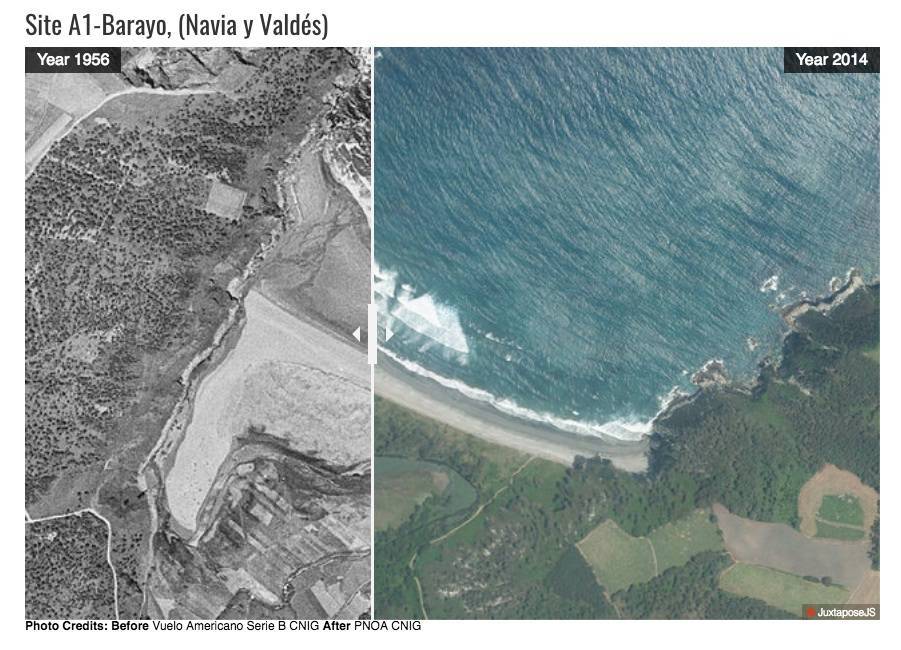
    This aerial photograph was taken in the 1950’s by the American army. It shows what the dune system landscape looked like in those years. We have compared it with current images from the Spanish National Plan for Aerial Orthophoto.

    In the following photos you can see images of all the Asturian areas where the Life+ARCOS project carries out its work: from the 50’s and from 2014.  You can clearly see how much the area has changed. Click and drag over the photos so you can see how the area looked before and now. It is as easy as that.

    It is true that it will be impossible for us to recover the area the dune systems covered in the past, but here at Life+ARCOS, we believe the sandbanks still deserve a chance. We are working on it.

    We hope you enjoy it.

    Site A1-Barayo, (Navia and Valdés)

    Site A2-Verdicio (Gozón)

    Site A3- Vega Beach (Ribadeslla)

  • Un poco de historia!! Las dunas de Asturias en los años 50 y esas mismas dunas en la actualidad ¿quieres verlo?

    Un poco de historia!! Las dunas de Asturias en los años 50 y esas mismas dunas en la actualidad ¿quieres verlo?

    La fotografía aérea realizada en los años 50 por el ejercito americano nos permite ver cómo era el paisaje de los sistemas dunares en aquellos años y compararlo con las imágenes que el Plan Nacional de Ortofografía Aérea nos ofrece del momento actual.

    En la siguientes fotografías te mostramos las imágenes de los años 50 y del año 2014 para todos los sitios de Asturias en los que se desarrolla el proyecto Life+ARCOS.  Tú mismo puedes comprobar lo grande que ha sido este cambio. Te invitamos a que muevas el deslizador en cada una de los pares de imágenes para que veas lo que había y lo que hay. Tan sencillo como eso.

    Es evidente que recuperar la superficie ocupada anteriormente por los sistemas dunares es algo ya inalcanzable, pero desde Life+ARCOS pensamos que los arenales todavía se merecen una oportunidad. En ello trabajamos.

    Esperamos que lo disfrutes.

    Site A1-Barayo, (Navia y Valdés)

    Site A2-Verdicio (Gozón)

    Site A3-Playa de Vega (Ribadeslla)

  • First activity of NACAR Programme in 2017 (Berria, Cantabria region)

    First activity of NACAR Programme in 2017 (Berria, Cantabria region)

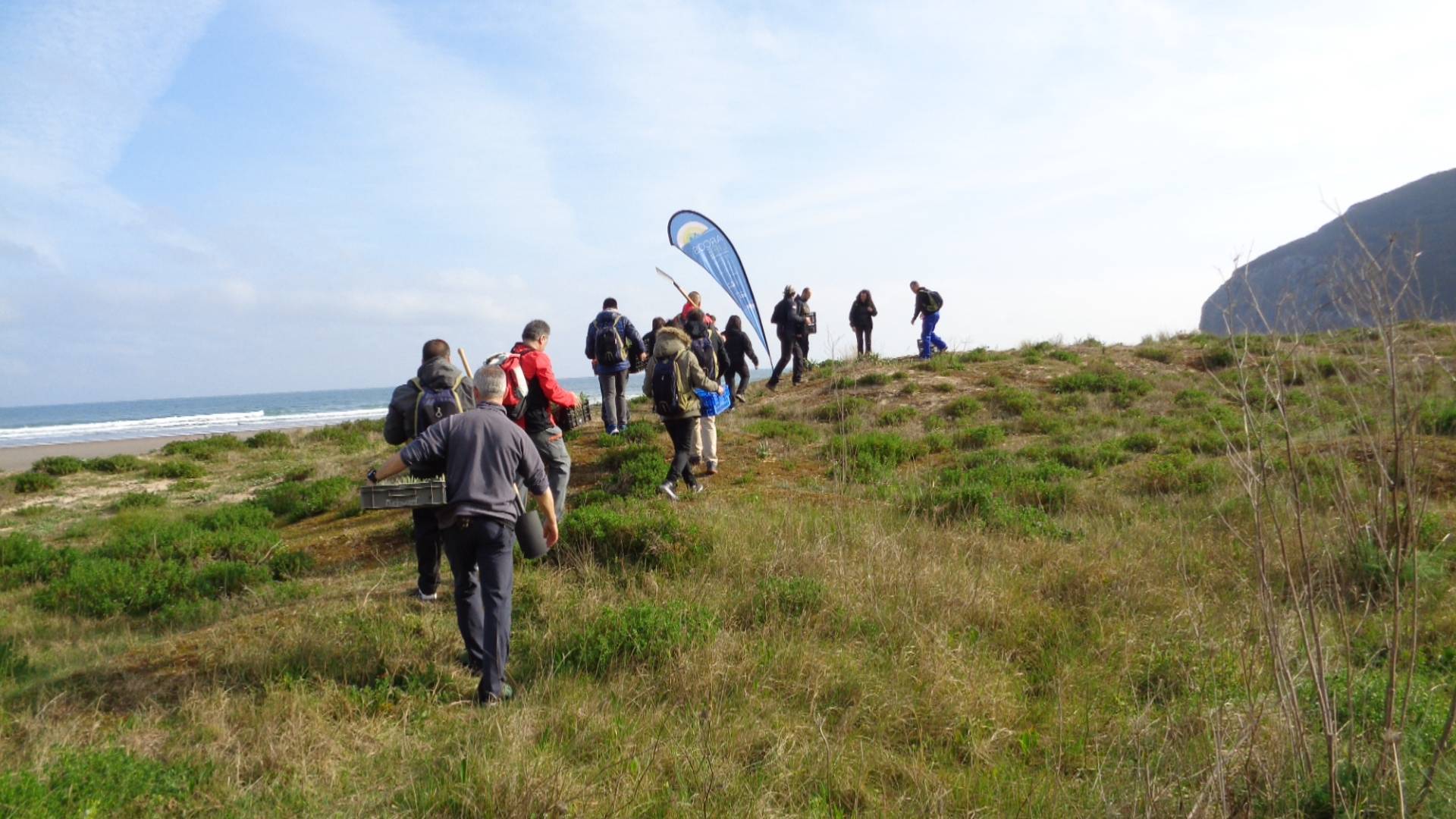
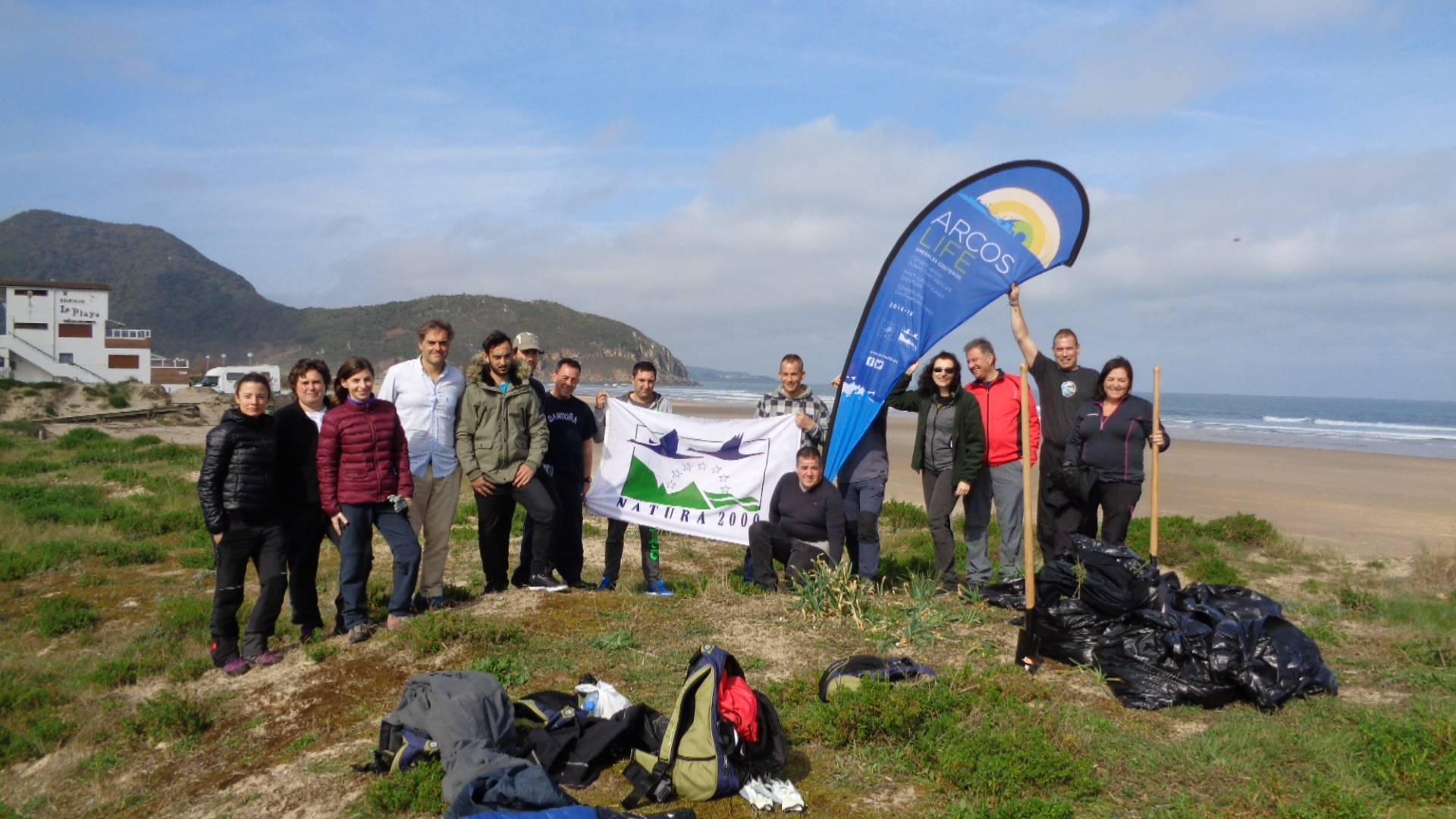
    On 9 March 2017, we scheduled the NACAR (Nature and Prison) program’s first volunteer activity of the year within the LIFE ARCOS project. On this occasion, the Natural Park Director and two interns from the Directorate-General of Natural Environment (from the Regional Ministry of Rural Affairs, Fisheries and Food, Government of Cantabria), seven inmates and two supervisors from the El Dueso Penitentiary participated.  Four supervisors from the Cantabrian Network for Rural Development that work at the Santoña, Victoria and Joyel Marshes Natural Park also participated.  The group was made up of a large team that worked all morning to restore the Berria dune.

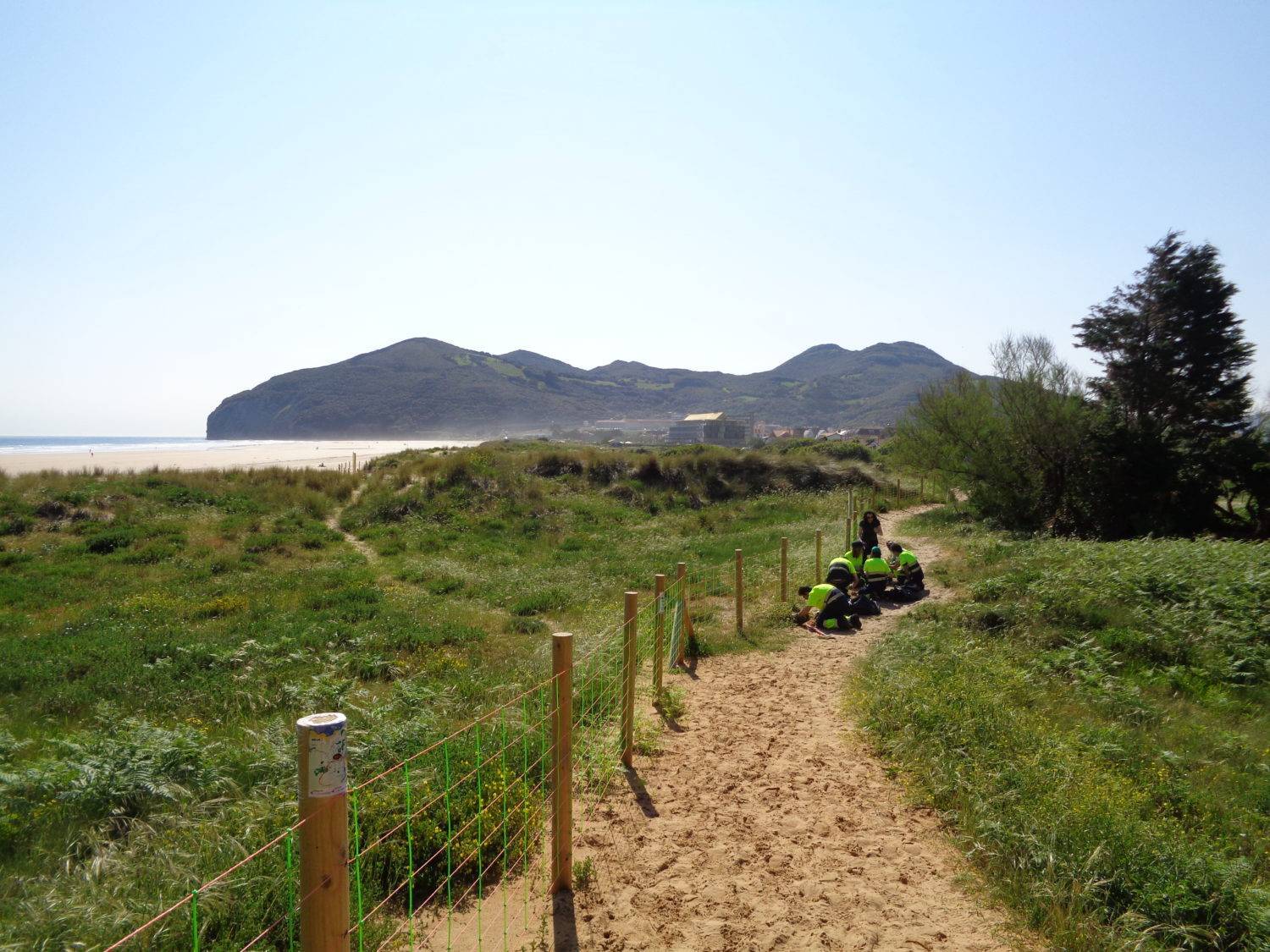
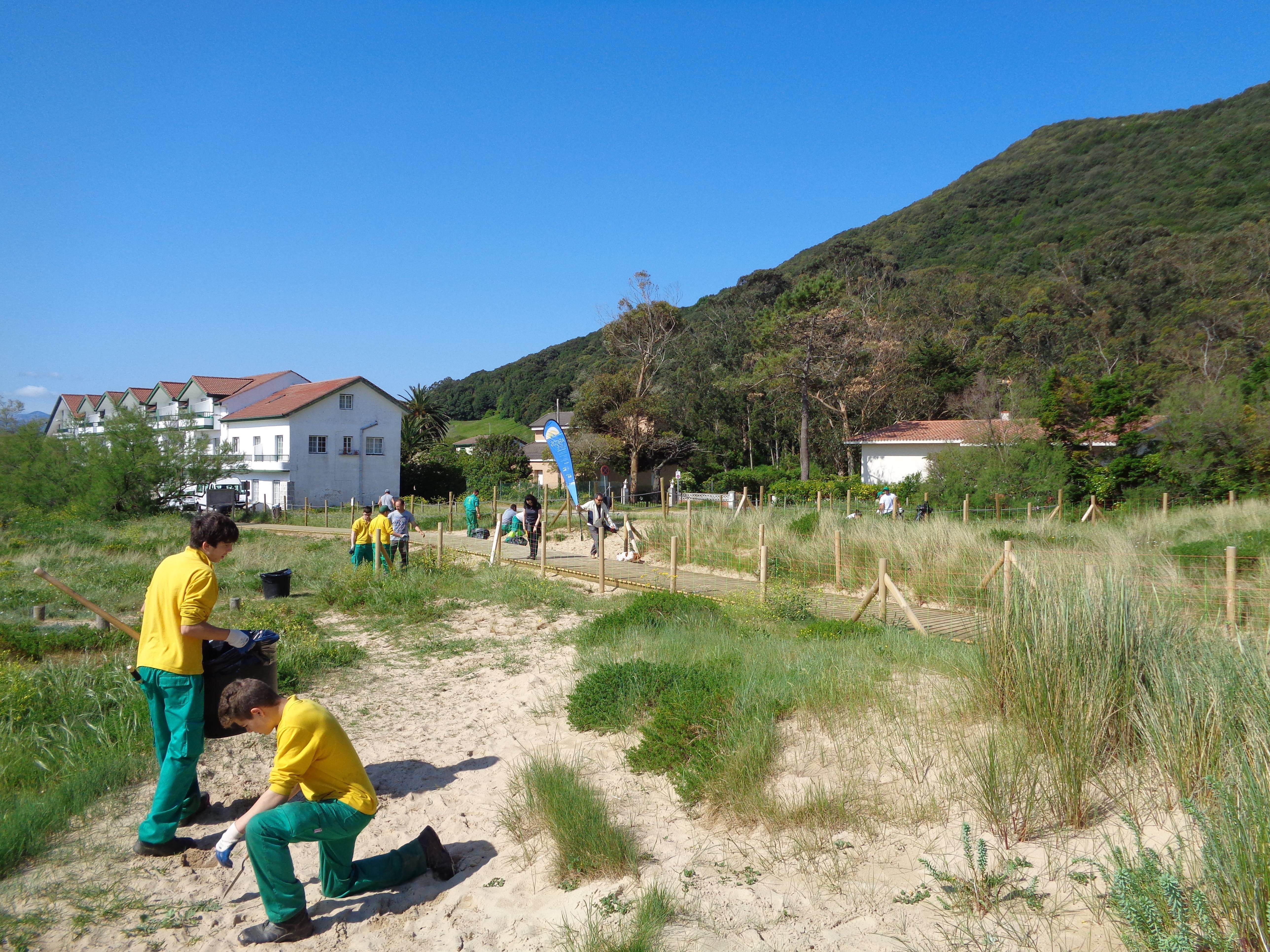
    After the Director of the Park gave a brief introduction to dune dynamics and the LIFE ARCOS project, participants were divided into two groups to work on the activity areas in the central part of the Berria beach (Santoña) dune system.  The activity started by picking up a bit of rubbish in the area. Then, the groups continued to extract invasive species like the cape weed Arcthoteca calendula, the Ambrosia artemisifolia and some outbreaks of yuca (Yucca gloriosa) in the secondary and especially in the tertiary dune.  Small gardening shovels were used to manually extract these plants from the dune ecosystem.  This work took a while, because some areas had very small cape weeds germinating from the large seed reservoir these plants create, and the teams reviewed the areas carefully. There were few cases of ambrosia since they had been extracted manually two years ago.

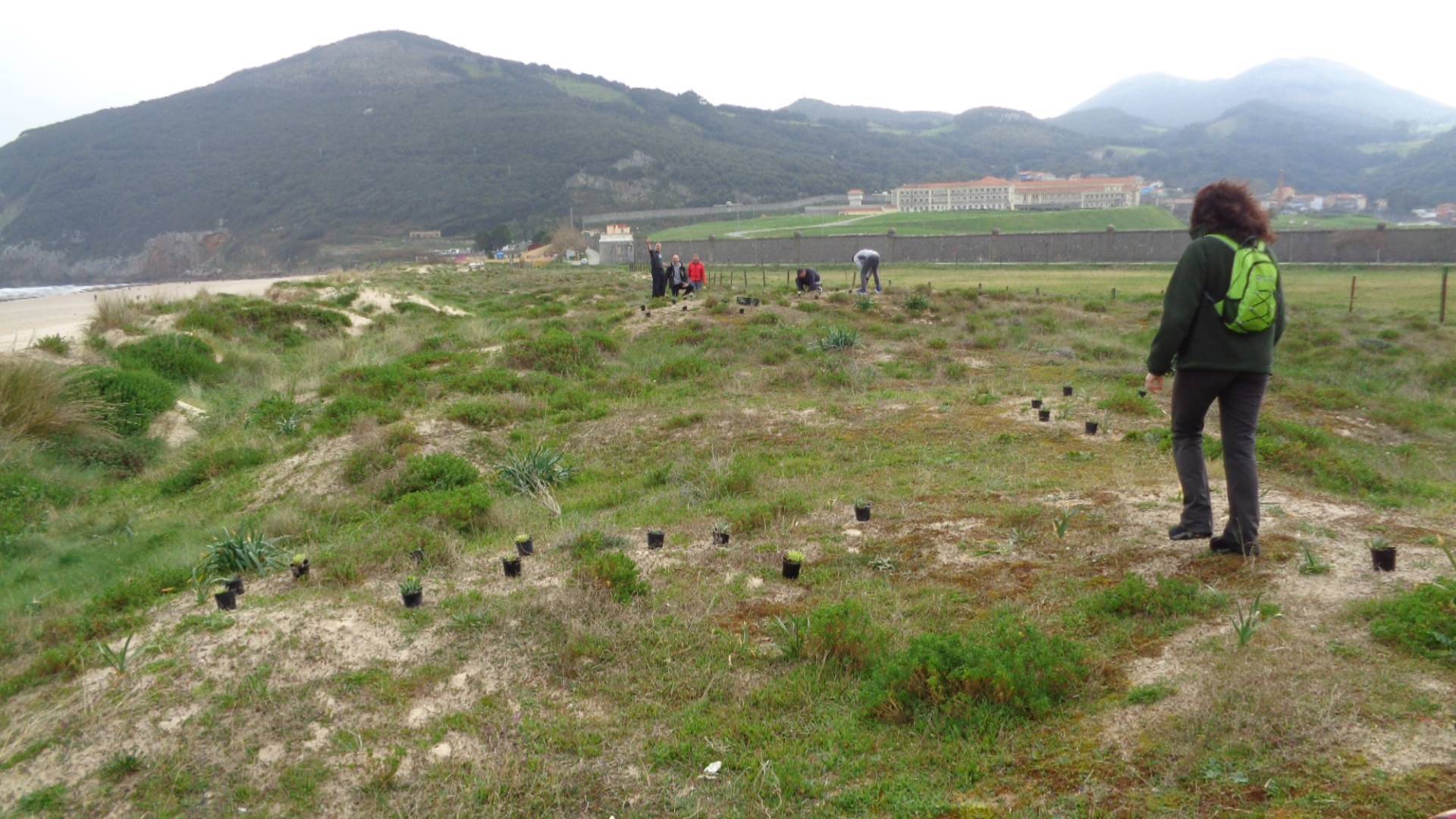
    Then, the teams worked to plant a native species called Virginia stock (Matthiola sinuata), which was obtained from the Gardening Workshop garden centre of the El Dueso Penitentiary, with seeds collected in 2016 from Berria beach dunes.  First, flowerpots were placed within an irregular planting framework to cover the entire area where cape weed was extracted. Then, around 200 Virginia stock were planted.

    We took a break at mid-morning and then went to the dune micro-reserve next to Brusco and the rising dune, an area that is closed to visitors to encourage regrowth. Just a few years ago, people were still parking their cars amongst the dunes.  During the beach walk on the way to the next activity area, we reviewed the frontal dune to collect some bulbs of daffodil (Pancratium maritimum) that were disconnected during the sea storm. They will be reintroduced into the dune. 

    In the Berria (Santoña) dune system, crossworts (Crucianella maritima) are just as rare as in other Cantabrian dunes and are present in just a few small areas of the tertiary dune. About thirty plants were cut so the El Dueso Gardening Workshop can work on multiplication techniques.

    In the area next to Brusco, Ononix natrix subsp. ramossisima (a Mediterranean plant in its distribution limit) was extracted and cleared. Cape weed was also extracted and 200 underdeveloped nursery plants of Virginia stock  were planted in the central area of Berria beach.  In this same area, agapanthus and crocosmias had bloomed and their bulbs were extracted.

    A total of four 100-litre bags of rubbish and eight 100-litre bags of invasive species, mostly cape weed (Arctotheca calendula), were collected. 

    Thank you to the team and all their hard work! We all learned from each other while enjoying a sunny morning at the beach. 

  • Primera actividad del programa NACAR en 2017 (Berria, Cantabria)

    Primera actividad del programa NACAR en 2017 (Berria, Cantabria)

    El día 9 de marzo de 2017 se programó la primera actividad del año del programa NACAR (Naturaleza y Cárcel) de voluntariado dentro del programa LIFE ARCOS. En esta ocasión participaron, junto con la Directora del Parque Natural y dos becarios de la Dirección General del Medio Natural (de la Consejería de Medio Rural, Pesca y Alimentación, Gobierno de Cantabria), siete internos con dos monitores del Centro Penitenciario del Dueso.  Además, colaboraron en la actividad también cuatro monitores de la Red Cántabra de Desarrollo Rural que trabajan en el Centro de Interpretación del Parque Natural de las Marismas de Santoña, Victoria y Joyel.  En conjunto se formó un numeroso equipo que trabajó en la restauración dunar de Berria durante toda la mañana.

    Tras una breve introducción a la dinámica dunar y al Proyecto LIFE ARCOS por parte de la Directora del Parque los participantes se dividieron en dos grupos para trabajar en las zonas de actuación de la parte central del sistema dunar de la playa de Berria (Santoña).  La actividad se inició retirando la poca basura que había por la zona y continuó con la retirada de especies invasoras como la margarita africana Arcthoteca calendula y Ambrosia artemisifolia así como algún rebrote de yuca (Yucca gloriosa) en la duna secundaria y sobretodo en la duna terciaria.  El método de trabajo para sacar estas plantas del sistema dunar es mediante extracción manual con pequeñas palas de jardinería.  Esta parte del trabajo llevó un buen rato, ya que en algunas zonas había planta muy pequeña de margarita africana germinando del gran reservorio de semillas que genera esta planta, pero se dio un buen repaso y, en el caso de la ambrosia había ya muy pocos ejemplares después de haber tratado esta planta de modo manual en los dos años anteriores.

    Seguidamente, se pasó a realizar la plantación con la especie autóctona de alhelí marino (Matthiola sinuata) obtenida en el vivero del Taller de Jardinería del Centro Penitenciario de El Dueso con semilla recogida en 2016 en las dunas de la playa de Berria.  Primero, se colocaron los tiestos con un marco de plantación irregular para cubrir toda la superficie en la que se extrajo la margarita africana y finalmente se plantaron unos 200 alhelies marinos.

    A media mañana hicimos una parada para reponer fuerzas y después nos movimos hasta la denominada microrreserva dunar junto al Brusco y la duna remontante, una zona cerrada al paso de los visitantes que se está regenerando y que hace pocos años todavía se aparcaban coches en su interior.  Durante el recorrido por la playa hasta llegar al siguiente punto de la actividad se revisó la parte frontal de la duna para recoger algún bulbo descolgado por los temporales marinos de azucena marina (Pancratium maritimum) que se volverá a introducir en la duna. 

    En el sistema dunar de Berria (Santoña) la espigadilla de mar (Crucianella maritima) es escasa como en el resto de dunas de Cantabria y aparece en unas pocas manchas de la duna terciaria por lo que se recogieron unos treinta esquejes para que en el Taller de Jardinería de El Dueso practiquen su multiplicación.

    La actividad en este zona junto al Brusco se desarrolló mediante la retirada y aclareo de Ononix natrix subsp. ramossisima (una planta mediterránea aquí en su límite de distribución), retirada también de margarita africana y la plantación de otras 200 plantas de alhelí marino de semillero, en este caso una planta algo menos formada que la que se plantó en la zona central de la playa de Berria.  En esta misma zona había rebrotando agapantos y crocosmias que se retiraron extrayendo sus bulbos.

    En total se retiraron cuatro bolsas de basura de 100 l y ocho bolsas del mismo volumen de especies exóticas invasoras sobretodo de margarita africana (Arctotheca calendula). 

    ¡Muy buena labor de equipo y compañerismo en una agradable y soleada mañana en la que aprendimos unos de otros¡