Categoría: Blog

  • Life+ARCOS team meets the major of the Noja Council and city councillorscity councillors

    Life+ARCOS team meets the major of the Noja Council and city councillorscity councillors

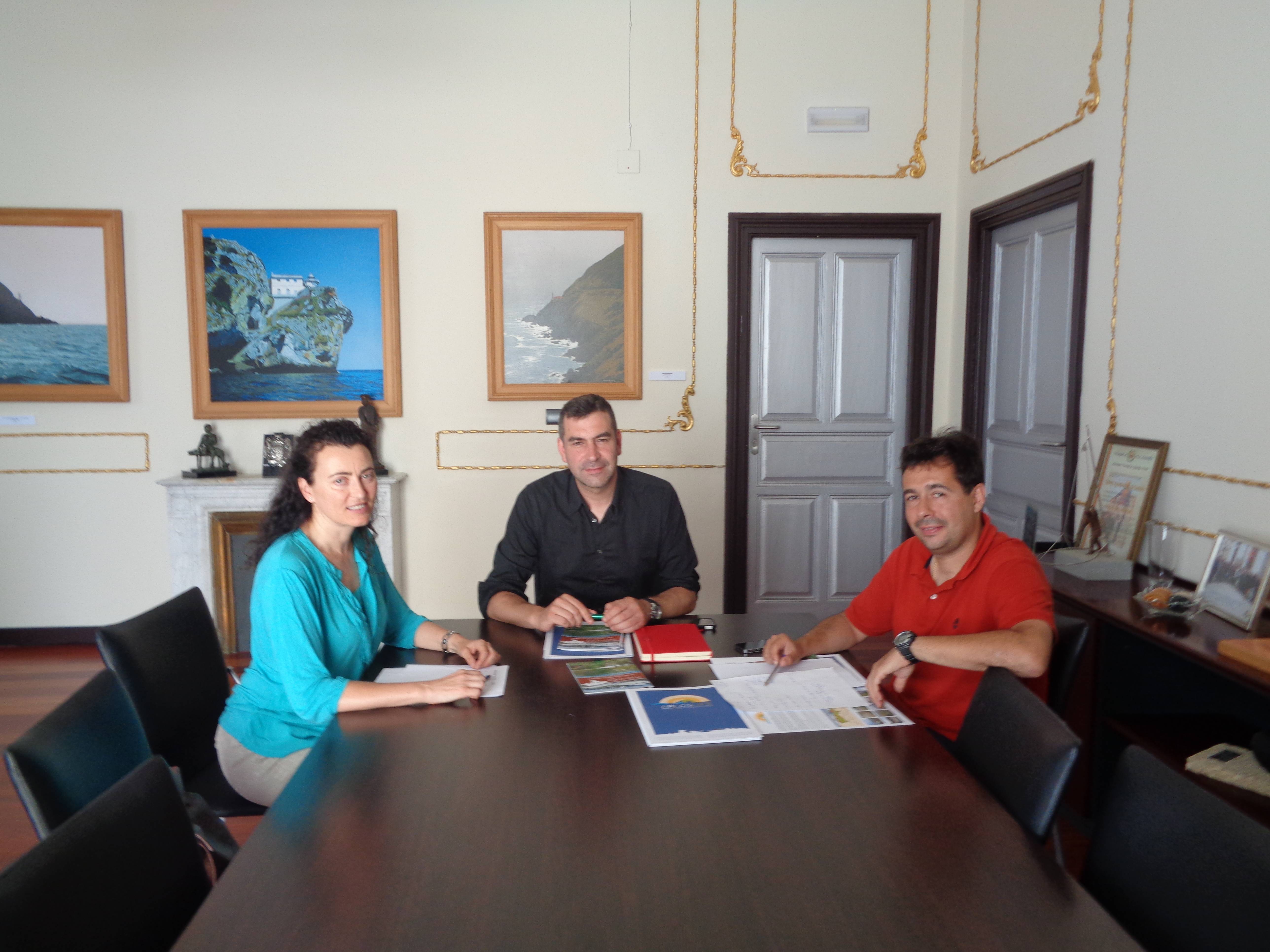
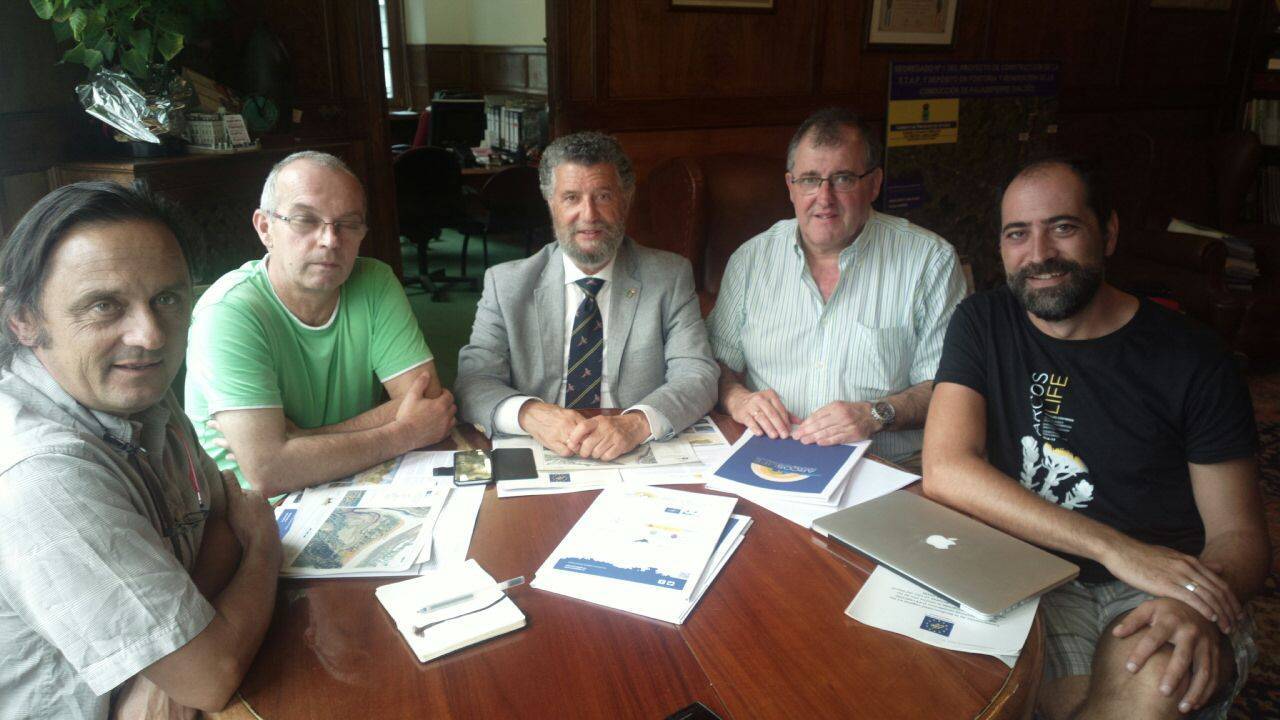
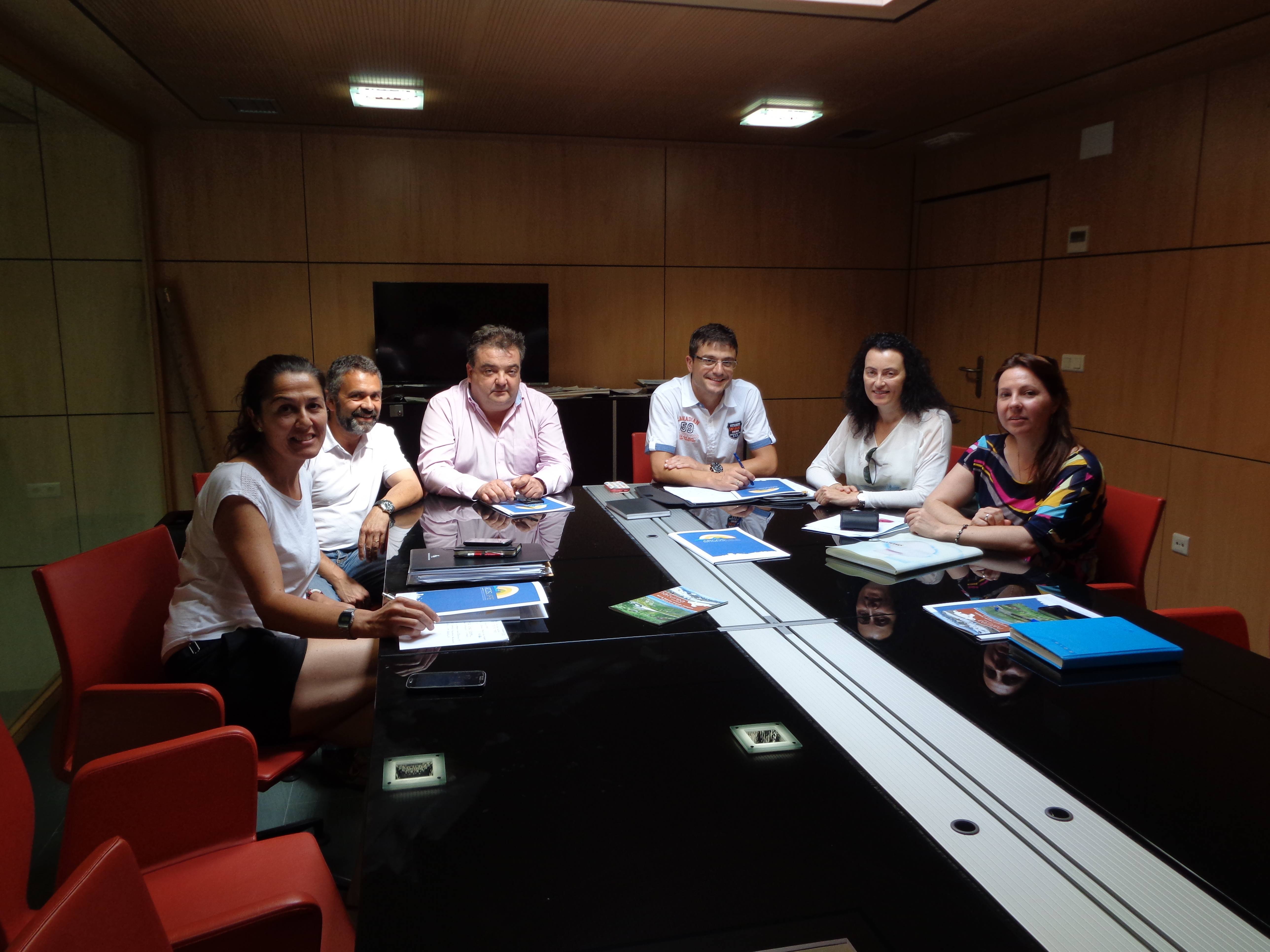
    Meeting at the Council of Villa de Noja, (from left to right) Ms Mónica Cagigas Ocerin (councillor of Procurement, Personnel, Heritage and Treasury), Mr Francisco Javier Martín Vázquez (councillor of the Environment), Mr Miguel Ángel Ruiz Lavín (mayor of Noja), Mr Álvaro Torre Torralbo (councillor of Sports), Ms Lourdes González Azpiri (director of the Santoña, Victoria and Joyel Marshes Natural Park), and Ms Rocío Gándara Revuelta (councillor of Education, Social Services and Healthcare).

    The LIFE+ARCOS project on Helgueras beach (Noja) will continue to do dune system conservation work from the Directorate-General of Forestry and Nature Conservation (currently the Directorate-General of Natural Environment) of the Regional Ministry of Rural Affairs, Fisheries and Food of the Government of Cantabria, which was already being carried out within the Santoña, Victoria and Joyel Marshes Natural Park.

    As stated by the new Noja mayor, Miguel Ángel Ruíz Lavín , and his councillors, the director of the Santoña, Victoria and Joyel Marshes Natural Park of the Directorate-General of Natural Environment of the Regional Ministry of Rural Affairs, Fisheries and Food of the Government of Cantabria (collaborating member of LIFE+ARCOS), Ms Lourdes González Azpiri at the meeting held on 6 August at the Council of Noja.

    Attendees received a thematic portfolio on the LIFE+ARCOS subject “Conserving Cantabrian Dunes” and learned about the scope of action and activities to be carried out on Helgueras Beach through 2018.
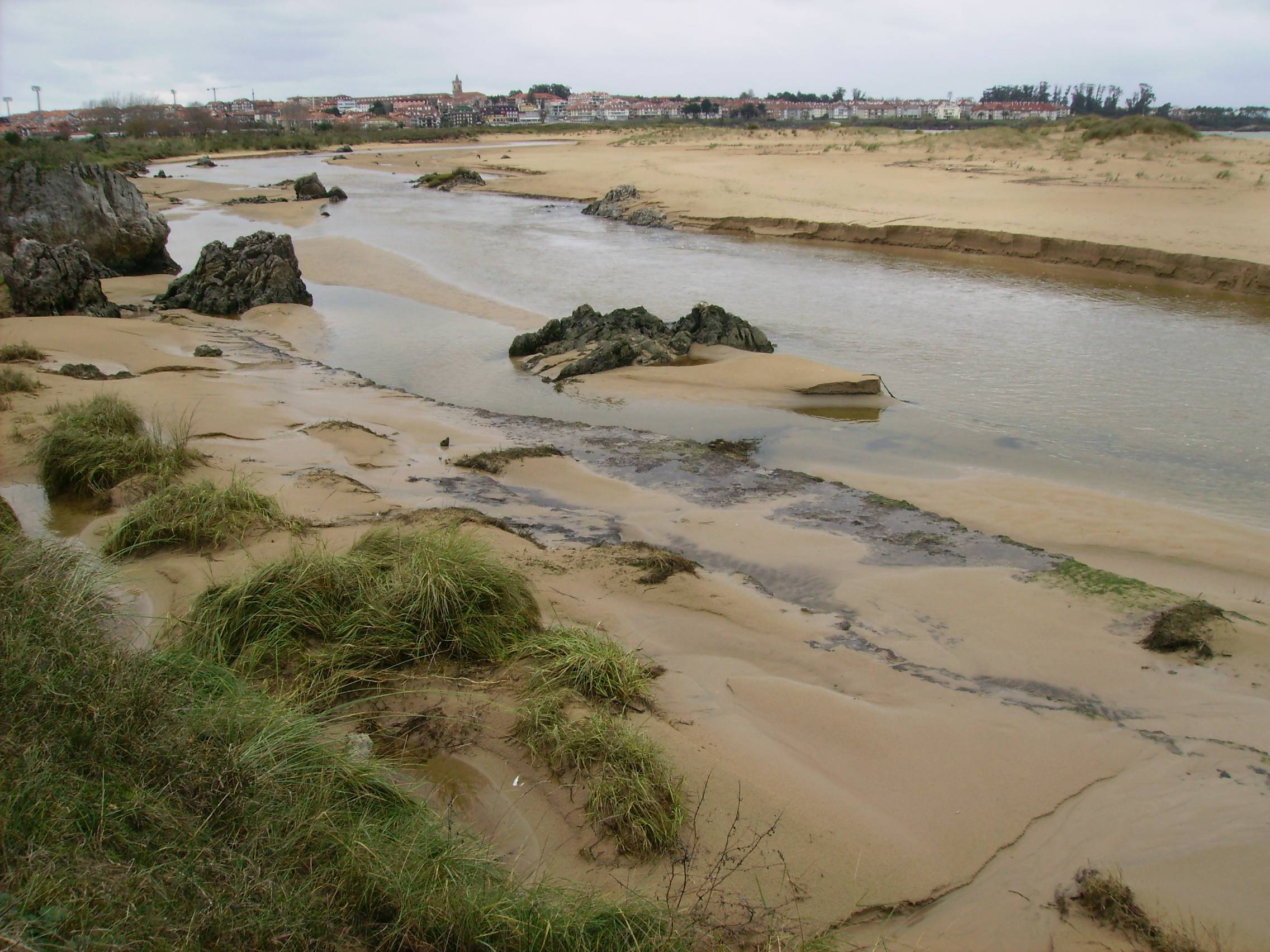
    Estuary of Victoria lagoon and, in the back, the settlement of Noja.

    The activities planned within the project (closing the dunes with wood posts and marine rope, eradicating invasive species and planting dune vegetation as main activities) are relevant to maintain the structure and dynamic of the dune system of Helgueras beach. During the presentation, the mayor expressed his interest in reading detailed information about the beach.

    During the meeting, we talked about the car park problem on Noja’s beaches. We talked about carrying out an activity to mark off an area visitors currently use to park and talked about possible solutions for the municipality during the summer. These potential activities need to be evaluated and studied.

    We also talked about the importance of ensuring dune structure maintenance in an area of the Helgueras dunes that shows signs of erosion. We focused on the importance of mechanical cleaning with a tractor (responsibility of the Council of Noja) on Helgueras and Ris beaches with enough distance from the front of the dune systems to ensure their conservation.

    Mayor Miguel Ángel Ruiz set up a new meeting to talk about different aspects of this Natural Protected Area after summer.
  • Life+ARCOS attended a meeting with the Gozón councilman in charge of the environmental matters

    Life+ARCOS attended a meeting with the Gozón councilman in charge of the environmental matters

    Ayuntamiento de Gozón
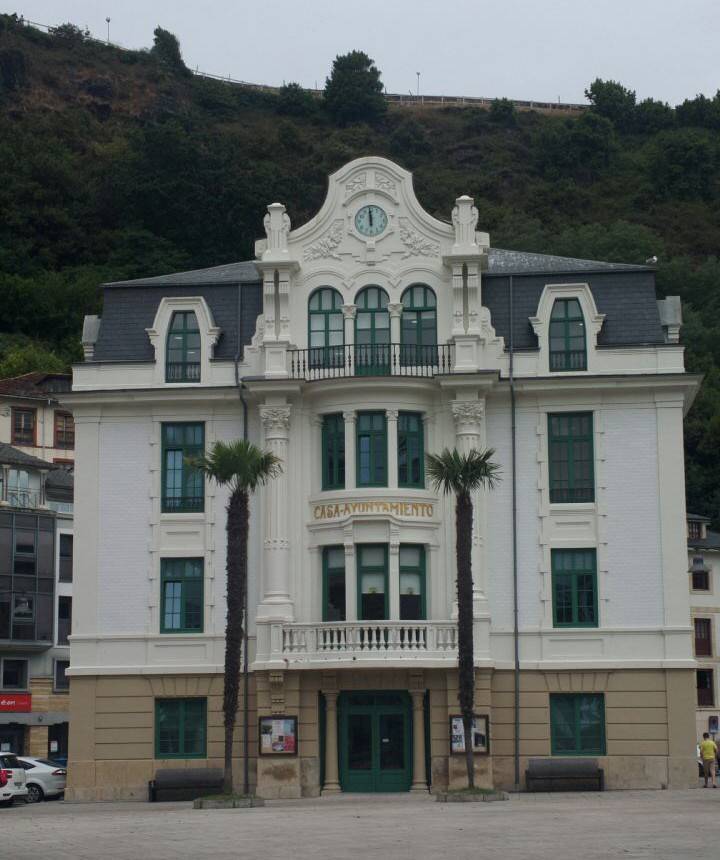
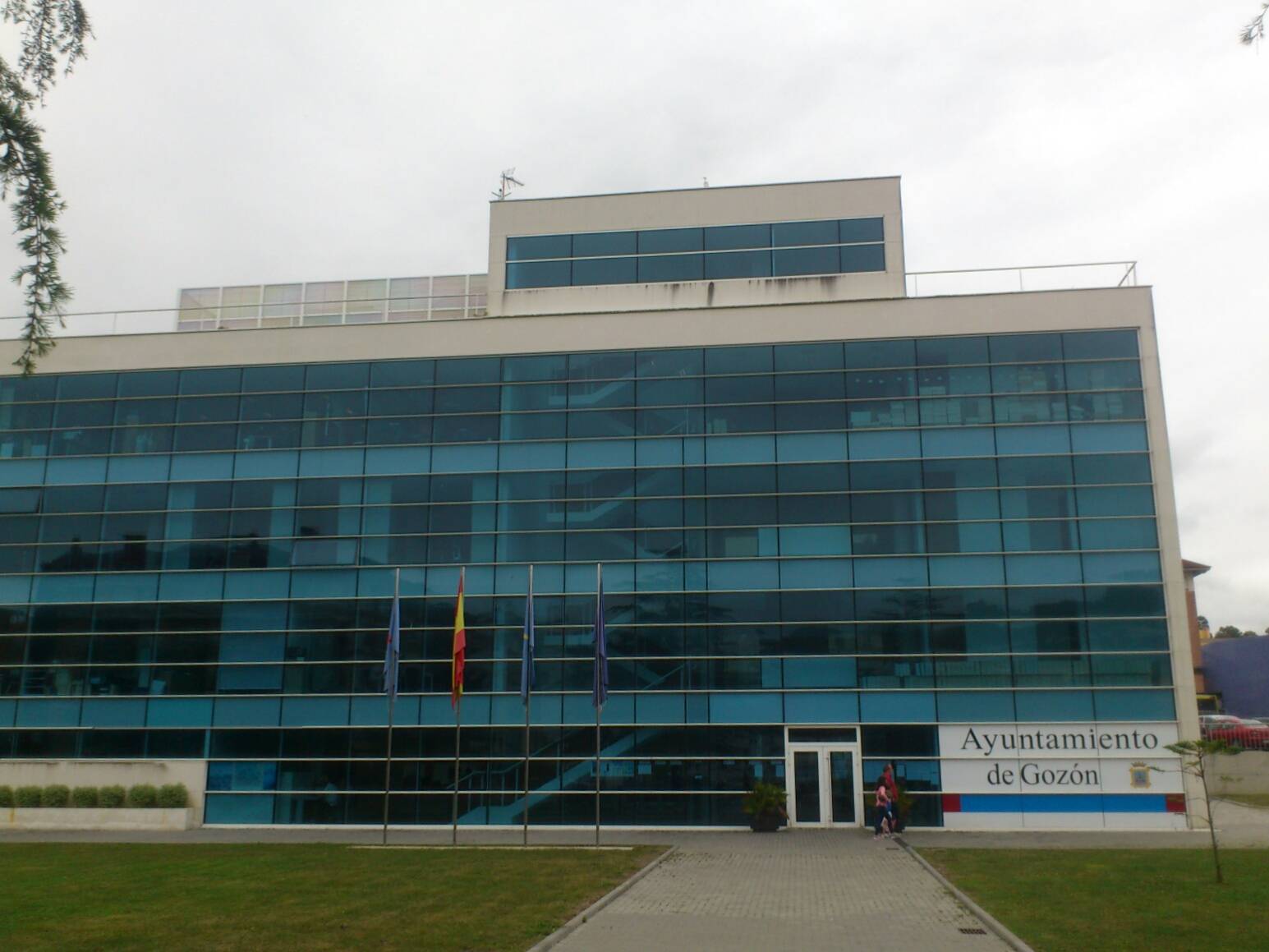
    Council of Gozón, located in Luanco, where the informational meeting took place.

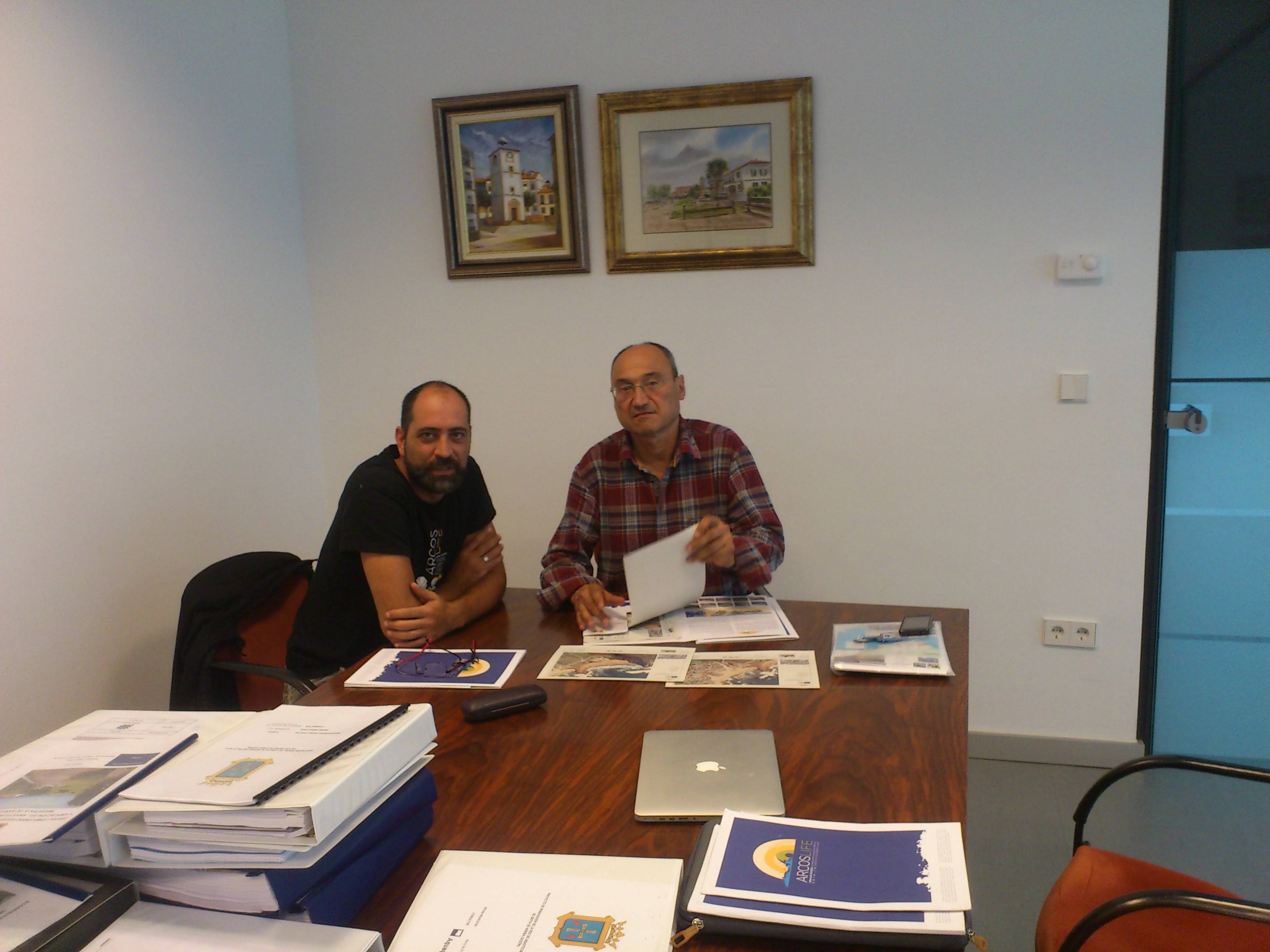
    The Council of Gozón, located in the village of Luanco, held a meeting on 4 August 2015 with representatives from the University of Oviedo (scientist team from the Atlantic Botanical Garden), coordinator of the Life+ARCOS project, and the head of the areas of Culture, Heritage and Education, councillor Mr Manuel Hernández Barrios.

    During the meeting, Mr Alvaro Bueno Sánchez and Mr J. Ignacio Alonso Felpete explained the scope of the project and the activities planned for the Barayo dune system (SCI Cabo Busto-Luanco) and which will be carried out within the Life+ARCOS project.

    After elections last May, members of the municipal corporation at the council of Gozón changed. Therefore, we explained the nature, scope and objectives of the LIFE programme in detail. We especially focused on the use of these European funds to improve the conservation of habitats and species protected by European legislation.

    Reunión
     Ignacio Alonso and Manuel Hernández during the meeting at the Council of Gozón.

    Mr Manuel Hernández, citizen of Verdicio and geographer, presented the main items that—with respect to managing the access to Carriciega and Tenrero beaches—could be of most interest to the corporation. During the conversation, he explained the project’s interest in actively recovering the tertiary dune system, as it was home to an old sports track up until a few years ago. He also talked about the urgent need to eradicate the large number of invasive species that are threatening the conservation of dune ecosystems. He also explained how the coastal route, which is currently cut off in the Verdicio residential area and diverted towards the dune system, has damaged these habitats. 

    The ARCOS team accepted the councillor of culture’s offer for part of the educational information resulting from the development of the ARCOS project be integrated into the demonstrative area known as «the traffic light” near Cabo de Peñas. This municipal management centre has fallen into disuse and, in the words of the councillor, will be used as a space for sharing the importance of coastal and marine biocenosis. Dune systems will fit in perfectly there.

    The meeting concluded with all parties showing interest in promoting public education and participation in carrying out the Life+ARCOS project. Therefore, we proposed hosting a public presentation for citizens where we will explain the activities to be carried out.

  • Life+ARCOS held a meeting with local authorities from the Ribadesella Council

    Life+ARCOS held a meeting with local authorities from the Ribadesella Council

    On 23 July 2015, members of the University of Oviedo-Atlantic Botanical Garden, coordinating member of the Life+ARCOS project, met at the city council house in Ribadesella to discuss the activities planned within the Life+ARCOS project with members of the municipal corporation, within the Site of Community Importance called “Vega Beach.”

    Reunión Ribadesella
    Photo of the meeting with A. Bueno (University of Oviedo) and Ignacio Baldón and Patricia Toyos (Council of Ribadesella), from left to right.

    The following people attended the meeting from the University of Oviedo: Mr Álvaro Bueno Sánchez and Mr J. Ignacio Alonso Felpete, as technical heads of the project; from the city council of Ribadesella: Mr Ignacio Baldó García, councillor of the environment and Ms Patricia Toyos González, surveyor from the council, who was accompanied by two employees of this section.

    Attendees received a thematic portfolio on the LIFE+ARCOS subject “Conserving Cantabrian Dunes” and learned about the scope of action and activities to be carried out on Vega Beach through 2018.

    The aerial photo of the protected area was used to talk about where the main activities will take place. We talked about the need to regulate access points to the beach, to eradicate exotic invasive species in dune areas—such as the Australian laurel (Pittosporum tobira), Arctoteca calendula or Stenotaphrum americanum and others that are present in fragments of the alder grove (a habitat that is also protected and prioritised by European legislation) at the final part of the river that flows into Vega Beach.

    At the meeting there was also time to coordinate some municipal activities such as placement of lifeguard stands and mechanical cleaning work. The goal was to make sure these activities do not threaten protected species in the Regional Catalogue of Threatened Flora of Asturias.

    The head of the Environment of the city council of Ribadesella’s knowledge of the area, resulting from having lived in the village of Vega for many years, enormously facilitated the conversation and discussion of information about the ownership of land bordering the Site of Community Importance.

    The meeting concluded with council members interest in the project. They agreed to meet in September to discuss important public information functions about activities on Vega Beach and in the council of Ribadesella.

  • Life+ARCOS held a meeting with the authorities of the Santoña Council

    Life+ARCOS held a meeting with the authorities of the Santoña Council

    Palacio Manzanedo, Santoña
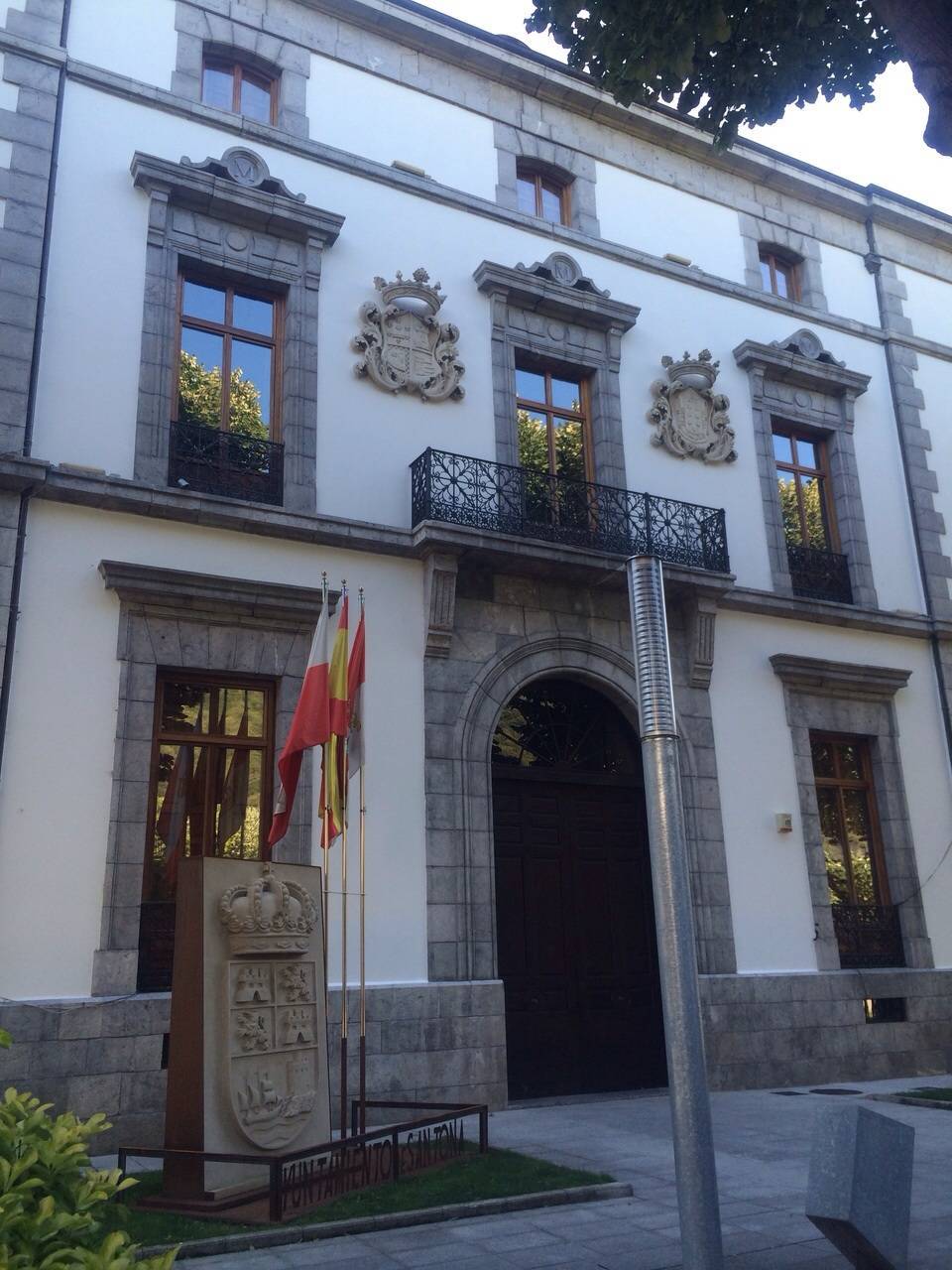
    Council of Santoña, Manzanedo Palace, where the meeting between the Life+ARCOS project representative and representatives from the Council of Santoña was held

    On 23 July, the director of the Santoña, Victoria and Joyel Marshes Natural Park of the Directorate-General of Forestry and Nature Conservation of the Regional Ministry of Rural Affairs, Fisheries and Food of the Government of Cantabria (collaborating member of the LIFE+ARCOS project), Ms Lourdes González Azpiri, met with the Mayor of Santoña, Mr Sergio Abascal Azofra, and the Councillor of the Environment, Mr Fernando Palacio Ansola. They talked about items of interest within the Natural Protected Area and about the LIFE+ARCOS dune restoration project for Berria Beach (Santoña).

    Attendees received a thematic portfolio on the LIFE+ARCOS subject “Conserving Cantabrian Dunes” and learned about the scope of action and activities to be carried out on Berria Beach through 2018. They were informed about the importance of the activities planned within the project (closing the dunes, installing sand collectors, eradicating invasive species and planting dune vegetation as main activities) to maintain the structure and dynamic of the dune system. We also insisted on the need for mechanical cleaning of the front side of the beach (responsibility of the Council of Santoña) that is far enough away from the dune to conserve its habitats. In reference to the volunteer activities, we explained the relationship the NACAR (Nature and Prison) environmental volunteer programme (since 2004) with the LIFE+ARCOS project with the activities scheduled for next autumn.

    Ms Lourdes González, the mayor of Santoña, Mr Sergio Abascal and the Councillor of Environment, Mr Fernando Palacio during the meeting.

    The Mayor and Councillor of Environment were interested in knowing more about the project’s activities and suggested carrying out a technical visit to Berria beach on 3 August to interact with the current state of Berria beach’s dune system and to evaluate existing public use infrastructure.

  • Life+ARCOS team finds a new population of the protected species Chamaesyce peplis in the Verdicio (Asturias) dune system

    Life+ARCOS team finds a new population of the protected species Chamaesyce peplis in the Verdicio (Asturias) dune system

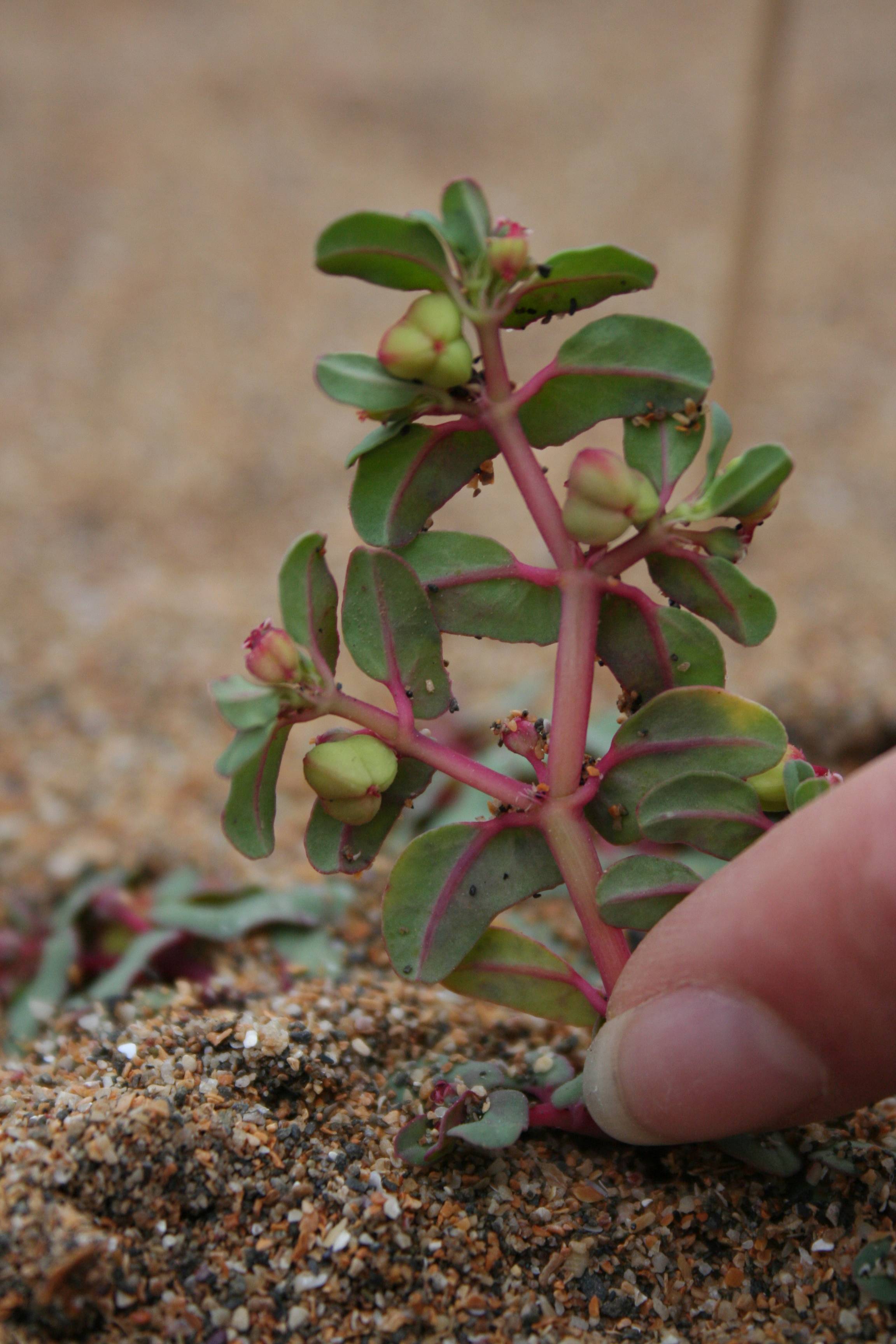
    In the course of the Cantabrian dune system recovery actions within the activity of the Life+ARCOS project, on the Tenrero beach, Verdicio (Asturias), a population of the threatened species Chamaesyce peplis has been identified.

    This species had already been listed by Damián Abril-San Juan for this protected space, in his end-of-degree project about the “Assessment of Plant Coverage in the Verdicio Dune System, Gozón (Asturias)”, but during 2014 the Life+ARCOS team in charge of collecting seeds for their preservation and use in re-introduction actions envisaged within the project were unable to find it.

    Frutos de Chamaesyce peplis
    “Sea spurge” specimen, displaying its still unripe fruits, each containing 3 seeds.

    Chamaesyce peplis is a species that along with around twenty other taxa, are being preserved in the germoplasm banks in Iturrarán (Basque Country) and in the Atlantic Botanical Garden, where its germination capacity is being assessed and for its later use in restoring 10 dune ecosystems along the Cantabrian coast benefiting from this European project.

    Sea spurge is an annual plant found on the tide line area of dunes and sandbanks, included within the Principality of Asturias Regional Catalogue of Threatened Flora Species under the “Endangered“ category. In the Communities of the Basque Country and Cantabria, this species is also included in the protection catalogues under the category of “Vulnerable“. 

    A direct census has been carried out on this population, producing an approximate figure of 150 specimens. This high number of specimens is particularly striking given the harsh environmental conditions faced by these plants over the past autumn-winter seasons, in which adverse weather conditions considerably altered the landscape.

    The recreational use of the habitat where this species is developing – particularly intense over the summer season – can make it difficult for enough species to complete their life cycle (remember that they are annual plants), culminating with the production of seeds that allow it to regenerate year after year.

    Other activities, such as beach cleaning with machinery, can cause irreparable damage to the numbers of this species.

    Señalización de ejemplares de Chamaesyce peplis en la playa de Verdicio.
    Image displaying the census carried out on “sea spurge” populations located in Verdicio

    Sea spurge is currently in full flower, and even though some plants have already begun to develop fruits, we must still wait for several weeks before collecting the seeds. 

    In the photograph you can see the still green fruits of this species (small and smooth trilocular capsules) each containing three seeds.

    In the near future, once the seeds of this species have been collected, the University of Oviedo-Atlantic Botanical Garden scientific team will develop the most suitable cultivation protocols so as to reintroduce the Chamaesyce peplis back into the Cantabrian dune, where it has currently disappeared completely, or to reinforce enclaves where its numbers have been diminishing.

    If you come across this species on a visit to Verdicio, please remember that it is protected and enjoy its presence without damaging it. It is a great privilege to see such a rare species along the coasts of the northern Iberian peninsula.

  • Life+ARCOS meets the majors and councillors of Valdés and Navia Councils, Asturias

    Life+ARCOS meets the majors and councillors of Valdés and Navia Councils, Asturias

    Asistentes a la reunión
    From left to right. Álvaro Bueno, Mariano Fernández, Ignacio García Palacios, Simón Guardado Pérez and Ignacio Alonso, attendees at the meeting.

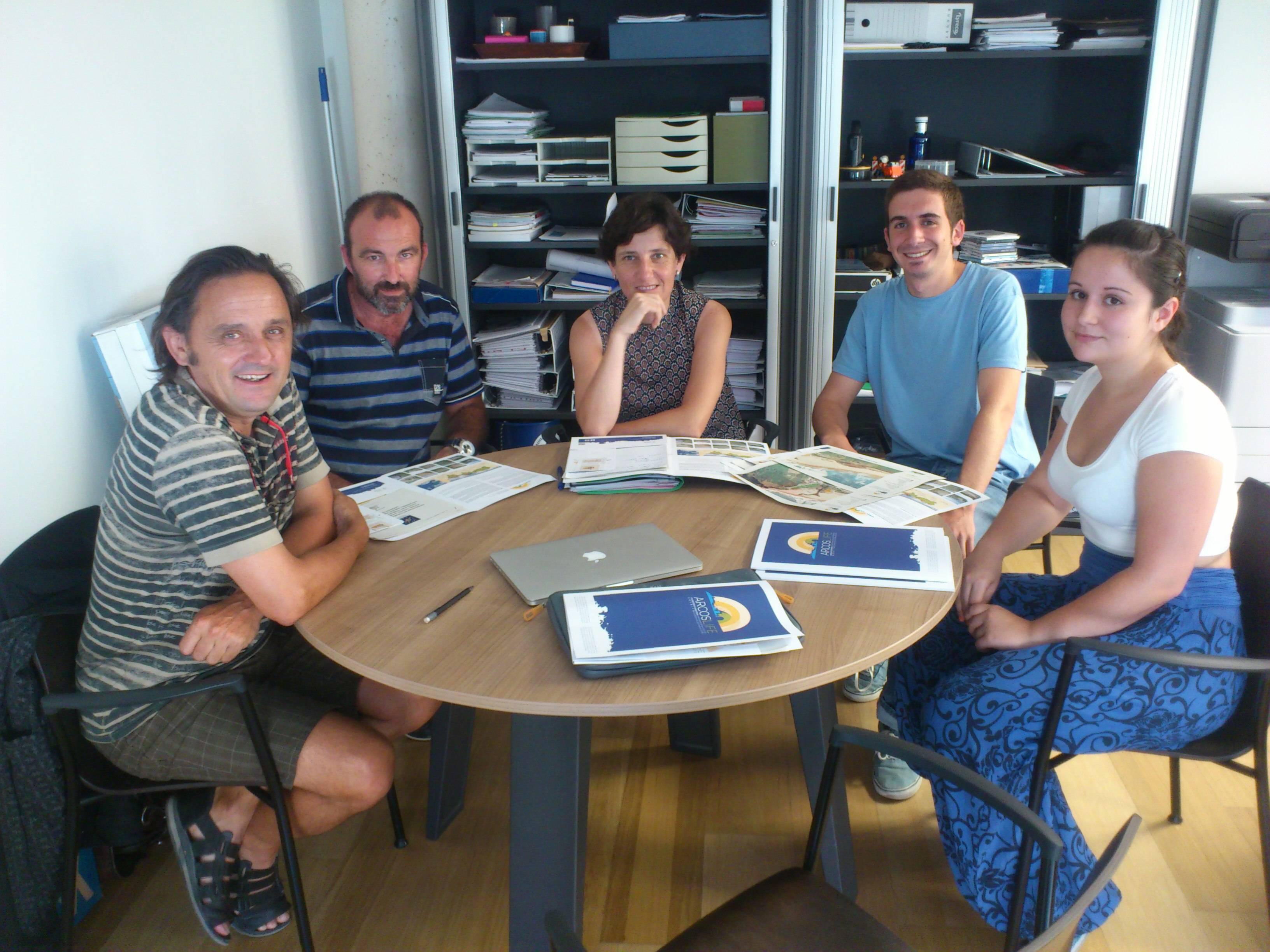
    Today, members of the University of Oviedo, the coordinating partner of the Life+ARCOS project, held a meeting at the Luarca Council with the local mayor, Mr Simón Guardado Pérez, the Councillor of Navia, Mr Ignacio García Palacios, and a member of the Navia Council Environmental Department, Mr Mariano Fernández, to give information about the development of the conservation actions included within the project for the Barayo Beach protected space.

    During the meeting, Mr Alvaro Bueno Sánchez and D. J. Alonso Felpete explained to representatives from both Councils the actions envisaged for the Partial Natural Reserve of Barayo, a protected space that encompasses terrain belonging to both Navia and Valdés. They were given an informative dossier with the list of foreseen actions in the other enclaves where this project is being developed.

    IMG-20150708-WA0005
    Luarca Council, which hosted the meeting between representatives of the Life+ARCOS project and representatives of the Navia and Valdés Councils

    The Councillors and members of the Council shared the interest and concern expressed by Life+ARCOS to recover the state of conservation of the dune system, which is currently far from optimal. Removing invasive species from the setting, specifically the actions on the invasive grass Spartina patens, were a central part of the meeting. The proposal to remove the non-native trees currently covering the space on the Barayo grey dune was met with great interest by all parties, who discussed the possibility that the dune ecosystem restoration actions may receive financial support from other institutions, which until now had not been part of the project development.

    The meeting ended with the intention of all parties to hold an information session about all the actions envisaged for the Barayo space, with citizen participation and open to specific groups that may be interested in participating in the volunteering programme, which have been planned for this space within the Life+ARCOS project.

  • Volunteering day in Berria with the aim of NACAR project. Event date: 12/06/2015

    Volunteering day in Berria with the aim of NACAR project. Event date: 12/06/2015

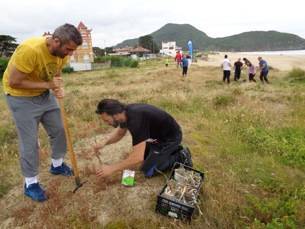
    Dune restoration by removing waste, invasive plants and by planting sea daffodils on the Berria beach (SCI Santoña, Victoria and Joyel Marshes)

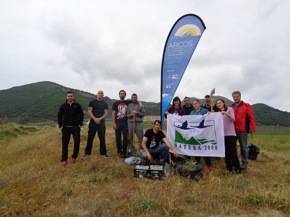
    NACAR_banderola
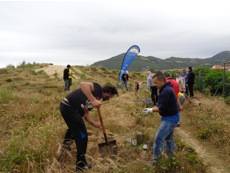
    Image of the group of participants on the volunteering day

    After being forced to rain off the activity set for 15th May, this time inmates and technicians from the El Dueso Penitentiary Centre participated in the start of the volunteering activities within the Life+ARCOS programme, also giving continuity to the NACAR Programme (Nature and Prison) that has involved environmental volunteering work since 2009 on the Berria beach dune system.

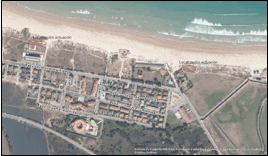
    articulo_NACAR_localizacion
    Area of action

    The Nature Conservation Expert from the Directorate General of Forestry and Conservation from the Government of Cantabria and two trainees (Technical Forestry Engineers) explained the Life+ARCOS programme, whose main aim is to restore dune systems on different points along the Cantabrian coast. They gave them notions about the Protected Natural Space, the problematic issue of invasive species, planting bulbs, giving their full support at all times for hands-on implementation.

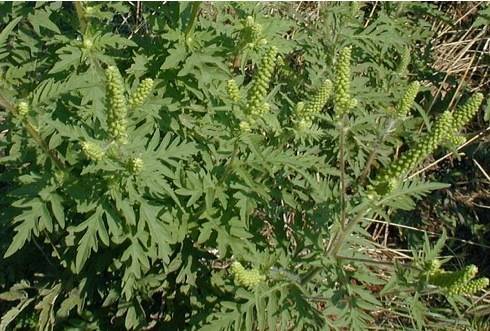
    The first action that was carried out was collecting waste and removing specimens from the entire ragweed population (Ambrosia artemisiifolia) along the tertiary dune area on the Berria beach, using careful manual removal techniques to avoid new shoots from forming in the future from the stoloniferous rhizomes. Some 30 young specimens of another invasive species were found in the same area: Adam’s needle (Yucca gloriosa), which were also removed, excavating the sand so as to remove its roots.

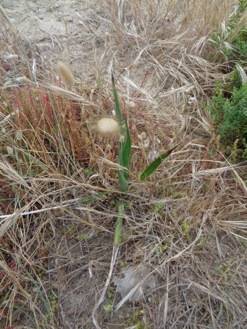
    yucca
    Yucca gloriosa

    Next, almost 100 sea daffodils were replanted (Pancratium maritimum) in the areas cleared of the ragweed. The sea daffodil bulbs used had been kept since March in the nursery of the El Dueso Penitentiary Centre Gardening Workshop, as part of another activity carried out by inmates involving collecting the bulbs from the same dune system where they had been displaced by winter storms.

    ambrosia
    Ambrosia artemisiifolia

    The second activity was carried out on the middle zone of the dune system, in front of the Juan de la Cosa Hotel, also on the Berria beach tertiary dune. First the small stones and rubble piled on the sand were sieved out, so as to remove the largest materials. Next, the sea daffodil bulbs were replanted.

    Plantación de bulbos de azucena marina
    Plantación de bulbos de azucena marina


    The objectives of this day to improve the dune system habitats and to raise environmental awareness have been successfully achieved. The area worked on directly, in total comprised some 1,500 m2 of tertiary dune.

    At the end of the day, the inmates received a Life+ARCOS project t-shirt and they were enthusiastic about having the opportunity to have collaborated in this environmental activity.

    As well as various workshops, the El Dueso Penitentiary Centre also has a Radio channel that broadcasts the most important events in which the inmates participate. After the day of volunteering, one of the participants broadcast on the El Dueso Radio Programme in the local area of Santoña, about the activities carried out, including details about the plant species that they had been working on.

    Voluntarios durante los trabajos de restauración de la duna terciaria de Berria
    Volunteers during the Berria tertiary dune restoration works

    We hope to carry out a new activity from the LIFE+ARCOS soon, in collaboration with the NACAR Programme (Nature and Prison)!


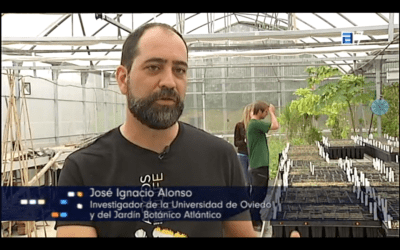
  • News on the TPA channel. Noticias fin de semana weekend’s news programme. Broadcasting date: 07/06/2015

    News on the TPA channel. Noticias fin de semana weekend’s news programme. Broadcasting date: 07/06/2015

    “Removing invasive species from the Cantabrian dunes and growing plants to be reintroduced, Life+ARCOS project objectives”

    Broadcast date: 07/06/2015

    [button link=»https://www.youtube.com/watch?t=53&v=vD1RKnVHxFE» color=»lightblue» newwindow=»yes»] SEE ON THE WEBSITE[/button]


  • News published on the Europapress.es website, Culture section

    News published on the Europapress.es website, Culture section


    News published on the Europapress.es website Culture section
    “The University of Oviedo is leading an EU project to regenerate dune systems on Cantabrian beaches”

    Date of online publication: 09/05/2014


    [button link=»http://www.europapress.es/cultura/noticia-universidad-oviedo-lidera-proyecto-ue-regenerar-sistemas-dunares-playas-cantabrico-20140509131129.html» newwindow=»yes»] See publication[/button]

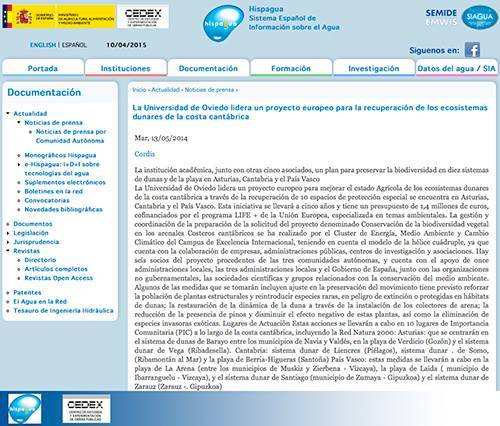
  • News published on the HISPAGUA – CEDEX website

    News published on the HISPAGUA – CEDEX website


    News published on the hispagua.cedex.es website
    “The University of Oviedo is leading a European project to recover the dune ecosystems on the Cantabrian coast”

    Date of online publication: 13/05/2014


    [button link=»http://hispagua.cedex.es/documentacion/noticia/133993″ newwindow=»yes»]SEE PUBLICATION[/button]