In the course of the Cantabrian dune system recovery actions within the activity of the Life+ARCOS project, on the Tenrero beach, Verdicio (Asturias), a population of the threatened species Chamaesyce peplis has been identified.
This species had already been listed by Damián Abril-San Juan for this protected space, in his end-of-degree project about the “Assessment of Plant Coverage in the Verdicio Dune System, Gozón (Asturias)”, but during 2014 the Life+ARCOS team in charge of collecting seeds for their preservation and use in re-introduction actions envisaged within the project were unable to find it.
Chamaesyce peplis is a species that along with around twenty other taxa, are being preserved in the germoplasm banks in Iturrarán (Basque Country) and in the Atlantic Botanical Garden, where its germination capacity is being assessed and for its later use in restoring 10 dune ecosystems along the Cantabrian coast benefiting from this European project.
Sea spurge is an annual plant found on the tide line area of dunes and sandbanks, included within the Principality of Asturias Regional Catalogue of Threatened Flora Species under the “Endangered“ category. In the Communities of the Basque Country and Cantabria, this species is also included in the protection catalogues under the category of “Vulnerable“.
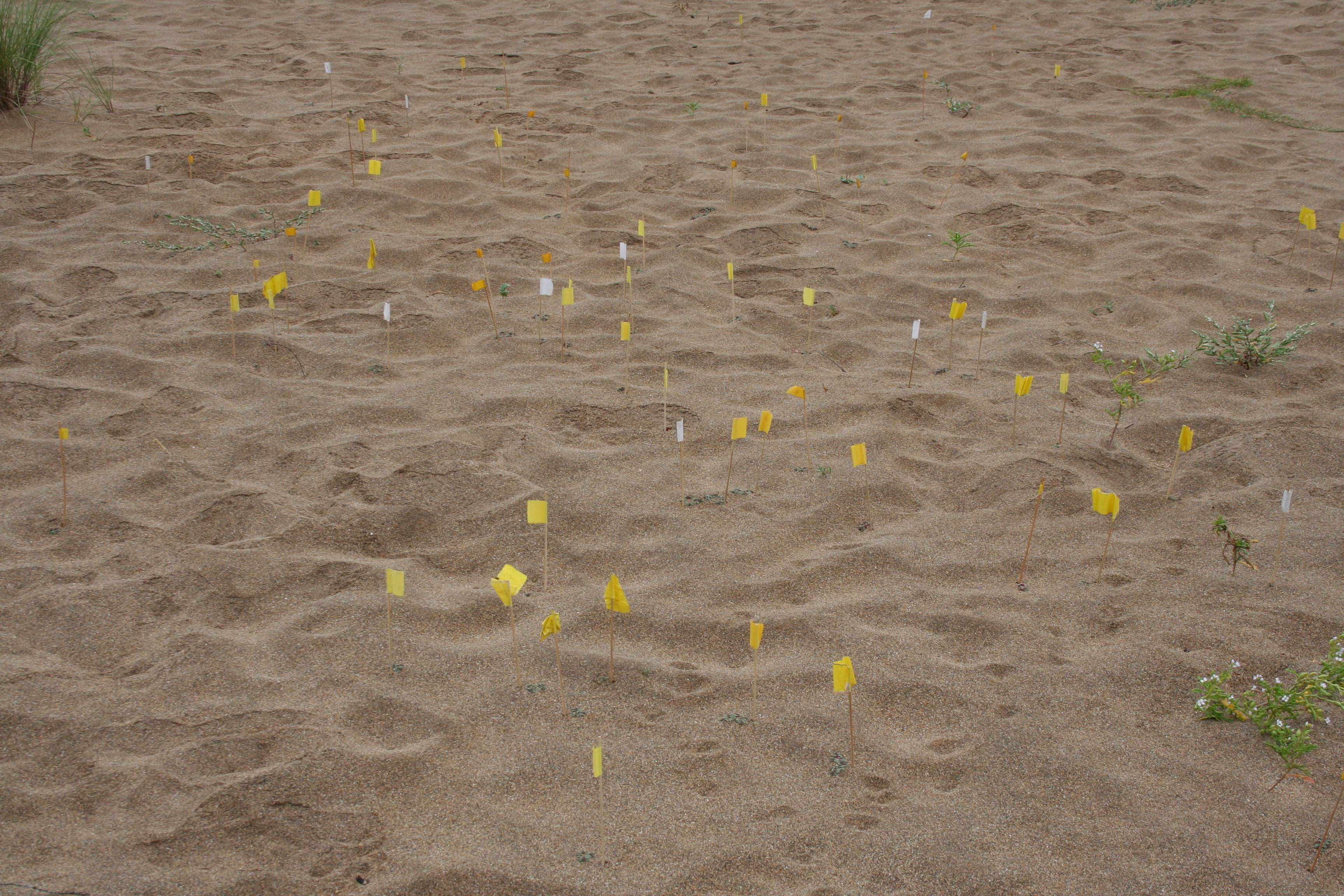
A direct census has been carried out on this population, producing an approximate figure of 150 specimens. This high number of specimens is particularly striking given the harsh environmental conditions faced by these plants over the past autumn-winter seasons, in which adverse weather conditions considerably altered the landscape.
The recreational use of the habitat where this species is developing – particularly intense over the summer season – can make it difficult for enough species to complete their life cycle (remember that they are annual plants), culminating with the production of seeds that allow it to regenerate year after year.
Other activities, such as beach cleaning with machinery, can cause irreparable damage to the numbers of this species.
Sea spurge is currently in full flower, and even though some plants have already begun to develop fruits, we must still wait for several weeks before collecting the seeds.
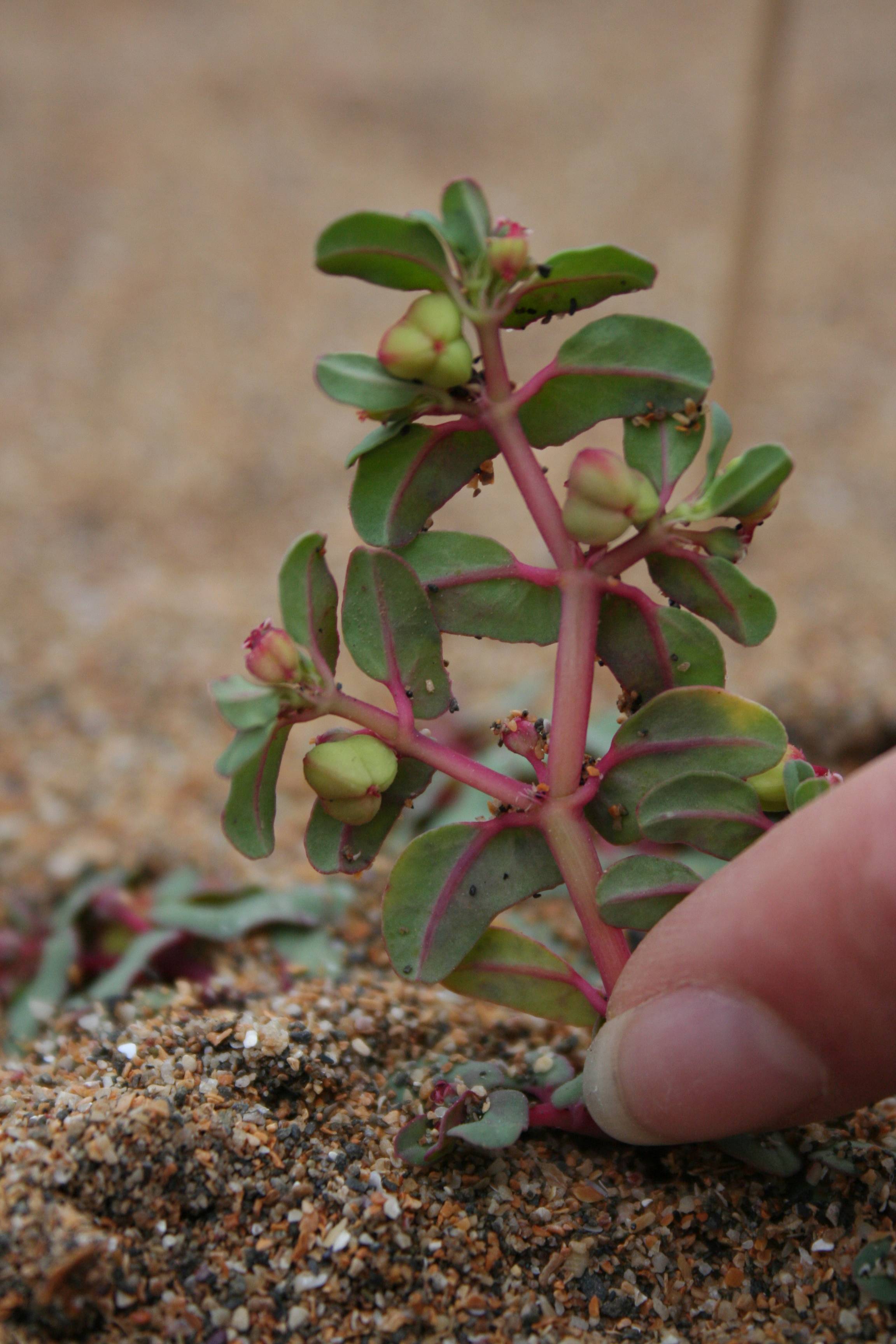
In the photograph you can see the still green fruits of this species (small and smooth trilocular capsules) each containing three seeds.
In the near future, once the seeds of this species have been collected, the University of Oviedo-Atlantic Botanical Garden scientific team will develop the most suitable cultivation protocols so as to reintroduce the Chamaesyce peplis back into the Cantabrian dune, where it has currently disappeared completely, or to reinforce enclaves where its numbers have been diminishing.
If you come across this species on a visit to Verdicio, please remember that it is protected and enjoy its presence without damaging it. It is a great privilege to see such a rare species along the coasts of the northern Iberian peninsula.