Categoría: Without category

  • This is how the Final Life+ARCOS Seminar went, held in Donostia (1/2)

    This is how the Final Life+ARCOS Seminar went, held in Donostia (1/2)

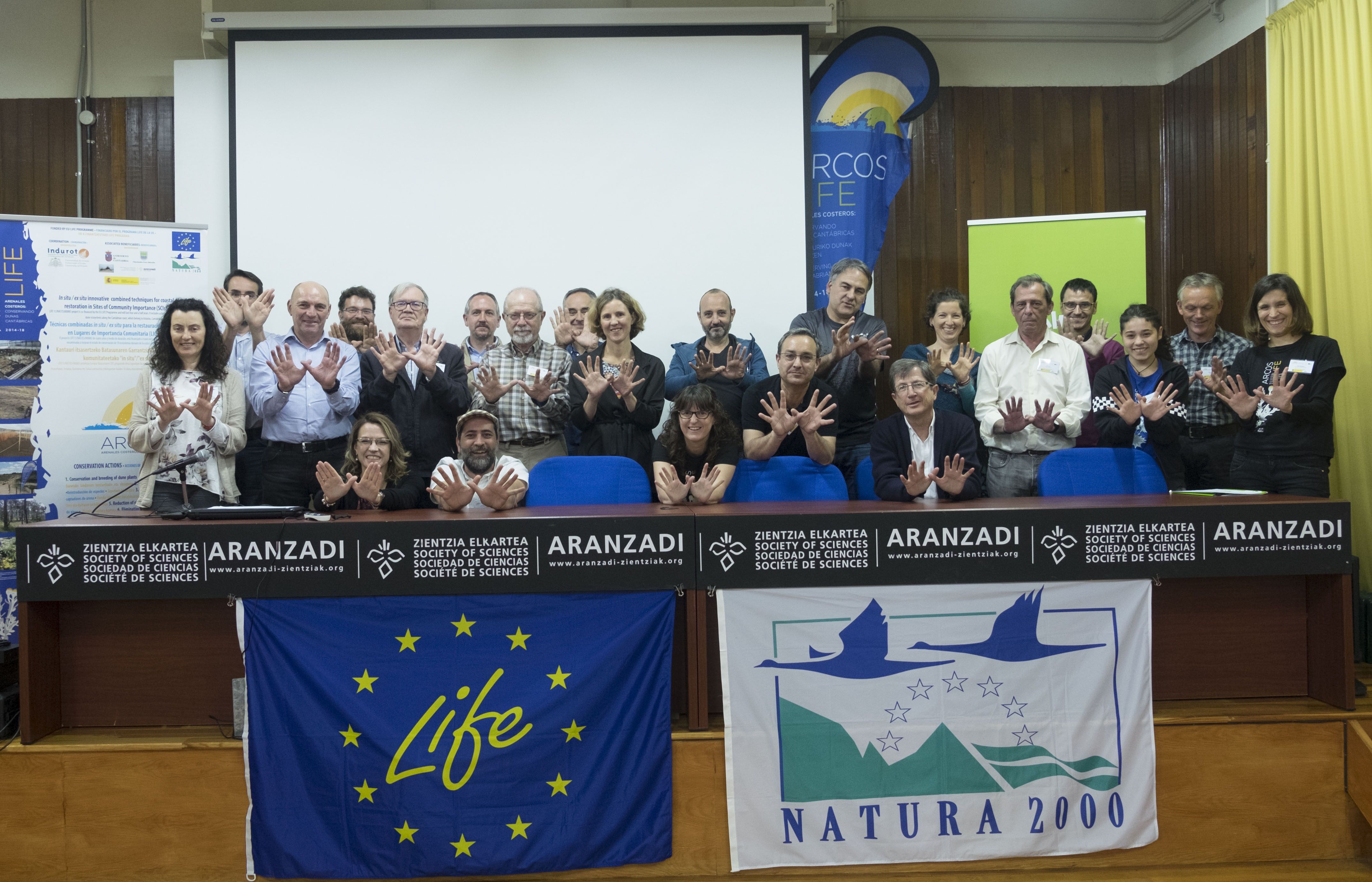
    On Tuesday 28th May, a week after the date set by the European Union to mark the European Natura 2000 Day, the Life+ARCOS team met up in the Society of Sciences Aranzadi headquarters in San Sebastian to hold the final project meeting and to discover the main results achieved, just a month before its formal completion.

    Along with all the partners involved in the project, the meeting also included contributions from various experts specialising in dune ecosystem management, whom, from various different fields and locations, were able to participate in the workshop, revealing the outcomes of the experiences and projects on which they had worked.

    Their contributions will be discussed in another blog entry.

    Opening

    The seminar was opened by Mr Tomás E. Diaz (Main project researcher from the Life+ARCOS project), José Ramón Martínez Cordero (Director of the Maritime-Terrestrial Public Domain Department in the Ministry for Ecological Transition (MITECO)), Íñigo Mendiola (Gipuzkoa Council) and Juan Arizaga (Society of Sciences Aranzadi).


    Opening table

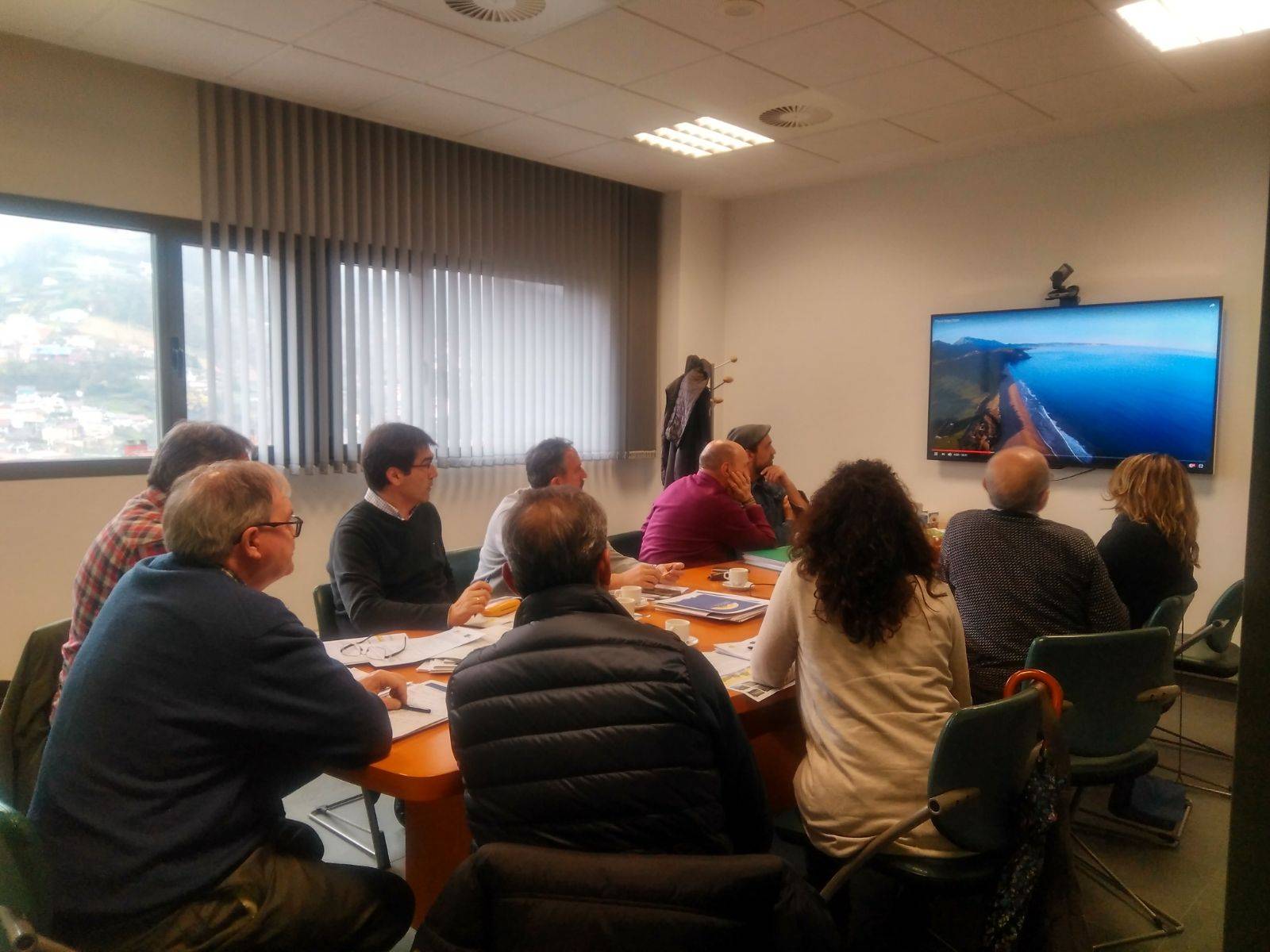
    This presentation was followed by a screening of a video about the restoration carried out by Life+ARCOS on the Somo dune system in Cantabria, and an introduction to the conference given by J. Ignacio Alonso Felpete (Ecología Litoral) to highlight the celebration of the European Natura 2000 Day and to outline the Spanish contribution to this Network of protected spaces.

    Ignacio Felpete (Ecología Litoral) during his presentation speech about the European Natura 2000 Day

    The first part of the conference was led by partners participating in the Life+ARCOS project, who assessed the actions carried out in each of the targeted spaces.

    Revealing problems and actions in the enclaves

    The first of the interventions was given by Jorge Marquínez, who outlined the main signs of change detected in the ten dune systems that had been worked on within the ARCOS project.

    The historical photo analysis and LIDAR data allowed for an assessment of the advances and setbacks suffered by the coastline over the past 70 years, as well as the volume of sediment estimated to have moved over these years. Some results were also shown of the chemical analyses performed on the different beaches-dunes, and the sea flooding and storm phenomena that have occurred, as well as estimated recurrence periods.


    Jorge Marquínez, director of the Institute of Natural Resources and Territorial Planning (INDUROT) – University of Oviedo

    The Main project Researcher, Tomás E. Díaz, from the Department of Biology of Organisms and Systems from the University of Oviedo was in charge of sharing the actions undertaken on the three dune systems in the Principality of Asturias where actions have been performed: the Partial Natural Reserve of Barayo, included in the SAC Penarronda-Barayo; the Verdicio beach, included in the SAC Cabo Busto-Luanco, and the Vega Beach, belonging to the SAC Vega Beach.

    The actions carried out in Barayo constituted the main focus of the intervention. The social interest raised with the felling of the non-native trees has been high, as expected. Importance was also given to the planting of native dune system species in the three enclaves, which should encourage self-restoration processes. In spaces such as Verdicio and Vega, the treatment of invasive species has been crucial to improving the state of conservation of the present dune habitats. The aim of the protection system using enclosures is to prevent the negative effects of excess pressure due to visitors walking over these spaces, particularly intense in these two areas.


    Tomás E. Díaz, director del proyecto Life+ARCOS

    The actions carried out in Cantabria, specifically on the Liencres  dune system (SAC Liencres dune system and Pas Estuary) and on the Berria and Helgueras beaches (SAC Santoña, Victoria and Joyel Marshes) were presented by Jesús Varas, director of the Liencres protected space. Lourdes González, director of the latter SAC, also concluded the presentations, in which emphasis was placed on the on-going treatment to remove invasive exotic species, which has had outstanding results, in particular on the Santoña and Noja beaches. The role of certain social agents and associations of groups with difficulties has been an essential part of developing this action. Among many others is the particularly noteworthy NACAR Programme (Nature and Prison), which enabled inmates and staff members from the El Dueso Penitentiary Centre to participate in some of these actions.

    The management and regulation of access to these spaces has been singled out as a key to achieving excellent results in the recovery of dune plant life. Accompanying all of these actions has been the planting of species that have speeded up the initial growth of biodiversity.


    Jesús Varas, director of the SAC Liencres Dunes and Pas Estuary

    From the Cantabrian Coastal Demarcation, José Luis Tejerina Hernando spoke on behalf of the Directorate General of Sustainability of the Coast and the Sea (Ministry for Ecological Transition), a beneficiary partner of the Life+ARCOS project.  This demarcation is responsible for assigning the majority of the structural dune species that have been used in all the spaces, as is responsible for managing the Ministry’s dune plant nursery located in the Cantabrian town of Somo.

    Tejerina assessed the plant that has been used in each of the SAC spaces where work has been performed.


    Jose Luis Tejerina, Head of the Construction and Coastal Demarcation Projects Department in Cantabria

    The summary of  the actions carried out on the dune systems of Santiago, in Zumaia (SAC Urolako Itsasadarra / Urola Estuary) and in Zarautz (SAC Iñurritza) was given by Jon Zulaika Isasti, from the Protection of Wild Flora and Fauna Department of the Gipuzkoa Council, a project partner.

    Zulaika focused a large part of the presentation on the handling of part of the non-native trees that were removed from Santiago, the handling of the invasive species in this space, and the problems caused by the strong tides on the extensive dune system in Zarautz. Managing threatened flora in this space has also been a priority line of action, as various protected species have been recorded here.

    The difference in the sediment balance between the first and second spaces, has been heavily conditioned by the set of actions. Sand collection in Zarautz: a priority line of action to create the conditions needed to ensure a future for the plantations carried out there. Various sand collecting systems have been implemented with varying results.


    Jon Zulaika Isasti, from the Gipuzkoa Council Protection of Wild Flora and Fauna Department

    The actions carried out on the Somo beach in Cantabria (SAC Puntal Dunes and Miera Estuary) and in the Biscay enclaves of La Arena, Zierbena (SAC Barbadungo itsasadarra/Barbadun Estuary) and Laga, Ibarrangelu (SAC Urdaibaiko Itsasertzak eta Padurak – Coastal and Marshland Zones of Urdaibai) were covered by Carlos Ley Vega de Seoane, director of the Ecología Litoral company, an project partner. This company was responsible for the development of the actions in the cited spaces and in all the Asturian spaces.

    The Somo dune system has been a success story for the functional and ecological recovery of a dune ridge, which had been literally destroyed after the 2014 storms. Along with the physical actions of incorporating sand and removing invasive exotic species, intense recovery work has also been carried out on the plant cover, which will enable the bank of seeds in the space to recover quickly. Fitting enclosures to control access and to avoid the negative effects of visitors treading on the plants as far as possible, have also been qualified as effective measures in achieving the desired results.

    Equally successful are the actions carried out in La Arena, where particularly intensive work was performed to remove invasive species, due to their high concentration at the start of the actions. The final aspect of the recovered dune system presents a marked dune morphology, thanks to the sand collectors fitted along specific points, and to sediment inputs, which have been exceptionally good over recent years. Reorganising accesses has also been highlighted as a key measure in encouraging the recovery of the entire system.

    The Laga dune system is currently the focus of the latest actions, which have centred on removing invasive exotic species and some non-native tree species, as well as on strengthening the numbers of dune species on the most damaged points. Strengthening the peripheral enclosures will also be a key step in organising access and to give greater continuity to the dune ridges, especially along the most easterly end.

    After the speech by Carlos Ley there was a break, followed by interventions from experts invited by Life+ARCOS, who spoke about the projects they are working on.

    We will explain it all in the next blog entry.

  • Final seminar of the Life+ARCOS project to celebrate Natura 2000 day

    Final seminar of the Life+ARCOS project to celebrate Natura 2000 day

    The final seminar of the ARCOS project, with European funding from the LIFE Nature Programme, will take place on 28 May at the headquarters of one of its partners, the Aranzadi Science Society in San Sebastian.

    It starts at 10:00 am and will be inaugurated by representatives from the University of Oviedo, the Directorate-General for the Sustainability of the Coast and the Sea, the General Council of the Basque Country and the Aranzadi Science Society (who will be hosting the event).

    Members of the ARCOS work team will talk about the problems the project areas are facing and project activities (Barayo, Verdicio, Vega, Liencres, Somo, Berria-Helgueras, La Arena, Laga, Santiago and Zarautz): Jorge Marquínez (Uniovi-INDUROT) will talk about ecosystem dynamic; Tomás E. Díaz (Uniovi-Dpto BOS) will talk about the activities carried out in Asturias; Jesús Varas and Lourdes González (Gov. of Cantabria) about those carried out in Cantabria; José Luis Tejerina (Cantabrian Coasts) about the participation of the Directorate-General for the Sustainability of the Coast and the Sea in the ARCOS project; Jon Zulaika (Provincial Council of Gipuzkoa) about the activities carried out in Gipuzkoa and Carlos Ley (Ecología Litoral, S.L.) about those carried out in Bizkaia. 

    At 12:30 pm the following presentations will be made by dune-system experts:

    • Laura Fernández Carrillo (from the Council of Andalusia, AMAYA, Environment and Water Agency) will talk about the LIFE CONHABIT Andalusia project.
    • Mark van Til (Waternet) will talk about his experience with a pilot project to eradicate pine trees in order to develop grey dunes in the Netherlands.
    • David Rosebery (Service Développement Littoral Risques Naturels, ONF) will talk about restoring grey dunes and dune system shrinkage problems in Aquitaine, France.
    • Juan Bautista Gallego (University of Sevilla) will talk about coastal landscape conservation and criteria for selecting dune systems to restore.

    In the afternoon, starting at 3:30 pm, the following presentations will be made by experts:

    • José Ramón Martínez Cordero (Subdirectorate-General of Maritime Terrestrial Public Domain) will talk about investments in marine environment coasts.
    • José Luis Atutxa (Basque government) will talk about monitoring and evaluating habitats in the Autonomous Community of the Basque Country.
     

    The closing speeches will take place at 5:00 pm and the seminar will be done by 6:00 pm.

    Services: Simultaneous interpreting (Spanish-French-Spanish) will be provided. Events will be recorded for the Aranzadi YouTube channel. Presentations and seminar conclusions will be available on the ARCOS project website https://www.arcoslife.eu/

    Download the full programme here

    IF YOU ARE INTERESTED IN ATTENDING THE SEMINAR, SEND AN EMAIL TO ARCOSLIFE@UNIOVI.ES AND WAIT TO RECEIVE CONFIRMATION, THANK YOU.

  • Actions taking place on the Barayo dune system (Navia-Valdés)

    Actions taking place on the Barayo dune system (Navia-Valdés)

    Dune habitat improvement actions are continuing on the ES0000317 Penarronda-Barayo Special Conservation Area.

    The following actions are taking place in Barayo:

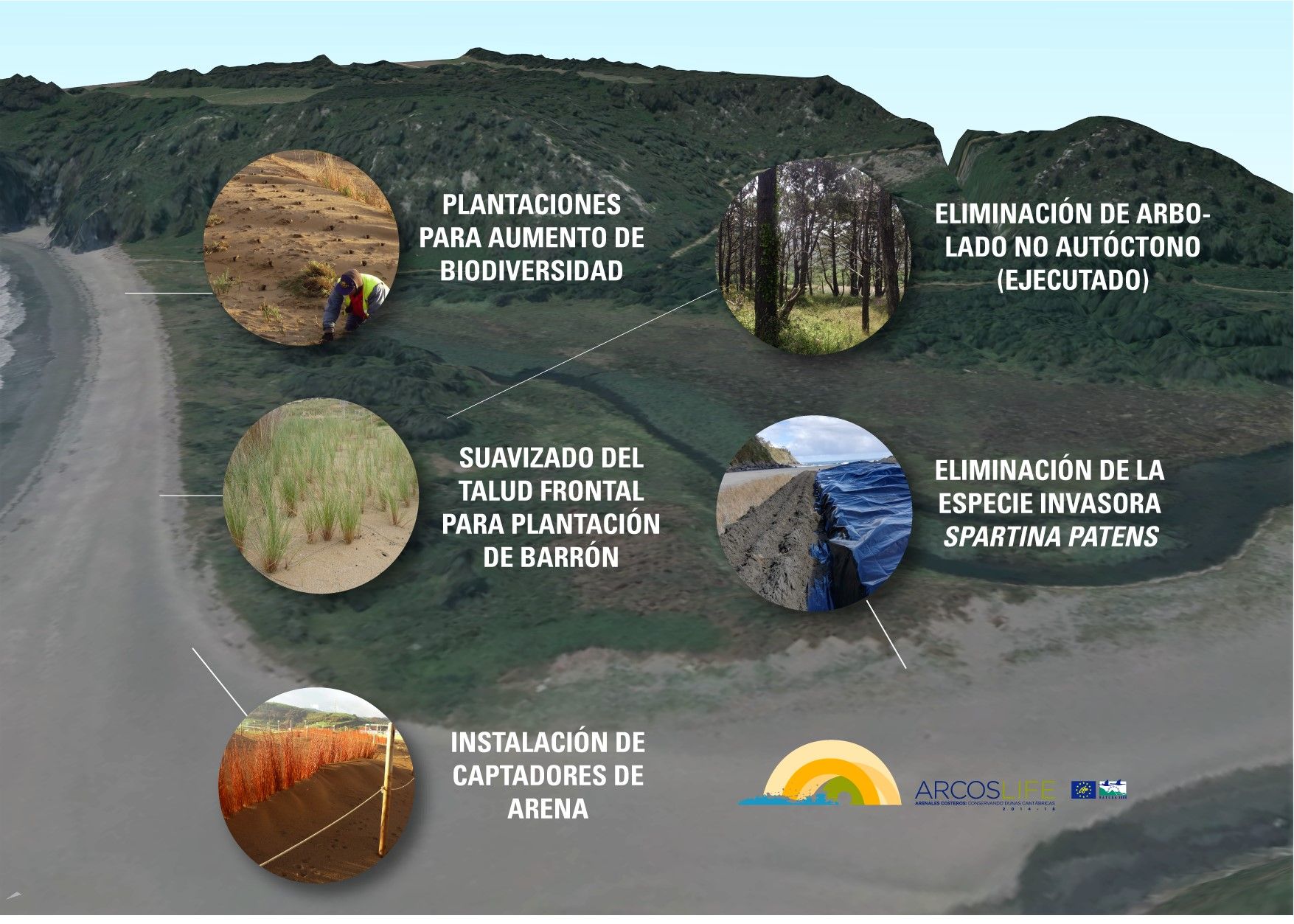
    1. Reinforcing the dune front to speed up the natural processes of sand intake and accumulation in the internal part of the dune system, and to establish favourable conditions for planting dune species.
    2. Planting species native to dune environments. Approximately 10,000 European beach grass plants and other species were introduced, such as sea holly, sea knotgrass, sea spurge, tuberous hawksbeard and the sea daffodil (the latter included in the Asturian Catalogue of Threatened Species), provided by the nursery of the Directorate General of Sustainability of the Coast and the Sea (Ministry for Ecological Transition) in Loredo, Cantabria.
    3. Installing wicker sand catchers, also to speed up the sand accumulation processes and to contribute to modelling the dune shape.
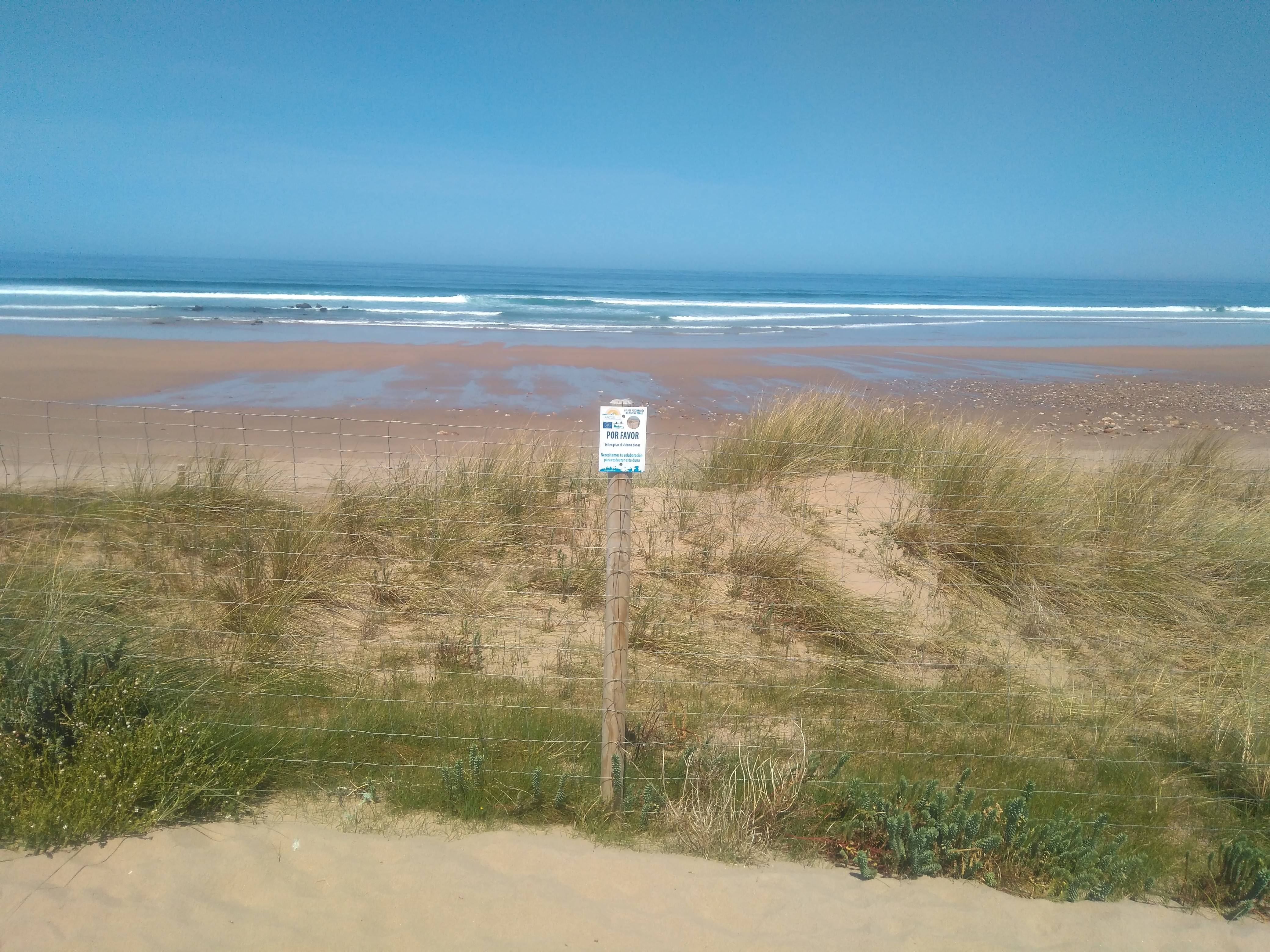
    4. Introducing barriers to protect planted areas from being stepped on by visitors to the beach.
    5. Eliminating invasive species, such as the Spartina patens in part of the invaded area, the part closest to the planting zones, by laying plastic covering and sand filling.

    For more information about actions that have already been carried out and those underway, click on this link Resumen_actuaciones_Barayo2019


  • You can now read Life+ARCOS in Basque.

    You can now read Life+ARCOS in Basque.

    Life+ARCOS carries out its work within four Red Natura 2000 areas in the Basque Country (in both Bizkaia and Gipuzkoa).

    Therefore, we decided to develop the following four informational brochures in Basque for native speakers of the language.

    You can download these brochures from the «downloads» area of our website.

    #Euskaraldia

    Bizkaia: 

    Barbadungo Itsasadarra KBEko (ES2130003)

    Leku: Arenako hondartza (Muskiz eta Zierbena)

    Urdaibaiko itsasbazterrak eta padurak KBEko (ES2130007)

    Leku: Lagako hondartza (Ibarrangelu)

    Urolako Itsasadarra KBEko (ES2120004)

    Leku: Santiago hondartza (Zumaia)

    Iñurritza KBEko(ES210009)

    Leku: Zarautz hondartza (Zarautz)

    Podrás descargar estos folletos en la zona de descargas de nuestro sitio web.

  • Check out these 10 new brochures concerning the conservation actions that Life+ARCOS is devoping in 10 coastal SCAs in Northern Spain

    Check out these 10 new brochures concerning the conservation actions that Life+ARCOS is devoping in 10 coastal SCAs in Northern Spain

    If you visit one of the beaches that connect with a dune system we are working to improve (within one of Red Natura 2000’s Special Areas of Conservation), please take our survey. We want to evaluate the social impact of our work and analyse how visitors perceive Cantabrian dunes.
    We have created a series of informational brochures for each of the 10 sites included in this project. They will help you understand the problems these Cantabrian dunes are facing and how important it is that they be included in the largest network of protected sites, Red Natura 2000.

    You can download them here:


    In Asturias:

    SAC Penarronda-Barayo (ES0000317) (ES0000317)

    Location: Barayo Beach


    SAC Busto-Luanco Cape (ES1200055)  (ES1200055)

    Location: Verdicio

    SAC Vega Beach (ES1200022) (ES1200022)

    Location: Vega Beach


    In Cantabria:

    SAC Liencres Dunes and Pas Estuary (ES1300004) (ES1300004)

    Location: Valdearenas

    SAC Puntal Dunes and Miera Estuary (ES1300005) (ES1300005)

    Location: Somo Beach

    SAC Santoña, Victoria and Joyel Marshes (ES1300007) (ES1300007)

    Location: Berria and Helgueras Beach


    In the Basque Country: 

    SAC Barbadún Sea Inlet (ES2130003) (ES2130003)

    Location: La Arena Beach

    SAC Urdaibai Coast and Marshes (ES2130007) (ES2130007)

    Location: Laga Beach

    SAC Urola Sea Inlet (ES2120004) (ES2120004)

    Location: Santiago Beach

    SAC Iñurritza (ES210009)

    Location: Zarautz Beach

    You can download these brochures from the «downloads» area of our website.


  • Monitoring team visit LIFE+ARCOS actions in Asturias. 16-17 April, 2018

    Monitoring team visit LIFE+ARCOS actions in Asturias. 16-17 April, 2018

    Last week, a representative from the NEEMO team (which monitors LIFE projects) visited the Life+ARCOS project to observe its current state first hand.
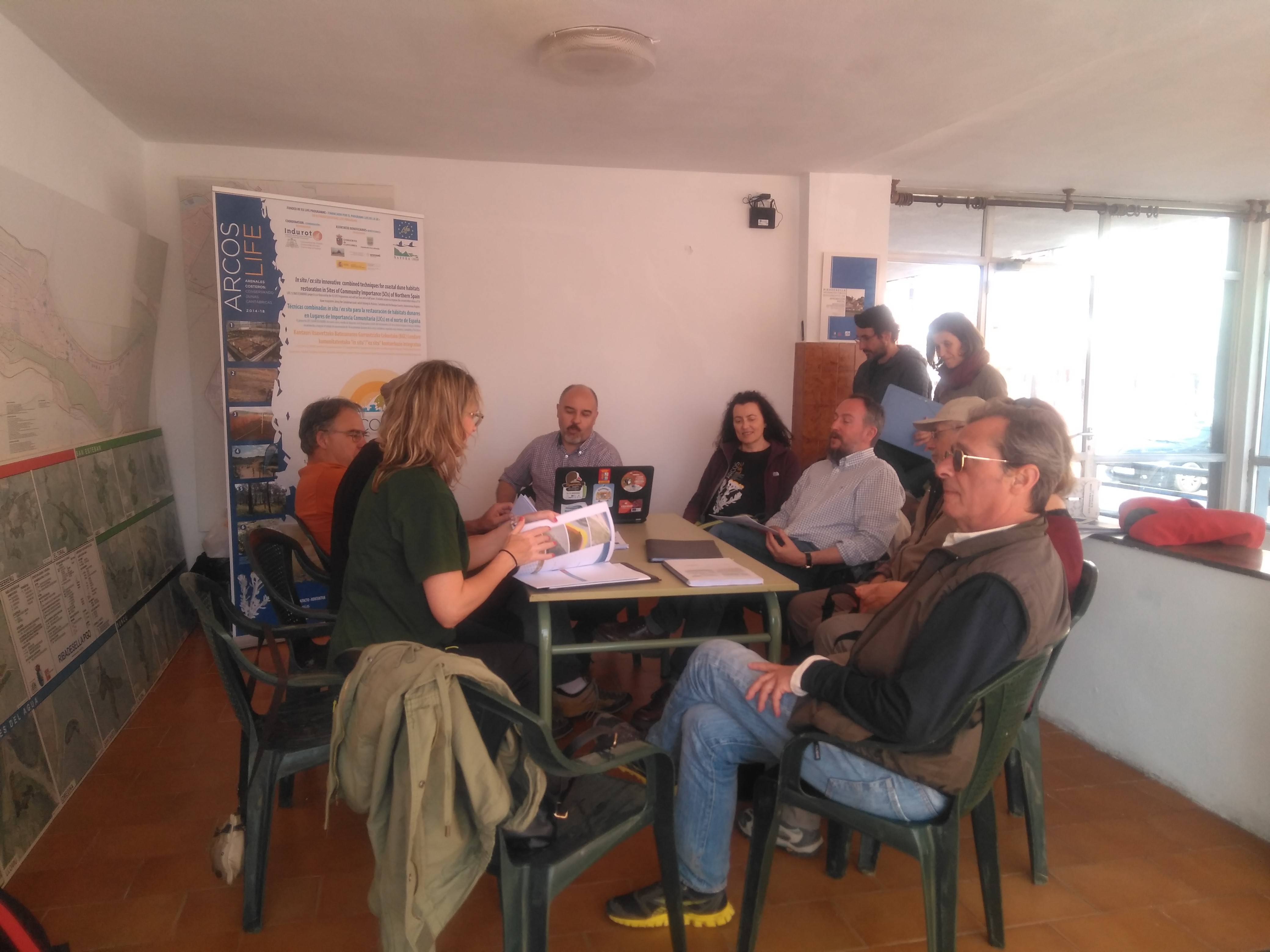
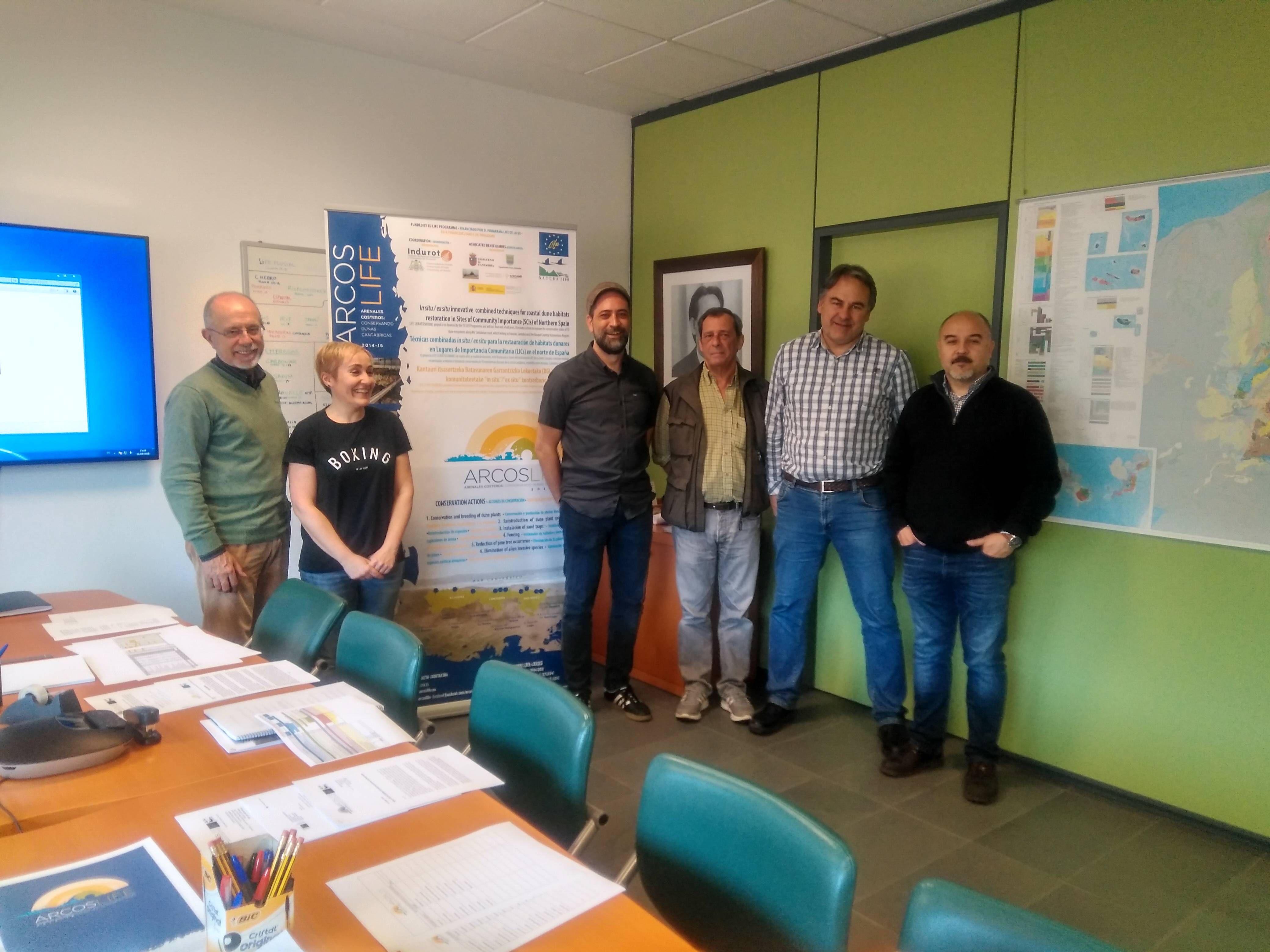
    During the representative’s two-day visit, they reviewed the project’s financial and technical parts. The first meeting took place on 16 April at the Institute of Natural Resources and Land Planning headquarters (INDUROT-University of Oviedo), located at the Mieres Campus.

    Primera jornada, evaluación de la situación económica del proyecto.
    Day one: Evaluation of the project’s financial status

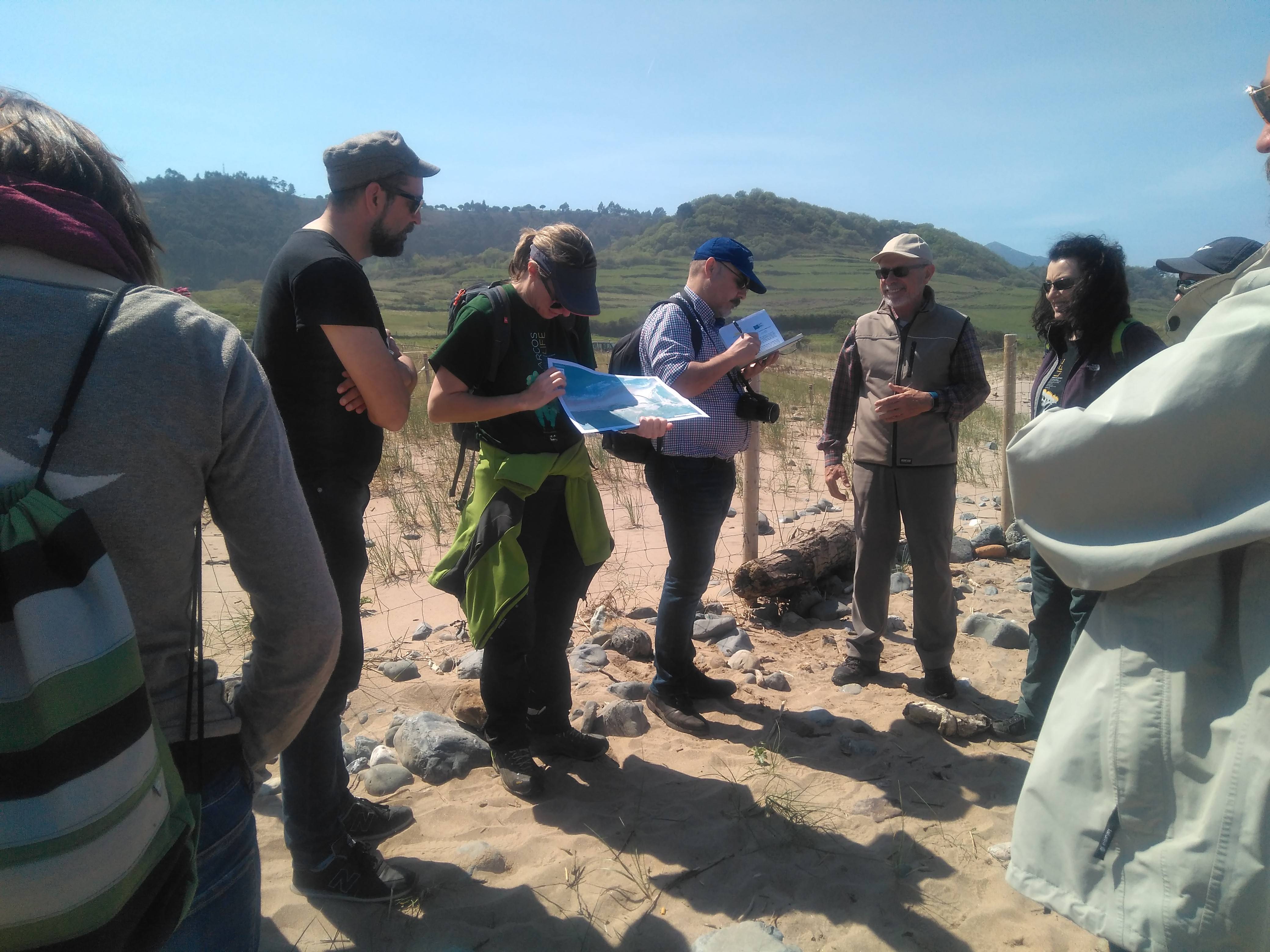
    On 17 April, the representative observed the work being carried out within the Barayo protected area (Navia and Valdés) and at Vega beach (Ribadesella), where dune system restoration work recently began.

    Other project members were also invited to the Barayo Partial Natural Reserve (SAC ES0000317 Penarronda-Barayo): Ecología Litoral, Provincial Council of Gipuzkoa, Aranzadi Science Society and Directorate-General of Environment of the Government of Cantabria.

    Elena Fernández explains erosion trends in the Barayo dune system.

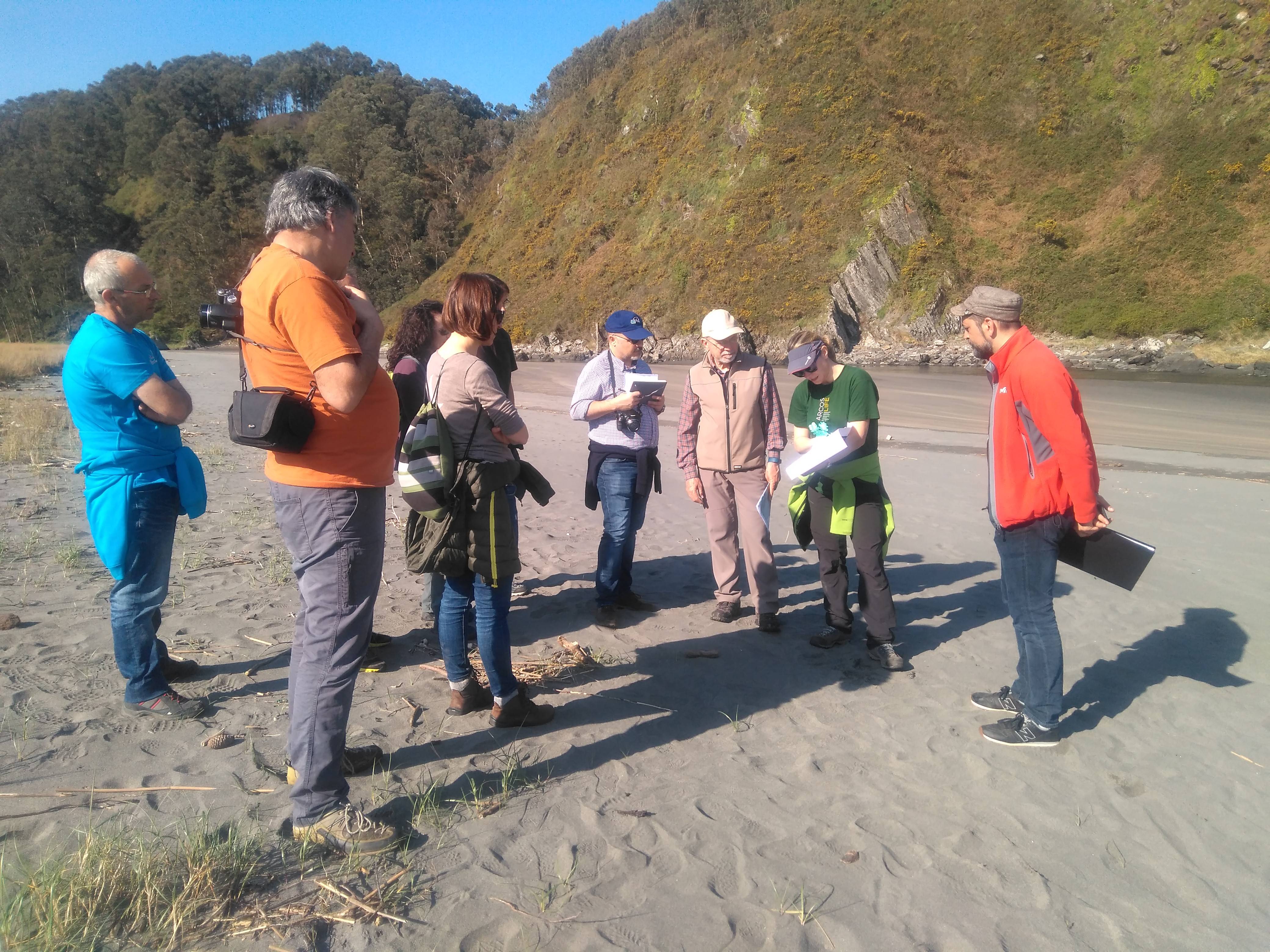
    At Barayo, we talked about the conservation problems this area faces and the steps we must take in order to begin restoring the dune ecosystem’s natural vegetation cover.

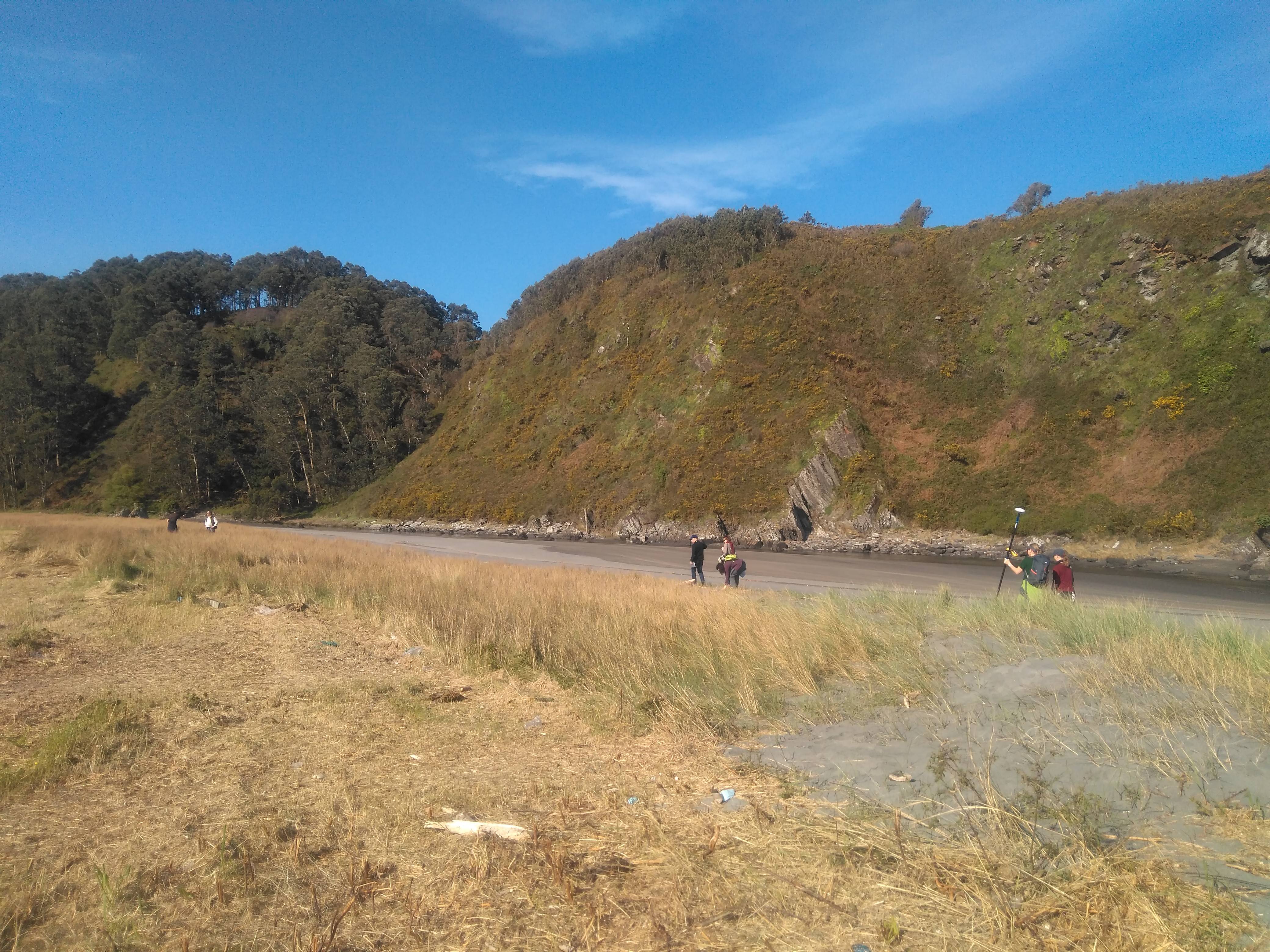
    That day, we also took new positioning measurements of the frontal dune with a sub-meter accuracy GPS receptor.

    Collecting frontal dune data via GPS

    After visiting Barayo, the team went to Vega beach in Ribadesella to see the results of the work done there. In this area, the closures and decrease in foot traffic inside the dune system has allowed vegetation to recover. In the area you could also see the effect storms had on some of the work carried out. Significant damage was done to the sand collectors and to some of the frontal closures.

    Presentation on Vega beach erosion trends, given by Elena Fernández (INDUROT)
    Dune vegetation recovery on Vega beach after closing transversal access points to the beach
    Evaluation of damage on Vega beach

    After visiting Vega beach, the team went to Ribadesella to have lunch at the «Tito Bustillo» Cave Interpretation Centre. Afterwards, we reviewed the work carried out by other teams at different work sites. The meeting was held at facilities generously provided by the Council of Ribadesella.

    Technical meeting at the offices of the Council of Ribadesella.
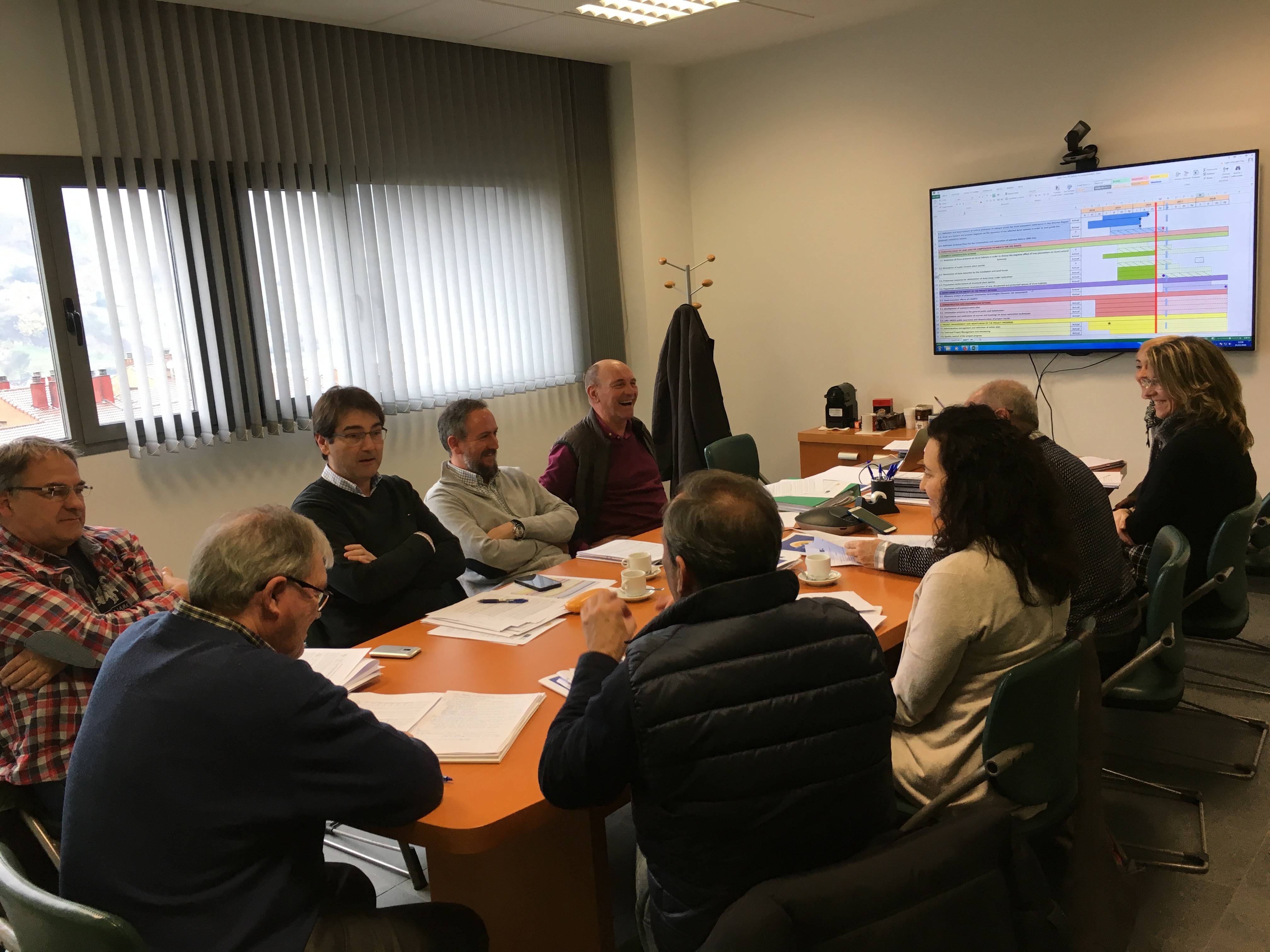
  • Life+ARCOS General meeting prior to the Mid-term report submit, hosted in the INDUROT headquarters in Mieres, Aturias.

    Life+ARCOS General meeting prior to the Mid-term report submit, hosted in the INDUROT headquarters in Mieres, Aturias.

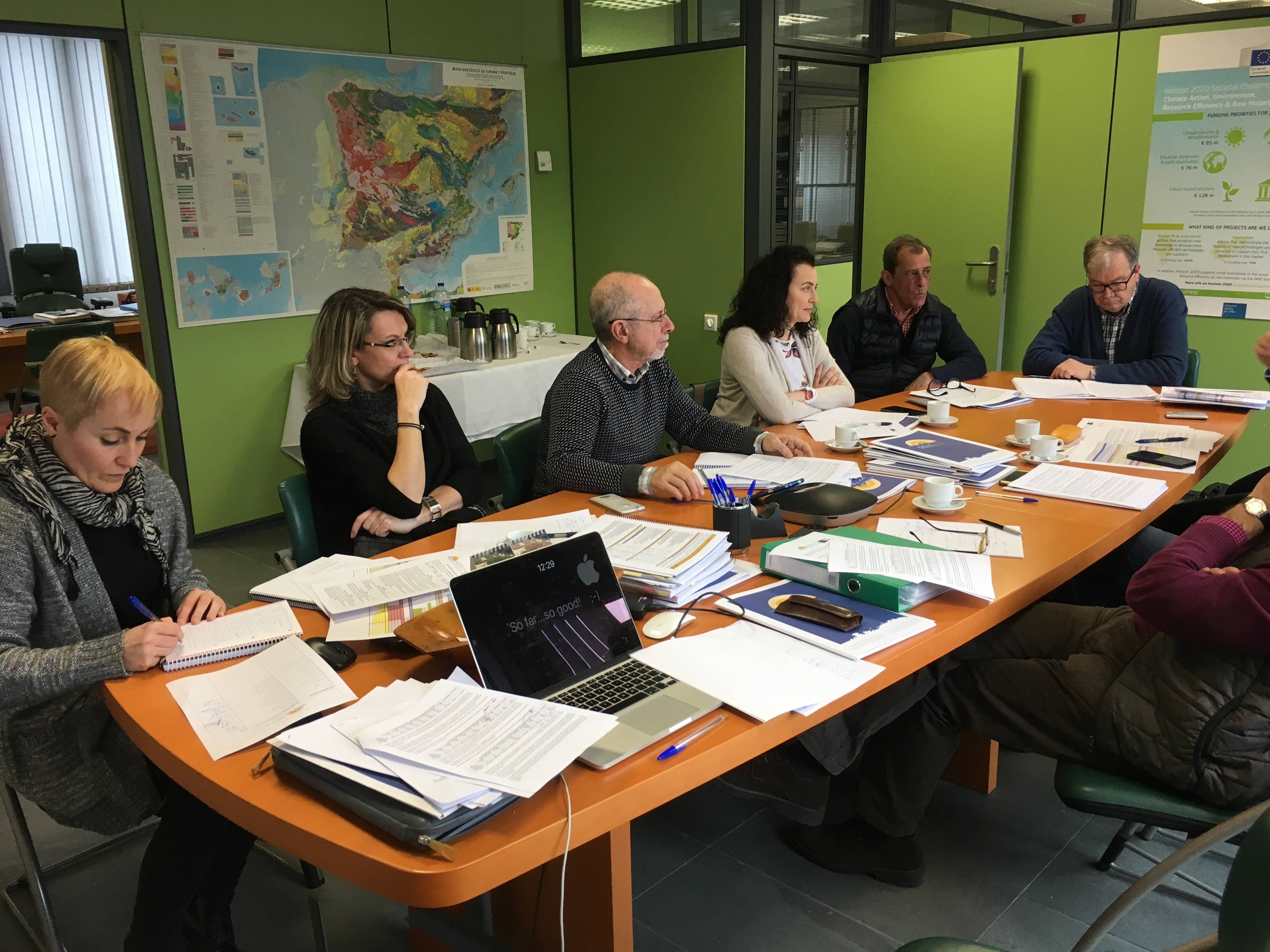
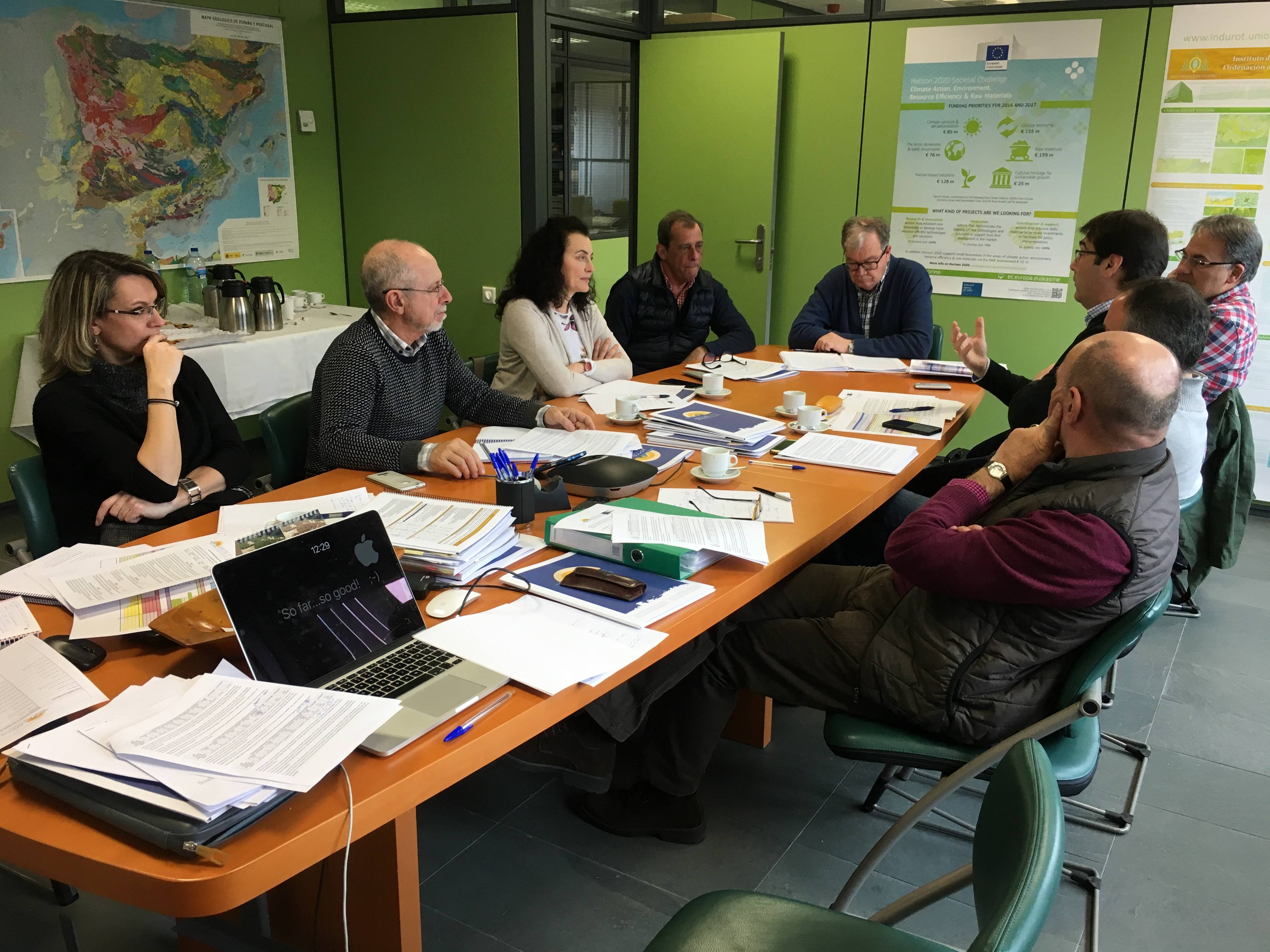
    The morning and afternoon sessions just ended. Members from the General Assembly of the Life+ARCOS @Lifeprogramme project were in attendance, alongside all beneficiary members of the project: Directorate-General for the Sustainability of the Coast and the Sea (via its areas in Asturias, Cantabria and Bizkaia); the Government of Cantabria (via the Directorate-General of Natural Environment), the Provincial Council of Gipuzkoa and the company Ecología Litoral; as well as its coordinating partner, the University of Oviedo.

    The meeting was held at the Institute of Natural Resources and Land Planning (INDUROT)-University of Oviedo, located on the Mieres Campus (Asturias).

    At the meeting, the head of each of the work areas reviewed the current state of Life project conservation activities. The progress obtained up until now and proposed a closure calendar for each of the 10 enclaves where the activities are taking place was also evaluated. With help from members, the timetable for project closure was adjusted and adapted to current needs. 

    At the meeting, the project’s interim report was reviewed, which will be sent to European authorities for evaluation. This also marks the beginning of the second and last stage of project closure, which will require an injection of new capital to carry out unfinished activities.

    The European Commission’s visit to activity areas in April of this year formed part of the work session.

    Project dissemination activities were reviewed and the consortium’s participation in international conferences during the following months of 2018 was decided.

    Also, within the scope of communicating and diffusing the project, 18 and 19 May were chosen to celebrate, with all project members, European Natura 2000 Network Day activities which, in the case of the Principality of Asturias, are focused on the Barayo Partial Natural Reserve.


    The capacity of the administrations working to manage the protected areas was brought to the table in order to talk about how to continue with the activities Life+ARCOS carries out in the three autonomous communities.

    It was informed that the Aranzadi Science Society recently obtained a subsidy to carry out informational activities. The Society was not present at the end of the meeting.

    The structural species and non-structural species planting calendar was also reviewed. The real capacity of the ARCOS+Life project was adjusted from its initial commitments.

    Finally, coordination between members regarding project closure was encouraged to make the process as successful as possible. In conclusion, everyone said their goodbyes as the next meeting won’t be held until April 2018.

  • LIFE+ARCOS meets the General Directorate for Biodiversitiy, in Oviedo, to evaluate the extent of the actions foreseen in the Barayo site (Navia-Valdés, Asturias)

    LIFE+ARCOS meets the General Directorate for Biodiversitiy, in Oviedo, to evaluate the extent of the actions foreseen in the Barayo site (Navia-Valdés, Asturias)

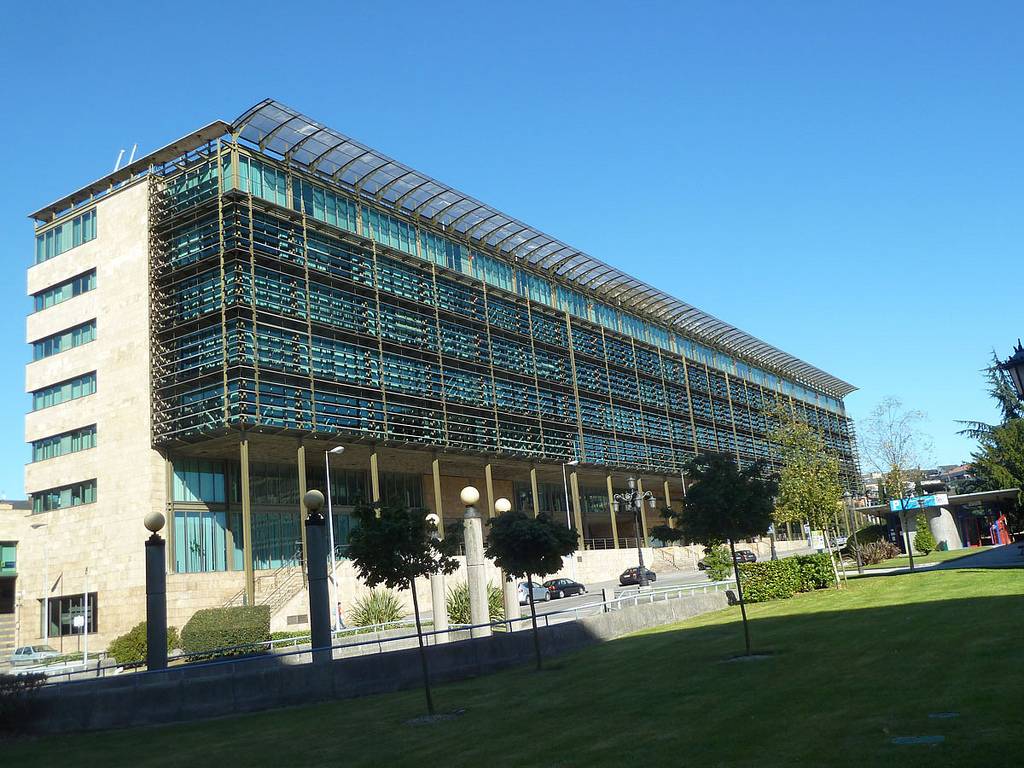
    On 14 February, LIFE+ARCOS met in the Multi-Service Building of the Principality of Asturias with heads of the Protected Area and Nature Conservation Service, of the Directorate-General for Biodiversity. They talked about the next steps for the Barayo Partial Natural Reserve, including the SAC Peñarronda-Barayo, once the non-native forest cutting has concluded in the area.

    Ms Teresa Sánchez Corominas, head of this service, attended the meeting. Items were brought up that will have to be included in the LIFE project’s plan of action for this area, relating to the definitive treatment of leftover plant material from the cutting of pine trees, the salinization of the dune system to eradicate adventitious species before planting activities and the plan to eliminate the invasive plant Spartina patens in the protected space, among other items.

    The Multi-Service Building of the Principality of Asturias, in Oviedo,  where the meeting with the heads of the Protected Area and Nature Conservation Service took place

    The following people attended the meeting:

    From LIFE+ARCOS: T. E. Díaz, main project lead; Ignacio Felpete, conservation activity technician in Asturias; Carlos Ley, manager of the company Ecología Litoral S.L. and Fernando de la Torre, from Coast Demarcation of Asturias.

    From the Principality: Teresa Sánchez, head of the Protected Area and Nature Conservation Service; Víctor Vazquez, head of the Biodiversity Analysis and Conservation Section of said Service and Susana García, biologist of the section.

  • Life+ARCOS discuss the planned actions for restoring Barayo with Municipal representatives from Navia and Valdés and with the NGO Asociación de Amigos de Barayo

    Life+ARCOS discuss the planned actions for restoring Barayo with Municipal representatives from Navia and Valdés and with the NGO Asociación de Amigos de Barayo

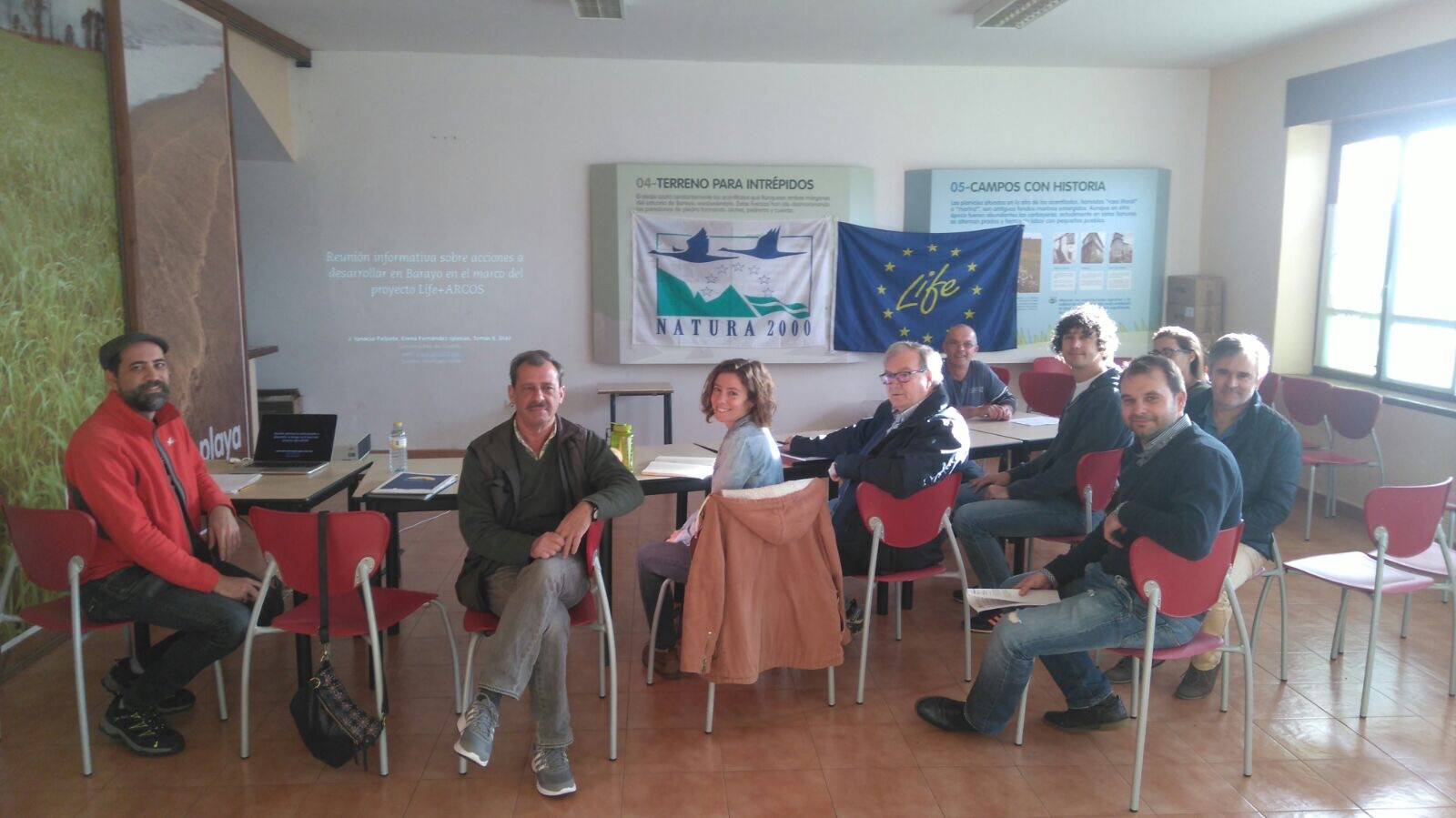
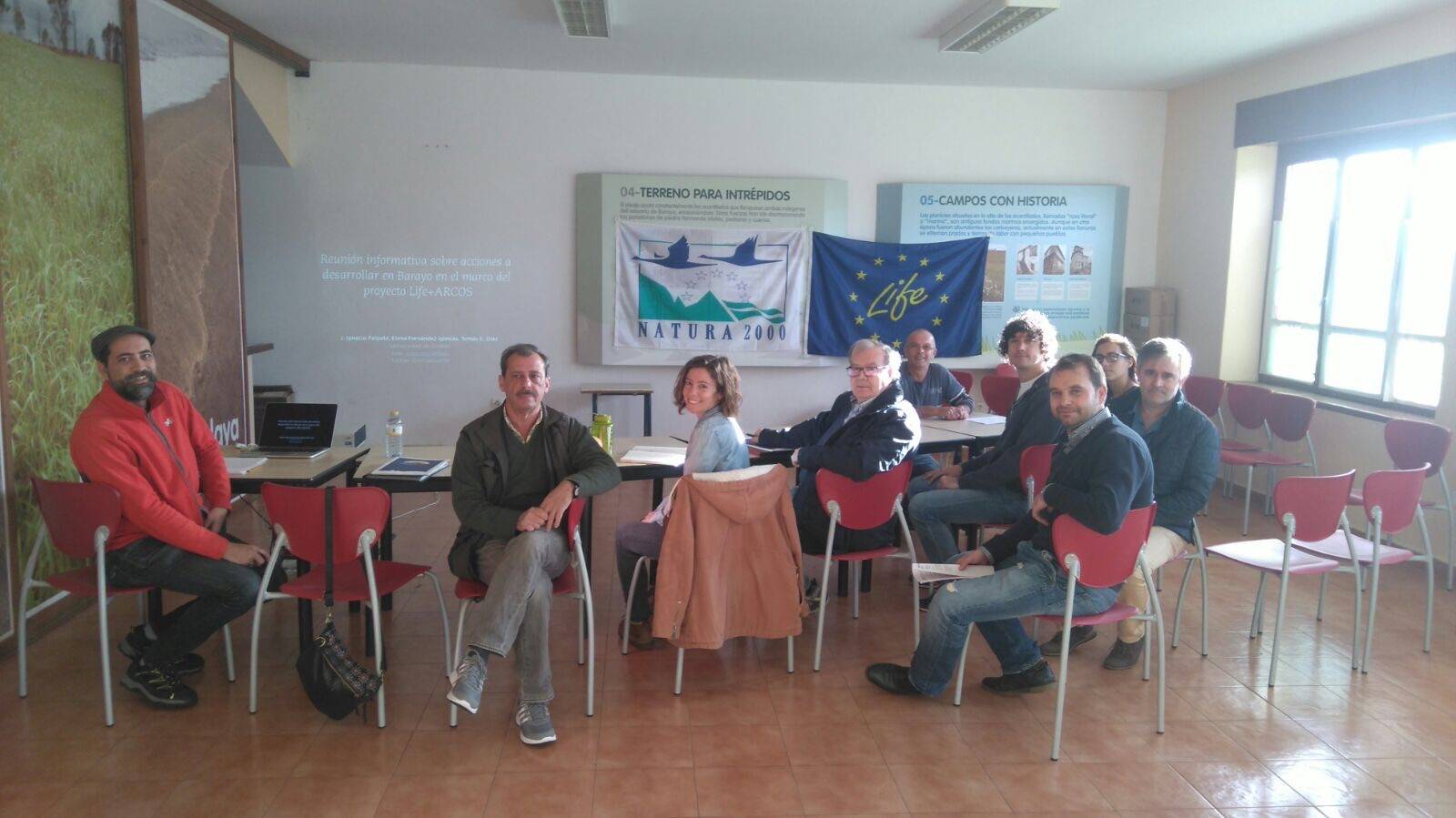
    On 23rd November 2017, the Life+ARCOS team travelled to the town of Vigo in Navia, home to the Partial Natural Reserve of Barayo Interpretation Centre, to take part in an information session including the participation of various members of the Life+ARCOS project coordinating team belonging to the University of Oviedo, along with ECOLOGÍA Litoral, also a project partner, with the manager Carlos Ley Vega de Seoane.

    Representatives from the two councils that share the space occupied by the Partial Natural Reserve of Barayo, Valdés and Navia attended the meeting. Representing the Navia Council was Marino Fernández, and on behalf of the Valdés Council were Ricardo García and Marcos Fernández. The Principality of Asturias was also present at the meeting, represented by Susana García Díaz, a biologist from the Service of Protected Spaces and Nature Conservation from the Directorate-General of Biodiversity.

    Tomás E. Díaz, the principal researcher, and Elena Fernández Iglesias along with J.Ignacio Felpete, technicians from the project linked to the INDUROT (Institute of Natural Resources and Territorial Planning), were in charge of breaking down the actions proposed in the Action Plan for Barayo. This Action Plan constitutes an internal document to manage the actions that have been agreed to by the players involved in managing the protected space

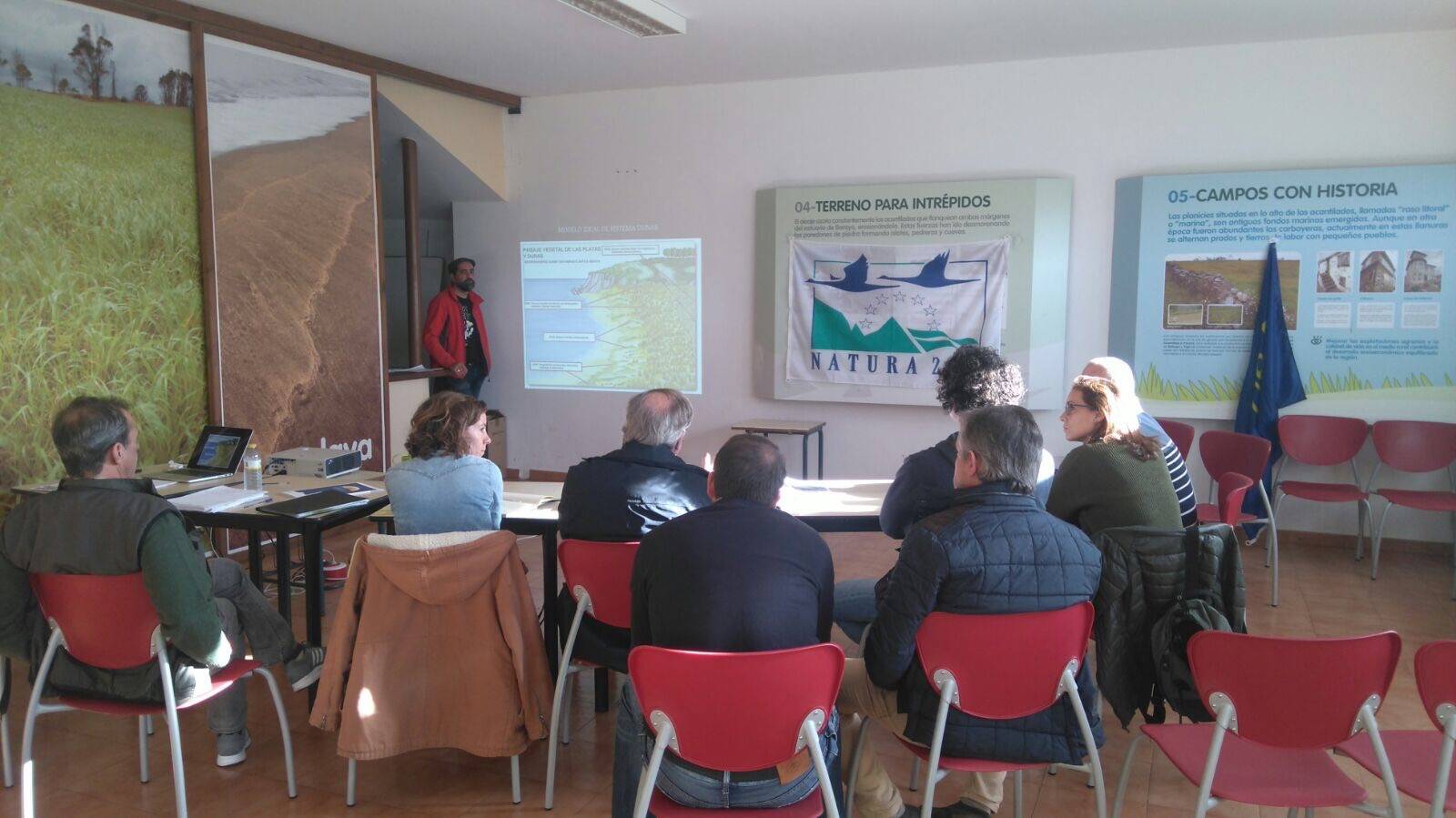
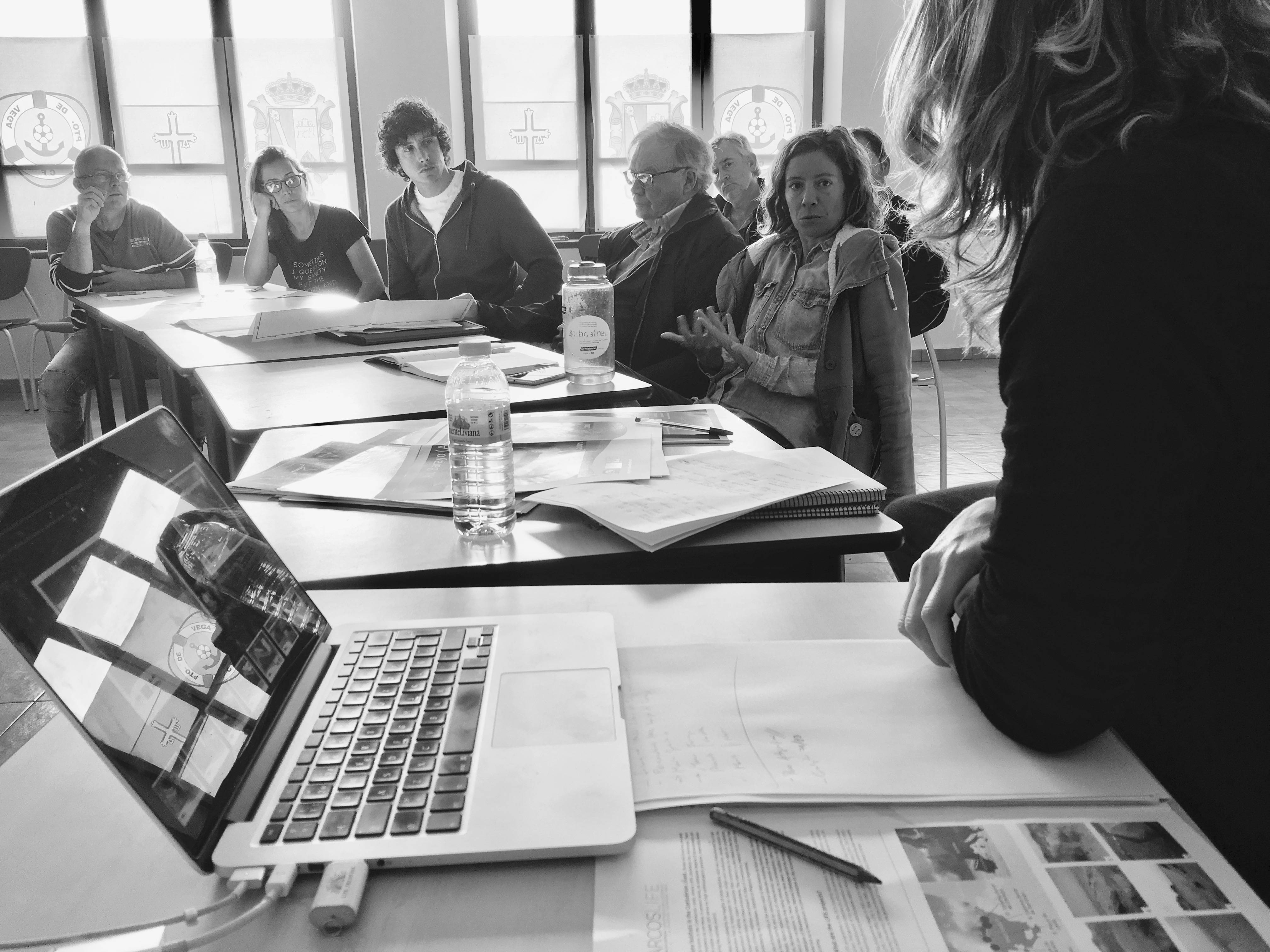
    Some of the attendees at the information meeting held at the Partial Natural Reserve of Barayo Interpretation Centre

    The meeting format meant that questions or debates about the scope of the actions could be proposed whilst they were being presented. The contributions of the attendees, in particular those from local people from the area of action, were extremely interesting. Particularly significant, in terms of the action to eliminate the pine covering currently present on the dune space, was the historical review using aerial photos from 1956 to the modern day, to confirm that the first Pinus pinaster plantations must have occurred at the end of the 1950s. Some unsuccessful management actions performed on the space were also reviewed, in comparison with those proposed today, and some of the reasons behind the failure of these actions were analysed.

    Part of the presentation was also dedicated to understanding the extent of the problem of invasive exotic species within the protected space, very insignificant in terms of diversity (around 5 species), yet extremely important in terms of the space occupied by the most worrying of them all: Spartina patens. Information was given about the results obtained from the partial trials performed in situ, and discussions were held about the possibility of applying the same technique used in the trials across the entire occupied area.

    The presentation

    The meeting was an opportunity to reveal the actions that are going to be carried out in the space, and to reinforce or set up communication channels between neighbouring groups and associations such as the Asociación de Amigos de Barayo (with which a joint day of volunteering was already planned). In short, the aim was to link together the actions of this project funded by the European LIFE programme, with the reality of the inhabitants of the spaces targeted for recovery, so as to involve them in the decision-making process. The pleasant atmosphere enjoyed throughout the day leads us to think that the environmental improvement targets for the protected space are shared by all participants, and also helped us close this year with a common wish for actions to be implemented as best as possible, without forgetting the need for these actions to continue over time to ensure both mid and long-term success.

  • The citizen science project «International cleanup of beaches»  finds synergies with Life+ARCOS objectives with the aim of the project NACAR

    The citizen science project «International cleanup of beaches» finds synergies with Life+ARCOS objectives with the aim of the project NACAR

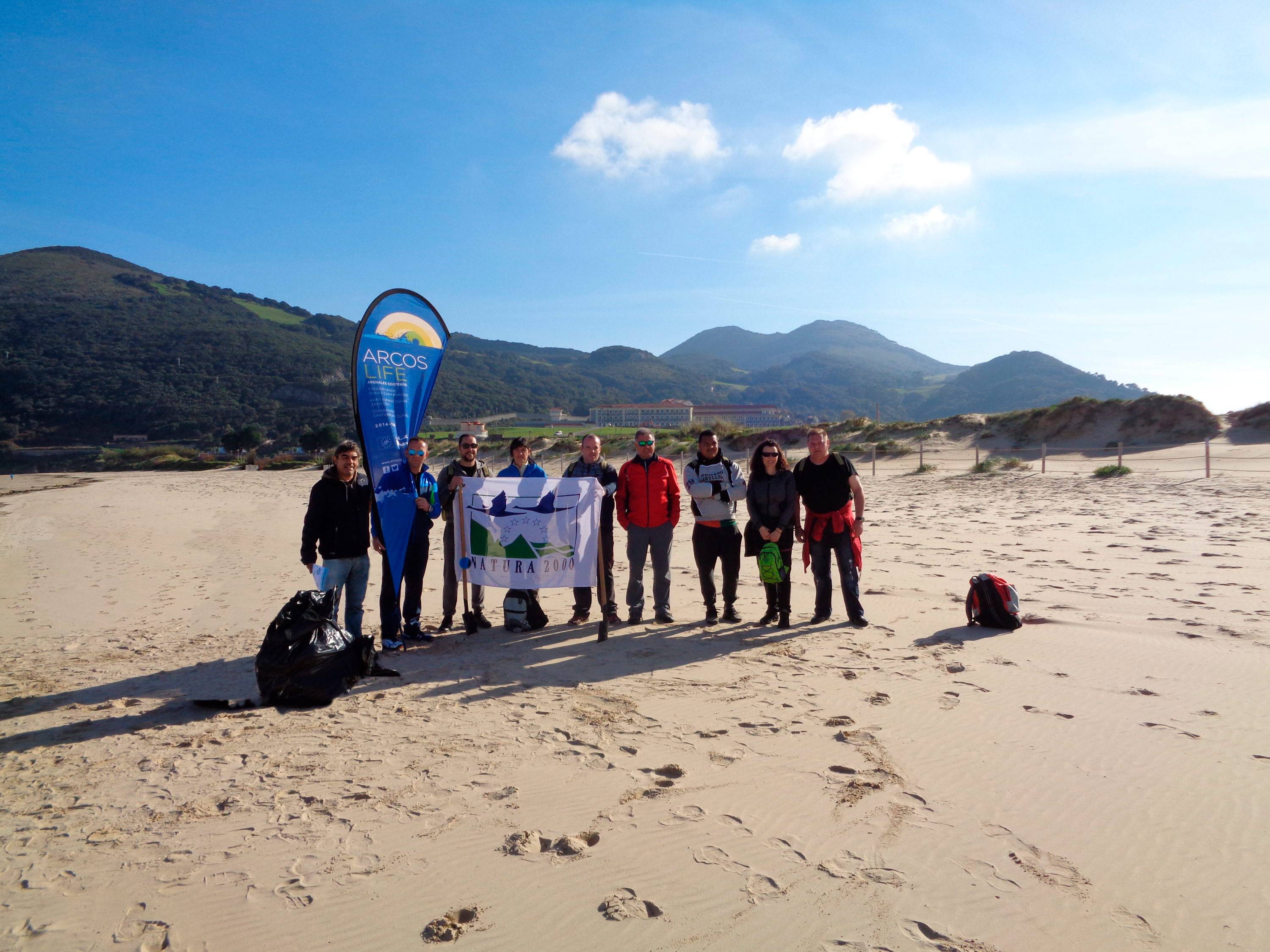
    On 17th November, a new day of volunteering was held, within the framework of the LIFE ARCOS Project for dune restoration and conservation, this time with a new and different approach.

    The project formed part of the NACAR Programme (Nature and Prison), in which inmates from the El Dueso Penitentiary Centre in Santoña are collaborating with the LIFE ARCOS Project on numerous occasions, mainly in the task of removing invasive exotic species, and producing and planting native flora in the dune system in the beaches near the penitentiary centre (Berria beach in Santoña and Helgueras beach in Noja).

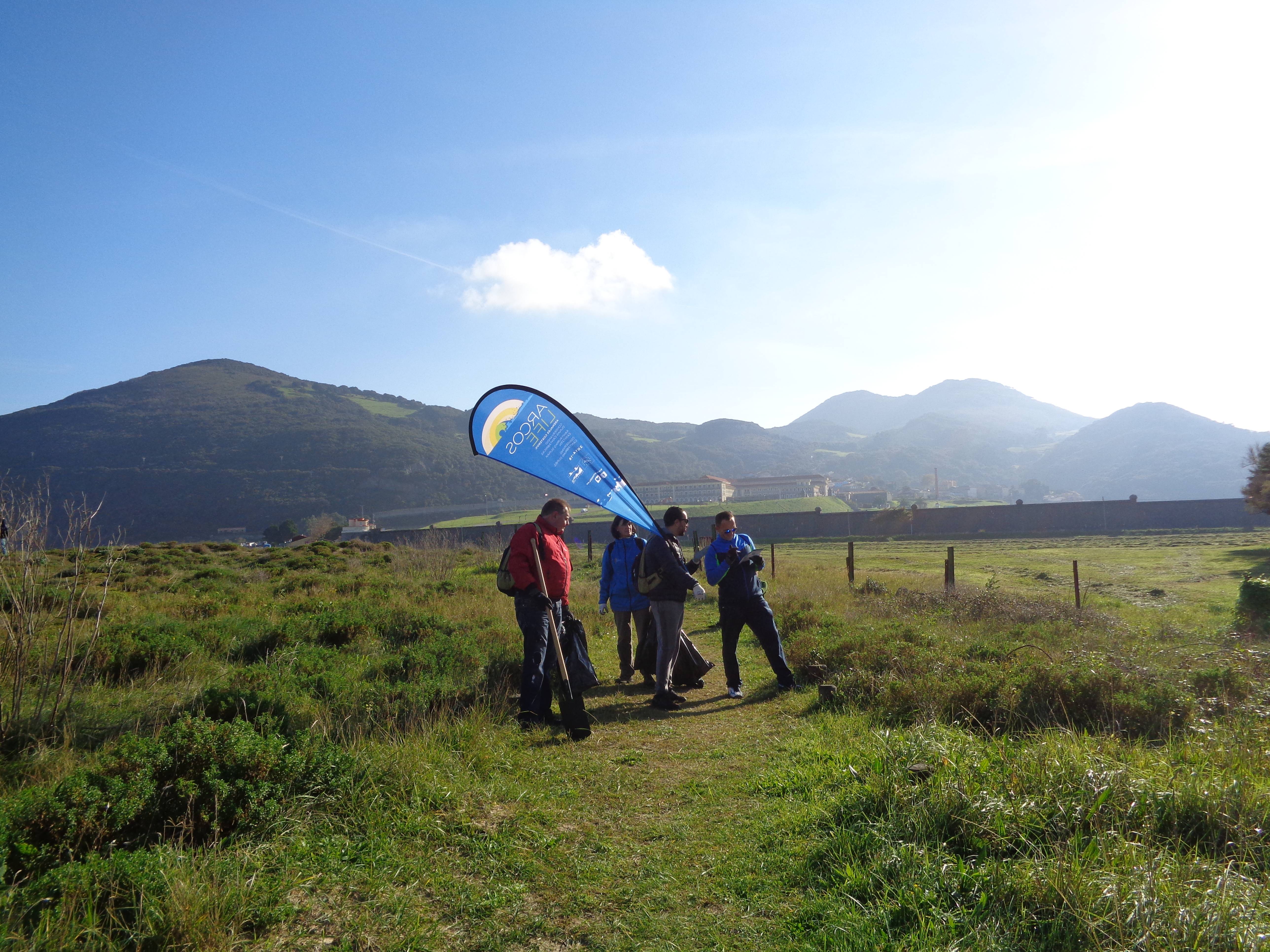
    The director of the Santoña, Victoria and Joyel Marshes Natural Park expressed the importance and value of the dune systems and their habitats; this was followed by a presentation given by members from the Asociación Ambiente Europeo (European environment association) (http://ambienteeuropeo.org/) about the citizen science project “International Coastal Cleanup”, its objectives as well as the deeply concerning issue of plastic waste in the world’s seas and oceans. The Berria beach and dune system (Santoña) were the setting for the first activity of this kind in Cantabria, with man-made waste collected using the Ocean Conservancy methodology employed on an international level in over 100 countries and territories.

    Removing waste

    The painstaking work proposed by this methodology consists in detailing the amount of different types of waste found in the study area so as to discover the nature of it, as well as the surprising ordinariness of much of it, to raise awareness among the public and bring about a change in our everyday lifestyle habits. During the morning, waste collection was carried out (some 14.5 kg) on both the 250 m stretch of the dune system, and then along the tide line where the majority of non-biodegradable waste is concentrated, brought in by the tide.

    Along the route followed to collect the waste, some cuttings of crossworts (Crucianella maritima) and seeds from other local dune flora species such as toadflax (linaria) and sea thrift (Armeria maritima) were moved for reproduction in the El Dueso nursery (Gardening Workshop), to be later replanted back on the dunes on nearby beaches.

    Finally, the slips filled out during the waste collection were pooled to verify their characteristics first hand, once again highlighting the great importance that simple actions in our everyday lives can have on marine ecosystems, such as avoiding buying products that have excessive plastic packaging, or choosing not to have fresh foods wrapped in plastic.

    The Directorate General of the Environment from the Government of Cantabria was extremely grateful to the collaborating entities for their involvement in these kinds of tasks, which highlight just how far small gestures go towards producing major results, and that underscore the need for a change in social awareness, particularly in terms of the waste produced by each and every one of us.