Categoría: Without category

  • There’s no much time less to begin the actions to restore the dune system in Barayo protected site (Navia-Valdés, Asturias)

    There’s no much time less to begin the actions to restore the dune system in Barayo protected site (Navia-Valdés, Asturias)

    On 23rd November, the LIFE+ARCOS team is meeting up with the authorities responsible for managing the “Natural Reserve of Barayo” protected space to inform them about the actions envisaged to be implemented in this space before the end of 2017.

    Authorities from the Principality of Asturias, the Navia and Valdés Councils, the Ecología Litora company (partner of the Life+ARCOS project) and the Asturias Coast Demarcation, are set to meet in the Natural Reserve of Barayo Interpretation Centre.

    The aim of this meeting is to inform the competent authorities about the dimension of the actions that will take place, and in particular the felling of the pine trees that currently occupy the entire space. In the past this space was occupied by grey dunes, a priority habitat for conservation, according to that stipulated in the  Directive 92/43/EEC from the Council, 21st May 1992, governing the conservation of natural habitats and wild flora and fauna, better known as the “Habitat Directive”.

    To help us all remember what this protected space used to be like, we will leave you with an image that shows us how much dune area has been lost over the past 50 years, not just as a result of changes in the use of the space, but also as a consequence of the sediment input problems faced by this unique place.

    Place the cursor on the central bar that separates both images and slide it from left to right to see before and after.

    The Barayo dune system (Navia and Valdés) in the 1950s and today

  • Guided excursions to the SCA Inurritza  on July. Activity supported by the Zarautz Council and guidance provided by the Sociedad de Ciencias Aranzadi

    Guided excursions to the SCA Inurritza on July. Activity supported by the Zarautz Council and guidance provided by the Sociedad de Ciencias Aranzadi

    NATURAL TREASURES OF THE INURRITZA DUNE


    Every Friday in July, the Zarautz Council organises guided tours of the Inurritza Special Area of Conservation, where the Life+ARCOS project is undertaking different conservation actions on the dune system.

    Members of the Aranzadi Science Society will be in charge of guiding these trips, which will be offered in various different languages so as to reach a larger audience, following this envisaged schedule:

    Friday 7th July, 16:30-18:00 Basque – Spanish

    Friday 14th July, 18:00-19:30 Basque – French

    Friday 21st July, 16:30-18:00 Basque – English

    July 28th July, 18:00-19:30 Basque- Spanish

    In order to participate in this activity you must register on the Pier (tourist information point).

    Activity free of charge.

    Note: adverse weather conditions will not postpone the activity. Please wear suitable clothing.


  • 25 anniversary of EU LIFE Programme. Location: INDUROT, Investigation Building, Mieres Universitary Campus.

    25 anniversary of EU LIFE Programme. Location: INDUROT, Investigation Building, Mieres Universitary Campus.

    Today, 17th May, the INDUROT (Institute of Natural Resources and Territorial Planning, Research Building, Mieres University Campus) is celebrating the 25th anniversary of the LIFE Programme. The event will cover the importance of this programme and diverse projects that have been developed from the University of Oviedo within this European funding framework.

    In 2017, the LIFE Programme and the Habitats Directive are celebrating their 25th anniversary, both passed on 21st May 1992.  To acknowledge the important role of this programme in conserving European natural heritage, the European Commission and the European Parliament, the Council and the Committee of the Regions, will officially declare the 21st May as the “European Natura 2000 Day”.  INDUROT wants to mark this anniversary by implementing this information day on 17th May, which will address the way that this financial instrument has acted to co-fund environmental conservation actions, to study ways of mitigating climate change, and to propose new solutions to treating contaminated ground. The day will have a particular focus on analysing advances made by the LIFE+ARCOS project, and on highlighting the importance of conservation works on coastal dune systems, the target of this project’s action along the entire Cantabrian coastline. It will also summarise the objectives and results of the 2011 LIFE+IDARTS and TREMEDAL projects.

    The programme can be downloaded here , summarised below:

    CELEBRATORY DAY TO MARK THE 25TH ANNIVERSARY OF THE LIFE PROGRAMME

    17/05/2017 Start time: 12:00.
    Location: Aula Emilio Murcia, 7a planta, INDUROT, Research Building, Mieres Campus

    PROGRAMME

    12:00 Presentation by leaders of the regional administration and from the INDUROT (Institute of Natural Resources and Territorial Planning) from the European funding programme LIFE. Manuel Calvo, General Director for Natural Resources from the Principality of Asturias, and Jorge Marquínez, Director of the INDUROT.

    12:30 Communication about the LIFE ARCOS Project currently in process by Tomás E. Díaz González (leading project researcher and Botany Lecturer at the University of Oviedo), Nacho Alonso Felpete and Elena Fernández Iglesias (project experts, botany and geomorphology specialists).

    13:00 Communication about the LIFE IDARTS project by José Luis Rodríguez Gallego, leading project researcher and Tenured Professor of Prospecting and Mining Research.

    13:15 Communication about the LIFE Tremedal project by Jesús Valderrábano Luque, project expert and botany specialist.

    13:30 End of the day.


  • First activity of NACAR Programme in 2017 (Berria, Cantabria region)

    First activity of NACAR Programme in 2017 (Berria, Cantabria region)

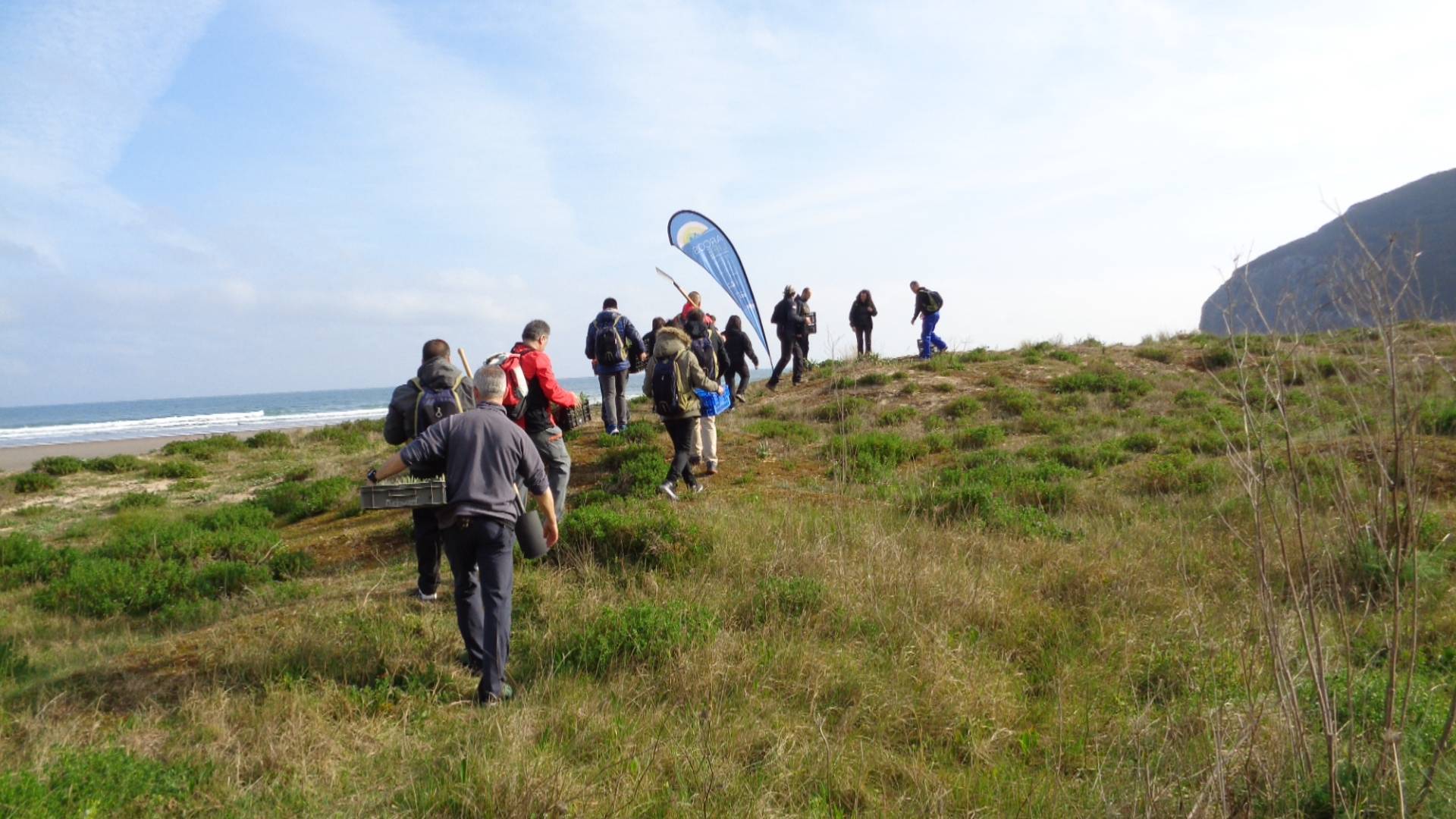
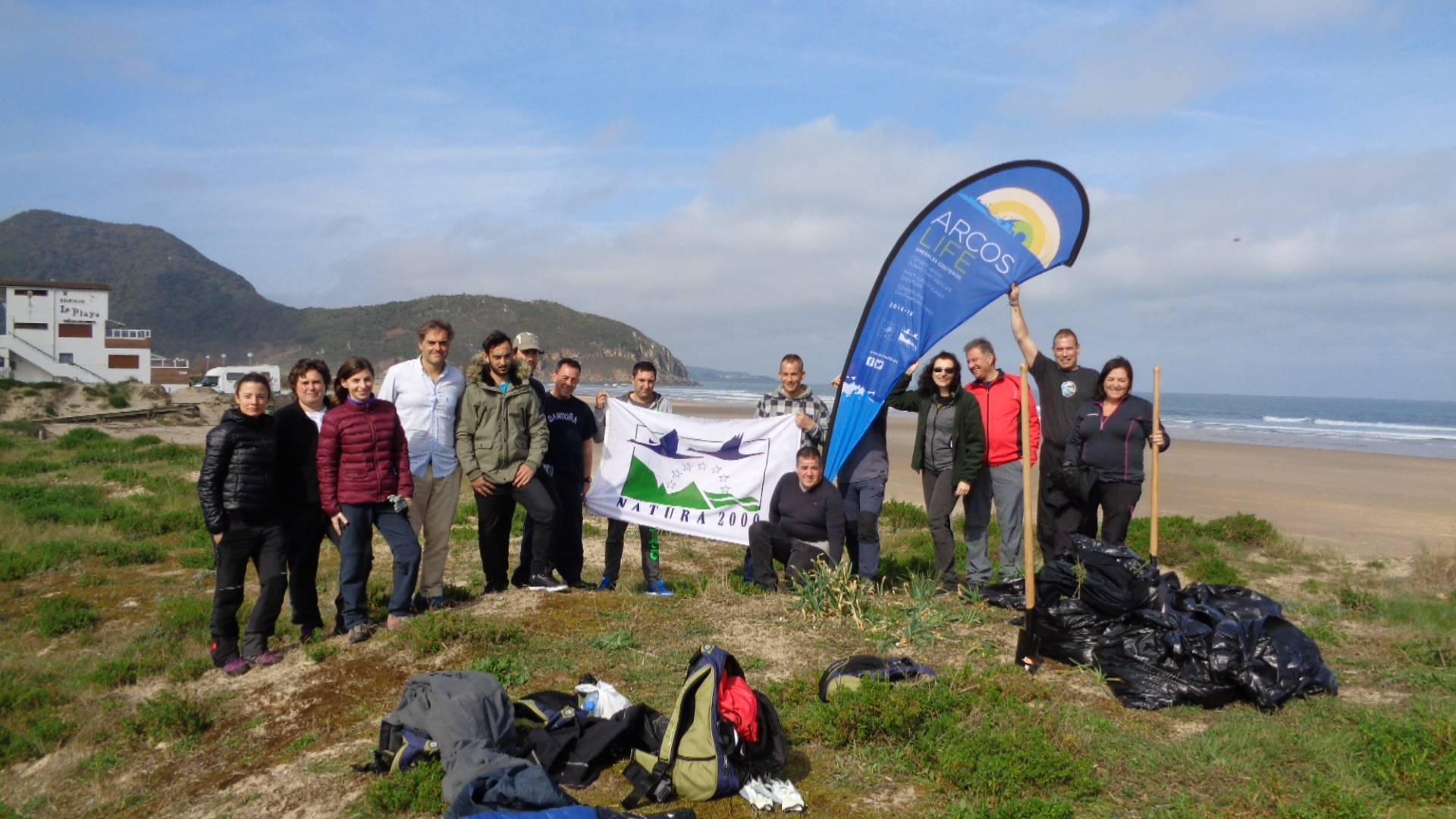
    On 9 March 2017, we scheduled the NACAR (Nature and Prison) program’s first volunteer activity of the year within the LIFE ARCOS project. On this occasion, the Natural Park Director and two interns from the Directorate-General of Natural Environment (from the Regional Ministry of Rural Affairs, Fisheries and Food, Government of Cantabria), seven inmates and two supervisors from the El Dueso Penitentiary participated.  Four supervisors from the Cantabrian Network for Rural Development that work at the Santoña, Victoria and Joyel Marshes Natural Park also participated.  The group was made up of a large team that worked all morning to restore the Berria dune.

    After the Director of the Park gave a brief introduction to dune dynamics and the LIFE ARCOS project, participants were divided into two groups to work on the activity areas in the central part of the Berria beach (Santoña) dune system.  The activity started by picking up a bit of rubbish in the area. Then, the groups continued to extract invasive species like the cape weed Arcthoteca calendula, the Ambrosia artemisifolia and some outbreaks of yuca (Yucca gloriosa) in the secondary and especially in the tertiary dune.  Small gardening shovels were used to manually extract these plants from the dune ecosystem.  This work took a while, because some areas had very small cape weeds germinating from the large seed reservoir these plants create, and the teams reviewed the areas carefully. There were few cases of ambrosia since they had been extracted manually two years ago.

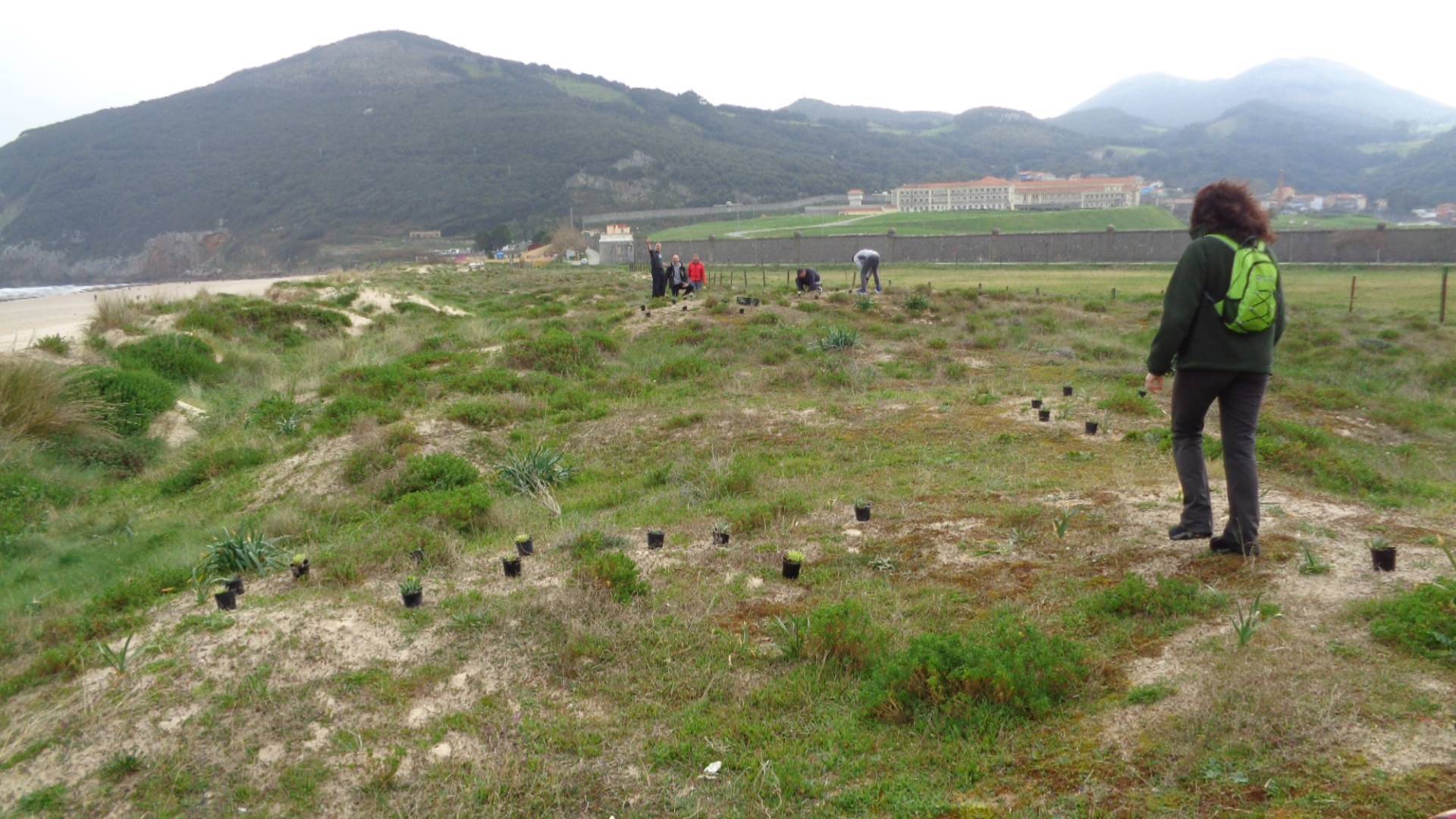
    Then, the teams worked to plant a native species called Virginia stock (Matthiola sinuata), which was obtained from the Gardening Workshop garden centre of the El Dueso Penitentiary, with seeds collected in 2016 from Berria beach dunes.  First, flowerpots were placed within an irregular planting framework to cover the entire area where cape weed was extracted. Then, around 200 Virginia stock were planted.

    We took a break at mid-morning and then went to the dune micro-reserve next to Brusco and the rising dune, an area that is closed to visitors to encourage regrowth. Just a few years ago, people were still parking their cars amongst the dunes.  During the beach walk on the way to the next activity area, we reviewed the frontal dune to collect some bulbs of daffodil (Pancratium maritimum) that were disconnected during the sea storm. They will be reintroduced into the dune. 

    In the Berria (Santoña) dune system, crossworts (Crucianella maritima) are just as rare as in other Cantabrian dunes and are present in just a few small areas of the tertiary dune. About thirty plants were cut so the El Dueso Gardening Workshop can work on multiplication techniques.

    In the area next to Brusco, Ononix natrix subsp. ramossisima (a Mediterranean plant in its distribution limit) was extracted and cleared. Cape weed was also extracted and 200 underdeveloped nursery plants of Virginia stock  were planted in the central area of Berria beach.  In this same area, agapanthus and crocosmias had bloomed and their bulbs were extracted.

    A total of four 100-litre bags of rubbish and eight 100-litre bags of invasive species, mostly cape weed (Arctotheca calendula), were collected. 

    Thank you to the team and all their hard work! We all learned from each other while enjoying a sunny morning at the beach. 

  • 12th November 2016: Volunteer day to eradicate invasive plants on Vega Beach, Ribadesella, Asturias

    12th November 2016: Volunteer day to eradicate invasive plants on Vega Beach, Ribadesella, Asturias

    Last-minute news

    [box type=»warning»]

    REGISTRATION IS NOW CLOSED[/box] [box type=»info»]

    THANK YOU FOR PARTICIPATING. WE WILL PLAN MORE EVENTS TO CONSERVE CANTABRIAN DUNES. FOLLOW US TO STAY UP TO DATE ON FUTURE EVENTS.[/box]

    Playa de Vega

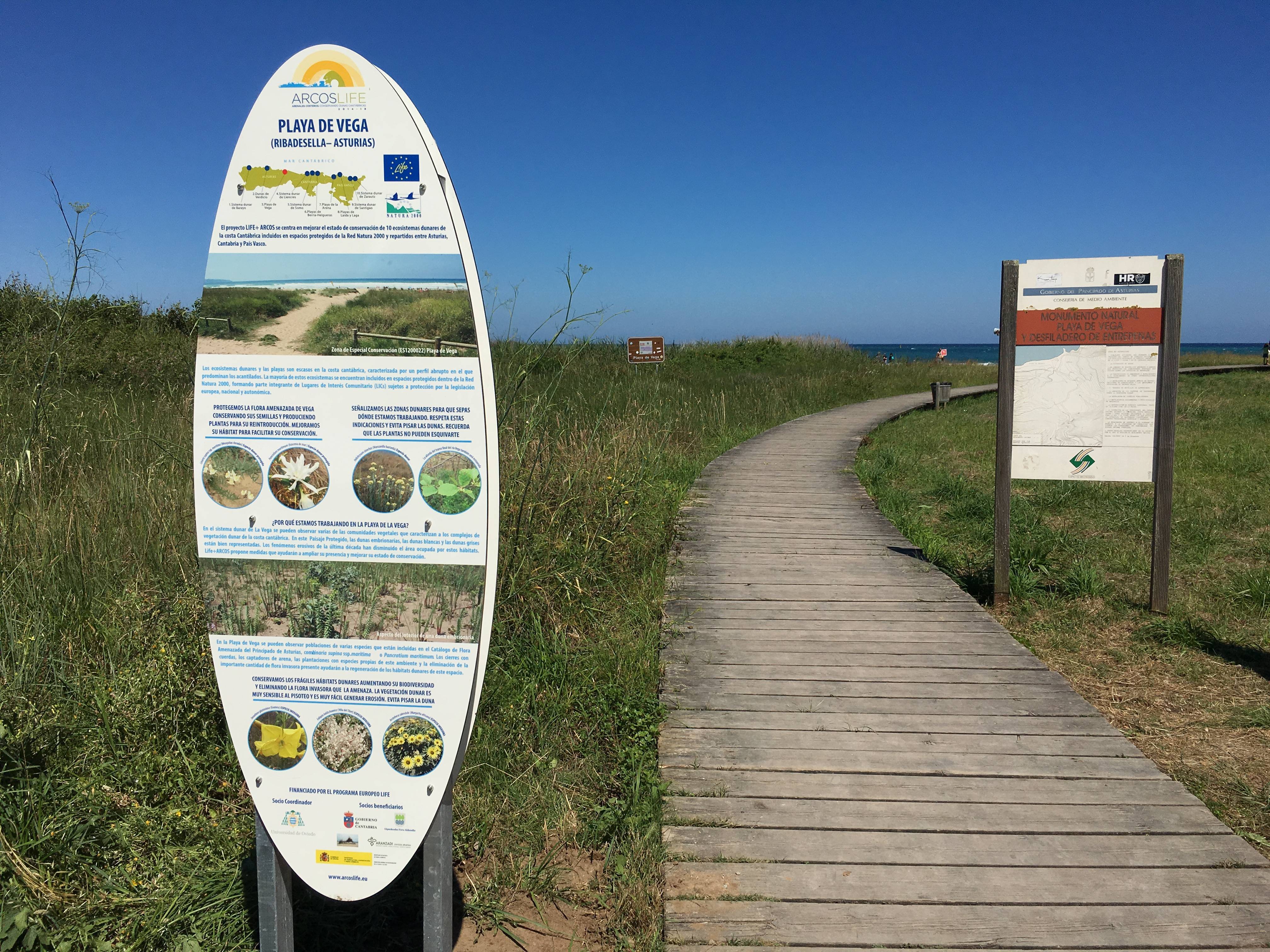
    On Saturday, 12 November 2016, the LIFE+ARCOS team invites you to participate in our volunteer activity to eradicate exotic invasive species on Vega Beach (Ribadesella, Asturias), a protected area within the Vega Beach Special Area  of Conservation (SAC ES1200022), and which therefore forms part of the Network of Protected Areas included in the Natura 2000 Network.

    We will keep you informed via our website.

    What is the plan?

    We will spend Saturday helping to improve the conservation of a natural protected area while participating in civic engagement. Various members of the LIFE+ARCOS team will be at Vega Beach: T. E. Díaz, Álvaro Bueno, Nacho Felpete, Elena Fernández and more. We will tell you about the area, take a look at the activities we have already carried out there and will teach you how to eradicate some problematic invasive species that are easy to remove by hand.

    How long will it last?

    Everyone who is interested in participating should be at Vega Beach at 11:00 am. Everyone in attendance is welcome to stay for lunch. If you have to go home for lunch, that is okay, too. Therefore, the volunteer day will wrap up at 2:30 pm.

    Schedule: 11:00 am to 2:30 pm

    How can I participate?

    To be covered by the insurance we hired from the University of Oviedo, fill out this this registration form. It is very important that we receive all participant names and their identification number. At Vega Beach we will ask you to sign a participation sheet to confirm your identity.

    Use the form to give us complimentary information about you. For example, if you are willing to share your car to bring people to the beach, if you are attending with children and, the most important part: one e-mail address or phone number so we can get in touch.

    Do not hesitate to contact us if you have any questions via the following link. We are happy to help.

    We will publish more information within the next few days.

    PARTICIPATE!

    The Life+ARCOS team

  • Life+ARCOS meets the majors and councillors of Valdés and Navia Councils, Asturias

    Life+ARCOS meets the majors and councillors of Valdés and Navia Councils, Asturias

    Asistentes a la reunión
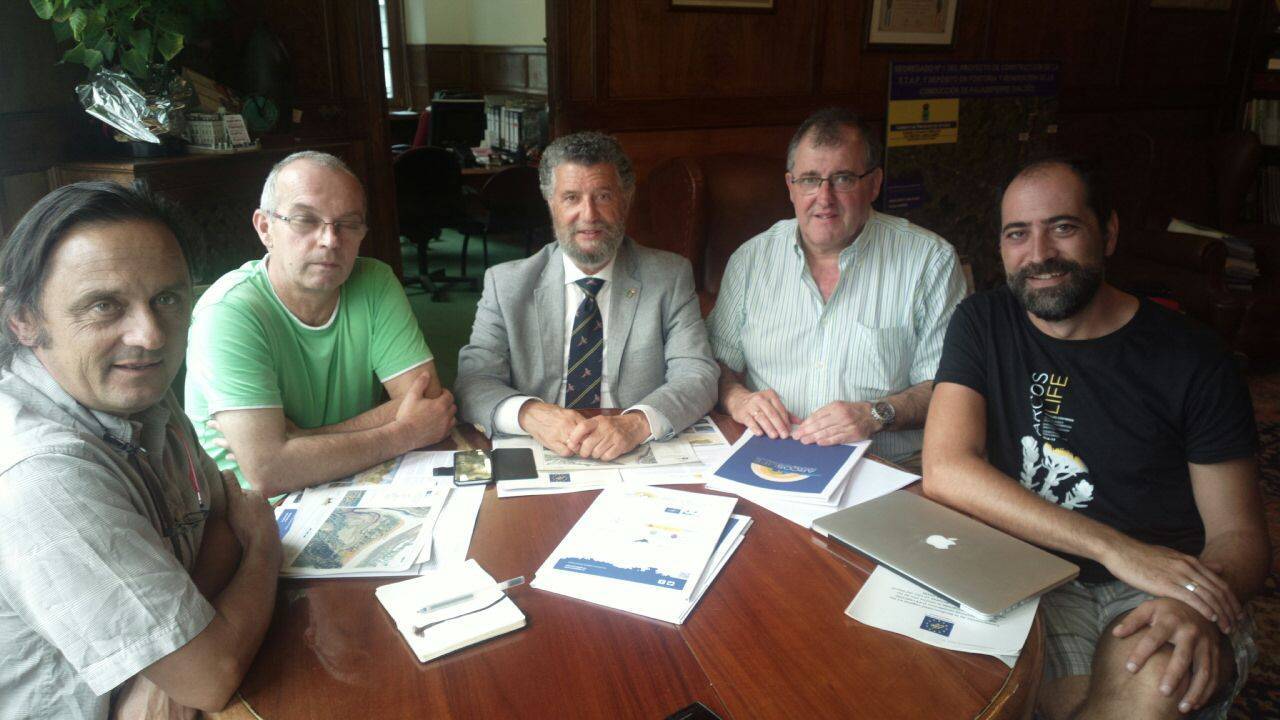
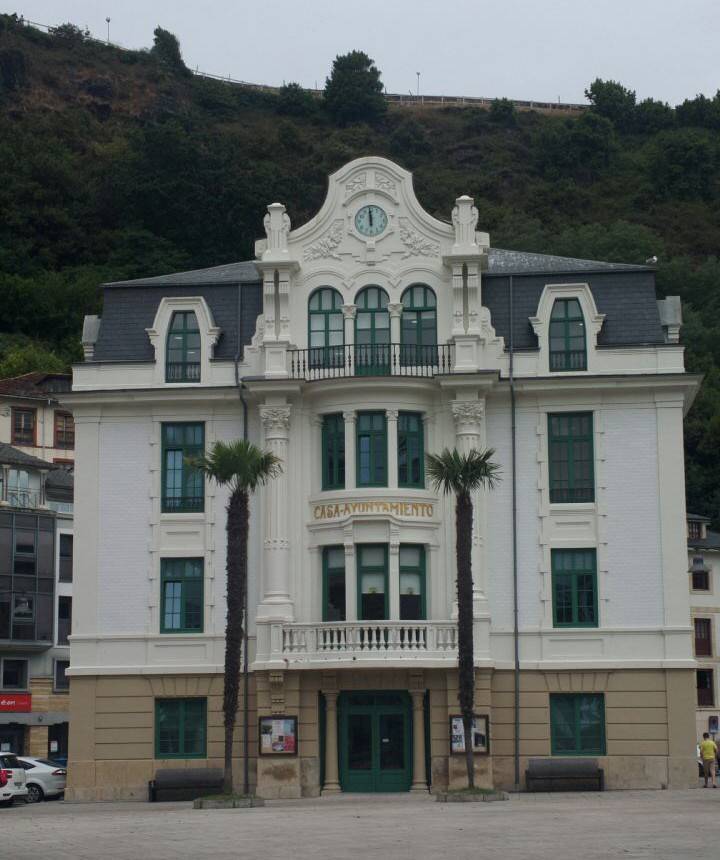
    From left to right. Álvaro Bueno, Mariano Fernández, Ignacio García Palacios, Simón Guardado Pérez and Ignacio Alonso, attendees at the meeting.

    Today, members of the University of Oviedo, the coordinating partner of the Life+ARCOS project, held a meeting at the Luarca Council with the local mayor, Mr Simón Guardado Pérez, the Councillor of Navia, Mr Ignacio García Palacios, and a member of the Navia Council Environmental Department, Mr Mariano Fernández, to give information about the development of the conservation actions included within the project for the Barayo Beach protected space.

    During the meeting, Mr Alvaro Bueno Sánchez and D. J. Alonso Felpete explained to representatives from both Councils the actions envisaged for the Partial Natural Reserve of Barayo, a protected space that encompasses terrain belonging to both Navia and Valdés. They were given an informative dossier with the list of foreseen actions in the other enclaves where this project is being developed.

    IMG-20150708-WA0005
    Luarca Council, which hosted the meeting between representatives of the Life+ARCOS project and representatives of the Navia and Valdés Councils

    The Councillors and members of the Council shared the interest and concern expressed by Life+ARCOS to recover the state of conservation of the dune system, which is currently far from optimal. Removing invasive species from the setting, specifically the actions on the invasive grass Spartina patens, were a central part of the meeting. The proposal to remove the non-native trees currently covering the space on the Barayo grey dune was met with great interest by all parties, who discussed the possibility that the dune ecosystem restoration actions may receive financial support from other institutions, which until now had not been part of the project development.

    The meeting ended with the intention of all parties to hold an information session about all the actions envisaged for the Barayo space, with citizen participation and open to specific groups that may be interested in participating in the volunteering programme, which have been planned for this space within the Life+ARCOS project.

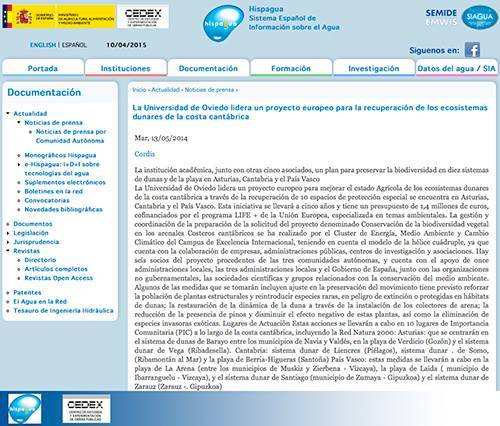
  • News published on the HISPAGUA – CEDEX website

    News published on the HISPAGUA – CEDEX website


    News published on the hispagua.cedex.es website
    “The University of Oviedo is leading a European project to recover the dune ecosystems on the Cantabrian coast”

    Date of online publication: 13/05/2014


    [button link=»http://hispagua.cedex.es/documentacion/noticia/133993″ newwindow=»yes»]SEE PUBLICATION[/button]