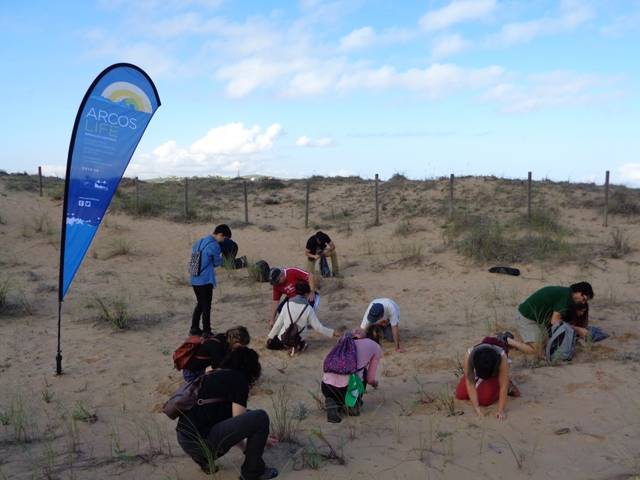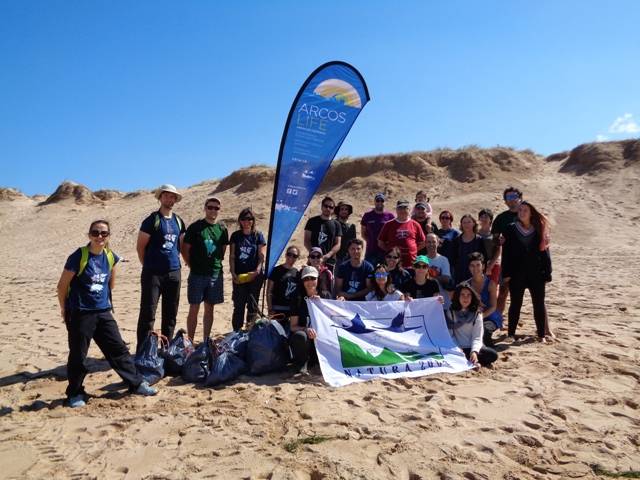
Last Saturday, 19 September 2015, a volunteer day of the LIFE+ Arcos project was held within the existing dune system of Valdearenas beach in Liencres. Personnel from the Directorate-General of Natural Environment attended (which belongs to the Directorate-General of Natural Environment of the Regional Ministry of Rural Affairs, Fisheries and Food of the Government of Cantabria).
The main objective of this activity was to raise awareness about the LIFE+Arcos project and its activities, especially within SCI Dunes of Liencres and the Pas Estuary.
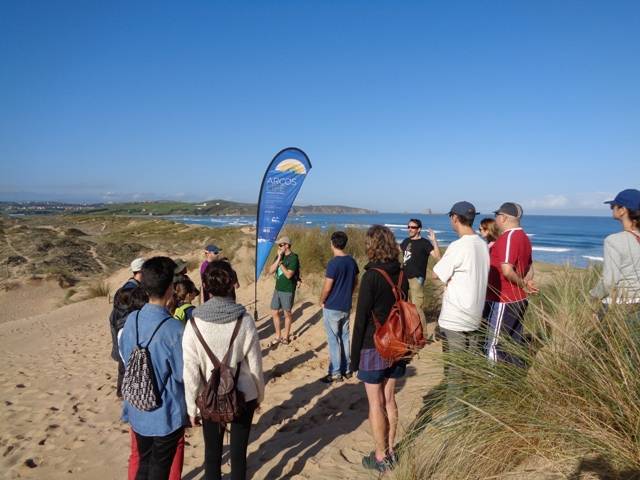
The day was organized by two technicians from the Nature Conservation Service of the aforementioned Directorate-General. It began with an introduction to the Natural Protected Area and to the dynamic and biological communities of the dune system’s ecosystem on the Cantabrian coast. It also included a presentation about the main problems this natural area faces.
One of the activities carried out during the day was the eradication of an invasive species, the Chamaesyce polygonifolia, an annual plant from the East Coast of North America that competes for space with other plants from the same genus, the Chamaesyce peplis. This natural area in Cantabria is the only area known to be home to this plant, and is classified as VULNERABLE in the Regional List of Threatened Species of Cantabria. A total of 30 litres of the invasive plant were extracted
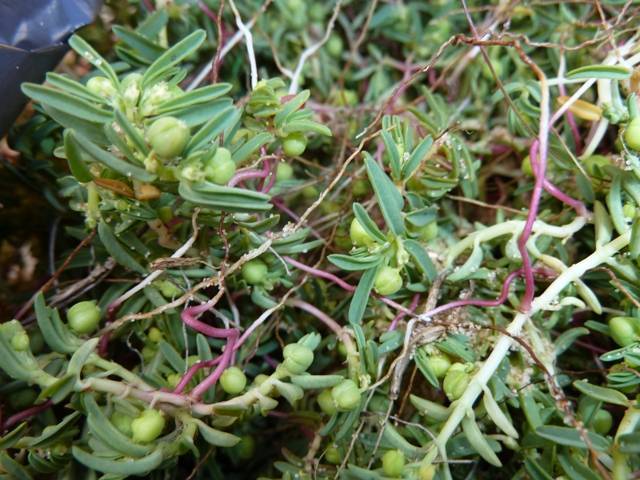
At the peak of the volunteer day, we swept the area to locate specimens of the only known population of Chamaesyce peplis in Cantabria and gathered their location points via GPS. A total of 38 specimens of this species were found. Some of them were completely covered in sand due to strong winds, which means there were probably more specimens in the area than what we found.
Throughout the day, participants collected a total of three, 20-litre bags of different types of waste.
Participants’ expectations were met. We also met our goal to raise awareness about dune system habitats and the environment. Even so, there is still more work to be done to eradicate the invasive species threatening Chamaesyce peplis conservation.