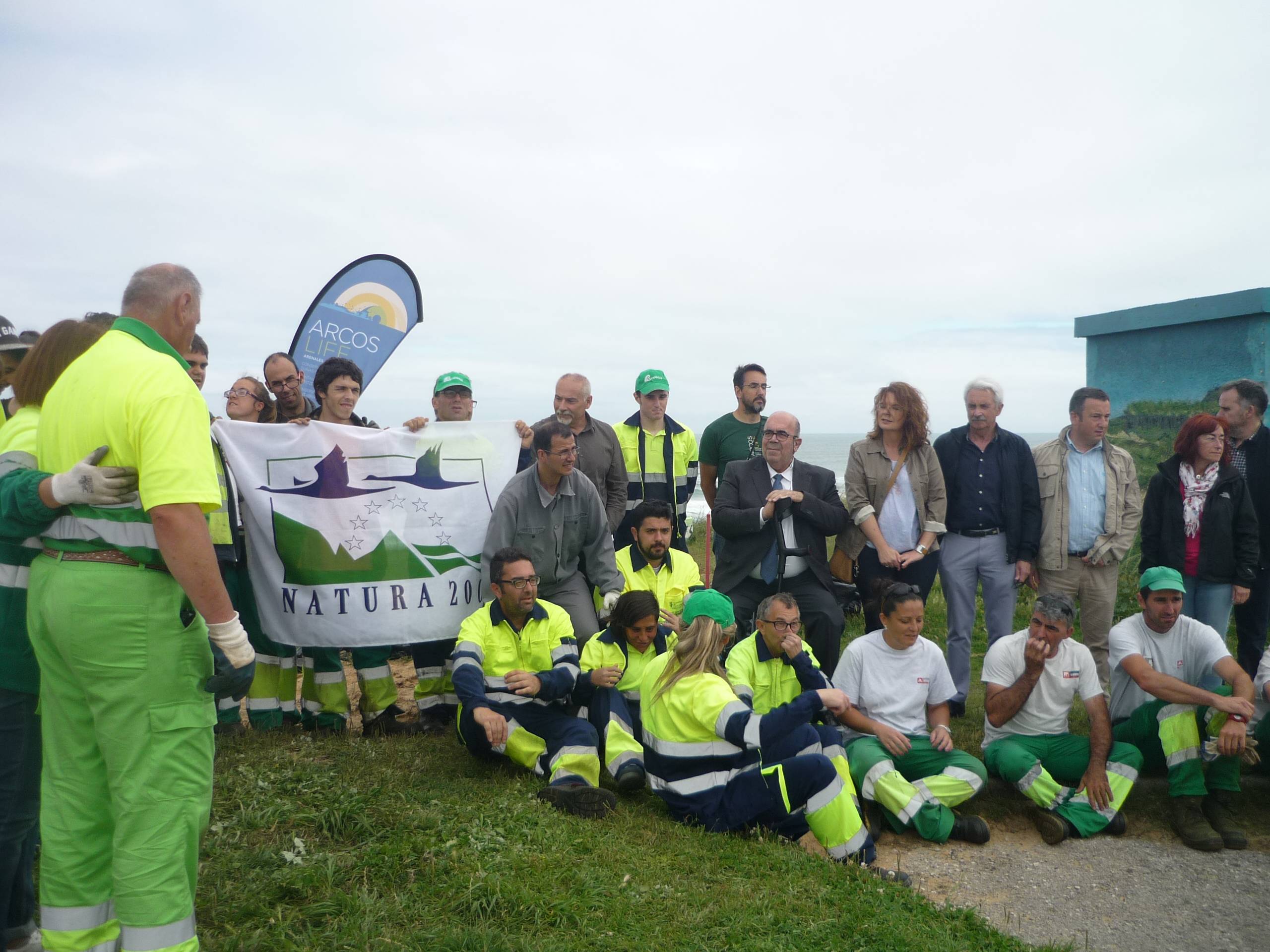
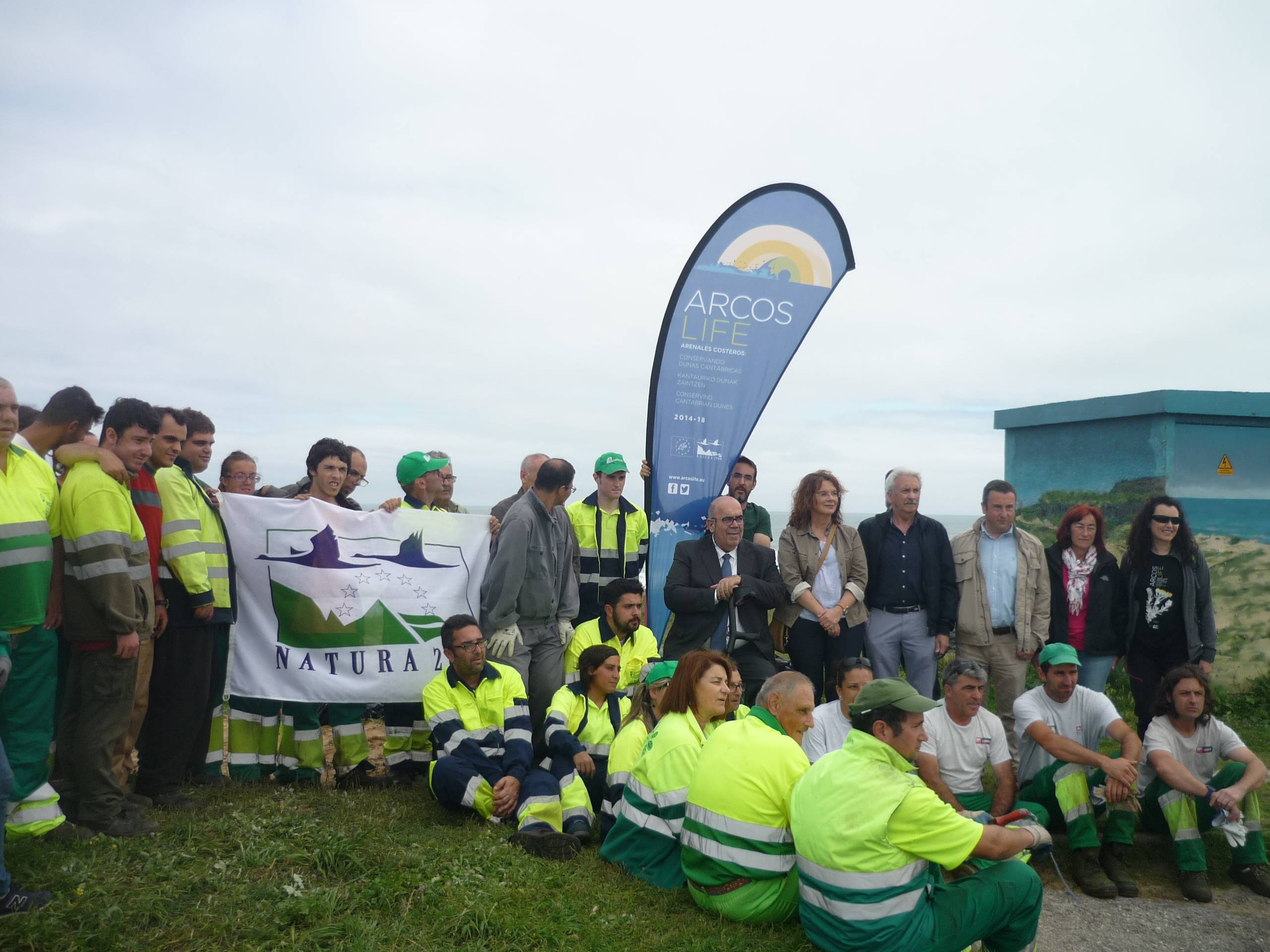
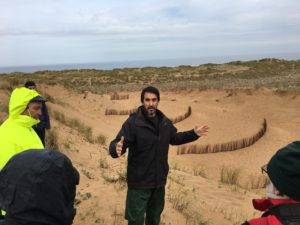
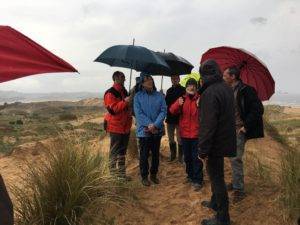
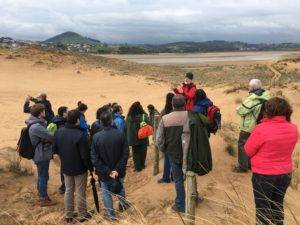
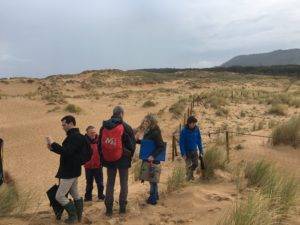
The companies AMICA, AMPROS and SERCA received training and volunteered for the LIFE ARCOS project.
We celebrated World Environment Day on 18 June 2018 with a volunteer and training event on invasive flora with the LIFE ARCOS Project from the Directorate-General of Natural Environment of the Regional Ministry of Rural Affairs, Fisheries and Food of the Government of Cantabria.
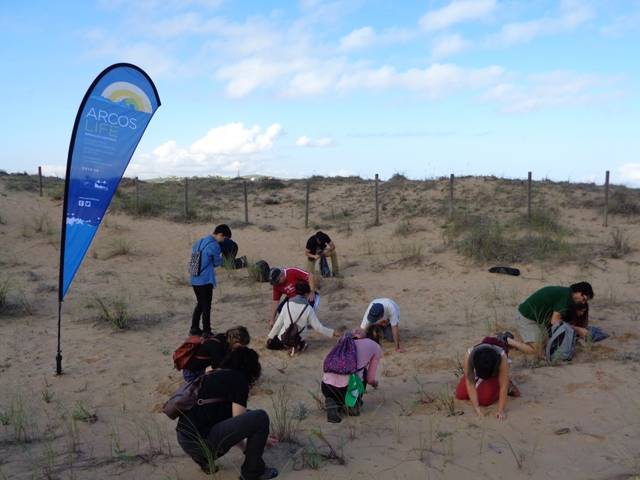
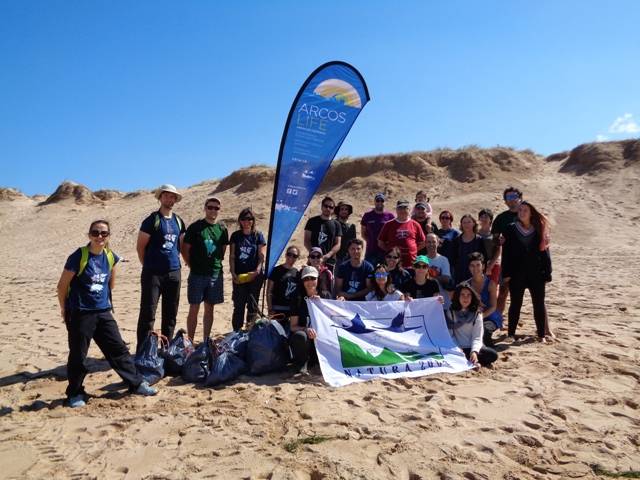
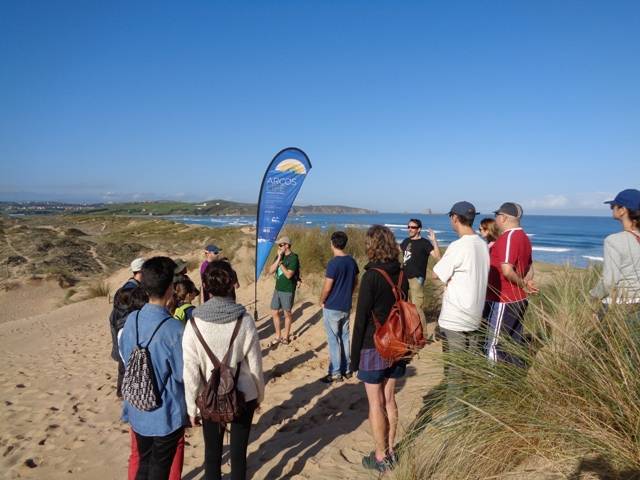
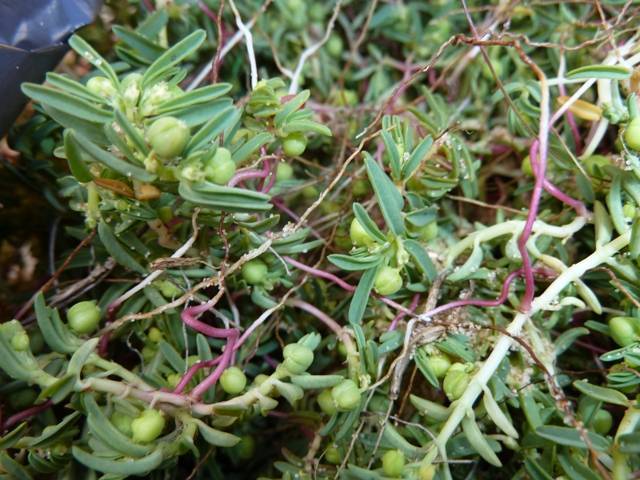
On this day, the Cantabrian companies AMICA, AMPROS and SERCA got to work to control the cape weeds and horseweed on Canllave Beach (Natural Park of Liencres). After listening to a brief speech from the natural park director, Jesús Varas, the three teams from AMICA, AMPROS and SERCA got to work. 27 people worked within plots marked with temporary plastic tape. They collected approximately 390 kg of cape weeds (Arctotheca calendula) and 25 kg of horseweed (Conyza candensis). The participants learned to distinguish the characteristics of the cape weeds among other well-preserved and blooming dune plant species such as the sea potato, sea beet, Virginia stock, shore bindweed, European searocket, petty spurge, etc.
Teams from AMICA, AMPROS and SERCA working in Canallave. Group photo with the Regional Minister for Rural Affairs, Fisheries and Food.
The work area included dunes where restricted access favored their recovery and the regeneration of dune vegetation.
Although the area was quite clean, volunteers also collected some non-biodegradable bags.
Finally, the Cantabrian Network for Rural Development collected all the plants and garbage.
Participants received commemorative informational t-shirts from LIFE ARCOS.
The Directorate-General of Natural Environment would like to thank volunteers for their participation. Everyone learned something new about the environment and played their part in restoring vulnerable ecosystems: the dune systems of Cantabria.
The workshop organised by EUCC-Atlantique, in collaboration with the Life+ARCOS project, has chosen the dune systems in Cantabria and conservation actions, which are being carried out within the framework of this project on the Liencres Dunes and the Puntal Dunes and Miera Estuary (recently declared Special Area of Conservation, Decree 18/2017, 30th March, Official Cantabria Gazette 70), to bring together an experienced group of experts in managing and conserving this kind of habitat, on 25th and 26th May.
Summary of the activity held on 25th April
Visit to the Liencres dune system (tomorrow)
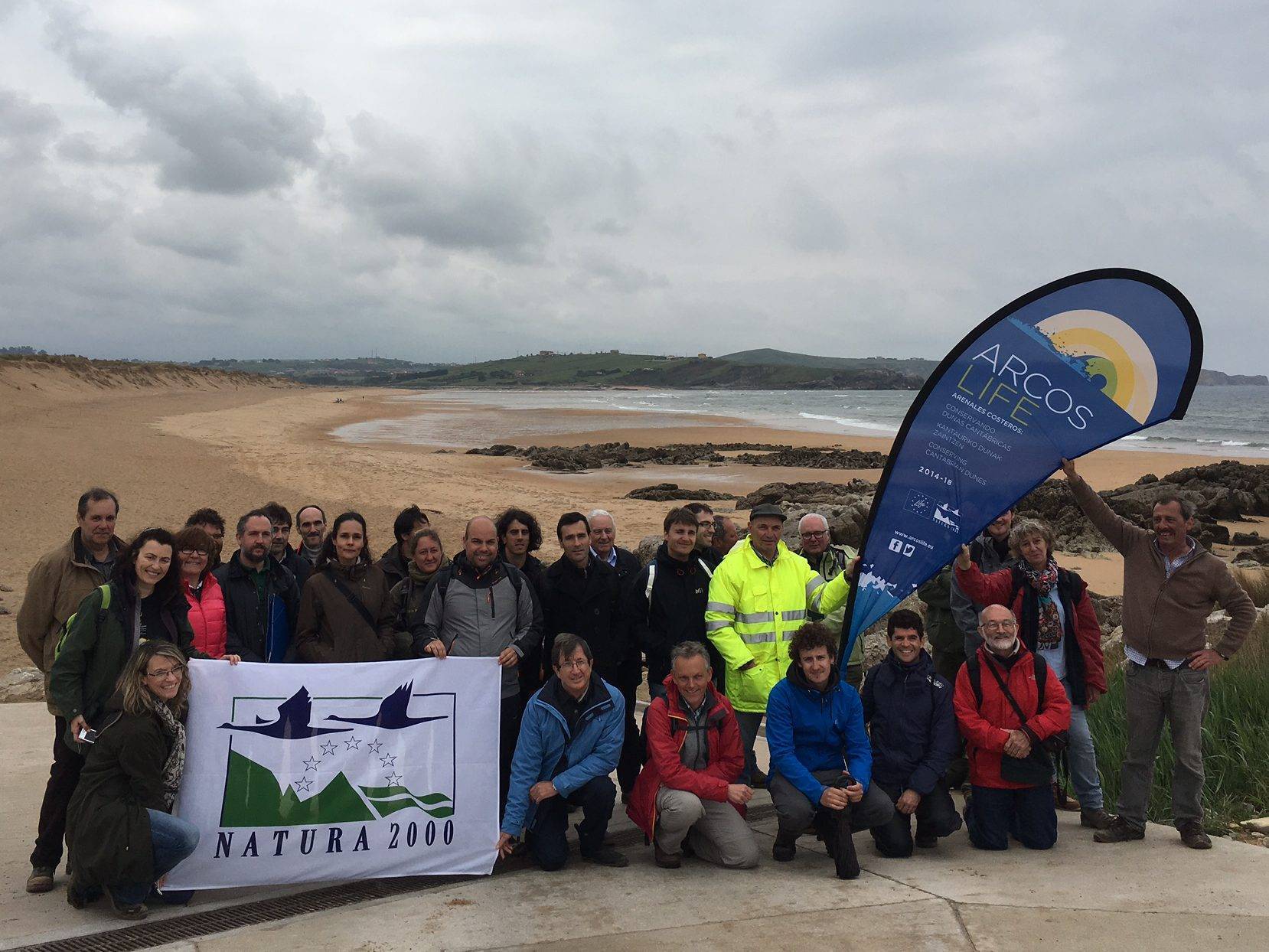
The day started with a presentation given to all attendees by Christine Clus-Auby (EUCC) and Carlos Ley (Ecología Litoral – Life+ARCOS). After the presentation, following the programme, the group visited the Liencres dune system. Different interventions were given during the walk to the protected area. The visit was guided by the Director of the protected area, Jesús Varas, and was supported by the collaboration of Carlos Ley and Jean Favenecc (EUCC), who also assisted in translating. Jesús Varas was in charge of explaining the different actions that are being carried out in terms of preserving dune habitats and managing the dune space, both in the context of the Life+ARCOS project and in other frameworks dependent on the Cantabrian Directorate for Nature Conservation.
Group photo with some of the attendees of the activity held on 25th April
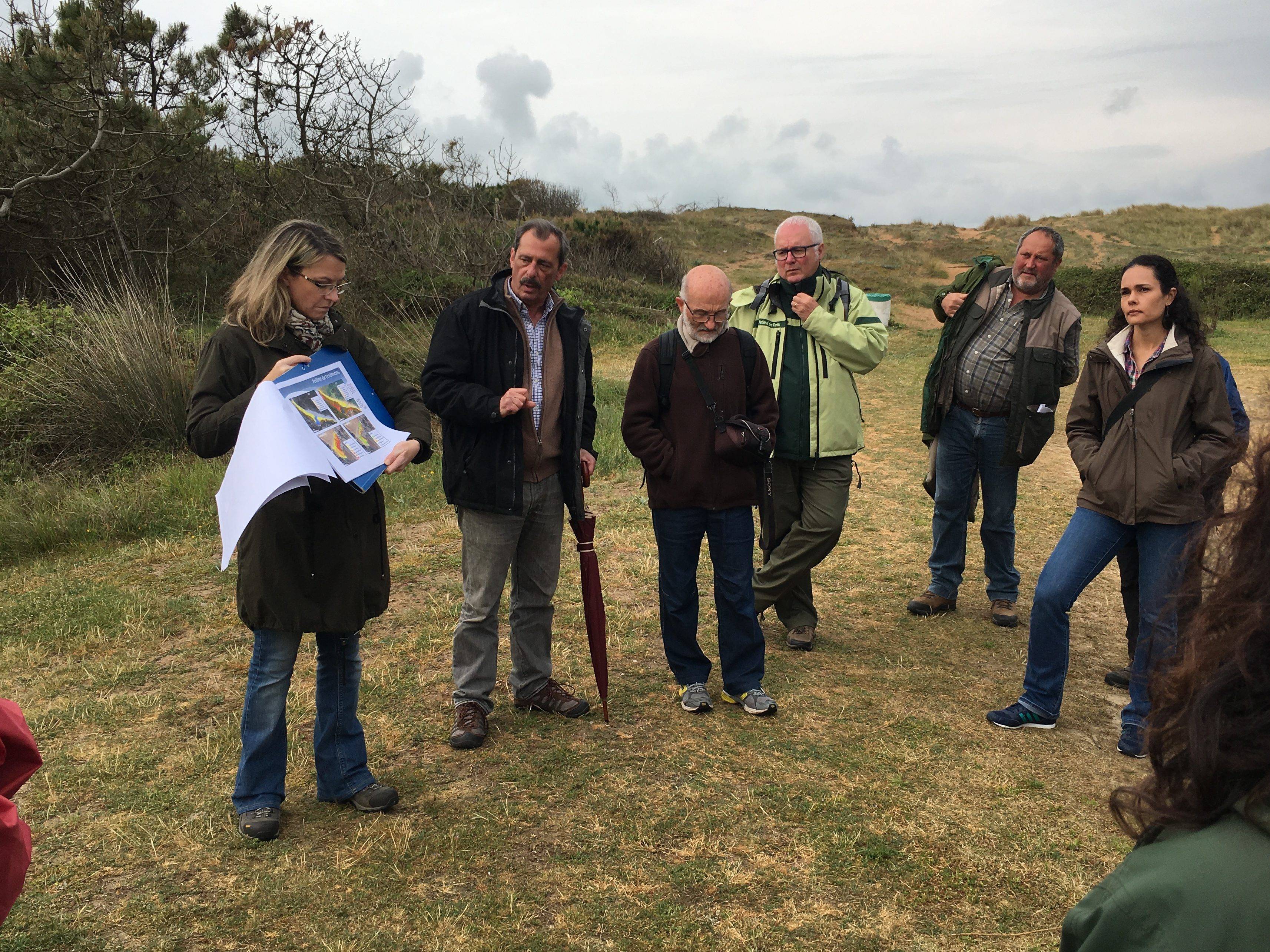
The introduction to the geomorphological situation of the space and the analysis of its sedimentary dynamic was given by Elena Fernández Iglesias (Indurot- Uniovi – Arcos+Life). Elena gave an analysis of the dune system history (1950s to present day), by interpreting historical aerial photos and by analysing LIDAR data. The variation of the sedimentary inputs of the river Pas and the erosive phenomena occurring over recent years, are among the leading causes of the current sediment balance.
Elena Fernández Iglesias giving the explanation
The morning included explanations from Mr Jesús Varas and interventions from various attendees, who discussed the set of actions being carried out within the protected space.
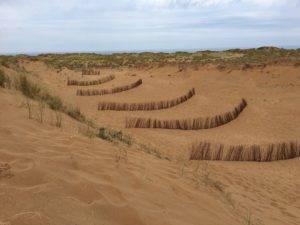
The selective elimination of pine trees, constructing enclosures to organise pedestrian transit, sand collectors, managing seaweed banks as a sand collector element, and eliminating invasive species, were some of the issues addressed and actively discussed “in situ”.
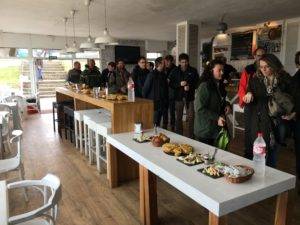
The morning session ended with a meal at a restaurant near the dune system.
Some photos of the visit can be seen below.
Presentations and discussion (afternoon)
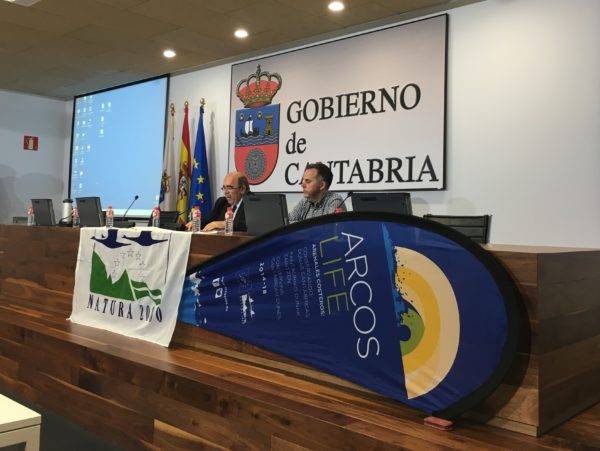
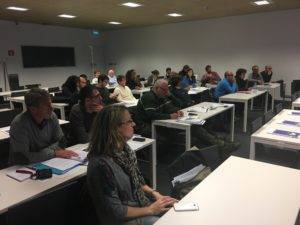
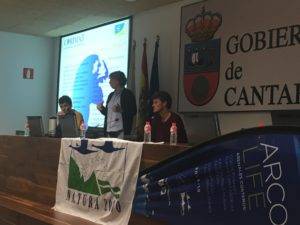
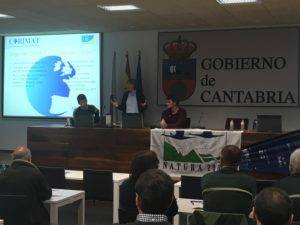
The Assembly Hall at the Government of Cantabria Directorate General of Nature Conservation, hosted the lively afternoon session, filled with communications and discussion.
The Session was opened by the Councillor for Rural Affairs, Fisheries and Food, Mr Jesús Oria, who commented on the interest of his department regarding these coastal habitats, reinforced by its participation as beneficiary partner within the Life+ARCOS project.
Opening of the activity days by the Councillor for Rural Affairs, Fisheries and Food, Mr Jesús Oria
After the introductory presentation by the Councillor, the different interventions were given in the following order:
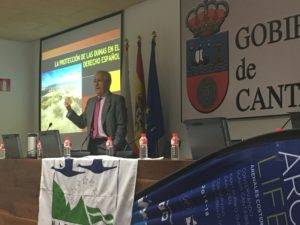
Luis Martín Rebollo, Administrative Law Professor at the University of Cantabria: Legislative context and territorial organisation in Cantabria: the keys to understanding dune management
Ignacio Alonso, from the University of Oviedo: The objectives and challenges of the ARCOSLIFE project
Loïc Gouguet, Leading National Coastal Expert from the “National Forestry Department (Office National des Forêts, ONF)”: Managing the French Atlantic dunes, from beaches to forested dunes
Maria Recio, Hydraulic Institute of Cantabria: Analysis of the effects of pedestrian transit over the dune vegetation
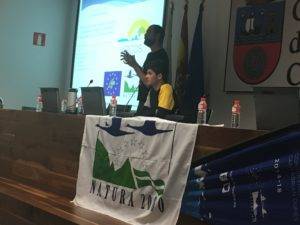
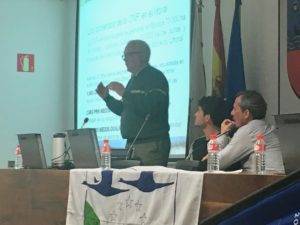
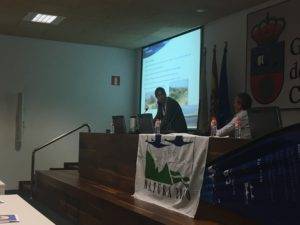
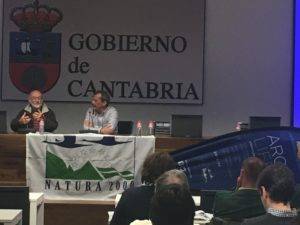
Photos of the speakers in order of intervention (from top to bottom, left to right).
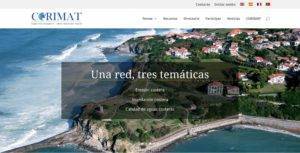
The debate following the interventions was chaired by Jean Favenecc (EUCC) and Carlos Ley (Ecología Litoral), and after it finished the ANCORIM /CORIMAT portal was officially introduced, created with the aim of reactivating the network of players to manage coastline risks in the European Atlantic area. The presentation of the portal was given by Pedro Fernández (EUCC-Atlantique) and Christine Clus-Auby (EUCC-Atlantique).
After the debate and the presentation of the CORIMAT portal, the organisation’s bus returned participants to the city of Santander.
Photo of the volunteer group and members of the Directorate-General of Natural Environment of the Government of Cantabria who participated in this activity on Valdearenas Beach.
Last Saturday, 19 September 2015, a volunteer day of the LIFE+ Arcos project was held within the existing dune system of Valdearenas beach in Liencres. Personnel from the Directorate-General of Natural Environment attended (which belongs to the Directorate-General of Natural Environment of the Regional Ministry of Rural Affairs, Fisheries and Food of the Government of Cantabria).
The main objective of this activity was to raise awareness about the LIFE+Arcos project and its activities, especially within SCI Dunes of Liencres and the Pas Estuary.
Volunteers attended a presentation about the importance of these dune systems.
The day was organized by two technicians from the Nature Conservation Service of the aforementioned Directorate-General. It began with an introduction to the Natural Protected Area and to the dynamic and biological communities of the dune system’s ecosystem on the Cantabrian coast. It also included a presentation about the main problems this natural area faces.
One of the activities carried out during the day was the eradication of an invasive species, the Chamaesyce polygonifolia, an annual plant from the East Coast of North America that competes for space with other plants from the same genus, the Chamaesyce peplis. This natural area in Cantabria is the only area known to be home to this plant, and is classified as VULNERABLE in the Regional List of Threatened Species of Cantabria. A total of 30 litres of the invasive plant were extracted
Euphorbia polygonifolia (originating in North America) lives in the same area as the native species Euphorbia peplis.
At the peak of the volunteer day, we swept the area to locate specimens of the only known population of Chamaesyce peplis in Cantabria and gathered their location points via GPS. A total of 38 specimens of this species were found. Some of them were completely covered in sand due to strong winds, which means there were probably more specimens in the area than what we found.
Throughout the day, participants collected a total of three, 20-litre bags of different types of waste.
Participants’ expectations were met. We also met our goal to raise awareness about dune system habitats and the environment. Even so, there is still more work to be done to eradicate the invasive species threatening Chamaesyce peplis conservation.
Volunteers work to eradicate Chamaesyce polygonifolia and carry out a census of Chamaesyce peplis
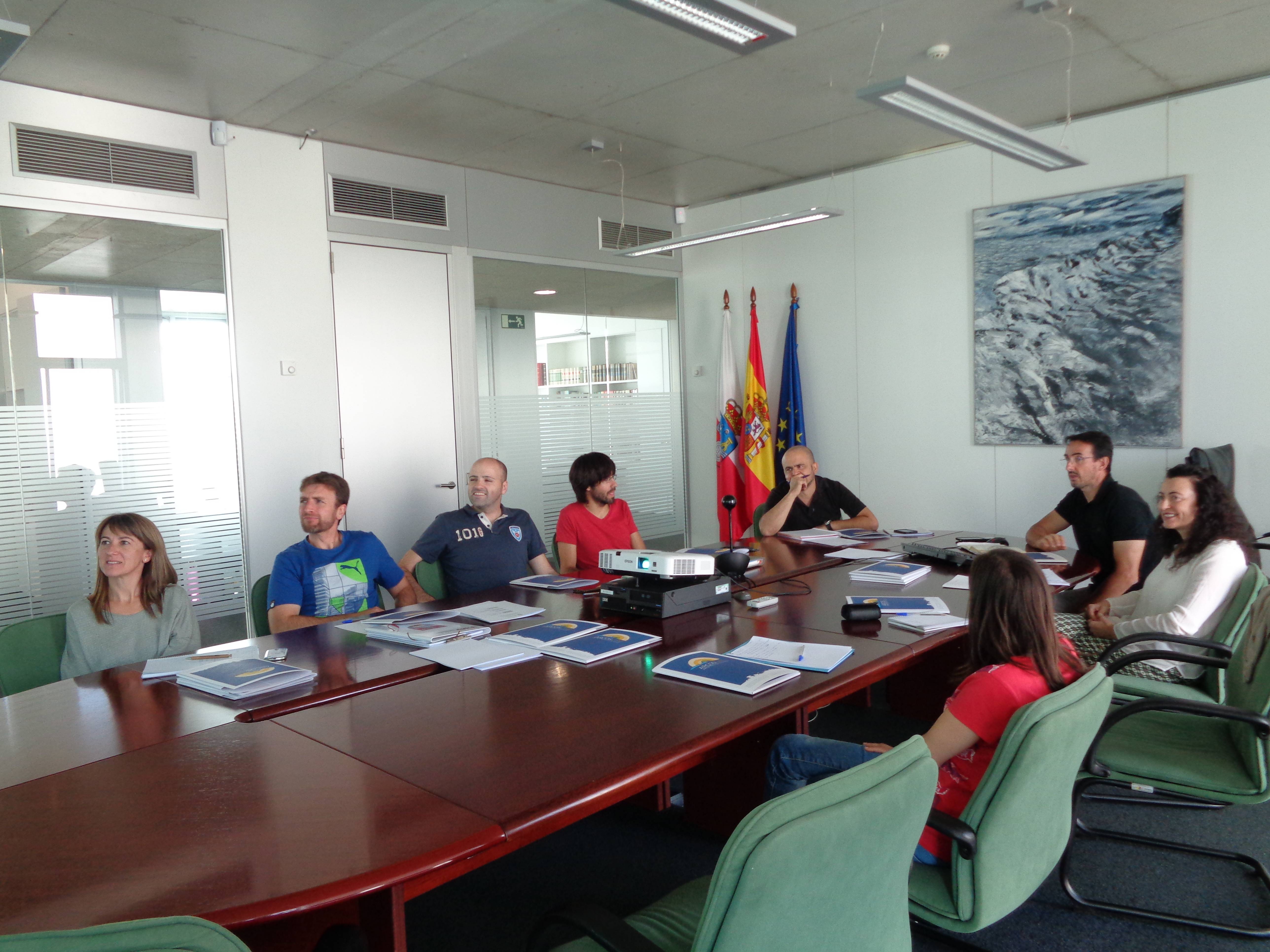
On 14 August, Jesús Varás (director of the Liencres Dunes Natural Park) and Lourdes González (Director of the Santoña, Victoria and Joyel Marshes Natural Park) met with the Technicians from the Nature Conservation Service to present and explain the LIFE+ARCOS project to colleagues working in other areas of the Directorate-General of Natural Environment of the Regional Ministry of Rural Affairs, Fisheries and Food.
During the meeting, attendees received thematic portfolios on the LIFE+ARCOS subject “Conserving Cantabrian Dunes.» Then, we presented on the scope of action and the list of activities to develop, focusing on specific activities on Cantabrian beaches that form part of this project (Valdearenas, Loredo, Helgueras and Berria).
During the meeting, attendees asked interesting questions about species and activities in the Liencres pine forest.
Meeting in the Cantabria Science and Technology Park (PCTCAN), where the Technicians (from the Nature Conservation Service) meeting took place.
We also explained the value the NACAR (Nature and Prison) environmental volunteer programme (since 2004) has added to the LIFE+ARCOS project.
When the meeting ended, we agreed to keep them informed about the LIFE+ARCOS project as activities in the Cantabrian dune systems are carried out. We also talked about the possibility of creating a volunteer group for the Directorate-General of Natural Environment to carry out activities for the project. All attendees liked the idea and we plan to host a volunteer day in September or October 2015.
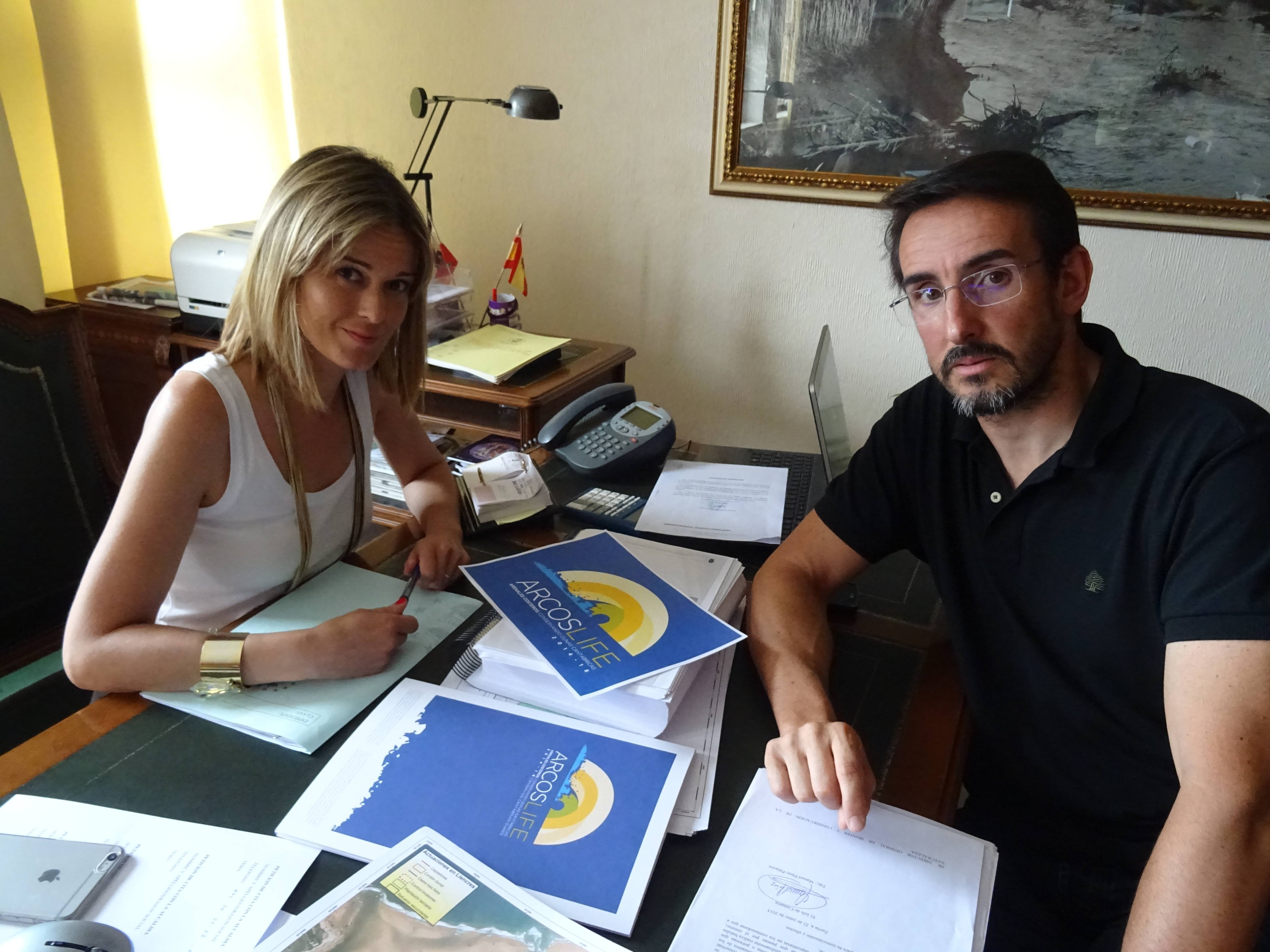
Meeting held between the mayor of Piélagos, Ms Verónica Samperio and Mr Jesús Varas, director of the Liencres Dunes Natural Park (Government of Cantabria)
On 3 August the director of the Liencres Dunes Natural Park, of the Directorate-General of Natural Environment of the Regional Ministry of Rural Affairs, Fisheries and Food of the Government of Cantabria (collaborating member of LIFE+ARCOS), Jesús Varas, held a meeting to meet the new mayor of Piélagos, Verónica Samperio. One of the meeting topics related with the Natural Park was introducing her to the LIFE+ARCOS project: “Conserving Cantabrian Dunes” and the activities being carried out in the Valdearenas dune system.
During the meeting, we explained the general scope of action of LIFE+ARCOS project and analysed the activities scheduled through 2018 within the Valdearenas dune system, one of the largest on the Cantabrian coast. Both parties agreed about the importance of tourism in the area and the need to plan activities to conserve this fragile habitat.
We also talked about continuing forward with the policy to eradicate invasive plants while prioritising mechanical control methods, planting and increasing threatened native species and installing sand collectors among the activities within the LIFE+ARCOS work programme. It is also advisable that dunes be temporarily closed to avoid alterations to the areas we have worked on.
The Mayor was interested in knowing more about the project’s activities and suggested holding occasional coordination meetings as well as carrying out a technical visit to Valdearenas beach to interact with the current state of Berria beach’s dune system and to evaluate existing public use infrastructure
Este sitio web utiliza cookies para que usted tenga la mejor experiencia de usuario. Si continúa navegando está dando su consentimiento para la aceptación de las mencionadas cookies y de nuestra política de cookies. Pinche el enlace para mayor información.