Autor: me

  • LIFE+ARCOS meets the General Directorate for Biodiversitiy, in Oviedo, to evaluate the extent of the actions foreseen in the Barayo site (Navia-Valdés, Asturias)

    LIFE+ARCOS meets the General Directorate for Biodiversitiy, in Oviedo, to evaluate the extent of the actions foreseen in the Barayo site (Navia-Valdés, Asturias)

    On 14 February, LIFE+ARCOS met in the Multi-Service Building of the Principality of Asturias with heads of the Protected Area and Nature Conservation Service, of the Directorate-General for Biodiversity. They talked about the next steps for the Barayo Partial Natural Reserve, including the SAC Peñarronda-Barayo, once the non-native forest cutting has concluded in the area.

    Ms Teresa Sánchez Corominas, head of this service, attended the meeting. Items were brought up that will have to be included in the LIFE project’s plan of action for this area, relating to the definitive treatment of leftover plant material from the cutting of pine trees, the salinization of the dune system to eradicate adventitious species before planting activities and the plan to eliminate the invasive plant Spartina patens in the protected space, among other items.
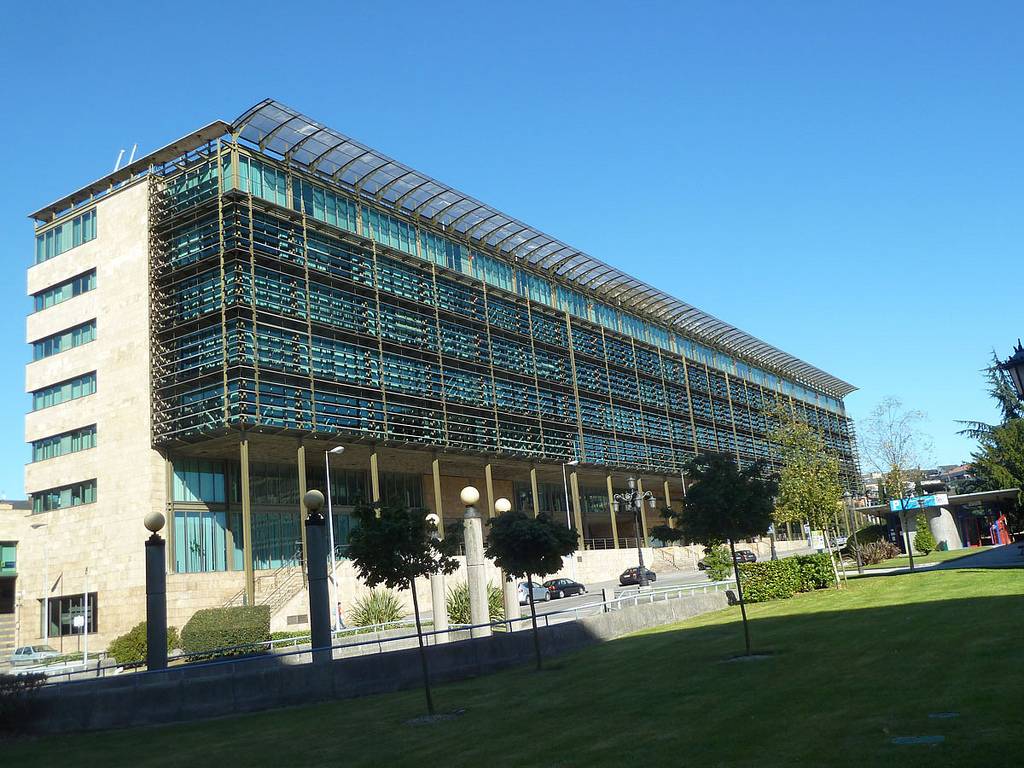
    The Multi-Service Building of the Principality of Asturias, in Oviedo,  where the meeting with the heads of the Protected Area and Nature Conservation Service took place

    The following people attended the meeting:

    From LIFE+ARCOS: T. E. Díaz, main project lead; Ignacio Felpete, conservation activity technician in Asturias; Carlos Ley, manager of the company Ecología Litoral S.L. and Fernando de la Torre, from Coast Demarcation of Asturias.

    From the Principality: Teresa Sánchez, head of the Protected Area and Nature Conservation Service; Víctor Vazquez, head of the Biodiversity Analysis and Conservation Section of said Service and Susana García, biologist of the section.
  • LIFE+ARCOS se reúne en Oviedo con responsables de la Dirección General de Biodiversidad, para revisar las acciones que se prevé llevar a cabo en Barayo

    LIFE+ARCOS se reúne en Oviedo con responsables de la Dirección General de Biodiversidad, para revisar las acciones que se prevé llevar a cabo en Barayo

    El pasado 14 de febrero, LIFE+ARCOS se reunió en el Edificio de Servicios Múltiples del Principado de Asturias, con responsables del Servicio de Espacios Protegidos y Conservación de la Naturaleza, de la  Dirección General de Biodiversidad, para discutir los siguientes pasos que se van a dar en la Reserva Natural Parcial de Barayo, incluida en la ZEC Peñarronda-Barayo, una vez finalizada la tala de arbolado no autóctono en el espacio.

    En la reunión, que contó con la presencia de la responsable de este servicio, Dña. Teresa Sánchez Corominas, se plantearon algunas cuestiones que habrán de ser incluidas en el Plan de Acción del proyecto LIFE para este espacio, relativas al tratamiento definitivo de los restos de material vegetal procedentes de la tala de pinos, a la salinización del sistema dunar para eliminar especies adventicias previo a las acciones de plantación o al plan de eliminación de la invasora Spartina patens en el espacio protegido, entre otros asuntos.

    Edificio de Servicios Múltiples del Principado de Asturias, en Oviedo, donde tuvo lugar la reunión con los responsables del Servicio de Espacios Protegidos y Conservación de la Naturaleza

    En la reunión estuvieron presentes:

    Por parte de LIFE+ARCOS: T. E. Díaz, responsable principal del proyecto; Ignacio Felpete, técnico de las acciones de conservación en Asturias; Carlos Ley, gerente de la empresa Ecología Litoral sl y Fernando de la Torre, de la Demarcación de Costas en Asturias.

    Por parte del Principado: Teresa Sánchez, responsable del Servicio de Espacios Protegidos y Conservación de la Naturaleza; Víctor Vazquez, jefe de la Sección de Análisis y Conservación de la Biodiversidad de dicho Servicio y Susana García, bióloga adscrita a la anterior sección.


  • NGO ARANZADI (associated beneficiary) is funded by the Fundación Biodiversidad to contribute the dissemination of Life+ARCOS activities and expertise

    NGO ARANZADI (associated beneficiary) is funded by the Fundación Biodiversidad to contribute the dissemination of Life+ARCOS activities and expertise

    The ARANZADI Society of Sciences (ARANZADI Zientzia Elkartea), as a LIFE+ARCOS project partner and as the only non-profit making Organisation involved, has received financial aid from the Fundación Biodiversidad Foundation, funding allocated fundamentally to the dissemination of LIFE projects within the Call for granting aid from the Fundación Biodiversidad, in the non-competitive tendering, to co-fund projects backed by the LIFE programme within the sphere of biodiversity 2017

  • La Sociedad de Ciencias ARANZADI, socia del proyecto LIFE+ARCOS logra ayudas de la Fundación Biodiversidad para contribuir a la difusión del proyecto

    La Sociedad de Ciencias ARANZADI, socia del proyecto LIFE+ARCOS logra ayudas de la Fundación Biodiversidad para contribuir a la difusión del proyecto

    La Sociedad de Ciencias ARANZADI (ARANZADI Zientzia Elkartea), como socia del proyecto LIFE+ARCOS y única con la condición de Organización sin ánimo de lucro, ha sido beneficiaria de las ayudas que la Fundación Biodiversidad destinas fundamentalmente a la difusión de proyectos LIFE, dentro de la Convocatoria de concesión de ayudas de la Fundación Biodiversidad, en régimen de concurrencia no competitiva, para la cofinanciación de proyectos apoyados por el programa LIFE en el ámbito de la biodiversidad 2017.

  • El sistema dunar de Somo (Cantabria) nos muestra su estado tras varios años de restauración por Life+ARCOS

    El sistema dunar de Somo (Cantabria) nos muestra su estado tras varios años de restauración por Life+ARCOS

    De los tres espacios dunares cántabros en los que está trabajando el proyecto Life+ARCOS, el localizado dentro de la ZEC Dunas del Puntal y Estuario del Miera, es uno de los que mejores resultados está dando, en lo que a su restauración se refiere.

    Tras las tormentas de 2014 que acabaron por completo con la barrera dunar de este entorno, la Dirección General para la Sostenibilidad de la Costa y del Mar, llevó a cabo una acción de dragado que permitió recuperar parte del sedimento desplazado. A esta acción siguieron otras, ya dentro del proyecto Life+ARCOS que han permitido recuperar la cubierta vegetal, tanto de la duna blanca como de la duna gris.

    A estas acciones se unen otras de divulgación, protección y apoyo a la captación de arena que, junto con la importante labor de eliminación de especies exóticas invasoras presentes en el espacio, permiten ser optimistas sobre el futuro de este sistema dunar.

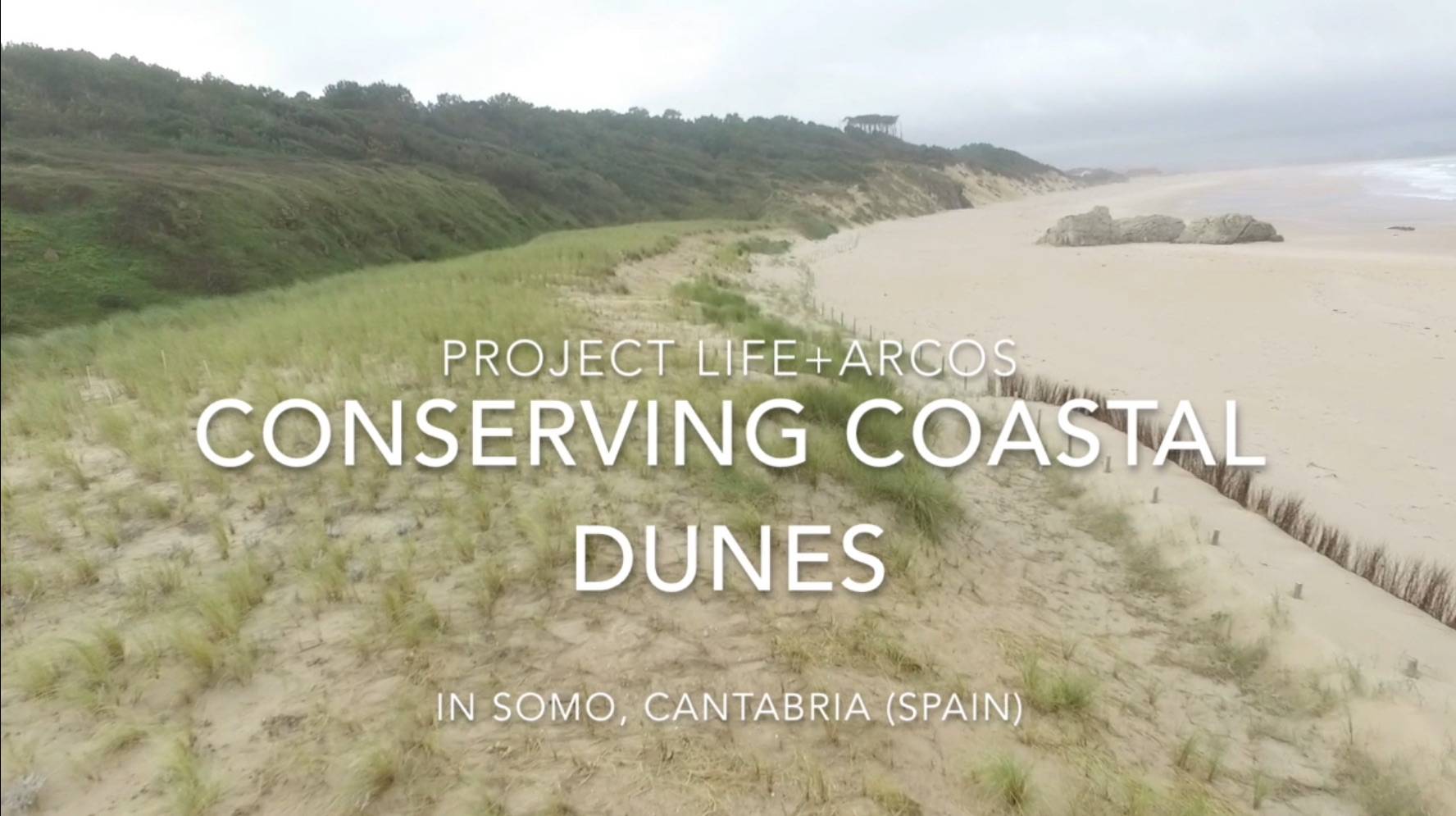
    El siguiente video os muestra como se encuentra actualmente el sistema dunar de Somo, en Cantabria, a pocos años de que finalice el proyecto.

    Esperamos que os guste!


  • Somo dunes (Cantabria) exhibits a good conservation status after several years of conservation actions developed by Life+ARCOS

    Somo dunes (Cantabria) exhibits a good conservation status after several years of conservation actions developed by Life+ARCOS

    The Life+ARCOS project is currently working on three Cantabrian dune spaces, with the one located within the SAC Puntal Dunes and Miera Estuary giving the best results in terms of restoration.

    After the storms in 2014 that completely destroyed the dune barrier in this setting, the Directorate General of Sustainability of the Coast and the Sea performed dredging actions, enabling part of the displaced sediment to be recovered. This action was followed by others, already within the Life+ARCOS project, which have led to a recovery of the plant cover both on the white and grey dune.

    Added to these actions are others of an outreach, dissemination and protection nature, and support for capturing sand, which along with the major works undertaken to eliminate invasive exotic species from the space, offer an optimistic outlook on the future of this dune system.

    The following video reveals the current state of the Somo dune system in Cantabria, just a few years from finishing the project.

    We hope you enjoy it!


  • The Asturian public TV  includes a video report to show the beginning of the tree cut in Barayo (Asturias) developed by Life+ARCOS

    The Asturian public TV includes a video report to show the beginning of the tree cut in Barayo (Asturias) developed by Life+ARCOS

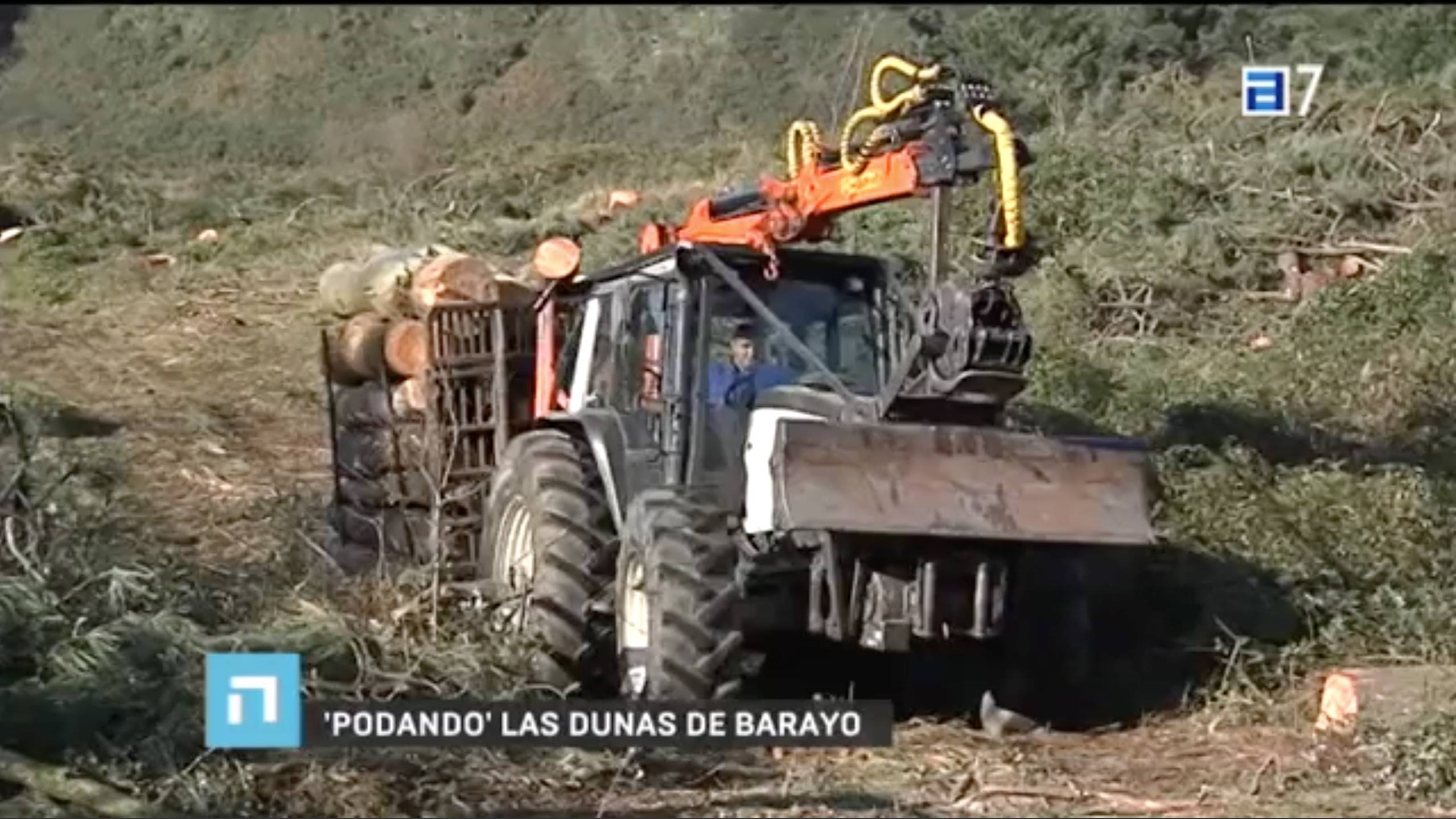
    Here is the video of the news item, which was used on the opening of the local Asturian TPA News (evening edition) about the activities carried out in Barayo, which commence the dune system recovery actions on this protected space.

    In the interview, the project director Mr Tomás E. Díaz comments on the role that the pine trees used to have in structuring and setting the dune system. When removing the pine tree covering, before the other actions – including the conditioning of the substrate so as to plant dune species such as the European beach grass (Ammophila arenaria)- the stump extraction of the planted pines was not carried out so as to limit the amount of sediment moved.


    Another major issue arising from the recovery of this space is linked directly to the modification of the sediment input needed to keep the dune active. Within the LIFE+Arcos project, the INDUROT team (University of Oviedo) analysed the evolution of these inputs over the past 50 years.

    Acknowledgements: RTPA (link to news)


  • RTPA difunde la acción de retirada de la cubierta de pinos de Barayo (Asturias) promovida por Life+ARCOS

    RTPA difunde la acción de retirada de la cubierta de pinos de Barayo (Asturias) promovida por Life+ARCOS

    Os mostramos el video de la noticia, que sirvió de apertura a los informativos de TPA Noticias (2ª edición) sobre las actuaciones llevadas a cabo en Barayo, que dan inicio a las acciones de recuperación del sistema dunar de este espacio protegido.

    En la entrevista, el director del proyecto D. Tomás E. Díaz comenta el papel fijador que han tenido los pinos, en el pasado, sobre el sistema dunar. En la actuación de eliminación de la cubierta de pinos, previa al resto de actuaciones entre las que se incluye el acondicionamiento del sustrato para la realización de plantaciones con especies dunares como el barrón (Ammophila arenaria), no se ha procedido al destoconado de los pinos plantados, para evitar una movilización excesiva del sedimento.


    Otro de los mayores problemas que presenta la recuperación de este espacio está directamente relacionado con la modificación de los aportes de sedimento necesarios para mantener la duna en condiciones de actividad. Dentro del proyecto LIFE+Arcos, el equipo del INDUROT (Universidad de Oviedo) ha analizado la evolución de dichos aportes en los últimos 50 años.

    Agradecimientos: RTPA (link a los informativos)


  • “Felling for biodiversity in Barayo”

    “Felling for biodiversity in Barayo”

    News published in the newspaper LA NUEVA ESPAÑA
    “Felling for biodiversity in Barayo”

    Publishing date: 1/02/2018

    Go to the website of the publisher


  • «Tala por la biodiversidad en Barayo»

    «Tala por la biodiversidad en Barayo»

    Información publicada en el periódico LA NUEVA ESPAÑA
    «Tala por la biodiversidad en Barayo»

    Fecha publicación en prensa: 1/02/2018

    Ir al sitio web de la noticia