Categoría: Blog

  • This is how the Final Life+ARCOS Seminar went, held in Donostia (1/2)

    This is how the Final Life+ARCOS Seminar went, held in Donostia (1/2)

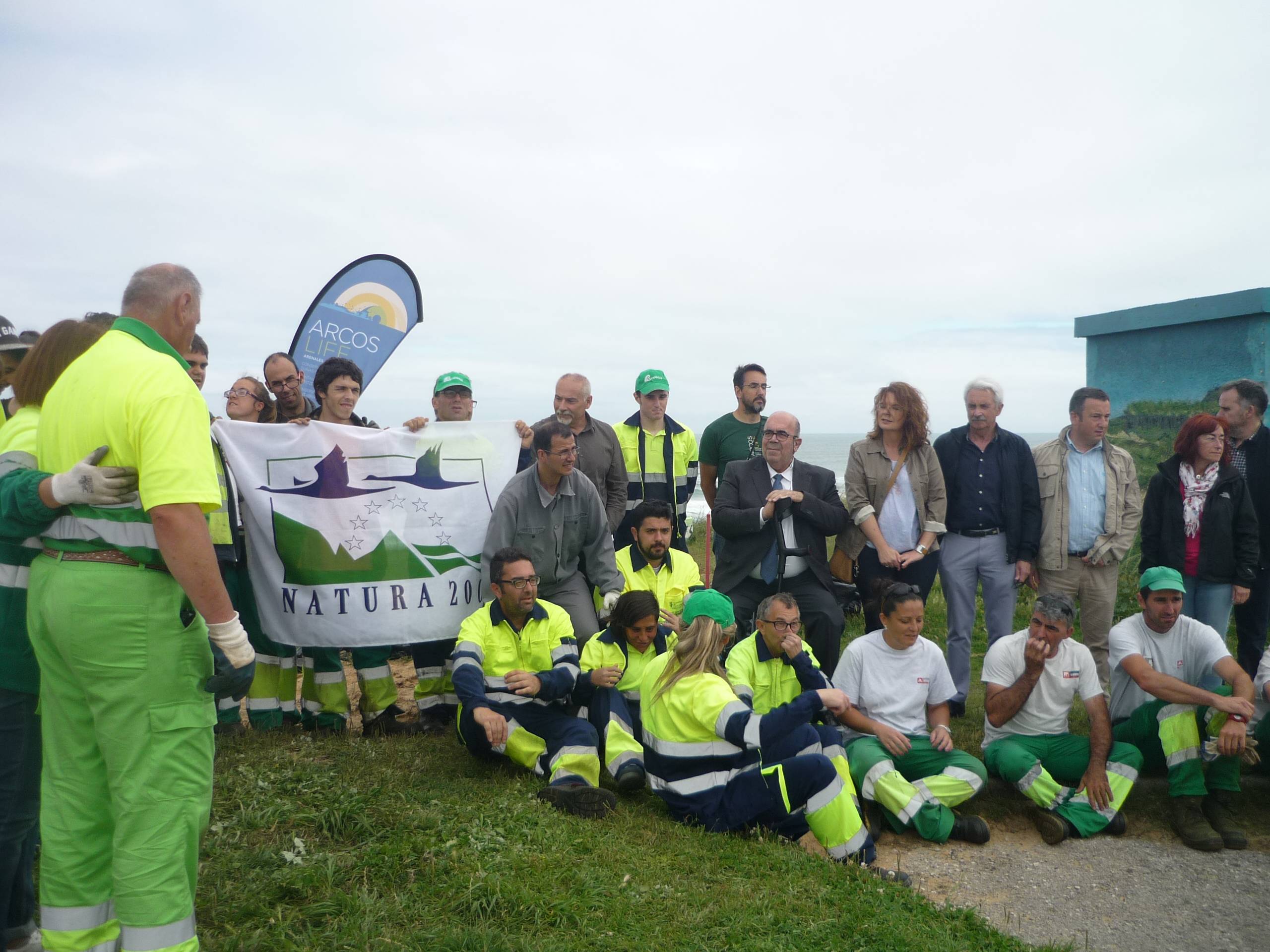
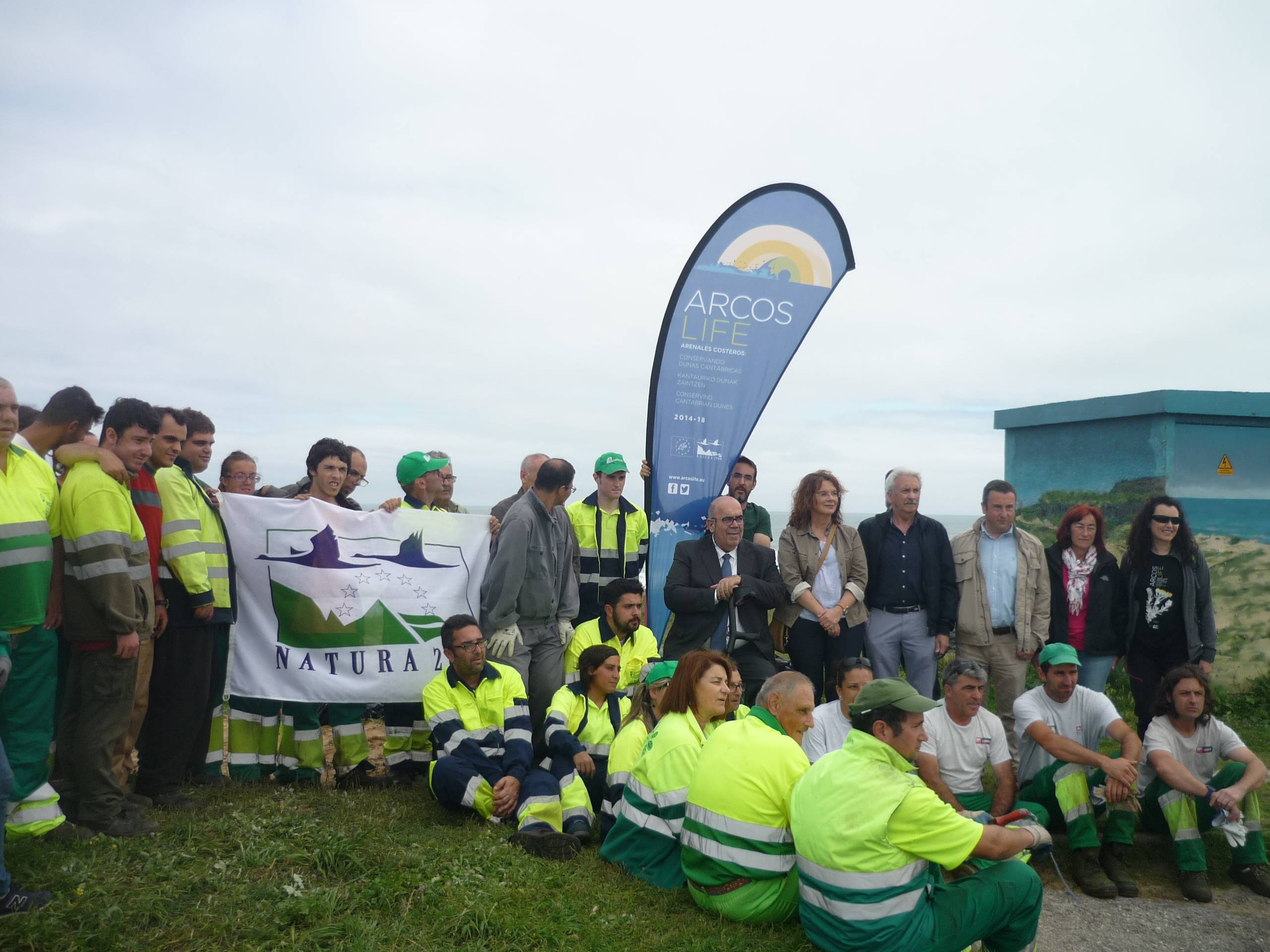
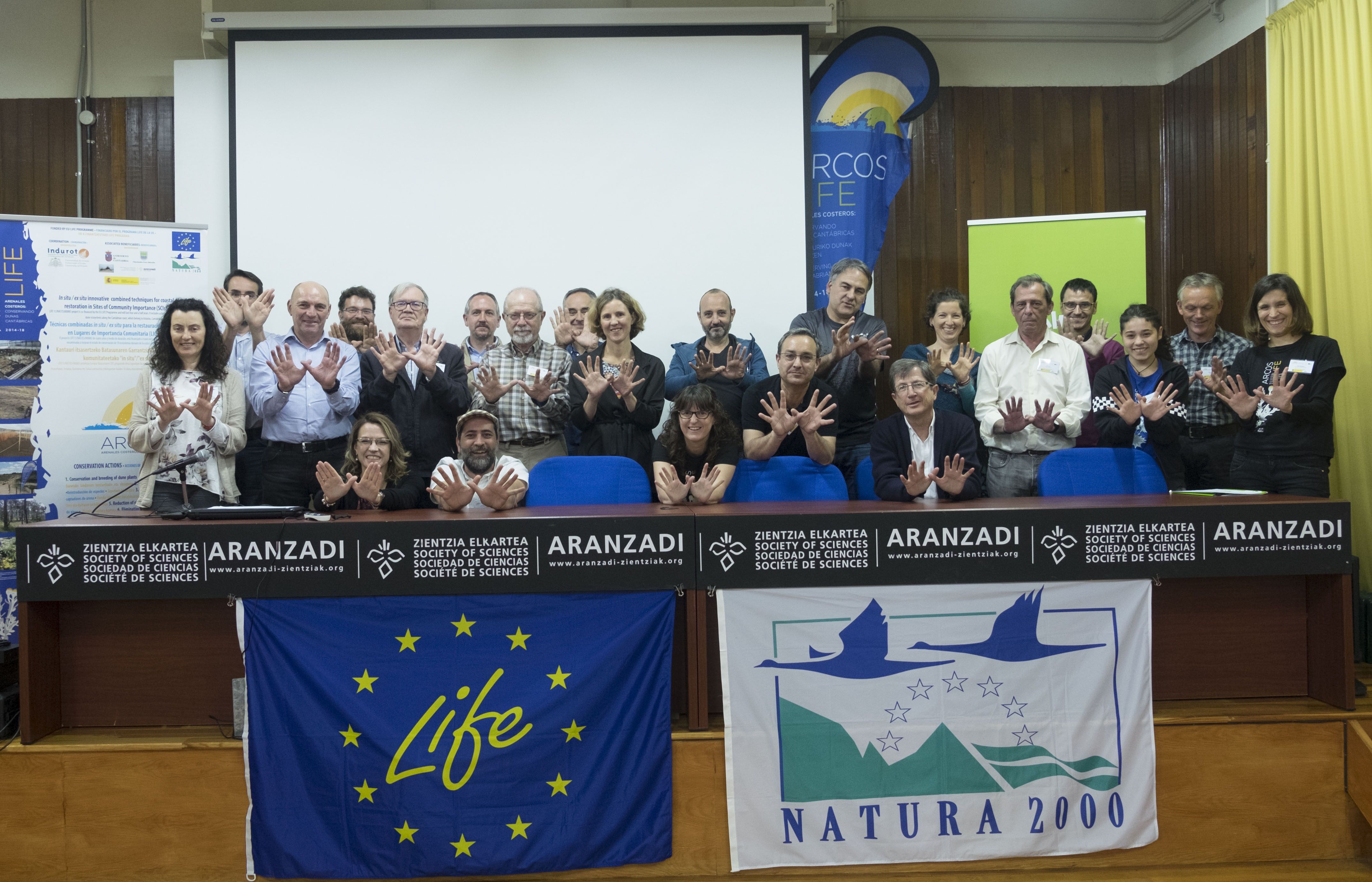
    On Tuesday 28th May, a week after the date set by the European Union to mark the European Natura 2000 Day, the Life+ARCOS team met up in the Society of Sciences Aranzadi headquarters in San Sebastian to hold the final project meeting and to discover the main results achieved, just a month before its formal completion.

    Along with all the partners involved in the project, the meeting also included contributions from various experts specialising in dune ecosystem management, whom, from various different fields and locations, were able to participate in the workshop, revealing the outcomes of the experiences and projects on which they had worked.

    Their contributions will be discussed in another blog entry.

    Opening

    The seminar was opened by Mr Tomás E. Diaz (Main project researcher from the Life+ARCOS project), José Ramón Martínez Cordero (Director of the Maritime-Terrestrial Public Domain Department in the Ministry for Ecological Transition (MITECO)), Íñigo Mendiola (Gipuzkoa Council) and Juan Arizaga (Society of Sciences Aranzadi).


    Opening table

    This presentation was followed by a screening of a video about the restoration carried out by Life+ARCOS on the Somo dune system in Cantabria, and an introduction to the conference given by J. Ignacio Alonso Felpete (Ecología Litoral) to highlight the celebration of the European Natura 2000 Day and to outline the Spanish contribution to this Network of protected spaces.

    Ignacio Felpete (Ecología Litoral) during his presentation speech about the European Natura 2000 Day

    The first part of the conference was led by partners participating in the Life+ARCOS project, who assessed the actions carried out in each of the targeted spaces.

    Revealing problems and actions in the enclaves

    The first of the interventions was given by Jorge Marquínez, who outlined the main signs of change detected in the ten dune systems that had been worked on within the ARCOS project.

    The historical photo analysis and LIDAR data allowed for an assessment of the advances and setbacks suffered by the coastline over the past 70 years, as well as the volume of sediment estimated to have moved over these years. Some results were also shown of the chemical analyses performed on the different beaches-dunes, and the sea flooding and storm phenomena that have occurred, as well as estimated recurrence periods.


    Jorge Marquínez, director of the Institute of Natural Resources and Territorial Planning (INDUROT) – University of Oviedo

    The Main project Researcher, Tomás E. Díaz, from the Department of Biology of Organisms and Systems from the University of Oviedo was in charge of sharing the actions undertaken on the three dune systems in the Principality of Asturias where actions have been performed: the Partial Natural Reserve of Barayo, included in the SAC Penarronda-Barayo; the Verdicio beach, included in the SAC Cabo Busto-Luanco, and the Vega Beach, belonging to the SAC Vega Beach.

    The actions carried out in Barayo constituted the main focus of the intervention. The social interest raised with the felling of the non-native trees has been high, as expected. Importance was also given to the planting of native dune system species in the three enclaves, which should encourage self-restoration processes. In spaces such as Verdicio and Vega, the treatment of invasive species has been crucial to improving the state of conservation of the present dune habitats. The aim of the protection system using enclosures is to prevent the negative effects of excess pressure due to visitors walking over these spaces, particularly intense in these two areas.


    Tomás E. Díaz, director del proyecto Life+ARCOS

    The actions carried out in Cantabria, specifically on the Liencres  dune system (SAC Liencres dune system and Pas Estuary) and on the Berria and Helgueras beaches (SAC Santoña, Victoria and Joyel Marshes) were presented by Jesús Varas, director of the Liencres protected space. Lourdes González, director of the latter SAC, also concluded the presentations, in which emphasis was placed on the on-going treatment to remove invasive exotic species, which has had outstanding results, in particular on the Santoña and Noja beaches. The role of certain social agents and associations of groups with difficulties has been an essential part of developing this action. Among many others is the particularly noteworthy NACAR Programme (Nature and Prison), which enabled inmates and staff members from the El Dueso Penitentiary Centre to participate in some of these actions.

    The management and regulation of access to these spaces has been singled out as a key to achieving excellent results in the recovery of dune plant life. Accompanying all of these actions has been the planting of species that have speeded up the initial growth of biodiversity.


    Jesús Varas, director of the SAC Liencres Dunes and Pas Estuary

    From the Cantabrian Coastal Demarcation, José Luis Tejerina Hernando spoke on behalf of the Directorate General of Sustainability of the Coast and the Sea (Ministry for Ecological Transition), a beneficiary partner of the Life+ARCOS project.  This demarcation is responsible for assigning the majority of the structural dune species that have been used in all the spaces, as is responsible for managing the Ministry’s dune plant nursery located in the Cantabrian town of Somo.

    Tejerina assessed the plant that has been used in each of the SAC spaces where work has been performed.


    Jose Luis Tejerina, Head of the Construction and Coastal Demarcation Projects Department in Cantabria

    The summary of  the actions carried out on the dune systems of Santiago, in Zumaia (SAC Urolako Itsasadarra / Urola Estuary) and in Zarautz (SAC Iñurritza) was given by Jon Zulaika Isasti, from the Protection of Wild Flora and Fauna Department of the Gipuzkoa Council, a project partner.

    Zulaika focused a large part of the presentation on the handling of part of the non-native trees that were removed from Santiago, the handling of the invasive species in this space, and the problems caused by the strong tides on the extensive dune system in Zarautz. Managing threatened flora in this space has also been a priority line of action, as various protected species have been recorded here.

    The difference in the sediment balance between the first and second spaces, has been heavily conditioned by the set of actions. Sand collection in Zarautz: a priority line of action to create the conditions needed to ensure a future for the plantations carried out there. Various sand collecting systems have been implemented with varying results.


    Jon Zulaika Isasti, from the Gipuzkoa Council Protection of Wild Flora and Fauna Department

    The actions carried out on the Somo beach in Cantabria (SAC Puntal Dunes and Miera Estuary) and in the Biscay enclaves of La Arena, Zierbena (SAC Barbadungo itsasadarra/Barbadun Estuary) and Laga, Ibarrangelu (SAC Urdaibaiko Itsasertzak eta Padurak – Coastal and Marshland Zones of Urdaibai) were covered by Carlos Ley Vega de Seoane, director of the Ecología Litoral company, an project partner. This company was responsible for the development of the actions in the cited spaces and in all the Asturian spaces.

    The Somo dune system has been a success story for the functional and ecological recovery of a dune ridge, which had been literally destroyed after the 2014 storms. Along with the physical actions of incorporating sand and removing invasive exotic species, intense recovery work has also been carried out on the plant cover, which will enable the bank of seeds in the space to recover quickly. Fitting enclosures to control access and to avoid the negative effects of visitors treading on the plants as far as possible, have also been qualified as effective measures in achieving the desired results.

    Equally successful are the actions carried out in La Arena, where particularly intensive work was performed to remove invasive species, due to their high concentration at the start of the actions. The final aspect of the recovered dune system presents a marked dune morphology, thanks to the sand collectors fitted along specific points, and to sediment inputs, which have been exceptionally good over recent years. Reorganising accesses has also been highlighted as a key measure in encouraging the recovery of the entire system.

    The Laga dune system is currently the focus of the latest actions, which have centred on removing invasive exotic species and some non-native tree species, as well as on strengthening the numbers of dune species on the most damaged points. Strengthening the peripheral enclosures will also be a key step in organising access and to give greater continuity to the dune ridges, especially along the most easterly end.

    After the speech by Carlos Ley there was a break, followed by interventions from experts invited by Life+ARCOS, who spoke about the projects they are working on.

    We will explain it all in the next blog entry.

  • Ice plant extraction on Helgueras beach (Noja, Cantabria) and training with the AMICA, SERCA and AMPROS teams

    Ice plant extraction on Helgueras beach (Noja, Cantabria) and training with the AMICA, SERCA and AMPROS teams

    On 9 May 2019 we participated in a new volunteer and training day in coordination with the LIFE ARCOS Project, from the Directorate-General of Natural Environment of the Regional Ministry of Rural Affairs, Fisheries and Food of the Government of Cantabria.

    The activity started at the frontal dune of Helgueras beach in Noja with the AMICA, SERCA and AMPROS teams, who had been hired on other occasions for a number of manual control projects to eradicate invasive species on the Cantabrian coast. We plan to work with them again on future activities of this type.

    Natural park director, Lourdes González, gave participants a brief introduction on the importance of dune ecosystems and their protective function against winter storms, the distribution of dune species in areas of vegetation and how they are affected by invasive exotic species. 

    Photo of the AMICA volunteer team before the NACAR activity began on Helgueras beach.

    Once the activity started, we found different invasive exotic species and learned how to differentiate and identify garden nasturtium (Tropaeolum majus), common evening primrose (Oenothera glazioviana), horseweed (Coniza canadensis), Senecio mikanioidesSenecio angulatus, cape weed (Arctotheca caléndula) and ice plant (Carpobrotus edulis). We observed their distinct radicular systems and the way they grow and disperse in order to learn how to treat them in the soil.

    Environmental Technicians from the Council of Noja stopped by to visit the activity, just as they have done during previous activities on the municipality’s beaches. They kindly helped us with everything we needed. We are thankful for their support and involvement in the activity in Noja.

    During our work, we were able to observe dune vegetation and explain its distribution in dune systems. The day was successful, as we extracted around 3,000 kg of ice plant and some rubbish. Great teamwork was essential to the day, everyone supported each other and enjoyed spending the day outdoors.

    Extraction of ice plant from Helgueras dunes

    Finally, the Cantabrian Network for Rural Development collected all the plants and rubbish for their management.

    Photo before extracting ice plant from the frontal dune of Helgueras beach
    Photo after ice plant extraction from the frontal dune of Helgueras beach

    Participants were given a ceramic souvenir with the LIFE ARCOS logo on it. The gift was made by hand by NACAR (Nature and Prison) Ceramic Workshop participants.

    SERCA and AMPROS team participants

    The Directorate-General of Natural Environment would like to thank the volunteer teams (AMICA, SERCA and AMPROS), the Cantabrian Network for Rural Development (RCDR) and the Natural Environment Agency participants for all their hard work. They would also like to thank everyone for playing their part in the extraordinary conservation and restoration work carried out in Cantabrian dune systems.

  • The first 360º images of the Barayo dune system before reinforcement planting.

    The first 360º images of the Barayo dune system before reinforcement planting.

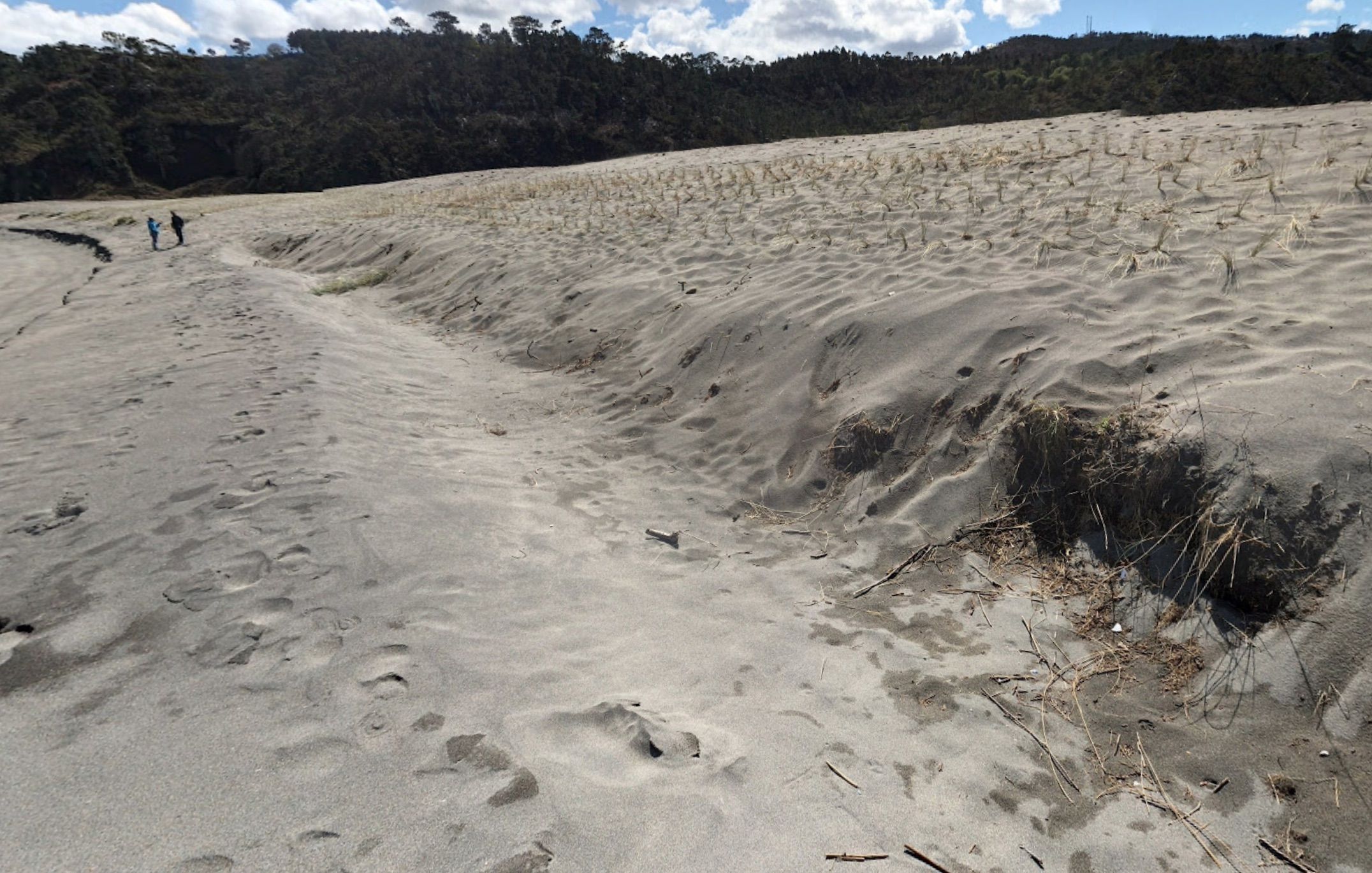
    We could wait no longer to show you the first results that the smoothing of the front embankment has had on the dune system. By improving the conditions of the front, sand from the beach can once again reach the upper part of Barayo.

    The good health of the primary and secondary dune vegetation depends on a sandy substrate, aided by the wind and the salty air. With the help of the wind over the past few weeks, we have managed to transform dune setting enough so as to put us in good stead to successfully face the next planting phase.

    The first plantations that you can see in 360º image were carried out using European beach grass (Ammophila arenaria), which had detached from the top part of the dune and which was developing at the base of the front embankment. At LIFE+ARCOS we have taken the utmost care to ensure that these species – natural to white dunes – have not been affected by the conditioning works on the dune front.

    We hope to shortly embark upon the bulk of planting with plants from the nursery that the Directorate General of Sustainability of the Coast and the Sea has in the Cantabrian town of Loredo, for the production of dune species. In the meantime, we will leave you with this image to give you an idea of how our efforts to recover these types of habitat – disappearing in the Partial Nature Reserve of Barayo over recent years – are advancing.


  • Actions taking place on the Barayo dune system (Navia-Valdés)

    Actions taking place on the Barayo dune system (Navia-Valdés)

    Dune habitat improvement actions are continuing on the ES0000317 Penarronda-Barayo Special Conservation Area.

    The following actions are taking place in Barayo:

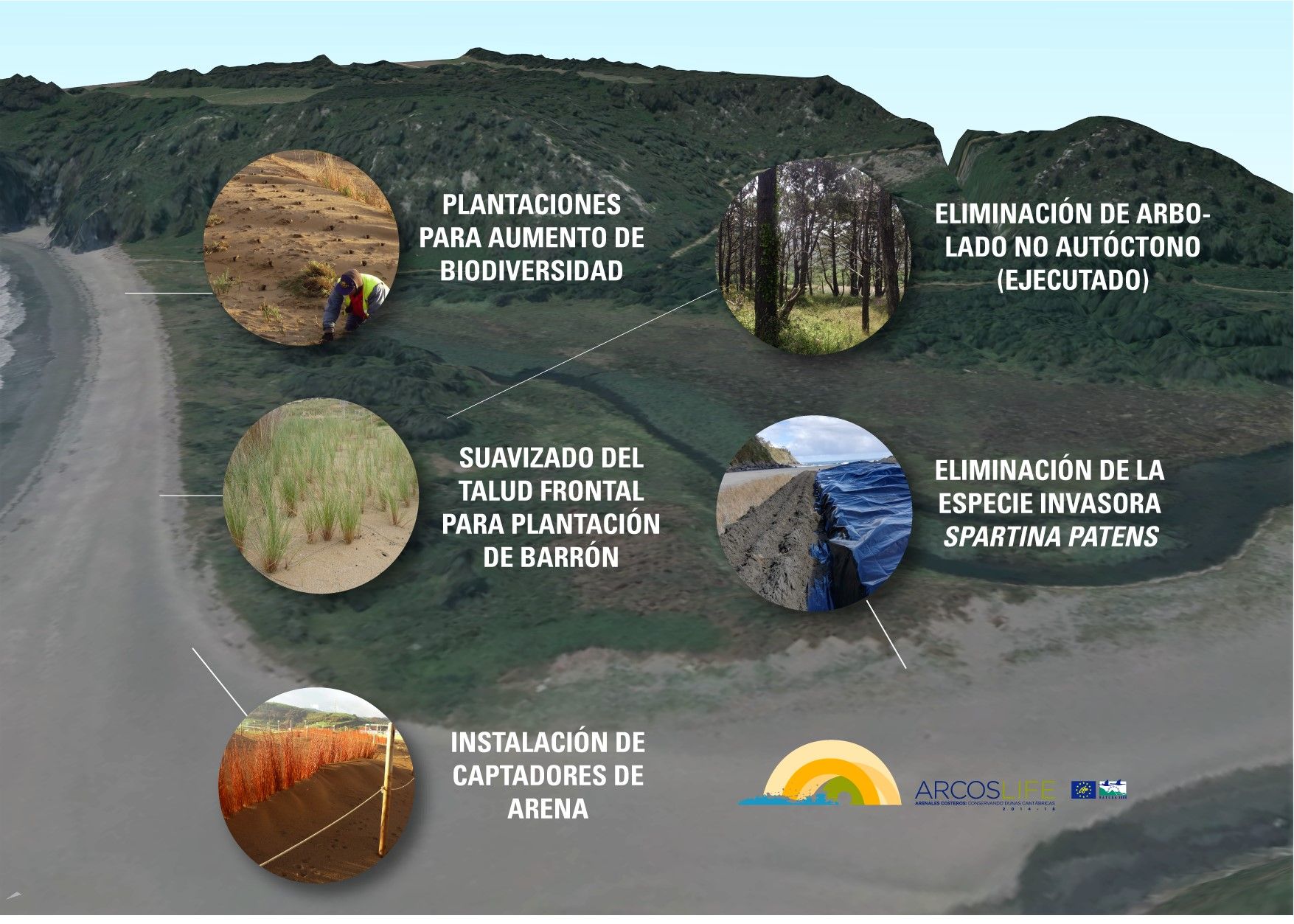
    1. Reinforcing the dune front to speed up the natural processes of sand intake and accumulation in the internal part of the dune system, and to establish favourable conditions for planting dune species.
    2. Planting species native to dune environments. Approximately 10,000 European beach grass plants and other species were introduced, such as sea holly, sea knotgrass, sea spurge, tuberous hawksbeard and the sea daffodil (the latter included in the Asturian Catalogue of Threatened Species), provided by the nursery of the Directorate General of Sustainability of the Coast and the Sea (Ministry for Ecological Transition) in Loredo, Cantabria.
    3. Installing wicker sand catchers, also to speed up the sand accumulation processes and to contribute to modelling the dune shape.
    4. Introducing barriers to protect planted areas from being stepped on by visitors to the beach.
    5. Eliminating invasive species, such as the Spartina patens in part of the invaded area, the part closest to the planting zones, by laying plastic covering and sand filling.

    For more information about actions that have already been carried out and those underway, click on this link Resumen_actuaciones_Barayo2019


  • Controlling ice plant on the Helgueras beach (Noja, Cantabria) within the NACAR programme and volunteering

    Controlling ice plant on the Helgueras beach (Noja, Cantabria) within the NACAR programme and volunteering

    Controlling ice plant on the Helgueras beach (Noja)

    NACAR Programme (Nature and Prison) and volunteering within the LIFE ARCOS Project

    On 21st November, a new volunteering day was held in association with the NACAR Programme (Nature and Prison) to eliminate invasive flora within the activities of the LIFE ARCOS Project, coordinated in Cantabria by the Directorate General of the Environment of the Government of Cantabria Natural Environmental, Fisheries and Food Department.

    Work was carried out on the Helgueras beach dunes (Noja) with the participation of inmates and workers from the El Dueso Penitentiary Centre, support from the Cantabrian Rural Development Network team, technical staff from the Government of Cantabria Directorate General of the Environment, and logistical support from the Noja Council.

    Before starting, participants took a short walk from the Berria beach (Santoña), across the El Brusco mountain towards the Helgueras beach. This route was the ideal introduction to the day, revealing how dune systems work and how important they are, giving participants a first-hand insight into the dune restoration actions carried out on the Berria and Helgueras beaches within the LIFE ARCOS Project, some performed in collaboration with the NACAR programme.


    Introduction to the day on the Berria beach

    The main part of the activity consisted in eliminating various patches of ice plant (Carpobrotus edulis) found on the Helgueras dune system, a demanding job given that it is a particularly complex species to remove. In just a few hours of work, around 1500 kg of ice plant were removed, taken off the beach by teams from the Noja Council to be managed by the Cantabrian Rural Development Network.

    The team removing ice plant from the Helgueras beach (Noja)

    Despite their work mainly focusing on the ice plant, both during the route between the beaches and throughout their activities, participants also collected a large amount of non-biodegradable waste, mainly plastics.

    Work group with some of the bags of extracted ice plant

    Once again, we greatly appreciate the collaboration of all those involved in the NACAR programme for their work within the LIFE ARCOS European Project, which has already been the architect of numerous activities to support the conservation of Protected Natural Spaces. We should keep in mind that these activities are undertaken on the Santoña, Victoria and Joyel Marshes Natural Park dune systems, also protected as Special Conservation Areas; SCA Santoña, Victoria and Joyel Marshes; Special Protection Areas for Birds; SPAB Santoña, Victoria and Joyel Marshes; and Ajo Estuary and the Santoña Marshes Wetlands of International Importance.

    During the activity, participants were visited by representatives from the Noja Council environment department, who via the Councillor for the Environment, Health and Spatial Planning, and the Environmental Officer, wished to thank participants for the work undertaken in the pursuit of conserving the dune system.

    Finally, and with the hope that this programme may continue, the Directorate General of the Environment thanked the people and bodies that participated in the activity for their collaboration and the chance to keep working and learning together.

  • You can now read Life+ARCOS in Basque.

    You can now read Life+ARCOS in Basque.

    Life+ARCOS carries out its work within four Red Natura 2000 areas in the Basque Country (in both Bizkaia and Gipuzkoa).

    Therefore, we decided to develop the following four informational brochures in Basque for native speakers of the language.

    You can download these brochures from the «downloads» area of our website.

    #Euskaraldia

    Bizkaia: 

    Barbadungo Itsasadarra KBEko (ES2130003)

    Leku: Arenako hondartza (Muskiz eta Zierbena)

    Urdaibaiko itsasbazterrak eta padurak KBEko (ES2130007)

    Leku: Lagako hondartza (Ibarrangelu)

    Urolako Itsasadarra KBEko (ES2120004)

    Leku: Santiago hondartza (Zumaia)

    Iñurritza KBEko(ES210009)

    Leku: Zarautz hondartza (Zarautz)

    Podrás descargar estos folletos en la zona de descargas de nuestro sitio web.

  • Controlling invasive species in Liencres Natural Park (Piélagos) to celebrate Natura 2000 day

    Controlling invasive species in Liencres Natural Park (Piélagos) to celebrate Natura 2000 day

    The companies AMICA, AMPROS and SERCA received training and volunteered for the LIFE ARCOS project.

    We celebrated World Environment Day on 18 June 2018 with a volunteer and training event on invasive flora with the LIFE ARCOS Project from the Directorate-General of Natural Environment of the Regional Ministry of Rural Affairs, Fisheries and Food of the Government of Cantabria.

    On this day, the Cantabrian companies AMICAAMPROS and SERCA got to work to control the cape weeds and horseweed on Canllave Beach (Natural Park of Liencres).  After listening to a brief speech from the natural park director, Jesús Varas, the three teams from AMICA, AMPROS and SERCA got to work.  27 people worked within plots marked with temporary plastic tape. They collected approximately 390 kg of cape weeds (Arctotheca calendula) and 25 kg of horseweed (Conyza candensis).  The participants learned to distinguish the characteristics of the cape weeds among other well-preserved and blooming dune plant species such as the sea potato, sea beet, Virginia stock, shore bindweed, European searocket, petty spurge, etc.


    Teams from AMICA, AMPROS and SERCA working in Canallave. Group photo with the Regional Minister for Rural Affairs, Fisheries and Food.

    The work area included dunes where restricted access favored their recovery and the regeneration of dune vegetation.

    Although the area was quite clean, volunteers also collected some non-biodegradable bags.

    Finally, the Cantabrian Network for Rural Development collected all the plants and garbage.

    Participants received commemorative informational t-shirts from LIFE ARCOS.

    The Directorate-General of Natural Environment would like to thank volunteers for their participation. Everyone learned something new about the environment and played their part in restoring vulnerable ecosystems: the dune systems of Cantabria.

    Download the activity announcement here

  • This is how went the International Workshop – Management of Coastal Dunes & Sandy Beaches, hold in Dunkirk, FR, on 12th to 14th of June 2018

    This is how went the International Workshop – Management of Coastal Dunes & Sandy Beaches, hold in Dunkirk, FR, on 12th to 14th of June 2018

    From 12 to 14 June 2018, the French city of Dunkirk hosted the International Workshop on Management of Coastal Dunes and Sandy Beaches, organized by the Agency of Nature and Forests of the Flemish authority and with collaboration from the  Université du Littoral Côte d’Opale within the framework of the LIFE+ Nature project FLANDRE. The BOS+  and EUCC-France organizations supported the efforts. 

    Life+ARCOS attended this international seminar with participants from the University of Oviedo (J. Ignacio Felpete) and the company Ecología Litoral (Carlos Ley).


    Tuesday 12 June (opening session, LIFE session projects and first parallel sessions)


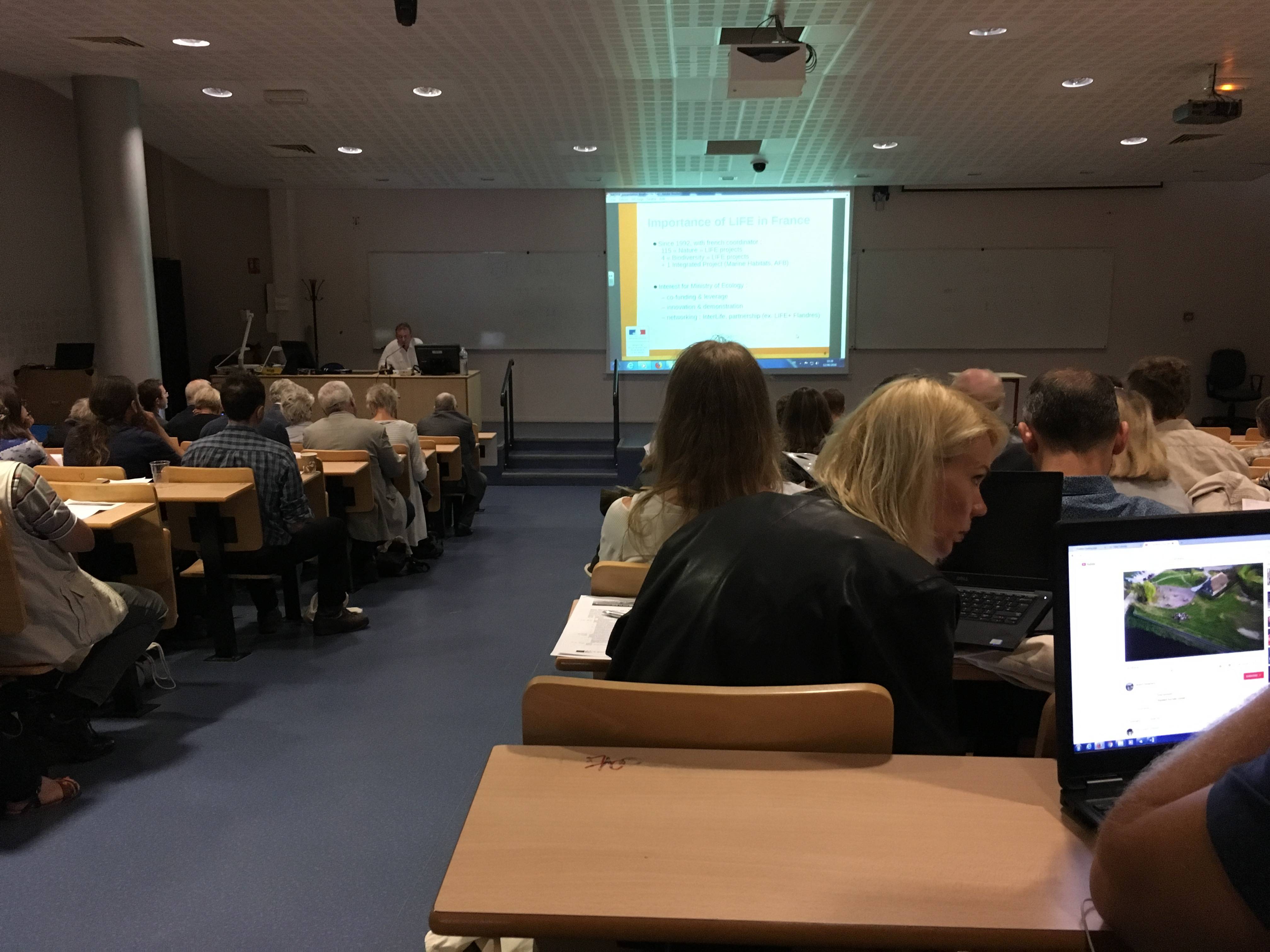
    At the opening session on 12 June, the European perspective was represented with speeches given by two members of the Directorate-General of Natural Environment of the European Commission: François Delcueillerie, affiliate of the Life program and Michéal O’Briain, his counterpart of the Nature Protection Unit.

    Opening session of the International Workshop on management of Coastal Dunes and Sandy Beaches. Dunkirk (12-14 June, 2018)

    Later, John Houston from NEEMO explained the need to boost the biogeographic process for the Atlantic Biogeographical Region, an initiative that works to increase efforts and actions to develop the conservation of our habitats within a biogeographic context.

    To close the opening session, Loïc Gouguet, National Forest Administration of France (ONF-Office National des Forêts) and Jean-Louis Herrier, from the Flemish Agency for Nature and Forests, talked about the advancements in the habitat protection of 2,130 grey dunes in France and the importance of cross-border cooperation to protect the dune habitats, which is carried out within the Life+FLANDR project, providing support to maintain the French-Belgian Natura 2000 Network.

    After the coffee break, the inspiring LIFE projects session started. It was hosted by Edy Fantinato, head of the LIFE REDUNE project, which aims to restore diverse spaces within the Natura 2000 Network on the Venetian coast. During his speech, Fantinato explained the project’s main objectives and foreseen joint efforts.


    Life REDUNE

    The following session was led by Gundega Ulme and Vilis Zinkevics from Carnikava, Lithuania city hall and members of the LIFE15 NAT/LV/000900 project. Both talked about the CoHaBit project, which aims to conserve the coastal habitats of Piejura Natural Park in Lithuania.

    J. Ignacio Felpete, researcher for the Life+ARCOSproject, was the next to speak. He did not give a session about the project’s objectives and action points, but about the main differences between Cantabrian and European dunes. He pointed out the urgent need to prioritize their conservation. The presentation was titled “Prioritizing the conservation of coastal dunes in Northern Spain” and concluded with participation from the audience by asking the tough question: “Can we really talk about conserving Cantabrian dune systems considering their current state?” In this situation, the more correct term to use would be restore instead of conserve.

    Nadia Sanz Casas, Eric Girard and Etienne Dubaille, from the Conservatoire du Littoral presented on the LIFE Adapto project. They taught us about the 10 flexible-management systems on the coast that they are putting into practice.


    Presentation by J.I. Felpete (Life+ARCOS)

    Lunch in the poster room allowed attendees to talk about their experiences with other projects focused on coastline protection. Then, the first parallel sessions started:

    1. Climate change & coastal dynamics (moderated by Yvonne BATTIAU-QUENEY, head of EUCC France)
    2. Ecosystem services from dunes and beaches (moderated by Jean HUGÉ from the Université Libre de Bruxelles, ULB, Belgium)
    3. Spatial fragmentation and ecological connectivity (moderated by Jean-Louis HERRIER, Agency for Nature and Forests, Flanders, Belgium)

    Wednesday, 13 June (Excursion)


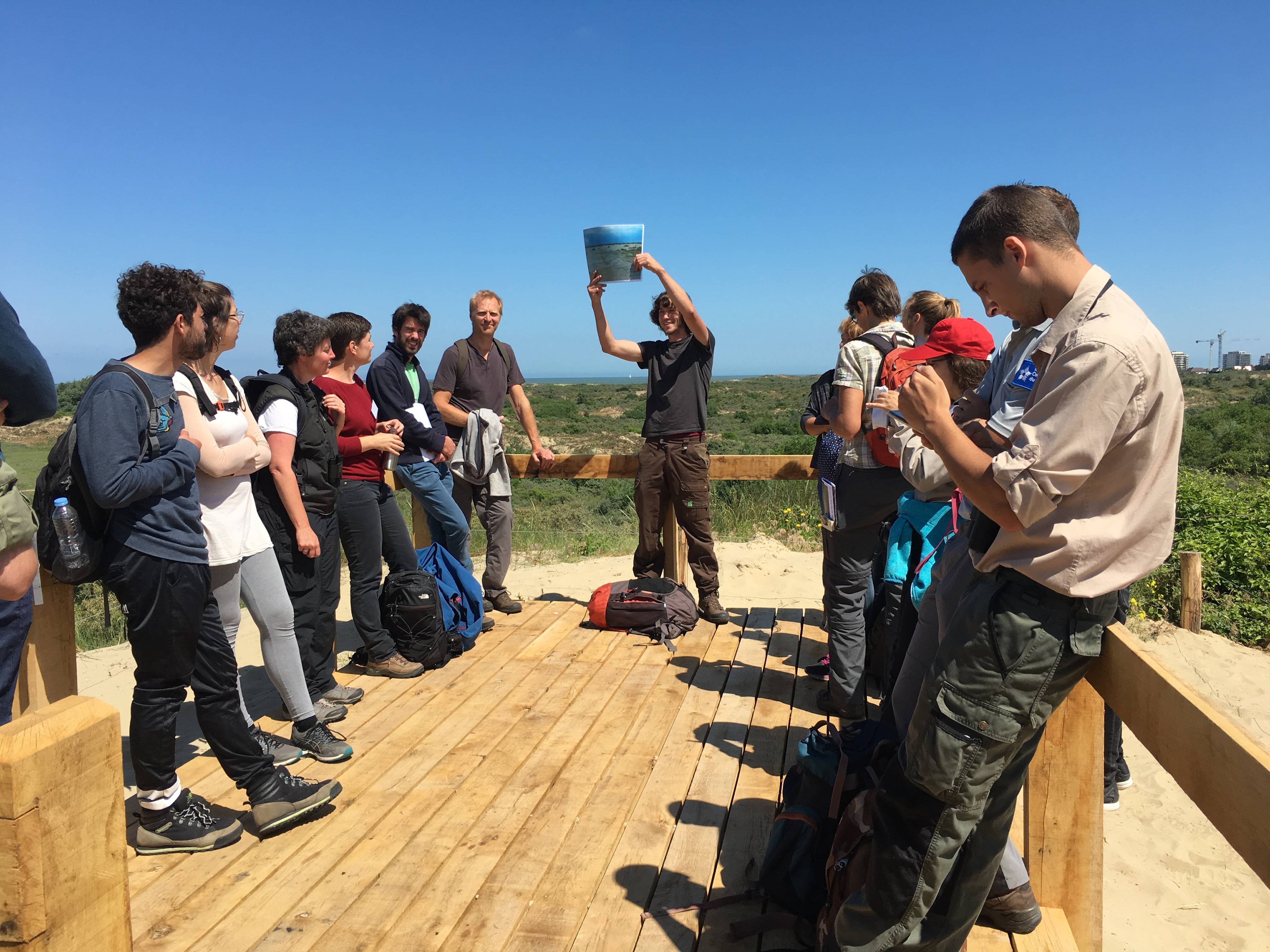
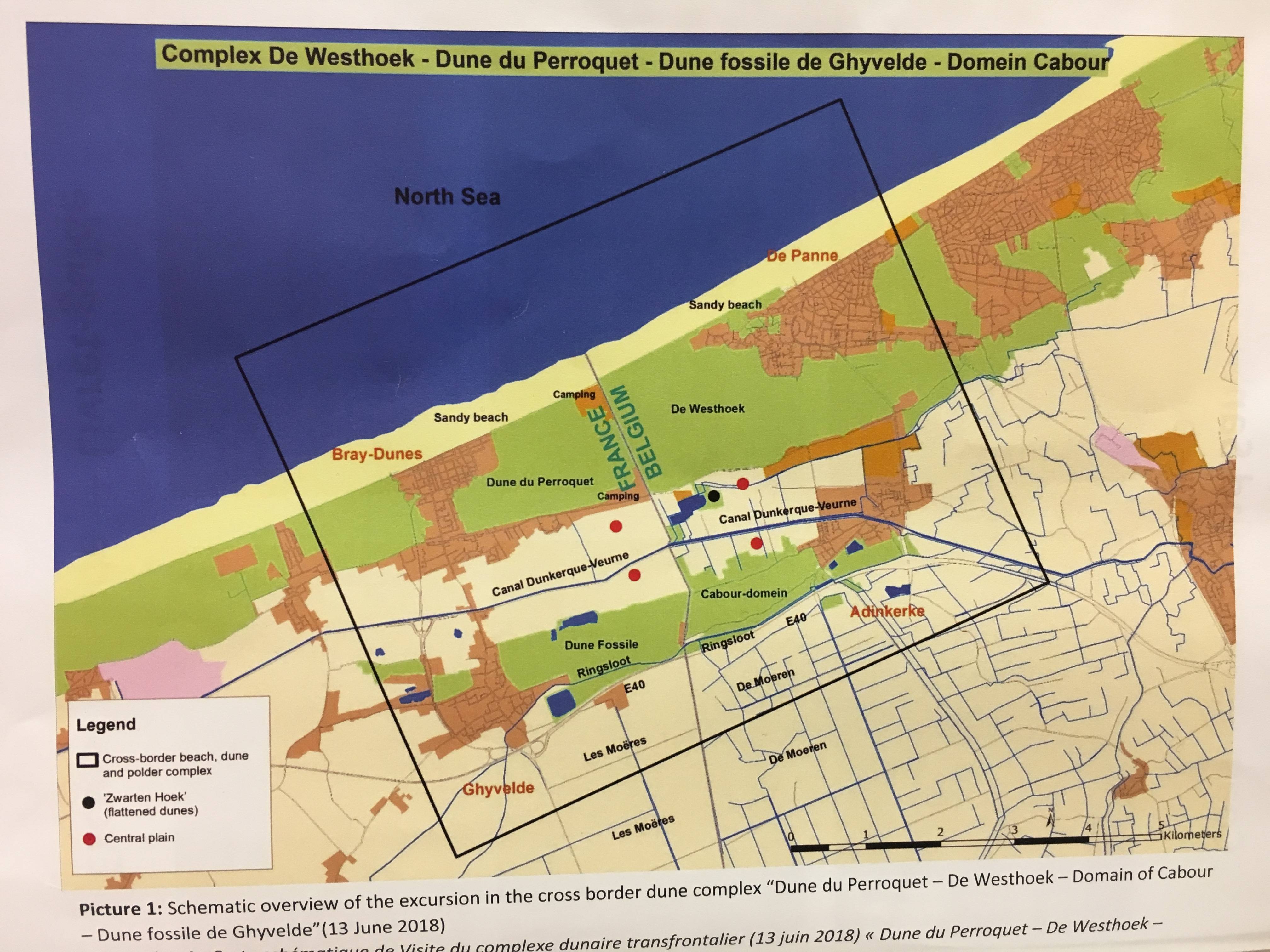
    We met near the Opalo Coast University at 8:00 AM to make our way towards the French/Belgium cross-border dune complex. We visited the Bray-Dunes (Dune du Perroquet) on the French side, Panne dunes (De Westhoek) on the Belgian side, tertiary fossil dunes of Carbour-domein in Belgium, and finally, the fossil dunes of Ghyvelde in France.

    Excursion map extracted from the interpretive guide edited for the occasion.

    During the 17-km long visit, members of the French and Belgian coastal conservation agencies (EUCC-France, Opalo Coast University) and other centres explained the work they carry out.  During the 12-stop tour, we saw all the habitat dunes in that area.

    Here are some images of our trip and of some of the habitats undergoing active work.

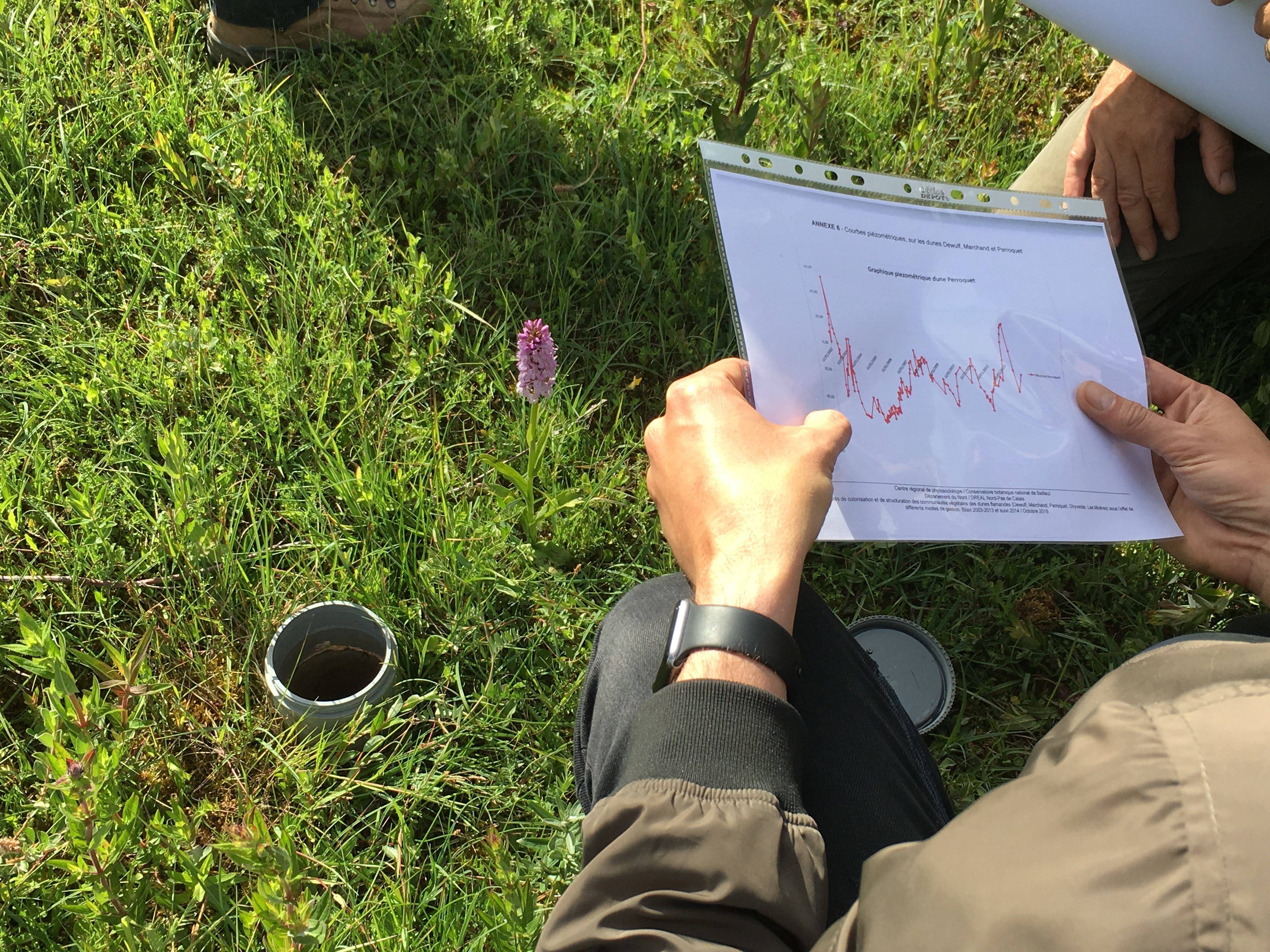
    Installation of piezometers in the wet interdune depressions (habitat 2190) to monitor water levels.
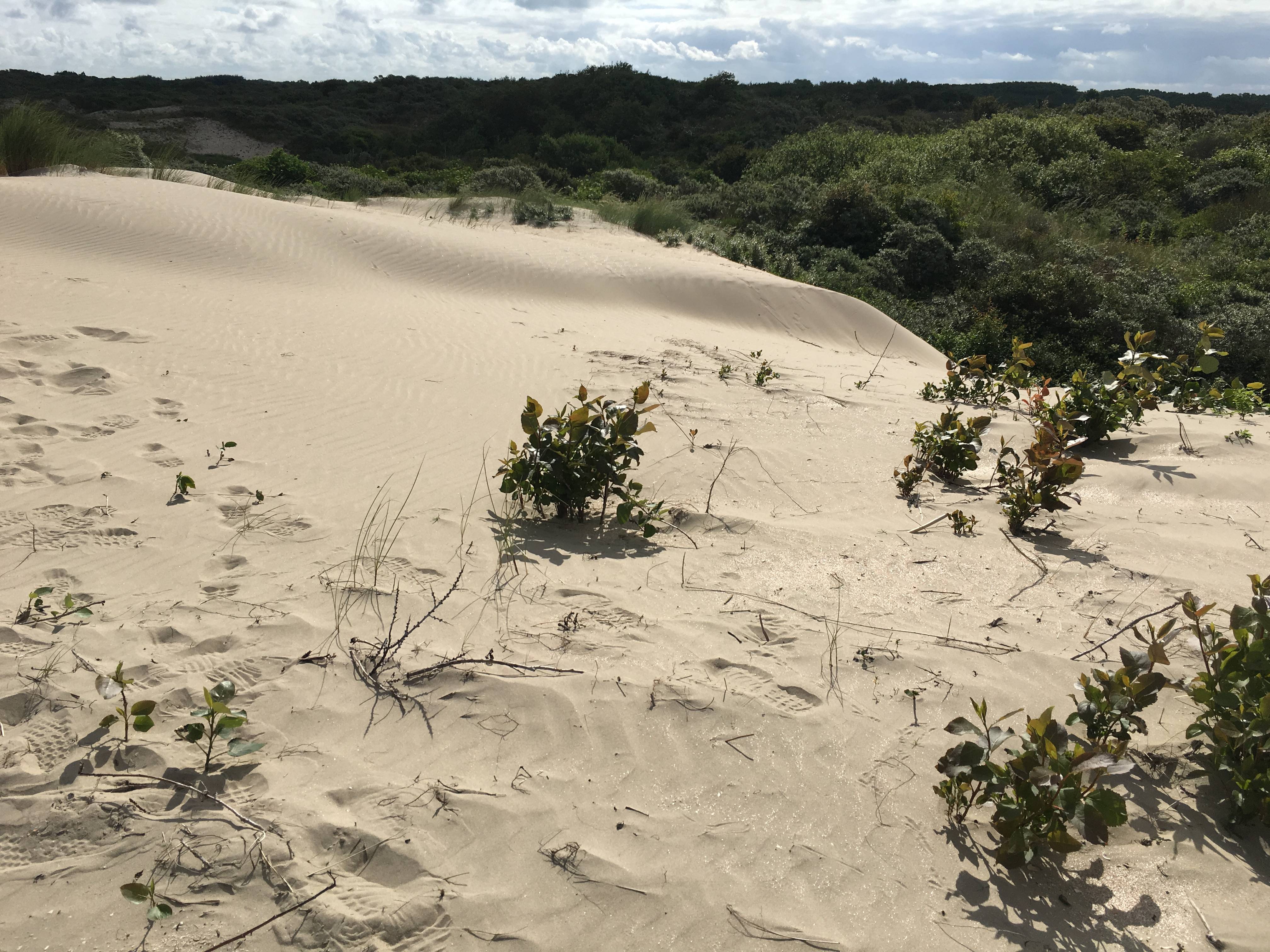
    Parabolic dune

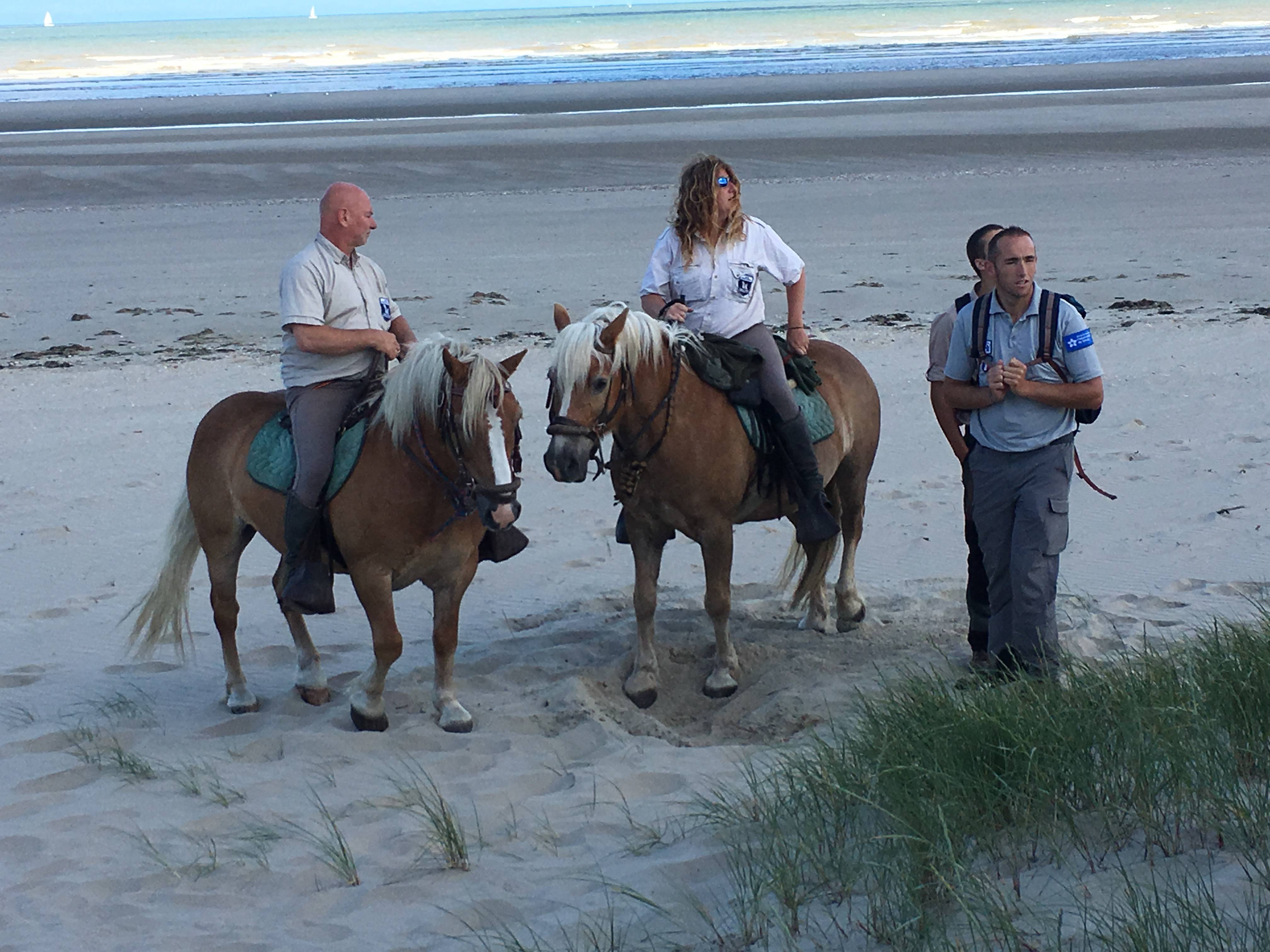
    Coast guard on horses in the Dunkirk dunes
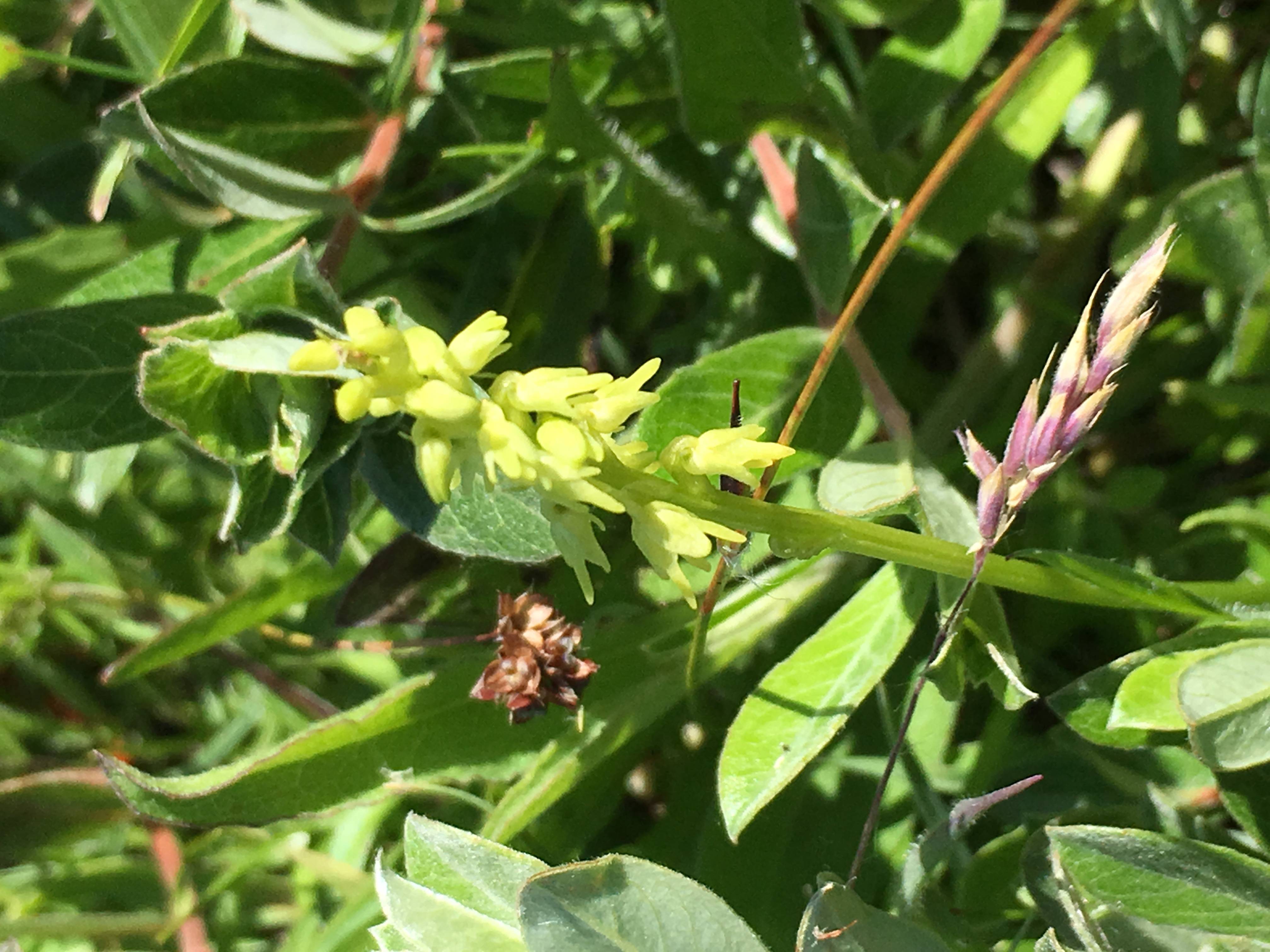
    Liparis loeselii (orchid)
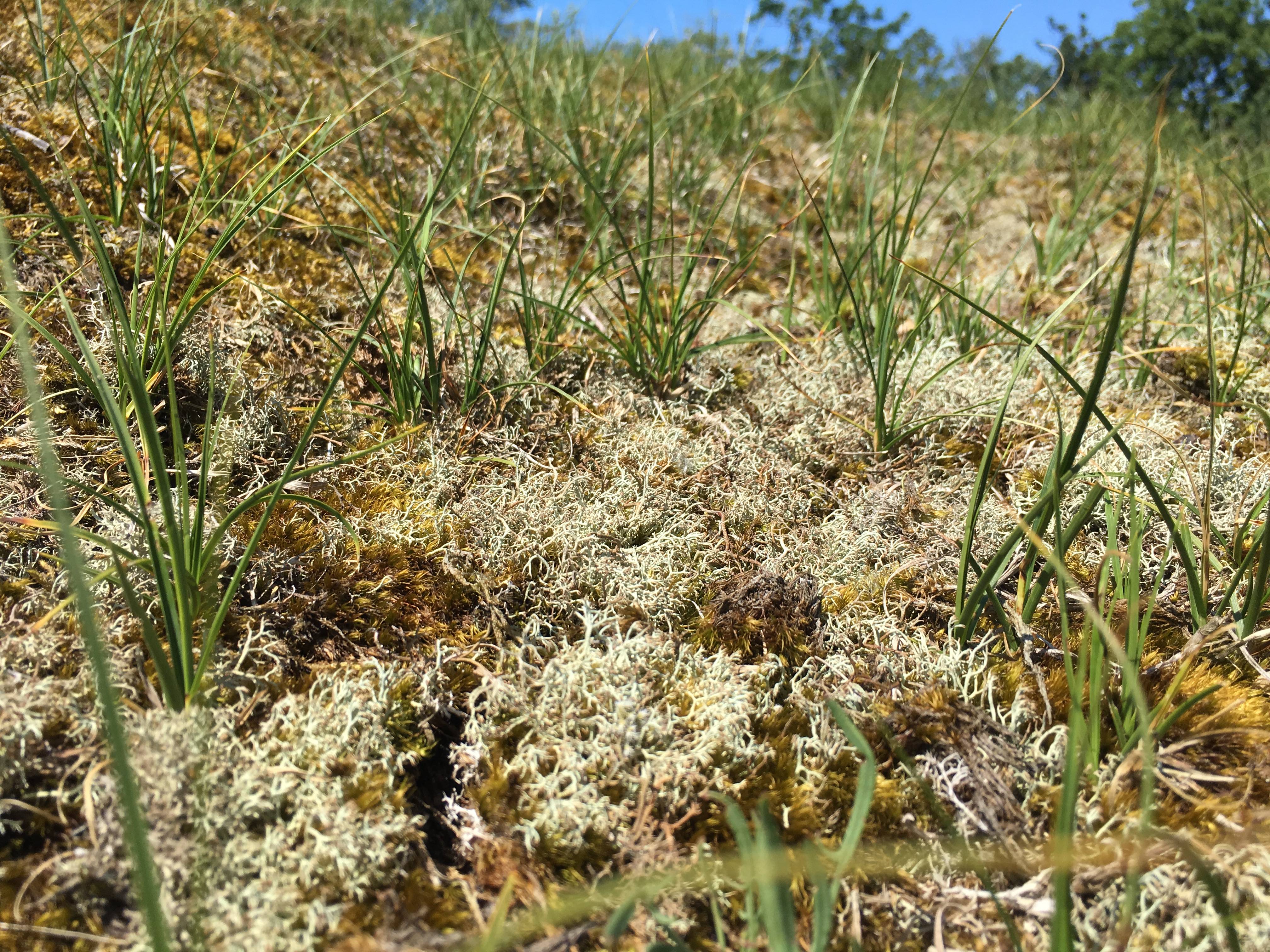
    Aspect of a fossil dune, characterized by a great presence of lichens and mosses


    Thursday, 14 June (second parallel sessions, workshop on Atlantic Dune Roadmap, conclusions and post-workshop excursion)


    The last three parallel sessions took place on Thursday morning. The topics and moderators were:

    1. Climate change & atmospheric nitrogen deposition versus biodiversity (moderated by Hubert BRABANT from EDEN 62 and EUCC France)
    2. Integrating nature development in coastal defence (moderated by Kristien OOMS from BOS+, Belgium)
    3. Management planning and monitoring (moderated by Marie-Claire PRAT from EUCC France)

    After the coffee break (an opportunity to chat with the poster artists), a workshop on the Atlantic Dune Roadmap, within the Biogeographic Process promoted by Europe, was held.

    John Houston from NEEMO and Jean-Louis Herrier from the Flemish Agency for Nature and Forests (Flanders, Belgium) were in charge of evaluating the current state of this roadmap. All attendees were encouraged to join improvement efforts. V.3 of this roadmap should be ready by September of next year. They hope to get the financing needed to implement it more efficiently.

    They especially focused on the need to boost national networks within this context. Maike Isermann from the University of Bremen requested everyone’s help to progress in exchanging experiences in eliminating exotic invasive species.

    Finally, the moderators of each of the 6 parallel sessions held on Tuesday and Thursday proceeded to give a detailed lecture on their conclusions.

    Michéal O’Briain and Jean-Louis Herrier gave the closing speech.

  • Life+ARCOS launches a public survey  to evaluate public awareness about dune conservation

    Life+ARCOS launches a public survey to evaluate public awareness about dune conservation

    We value your opinion. Can you tell us about a beach on the Cantabrian coast? 
    It will only take5 minutes!

    Thank you very much for your help!

    Kantauriko hondartza bati buruz duzun iritzia jakin nahiko genuke, lagunduko diguzu?
    Soilik 5 minutu pasako dituzu!

    Eskerrik asko parte-hartzeagatik!

    Click here to access the survey or do it here.

    Survey in Basque

    Survey in Spanish

  • That’s how Life+ARCOS celebrated the European day for Natura 2000 network in Barayo (Navia-Valdés) Asturias

    That’s how Life+ARCOS celebrated the European day for Natura 2000 network in Barayo (Navia-Valdés) Asturias

    On 26 May, Life+ARCOS celebrated European Natura 2000 Network day alongside 34 people at the Penarronda-Barayo Special Area of Conservation (ES0000317). Here is a video summary of the day.

    At the Barayo Partial Nature Reserve interpretation centre, located in the village of Vigo (Navia), we invited Life+ARCOS members to participate in a chat with members of the Friends of Barayo Association and other associations. The goal of the chat was to inform the neighboring areas of the protected site about the project and what we aim to recover.

    After the chat (which turned into a Q&A session with the Life+ARCOS team) we went to the Barayo dune system to hear explanations about dune system vegetation and to observe plants that are native to these areas.
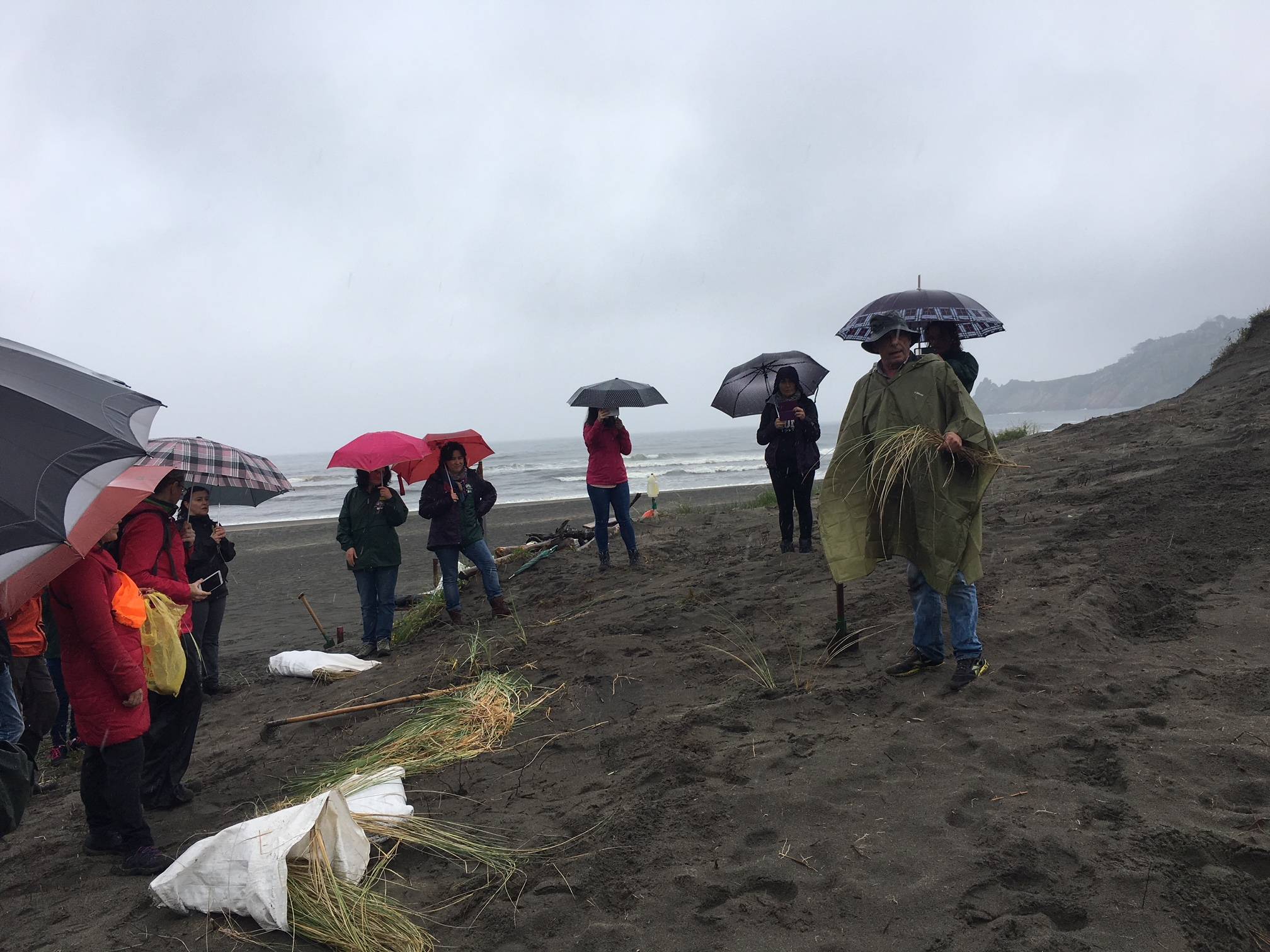
    Carlos Ley, from the company Ecología Litoral, demonstrated planting techniques for two structural species that will be introduced into the area: European beachgrass and sand couch-grass.

    Unfortunately, the bad weather prevented us from cleaning parts of the dunes that are invaded by Espartina patens.

    The day concluded with lunch at the interpretation centre.
    Life+ARCOS would like to thank all attendees for participating.