Etiqueta: Actions

  • Life+ARCOS starts to analyse sand inputs on the Asturian dunes

    Life+ARCOS starts to analyse sand inputs on the Asturian dunes

    For the state of conservation of the Cantabrian dunes to be assessed correctly, first we must find out if its current dynamic contributes to the formation of embryonic dunes.

    With this target in mind, the Institute of Natural Resources and Territorial Planning team (INDUROT) from the University of Oviedo, led by Jorque Marquínez (director of INDUROT) and Rosana Menéndez (lecturer assigned to the project), has begun to undertake studies on the Verdicio beach in Gozón (Asturias), which will be followed by similar procedures on the dunes on the Barayo and Vega beaches.

    Follow-up of the sand variation on the dune

    After the winter storms, follow-up works have begun to return the sand to some of the beach-dune systems that are the focus of action within the Life+ARCOS project. The wind, the type and amount of sand, as well as a lack of heavy storms, are key factors that have repercussions on the speed of dune recovery.

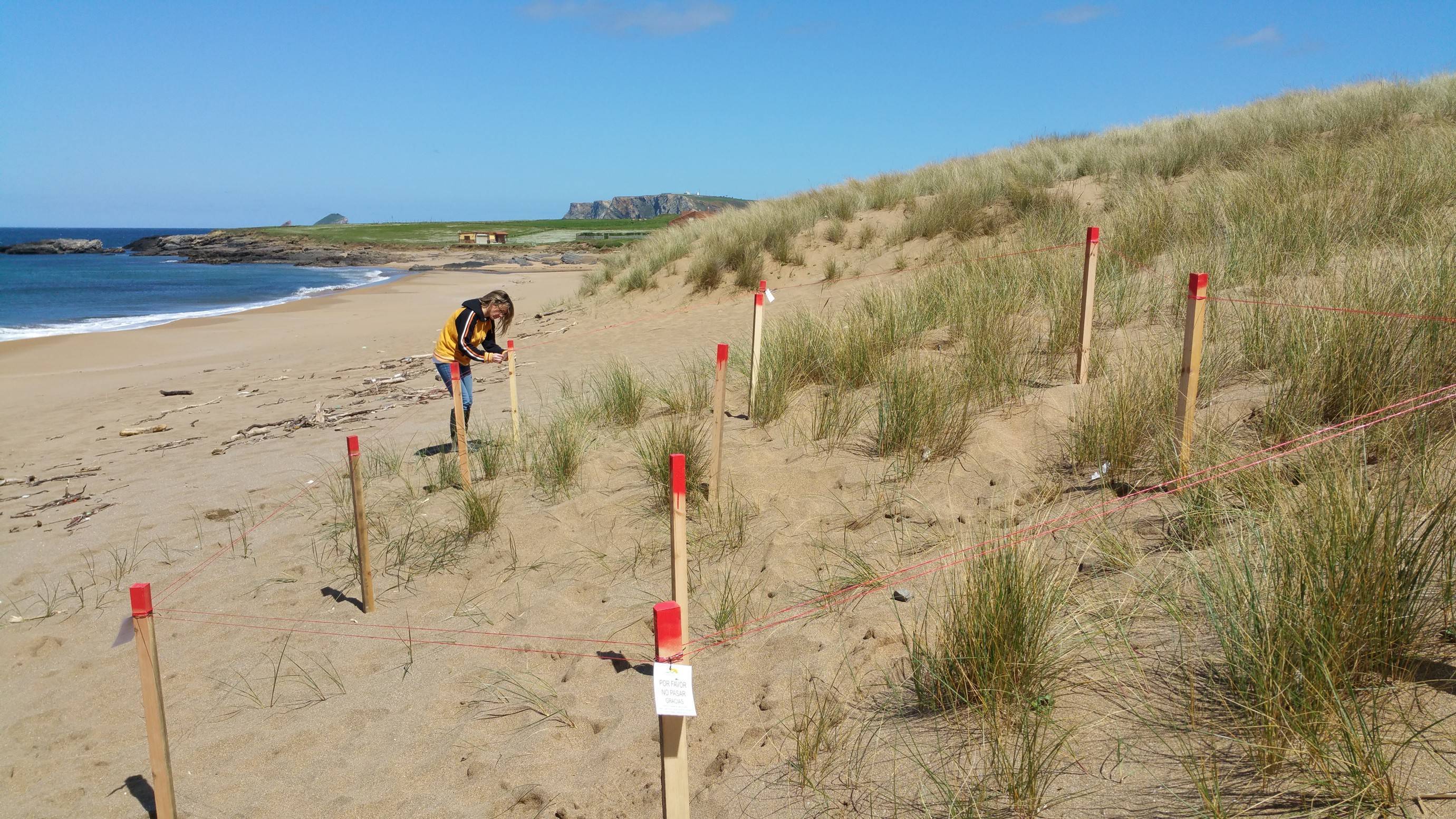
    In this respect, follow-up has been initiated on some of these variables, including the amount of sand input using monitoring by staking the study site. The results of this measurement will provide information so that balances or imbalances in the system can be identified and measures can be taken accordingly. For this reason, it is crucial to avoid any human interference in the study area that could alter the results of the analysis.

    If you visit any of these three beaches and you come across the staked follow-up area, please avoid walking inside the enclosure so that the measurements we get are as precise as possible.
    Clavando_estacas

    Elena Fernández fitting the sand-input follow-up system on the Verdicio beach dune system
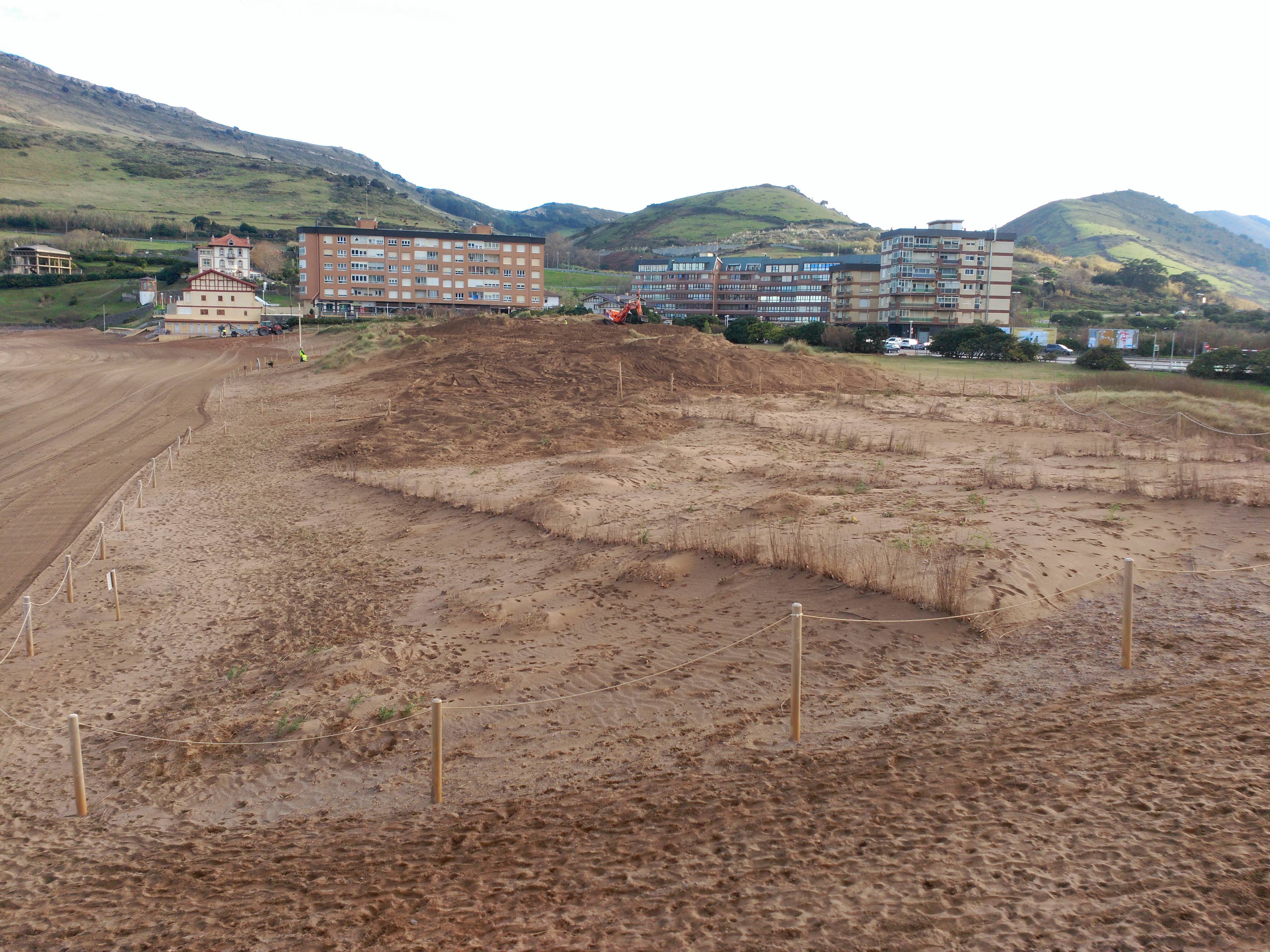
    Vista_aerea_loc
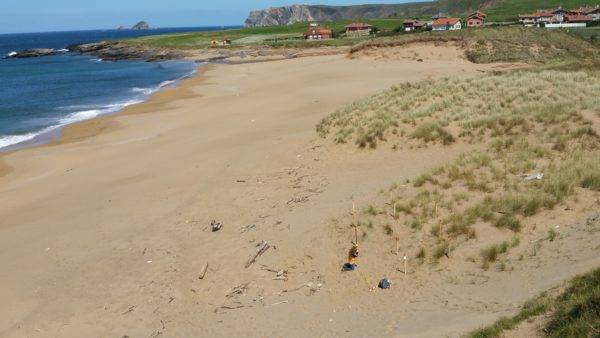
    Definitive location of the sand-input measurement elements
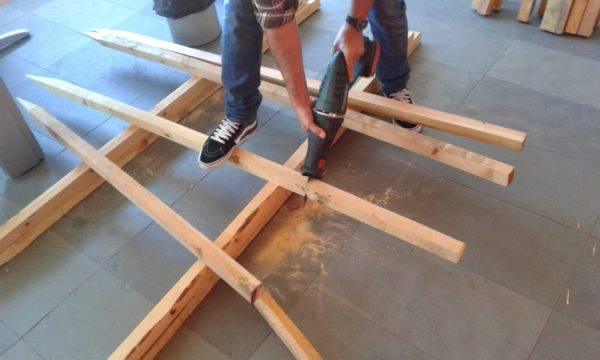
    Preparacion_listones
    Snapshot of the elaboration process of the measurement stakes
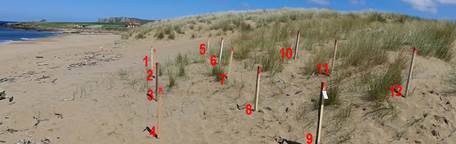
    numeracion_cartelas
    Numerical allocation of each of the stakes for follow-up
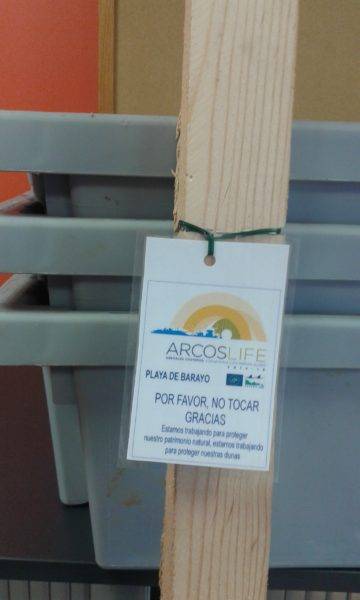
    Detalle_etiquetas
    Signs warning beach visitors of the scientific use of the measurement stakes to avoid them being removed

  • Dune habitats in La Arena (Zierbena, Bizkaia) will remove the invasive exotic species as a consequence of the actions developed by Life+ARCOS

    Dune habitats in La Arena (Zierbena, Bizkaia) will remove the invasive exotic species as a consequence of the actions developed by Life+ARCOS

    Eliminación de invasoras en la playa de La Arena
    La Arena beach with the replanted species in the foreground and the machinery working to remove the invasive exotic species.

    We should congratulate ourselves. Whoever visits the “La Arena” beach (Zierbena, Bizkaia) over this December bank holiday, will be able to see the start of the restoration works being carried out on the dune systems in this protected space, as part of the actions proposed within the Life+ARCOS project.

    The space chosen on the La Arena beach to start these removal actions of invasive exotic species is located on the most easterly part of the dune system. After releasing the news of these initiatives to the competent authorities and interest groups (see news published on this blog), work is already underway to effectively remove a large number of invasive species that are currently occupying this space. Among the most problematic species are: Arundo donax (giant cane),  Tamarix sp. (tamarisk), Pittosporum tobira (Australian laurel) and different species from the Carpobrotus genus (ice plant).

    The use of heavy machinery with perforated blades that facilitate the recovery of the sand attached to the roots of the removed plants, allows the moved sand to remain within the dune system. Removing this element would entail a significant loss to the dune. More direct benefits emerging from the use of this kind of machinery, include the removal of the deepest rhizomes of this species and increased surface area where effective action can be taken.

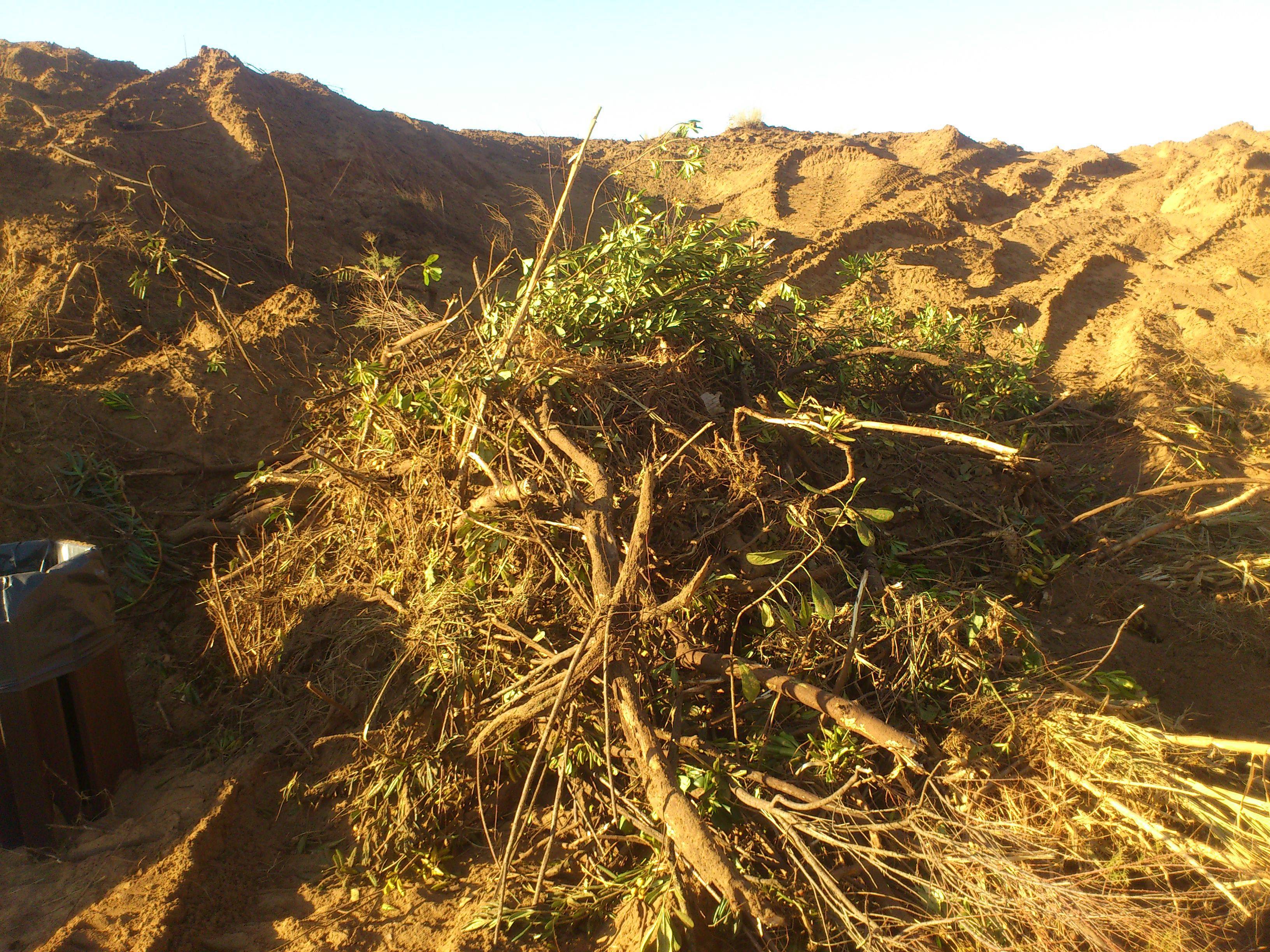
    Parte de restos de pitósporo eliminados del sistema dunar.
    Parte de restos de pitósporo eliminados del sistema dunar.

    To minimise the generation of new specimens of invasive species from the fragments of rhizomes that can be generated with the use of this machinery, this action was complemented with a manual removal process of these fragments, minimising the possibility that new shoots may appear over time. The combined use of machinery, followed by manual cleaning and removal of possible plant remains, will undoubtedly ensure that over the coming years there will be a decreasing need for new removal campaigns for invasive species.

    The structural plants removed (European beach grass and brome) – to facilitate the removal of invasive species – are planted in the selected spots on the dune front to help facilitate the stabilisation and setting process of the sand.   Likewise, other non-structural species such as Euphorbia paralias (sea spurge) and Eryngium maritimum (sea holly) are also being used in the replanting action.

    The use of sand collectors that will be fitted in the dune face and the replanting of the entire space with structural species and other high ecological value species, will contribute to recovering the plant biodiversity of these ecosystems, which are becoming increasingly scarce on the Cantabrian coast.