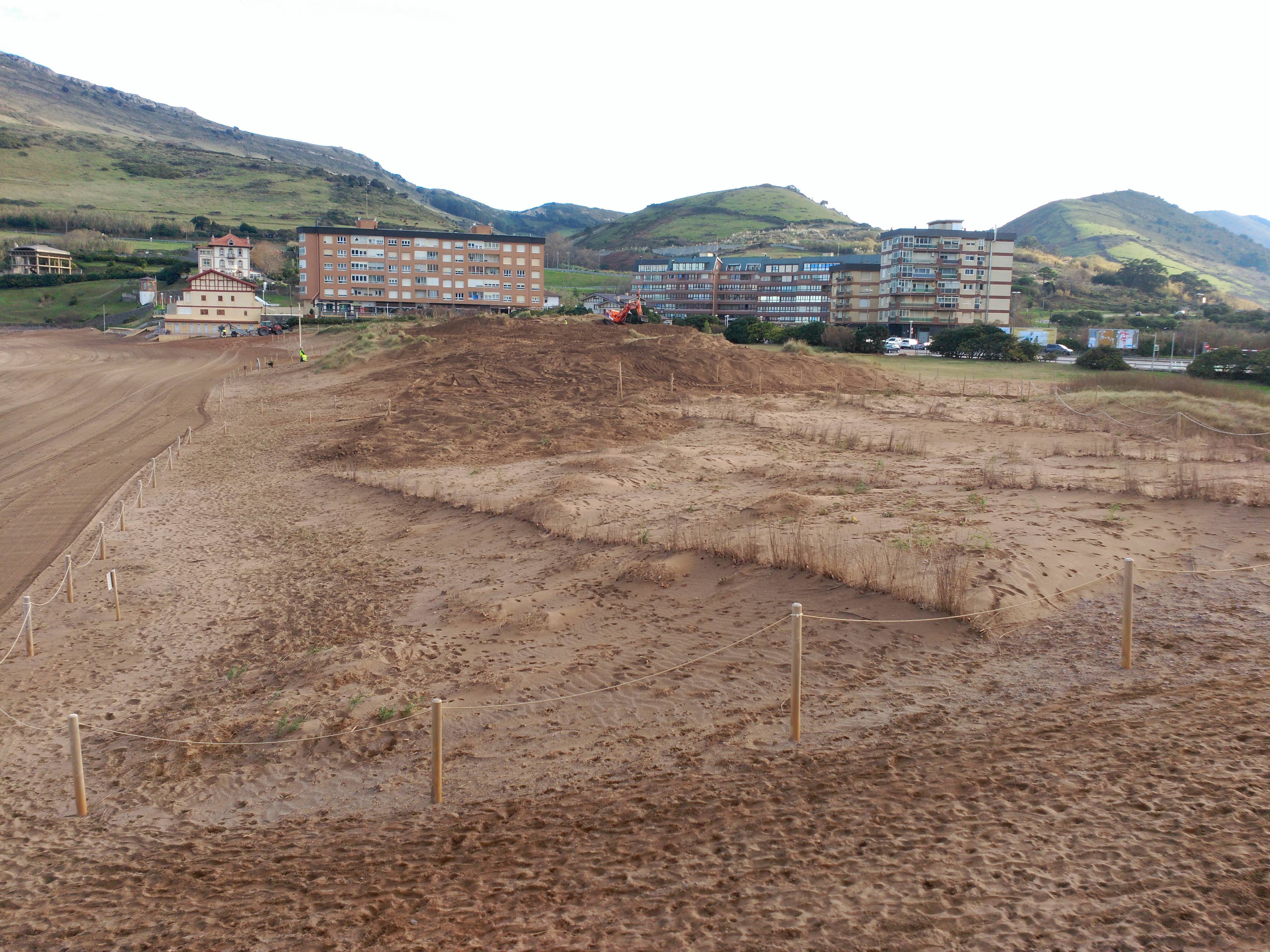
We should congratulate ourselves. Whoever visits the “La Arena” beach (Zierbena, Bizkaia) over this December bank holiday, will be able to see the start of the restoration works being carried out on the dune systems in this protected space, as part of the actions proposed within the Life+ARCOS project.
The space chosen on the La Arena beach to start these removal actions of invasive exotic species is located on the most easterly part of the dune system. After releasing the news of these initiatives to the competent authorities and interest groups (see news published on this blog), work is already underway to effectively remove a large number of invasive species that are currently occupying this space. Among the most problematic species are: Arundo donax (giant cane), Tamarix sp. (tamarisk), Pittosporum tobira (Australian laurel) and different species from the Carpobrotus genus (ice plant).
The use of heavy machinery with perforated blades that facilitate the recovery of the sand attached to the roots of the removed plants, allows the moved sand to remain within the dune system. Removing this element would entail a significant loss to the dune. More direct benefits emerging from the use of this kind of machinery, include the removal of the deepest rhizomes of this species and increased surface area where effective action can be taken.
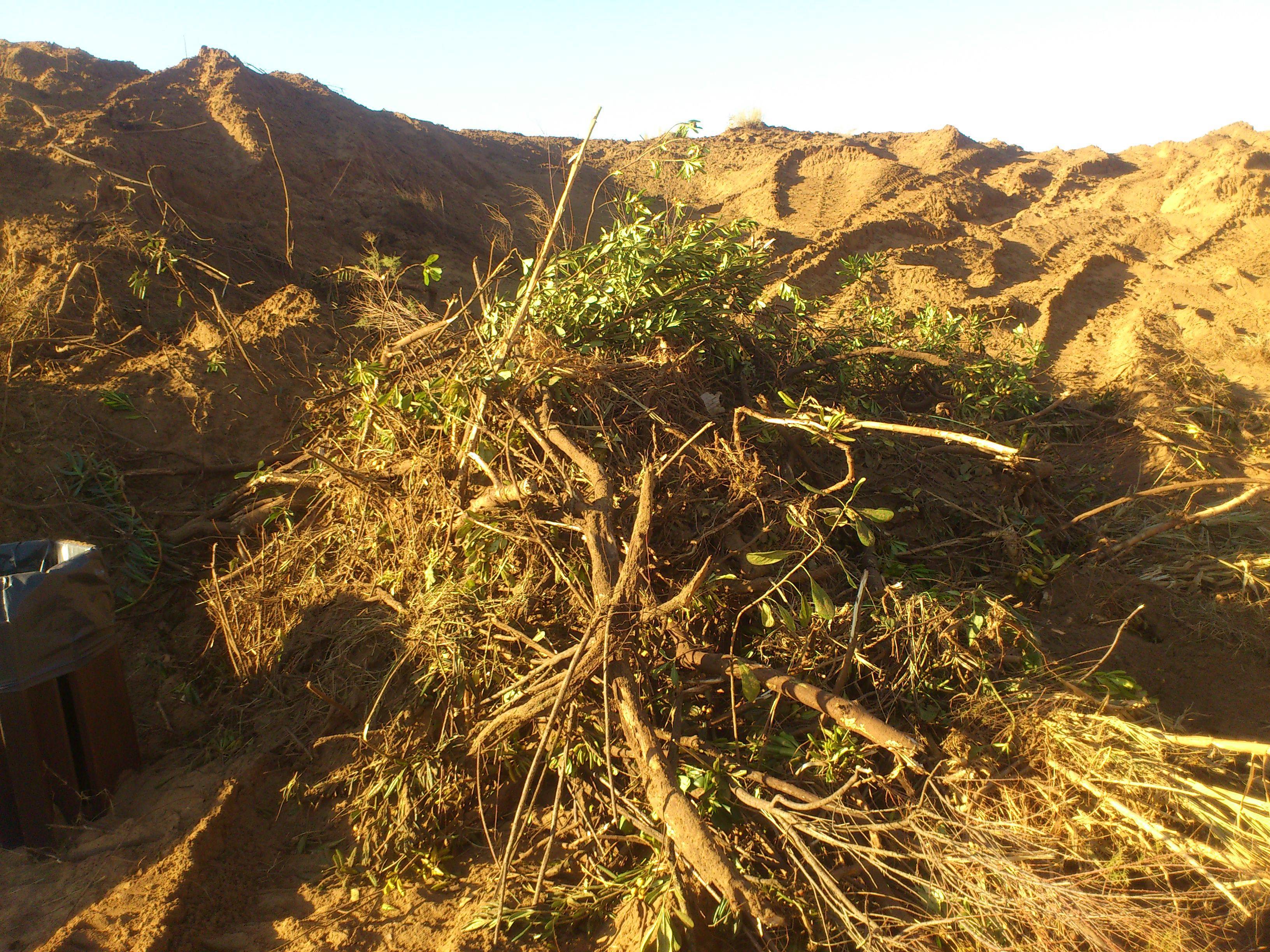
To minimise the generation of new specimens of invasive species from the fragments of rhizomes that can be generated with the use of this machinery, this action was complemented with a manual removal process of these fragments, minimising the possibility that new shoots may appear over time. The combined use of machinery, followed by manual cleaning and removal of possible plant remains, will undoubtedly ensure that over the coming years there will be a decreasing need for new removal campaigns for invasive species.
The structural plants removed (European beach grass and brome) – to facilitate the removal of invasive species – are planted in the selected spots on the dune front to help facilitate the stabilisation and setting process of the sand. Likewise, other non-structural species such as Euphorbia paralias (sea spurge) and Eryngium maritimum (sea holly) are also being used in the replanting action.
The use of sand collectors that will be fitted in the dune face and the replanting of the entire space with structural species and other high ecological value species, will contribute to recovering the plant biodiversity of these ecosystems, which are becoming increasingly scarce on the Cantabrian coast.