For the state of conservation of the Cantabrian dunes to be assessed correctly, first we must find out if its current dynamic contributes to the formation of embryonic dunes.
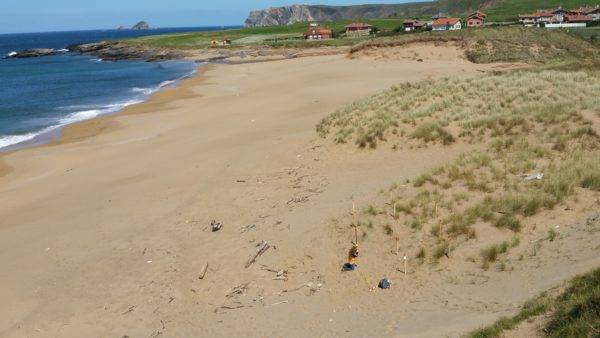
With this target in mind, the Institute of Natural Resources and Territorial Planning team (INDUROT) from the University of Oviedo, led by Jorque Marquínez (director of INDUROT) and Rosana Menéndez (lecturer assigned to the project), has begun to undertake studies on the Verdicio beach in Gozón (Asturias), which will be followed by similar procedures on the dunes on the Barayo and Vega beaches.
Follow-up of the sand variation on the dune
After the winter storms, follow-up works have begun to return the sand to some of the beach-dune systems that are the focus of action within the Life+ARCOS project. The wind, the type and amount of sand, as well as a lack of heavy storms, are key factors that have repercussions on the speed of dune recovery.
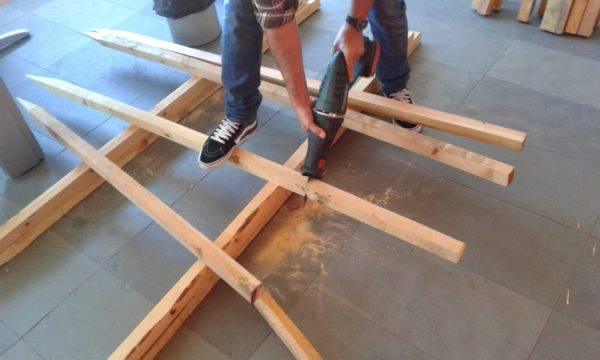
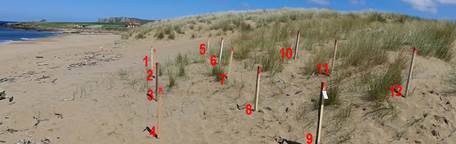
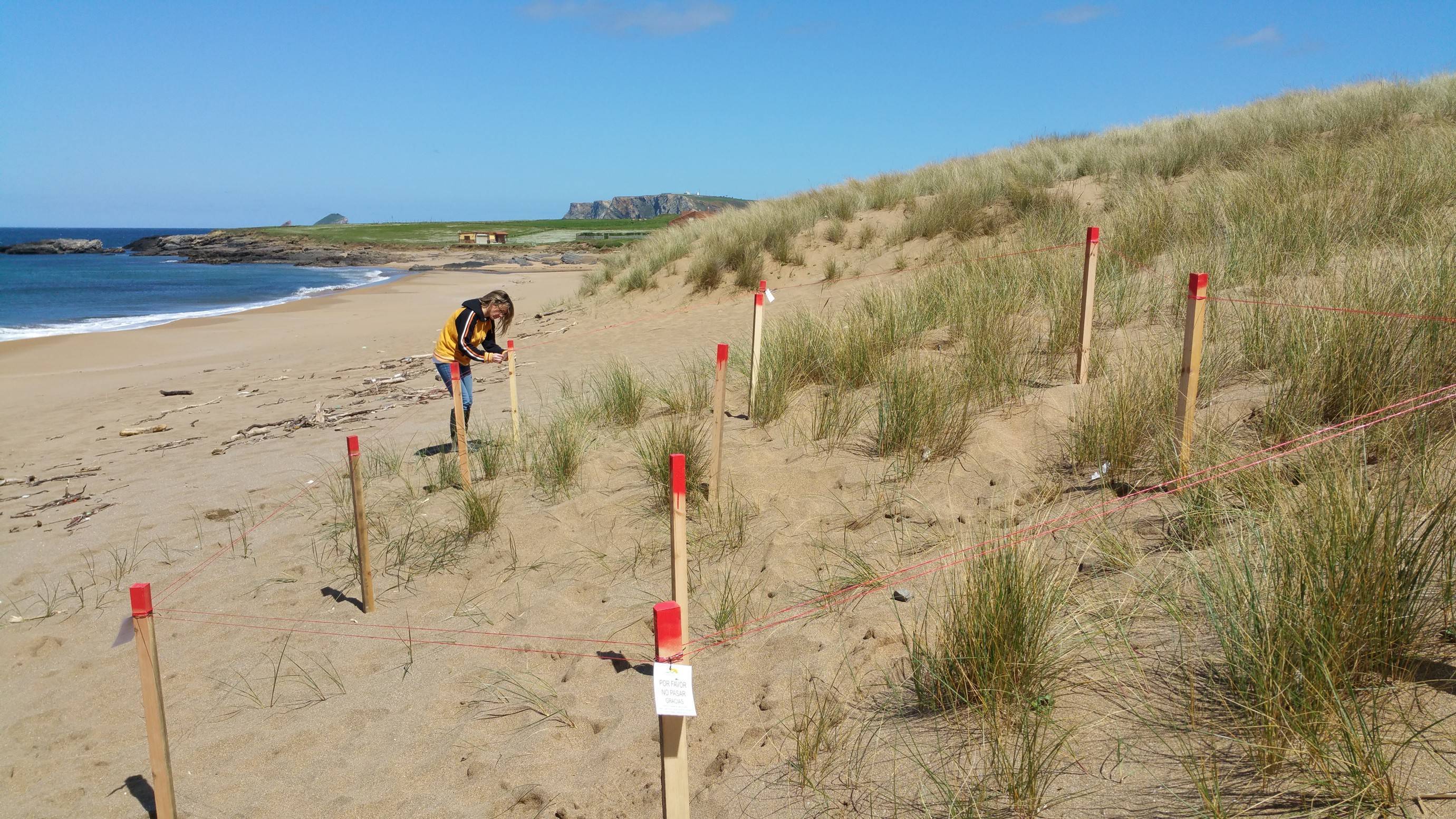
In this respect, follow-up has been initiated on some of these variables, including the amount of sand input using monitoring by staking the study site. The results of this measurement will provide information so that balances or imbalances in the system can be identified and measures can be taken accordingly. For this reason, it is crucial to avoid any human interference in the study area that could alter the results of the analysis.
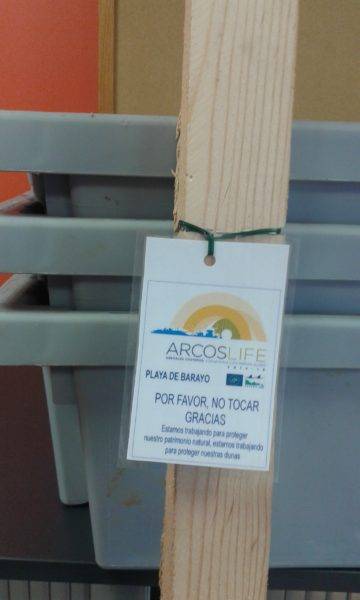
If you visit any of these three beaches and you come across the staked follow-up area, please avoid walking inside the enclosure so that the measurements we get are as precise as possible.
Elena Fernández fitting the sand-input follow-up system on the Verdicio beach dune system