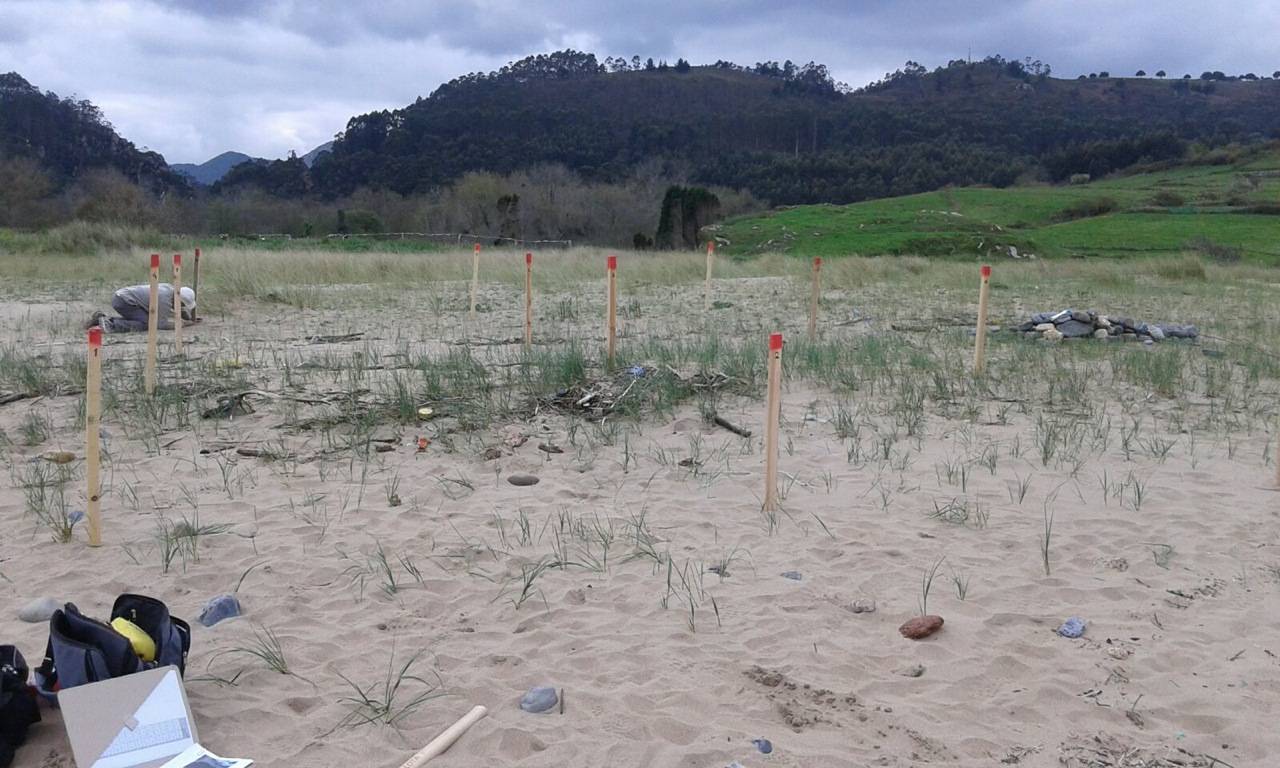
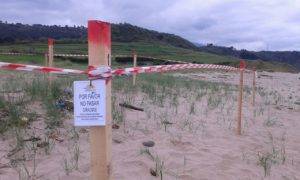
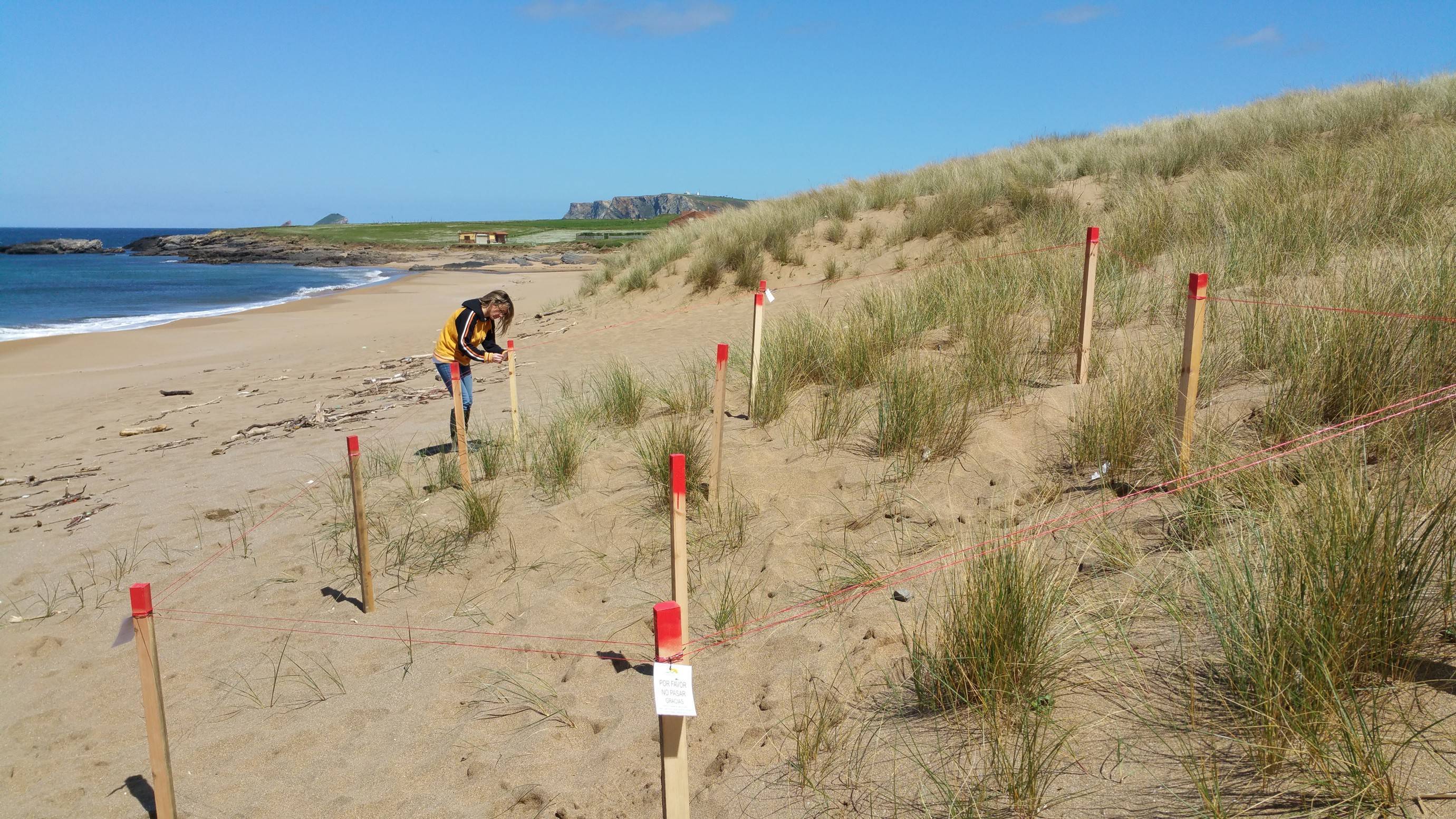
Detalle de las estacas de madera y cierre que delimita el espacio en el que se lleva a cabo el estudio
El equipo de Life+ARCOS ha instalado un sistema de seguimiento de aporte de arena en la Playa de Vega (Ribadesella, Asturias).
Mediante la colocación de estacas de madera graduadas, se pretende estimar la cantidad de aportes de arena que se producen en este enclave. El Instituto de Recursos Naturales y Ordenación del Territorio de la Universidad de Oviedo, liderado por Jorque Marquínez y Rosana Menéndez llevan a cabo esta parte del seguimiento.
Tras la instalación de idéntico sistema de medición en la playa de Verdicio, y en el día de ayer en Playa de Vega, sólo resta instalar este sistema en la playa de Barayo, para completar los tres sistemas dunares asturianos donde se realiza este estudio.
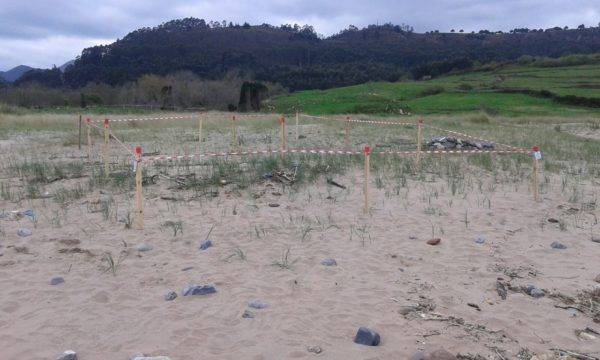
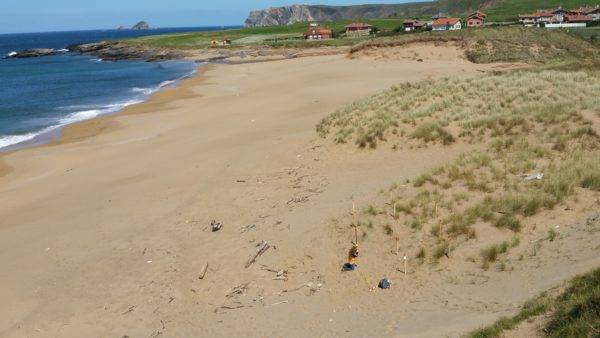
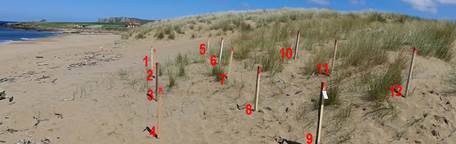
Trabajos de instalación del sistema de mediciónAspecto final del área de estudio delimitada con cinta sobre las estacas de madera graduadas
Close-up of the wooden stakes and the enclosure marking off the space where the study is being carried out
The Life+ARCOS team has set up a follow-up system for sand input on the Vega beach (Ribadesella, Asturias).
By positioning graduated wooden stakes in the dune, the aim is to estimate the quantity of sand inputs that occur in this enclave. The Institute of Natural Resources and Land Planning of the University of Oviedo is carrying out this part of the follow-up, led by Jorque Marquínez and Rosana Menéndez.
After setting up an identical measurement system on the Verdicio beach, and yesterday on the Vega beach, all that remains is to install this system on the Barayo beach to complete the three Asturian dune systems where this study is being carried out.
Measurement system installation works
Final appearance of the marked off study area with tape on the graduated wooden stakes
Para poder evaluar correctamente el estado de conservación de las dunas cantábricas es necesario conocer si su dinámica actual favorece la formación de dunas embrionarias.
Con este objetivo, el equipo del Instituto de Recursos Naturales y Ordenación del Territorio (INDUROT) de la Universidad de Oviedo, liderado por Jorque Marquínez (director del Indurot) y Rosana Menéndez (profesora adscrita al proyecto), han empezado a desarrollar unos muestreos en la playa de Verdicio en Gozón (Asturias), al que seguirán análogos procedimientos en las dunas de Barayo y Playa de Vega.
Seguimiento de la variación de arena en la duna
Tras los temporales de invierno, se han empezado los trabajos de seguimiento del retorno de arena a algunos de los sistemas playa-duna que son objeto de actuación dentro del proyecto Life+ARCOS. El viento, el tipo y cantidad de arena así como ausencia de grandes temporales son factores clave que repercuten en la velocidad de recuperación dunar.
En esta dirección, se ha iniciado el seguimiento de algunas de estas variables, incluyendo la cantidad de entrada de arena mediante una monitorización basada en el estacado del terreno. Esta medición aportará información para identificar situaciones de equilibrio o desequilibrio en el sistema y tomar medidas acordes con los resultados obtenidos. Por ello, resulta crucial evitar cualquier interferencia del hombre en la parcela de estudio que pudiera alterar los resultados del análisis.
Si visitáis cualquiera de estas tres playas y os encontráis con el estacado de seguimiento, por favor, evitad pisar en el interior del recinto, para que las mediciones que obtengamos sean lo más precisas posibles.
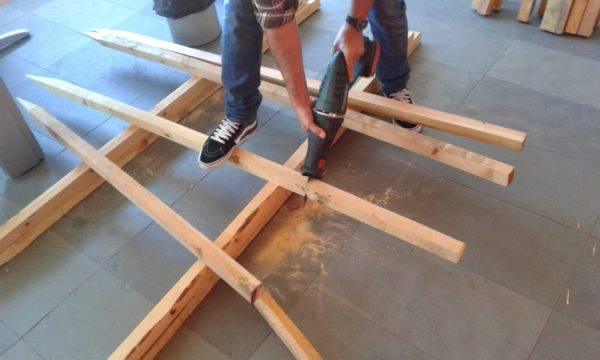
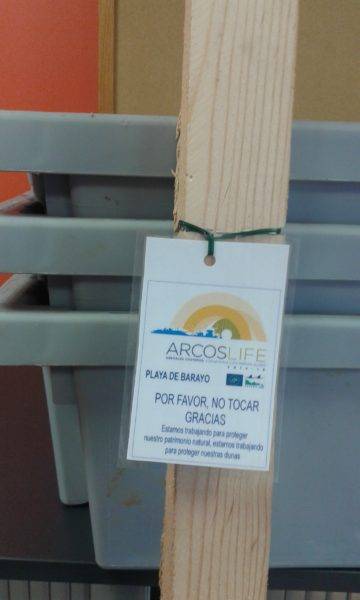
Elena Fernández instalando el sistema de seguimiento de aportes de arena en el sistema dunar de VerdicioUbicación definitiva de los elementos de medición de aporte de arenaImagen de un momento del proceso de elaboración de las estacas de mediciónDesignación numérica de cada una de las estacas para su seguimientoEtiquetas que advierten del uso científico de las estacas de medición, para evitar su robo
For the state of conservation of the Cantabrian dunes to be assessed correctly, first we must find out if its current dynamic contributes to the formation of embryonic dunes.
With this target in mind, the Institute of Natural Resources and Territorial Planning team (INDUROT) from the University of Oviedo, led by Jorque Marquínez (director of INDUROT) and Rosana Menéndez (lecturer assigned to the project), has begun to undertake studies on the Verdicio beach in Gozón (Asturias), which will be followed by similar procedures on the dunes on the Barayo and Vega beaches.
Follow-up of the sand variation on the dune
After the winter storms, follow-up works have begun to return the sand to some of the beach-dune systems that are the focus of action within the Life+ARCOS project. The wind, the type and amount of sand, as well as a lack of heavy storms, are key factors that have repercussions on the speed of dune recovery.
In this respect, follow-up has been initiated on some of these variables, including the amount of sand input using monitoring by staking the study site. The results of this measurement will provide information so that balances or imbalances in the system can be identified and measures can be taken accordingly. For this reason, it is crucial to avoid any human interference in the study area that could alter the results of the analysis.
If you visit any of these three beaches and you come across the staked follow-up area, please avoid walking inside the enclosure so that the measurements we get are as precise as possible.
Elena Fernández fitting the sand-input follow-up system on the Verdicio beach dune system
Definitive location of the sand-input measurement elementsSnapshot of the elaboration process of the measurement stakesNumerical allocation of each of the stakes for follow-upSigns warning beach visitors of the scientific use of the measurement stakes to avoid them being removed
Ayúdanos a conocer y proteger nuestro PATRIMONIO NATURAL
BASES DEL CONCURSO
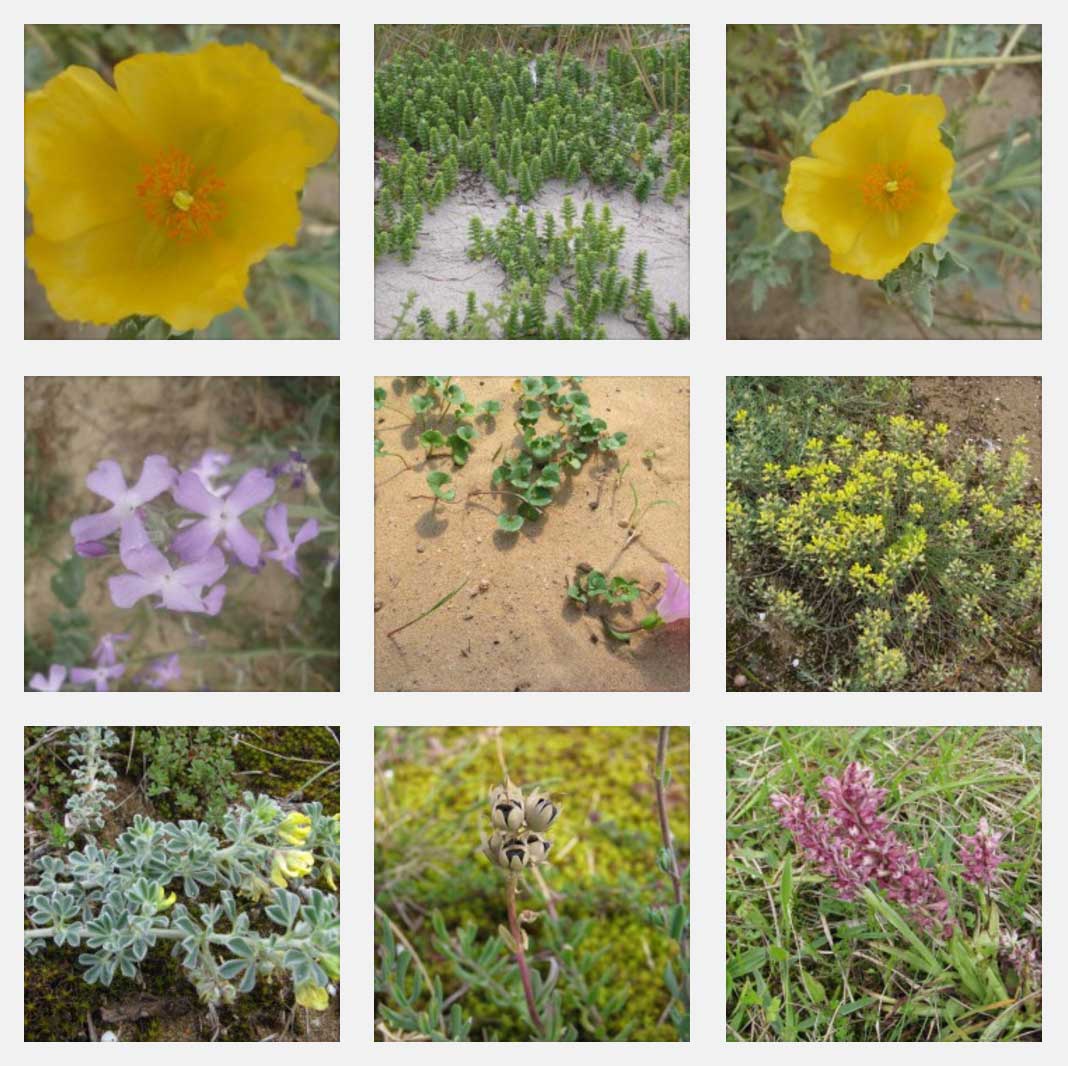
Haz una fotografía de una planta en cualquiera de las dunas de las Comunidades Autónomas en las que está trabajando el proyecto Life+ARCOS (Asturias, Cantabria o País Vasco)
Sube tus fotos de plantas dunares utilizando el hasthag #Nat2000DayArcos o a nuestro facebook(indicar en la foto Nat2000DayArcos)
Sólo utilizaremos en el concurso las fotografías en las que incluya el hasthag o nuestras cuenta de twitter @infoarcolife o facebook
PREMIOS
Las mejores fotos serán premiadas con los siguientes libros:
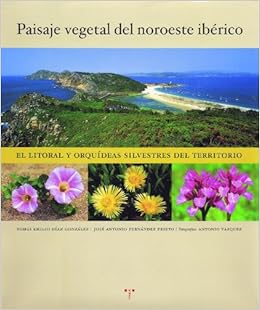
Paisaje Vegetal del noroeste ibérico. El litoral y orquídeas silvestres del territorio: libro en el que son coautores Tomás E. Díaz y J.A. Fernández Prieto y que está magníficamente ilustrado con las fotografías de Antonio Vazquez.
Manual de restauración de dunas costeras: del que es coautor Carlos Ley, de la empresa Ecología Litoral, socio beneficiario del proyecto ARCOS+LIFE
El paisaje vegetal de noroeste Ibérico: el litoral y orquídeas silvestres del territorio
Take a photo of a plant on any of the dunes in the Autonomous Communities where work is being carried out within the Life+ARCOS project (Asturias, Cantabria or the Basque Country)
Upload your dune plant photos using the #natura2000day hashtag
We will only enter your photos into the competition if they include our twitter account @infoarcolife
PRIZES
The best photos will be awarded with the following books:
Paisaje Vegetal del noroeste ibérico. El litoral y orquídeas silvestres del territorio (Plant life in North-West Spain. The Coast and Wild Orchids from the Region): book by the co-authors Tomás E. Díaz and J.A. Fernández Prieto and the magnificent photographic illustration by Antonio Vazquez.
Manual de restauración de dunas costeras (Coastal Dune Restoration Manual): by co-author Carlos Ley, from the Ecología Litoral company, beneficiary partner of the Life+ ARCOS Project
El paisaje vegetal de noroeste Ibérico: el litoral y orquídeas silvestres del territorio
At ARCOS+LIFE we want to celebrate the European Natura 2000 Day, which is held on 21st May across Europe.
We are already organising some activities and would love you to take part in them to celebrate this day with us. Keep an eye on our facebook page and our twitter account to receive the latest news. In Asturias, Cantabria and the Basque Country, where LIFE+ARCOS is participating in the conservation of dune ecosystems, we will hold invasive species removal campaigns and talks on the chosen dunes, allowing us to gauge a deeper understanding of the way these fragile ecosystems work, and to witness the problem of invasive exotic species first hand.
We are also going to open a photo competition that will award the best images of dune species, with prizes of books and t-shirts. We will publish the competition rules on our facebook page.
In the meantime, you are welcome to take part in the campaign promoted by the http://www.natura2000day.eu/ page, by sending a photo with the symbol of a butterfly made with your hands, as this video explains.
You can publish your photos using the #natura2000day hashtag, or upload them onto the website http://www.natura2000day.eu/sube-tu-foto/. If you use Twitter, include the #arcoslifeproject hashtag or @InfoArcoslife so we can follow you.
Desde ARCOS+LIFE queremos celebrar el día europeo de la Red Natura 2000 que se conmemora el día 21 de mayo en toda Europa.
Ya estamos organizando algunas actividades y queremos que participes en ellas para celebrar conjuntamente este día. Te pedimos que sigas atento a nuestro facebook y nuestro cuenta de twitter para recibir las últimas noticias. En Asturias, Cantabria y País Vasco, donde LIFE+ARCOS participa en la conservación de ecosistemas dunares, realizaremos campañas de eliminación de especies invasoras y charlas en las dunas elegidas que nos permitirán entender mejor el funcionamiento de estos frágiles ecosistemas y conocer de primera mano el problema de las especies exóticas invasoras.
También vamos a poner en marcha un concurso fotográfico que premiará las mejores imágenes de especies dunares, con libros y camisetas para los ganadores. Publicaremos en facebook las bases del concurso.
Mientras tanto, te invitamos a que participes en la campaña que promueve la página http://www.natura2000day.eu/ enviando una fotografía con el símbolo de una mariposa realizado con las manos, según te explican en este video.
Este sitio web utiliza cookies para que usted tenga la mejor experiencia de usuario. Si continúa navegando está dando su consentimiento para la aceptación de las mencionadas cookies y de nuestra política de cookies. Pinche el enlace para mayor información.