Categoría: On-line News

  • LIFE ARCOS project commemorates the European Day of the Natura 2000 Network with volunteer activities in Cantabria

    LIFE ARCOS project commemorates the European Day of the Natura 2000 Network with volunteer activities in Cantabria

    Activity within the LIFE Arcos (2014-18) project is continuing in Cantabria, with volunteering work in collaboration with different entities from the Autonomous Community.

    The Helgueras and Trengandín dune systems have been the focus of the activity over the past two days of work, which have contributed towards recovering the natural dynamic of these systems by mechanically eliminating different species of invasive exotic flora.

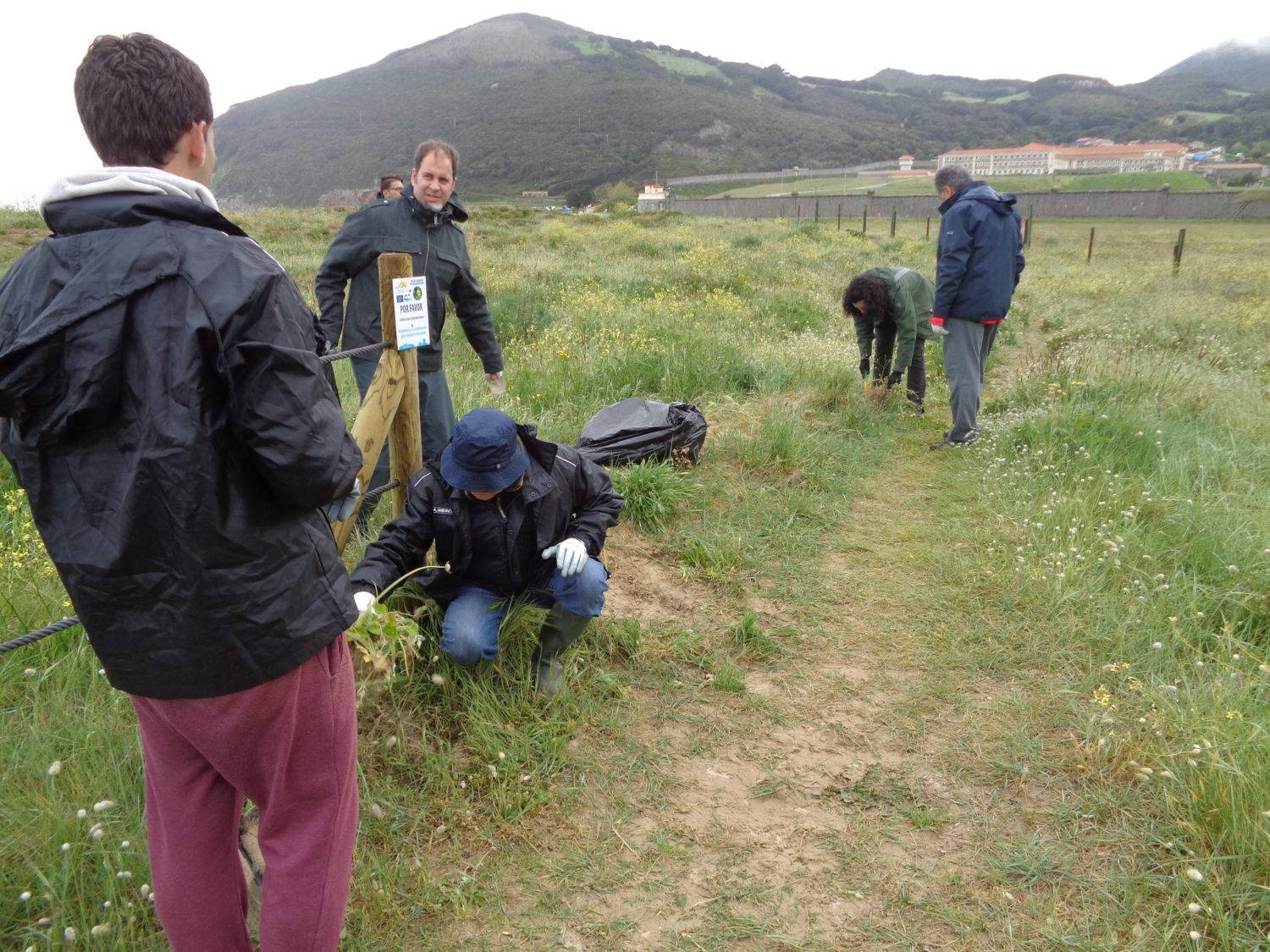
    The first of these days took place on 12th May, with the collaboration of a group of inmates from the El Dueso Penitentiary Centre. Within the NACAR (Nature and Prison) Programme, this group has undertaken outstanding work in restoring the dune by eliminating invasive species, reproducing and planting local species, removing waste, etc.

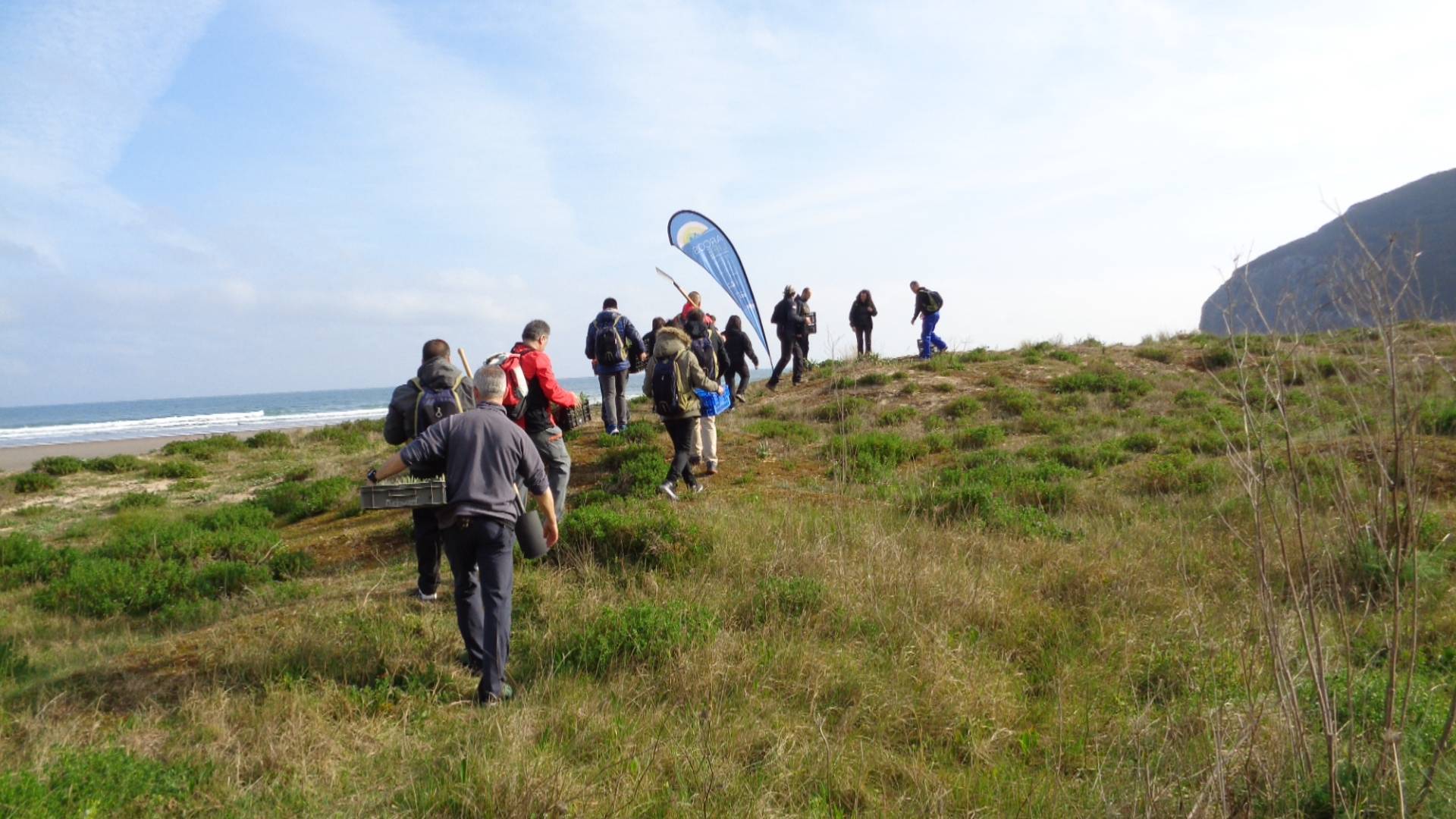
    On this occasion the tasks focused on eliminating ice plant (Carpobrotus edulis) from the dunes on the Helgueras beach. Prior to the work, as on previous occasions, the Director of the Santoña, Victoria and Joyel Marshes Natural Park gave a quick explanation to the participants about the dune dynamic and the problems that invasive species cause on these ecosystems. After this brief introduction and a practical demonstration of how to correctly treat and eliminate the species in question to ensure that the work is effective, the work began, resulting in the removal of some 1,600 kg  of ice plant from a surface area of around 120 m2. The group performed a 3 km hike from the Berria beach in the town of Santoña to reach the work zone, located on the Helgueras beach in Noja.
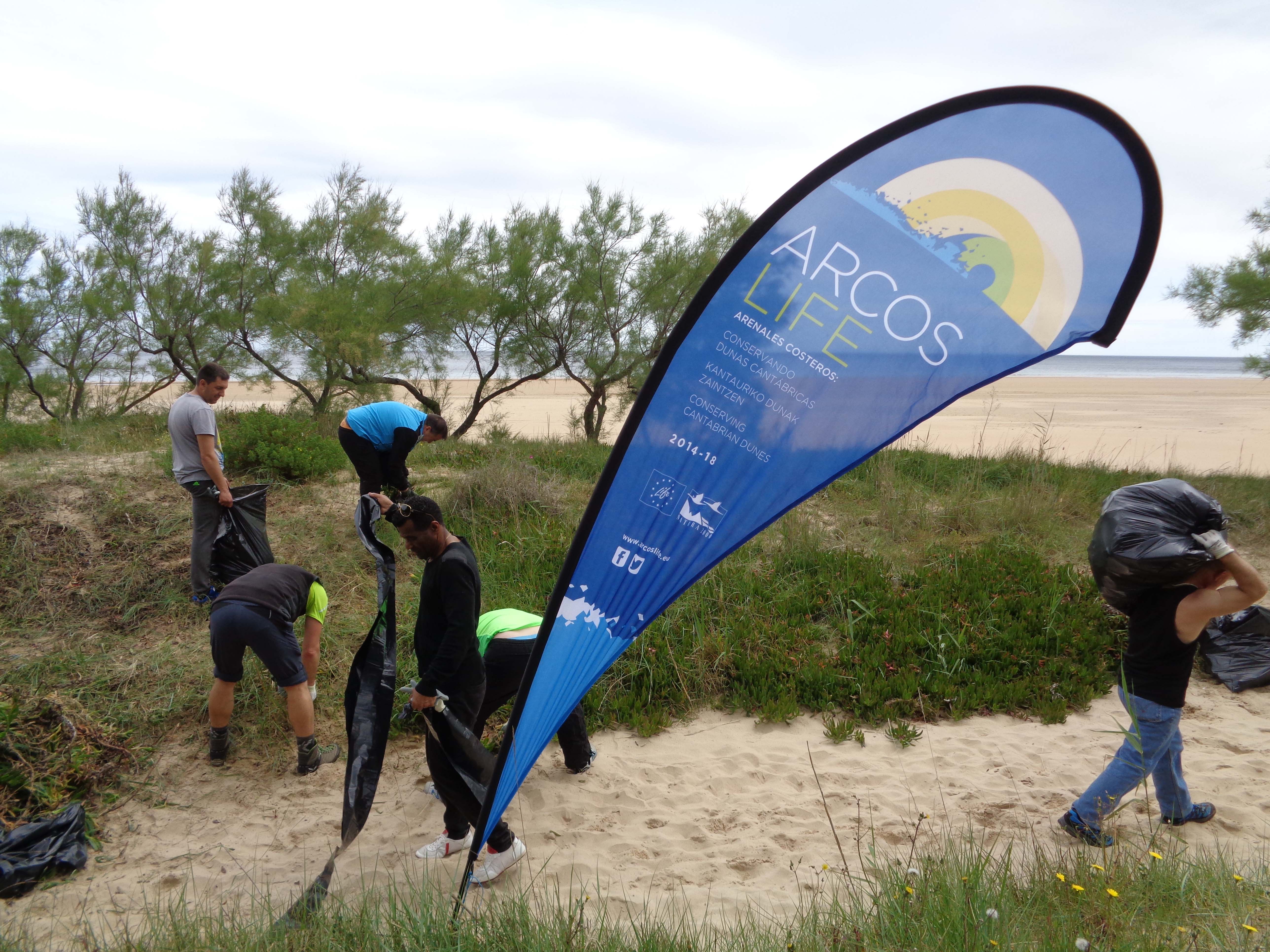
     

    Volunteering Group from the NACAR Programme

    The action was supported by the Noja Council, firstly represented by the Mayor and the Environmental Technician who made a follow-up visit, alongside civil servants from El Dueso Penitentiary Centre, followed by workers from the Council, who helped transport the plant waste extracted during the morning on the most inaccessible part of Helgueras beach.
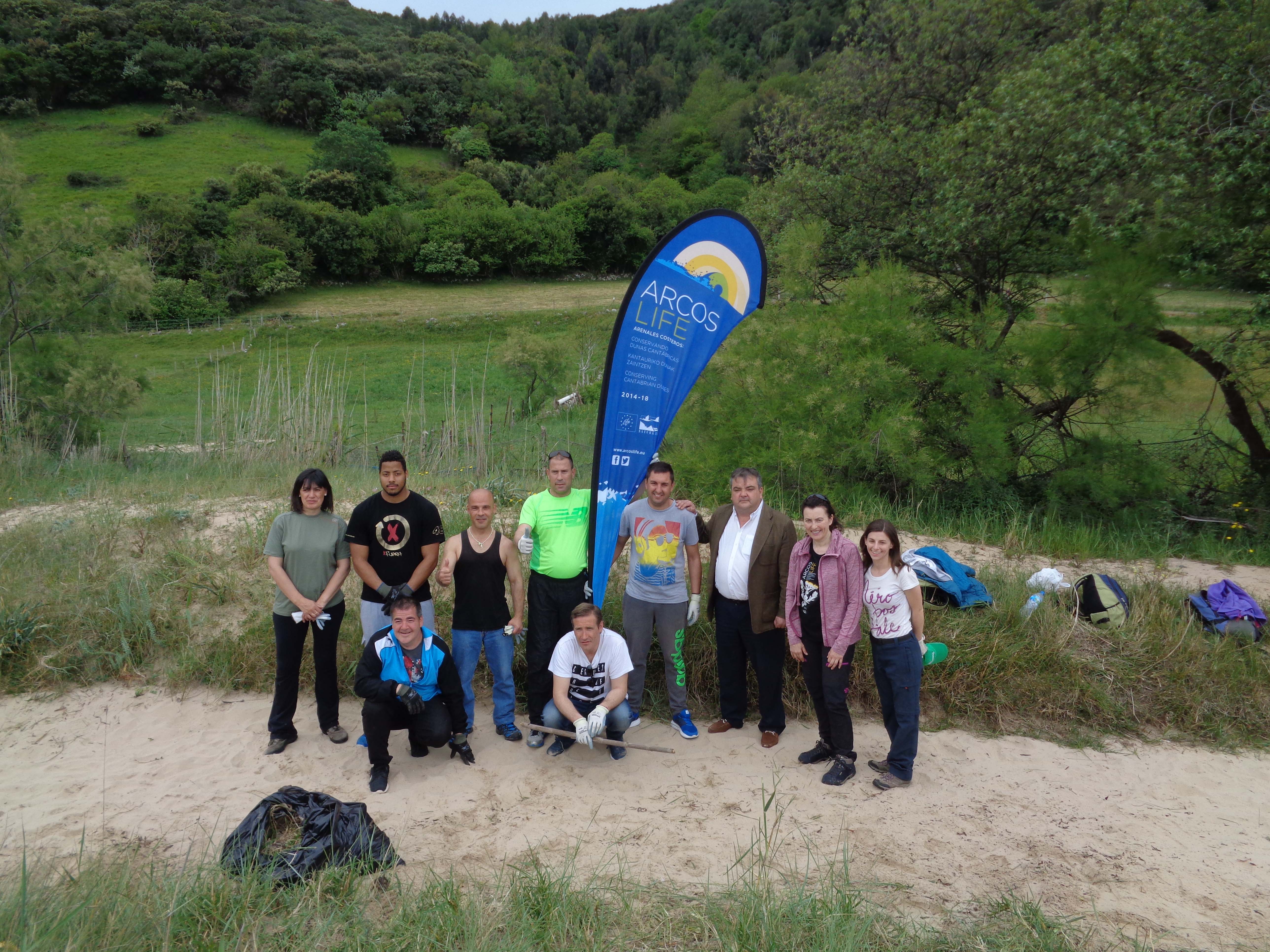
    NACAR Programme group and the ice plant removal activity

    Members of the work team that had already participated in the NACAR Programme on previous occasions were given LIFE ARCOS t-shirts, which were enthusiastically received.
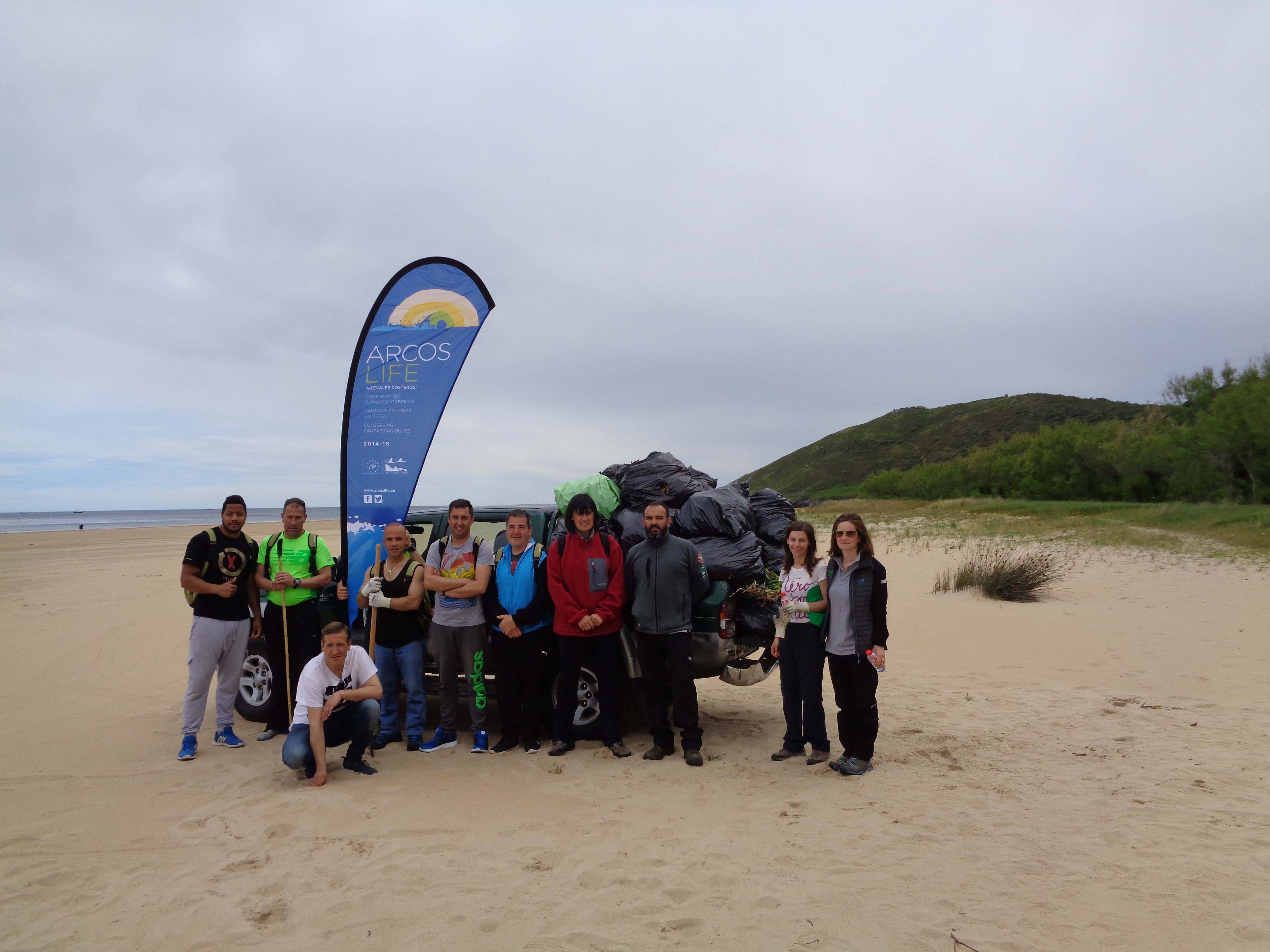
    NACAR Programme group and the ice plant removal activity

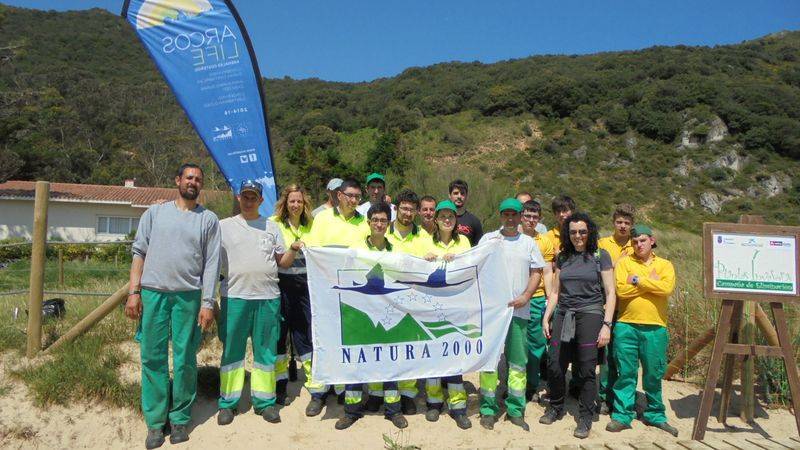
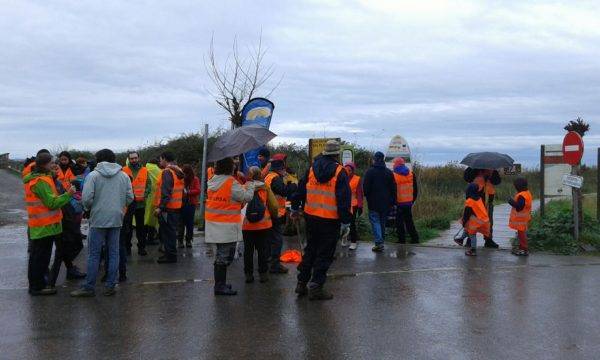
    The second work day took place on 17th May, coinciding to commemorate the European Natura 2000 Day. The activity was carried out with the collaboration of the AMICA and AMPROS associations, and the SERCA Special Employment Centre, which as on previous occasions, collaborated actively with the LIFE Arcos project, splitting into three action groups. 
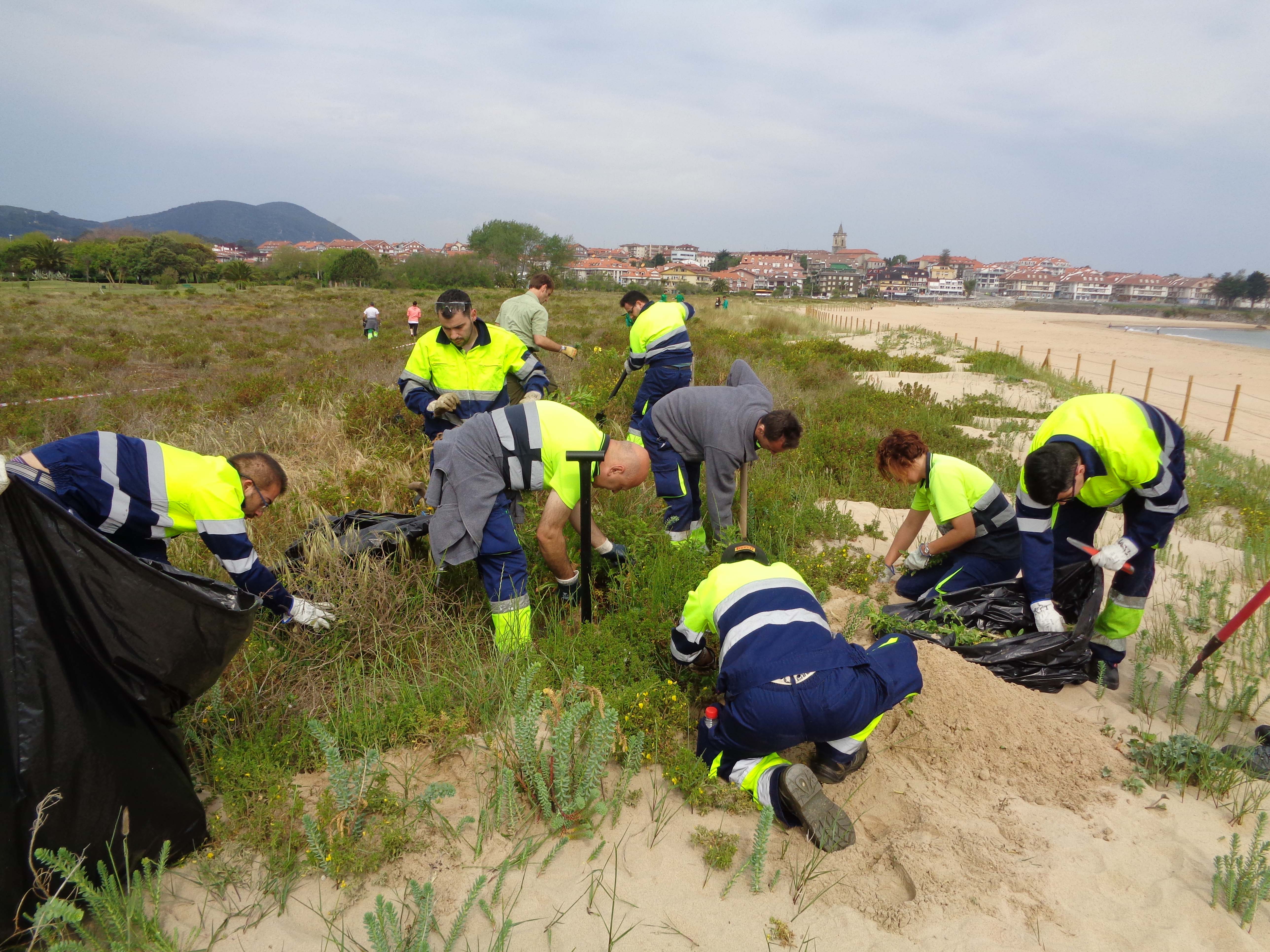
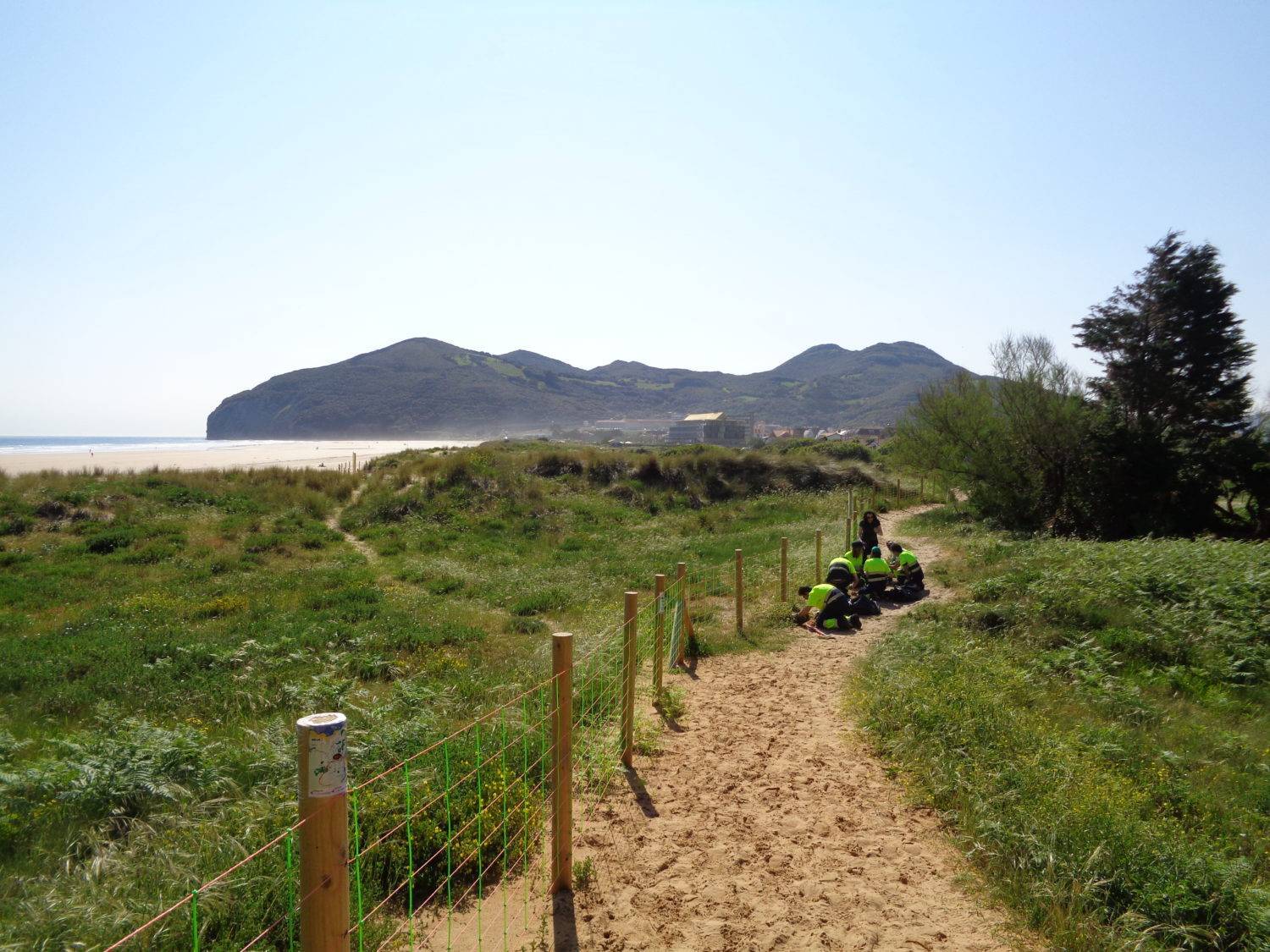
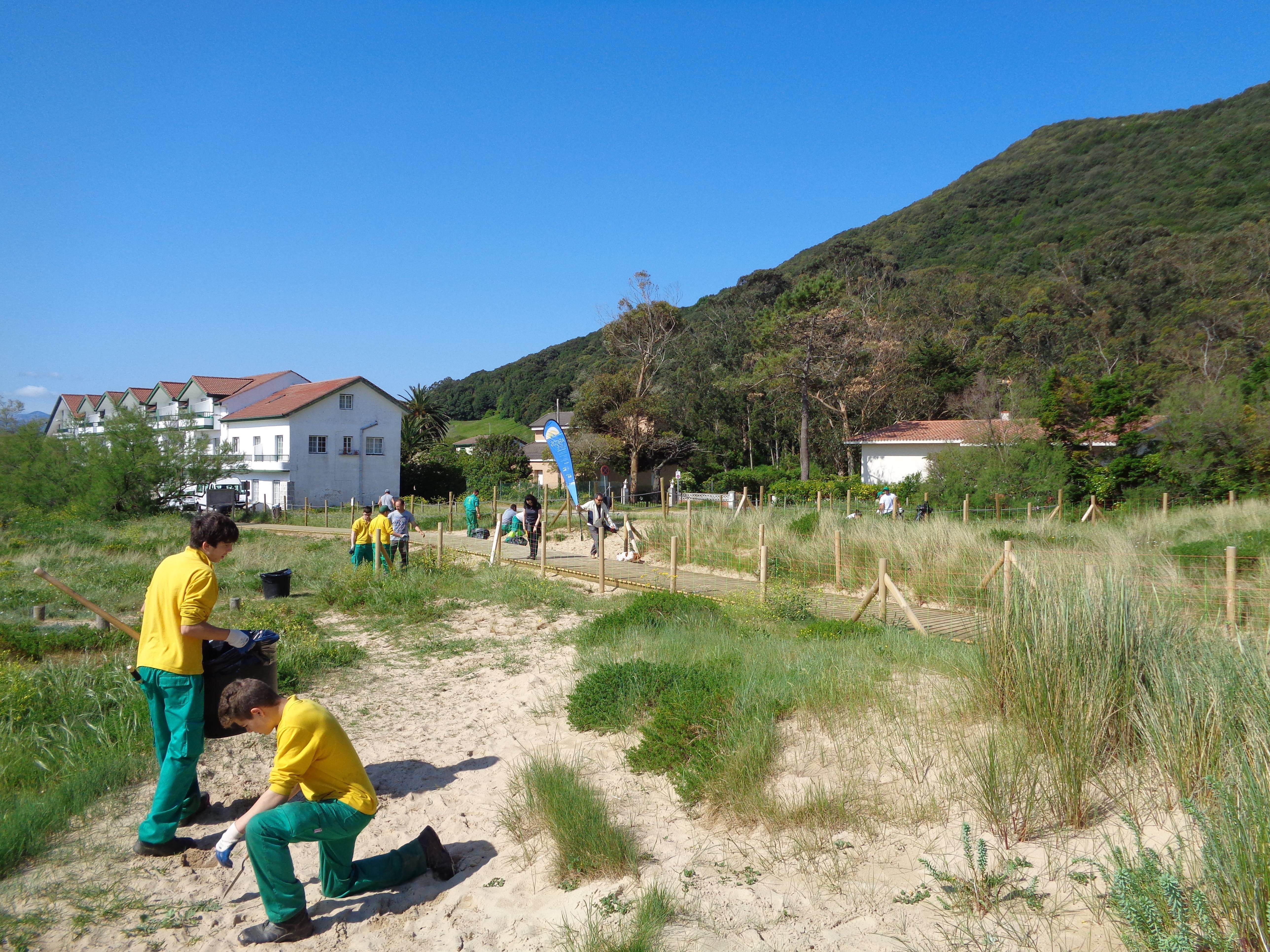
    AMICA volunteering team

    The location chosen for these tasks was the Trengandín beach dune system, which despite being a clear example of the consolidation of the ecosystems of this nature, also presents a significant amount of invasive exotic species.

    At the start of the day, various regional and town authorities attended to greet participants in person. The Councillor from the Natural Environment, Fisheries and Food Department , the Directorate General of the Environment, the Head of the Government of Cantabria Conservation Service and the Noja Council Mayor, with environmental experts and council members.

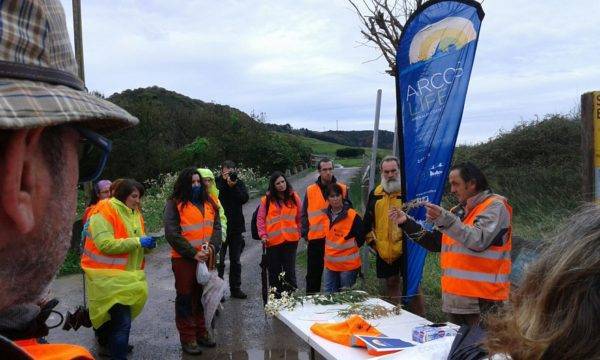
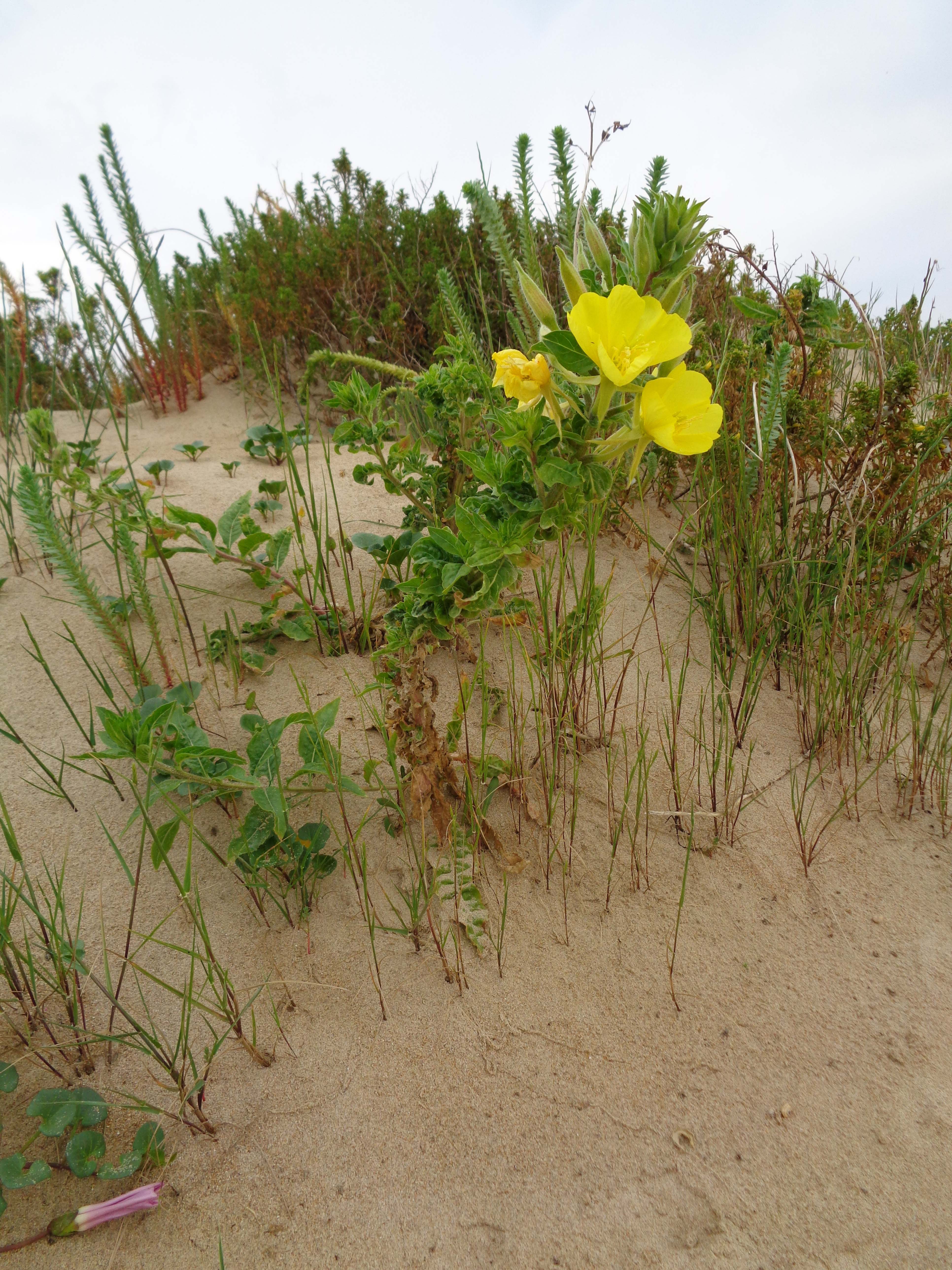
    After the formal greeting, participants were given an introductory explanation about how the dune systems work, the invasive plants and how to eliminate them, and the targets of the LIFE ARCOS Project, in this case focusing specifically on the invasive exotic species, evening primrose (Oenothera glazioviana).
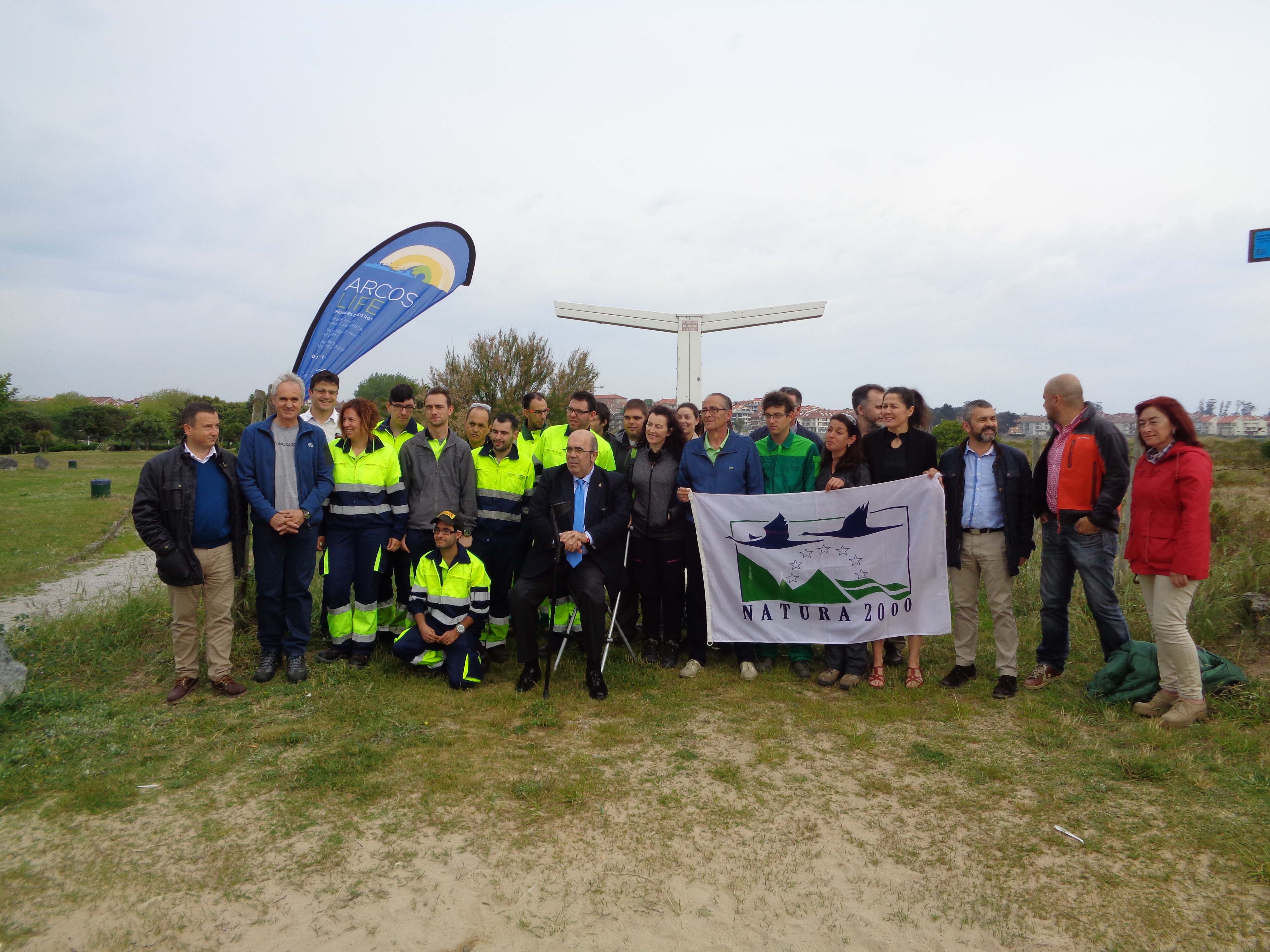
    Volunteering group with the Councillor from the Natural Environment, Fisheries and Food Department
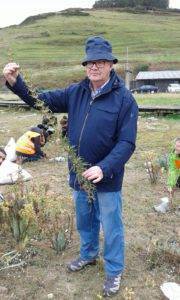
    Evening primrose present in the dune system (Oenothera glazioviana).

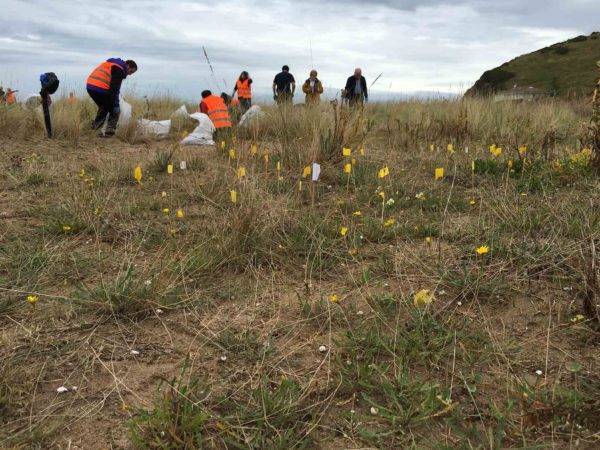
    Once the guidelines and aim of the activity were established, the work areas were marked out and the task began, which continued until the rain brought the activity to a close. By this point the group had already removed the evening primrose from a considerable stretch of dune (200 kg and 2 kg of waste) over an area covering around 10,000m2. To end the activity, participants from AMICA, SERCA and AMPROS were all given a LIFE ARCOS logo pendant, which is one of the ceramic pieces that has been made in their Workshops at the El Dueso Penitentiary Centre, as well as pen holders and flower pots. 

    LIFE ARCOS ceramic works produced in the El Dueso Penitentiary Centre Workshop

    During the task of removing the evening primrose, another exotic plant was detected and also removed: Agave americana. It had numerous shoots growing next to the dune vegetation, which would potentially have grown very large.
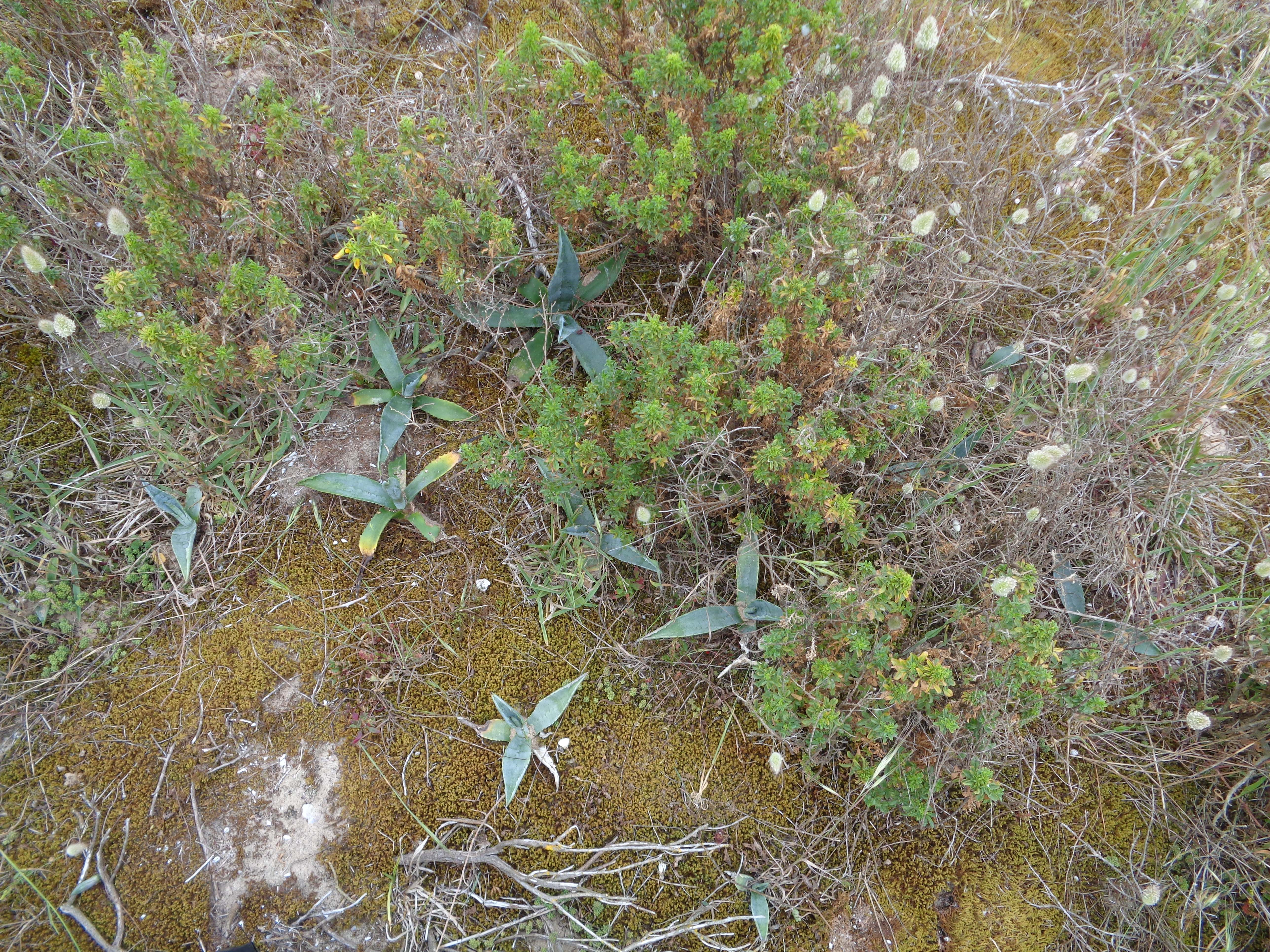
    Removed specimen of invasive species, Agave Americana


    The work performed on both days was supported by staff from the  Cantabrian Rural Development Network team, whose collaboration in removing and managing the plant waste obtained was paramount.

    These kinds of actions represent a major advance in terms of controlling invasive species, and show that adding up small actions can create a big result, which is why it falls to the Government of Cantabria Directorate General of the Environment to thank the collaborating entities for their involvement, without which these tasks would have been impossible.
  • 25 anniversary of EU LIFE Programme. Location: INDUROT, Investigation Building, Mieres Universitary Campus.
    25 anniversary of EU LIFE Programme. Location: INDUROT, Investigation Building, Mieres Universitary Campus.

    Today, 17th May, the INDUROT (Institute of Natural Resources and Territorial Planning, Research Building, Mieres University Campus) is celebrating the 25th anniversary of the LIFE Programme. The event will cover the importance of this programme and diverse projects that have been developed from the University of Oviedo within this European funding framework.

    In 2017, the LIFE Programme and the Habitats Directive are celebrating their 25th anniversary, both passed on 21st May 1992.  To acknowledge the important role of this programme in conserving European natural heritage, the European Commission and the European Parliament, the Council and the Committee of the Regions, will officially declare the 21st May as the “European Natura 2000 Day”.  INDUROT wants to mark this anniversary by implementing this information day on 17th May, which will address the way that this financial instrument has acted to co-fund environmental conservation actions, to study ways of mitigating climate change, and to propose new solutions to treating contaminated ground. The day will have a particular focus on analysing advances made by the LIFE+ARCOS project, and on highlighting the importance of conservation works on coastal dune systems, the target of this project’s action along the entire Cantabrian coastline. It will also summarise the objectives and results of the 2011 LIFE+IDARTS and TREMEDAL projects.

    The programme can be downloaded here , summarised below:

    CELEBRATORY DAY TO MARK THE 25TH ANNIVERSARY OF THE LIFE PROGRAMME

    17/05/2017 Start time: 12:00.
    Location: Aula Emilio Murcia, 7a planta, INDUROT, Research Building, Mieres Campus

    PROGRAMME

    12:00 Presentation by leaders of the regional administration and from the INDUROT (Institute of Natural Resources and Territorial Planning) from the European funding programme LIFE. Manuel Calvo, General Director for Natural Resources from the Principality of Asturias, and Jorge Marquínez, Director of the INDUROT.

    12:30 Communication about the LIFE ARCOS Project currently in process by Tomás E. Díaz González (leading project researcher and Botany Lecturer at the University of Oviedo), Nacho Alonso Felpete and Elena Fernández Iglesias (project experts, botany and geomorphology specialists).

    13:00 Communication about the LIFE IDARTS project by José Luis Rodríguez Gallego, leading project researcher and Tenured Professor of Prospecting and Mining Research.

    13:15 Communication about the LIFE Tremedal project by Jesús Valderrábano Luque, project expert and botany specialist.

    13:30 End of the day.


  • LIFE ARCOS project celebrates the European Natura 2000 Day with volunteering activities (2016)

    LIFE ARCOS project celebrates the European Natura 2000 Day with volunteering activities (2016)

    With the European Natura 2000 Day now approaching, we have included this news about the volunteering days undertaken in Cantabria in 2016, within the framework of the Life+ARCOS project.

    Today is not just any ordinary day; we are celebrating the European Natura 2000 Day, and to do this we are holding some environmental awareness activities and carrying out work to control invasive exotic species on the Berria beach dunes (Santoña). One of the beaches included in the European dune conservation and restoration project Life+ARCOS.

    On this occasion, pupils from Argoños (Pedro Santiuste Primary School) and Santoña (Macías Picavea Primary School), visited the Berria beach dune system in Santoña on 10th and 12th May 2016, walking along the stretch to discover the dune and its flora and fauna, led by instructors from the Cantabrian Rural Development Network (RCDR in Spanish) who work at the Santoña, Victoria and Joyel Marshes Natural Park Interpretation Centre. The pupils were fascinated and their constant questions helped the Cantabrian Rural Development Network instructors from Cantabria (NATUREA programme) to explain all the ins and outs of the unique flora and fauna species that inhabit the dunes.


    Pupils from the Pedro Santiuste Primary School in Argoños, who participated in the activity day

    The activities ended with the mini planting of grasses from the tertiary dunes Festuca vasconcensis – which was the activity that all the pupils had been excitedly waiting for.

    The volunteering activities have not yet finished on the Berria dunes, and some other control activities of invasive species have been carried out with the NACAR Programme (Nature and Prison) and by the Cantabrian AMICA, SERCA and AMPROS groups.

    19th May 2016 was a mostly cloudy day with the odd spot of rain, but even so activities commenced to remove invasive species from the tertiary dune on Berria beach, with a group of 6 inmates from the El Dueso Penitentiary Centre. The work setting – Berria beach nestled between two limestone massifs (El Brusco to the west and Mount Buciero to the east) – was spectacular. The dune systems here are rich in unique species of flora and fauna such as the Linaria supina subspecies. maritima.


    Team from the NACAR Programme working to eliminate the IES “Capeweed”

    This season an invasive exotic species – Capeweed (Artotheca calendula) – has been spotted flowering on the pathways that run alongside the Berria beach and at the main entrance to the dunes next to the apartment buildings. To avoid this concentration of invasive species, thirteen 120L-bags were filled, leaving the area free from the invasive plant.

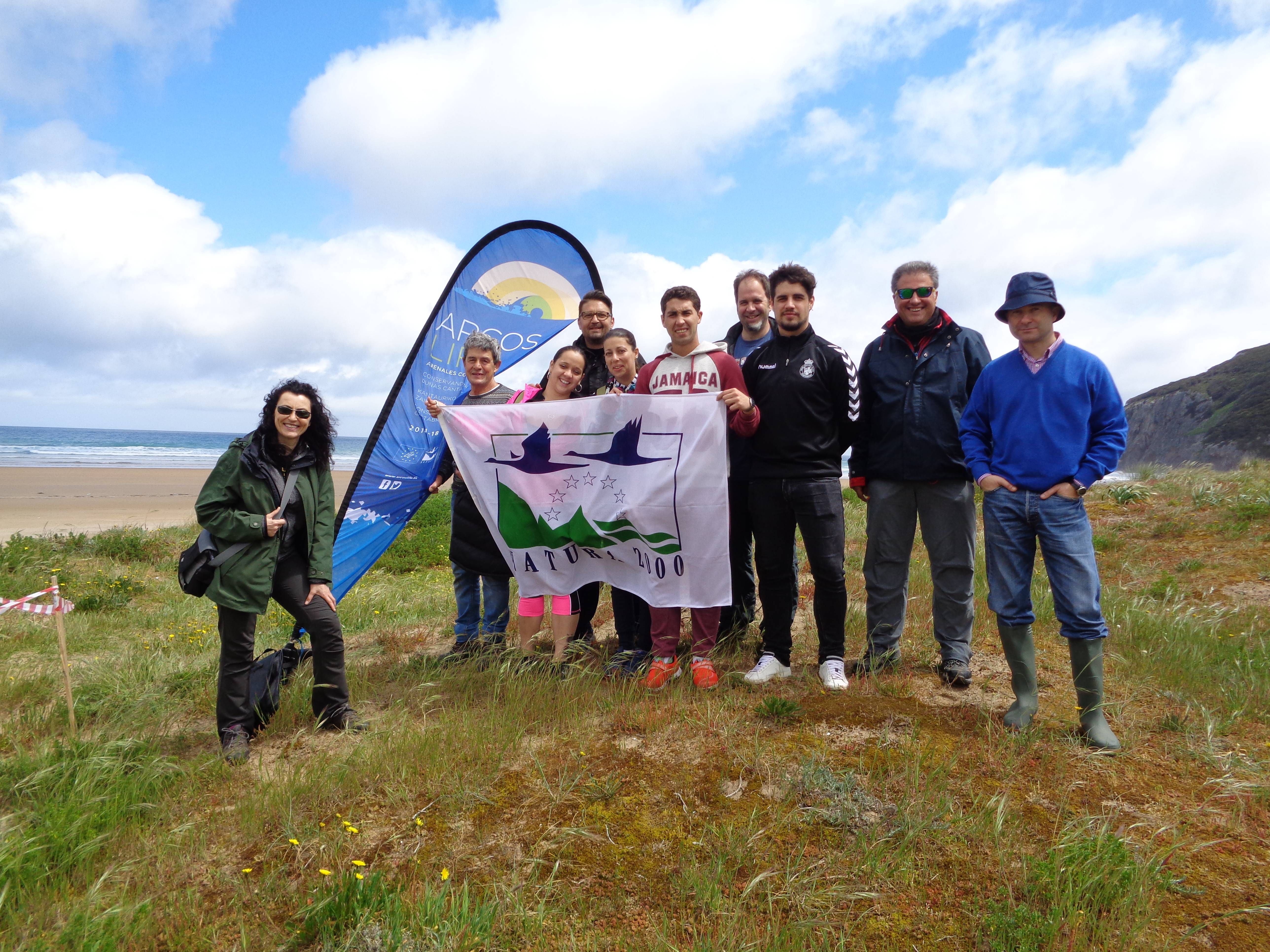
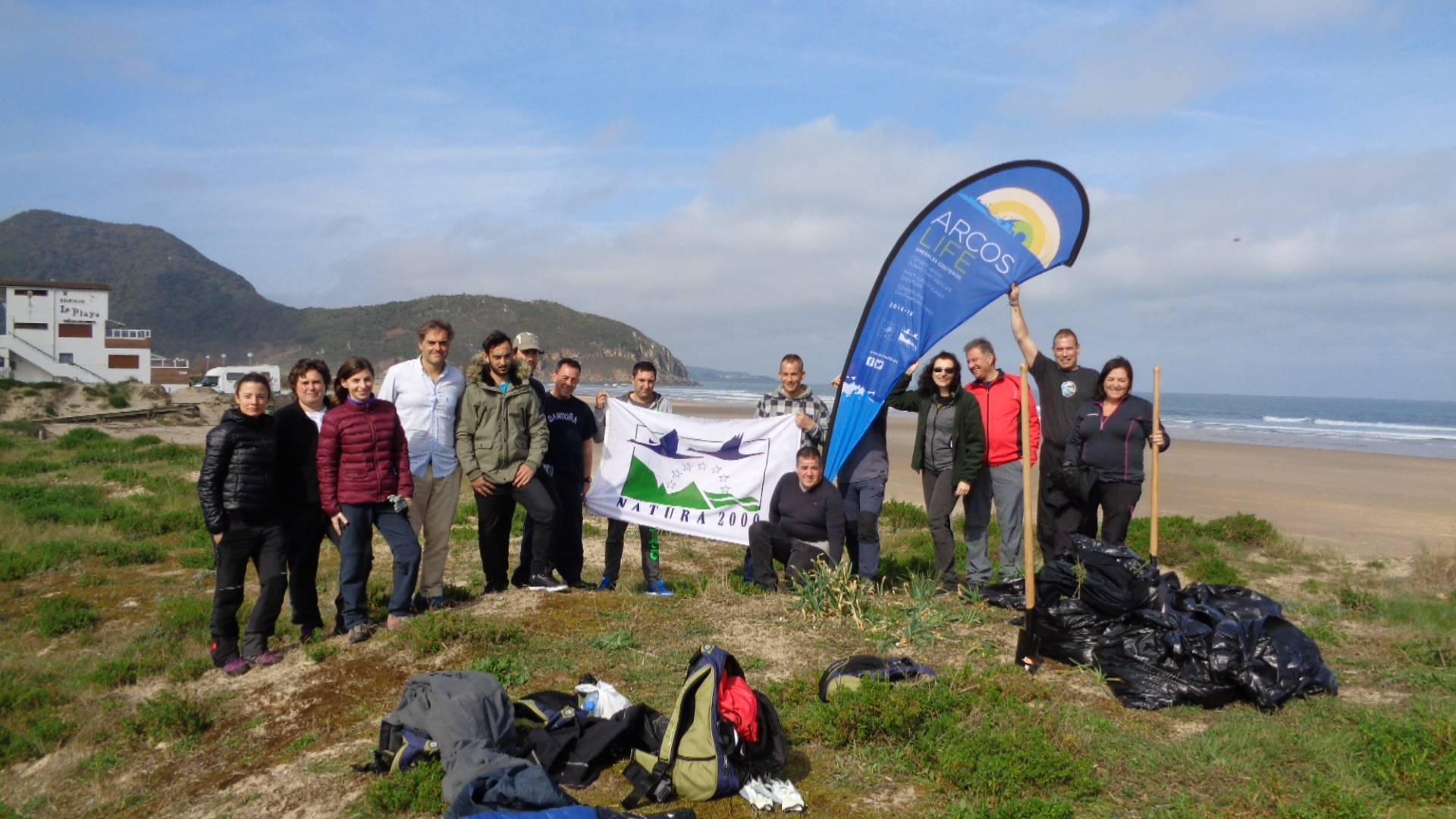
    Group photo with the team from the NACAR Programme

    On 20th May 2016 work was carried out next to the El Brusco hill on the Berria beach. Staff from AMICA, SERCA and AMPROS joined forces to take action against the invasive species and to commemorate the European Natura 2000 Day.

    AMICA, AMPROS and SERCA staff working to control “Capeweed”

    The work was arduous, and the teams split the work into collecting and cleaning both rubbish and the capeweed, which was in full bloom. Some workers, such as those from AMICA and AMPROS, contributed their far-reaching experience in this kind of manual control of invasive species, whilst the SERCA team, in training for gardening tasks, thoroughly enjoyed the hugely constructive learning experience.

    Another snapshot of the work to control “Capeweed”

    A total of 75 kg of waste were collected, of which 58 kg comprised organic waste, 17 kg recyclable waste, and 103 kg capeweed.

    Everyone worked extremely hard, managing to control the growth of capeweed throughout 2016 in the Berria beach dune system (Santoña). Over the coming years, maintenance work must be carried out to keep the reservoir of the seeds of this species under check.

    Group photo with the members of AMICA, AMPROS and SERCA who participated in the activity day.
  • The Asturias dunes in the 50’s and today. Do you want to see it?

    The Asturias dunes in the 50’s and today. Do you want to see it?

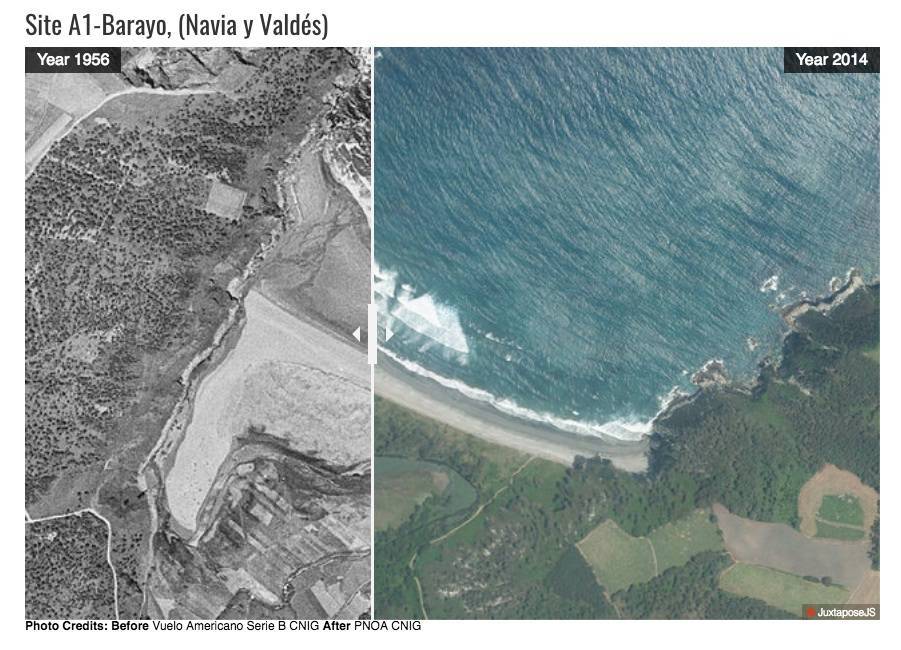
    This aerial photograph was taken in the 1950’s by the American army. It shows what the dune system landscape looked like in those years. We have compared it with current images from the Spanish National Plan for Aerial Orthophoto.

    In the following photos you can see images of all the Asturian areas where the Life+ARCOS project carries out its work: from the 50’s and from 2014.  You can clearly see how much the area has changed. Click and drag over the photos so you can see how the area looked before and now. It is as easy as that.

    It is true that it will be impossible for us to recover the area the dune systems covered in the past, but here at Life+ARCOS, we believe the sandbanks still deserve a chance. We are working on it.

    We hope you enjoy it.

    Site A1-Barayo, (Navia and Valdés)

    Site A2-Verdicio (Gozón)

    Site A3- Vega Beach (Ribadeslla)

  • First activity of NACAR Programme in 2017 (Berria, Cantabria region)

    First activity of NACAR Programme in 2017 (Berria, Cantabria region)

    On 9 March 2017, we scheduled the NACAR (Nature and Prison) program’s first volunteer activity of the year within the LIFE ARCOS project. On this occasion, the Natural Park Director and two interns from the Directorate-General of Natural Environment (from the Regional Ministry of Rural Affairs, Fisheries and Food, Government of Cantabria), seven inmates and two supervisors from the El Dueso Penitentiary participated.  Four supervisors from the Cantabrian Network for Rural Development that work at the Santoña, Victoria and Joyel Marshes Natural Park also participated.  The group was made up of a large team that worked all morning to restore the Berria dune.

    After the Director of the Park gave a brief introduction to dune dynamics and the LIFE ARCOS project, participants were divided into two groups to work on the activity areas in the central part of the Berria beach (Santoña) dune system.  The activity started by picking up a bit of rubbish in the area. Then, the groups continued to extract invasive species like the cape weed Arcthoteca calendula, the Ambrosia artemisifolia and some outbreaks of yuca (Yucca gloriosa) in the secondary and especially in the tertiary dune.  Small gardening shovels were used to manually extract these plants from the dune ecosystem.  This work took a while, because some areas had very small cape weeds germinating from the large seed reservoir these plants create, and the teams reviewed the areas carefully. There were few cases of ambrosia since they had been extracted manually two years ago.

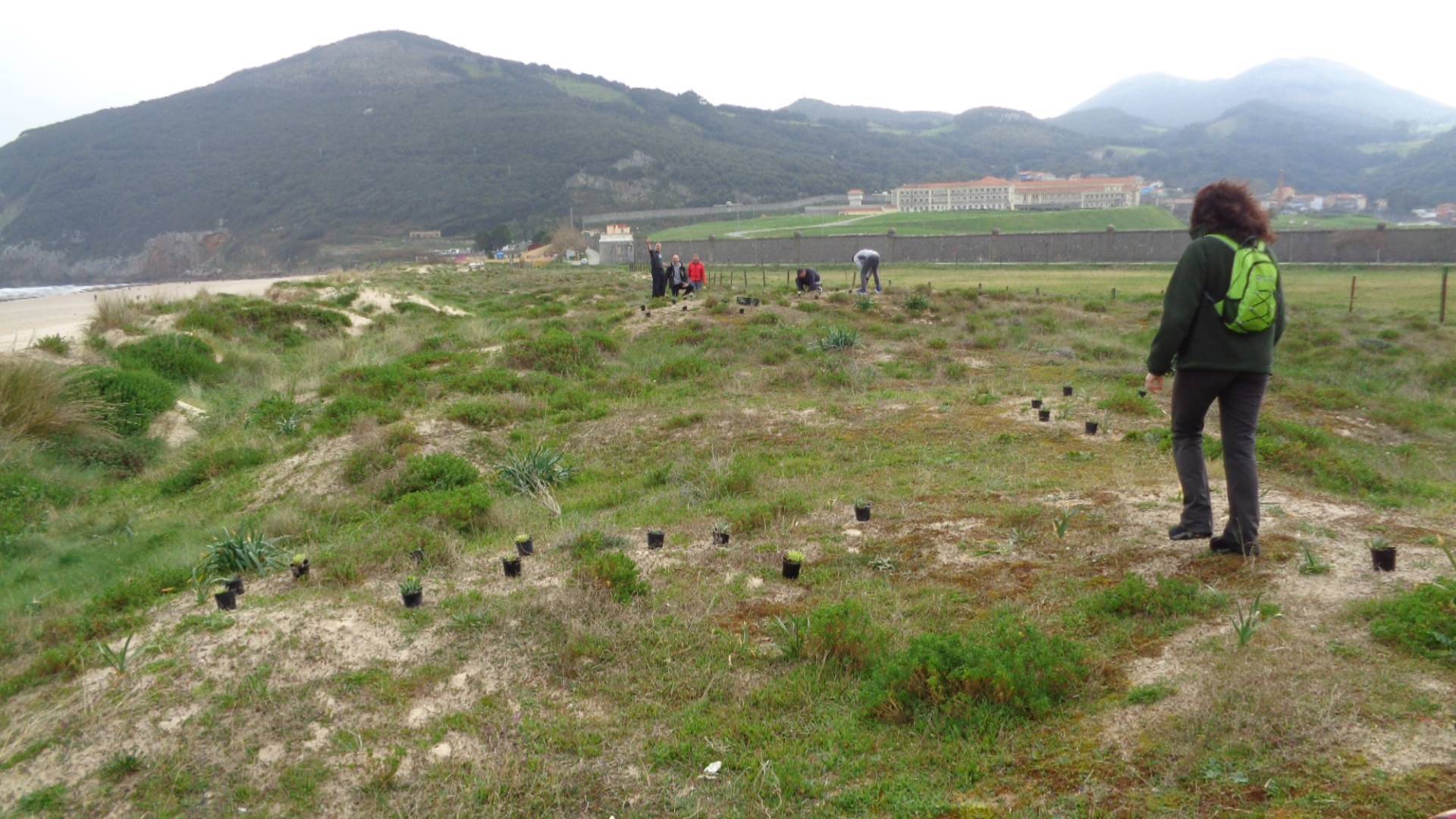
    Then, the teams worked to plant a native species called Virginia stock (Matthiola sinuata), which was obtained from the Gardening Workshop garden centre of the El Dueso Penitentiary, with seeds collected in 2016 from Berria beach dunes.  First, flowerpots were placed within an irregular planting framework to cover the entire area where cape weed was extracted. Then, around 200 Virginia stock were planted.

    We took a break at mid-morning and then went to the dune micro-reserve next to Brusco and the rising dune, an area that is closed to visitors to encourage regrowth. Just a few years ago, people were still parking their cars amongst the dunes.  During the beach walk on the way to the next activity area, we reviewed the frontal dune to collect some bulbs of daffodil (Pancratium maritimum) that were disconnected during the sea storm. They will be reintroduced into the dune. 

    In the Berria (Santoña) dune system, crossworts (Crucianella maritima) are just as rare as in other Cantabrian dunes and are present in just a few small areas of the tertiary dune. About thirty plants were cut so the El Dueso Gardening Workshop can work on multiplication techniques.

    In the area next to Brusco, Ononix natrix subsp. ramossisima (a Mediterranean plant in its distribution limit) was extracted and cleared. Cape weed was also extracted and 200 underdeveloped nursery plants of Virginia stock  were planted in the central area of Berria beach.  In this same area, agapanthus and crocosmias had bloomed and their bulbs were extracted.

    A total of four 100-litre bags of rubbish and eight 100-litre bags of invasive species, mostly cape weed (Arctotheca calendula), were collected. 

    Thank you to the team and all their hard work! We all learned from each other while enjoying a sunny morning at the beach. 

  • EUCC-Atlantique & LIFE ARCOS Project organize a Workshop on Cantabrian dunes, in Santander, 25-26 april 2017

    EUCC-Atlantique & LIFE ARCOS Project organize a Workshop on Cantabrian dunes, in Santander, 25-26 april 2017

    EUUC Centre Atlantique
    ARCOS Life+Project

    The non-governmental organisation EUCC, via its local branch EUCC-Atlantic, with headquarters in Biarritz (https://euccatlantic.net) and in collaboration with the ARCOSLIFE project for coastal sandbanks, is organising some field days on the Liencres and Somo-Loredo dunes, set to take place on 25th and 26th April 2017.

    Some 30 attendees are expected, including professionals, students and independent individuals from various different countries. Among the participating entities are EUCC (European Union for Coastal Conservation), National Forestry Office (Office National des Fôrets) (France) and some mayors from coastal towns such as Saint Jean de Monts (Vendée, France).

    • Web Workshop site here
    • News about Workshop in EUCC-Atlantique web here
    • Workshop registration form here


    PROVISIONAL PROGRAMME

    25th April 2017

    8:30: Meeting point in front of the dock palace on the Port of Santander. Bus shuttle to the Liencres dunes.

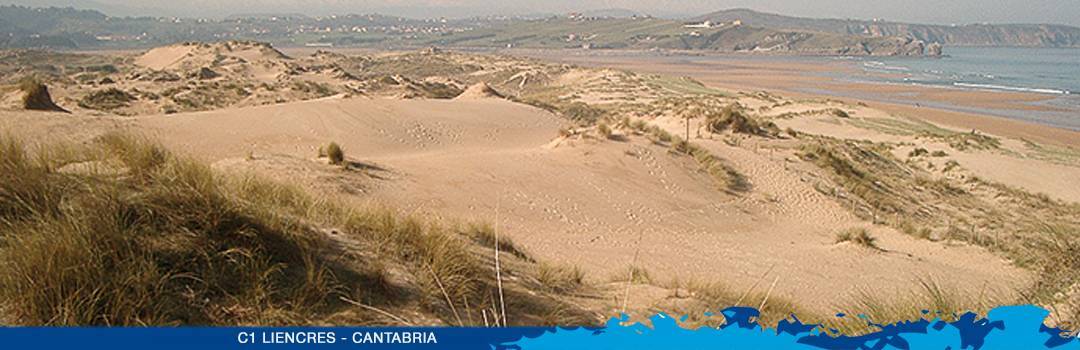
    Morning: Liencres Dunes/Pas Estuary

    liencres_700

    Carlos Ley, director of Ecología Litoral, and Jesús Varas, from the Government of Cantabria (Directorate-General of the Environment), will cover four main issues during the journey along the dune system:

    • Characteristics, formation and historical evolution of the dune system
    • Beach clean-up (polygonifolia vs  peplis)
    • Management of the pine forest
    • Public use

    Elena Fernández Iglesias, researcher from the University of Oviedo (INDUROT), will speak about the geomorphological context of the area

    13:00 – 14:00: lunch.

    Bus shuttle to the Directorate General of the Environment premises.

    14:30: Reception at the premises of the Directorate General of the Environment (Santander).

    Presentation by a representative from the Government of Cantabria.

    • (Speaker to be confirmed: Legislative context and territorial organisation in Cantabria: the keys to understanding dune management
    • Maria Recio, Hydraulic Institute of Cantabria: Analysis of the effects of pedestrian transit over the dune vegetation
    • Ignacio Alonso, Life+ARCOS project: “The role of the Life+ARCOS project in recovering the Cantabrian dune systems”.
    • Loïc Gouguet, Leading National Coastal Expert from the “National Forestry Department (Office National des Forêts, OFN)”: Managing the French Atlantic dunes, from the beach to the forested dune.
    • Paul Rooney, Liverpool Hope University: differences and similarities between the management priorities of the coastal dunes in northern and southern Europe.

    15:45 – 17:15: discussion.

    17:15 – 17:30: Presentation about the reactivation of players for the European Atlantic Network for Coastal Risk Management (ANICORIM).

    17:30 – 18:00: Return to Santander by bus


    26th April 2017

    8:30: Meeting point in front of the dock palace, Santander

    8:45: Departure of the boat across the Santander bay.

    9:00: Walk (1.5 km) to the Somo-Loredo dunes.

    Morning: The Somo dunes (photo) and the dune plant nursery

    P1000091

    Carlos Ley and Lourdes González Azpiri, from the Government of Cantabria (Directorate-General for the Environment), will guide us through the dunes and will explain:

    • The actions of the LIFE ARCOS Project: dune restored by planting European beach grass and other dune plants.
    • The techniques for planting in dunes.
    • The Loredo Dune Plant Nursery.

    13:00: Return on foot to Somo and lunch at the Surf Centre.

    Afternoon: Somo Surf Centre.

    14:30: Welcome and presentation by Mr Francisco Asón, Mayor of Ribamontán al Mar.

    • Tomás Díaz Gonzalez, Botany Professor at the University of Oviedo and general coordinator of the LIFE ARCOS Project. “The wealth of the Cantabrian dune systems”.
    • André Ricolleau,President of the Communauté de Communes Océan-Marais de Monts and Jean Magne, responsible for overseeing environmental policies: French communities and the management of public use. Examples of the “House of the Dune and of the Forest” and of the interactive Biotopia exhibition.
    • Luis Cayón, manager of the Ribamontán al Mar tourism competitiveness centre: tourist uses and visits to the Somo dunes.
    • David Rosebery, ONF coastal project managerPublic use of the Aquitaine coast.

    15:45 – 17:15: discussion.

    17:15: Return to the Somo dock and crossing of Santander bay by boat.

    18:15: Arrival in Santander

  • Erradication day of invasive plants in Playa de Vega, Ribadesella, Asturias. A great success¡

    Erradication day of invasive plants in Playa de Vega, Ribadesella, Asturias. A great success¡

    Summary of the volunteering day to remove invasive exotic species on the Vega Beach, Ribadesella (Asturias) on 12th November 2016.

    On 12th November 2016, the Life+ARCOS team brought together around 60 volunteers on the Vega Beach to hold an activity day, with the aim of removing invasive exotic species from the dune space in the Vega Beach Special Area of Conservation, in the municipality of Ribadesella (Asturias).

    img_7094
    The first participants approaching the meeting point, before starting the Volunteering day

    The day started off cloudy with the odd drop of rain, but in the end the weather held out and the activity continued until 2 o’clock in the afternoon, when the rain started to fall more heavily.

    After the introduction to the day and the presentation of the target species for removal: Paspalum secundatum (St. Augustine grass), Bidens aurea and various species of the Paspalum genus, the activity attendees were organised into groups, each distributed to different points along the dune system where there were registered patches of invasive species.

    Momento de presentación de las especies invasoras a eliminar.
    During the presentation of the target invasive species to be removed.

    The participants were provided with jackets and gloves by COGERSA, the company that also set up waste containers on the boundaries of the work areas, where the plant waste could be left and re-used by the company in its composting plants.

    With the help of the weeding tools and rakes, the participants were able to tackle a species that is particularly tricky to remove – St. Augustine grass – whose stolon stems spread along the entire secondary dune system, preventing other dune species from growing normally. The adaptation of this species to being trodden on (it is worth remembering that this invasive species was originally used for lawns), also favour its preponderance against dune species that are native to these environments, but that are less adapted to this kind of threat.


    Professor T.E. Díaz showing the stolon stems of the St. Augustine grass.

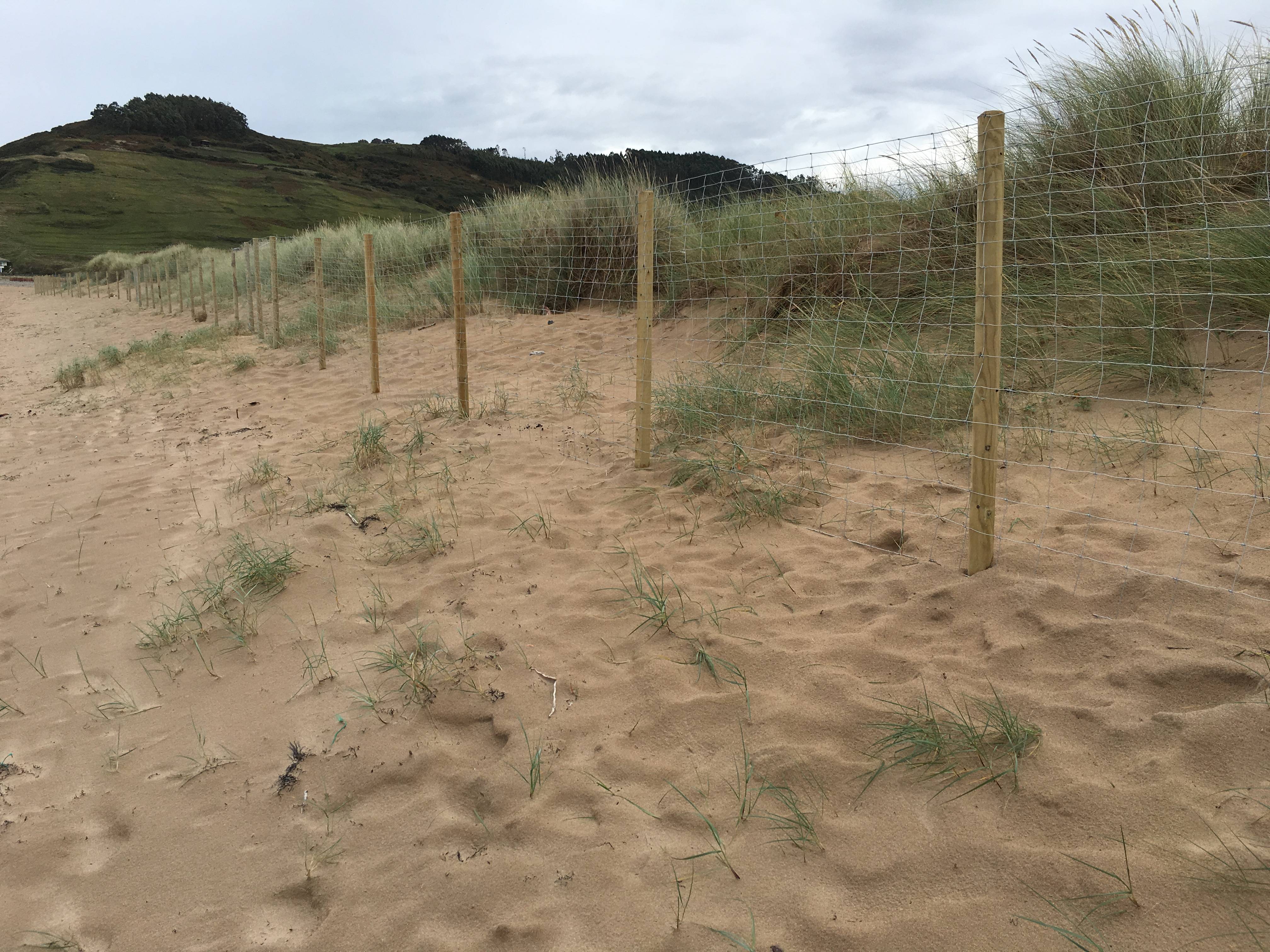
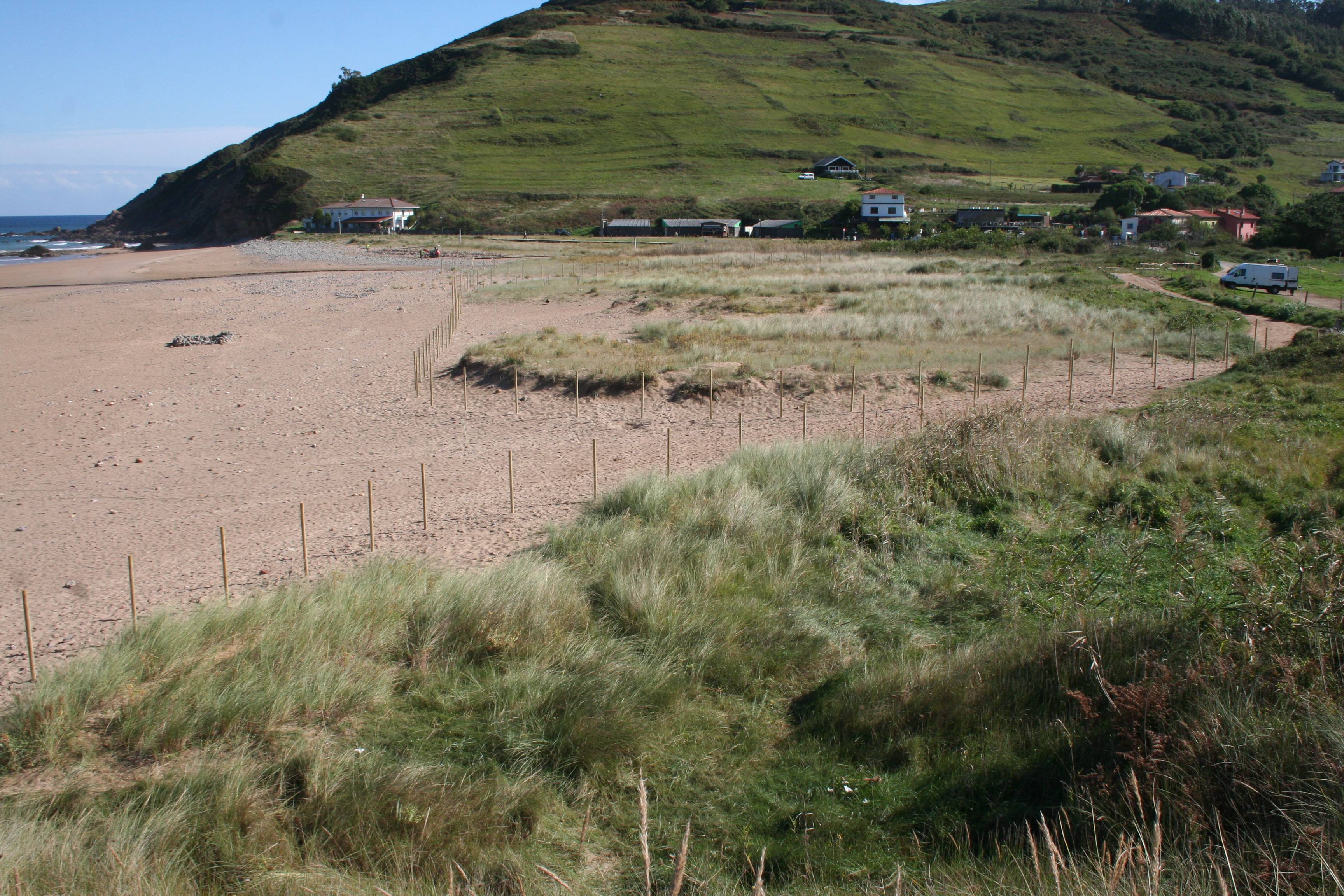
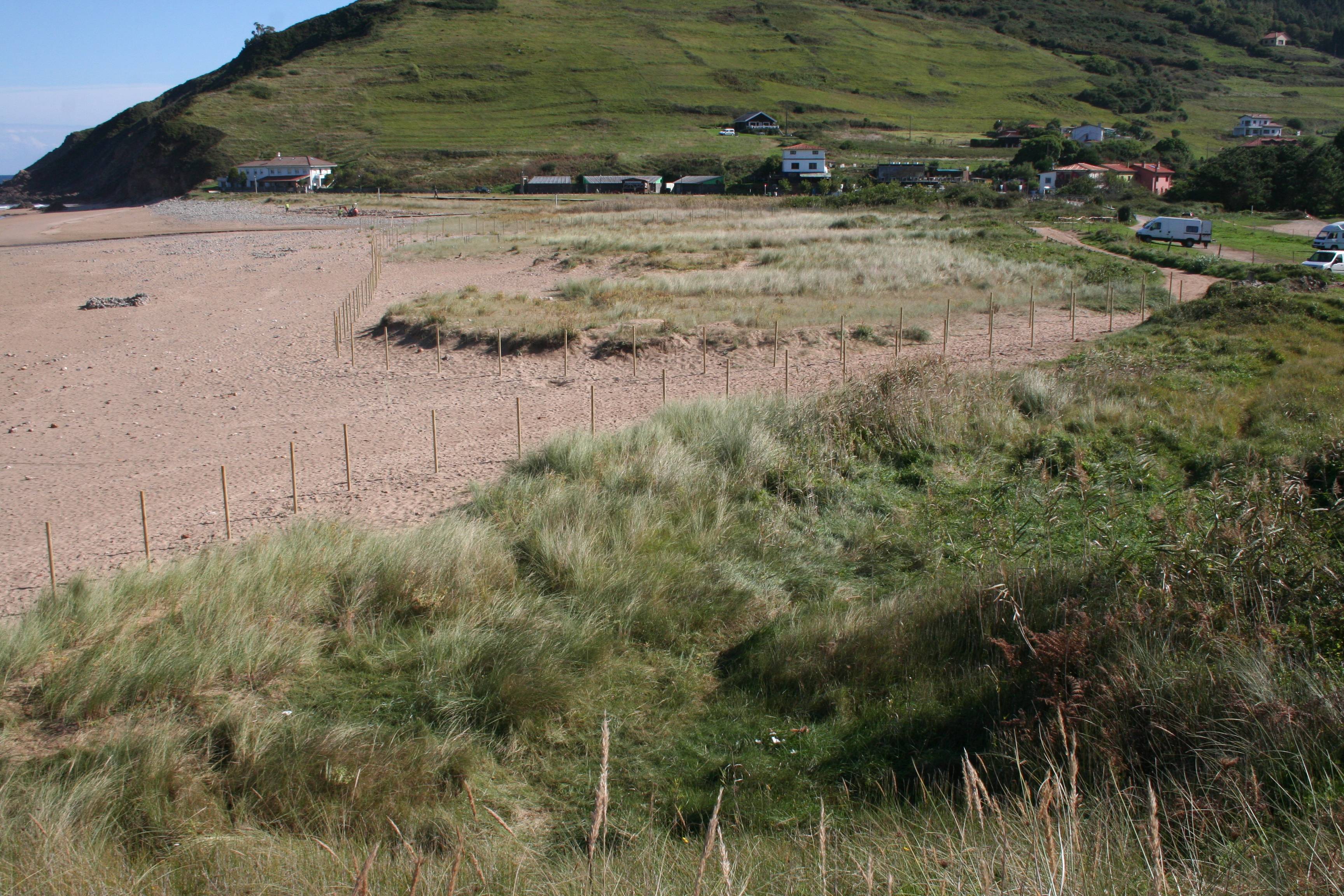
    Precisely to avoid treading on the dune system, participants were able to examine the actions undertaken by the Life+ARCOS project, with the fitting of enclosures that will protect the dune systems during the planting phase of native species in these environments.

    Some attendees to this activity day participated in the census of one of the population hubs of the catalogued species Linaria supina sub species maritima present in one of the action points for removing invasive species. The Life+ARCOS staff remained near the removal area to prevent any possible damage coming to this species.

    censo-linaria
    Some attendees were able to participate in the census of one of the population hubs of the Linaria maritima species, included in the Principality of Asturias Catalogue of Threatened Vascular Flora.

    The day ended with two containers filled with the three eliminated species, and the perception of all participants of the serious problem that biological invasions have in the effort to keep Cantabrian dune systems in a good state of conservation.

    img_7071
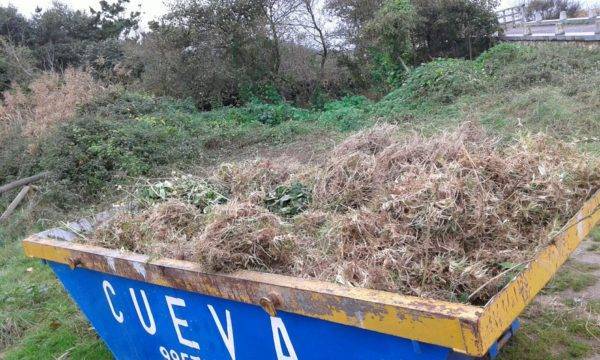
    One of the containers with some of the removed invasive species.

    As a final note, the Life+ARCOS would like to extend its deepest thanks for the warm welcome given to these kinds of actions, revealing the awareness of citizens in terms of environmental conservation.


    img_7070
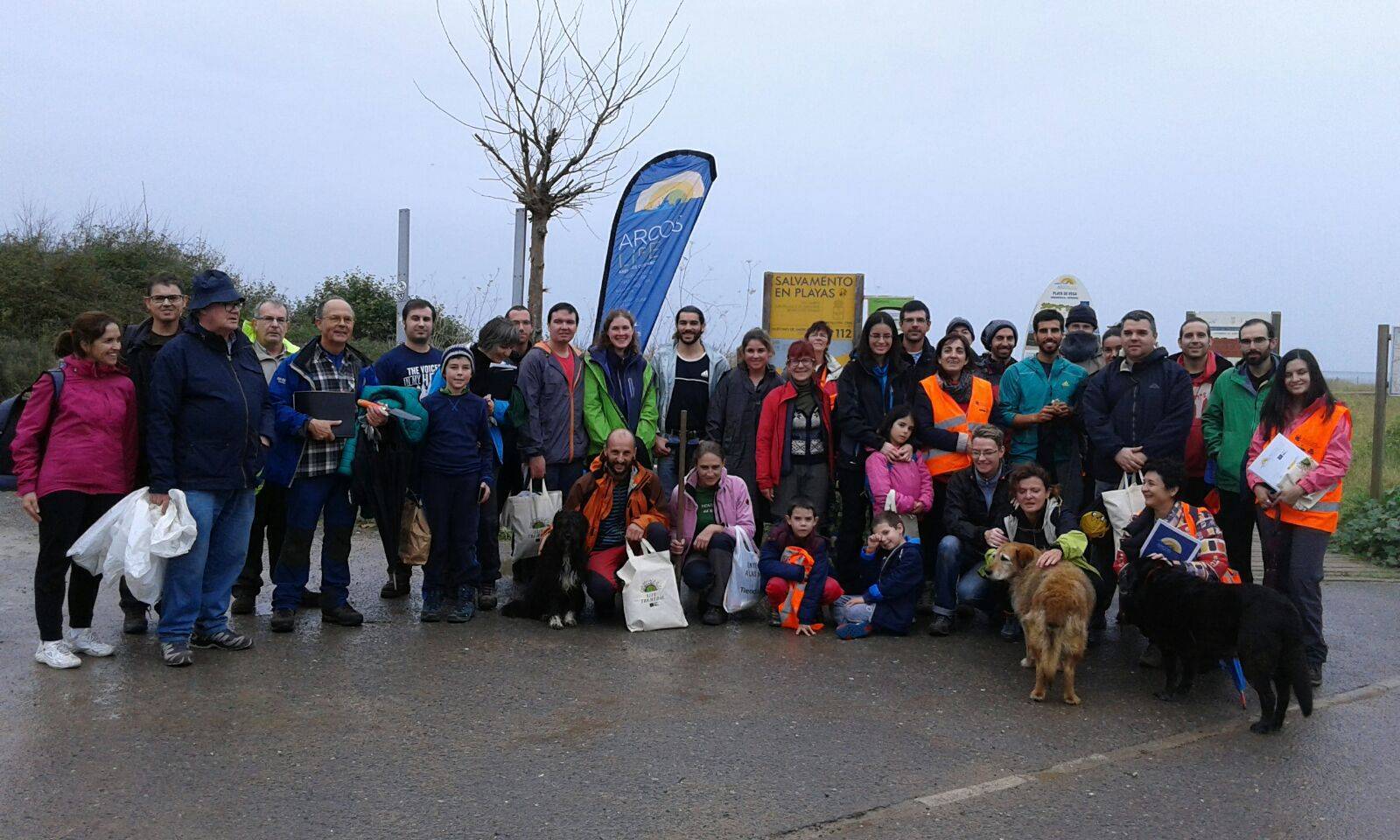
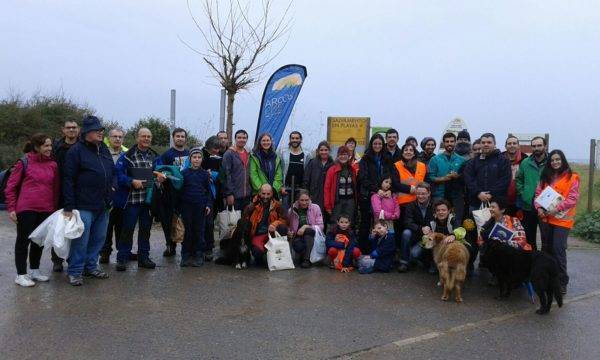
    Final photo with some of the attendees to these activity days.

    Many thanks to all participants, we hope to see you again in future editions.

    The Life+ARCOS team


  • 12th November 2016, volunteer day to eradicate invasive plants on Vega Beach dunes, Ribadesella, Asturias. Registration is closed

    12th November 2016, volunteer day to eradicate invasive plants on Vega Beach dunes, Ribadesella, Asturias. Registration is closed

    Dear friends, 

    Our call for volunteers to eradicate invasive exotic species on Saturday, 12 November on Vega beach (Ribadesella, Asturias) went wellA lot of people participated in this activity.

    Due to organisational reasons, we have to close registration on Friday, 4 November. We will delete the registration form from this link on that day.

    This week, we will send an email to everyone who registered with information about the departure points and specific organisation details. For those who do not have their own car, we have two departure points where you can get a ride: one in Oviedo (to be determined) and another in Gijon (Jardín Botánico Atlántico car park). There, we will coordinate car sharing.

    We would also like to take this opportunity to introduce you to some of the invasive species we will help to eradicate from this protected area within the Natura 2000 Network, which was declared a Special Area of Conservation with the approval of Decree 161/2014, of 29 December. This Decree declared Vega Beach as a Special Area of Conservation (ES1200022) and approved the First Integrated Management Instrument of protected areas on Vega Beach.

    This Decree, which was published in the Official Gazette of the Principality of Asturias of 3 January 2015, constituted the management instrument to regulate activities (allowed, authorisable and not allowed) that can be carried out in this protected area.

    The two invasive species that are directly affecting the biodiversity of Vega Beach dune ecosystems belong to the grass family. They have the strong ability to expand within the dune system, as you can see «in situ.» All these species are native to the Americas and are a problem on European coasts. They arrived to Europe in a number of different ways.

    The first one is called the St. Augustine grass Stenotaprhum secundatum (=Stenotaphrum americanum) which has sprig characteristics and extremely strong creeper roots. Its use in grass formation has proven to be «very effective» and has caused it to expand in natural and semi-natural environments. It is comfortable developing in the sandy soils of coastal dunes and eradicate all other dune species.
    The elimination of this species is done manually, being especially careful not to fragment the stems so new individuals cannot develop.

    Grama americana (Stenotaprhum secundatum)
    St. Augustine grass (Stenotaprhum secundatum)
    Duna blanca ocupada por la grama americana
    White dune taken over by St. Augustine grass

    Another dangerous species in the Vega Beach dune system is the Seashore paspalum or Salt Water Couch Paspalum vaginatum. Its characteristic sprigs–which sprout from the same point (digitate)–and some stems–which are also creeping–have the capacity to root in the soil. This means that any fragment can generate new, cloned individuals.

    Spot of Paspalum vaginatum in the embryonic dune
    Paspalum vaginatum
    Paspalum vaginatum moving from the embryonic dune to the white dune


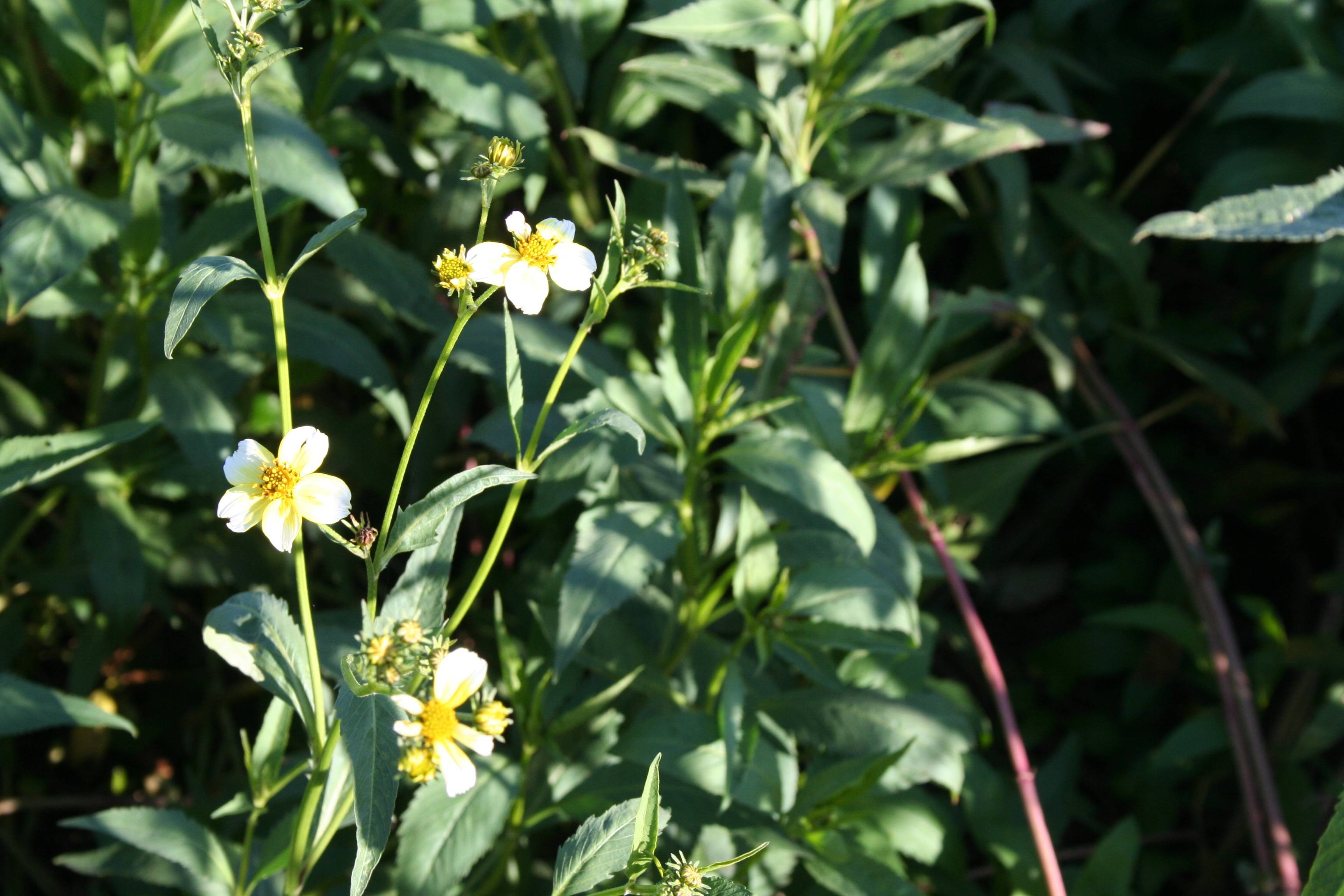
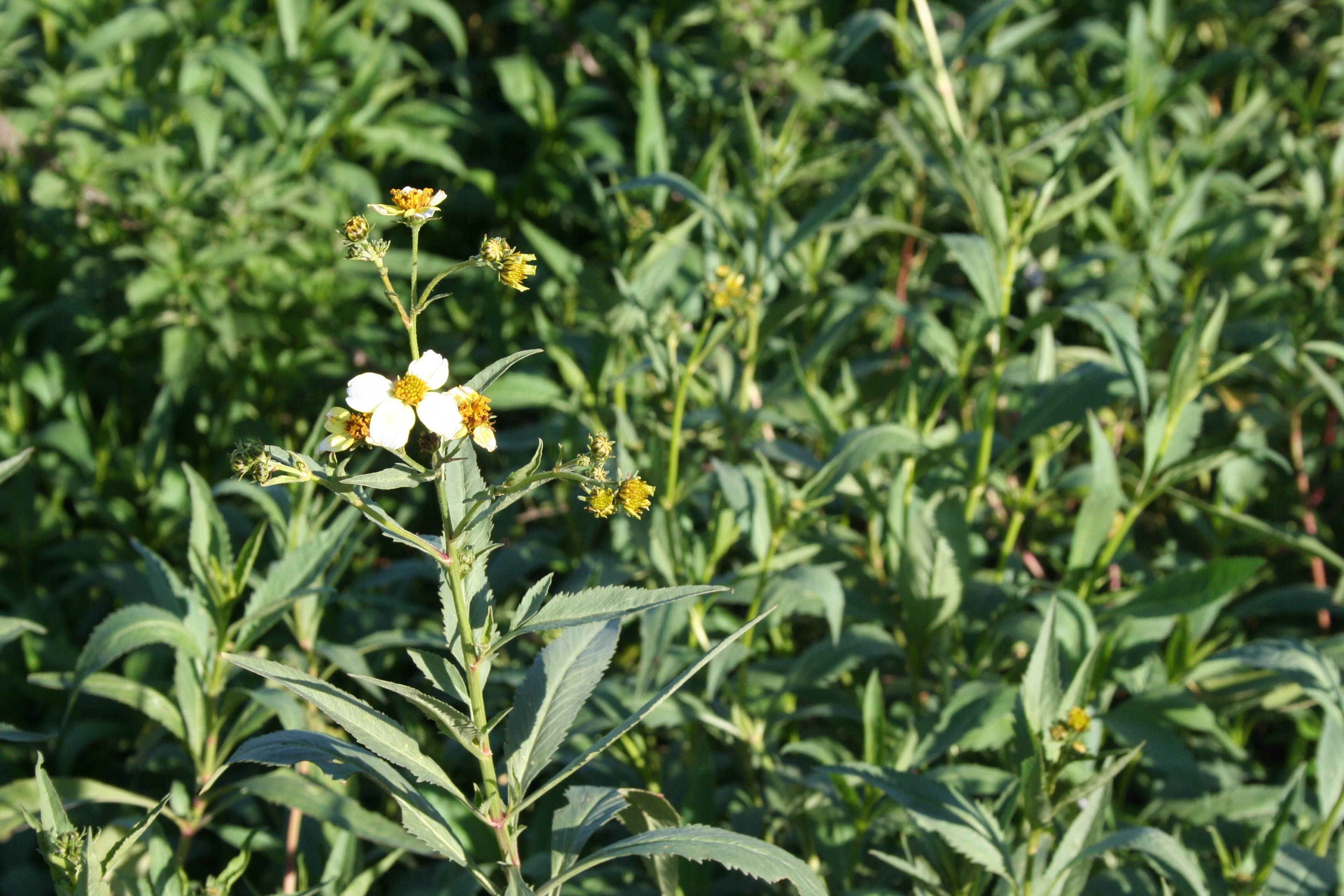
    Another invasive species present in the border of the dune system is the compound of American origin (especially in the central area of North America) known as the Arizona beggarticks, Bidens aurea. This species is located on the border of the Special Area of Conservation, occupying areas with the wettest soil. It is not present in the dune system itself, but its removal from the area will prevent it from moving to the nearest dune where it is also present.

    Arizona beggarticks (Bidens aurea), flower details
    img_3448
    Arizona beggarticks (Bidens aurea) on the border of the dune system


  • Centinelas project (Coastwatch Cantabria) organises an elimination campaign of invasive plants in La Arena Beach (Muskiz, Bizkaia)

    Centinelas project (Coastwatch Cantabria) organises an elimination campaign of invasive plants in La Arena Beach (Muskiz, Bizkaia)

    Centinelas (Coastwatch-Cantabria)

    On Sunday, 23 October the organisation called Centinelas carried out an environmental volunteer activity for a group of employees of the Port Authority of Bilbao in the La Arena beach area.

    A total of 40 people, most of them families with children, visited La Arena beach in the municipality of Ciérvana on their day off to volunteer and help Life+ARCOS carry out the activities we have been working on in the area.

    The activity began with an introduction to the Life+ARCOS project, as well as to the dune system and its vulnerabilities. Carlos Ley, head of Ecología Litoral, beneficiary member of the project, gave the introduction.

    First, we started to search for and eradicate the invasive flora in the area. To make sure we would not make any mistakes, we were accompanied and advised by the person in charge of coordinating restoration and conservation of this dune within the Life+ARCOS project. We were able to extract approximately 40 kg. of the invasive plant.

    Afterwards, we broke up into small groups to plant dune flora species.

    We wanted to thank volunteers for all their hard work and gave them a gift and appetisers. We were thrilled to see how satisfied everyone was after having participated in the activity.

    Our Association would like to thank the Port Authority of Bilbao and its employees for having worked to conserve and recover the La Arena beach dune system.

    Lugar de actuación
    Activiy area
    Presentación de la actividad
    Introdudction to activity

    What is the Centinelas and Coastwatch project?

    The Centinelas project is the local adaptation of the European volunteer programme called Coastwatch. It works to develop an environmental volunteer programme that values, protects and manages the coastline.

    The project framework came about almost 30 years ago in Ireland and has, ever since then and on occasion, been present in Cantabria.

    It is currently an established program that serves as a link between the Cantabrian people and Coastwatch International in a network of entities in charge of coordinating different areas of the European coast (countries, autonomous communities, provinces, regions…).

    These local entities serve as a nexus between the international project and its participants by providing information, training, resources and opportunities for people to join the project’s efforts.

    More information about Centinelas project here

    You can download the activity report provided by the Centinelas project team (Coastwatch-Cantabria) here: Report of Centinelas activity in La Arena beach.