Etiqueta: Volunteering

  • Erradication day of invasive plants in Playa de Vega, Ribadesella, Asturias. A great success¡

    Erradication day of invasive plants in Playa de Vega, Ribadesella, Asturias. A great success¡

    Summary of the volunteering day to remove invasive exotic species on the Vega Beach, Ribadesella (Asturias) on 12th November 2016.

    On 12th November 2016, the Life+ARCOS team brought together around 60 volunteers on the Vega Beach to hold an activity day, with the aim of removing invasive exotic species from the dune space in the Vega Beach Special Area of Conservation, in the municipality of Ribadesella (Asturias).
    img_7094
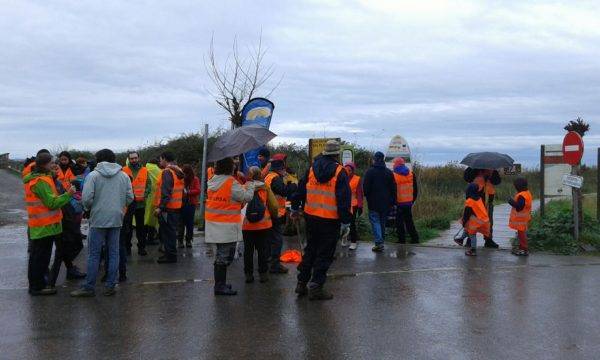
    The first participants approaching the meeting point, before starting the Volunteering day

    The day started off cloudy with the odd drop of rain, but in the end the weather held out and the activity continued until 2 o’clock in the afternoon, when the rain started to fall more heavily.

    After the introduction to the day and the presentation of the target species for removal: Paspalum secundatum (St. Augustine grass), Bidens aurea and various species of the Paspalum genus, the activity attendees were organised into groups, each distributed to different points along the dune system where there were registered patches of invasive species.
    Momento de presentación de las especies invasoras a eliminar.
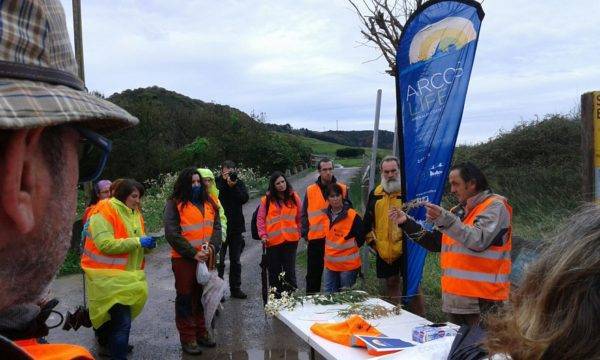
    During the presentation of the target invasive species to be removed.

    The participants were provided with jackets and gloves by COGERSA, the company that also set up waste containers on the boundaries of the work areas, where the plant waste could be left and re-used by the company in its composting plants.

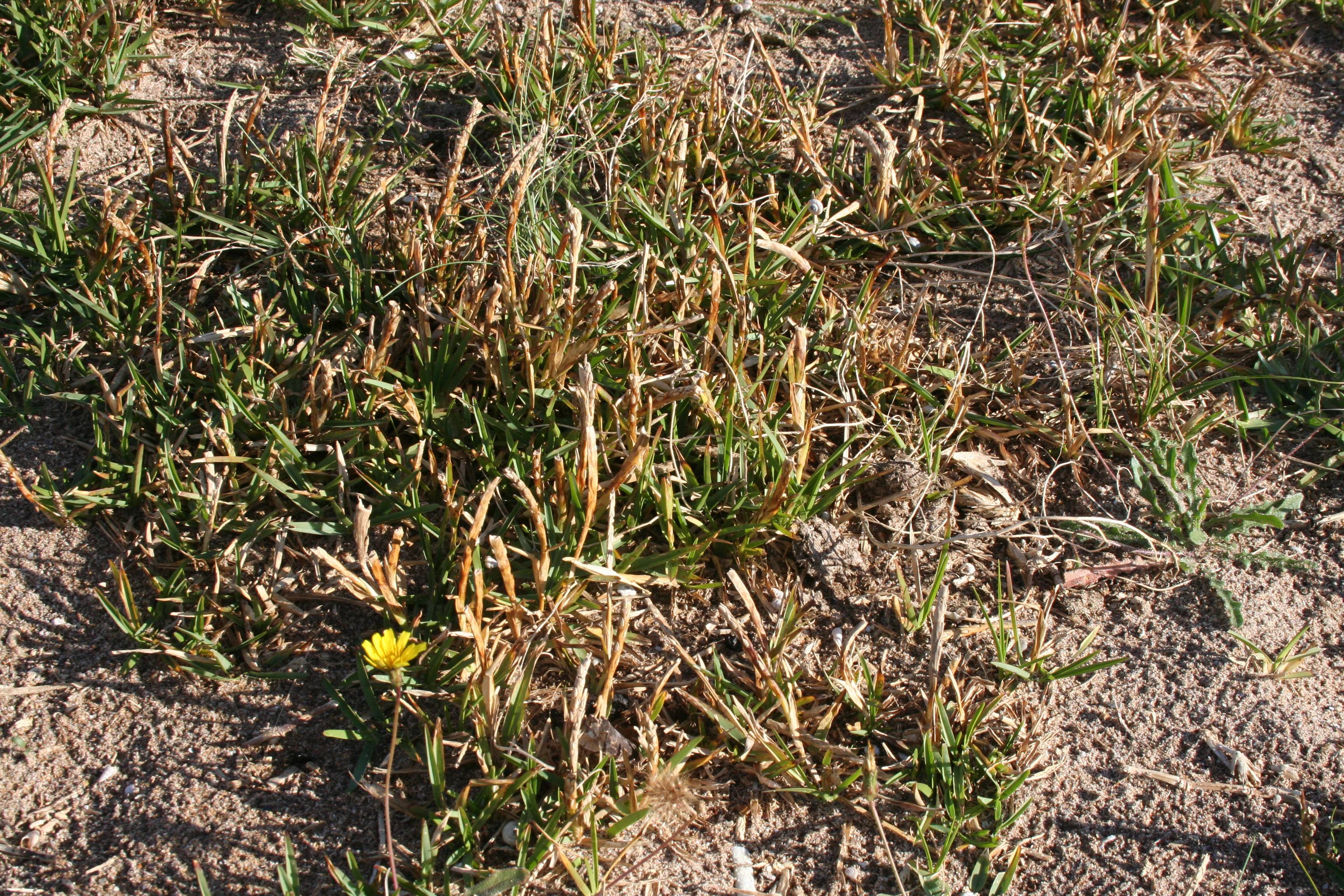
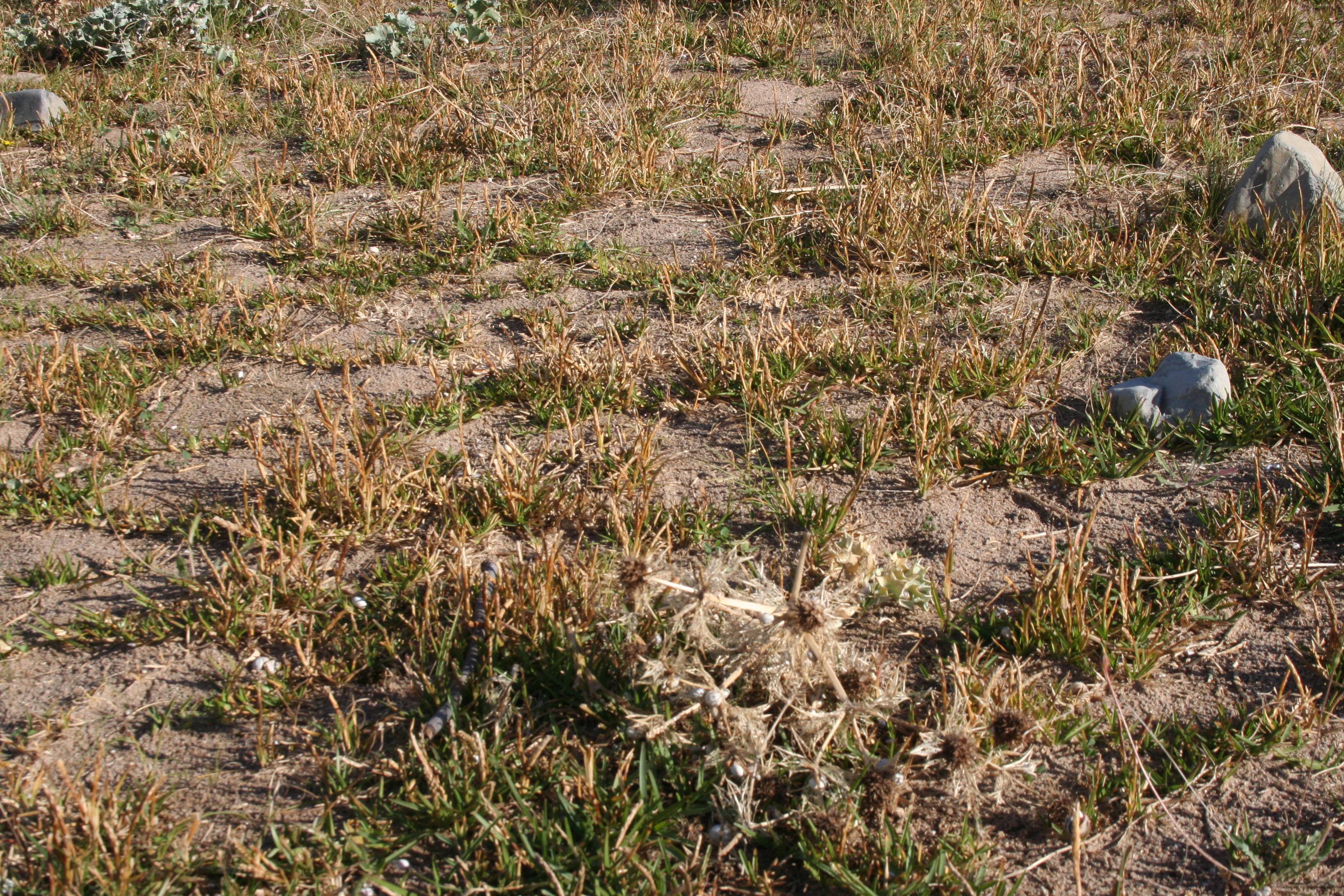
    With the help of the weeding tools and rakes, the participants were able to tackle a species that is particularly tricky to remove – St. Augustine grass – whose stolon stems spread along the entire secondary dune system, preventing other dune species from growing normally. The adaptation of this species to being trodden on (it is worth remembering that this invasive species was originally used for lawns), also favour its preponderance against dune species that are native to these environments, but that are less adapted to this kind of threat.
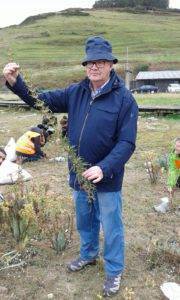
     

    Professor T.E. Díaz showing the stolon stems of the St. Augustine grass.

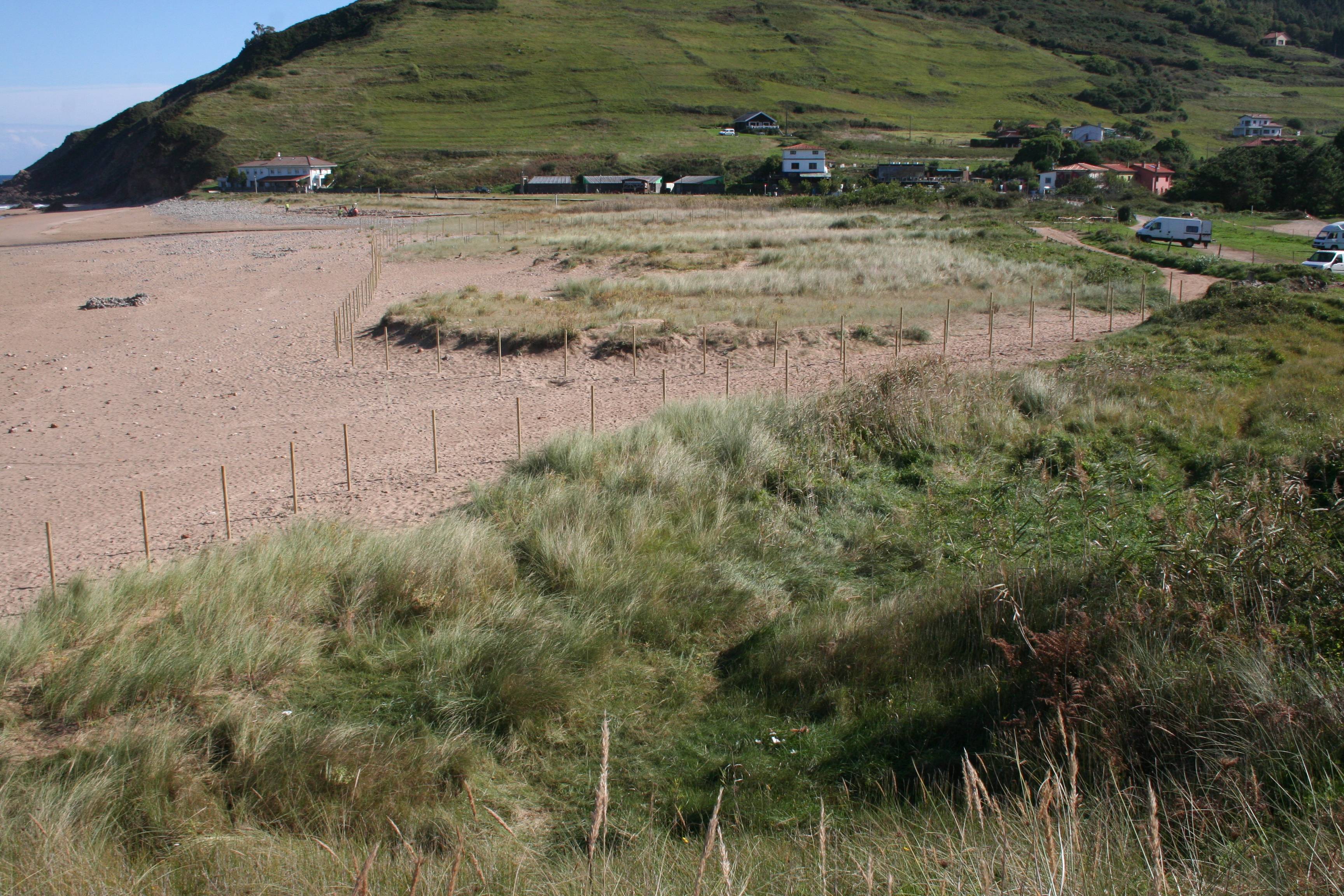
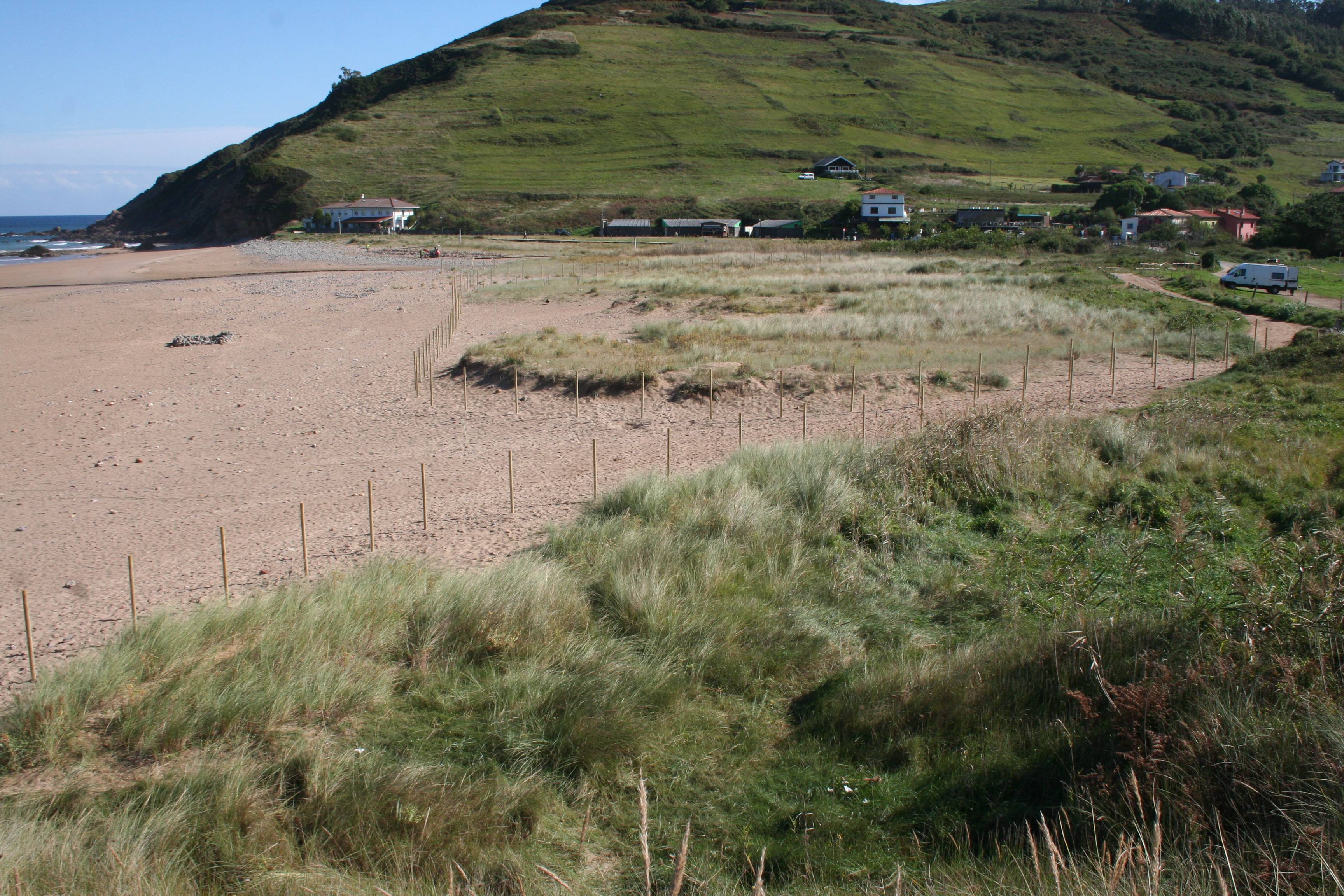
    Precisely to avoid treading on the dune system, participants were able to examine the actions undertaken by the Life+ARCOS project, with the fitting of enclosures that will protect the dune systems during the planting phase of native species in these environments.

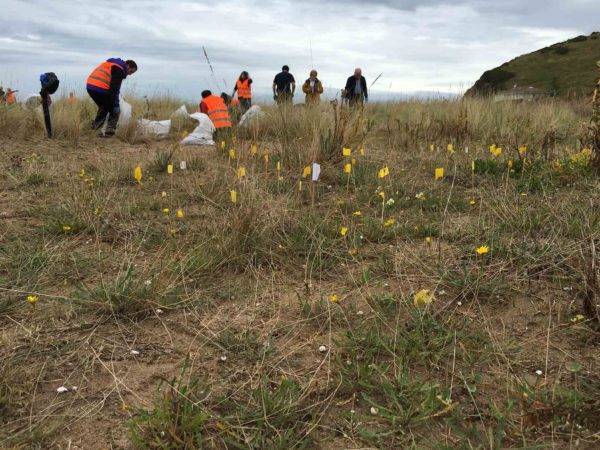
    Some attendees to this activity day participated in the census of one of the population hubs of the catalogued species Linaria supina sub species maritima present in one of the action points for removing invasive species. The Life+ARCOS staff remained near the removal area to prevent any possible damage coming to this species.
    censo-linaria
    Some attendees were able to participate in the census of one of the population hubs of the Linaria maritima species, included in the Principality of Asturias Catalogue of Threatened Vascular Flora.

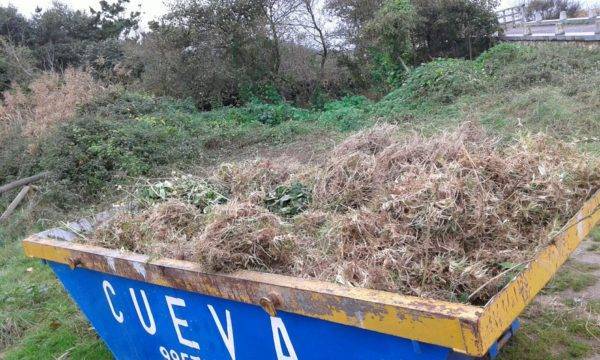
    The day ended with two containers filled with the three eliminated species, and the perception of all participants of the serious problem that biological invasions have in the effort to keep Cantabrian dune systems in a good state of conservation.
    img_7071
    One of the containers with some of the removed invasive species.

    As a final note, the Life+ARCOS would like to extend its deepest thanks for the warm welcome given to these kinds of actions, revealing the awareness of citizens in terms of environmental conservation.
     

    img_7070
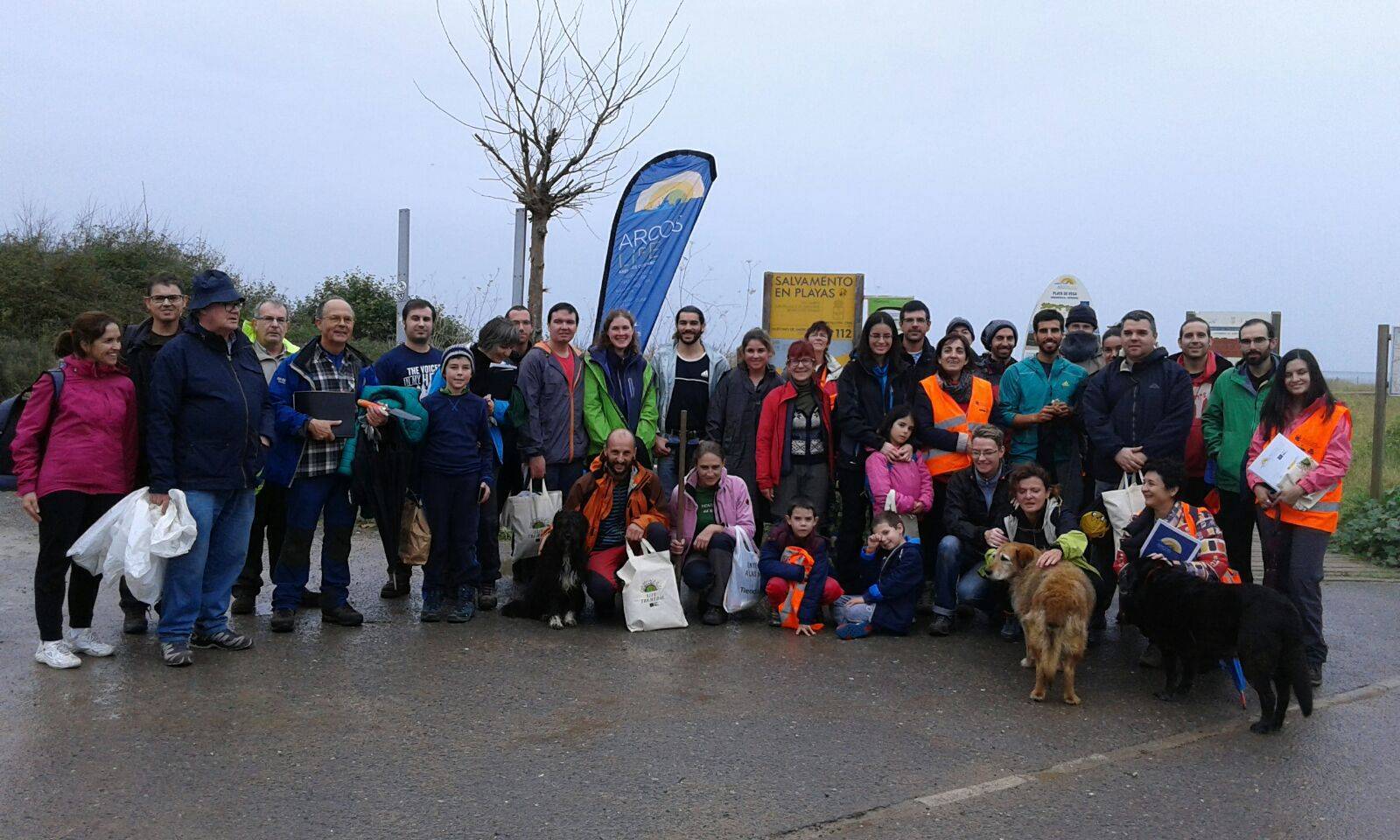
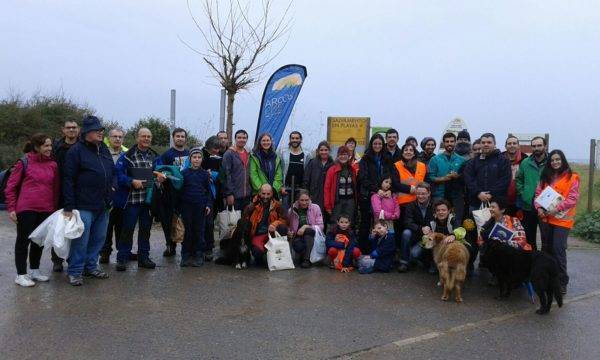
    Final photo with some of the attendees to these activity days.

    Many thanks to all participants, we hope to see you again in future editions.
    The Life+ARCOS team


  • 12th November 2016, volunteer day to eradicate invasive plants on Vega Beach dunes, Ribadesella, Asturias. Registration is closed

    12th November 2016, volunteer day to eradicate invasive plants on Vega Beach dunes, Ribadesella, Asturias. Registration is closed

    Dear friends, 

    Our call for volunteers to eradicate invasive exotic species on Saturday, 12 November on Vega beach (Ribadesella, Asturias) went wellA lot of people participated in this activity.

    Due to organisational reasons, we have to close registration on Friday, 4 November. We will delete the registration form from this link on that day.

    This week, we will send an email to everyone who registered with information about the departure points and specific organisation details. For those who do not have their own car, we have two departure points where you can get a ride: one in Oviedo (to be determined) and another in Gijon (Jardín Botánico Atlántico car park). There, we will coordinate car sharing.

    We would also like to take this opportunity to introduce you to some of the invasive species we will help to eradicate from this protected area within the Natura 2000 Network, which was declared a Special Area of Conservation with the approval of Decree 161/2014, of 29 December. This Decree declared Vega Beach as a Special Area of Conservation (ES1200022) and approved the First Integrated Management Instrument of protected areas on Vega Beach.

    This Decree, which was published in the Official Gazette of the Principality of Asturias of 3 January 2015, constituted the management instrument to regulate activities (allowed, authorisable and not allowed) that can be carried out in this protected area.

    The two invasive species that are directly affecting the biodiversity of Vega Beach dune ecosystems belong to the grass family. They have the strong ability to expand within the dune system, as you can see «in situ.» All these species are native to the Americas and are a problem on European coasts. They arrived to Europe in a number of different ways.

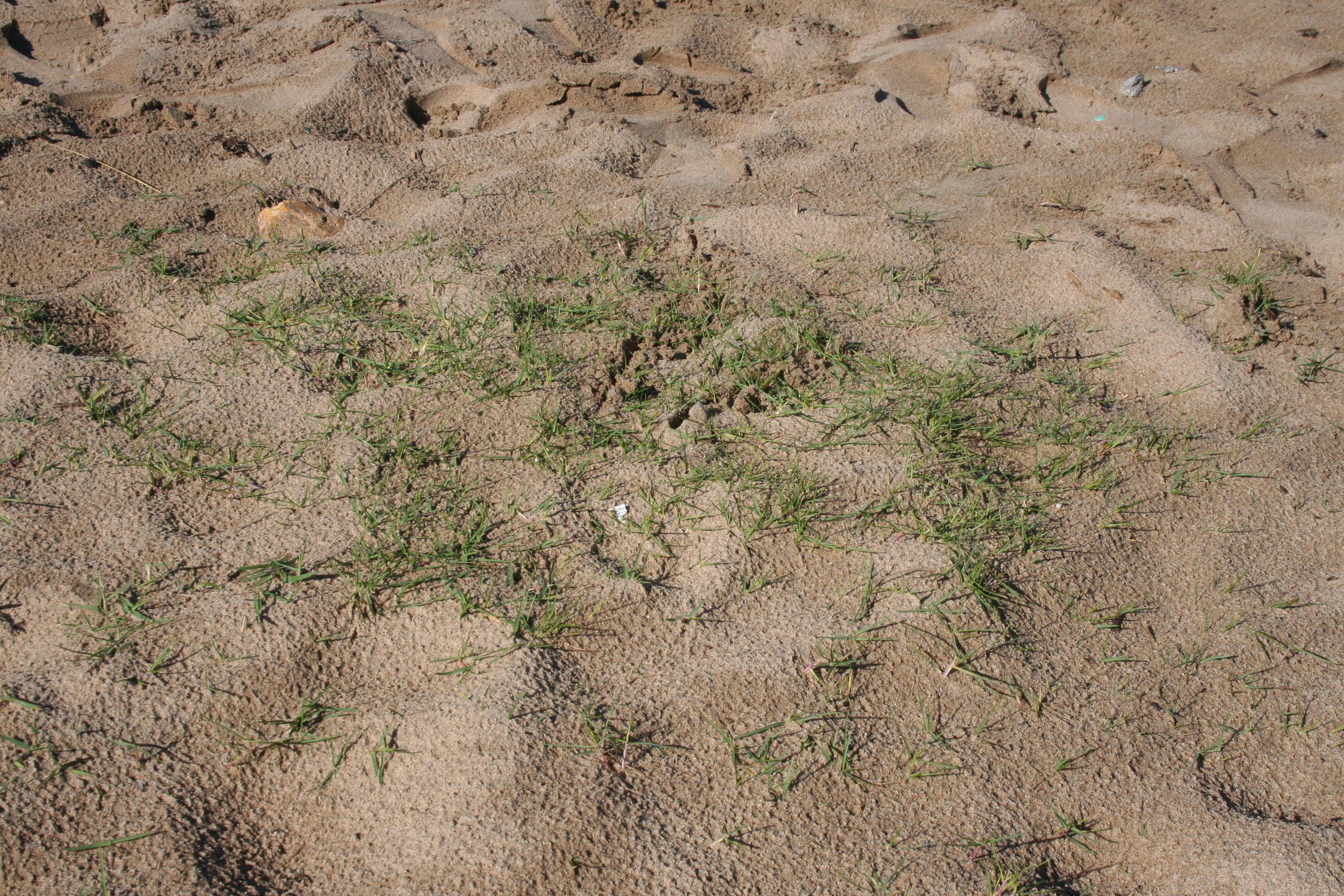
    The first one is called the St. Augustine grass Stenotaprhum secundatum (=Stenotaphrum americanum) which has sprig characteristics and extremely strong creeper roots. Its use in grass formation has proven to be «very effective» and has caused it to expand in natural and semi-natural environments. It is comfortable developing in the sandy soils of coastal dunes and eradicate all other dune species.
    The elimination of this species is done manually, being especially careful not to fragment the stems so new individuals cannot develop.

    Grama americana (Stenotaprhum secundatum)
    St. Augustine grass (Stenotaprhum secundatum)
    Duna blanca ocupada por la grama americana
    White dune taken over by St. Augustine grass

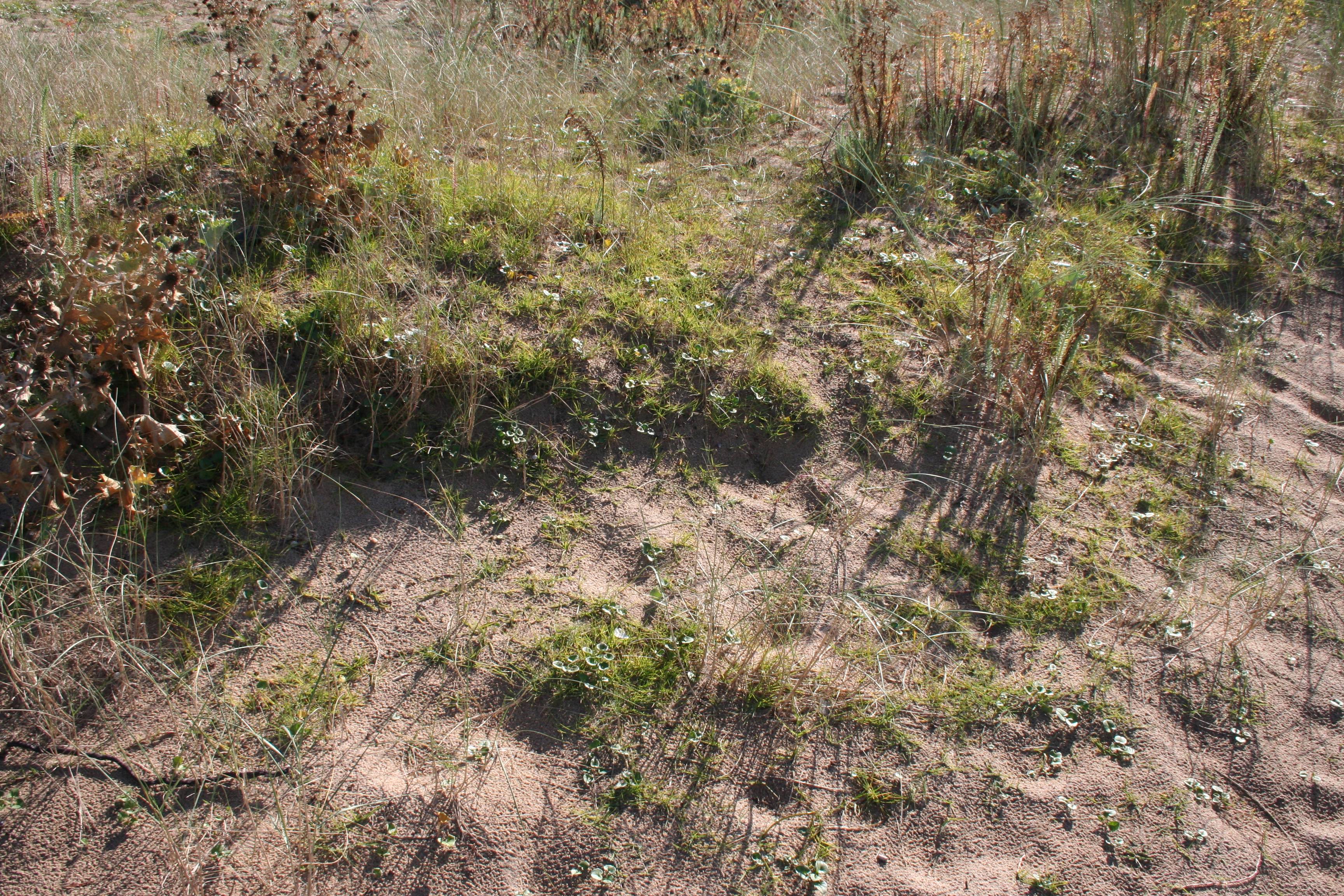
    Another dangerous species in the Vega Beach dune system is the Seashore paspalum or Salt Water Couch Paspalum vaginatum. Its characteristic sprigs–which sprout from the same point (digitate)–and some stems–which are also creeping–have the capacity to root in the soil. This means that any fragment can generate new, cloned individuals.

    Spot of Paspalum vaginatum in the embryonic dune
    Paspalum vaginatum
    Paspalum vaginatum moving from the embryonic dune to the white dune


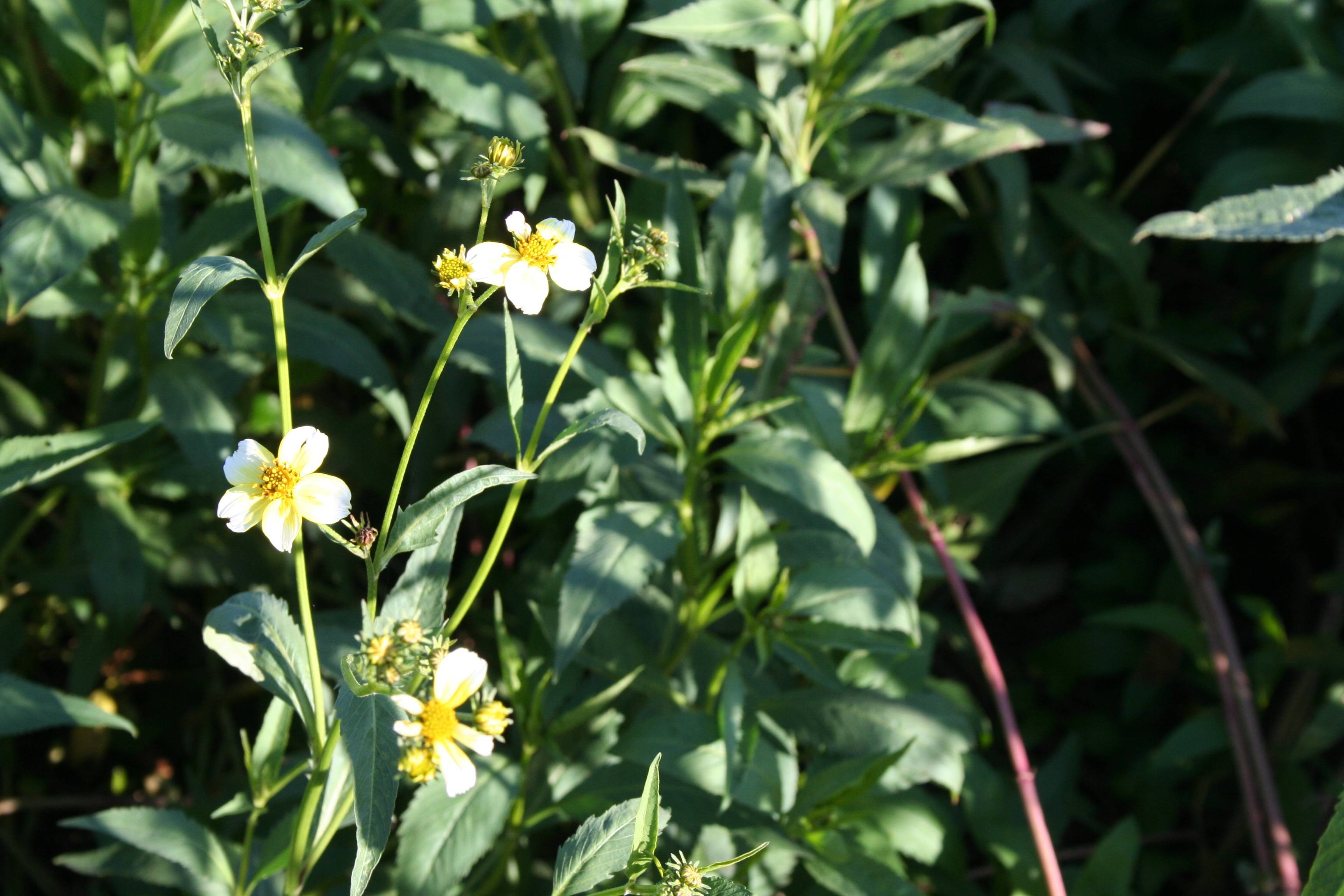
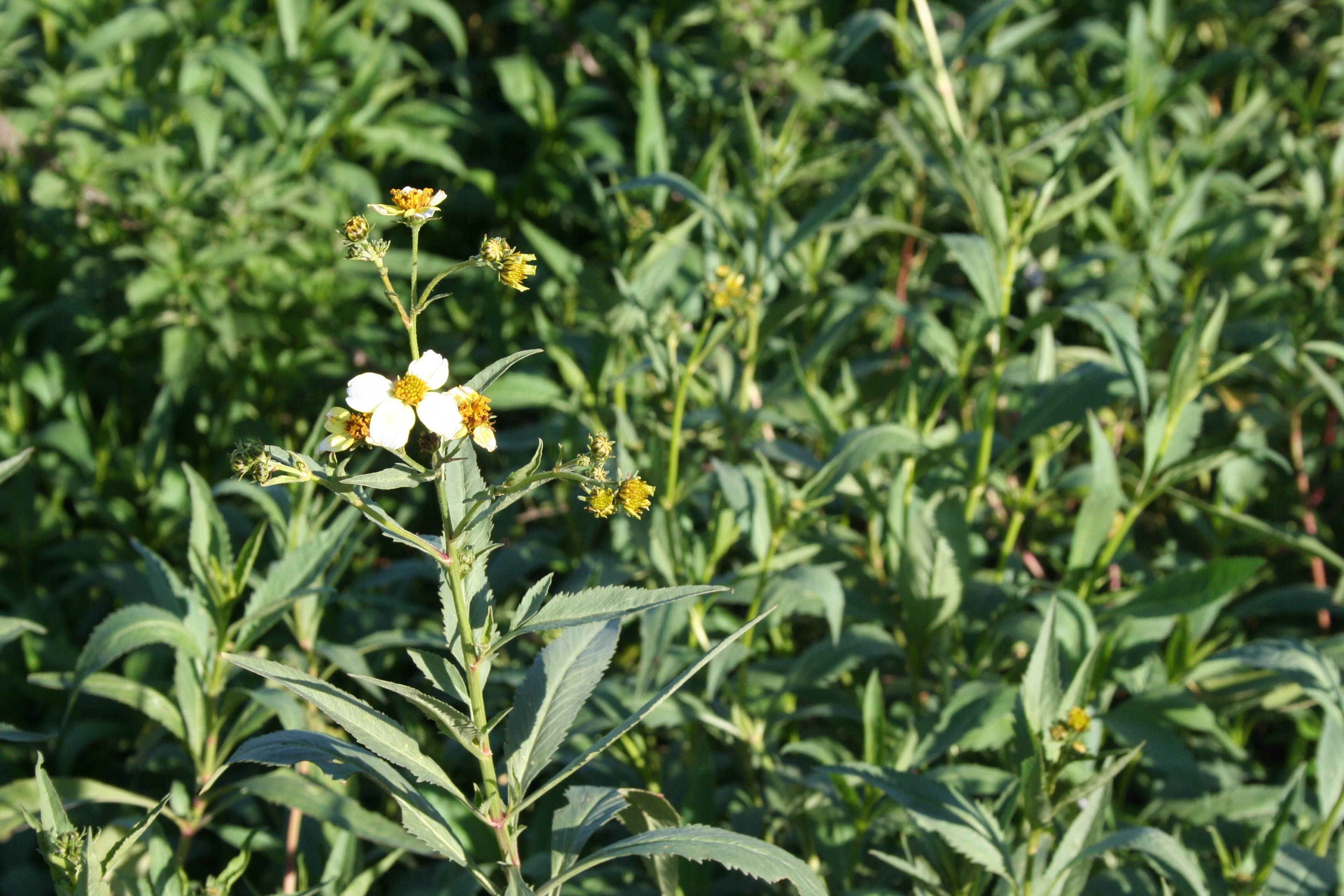
    Another invasive species present in the border of the dune system is the compound of American origin (especially in the central area of North America) known as the Arizona beggarticks, Bidens aurea. This species is located on the border of the Special Area of Conservation, occupying areas with the wettest soil. It is not present in the dune system itself, but its removal from the area will prevent it from moving to the nearest dune where it is also present.

    Arizona beggarticks (Bidens aurea), flower details
    img_3448
    Arizona beggarticks (Bidens aurea) on the border of the dune system


  • Centinelas project (Coastwatch Cantabria) organises an elimination campaign of invasive plants in La Arena Beach (Muskiz, Bizkaia)

    Centinelas project (Coastwatch Cantabria) organises an elimination campaign of invasive plants in La Arena Beach (Muskiz, Bizkaia)

    Centinelas (Coastwatch-Cantabria)

    On Sunday, 23 October the organisation called Centinelas carried out an environmental volunteer activity for a group of employees of the Port Authority of Bilbao in the La Arena beach area.

    A total of 40 people, most of them families with children, visited La Arena beach in the municipality of Ciérvana on their day off to volunteer and help Life+ARCOS carry out the activities we have been working on in the area.

    The activity began with an introduction to the Life+ARCOS project, as well as to the dune system and its vulnerabilities. Carlos Ley, head of Ecología Litoral, beneficiary member of the project, gave the introduction.

    First, we started to search for and eradicate the invasive flora in the area. To make sure we would not make any mistakes, we were accompanied and advised by the person in charge of coordinating restoration and conservation of this dune within the Life+ARCOS project. We were able to extract approximately 40 kg. of the invasive plant.

    Afterwards, we broke up into small groups to plant dune flora species.

    We wanted to thank volunteers for all their hard work and gave them a gift and appetisers. We were thrilled to see how satisfied everyone was after having participated in the activity.

    Our Association would like to thank the Port Authority of Bilbao and its employees for having worked to conserve and recover the La Arena beach dune system.

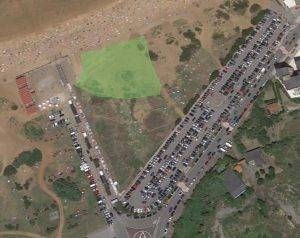
    Lugar de actuación
    Activiy area
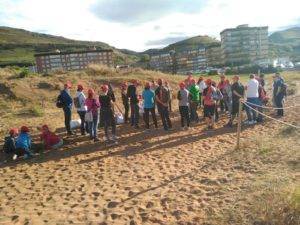
    Presentación de la actividad
    Introdudction to activity

    What is the Centinelas and Coastwatch project?

    The Centinelas project is the local adaptation of the European volunteer programme called Coastwatch. It works to develop an environmental volunteer programme that values, protects and manages the coastline.

    The project framework came about almost 30 years ago in Ireland and has, ever since then and on occasion, been present in Cantabria.

    It is currently an established program that serves as a link between the Cantabrian people and Coastwatch International in a network of entities in charge of coordinating different areas of the European coast (countries, autonomous communities, provinces, regions…).

    These local entities serve as a nexus between the international project and its participants by providing information, training, resources and opportunities for people to join the project’s efforts.

    More information about Centinelas project here

    You can download the activity report provided by the Centinelas project team (Coastwatch-Cantabria) here: Report of Centinelas activity in La Arena beach.


  • 12th November 2016: Volunteer day to eradicate invasive plants on Vega Beach, Ribadesella, Asturias

    12th November 2016: Volunteer day to eradicate invasive plants on Vega Beach, Ribadesella, Asturias

    Last-minute news

    [box type=»warning»]

    REGISTRATION IS NOW CLOSED[/box] [box type=»info»]

    THANK YOU FOR PARTICIPATING. WE WILL PLAN MORE EVENTS TO CONSERVE CANTABRIAN DUNES. FOLLOW US TO STAY UP TO DATE ON FUTURE EVENTS.[/box]

    Playa de Vega

    On Saturday, 12 November 2016, the LIFE+ARCOS team invites you to participate in our volunteer activity to eradicate exotic invasive species on Vega Beach (Ribadesella, Asturias), a protected area within the Vega Beach Special Area  of Conservation (SAC ES1200022), and which therefore forms part of the Network of Protected Areas included in the Natura 2000 Network.

    We will keep you informed via our website.

    What is the plan?

    We will spend Saturday helping to improve the conservation of a natural protected area while participating in civic engagement. Various members of the LIFE+ARCOS team will be at Vega Beach: T. E. Díaz, Álvaro Bueno, Nacho Felpete, Elena Fernández and more. We will tell you about the area, take a look at the activities we have already carried out there and will teach you how to eradicate some problematic invasive species that are easy to remove by hand.

    How long will it last?

    Everyone who is interested in participating should be at Vega Beach at 11:00 am. Everyone in attendance is welcome to stay for lunch. If you have to go home for lunch, that is okay, too. Therefore, the volunteer day will wrap up at 2:30 pm.

    Schedule: 11:00 am to 2:30 pm

    How can I participate?

    To be covered by the insurance we hired from the University of Oviedo, fill out this this registration form. It is very important that we receive all participant names and their identification number. At Vega Beach we will ask you to sign a participation sheet to confirm your identity.

    Use the form to give us complimentary information about you. For example, if you are willing to share your car to bring people to the beach, if you are attending with children and, the most important part: one e-mail address or phone number so we can get in touch.

    Do not hesitate to contact us if you have any questions via the following link. We are happy to help.

    We will publish more information within the next few days.

    PARTICIPATE!

    The Life+ARCOS team

  • ¡LAST NEWS! 21th May Volunteer day in Verdicio, Asturias

    ¡LAST NEWS! 21th May Volunteer day in Verdicio, Asturias

    We are just one day away from doing very important conservation work in the Verdicio dunes. 

    On 21 May, all of Europe is celebrating European Natura 2000 Day. We are meeting at this unique space within the Council of Gozón because it belongs to the Cabo Busto-Luanco Special Area of Conservation, one of the many protected areas that make up the Natura 2000 Network in Asturias.

    10:00 OPTIONAL DEPARTURE POINT – JARDÍN BOTÁNICO ATLÁNTICO (ATLANTIC BOTANICAL GARDEN)

    For those of you that are willing to share their car and give others a ride, you should arrive at the Jardín Botánico Atlántico car park in Gijón around 10:00 am. Organisers be there around that time. Meet near the entrance. That way, the least number of cars possible will drive us to the beach. If you do not have your own car and do not have a ride there, we can take you in a university car. Please, do not hesitate to let us know if you do not have a car.

    At 10:30 am we will go to Tenrero beach in Verdicio.

    11:00 VERDICIO – START OF VOLUNTEER DAY

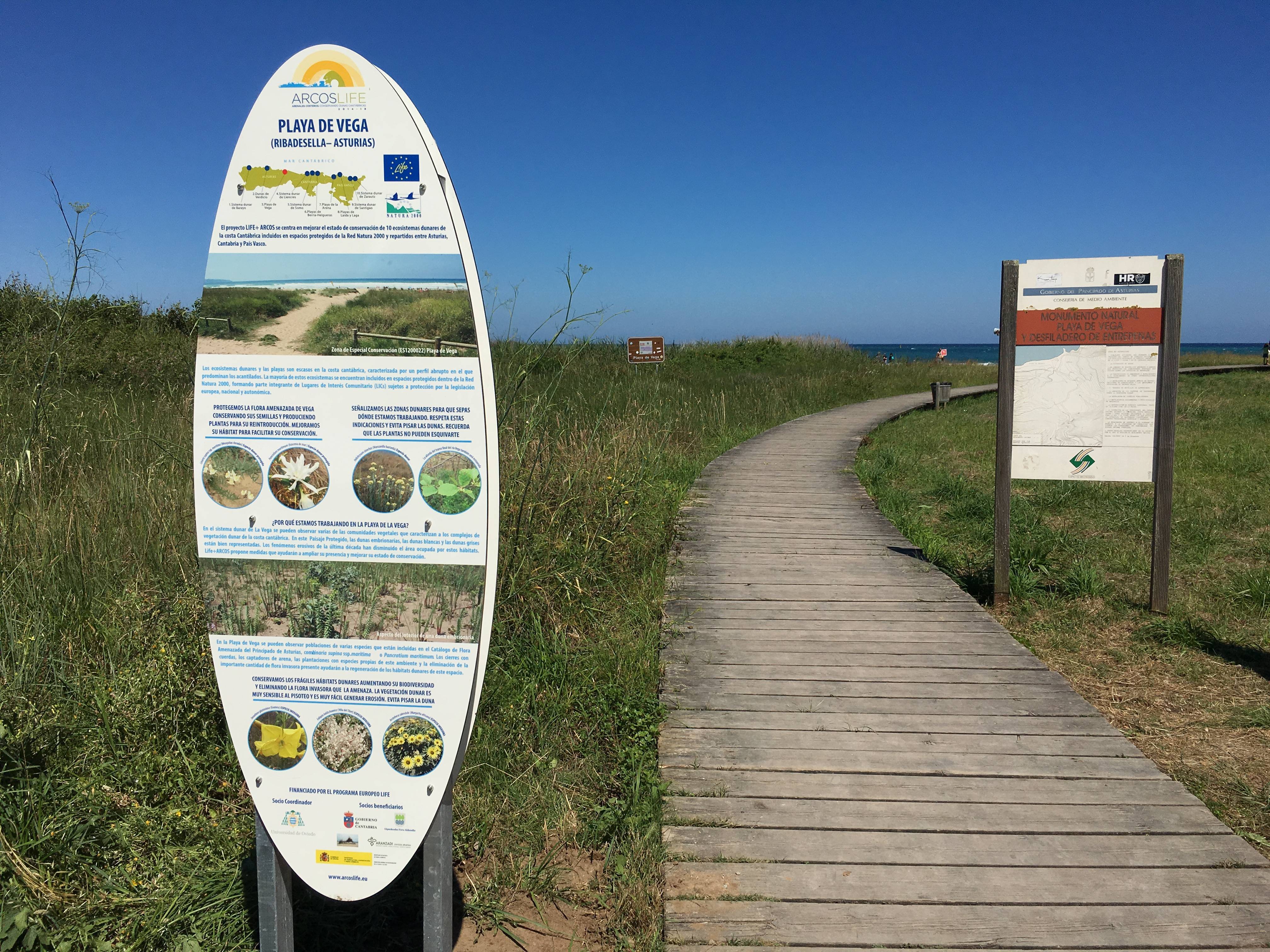
    The day will start on Tenrero beach. We will meet under a Life+ARCOS banner (like a surf banner). There should not be many banners of this type on the beach that day. Everyone will meet at this banner.

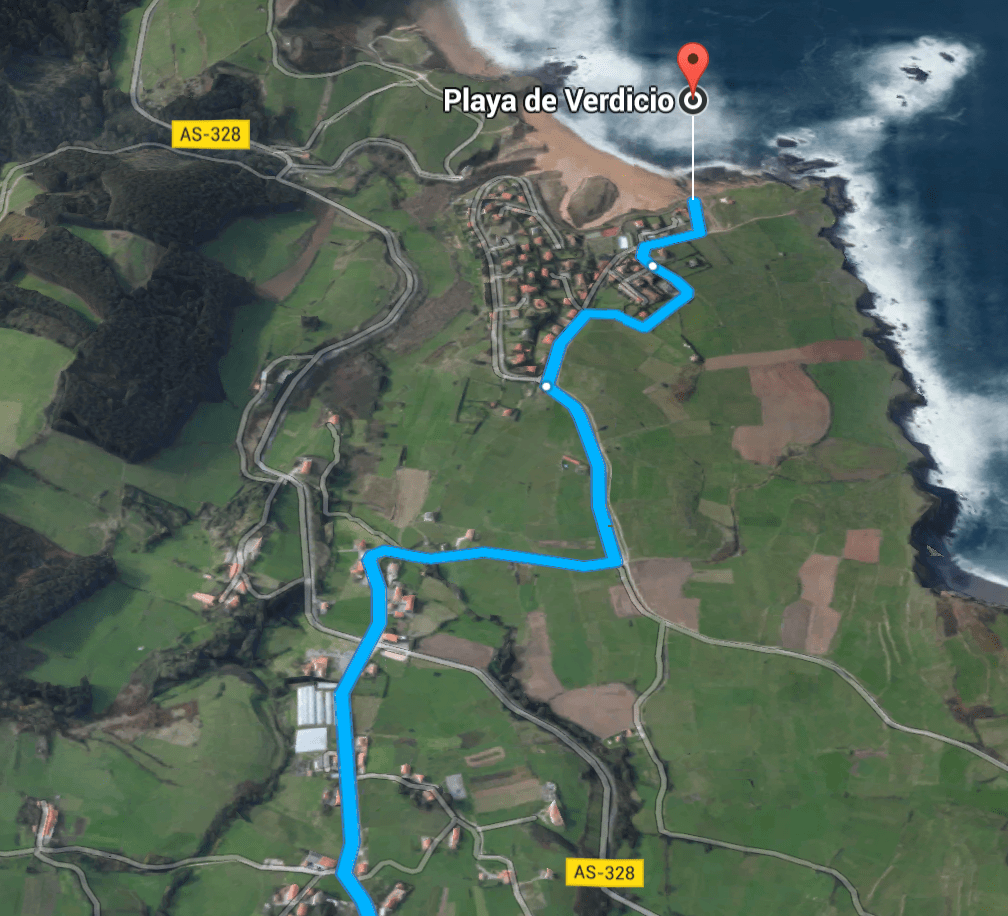
    IMPORTANT: Verdicio beach has two access points. We will set up our base of operations near the beach kiosk, showers, etc. This is on the right side of the beach. To get here, from AS-328 and where the «Casa Oliva» Restaurant is located, turn towards the Verdicio residential area to get to the eastern side of the beach (right where Google Maps marks the location of the beach). Here is a screenshot

    PastedGraphic-8

    Upon arrival you will have to sign a form in order to be covered by our insurance policy. We will provide you with all the material and instructions you need to carry out the activity. 

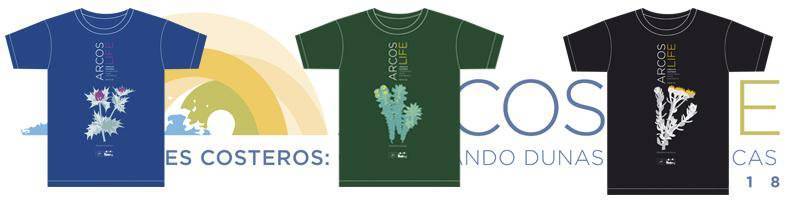
    We have made some Life+ARCOS project t-shirts for you to take as a souvenir. Make sure you get one before you leave.

    11:30 AM, TIME TO WORK! WHAT WILL WE BE DOING?

    In addition to having a good time, we will spend 20-30 minutes telling you a bit about the Life+ARCOS project, the Natura 2000 Network and the dune systems. Above all, we will teach you about the species that are invading Cantabrian dunes, which we need to eradicate (so native dune species do not encounter competitors and can develop normally).

    We will divide everyone up into small groups (we do not want 60 people walking through the same area at the same time) and we will tell you which species must be eradicated. We will also take this opportunity to collect plastic and rubbish that is not only unsightly but is also a threat to bird life and other animals that use the dune as a place to breed and live.

    Clean beaches and dunes are, without a doubt, much nicer than a beach full of rubbish.

    3:00 pm FAREWELL AND CLOSING

    Since we will have a large number of participants, we may have finished «sweeping» Tenrero beach and eliminating the vast majority of species that we can remove manually. If that were the case, we could go to the neighbouring Carriciega beach to do similar work and enjoy the views.

    We will get rid of plant remains and rubbish in the containers COGERSA will provide for the occasion on Verdicio beach.

    After the activities, some of us will stay for lunch at a restaurant near the beach. There will also be time for photos.

    RECOMMENDATIONS

    We would like to remind you to bring sunscreen and a hat (if it is a sunny day).

    Bring your mobile phone and participate in the Life+ARCOS photo contest. Add your photos to Twitter with the hashtag #Nat200DayArcos.

    ————

    It is our duty and pleasure to thank everyone for supporting and contributing to the conservation of these fascinating and fragile dune ecosystems.

    Although many different types of people have signed up to volunteer, we would like to especially thank the Friends of the Botanical Garden Association for supporting all our activities by allowing us to meet at the Atlantic Botanical Garden and, especially, for the support they provide with their scientific work. A clear example of #civicscience. To all of you and our volunteers, thank you so much for your participation!

  • Hurry up! If you want to get one of these t-shirt, participate on 21th of May and join us to contribute to eradicate Invasive Exotic Plants in Verdicio (Gozón, Asturias)

    Hurry up! If you want to get one of these t-shirt, participate on 21th of May and join us to contribute to eradicate Invasive Exotic Plants in Verdicio (Gozón, Asturias)

    CG_lAXaWQAA8Ez-

    You are just in time to get one of these t-shirts. On 21 May we are celebrating European Natura 2000 Day with a volunteer day in Verdicio to remove invasive species. All participants can take one of these t-shirts home. Start thinking of which one you like best.

    You can sign up on this website and fill out this registration form. Don’t forget to add your name and ID number so you will be covered by our insurance policy.

     Remember to participate in our photography contest. Make the most of this weekend! Go to the beach and take photos of plants there. Send them to us on our Facebook page or share them on Twitter (our handle is @infoArcosLife) with the hashtag #Nat2000DayArcos

    We contacted COGERSA and, on the 21st, they installed some dumpsters so we can throw out the rubbish we collect from the beach. COGERSA is providing us with material: gloves and vests, so you do not have to bring any material from home. 

    Like us on Facebook  or follow us on Twitter.

    We will send more information next week.

    Thank you for participating!

  • Sign up now! On 21st May 2016, we are celebrating the European Natura 2000 day by removing invasive exotic species from the dunes in Verdicio, Asturias

    Sign up now! On 21st May 2016, we are celebrating the European Natura 2000 day by removing invasive exotic species from the dunes in Verdicio, Asturias

    Last minute note

    [box type=»warning»] WE HAVE CLOSED THE REGISTRATION FORM[/box] [box type=»info»]

    THANK YOU ALL FOR PARTICIPATING. WE WILL CONTINUE TO ORGANISE MORE EVENTS TO CONSERVE THE CANTABRIAN DUNES. STAY TUNED[/box]

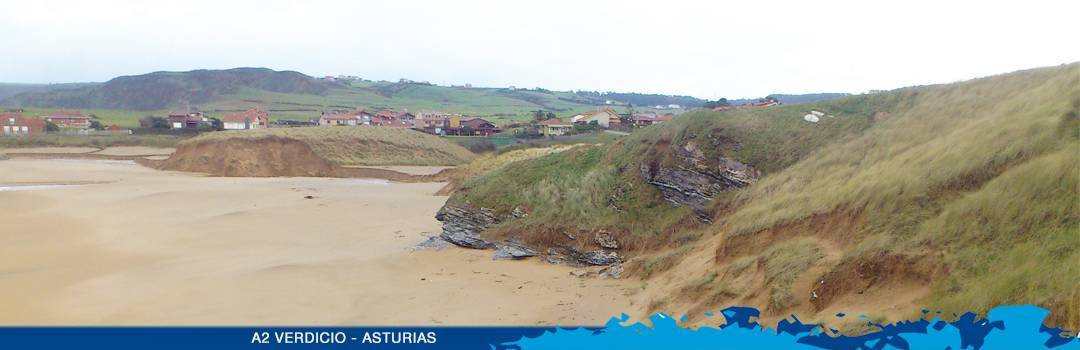
    A2-VERDICIO

    On Saturday 21st May 2016 the Life+ARCOS team invites you to join us to carry out volunteering action to remove some invasive exotic species on the Verdicio Beach (Luanco, Asturias), a protected space that is included within the Cabo Busto-Luanco Special Area of Conservation (SAC ES1200055), and therefore is part of the Network of Protected Spaces included in the Natura 2000 Network.

    If you do not live in Asturias, Life+ARCOS is also holding other activities on the same day in Cantabria and in the Basque Country. Stay tuned to our website where we will post more information shortly.

    What will we be doing?

    The idea is to be able to spend a Saturday in a natural protected space, and to help improve its state of conservation, with the assistance of citizen participation. Various members of the Life+ARCOS team will be present in Verdicio, T. E. Díaz, Álvaro Bueno, Nacho Felpete, Elena Fernández and other people. We will talk about the space and will give you instructions on how to remove some particularly problematic invasive species that are tricky to remove manually.

    How long will it last?

    The plan is for everyone interested in participating to already be in Verdicio by 11:00 am. Our intention is to close the day by around 3 pm, so that participants can either stay to eat or return home with no problem.

    Schedule: 11:00 to 15:00

    How can I take part?

    Fill out this registration form so you will be covered by the insurance that we take out with the University of Oviedo. It is essential for us to have the names of participants and their national identity document. In Verdicio we will ask you to sign a participation sheet to make sure our list coincides.

    Use the form fields to give any additional information such as if you can share a car to reach the location, for example, or if you will be accompanied by children, and above all: an e-mail address or telephone number so we can contact you.

    Contact us with any queries on the following contact page. We will be delighted to help.

    Over the coming days we will publish more information with more details.

    TAKE PART!

    The Life+ARCOS team

  • European Natura 2000 Day, the countdown begins.

    European Natura 2000 Day, the countdown begins.

    natura-200day

    At ARCOS+LIFE we want to celebrate the European Natura 2000 Day, which is held on 21st May across Europe.

    We are already organising some activities and would love you to take part in them to celebrate this day with us. Keep an eye on our facebook page and our twitter account to receive the latest news. In AsturiasCantabria and the Basque Country, where LIFE+ARCOS is participating in the conservation of dune ecosystems, we will hold invasive species removal campaigns and talks on the chosen dunes, allowing us to gauge a deeper understanding of the way these fragile ecosystems work, and to witness the problem of invasive exotic species first hand.

    We are also going to open a photo competition that will award the best images of dune species, with prizes of books and t-shirts. We will publish the competition rules on our facebook page.

    In the meantime, you are welcome to take part in the campaign promoted by the http://www.natura2000day.eu/ page, by sending a photo with the symbol of a butterfly made with your hands, as this video explains.

    You can publish your photos using the #natura2000day hashtag, or upload them onto the website http://www.natura2000day.eu/sube-tu-foto/. If you use Twitter, include the #arcoslifeproject hashtag or @InfoArcoslife so we can follow you.

    We hope to see you there!