Autor: me

  • 12th November 2016: Volunteer day to eradicate invasive plants on Vega Beach, Ribadesella, Asturias

    12th November 2016: Volunteer day to eradicate invasive plants on Vega Beach, Ribadesella, Asturias

    Last-minute news

    [box type=»warning»]

    REGISTRATION IS NOW CLOSED[/box] [box type=»info»]

    THANK YOU FOR PARTICIPATING. WE WILL PLAN MORE EVENTS TO CONSERVE CANTABRIAN DUNES. FOLLOW US TO STAY UP TO DATE ON FUTURE EVENTS.[/box]

    Playa de Vega

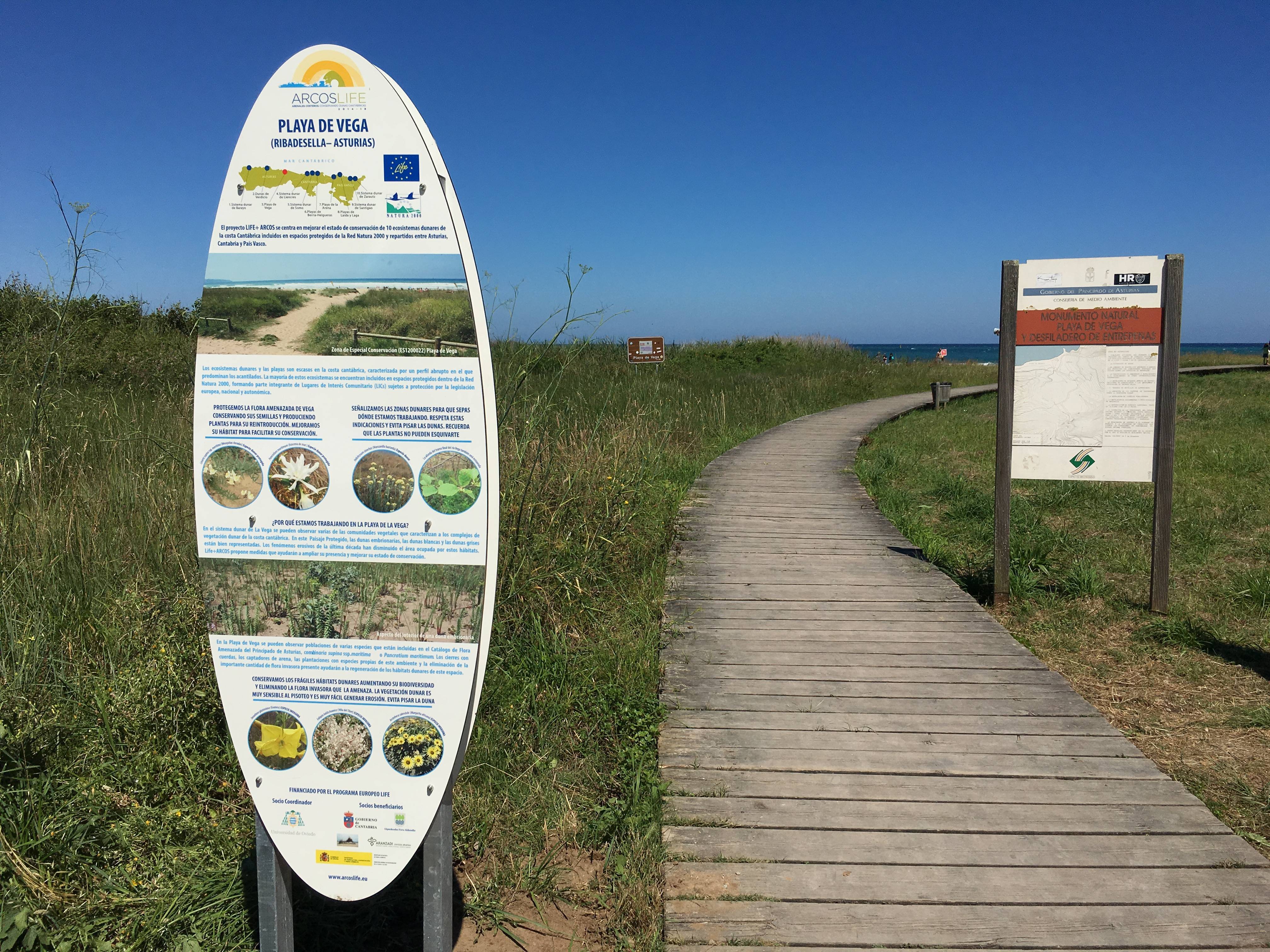
    On Saturday, 12 November 2016, the LIFE+ARCOS team invites you to participate in our volunteer activity to eradicate exotic invasive species on Vega Beach (Ribadesella, Asturias), a protected area within the Vega Beach Special Area  of Conservation (SAC ES1200022), and which therefore forms part of the Network of Protected Areas included in the Natura 2000 Network.

    We will keep you informed via our website.

    What is the plan?

    We will spend Saturday helping to improve the conservation of a natural protected area while participating in civic engagement. Various members of the LIFE+ARCOS team will be at Vega Beach: T. E. Díaz, Álvaro Bueno, Nacho Felpete, Elena Fernández and more. We will tell you about the area, take a look at the activities we have already carried out there and will teach you how to eradicate some problematic invasive species that are easy to remove by hand.

    How long will it last?

    Everyone who is interested in participating should be at Vega Beach at 11:00 am. Everyone in attendance is welcome to stay for lunch. If you have to go home for lunch, that is okay, too. Therefore, the volunteer day will wrap up at 2:30 pm.

    Schedule: 11:00 am to 2:30 pm

    How can I participate?

    To be covered by the insurance we hired from the University of Oviedo, fill out this this registration form. It is very important that we receive all participant names and their identification number. At Vega Beach we will ask you to sign a participation sheet to confirm your identity.

    Use the form to give us complimentary information about you. For example, if you are willing to share your car to bring people to the beach, if you are attending with children and, the most important part: one e-mail address or phone number so we can get in touch.

    Do not hesitate to contact us if you have any questions via the following link. We are happy to help.

    We will publish more information within the next few days.

    PARTICIPATE!

    The Life+ARCOS team

  • Jornada de voluntariado de eliminación de flora exótica invasora en Playa de Vega (Ribadesella) el día 12 de noviembre

    Jornada de voluntariado de eliminación de flora exótica invasora en Playa de Vega (Ribadesella) el día 12 de noviembre

    Nota de última hora

    [box type=»warning»] HEMOS CERRADO EL FORMULARIO DE INSCRIPCIÓN[/box] [box type=»info»] GRACIAS A TODOS POR VUESTRA PARTICIPACIÓN. SEGUIREMOS DESARROLLANDO MÁS EVENTOS PARA CONSERVAR LAS DUNAS DEL CANTÁBRICO. SIGUE ATENTO[/box]

    Playa de Vega

    El sábado 12 de noviembre de 2016 el equipo de LIFE+ARCOS te invita a que participes con nosotros en una acción de voluntariado para eliminar alguna especies exóticas invasoras en la Playa de Vega (Ribadesella, Asturias), espacio protegido que está incluido dentro de la Zona de Especial Conservación Playa de Vega (ZEC ES1200022), y por lo tanto forma parte de la Red de Espacios protegidos incluidos en la Red Natura 2000.

     Sigue atento a nuestra página porque te informaremos de ello en breve.

    ¿Qué haremos?

    La idea es que podamos pasar una jornada de sábado en un espacio natural protegido y que podamos ayudar a mejorar su estado de conservación, haciendo uso de la participación ciudadana. En Playa de Vega estaremos varios miembros del equipo LIFE+ARCOS, T. E. Díaz, Álvaro Bueno, Nacho Felpete, Elena Fernández y más gente. Os diremos algunas cosas sobre el espacio, veremos las acciones que ya hemos realizado allí  y os daremos indicaciones de como eliminar algunas especies invasoras que son problemáticas y fáciles quitar manualmente.

    ¿Cuánto dura?

    En principio al 11:00 am. todo el mundo intersado debería estar ya en Playa de Vega. Nuestra intención es que aquellos que os queráis quedar a comer allí lo podáis hacer y aquellos que tengáis que marchar a casa, no tengáis problema, así que a eso de las 2:30 pm daremos por finalizada la jornada.

    Horario: 11:00 a 14:40

    ¿Cómo participar?

    Rellena este boletín de inscripción para que puedas disfrutar del seguro que contratamos con la Universidad de Oviedo. Es muy importante que tengamos los nombres de los participantes y su número del documento nacional de identidad. En Playa de Vega os pediremos que firméis una hoja de participación para asegurarnos de que sois vosotros.

    Utilizad los campos del formulario para darnos información complementaria como por ejemplo, si podéis compartir coche para llegar, si venís acompañados con niños y, lo más importante: una dirección de correo electrónico o de teléfono para poder contactar con vosotros.

    Para cualquier duda ponte en contacto con nosotros a través de la siguiente página de contacto. Estaremos encantados de atenderte.

    En los próximos días publicaremos más información con más detalles.

    ¡PARTICIPA!

    El Equipo Life+ARCOS

  • El proyecto ARCOS presente en Holanda, dentro del LIFE platform meeting on restoration of sand dune habitats

    El proyecto ARCOS presente en Holanda, dentro del LIFE platform meeting on restoration of sand dune habitats

    1st_Session_Life_Platform_Meeting

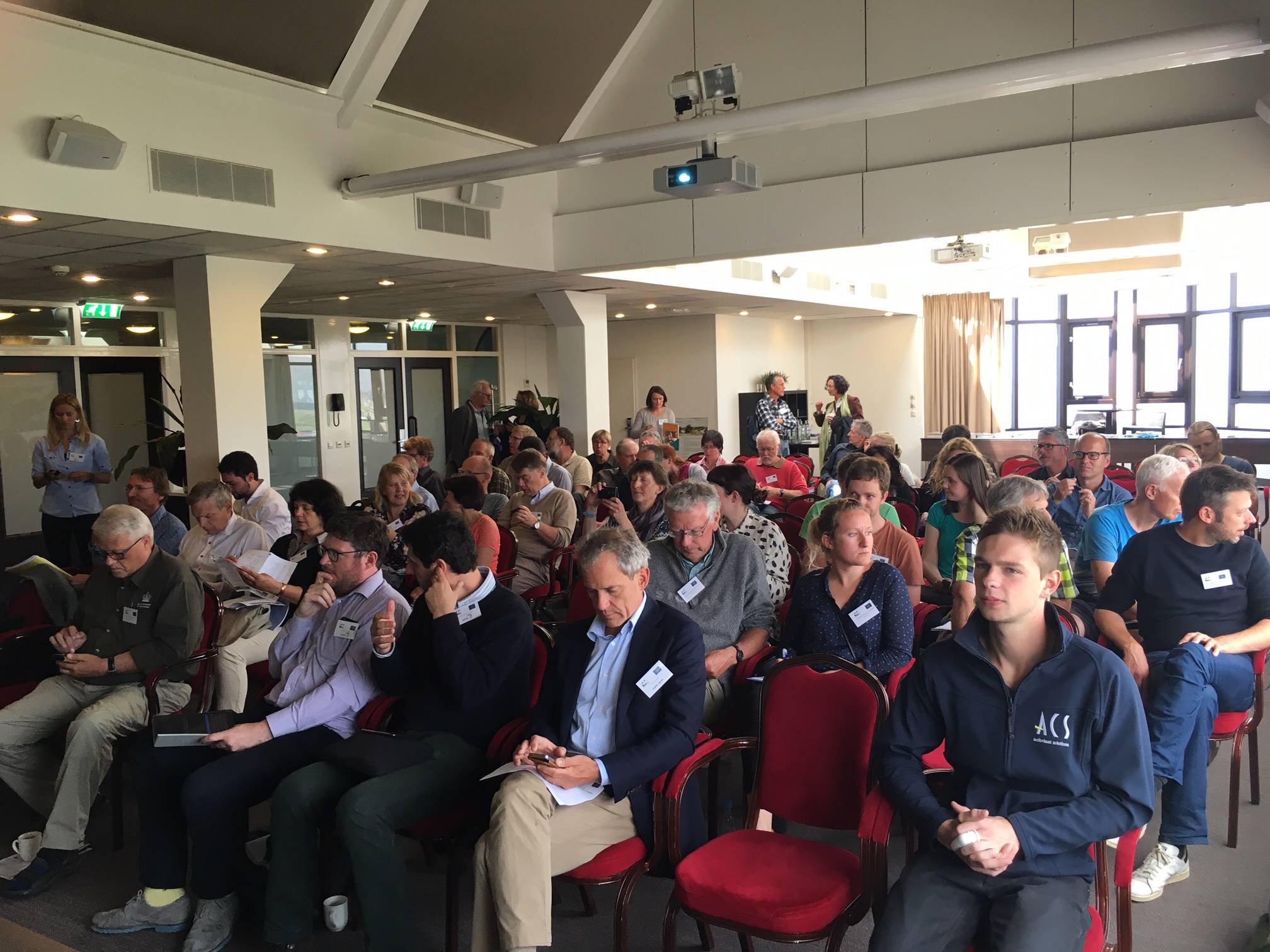
    Durante los días 15 al 17 de Junio el equipo de Life+ARCOS se mueve a Holanda para participar en una reunión promovida por NEEMO, el organismo que supervisa el desarrollo de proyectos LIFE, junto con ECNC.

    En la reunión hemos presentado algunos aspectos del enfoque de conservación  ex situ-in situ que se desarrolla desde el proyecto, dando una especial importancia a la restauración de la biodiversidad dunar, a partir de las semillas de especies dunares que hemos conservado en los bancos de semillas del proyecto.

    patrocinadores

    Aquí tenéis el pograma de la reunión en la que aparecen varios de los proyectos de restauración dunar que están financiados por el programa europeo LIFE.


    LIFE platform meeting on restoration of sand dune habitats
    NH Hotel, Zandvoort, the Netherlands, 15-17 June 2016


    Wednesday 15th June

    Registration desk open from 13.00 – Hotel Foyer

    All Plenary Sessions to be held in Zeester Meeting Room – access by lift from foyer

    Session 1: The Natura 2000 Biogeographical Process

    14.30 Welcome by chair Sjakel van Wesemael, Nature and Recreation Manager, PWN

    14.40 – 15.00 The Natura 2000 Biogeographical Process explained
    EC Representative TBC

    15.00 – 15.15 The LIFE programme 2014-2020 and expected LIFE project outputs in terms of dissemination, replicability and transferability
    Angelo Salsi, Head of Unit B3 -LIFE and CIP Eco-Innovation, European Commission, Executive Agency for Small and Medium-sized Enterprises (EASME)

    15.15 – 15.30 The LIFE programme and dune habitats
    João Pedro Silva, LIFE Communication Team, NEEMO-AEIDL

    15.30 – 16.00 Refreshment break

    Session 2: Lessons from the projects

    16.00 – 16.15 REDCOHA-LIFE Restoration of Danish coastal habitats: focus on removal of invasive alien species
    Uffe Strandby, Danish Nature Agency

    16.15 – 16.30 Restoration of inland dunes and dry grasslands in military areas – LIFE+ Military Habitats project in Southern Poland
    Wojtek Mróz, IOP, District Infrastructure Administration in Krakow

    16.30 – 16.45 The SandLIFE project: coastal and inland dune restoration in Sweden
    Magnus Jönsson, Land Manager, County Administrative Board, Skåne

    16.45 – 17.00 Conservation and restoration of inland dunes and dune heaths in Flanders: LIFE projects Most-Keiheuvel and LIFE-Together
    Lennert Damen and Bart Tessens, Agency of Nature and Forests of the Flemish Government

    17.00 – 17.15 Light and Fire –LIFE: Dune management in the Boreal Zone
    Päivi Virnes, Conservation Biologist, Metsähallitus Parks & Wildlife, Finland

    17.15 – 17.30 LIFE+ARCOS: coastal dune habitat restoration in northern Spain
    Ignacio Alonso Felpete, University of Oviedo

    17.30 Introduction to rest of programme and field trips

    18.30 Buffet dinner

    20.00 – 22.00 The Knowledge Market:
    -Knowledge exchange and networking

    Thursday 16th June

    Registration Desk 8.30-9.00 outside Meeting Room

    Session 3 Practical experiences and lessons: Where are we now and what needs to be done?

    9.00 Welcome from chair Angelo Salsi, Head of Unit B3, EASME, European Commission

    9.05 – 9.25 The Nitrogen problem
    Annemieke Kooijman, University of Amsterdam

    9.25 – 9.45 Invasive Alien Species in coastal dunes
    Maike Isermann, University of Bremen

    Project presentations
    09.45 – 10.00 LIFE HELVEX: From pine plantations to dunes: a practical overview of the integral restoration of inland dunes in the cross border park Kalmthoutse heide-De Zoom
    Frederik Naedts, Natuurpunt

    10.00 – 10.15 Dutch Dune Revival: Revitalising dunes in Kennemerland: beach-dune sand transport and habitat restoration
    Marieke Kuipers, PWN

    10.15-10.30 Amsterdam Dunes- Source for nature, dune habitat restoration project
    Luc Geelen, Waternet

    10.30 – 11.00 coffee break in workshop rooms and workshops to 12.30

    Session 4: Workshops

    Workshop 1: Challenges with rejuvenation and dynamics in inland and coastal dunes
    Leader: Evert Jan Lammerts, Staatsbosbeheer
    Presenter: Eva Remke, Bargerveen Foundation

    Workshop 2: Challenges and experiences with grassland habitats in inland and coastal dunes
    Leader: Luc Geelen, Waternet
    Presenter: Marijn Nijssen, Bargerveen Foundation

    Workshop 3: Drawing up a roadmap for the Atlantic Biogeographical Process
    Leader: Albert Salman, Coast and Marine Union-EUCC
    Presenter: Jean-Louis Herrier, Agency for Nature and Forests, Flemish Government

    13.00 Collect sandwich lunch

    Field visits

    13.15 – 17.30 Field visits by bicycle.

    1. During the excursion to the Amsterdam Dunes Project led by Mark van Til and Martijn van Schaik of Waternet we will show you:

    • Mosaic management grey dunes
    • Large scale removal of Prunus serotina shrubs
    • Removal of pine forest
    • Small scale blow-outs
    • Large scale restoration: Van Limburg Stirum project
    • Dune slack restoration and new ponds

    2. Dutch Dune Revival: During the excursion to the Noordwest Natuurkern in National Park Zuid-Kennemerland led by Coen van Oosterom (PWN) and Ruud Luntz (Natuurmonumenten) we will show you:

    • Old and new Dutch coastal management
    • Large scale interventions in frontal dunes
    • Successful connection beach-dunes
    • Large scale reactivation of parabolic dunes
    • Need for aftercare management
    • Integration of recreation and bunkers in this nature project
    • Profit and loss of the Dutch ‘Poldermodel’

    18.30—21.30 Social Dinner at Club Nautique Zandvoort www.clubnautique.nl

    Friday 17th June

    Registration Desk 8.30 – 9.00 outside Meeting Room

    Session 5: Ways to proceed, including feedback from workshops

    9.00 Welcome by chair Ed Cousin, Head of Nature Management, Waternet

    Project presentations
    9.10 – 9.25 LIFE FLANDRE: cross –border cooperation
    Jean-Louis Herrier, Agency Nature and Forests, Flemish Ministry of the Environment

    9.25 – 9.40 National Conservation and Management Programme for Natura 2000 Sites in Latvia – example of coastal dunes
    Juris Jatnieks, Nature Conservation Agency, Latvia

    9.55 – 10.10 Developing a UK dune restoration programme
    Sue Rees, Natural England

    10.10 – 10.30 Wuthering Heaths-Restoration on inland dunes and sandy heathland in the North-western Veluwe
    Peter Dam, Natuurmonumenten

    10.30 – 11.00 Coffee Break

    Session 6: Plenary discussion and input to dune roadmap

    11.00 – 11.30 Feedback and discussion from working groups

    11.30 – 11.45 Developing a ‘dune roadmap’ for 2016-2020 to take the views of the meeting forward to the Atlantic biogeographic seminar in Ireland in October 2016.
    Neil McIntosh (ECNC) and John Houston (NEEMO)

    11.45-12.15 Discussion and conclusions

    12.30 Sandwich lunch

    13.15 – 16.00 Excursion by bicycle to the Wisent Project Kraansvlak (European bison project) http://www.wisenten.nl/en/project

    1st_Session_Life_Platform_Meeting

  • LIFE ARCOS project in the LIFE platform meeting on restoration of sand dune habitats, Holland, 15-17 June 2016

    LIFE ARCOS project in the LIFE platform meeting on restoration of sand dune habitats, Holland, 15-17 June 2016

    1st_Session_Life_Platform_Meeting

    From 15–17 June the Life+ARCOS team is going to Holland to participate in a meeting promoted by NEEMO, the organisation that supervises the development of LIFE projects, along with ECNC.

    At the meeting, we gave a presentation on some aspects of conservation efforts ex situ-in situ that the project has been developing, especially focusing on the importance of restoring dune biodiversity using dune species seeds we have conserved in the project’s seed banks.
     

    patrocinadores

    Here is the schedule of the meeting in which various dune restoration projects appear, which are financed by the European LIFE program.


    LIFE platform meeting on restoration of sand dune habitats
    NH Hotel, Zandvoort, the Netherlands, 15-17 June 2016


    Wednesday 15th June

    Registration desk open from 13.00 – Hotel Foyer

    All Plenary Sessions to be held in Zeester Meeting Room – access by lift from foyer

    Session 1: The Natura 2000 Biogeographical Process

    14.30 Welcome by chair Sjakel van Wesemael, Nature and Recreation Manager, PWN

    14.40 – 15.00 The Natura 2000 Biogeographical Process explained
    EC Representative TBC

    15.00 – 15.15 The LIFE programme 2014-2020 and expected LIFE project outputs in terms of dissemination, replicability and transferability
    Angelo Salsi, Head of Unit B3 -LIFE and CIP Eco-Innovation, European Commission, Executive Agency for Small and Medium-sized Enterprises (EASME)

    15.15 – 15.30 The LIFE programme and dune habitats
    João Pedro Silva, LIFE Communication Team, NEEMO-AEIDL

    15.30 – 16.00 Refreshment break

    Session 2: Lessons from the projects

    16.00 – 16.15 REDCOHA-LIFE Restoration of Danish coastal habitats: focus on removal of invasive alien species
    Uffe Strandby, Danish Nature Agency

    16.15 – 16.30 Restoration of inland dunes and dry grasslands in military areas – LIFE+ Military Habitats project in Southern Poland
    Wojtek Mróz, IOP, District Infrastructure Administration in Krakow

    16.30 – 16.45 The SandLIFE project: coastal and inland dune restoration in Sweden
    Magnus Jönsson, Land Manager, County Administrative Board, Skåne

    16.45 – 17.00 Conservation and restoration of inland dunes and dune heaths in Flanders: LIFE projects Most-Keiheuvel and LIFE-Together
    Lennert Damen and Bart Tessens, Agency of Nature and Forests of the Flemish Government

    17.00 – 17.15 Light and Fire –LIFE: Dune management in the Boreal Zone
    Päivi Virnes, Conservation Biologist, Metsähallitus Parks & Wildlife, Finland

    17.15 – 17.30 LIFE+ARCOS: coastal dune habitat restoration in northern Spain
    Ignacio Alonso Felpete, University of Oviedo

    17.30 Introduction to rest of programme and field trips

    18.30 Buffet dinner

    20.00 – 22.00 The Knowledge Market:
    -Knowledge exchange and networking

    Thursday 16th June

    Registration Desk 8.30-9.00 outside Meeting Room

    Session 3 Practical experiences and lessons: Where are we now and what needs to be done?

    9.00 Welcome from chair Angelo Salsi, Head of Unit B3, EASME, European Commission

    9.05 – 9.25 The Nitrogen problem
    Annemieke Kooijman, University of Amsterdam

    9.25 – 9.45 Invasive Alien Species in coastal dunes
    Maike Isermann, University of Bremen

    Project presentations
    09.45 – 10.00 LIFE HELVEX: From pine plantations to dunes: a practical overview of the integral restoration of inland dunes in the cross border park Kalmthoutse heide-De Zoom
    Frederik Naedts, Natuurpunt

    10.00 – 10.15 Dutch Dune Revival: Revitalising dunes in Kennemerland: beach-dune sand transport and habitat restoration
    Marieke Kuipers, PWN

    10.15-10.30 Amsterdam Dunes- Source for nature, dune habitat restoration project
    Luc Geelen, Waternet

    10.30 – 11.00 coffee break in workshop rooms and workshops to 12.30

    Session 4: Workshops

    Workshop 1: Challenges with rejuvenation and dynamics in inland and coastal dunes
    Leader: Evert Jan Lammerts, Staatsbosbeheer
    Presenter: Eva Remke, Bargerveen Foundation

    Workshop 2: Challenges and experiences with grassland habitats in inland and coastal dunes
    Leader: Luc Geelen, Waternet
    Presenter: Marijn Nijssen, Bargerveen Foundation

    Workshop 3: Drawing up a roadmap for the Atlantic Biogeographical Process
    Leader: Albert Salman, Coast and Marine Union-EUCC
    Presenter: Jean-Louis Herrier, Agency for Nature and Forests, Flemish Government

    13.00 Collect sandwich lunch

    Field visits

    13.15 – 17.30 Field visits by bicycle.

    1. During the excursion to the Amsterdam Dunes Project led by Mark van Til and Martijn van Schaik of Waternet we will show you:

    • Mosaic management grey dunes
    • Large scale removal of Prunus serotina shrubs
    • Removal of pine forest
    • Small scale blow-outs
    • Large scale restoration: Van Limburg Stirum project
    • Dune slack restoration and new ponds

    2. Dutch Dune Revival: During the excursion to the Noordwest Natuurkern in National Park Zuid-Kennemerland led by Coen van Oosterom (PWN) and Ruud Luntz (Natuurmonumenten) we will show you:

    • Old and new Dutch coastal management
    • Large scale interventions in frontal dunes
    • Successful connection beach-dunes
    • Large scale reactivation of parabolic dunes
    • Need for aftercare management
    • Integration of recreation and bunkers in this nature project
    • Profit and loss of the Dutch ‘Poldermodel’

    18.30—21.30 Social Dinner at Club Nautique Zandvoort www.clubnautique.nl

    Friday 17th June

    Registration Desk 8.30 – 9.00 outside Meeting Room

    Session 5: Ways to proceed, including feedback from workshops

    9.00 Welcome by chair Ed Cousin, Head of Nature Management, Waternet

    Project presentations
    9.10 – 9.25 LIFE FLANDRE: cross –border cooperation
    Jean-Louis Herrier, Agency Nature and Forests, Flemish Ministry of the Environment

    9.25 – 9.40 National Conservation and Management Programme for Natura 2000 Sites in Latvia – example of coastal dunes
    Juris Jatnieks, Nature Conservation Agency, Latvia

    9.55 – 10.10 Developing a UK dune restoration programme
    Sue Rees, Natural England

    10.10 – 10.30 Wuthering Heaths-Restoration on inland dunes and sandy heathland in the North-western Veluwe
    Peter Dam, Natuurmonumenten

    10.30 – 11.00 Coffee Break

    Session 6: Plenary discussion and input to dune roadmap

    11.00 – 11.30 Feedback and discussion from working groups

    11.30 – 11.45 Developing a ‘dune roadmap’ for 2016-2020 to take the views of the meeting forward to the Atlantic biogeographic seminar in Ireland in October 2016.
    Neil McIntosh (ECNC) and John Houston (NEEMO)

    11.45-12.15 Discussion and conclusions

    12.30 Sandwich lunch

    13.15 – 16.00 Excursion by bicycle to the Wisent Project Kraansvlak (European bison project) http://www.wisenten.nl/en/project
     

  • ¡ULTIMAS NOTICIAS! 21 de mayo Jornada de Voluntariado en Verdicio

    ¡ULTIMAS NOTICIAS! 21 de mayo Jornada de Voluntariado en Verdicio

    Estamos a solo un día para que juntos podamos hacer algo muy importante para ayudar a conservar las dunas de Verdicio

    El día 21 de mayo se celebra en toda europa el Día Europeo de la Red Natura 2000. Hemos quedado en este singular espacio ubicado en el Concejo de Gozón, porque pertenece a la Zona de Especial Conservación Cabo Busto-Luanco, uno de los muchos espacios protegidos que forman parte de la Red Natura 2000 en Asturias.

    10:00 LUGAR DE SALIDA OPCIONAL – JARDÍN BOTÁNICO ATLÁNTICO

    A todos aquellos que podáis compartir vehículo os recomiendo que estéis en el aparcamiento del Jardín Botánico Atlántico, Gijón a eso de las 10:00 de la mañana. A esa hora ya estaremos por ahí la gente de organización. Juntaros cerca de la puerta de entrada para facilitar que entre todos podamos acudir en el menor número de vehículos posibles. Aquellos que no tenéis vehículo propio y no hayáis conseguido juntaros en algún coche, os podremos llevar con un vehículo que vamos a llevar desde la Universidad. Por favor, no dudéis en decirnos que no tenéis vehículo si ese es el caso.

    A las 10:30 saldremos todos los que estemos en el Botánico con dirección a la playa de Tenrero, Verdicio.


    11:00 VERDICIO – INICIO DE LA JORNADA

    La jornada comienza en la playa de Tenrero. Allí nos encontraréis al pie de una banderola (como las de surf) que pone Life+ARCOS. No creo que haya muchas banderolas de este tipo, así que acercaros a este punto porque será el punto de encuentro común.

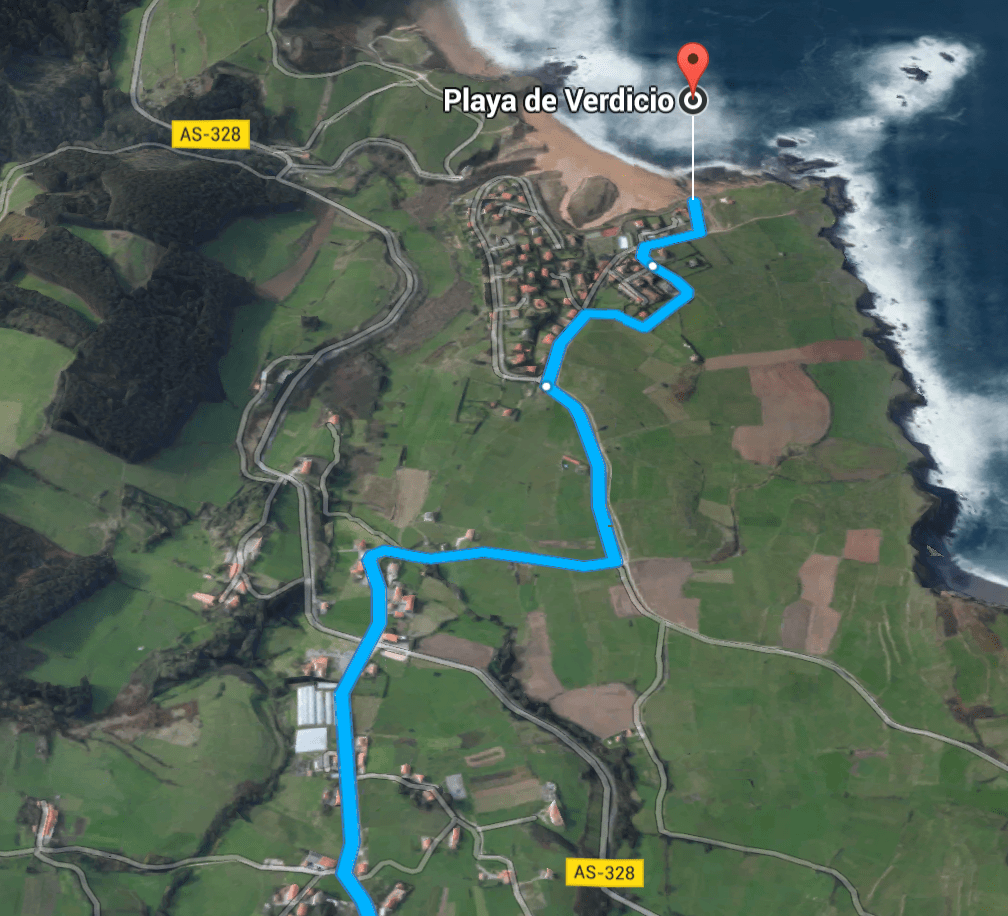
    IMPORTANTE: La playa de Verdicio tiene dos accesos. Nosotros montaremos la base de operaciones en el sitio donde se ubica el chiringuito playero, las duchas, etc. Es decir en el lado derecho de la playa. Para llegar a ese punto, desde la AS-328 y donde está el Restaurante “Casa Oliva” giráis hacia la Urbanización de Verdicio para llegar al extremo oriental de la playa (justo donde google maps coloca su punto). Os dejo una captura de pantalla 😉

    PastedGraphic-8

    Allí tendréis que firmar una hoja para poder estar cubiertos por el seguro que hemos contratado. Os daremos el material necesario para llevar a cabo la actividad y las primeras indicaciones. 

    Tenemos preparadas unas camisetas del proyecto Life+ARCOS, en el que se enmarca esta acción de voluntariado, para que os llevéis de recuerdo, así que no os vayáis sin una de ellas.

    11:30 A TRABAJAR, ¿QUE HAREMOS?

    Además de pasarlo bien, durante unos 20-30 minutos os contaremos un poco en qué consiste el proyecto Life+ARCOS, qué es la Red Natura 2000, qué son los sistemas dunares y, sobre todo, conoceremos aquellas especies que están invadiendo las dunas cantábricas y que necesitamos eliminar para que las especies propias de las dunas no encuentren competencia y puedan desarrollarse con normalidad.

    Nos dividiremos en grupos pequeños (no queremos que 60 personas pasen al mismo tiempo por el mismo punto) y os indicaremos que especies hay que eliminar. Además también podremos aprovechar la jornada para retirar plásticos y basuras que, además de afear el paisaje, constituyen un peligro importante para la avifauna y otros animales que ven en la duna un espacio para criar o disfrutar.

    Una playa y duna limpia es, sin duda, mucho más agradable de ver que una playa llena de basuras.

    15:00? DESPEDIDA Y CIERRE

    Somos muchos, así que es probable que antes de las 15:00 ya hayamos “barrido» la playa de Tenrero y eliminado la mayor parte de las especies que, por medios manuales, podemos quitar. Nos podemos acercar a la vecina playa de Carriciega para hacer algo parecido y disfrutar de las vistas.

    Depositaremos todos los restos vegetales y basuras en los contenedores que COGERSA ha instalado en la playa de Verdicio para esta jornada.

    Después de las actuaciones algunos nos quedaremos a comer por los alrededores y seguro que sacamos tiempo para hacernos fotografías y recordar esta jornada.

    RECOMENDACIONES

    Os recomendamos que llevéis crema solar y gorra (si el día amanece soleado).

    LLevad vuestro móvil y participad en el concurso de fotografía que tenemos abierto desde Life+ARCOS. Podési enviar vuestras fotos en twitter con el hasta #Nat200DayArcos.

    ————

    Es obligado y un placer al mismo tiempo agradecer la fenomenal respuesta que hemos tenido por parte de tanta gente interesada en aportar y apoyar la conservación de unos ecosistemas, fascinantes y frágiles al mismo tiempo, como son los sistemas dunares.

    A pesar de que la naturaleza de la gente que se ha apuntado es muy diversa, la Asociación de Amigos del Jardín Botánico merece ser destacada por su constante labor en apoyo a todas las acciones que se desarrollan desde el Jardín Botánico Atlántico y, en particular, el apoyo que brindan con su actividad al desarrollo científico de este espacio. Un ejemplo muy claro de lo que se viene en llamarse #cienciaciudadana. A todos vosotros y a todo el conjunto de voluntarios, muchísimas gracias por vuestro participación.


  • ¡LAST NEWS! 21th May Volunteer day in Verdicio, Asturias

    ¡LAST NEWS! 21th May Volunteer day in Verdicio, Asturias

    We are just one day away from doing very important conservation work in the Verdicio dunes. 

    On 21 May, all of Europe is celebrating European Natura 2000 Day. We are meeting at this unique space within the Council of Gozón because it belongs to the Cabo Busto-Luanco Special Area of Conservation, one of the many protected areas that make up the Natura 2000 Network in Asturias.

    10:00 OPTIONAL DEPARTURE POINT – JARDÍN BOTÁNICO ATLÁNTICO (ATLANTIC BOTANICAL GARDEN)

    For those of you that are willing to share their car and give others a ride, you should arrive at the Jardín Botánico Atlántico car park in Gijón around 10:00 am. Organisers be there around that time. Meet near the entrance. That way, the least number of cars possible will drive us to the beach. If you do not have your own car and do not have a ride there, we can take you in a university car. Please, do not hesitate to let us know if you do not have a car.

    At 10:30 am we will go to Tenrero beach in Verdicio.

    11:00 VERDICIO – START OF VOLUNTEER DAY

    The day will start on Tenrero beach. We will meet under a Life+ARCOS banner (like a surf banner). There should not be many banners of this type on the beach that day. Everyone will meet at this banner.

    IMPORTANT: Verdicio beach has two access points. We will set up our base of operations near the beach kiosk, showers, etc. This is on the right side of the beach. To get here, from AS-328 and where the «Casa Oliva» Restaurant is located, turn towards the Verdicio residential area to get to the eastern side of the beach (right where Google Maps marks the location of the beach). Here is a screenshot

    PastedGraphic-8

    Upon arrival you will have to sign a form in order to be covered by our insurance policy. We will provide you with all the material and instructions you need to carry out the activity. 

    We have made some Life+ARCOS project t-shirts for you to take as a souvenir. Make sure you get one before you leave.

    11:30 AM, TIME TO WORK! WHAT WILL WE BE DOING?

    In addition to having a good time, we will spend 20-30 minutes telling you a bit about the Life+ARCOS project, the Natura 2000 Network and the dune systems. Above all, we will teach you about the species that are invading Cantabrian dunes, which we need to eradicate (so native dune species do not encounter competitors and can develop normally).

    We will divide everyone up into small groups (we do not want 60 people walking through the same area at the same time) and we will tell you which species must be eradicated. We will also take this opportunity to collect plastic and rubbish that is not only unsightly but is also a threat to bird life and other animals that use the dune as a place to breed and live.

    Clean beaches and dunes are, without a doubt, much nicer than a beach full of rubbish.

    3:00 pm FAREWELL AND CLOSING

    Since we will have a large number of participants, we may have finished «sweeping» Tenrero beach and eliminating the vast majority of species that we can remove manually. If that were the case, we could go to the neighbouring Carriciega beach to do similar work and enjoy the views.

    We will get rid of plant remains and rubbish in the containers COGERSA will provide for the occasion on Verdicio beach.

    After the activities, some of us will stay for lunch at a restaurant near the beach. There will also be time for photos.

    RECOMMENDATIONS

    We would like to remind you to bring sunscreen and a hat (if it is a sunny day).

    Bring your mobile phone and participate in the Life+ARCOS photo contest. Add your photos to Twitter with the hashtag #Nat200DayArcos.

    ————

    It is our duty and pleasure to thank everyone for supporting and contributing to the conservation of these fascinating and fragile dune ecosystems.

    Although many different types of people have signed up to volunteer, we would like to especially thank the Friends of the Botanical Garden Association for supporting all our activities by allowing us to meet at the Atlantic Botanical Garden and, especially, for the support they provide with their scientific work. A clear example of #civicscience. To all of you and our volunteers, thank you so much for your participation!

  • Gracias por vuestra participación!! Cierre del formulario de inscripción a la Jornada Voluntariado Verdicio 21-mayo-2016

    Gracias por vuestra participación!! Cierre del formulario de inscripción a la Jornada Voluntariado Verdicio 21-mayo-2016

    natura-200da_arcos

    [box type=»info»] Si todavía quieres participar, desde la organización no podemos darte cobertura con el seguro que ha contratado la Universidad de Oviedo.
    Si te acercas a Verdicio y estás con nosotros te pediremos que firmes un escrito en el que aceptas participar en el evento conociendo este hecho.[/box]

    No tenemos palabras suficientes para agradecer el gran número de solicitudes que hemos recibido para participar en la jornada de voluntariado que celebramos en Verdicio el día 21 de mayo de 2016.

    Por motivos logísticos (organizar a a un grupo tan grande no va a ser fácil ;-), nos vemos obligados a cerrar el formulario de inscripción hoy día 18 de mayo a las 21:00 y enviaremos al listado definitivo de participantes un correo con información adicional sobre las tareas a realizar en Verdicio y cómo organizarnos para llegar allí en el menor número de coches posibles.

    Nuevamente, muchas gracias por vuestra participación y al impulso que entre todos damos a la difusión de la Red Natura 2000 en Asturias, así como a  la conservación y protección de los ecosistemas dunares, tan frágiles y escasos en nuestro entorno.


  • Thank you for your participation!! Closing the registration form for the Volunteer Day in Verdicio, 21 May 2016

    Thank you for your participation!! Closing the registration form for the Volunteer Day in Verdicio, 21 May 2016

    natura-200da_arcos

    [box type=»info»]If you would still like to participate, we cannot provide you with insurance through the University of Oviedo. If you go to Verdicio to spend the day with us, we will ask you to sign and accept that you are participating in the event without insurance.[/box]

    We are speechless. How could we ever thank everyone for signing up to participate in this volunteer day at Verdicio on 21 May 2016.

    Due to logistical reasons (organising such a large group is not easy 😉 we must remove the registration form today, 18 May at 9:00 pm. We will send the final list of participants an email with more information about the tasks we will carry out in Verdicio and how we will get to the beach in the least number of cars possible.

    Thanks for participating and working to diffuse Natura 2000 Network in Asturias, as well as to conserve and protect dune ecosystems, which are so fragile and scarce in our area.